Even if you do not consider yourself technologically savvy, you likely encounter AI regularly – scrolling social media, shopping online, or navigating to a new location.
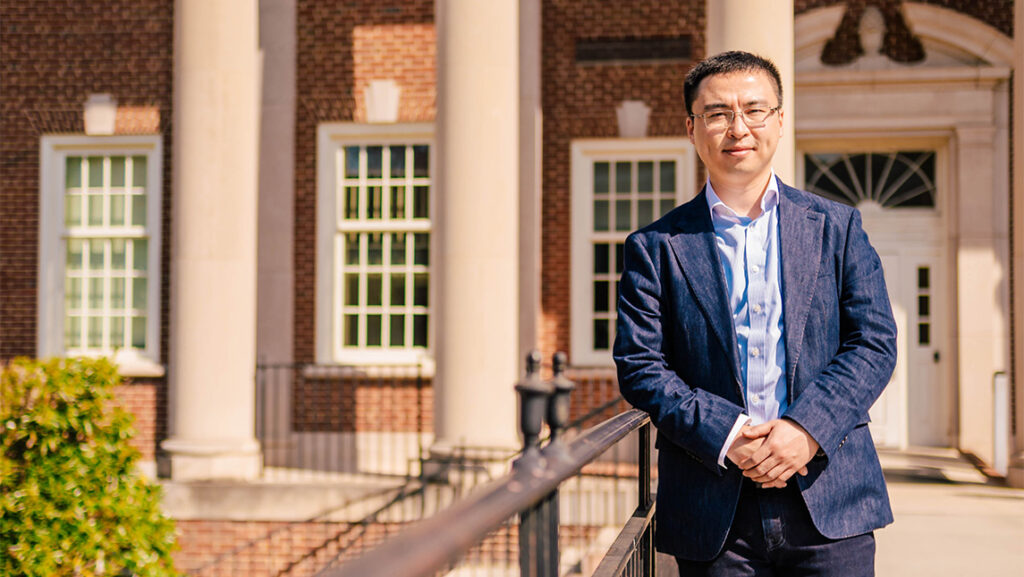
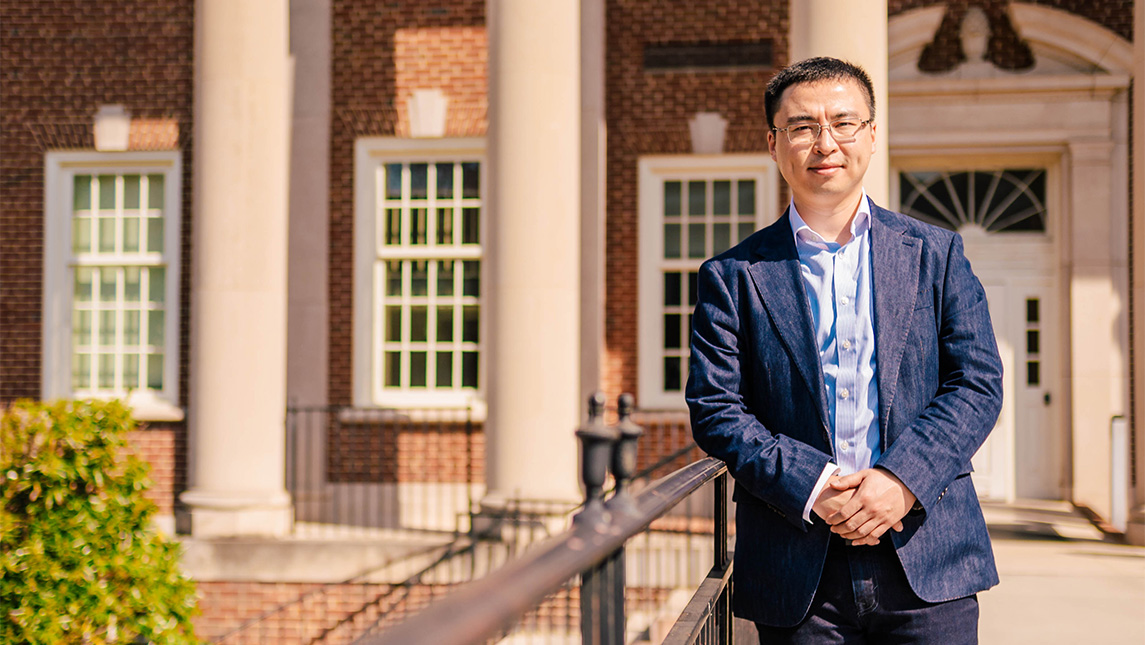
“AI is powerful,” says UNC Greensboro Computer Science Assistant Professor Yingcheng Sun. “We can use it to save us labor and cost. It’s useful, but by no means perfect.”
While an AI mistake in one context may be minor, a mishap in other fields, such as health care, can be detrimental. Sun is working to mitigate some of AI’s errors by leveraging the strengths of both humans and technology, a field known as human-centered AI.
“Our goal is to improve AI and avoid repeated mistakes by involving people’s feedback throughout the process,” he says.
Early in his career, Sun has already published his findings in some of the top publications in his field, including the Journal of Biomedical Informatics and the Journal of the American Medical Informatics Association.
Connecting researchers and clinical trial participants
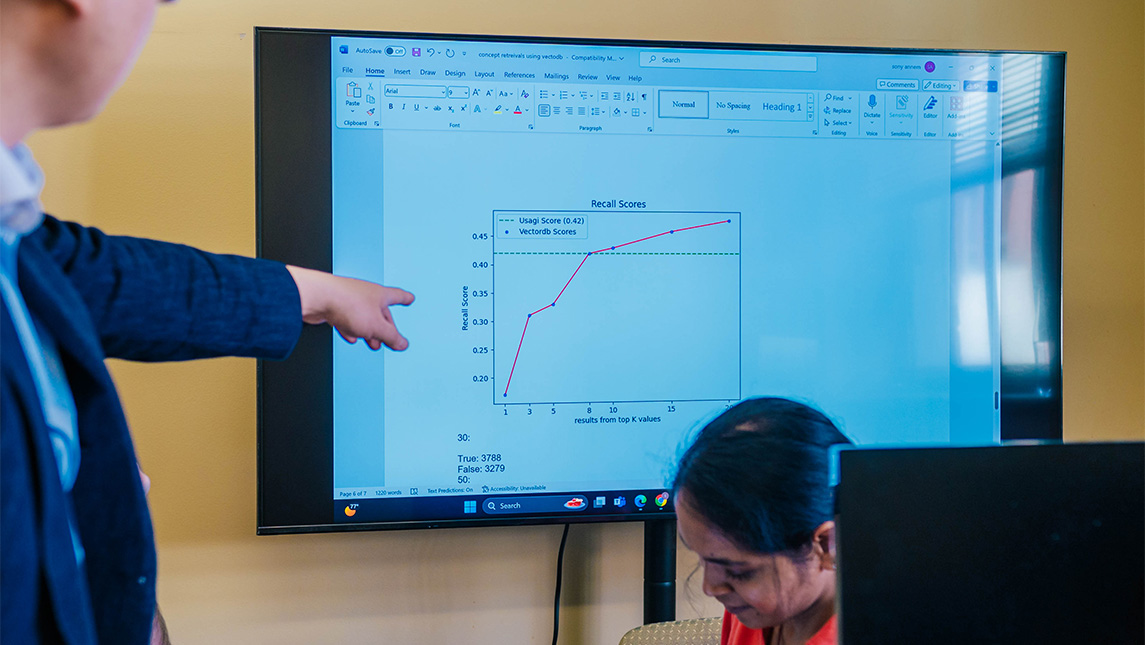
Sun’s recent research revolves around improving information retrieval in an important context: clinical trial recruitment.
Currently, there are an estimated half a million clinical trials. Each year, findings from about 11,000 clinical trials are published to advance knowledge and improve treatments.
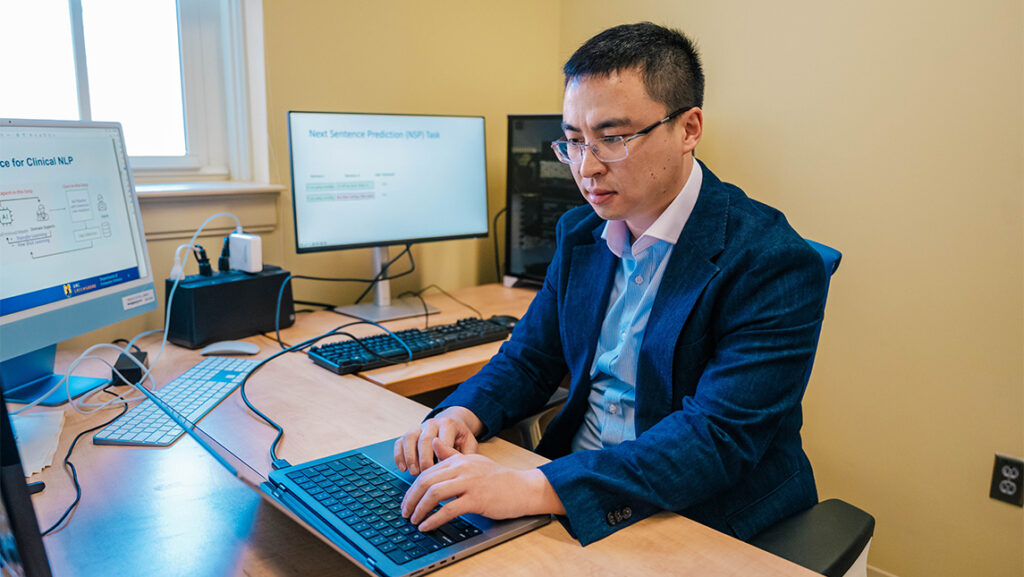
“When scientists need to develop new medication or new drugs, they want to hire or recruit volunteers, but there are a lot of requirements to be a part of a study,” Sun says.
While findings from clinical trials are key to driving science forward, researchers often find it challenging to recruit participants. Meanwhile, individuals open to participating in research are not sure how to engage. One study estimated that less than half of surveyed people feel comfortable finding a relevant clinical trial.
“Researchers sometimes put flyers on elevators and patients can check to see whether they are interested in these and then call them,” Sun says. “This approach is very inefficient.”
Without ample clinical trial participants, science stalls.
During the COVID-19 pandemic, Sun created COVID-19 Trial Finder, an online platform that connects interested people with clinical trial opportunities that fit their background and location.
Potential participants can answer a few questions about themselves, and then the platform generates a list of clinical trial options aligned with their responses. What’s more: if there are not any clinical trials that match the person’s interest, AI will provide other similar options.
“If the study is closed or isn’t recruiting new volunteers, then we will recommend relevant studies,” Sun says. “This is similar to when you’re online shopping and the item is out of stock. The website may recommend relevant products.”
The best of both worlds for health care
The benefits of Sun’s platform extends beyond matchmaking scientists and clinical trial participants. He’s also leveraging human-centered AI to catch mistakes and improve the platform.

Here’s how it works: after a person receives AI-generated clinical study recommendations, they can review the list and modify their responses to effectively train the AI.
“We have the user participate in the process. If they feel anything is wrong, they can modify it,” Sun said. “Equally important, we log all the modifications by the user.”
Tracking user feedback allows the research team to optimize the platform. In this way, Sun believes the best of both worlds – humans and AI – can come together to maximize efficiency and accuracy.
“AI is not enough – there’s still a lot of room to improve,” Sun says. “So how to improve, is we collect this feedback and continue training the AI tool.”
Sun hopes to build upon these findings.
“In the future, we will develop new tools based on this for other kinds of trials for the public – not only COVID-19, but also other kinds of disease,” he says.
Sun is also hard at work in other research areas, including building a platform called Evidence Map to expedite researcher synthesis of peer-reviewed papers. Sun says he’s grateful to be in the Department of Computer Science where his colleagues are friendly, and students are motivated.
“We have many local students from Greensboro. I enjoy working with them,” he said. “The students here really want to learn.”
Story by Rachel Damiani
Photography by Sean Norona, University Communications