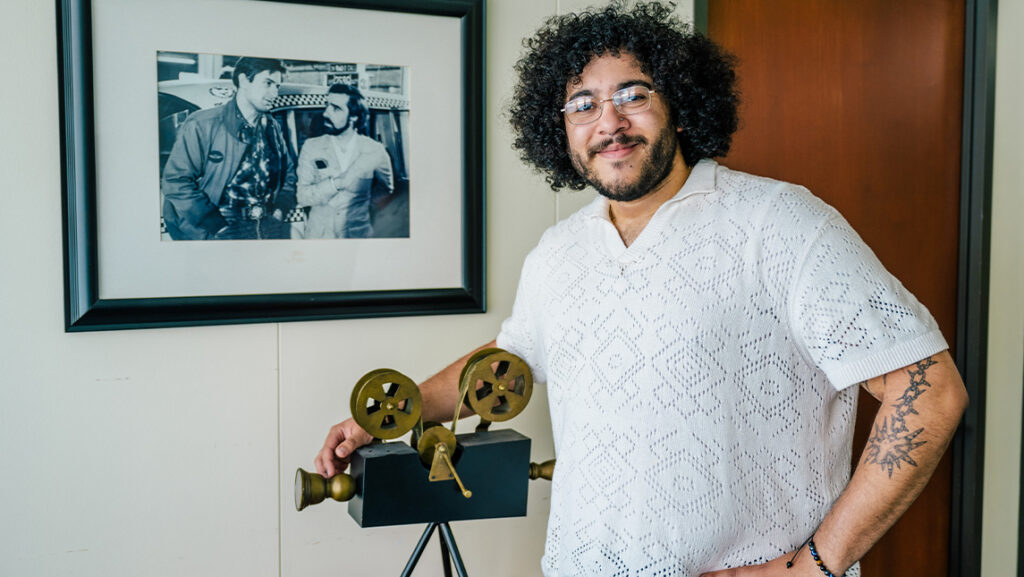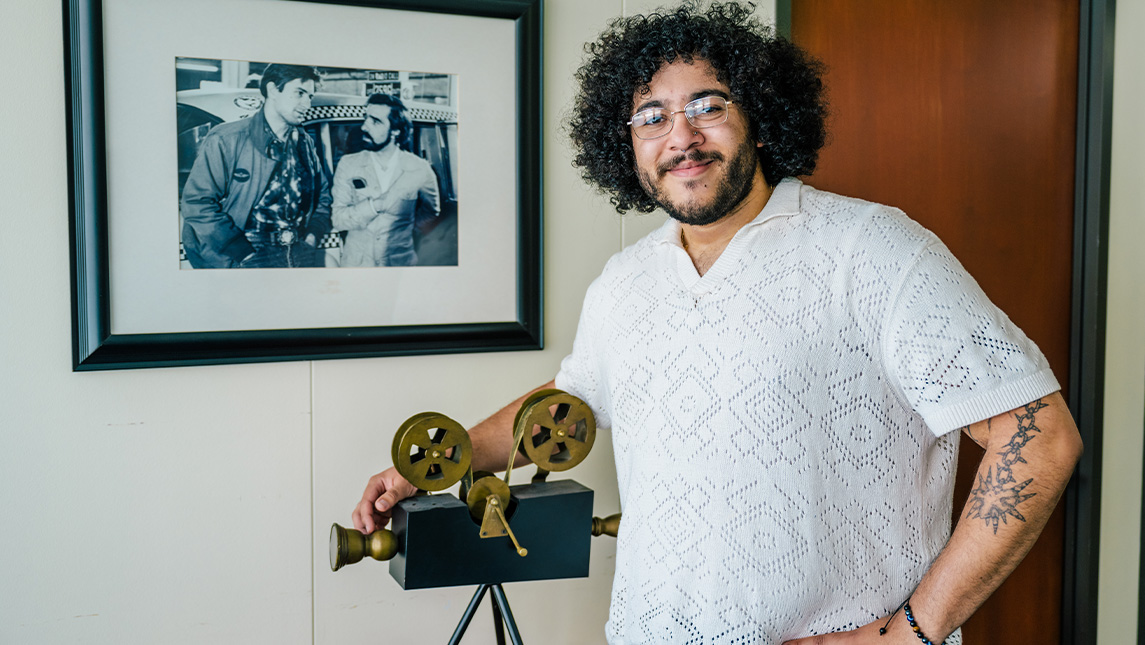
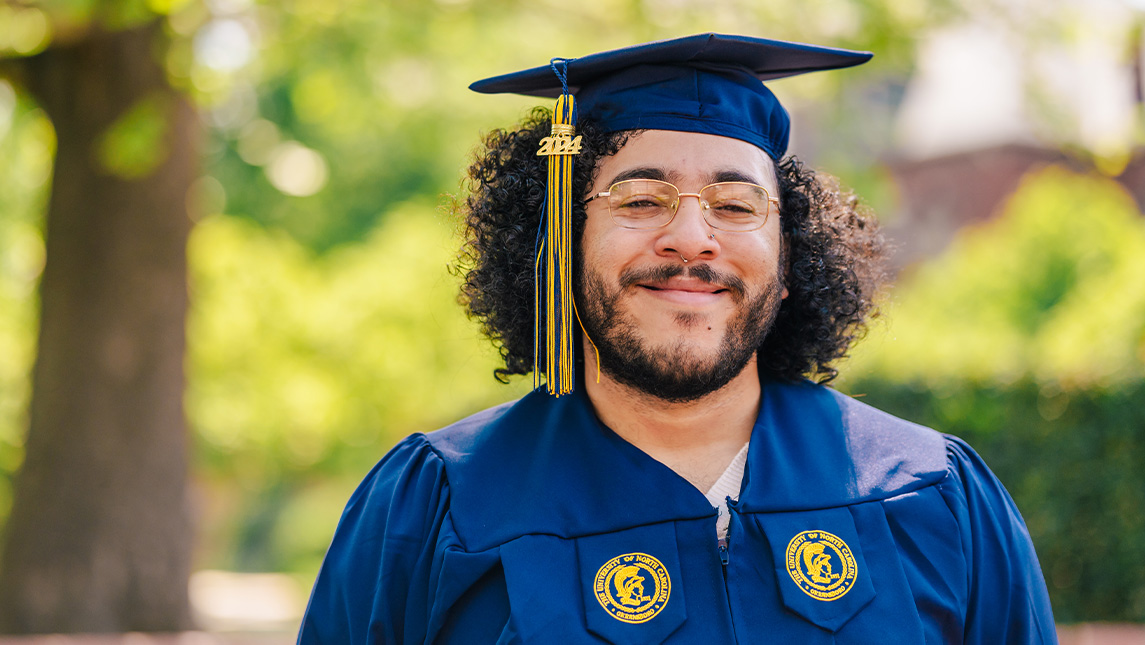
A sense of community drew Luis Roman to UNC Greensboro.
“UNCG has made a big impact on me, especially how they dedicate themselves to being a community-driven University,” says Roman, who will graduate in May 2024 with a bachelor’s degree in media studies. “Overall, the impact that the school has had on me with my education, friendships, and connections was more than I could ask for.”
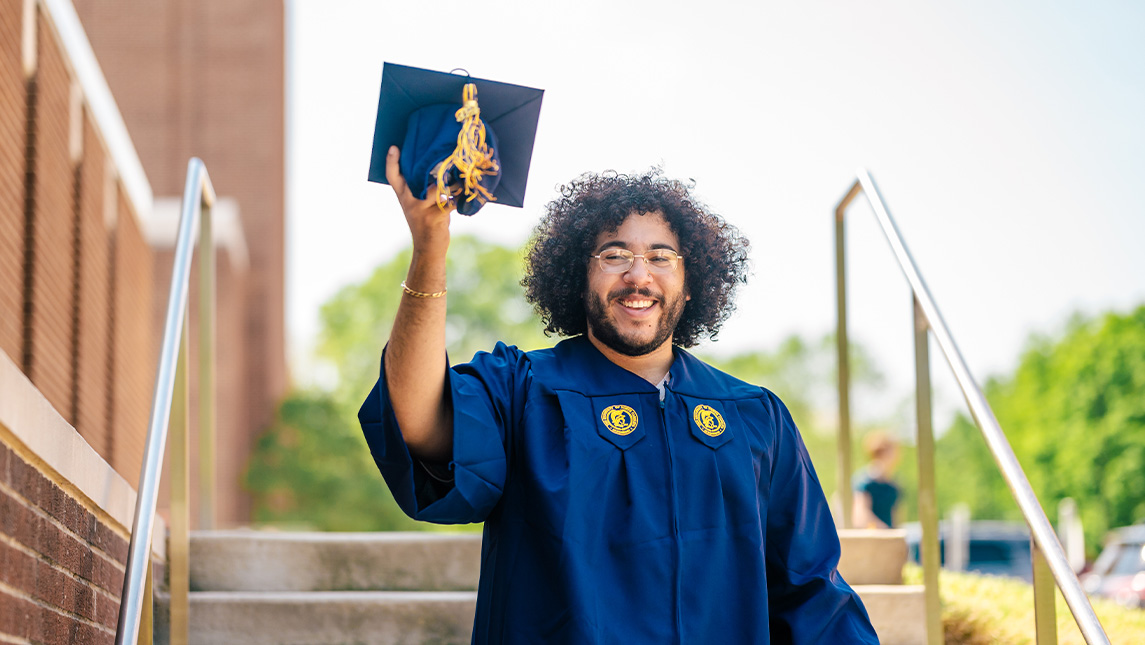
Roman transferred to UNCG from Wake Technical Community College, originally considering a degree in psychology but UNCG helped open his eyes to the opportunities within media studies.
“I didn’t realize how diverse media studies are,” says Roman. “I’ve always been the technologically savvy kid in my family, and I’ve seen how media like film, television, and music has been transformational in my generation and community and that led me to media studies.”
The Department of Media Studies in UNCG’s College of Arts and Sciences offers courses on a wide range of moving-image media, from film and television to electronic media sources. Students learn to make media and develop the tools to think more critically. In addition to the undergraduate degree, students can also earn two minors in non-production film and television studies and radio and production.
With a 3.68 GPA and several scholarships including the Joe Illman Memorial Scholarship and the Jane and Michael Bolton Scholarship, Roman is thriving with the opportunities at UNCG.
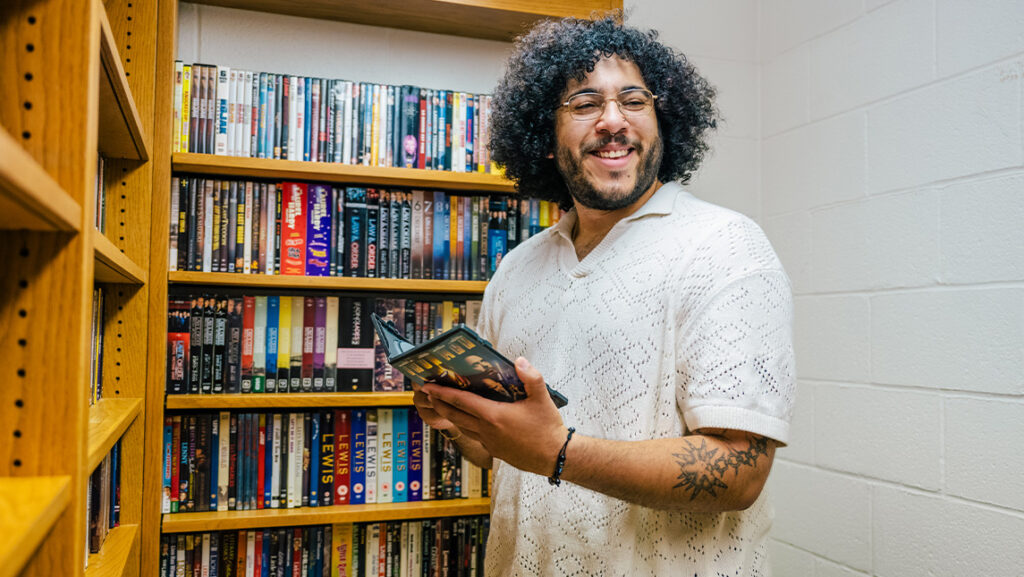

A HORROR FANATIC
Horror movie production is where Roman says his interest in media studies also comes from, identifying himself as a “fanatic” of the genre.
“There needs to be a reintroduction of what a horror movie is today,” says Roman. “There are a lot of newer movies that are doing interesting things like those directed by Jordan Peele. This generation is entering a new era of horror movies.”
Roman is also a member of the Carmichael Studios club, an opportunity for media studies students to showcase their work and collaborate on short films.
“It’s a good way to put your work out there and see what can come out of a student-made film,” says Roman.
But Roman didn’t stop with just media studies, he’s also earning two minors in psychology and music. His interest in psychology continues from his time in community college, especially learning how people work within their environments. The music minor though is much more personal – hearing his father play music helped instill a love for the art at an early age.
THE REAL ROMAN HOUR
Originally from Rahway, New Jersey, Roman played trombone in his middle school band but left music while he finished high school. UNCG helped him find his way back.
“There’s a good music scene in Greensboro and there are so many people at UNCG that have the same interests as me and we can work with each other,” Roman says. “I started studying making music electronically and was able to learn from a friend and on YouTube, basically teaching myself.”
UNCG has even allowed him to share his love for music – previously hosting a late-night radio show on WUAG called the “Real Roman Hour.”
“I would curate a list of music each week and then play it on Thursday night,” he says. “People could call in and I’ve had family members and friends from across the state being able to vibe with me. I love to share my music with people.”
Next, Roman plans to apply to internships, hoping to work in film or media production.
“What made UNCG so memorable for me is the people that I’ve met, the friends and memories that I’ve made,” says Roman. “I’ve put a lot into my media studies degree, and I’ve gotten back a lot more.”
Story by Avery Craine Powell, University Communications
Photography by Sean Norona, University Communications
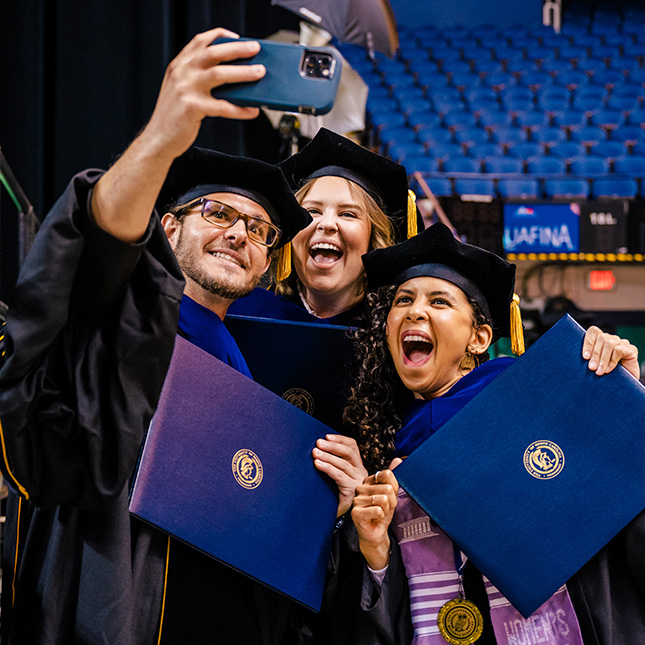
CELEBRATE OUR GRADS!
Graduate Commencement: May 2 at the Greensboro Coliseum
Undergraduate Commencement: May 3 at the Greensboro Coliseum
Tag social media posts #UNCGGrad and #UNCGWay. Tagged posts will be displayed live on screen in the Greensboro Coliseum before the ceremonies.
Mention @UNCG in celebratory posts on Instagram and X and @uncgreensboro on TikTok.