Black History Month has hit a significant milestone. It’s the 100th year the United States has honored the contributions of Black Americans to our nation, and UNC Greensboro joins the tribute with a variety of ways our community can observe the centennial this month.
A Century of History in the Making
The origins of Black History Month can be traced back to Feb. 7, 1926, when “Negro History Week” was established by Carter G. Woodson, an American historian, author, and journalist. He chose the second week in February to honor the birthdays of Frederick Douglass and Abraham Lincoln.
One hundred years might feel like a long time for a nation that still struggles with equity, but much Black history has come to pass in that time. Its founding year, 1926, was three years before Martin Luther King Jr.’s birth and 37 years before his “I Have a Dream” speech at the 1963 March on Washington. It was 34 years before the Greensboro Four sat at a segregated lunch counter at Greensboro’s Woolworth’s drug store on Feb. 1, 1960, fueling a sit-in movement that led to desegregation of the American South.
Black History at the G
One hundred years ago, UNC Greensboro was the North Carolina College for Women. Although only White women were enrolled at the time, many of these early Spartans had a passion for women’s rights that later expanded to civil rights. Negro History Week was 30 years old when the first African American students were admitted to the Woman’s College in 1956. Four years later, three of our students joined the growing crowd of supporters on Day Four of the Woolworth’s sit-in.
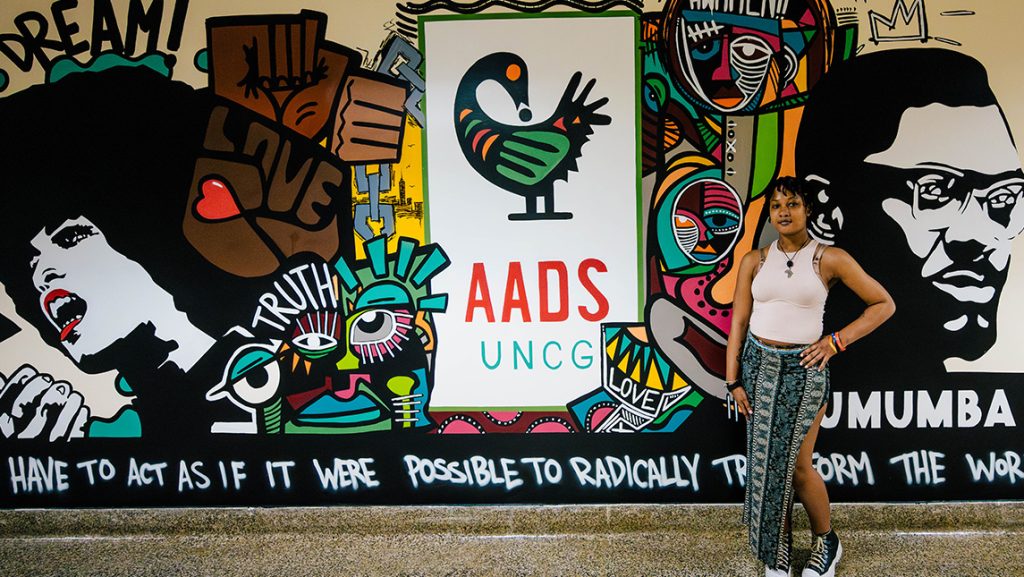
The University still celebrates the early pioneers of Black history at UNCG. This year, UNCG students painted a mural in the Foust Building to honor JoAnne Smart Drane and Bettye Tillman, our first African American students.
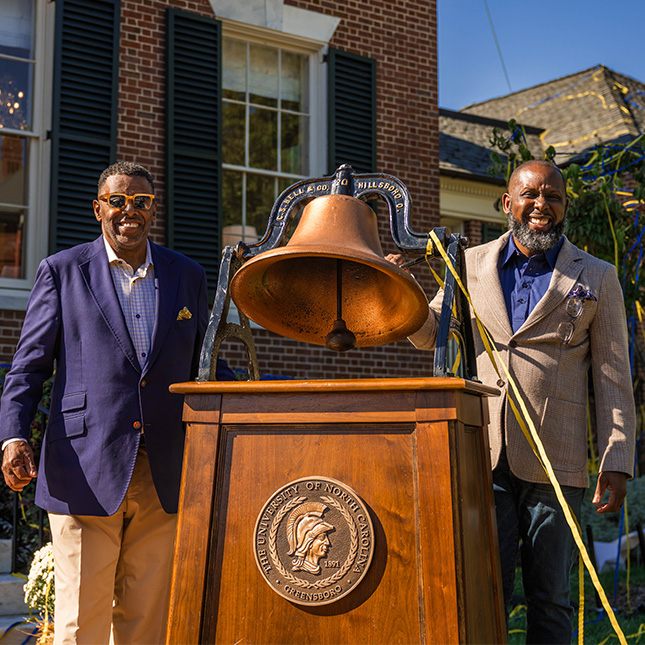
Black history continues to be made at UNCG, as evidenced by the naming of the Alumni House for alumnus Marcus T. Johnson ’99, just last year. His historic gift inspired the University to name the building after him, the first on our campus to honor a person of color.

Q&A with JoAnne Smart Drane and students who painted a mural in her honor.
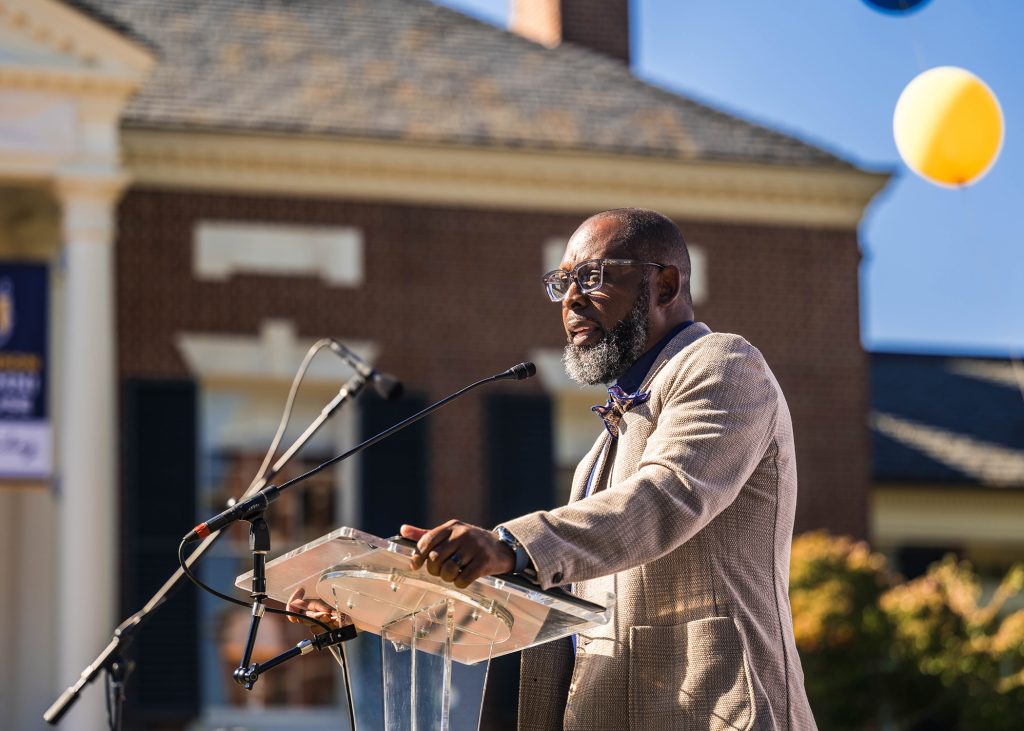
Meet Marcus T. Johnson ’99 and visit the Alumni House that bears his name.
Change Begins with Education
Chronicling history–in–the–making is what Woodson had in mind when he designated a week to honor Black history, which was expanded to Black History Month in 1976 by President Gerald R. Ford. Woodson spoke of using the weeklong tribute not as a “new tradition,” but to remind schoolchildren of what they had learned all year.
As the first scholar to study Black African diaspora in the United States, Woodson was passionate about using education to change hearts and minds. He famously said, “This crusade is much more important than the anti-lynching movement, because there would be no lynching if it did not start in the schoolroom.”
Since Woodson’s historic designation, we’ve seen 100 years of Black history education, the Civil Rights Movement, and the ongoing work that must be done to advance equity in this country.
Join the Celebration
At UNCG, there are many ways to commemorate Black History Month through cultural celebrations, educational opportunities, and open discussions throughout February. Below are some of the popular campus events planned for Black History Month this year:
Music, Performances & Games

BHM Kickoff Party x ILC
Monday, Feb. 9, 5-7 p.m. in the EUC Cone Ballroom
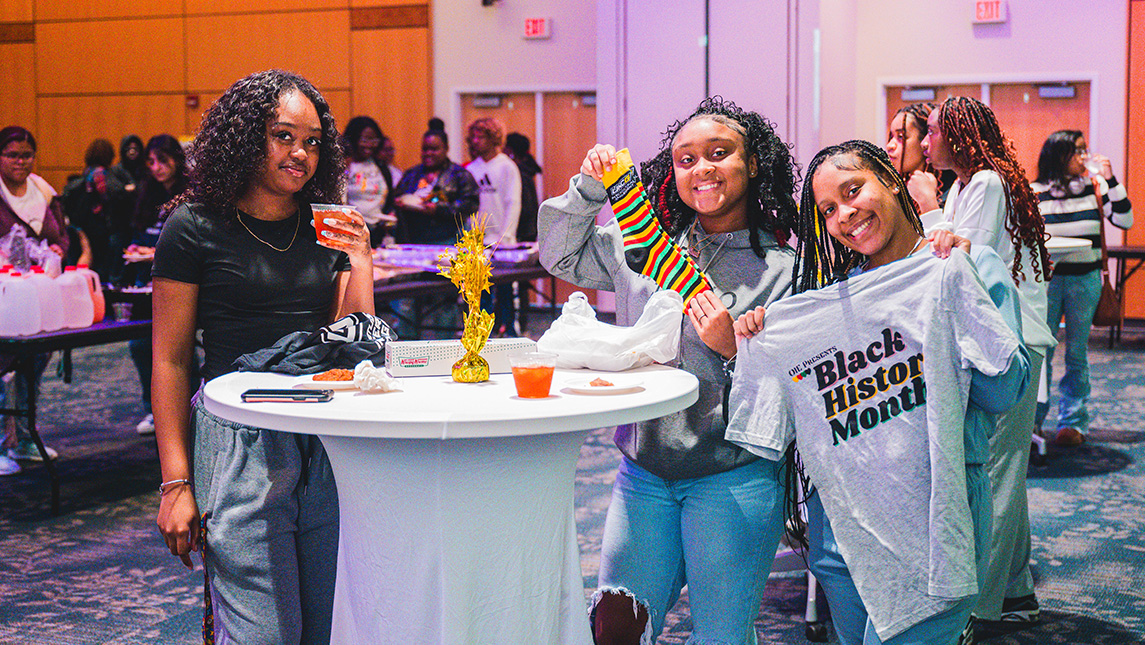
Free food, SWAG, and a live DJ to celebrate the start of Black History Month.
Alive in Color
Feb. 11 & 13 at 6:15 p.m. in the EUC Auditorium
UNCG honors Black culture with a showcase of Spartan talent.
BHM Night at Bodford Arena
Thursday, Feb. 12, 7 p.m.
Cheer on the women’s basketball team as they take on Wofford.
AUX Wars
Wednesday, Feb. 25, 5:30-7 p.m. in the EUC Cone Ballroom
Join a jam session as students battle in a reimagined take on aux music.
Education & Enlightenment
CACE 2026
36th Annual Conference on African American and African Diaspora Cultures and Experiences
Feb. 24, 25, and 26 at the Elliott University Center
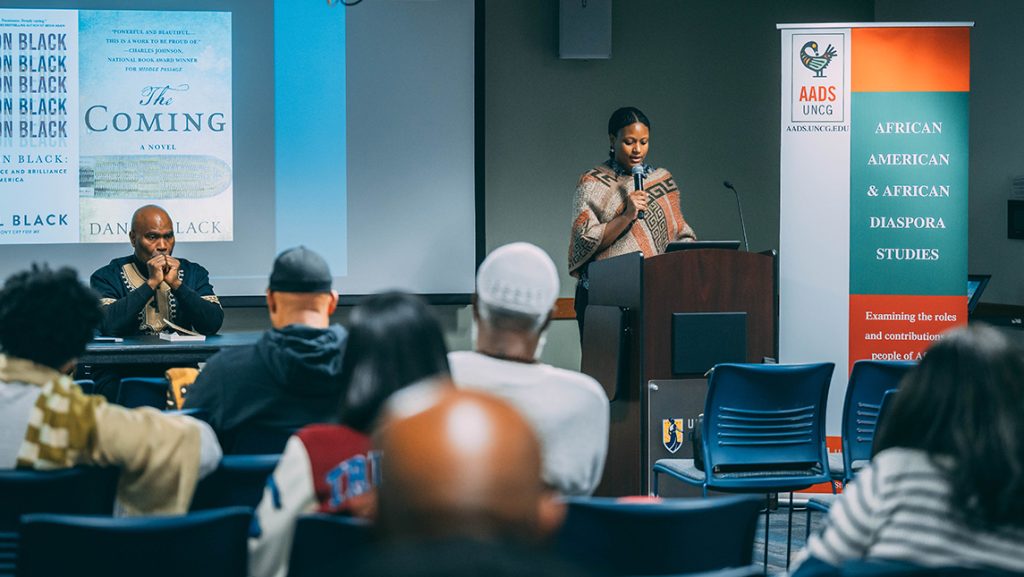
Presented by the Department of African American and African Diaspora Studies, this three-day educational conference includes presentations, roundtable conversations, poetry, performances, and workshops. Themed “Race and Education,” the sessions and keynote speakers present history and its impacts in ways you won’t expect. It’s free and open to the public, but registration is required. Click here for conference details, the official program, and the registration link.
Reflections of Art
Of Salt and Spirit: Black Quilters of the American South
Feb. 14 – Aug. 1 at the Weatherspoon,
2nd floor in The Bob & Lissa Shelley McDowell Gallery
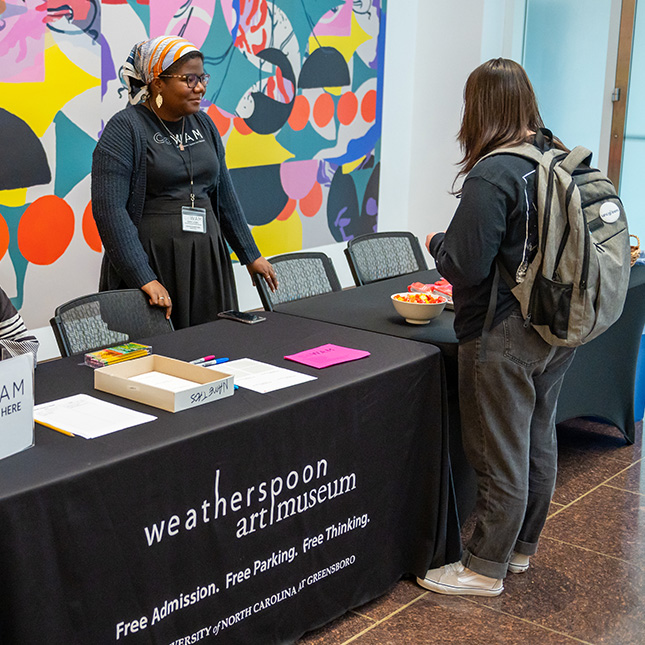
An exhibition of vibrant quilts hand-stitched by Black quilters across the United States features 24 quilts and two portraits from the Mississippi Museum of Art’s collection.
Precious D. Lovell: Harriet’s Powers
Open through July 25 at the Weatherspoon,
2nd floor Gallery 6
Precious Lovell’s installation is site-specific and multi-sensory. It represents her response to the Of Salt and Spirit exhibit, including stitched elements, sculpture, and historical artifacts commemorating the life and art of 19th-century Black quiltmaker Harriet Powers.
Story by Becky Deakins, University Communications.
Photography by Sean Norona, University Communications.