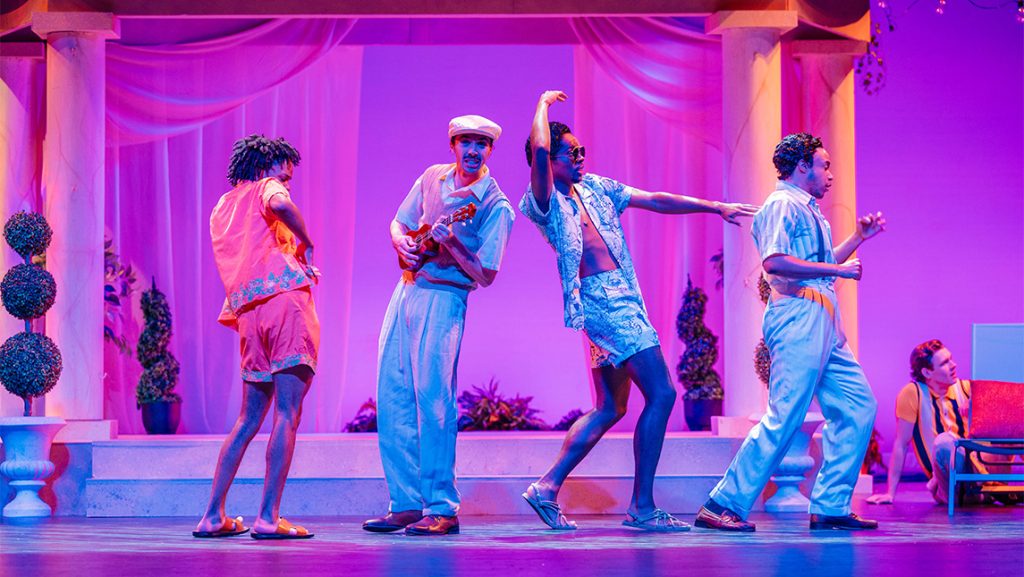
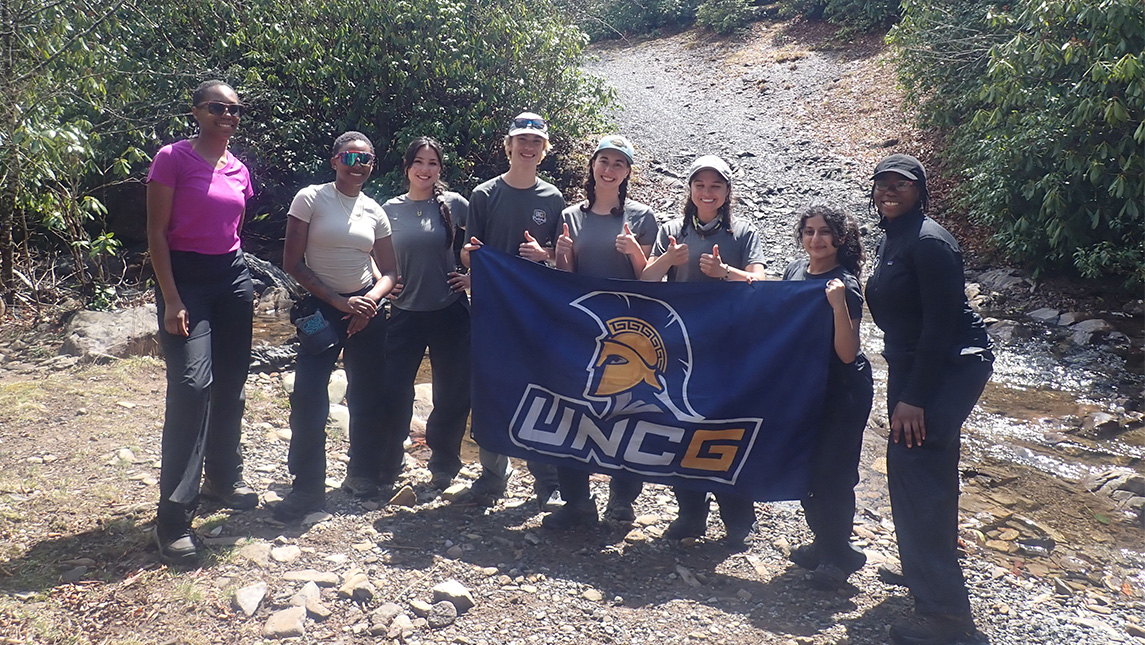
“The Lost Colony” is one of North Carolina’s most significant live performances. As it nears its ninth decade of production, it’s cemented itself as part of American history. The play based on the mysterious disappearance of a hundred British colonists debuted during the Great Depression. For its premiere season on the Outer Banks, admission cost one dollar. President Franklin D. Roosevelt has sat in its audience. Actor Andy Griffith and his wife Barbara had starring roles in the ’40s and ’50s. Broadway star Terrence Mann got his start there as an understudy and helped with its turn-of-the-millennium revitalization. It received a Tony Honor in 2013.
This summer, UNC Greensboro musical theatre major Patrick Joseph Mullen became part of that history.
He can feel the energy onstage and in his off-time traveling the Outer Banks. “Being a part of the 89th season of anything sort of forces you to stop and look around,” he says. “If you drive through any part of the island, you’ll see dozens of streets named after colonists from the show. We also have life-sized bear and elk puppets, swordfighting, fire dancing, and projections that rival any theme-park show.”
Before he stepped onto a stage mostly made of sand in Manteo, NC, he had to audition at a conference for regional productions.
“There are hundreds of auditioners in a four-day conference, 40 or so companies, 16 hours of auditions, and callbacks in a day,” Mullen remembers. “Auditioning was quite unique. It involved running around a basement studio using a classroom chair as a wolf head. With conferences like these, it’s next to impossible to predict if you’ll get cast.”
But Mullen did stand out and netted a role in “The Lost Colony’s” ensemble. He says, “I really brought my authentic self to the room despite the stress, which is something I learned the value of at UNCG.”
The History of an NC Mystery
“The Lost Colony” tells the story of the first attempt to establish a permanent British colony in North America. Organized by Sir Walter Raleigh and led by Captain John White, 117 of men, women, and children arrived on Roanoke Island in 1587. A month in, Virginia Dare became the first English child born on American soil. But after White sailed back to England for supplies, encountering several delays, he returned to find no trace of the colonists.
Their fate has been the stuff of North Carolina legends for hundreds of years. No one truly knows what became of the real Lost Colony, but Mullen said the show makes some speculations based on the few clues left behind.
The nation’s longest-running outdoor symphonic drama has challenged him in interesting ways. Acting on an unconventional stage is one of them. “The biggest learning curve was the sand,” he says. “Two-thirds of our stage is sand, which means I get to leap in the sand, jump and roll into the sand, and make sand angels in my shoes for two hours.”
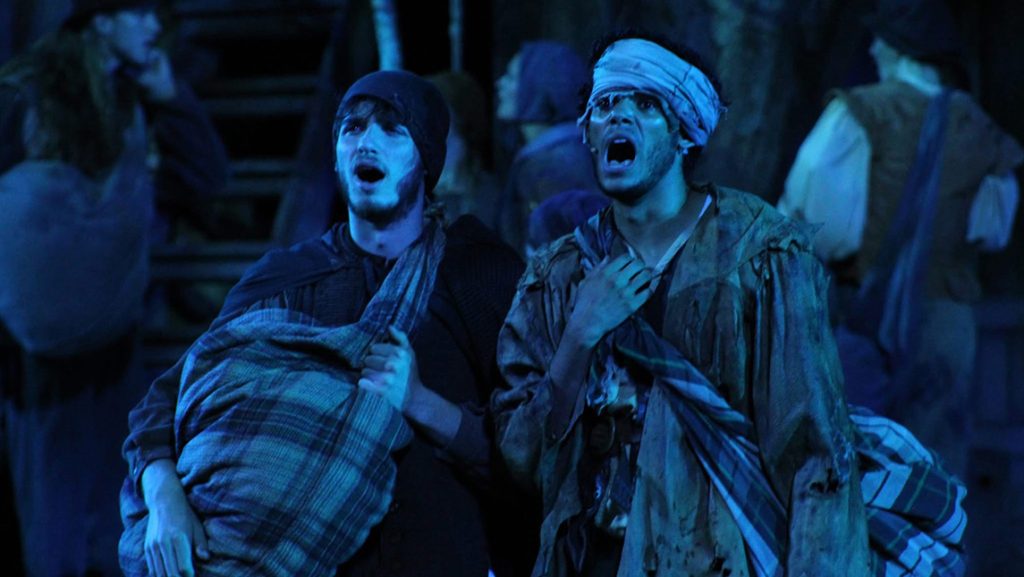
Being in the ensemble lets him stretch his acting chops by playing different parts depending on the scene: a dancing noble, a sailor, and Captain of the Guard among them. It is physically demanding to perform for hours in North Carolina’s coastal climate.
“It takes a lot of work outside of the theatre to keep your body going in these long summer weeks,” he says. “Learning how to hydrate, how to fuel your body, and figuring out just how sore is ‘too sore’ has been the true trial this summer.”
The experiences on and off stage make each sweaty day worth it. Mullen says, “I’ve gotten to spend my fair share of time beach-hopping in the Outer Banks. I’ve seen the lighthouse at Cape Hatteras, been through the Elizabethan Gardens, and performed in one of the state’s biggest tourist attractions every night.”
From Vegas to Manteo, Via UNCG
Rising to whatever challenge a show can throw is hardly new to Mullen. UNCG’s College of Visual and Performing Arts has been a great place for him to perfect stagecraft.
He says, “I hope to do a bit of everything: entertaining, educating, creating, performing, directing, or whatever else pays the bills and fills my cup.”
He got into acting at a very young age. In first and second grade, he attended a charter school for the performing arts in Las Vegas. Still, he wasn’t sure he would pursue drama professionally. He took a few years off to focus on springboard diving and even won a national championship.
In middle school, he returned to the stage, and this time he stuck around. He says, “My all-time favorite production was ‘Macbeth’ my senior year of high school. I played the titular Macbeth, a character that thousands have played before. I found a true love for my craft while in the show and discovered new intricacies of performance.”
Mullen auditioned for theatre programs at 23 colleges and universities, but UNCG always stood out. “It was the only school that made me feel valued as a human being rather than a performer,” he says. The location also appealed to him. “I have loved living in Greensboro. It truly is a little oasis in the middle of North Carolina.”
The Power of Performance as a History Teacher
A similar camaraderie has permeated the Outer Banks experience for Mullen. The Roanoke Island Historical Association provides housing for the approximately 100 cast members. By the second week, he says the local Jersey Mike’s had memorized all their food orders.
The veteran actors provided a masterclass for Mullen. “Learning a show with cast members who have been with ‘Lost Colony’ for up to 10 years was quite the experience,” he says. “It always surprised me when our Sir Walter Raleigh and assistant director could quote the show verbatim.”
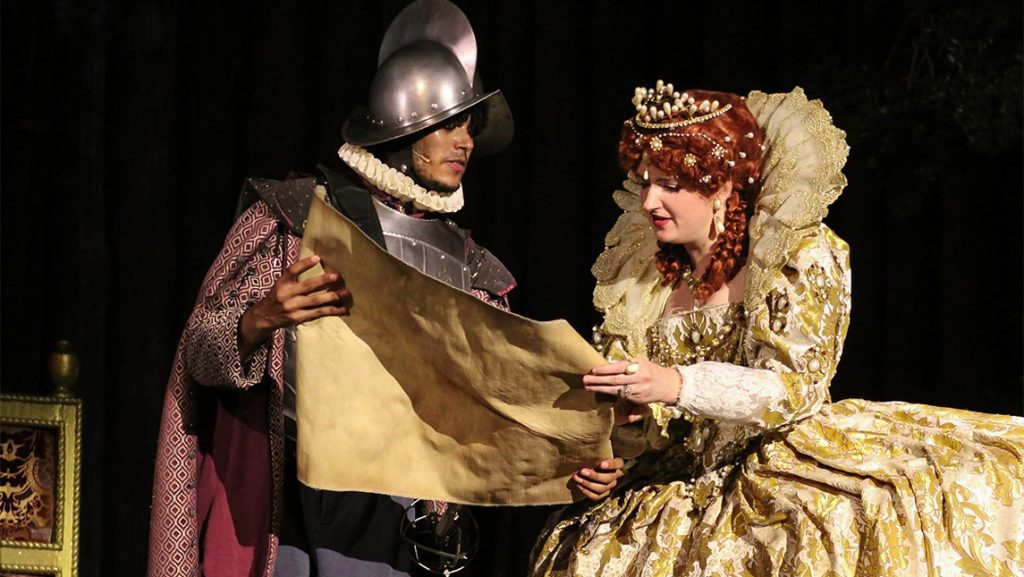
Before this summer, Mullen says he only had a cursory knowledge of the Lost Colony from pop culture and a few school lessons. The show has broadened his own understanding of American history.
“The Lost Colony” has gone through several revitalizations over the decades, notably in 1964 and the early 2000s, embracing new technology and adjusting its script and music. In more recent years, it brought in more of the Carolina Algonquins’ perspective, adding a pre-show showcasing different Indigenous cultures. “It’s been incredibly interesting to talk to my Native cast members and listen to their stories about the island,” says Mullen.
Once the show wraps, he will head back inland for his next semester at UNCG. On track to graduate in 2027, he’s open to many different acting gigs, although he hopes for roles that let him do more traveling before he eventually auditions for Broadway.
Right now, he wants people to appreciate the power of live performance, especially when it comes to sharing history. “It creates an emotional tether between every actor on stage and the audience,” Mullen says. “There is no equivalent. Being able to see these colonists from the 16th century as real, live people with struggles makes the colony feel important. It helps you live through the drama in a way that no movie or TikTok could ever do.”
Story by Janet Imrick, University Communications
Photography courtesy of Patrick Joseph Mullen