


Advance the future of education through research, measurement, and evaluation with UNC Greensboro’s Ph.D. in Educational Research, Measurement, and Evaluation (ERM). This interdisciplinary doctoral program prepares students to become leaders in designing rigorous studies, developing meaningful assessments, and evaluating programs that improve educational outcomes. Through advanced methodological training, hands-on research opportunities, and mentorship from expert faculty, students build the skills needed to transform data into actionable insights and address complex challenges in education, policy, and practice.
Individuals applying to the Ph.D. program are assumed to have previous foundational training in quantitative methodology and/or evaluation, such as a master’s degree in a related field (methodology, measurement, evaluation, statistics, or mathematics) or other graduate training that aligns with the training provided by the ERM master’s degree. Those who are interested in pursuing the Ph.D. in ERM, but have not completed the necessary graduate training in quantitative methodology and/or evaluation, are encouraged to apply to the joint Master’s and Ph.D. program.
ph.d. in educational research, Measurement, and Evaluation Program Distinctions
UNCG’s Ph.D. in Educational Research, Measurement, and Evaluation provides a strong foundation across educational research methodology, educational measurement and psychometrics, and program evaluation
Students deepen their expertise through one of two specialized concentrations:
Students will choose to officially pursue only one of these degree concentrations. In addition to the required core courses of the program, students will complete the additional required core for their chosen concentration based on professional and academic goals. Students may take courses from both cores, but double-concentrations are not recognized at this time. Students who complete both core concentrations will need to choose which concentration appears on their official transcript.
Participants learn from faculty with nationally and internationally recognized expertise in educational research, psychometrics, measurement, and program evaluation. Faculty pair active scholarship with close mentoring, helping students develop as researchers, evaluators, and future leaders in the field.
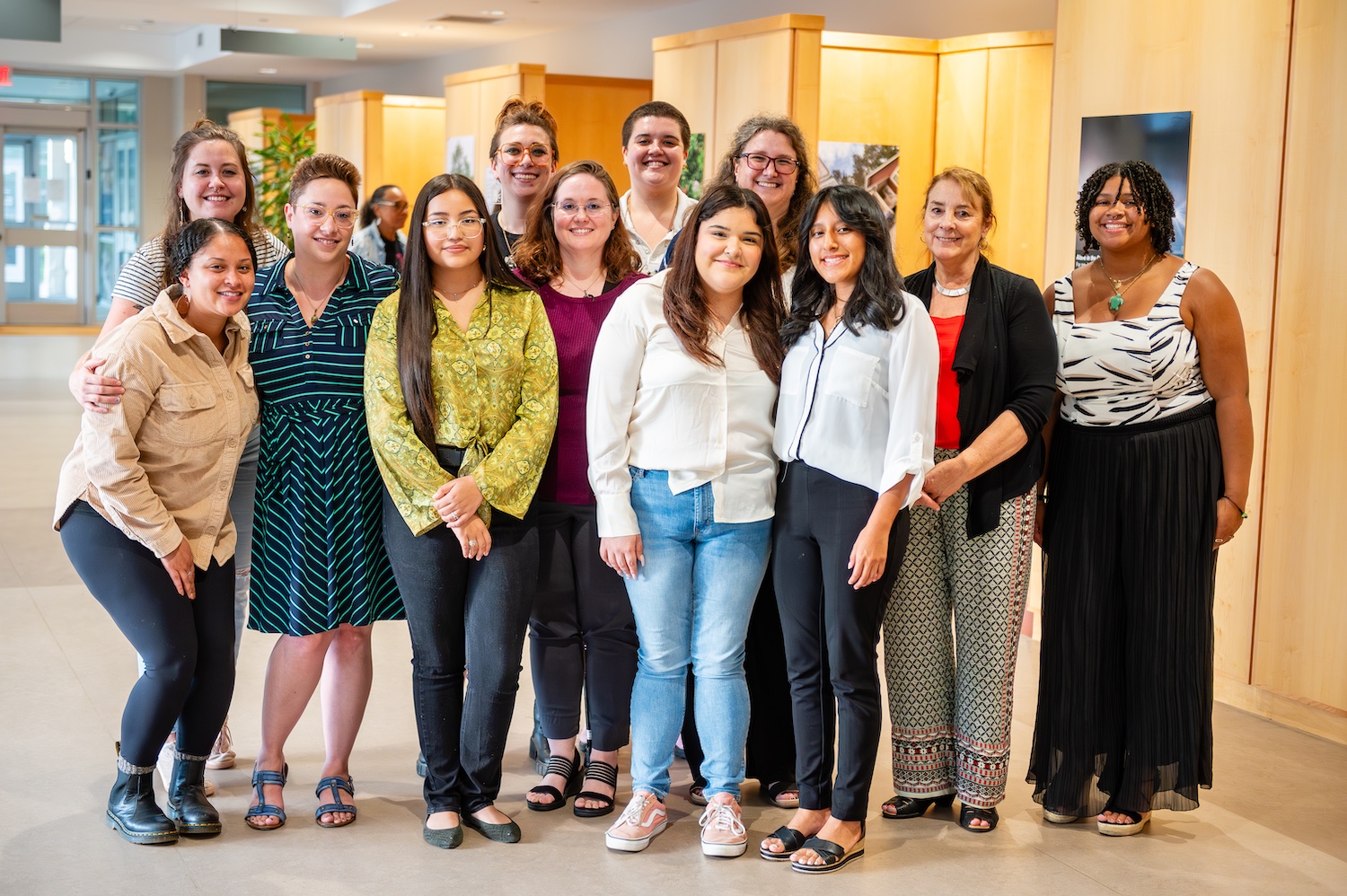
“We want to share a sense of the broader community. What are they seeing in their lives that’s helping, or not helping, or making it worse?”
–Dr. Stacy Huff ’22, ’25 Ph.D. in Educational Research, Measurement, and Evaluation
The Experience as a Ph.D. in eRM Student
ERM program participants become part of a community of researchers who collaborate with faculty and peers on research, evaluation, and measurement projects. The combination of personalized mentoring, applied experiences, and interdisciplinary collaboration helps students develop both technical expertise and professional networks.
A defining feature of UNCG’s program is its emphasis on applied learning. Students work on authentic evaluation, measurement, and assessment projects with local, national, and international organizations, allowing them to graduate with professional experience and not just academic coursework. This practical training is supported through opportunities with the Office of Assessment, Evaluation, and Research Services (OAERS).
The ERM Ph.D. curriculum develops expertise in both quantitative and qualitative methodologies through coursework in:
- Validity and validation
- Educational measurement theory
- Experimental design
- Survey research
- Qualitative research methods
- Educational program evaluation
Students also complete elective coursework that aligns with their research interests before conducting an original doctoral dissertation.
Upon Graduating with a ph.d. in educational research, Measurement, and Evaluation
The Ph.D. in Educational Research, Measurement, and Evaluation program prepares students with a foundation in quantitative methods or evaluation to become leaders in research methodology. Through advanced training and applied experiences, graduates develop the expertise needed to pursue careers as:
- Policy analyst
- University faculty
- Psychometrician
- Research scientist
- Director of assessment and accreditation
- Program evaluator
- Educational consultant
Program Details
Degree Type: Doctoral
College/School: School of Education
Program Type: Majors & Concentrations
Class Type: In Person
Catalog Name: Educational Research, Measurement, and Evaluation, Ph.D.
Similar Degree Offerings
Contact Us
Dr. Kyung Yong Kim
232 School of Education Building
k_kim9@uncg.edu