

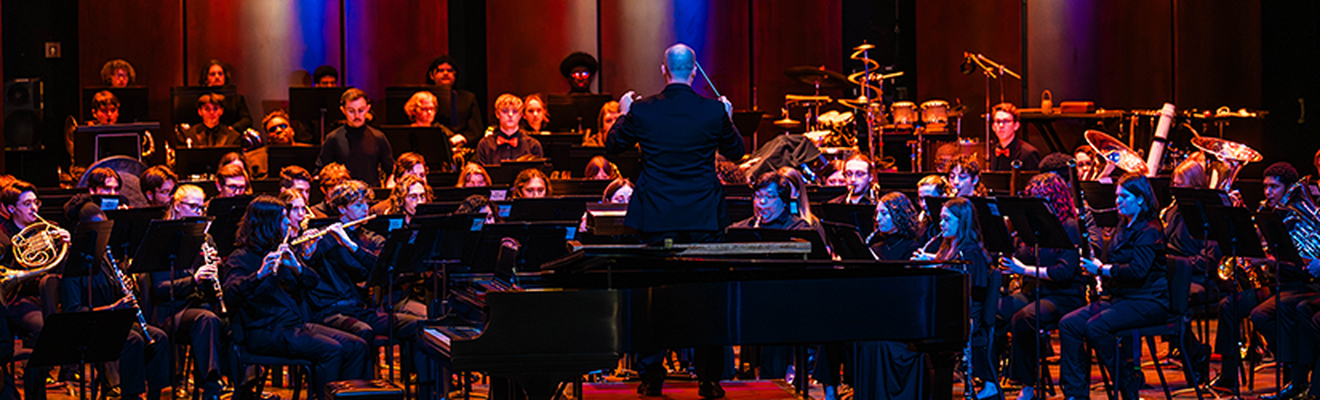
The Master of Music in Instrumental Conducting program prepares students to lead wind bands, orchestras, or contemporary music ensembles. Core philosophy of the program centers on developing the “artist-scholar,” ensuring students understand both the historical context of a score and how to communicate it physically. Graduates step directly into careers in music performance and education.
About the UNCG School of Music
- The School of Music at UNC Greensboro was ranked #1 in the U.S. by Best Value Schools in 2025.
- The UNCG School of Music offers the only comprehensive degrees in music education and music performance in the State of North Carolina, from the undergraduate level through doctoral study.
- The school is a member of the National Association of Schools of Music (NASM).
master of Music in Instrumental Conducting Program Distinctions
The Master of Music in Performance with a concentration in Conducting at UNCG offers two primary specialized tracks: Choral and Instrumental.
The Master’s in Instrumental Conducting program focuses on a dual-track curriculum—Wind Band or Orchestral. The program blends rigorous academic scholarship with intensive, practical podium mechanics. Because UNCG offers a Doctor of Musical Arts in Conducting, master’s students study in a highly rigorous, “artist-scholar” environment. They learn alongside doctoral peers, participate in advanced masterclasses, and benefit from a deeply structured, multi-tiered choral department.
The Instrumental Conducting Graduate Student Experience
Students rotate continuously across all major instrumental ensembles.
Every week, you’ll step in front of a live lab ensemble specifically assembled for the conducting studio. Faculty members record your session and provide immediate feedback on non-verbal cues, stance, and baton mechanics.
Students work closely in a tight-knit studio alongside Doctor of Musical Arts conducting peers.
Graduate level conducting students spend most of their time in the 130,000 square foot School of Music building. This massive facility features dedicated practice rooms, rehearsal halls, custom acoustic labs, and an extensive music library.
After Graduating with your master’s in Instrumental conducting
An MM in Instrumental Conducting from UNCG prepares you for careers in education; civic, community, and military ensembles; and church and specialized ensembles. Some potential career paths include:
- High School Band or Orchestra Director
- Community College/Adjunct Professor
- Youth Symphony Conductor
- Community Band/Orchestra Conductor
- Military Band Officer
- Assistant Conductor with a Symphony or Opera Company
- Worship and Instrumental Arts Director
- Musical Theater Conductor/Pit Director
For many conductors, the ultimate utility of an MM is serving as the mandatory prerequisite for a Doctor of Musical Arts. A DMA is the terminal degree required to secure a highly sought-after, tenure-track position as a Director of Bands or Director of Orchestral Activities at a four-year university.
How To Apply to The Master of Music in Instrumental Conducting
Students interested in the Master of Music in Instrumental Conducting complete UNCG’s undergraduate admission process and the School of Music application/audition process.
Frequently ASked Questions About the Masters in Instrumental Conducting
Program Details
Degree Type: Master's
College/School: College of Visual and Performing Arts
Program Type: Majors & Concentrations
Class Type: In Person
Catalog Name: Performance, M.M. Conducting (Instrumental) Concentration
Similar Degree Offerings
Contact Us
Nicholas Lewis, DMA
nelewis@uncg.edu
Graduate Student Services Specialist
336-334-5794