Christian Moraru

Class of 1949 Distinguished Professor
in the Humanities and Professor of English
English
Email Address: c_moraru@uncg.edu
Phone: 336.334.5311
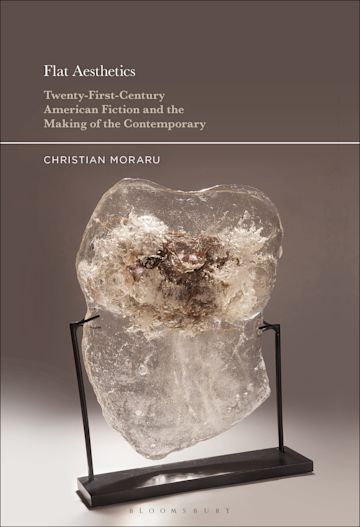
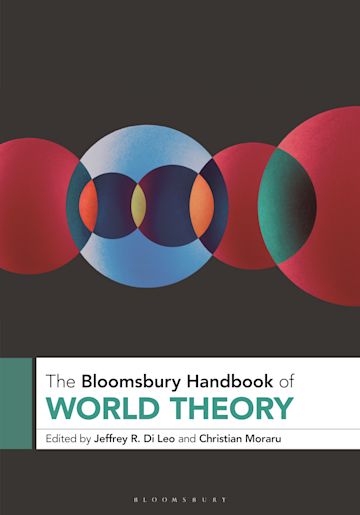
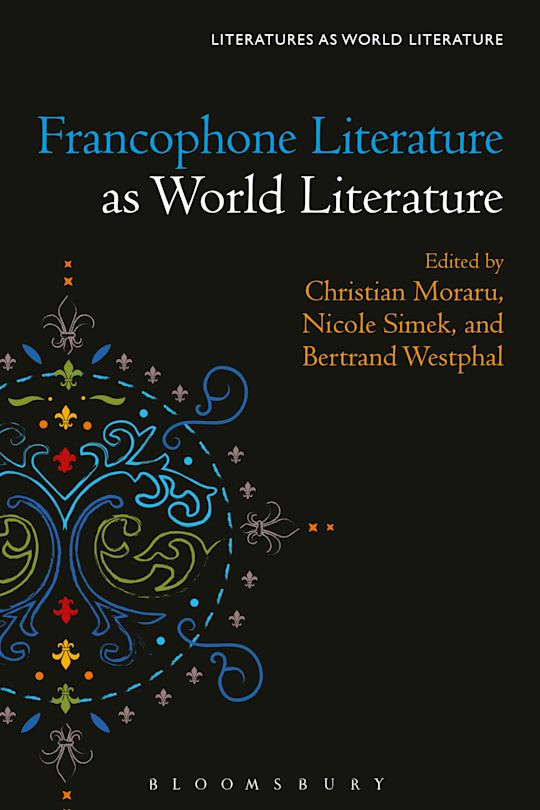
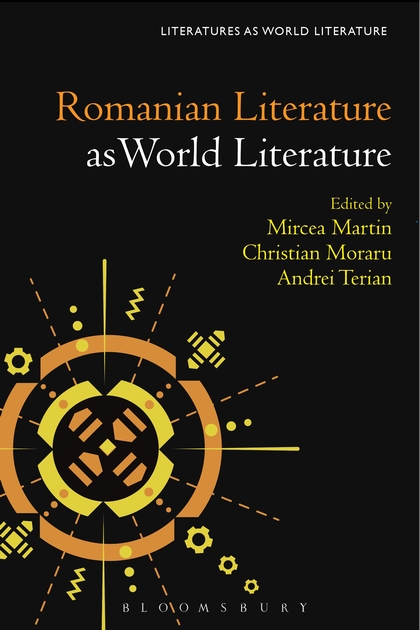
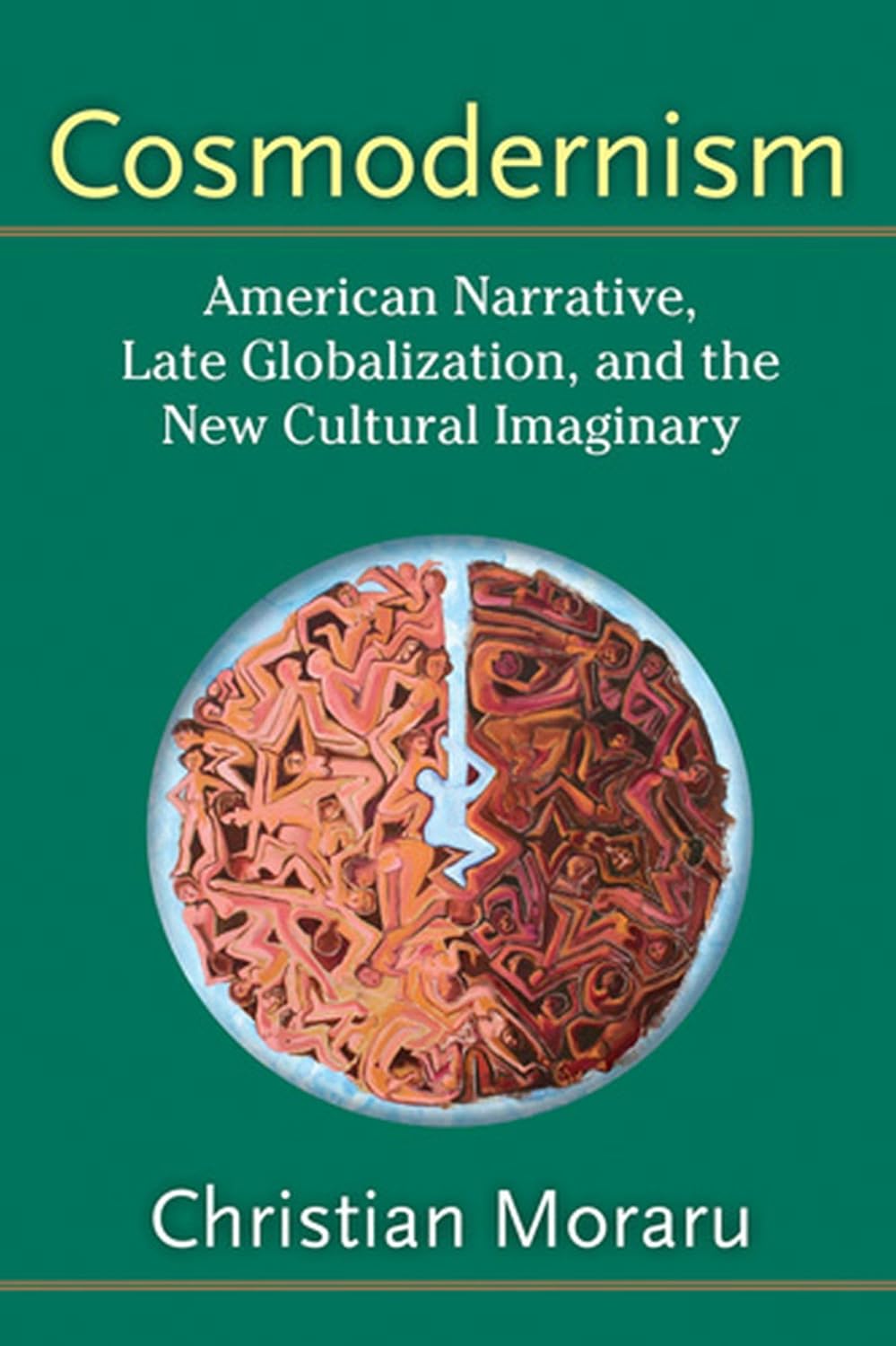
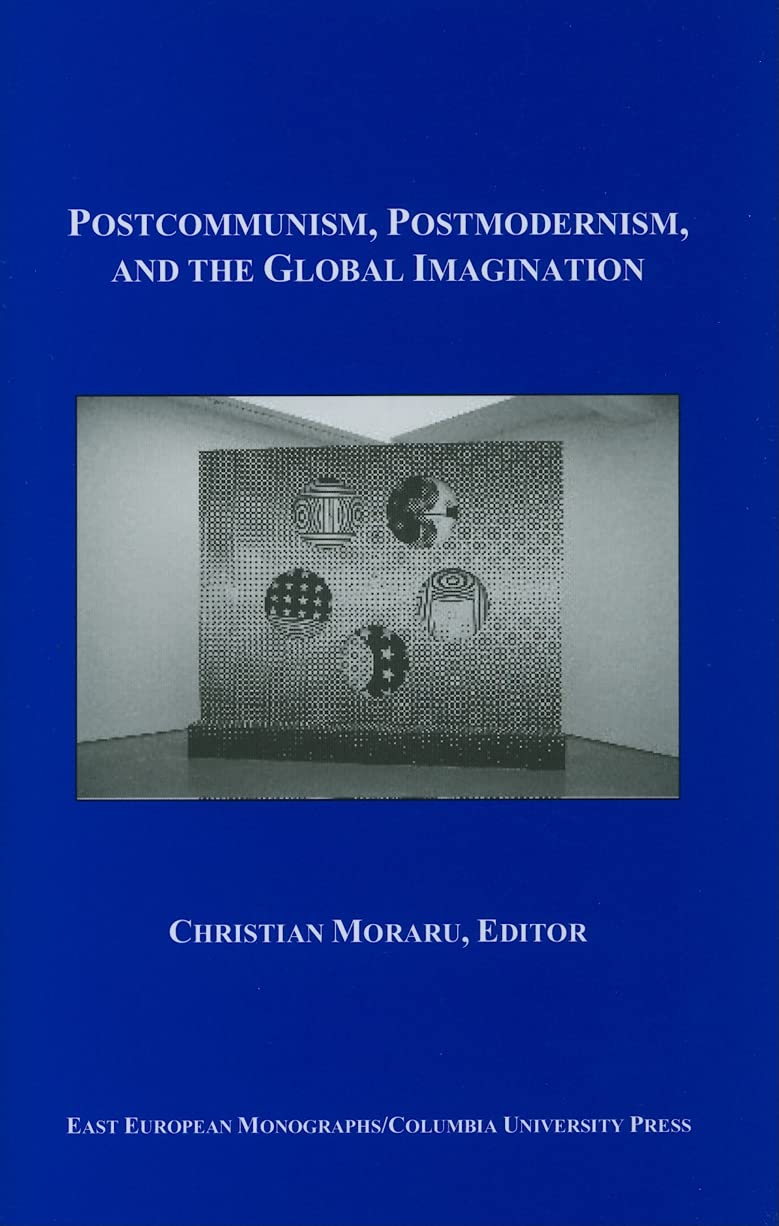
Christian Moraru is Class of 1949 Distinguished Professor in the Humanities and Professor of English at UNC Greensboro. He specializes in critical and New Materialist theory, contemporary American fiction, and comparative and World Literature, with emphasis on postmodernism and its post-Cold War successors. His recent publications include monographs such as Cosmodernism: American Narrative, Late Globalization, and the New Cultural Imaginary (2011), Reading for the Planet: Toward a Geomethodology (2015), and Flat Aesthetics: Twenty-First-Century American Fiction and the Making of the Contemporary (2023). He is the editor of Postcommunism, Postmodernism, and the Global Imagination (2009) and coeditor of The Planetary Turn: Relationality and Geoaesthetics in the Twenty-First Century (2015), Romanian Literature as World Literature (2018), Francophone Literature as World Literature (2020), Theory in the “Post” Era: A Vocabulary for the Twenty-First-Century Conceptual Commons (2022), The Bloomsbury Handbook of World Theory (2022), and the forthcoming Oxford Handbook of Postmodernisms.
Education
Ph.D. Double Ph.D. in English and Comparative Literature, Indiana Univ. Minor: Theory, 1998
M.A. English, Indiana Univ., 1996
M.A. Comparative Literature, Indiana Univ., 1995
B.A. Literary Studies/Romanian-Classics, Univ. of Bucharest, Romania, Diploma in Philology
(M.A.-equivalent). Minor: Latin, 1984
Teaching
Christian Moraru has taught at several universities. At UNCG, he offers regularly graduate courses such as English 740. Studies in Contemporary and Postmodern American Literature; English 704. Studies in Contemporary Literary and Cultural Theory; English 650. Modern Literary Theory; and English 549. The Critical Canon and Contemporary Issues. His undergraduate classes range from English 303. Critical Approaches to the Study of Literature to English 252. Major American Authors: Realist to Modern, English 208. Topics in Global Literature, and English 202. European Literary Classics: Enlightenment to Modern. He has directed Ph.D. dissertations and M.A. theses in his field since 2000.
What I Mean by Teaching: A Note on Pedagogy
RESEARCH, PUBLISHING, AND PROFESSIONAL DEVELOPMENT:
A Note on Teaching, Students, and Scholarship
In his undergraduate and graduate courses alike, Christian Moraru urges students to use the class to put their work in the larger, more demanding, and increasingly competitive perspective of professionalism and academic performance. In particular, his graduate offerings are systematically geared toward reading and writing carrying potential for publication and presentation outside UNCG. While fulfilling the course’s requirements remains the basic goal, students are invited to take these requirements as an opportunity to think about themselves as part of the broader academic community, with its standards, idioms, methods, tools, formats, resources, challenges, and venues. Along these lines, here are a few questions routinely raised in his classes: Where do I stand as a scholar, teacher, critic, and writer, and which are my goals? What do I need to do to get where I want to be as a well-published researcher? What is or will be my audience? In what kind of scholarly conversation do I wish to intervene based on what I learn here? What steps do I have to take to do that? What are the available resources and instruments? Which are the outlets for my work? What do I have to do to turn my course presentation/paper into a conference talk/journal article/dissertation chapter/writing sample?
Publications
Books



Events, Lectures, and Other Major Talks
- “Crises of the Universal in Anglophone Literatures and Criticism (19th-21st Centuries).” Conference, Université Sorbonne Nouvelle, Paris, France, March 30, 2023.
- “Comparative into World Literature: Scholarships and Politics in the Contemporary Era.” Lecture, Univ. of Alicante, Spain, June 14, 2022.
- “Post-Pandemic, Post-Postmodern: Emily St. John Mandel’s Station Eleven and the World on Display.” Lecture, Centre for the Study of the Modern Anglophone Novel, Babes-Bolyai Univ., Cluj, Romania, Oct. 16, 2021.
- “Object-Thinking and the Ontology of Translation.” Keynote, “A Translational Approach to National Cultures” International conference, Babes-Bolyai Univ., Cluj, Romania, Oct. 15, 2021.
- “Contracts of Spatiality after Postmodernism.” Lecture, Univ. of Tampere, Finland, May 15, 2019.
- “Literature, System, Power: Postmodernism and After.” Keynote address, Univ. of Pisa, Italy, Nov. 15, 2018.
- “Crossing the Kafka Network: Schulz, Blecher, Foer, and the Repositioning of the Human.” Lecture, Yale University, December 7, 2017.
- “Toward a New Geoliterary Order? A Critical Agenda for 21st-Century American Literature.” Lecture, Babes-Bolyai Univ., Cluj-Napoca, Romania, May 20, 2017.
- “Past, Present, History: The Meaning of the Contemporary in U. S. Literature and Culture.” Fulbright lecture, Lucian Blaga Univ. of Sibiu, May 5, 2015
- “Indisciplined Literature: Aesthetics and Critique after the ‘Waning of Affect.’” Keynote, Univ. of Bucharest, ALGCR Conference, July 11, 2014
- “The Planetary Remaking of Cultural Studies: Steps toward a Geomethodology.” Fulbright lecture, The Netherlands Research Institute for Literary Studies, Univ. of Amsterdam, the Netherlands, May 14, 2014
- “Post-Postmodernism?” Lecture, Petru Maior University, Targu-Mures, Romania, May 5, 2014
- “Reading with the Planet: Geocriticism and Mondialism.” ICLA/AILC Conference, Univ. of Paris IV, Sorbonne, July 20, 2013
- “Culture, Geopolitics, and Graduate Education in the Global Society.” Lecture, Transylvania Univ., Braşov, Romania, May 2, 2013
- “Intertextuality sans frontières? Cultural Memory after Postmodernism.” The Association for the Study of the Arts of the Present Conference, The Royal College of Art, London, UK, October 4, 2012
- “Culture in the Plural or, Cultural Studies after 9/11.” Univ. of Freiburg, Germany, July 19, 2012
- “Don DeLillo, American Literature, and the Post-Cold War World-System.” Lecture, University of Maryland, September 9, 2011
- “Horizontal Tradition.” Keynote presentation, International Conference on Narrative, Washington Univ. in St. Louis, April9, 2011
- “Ganga, Ganguli, Gogol: Jhumpa Lahiri’s Onomastic Narrative.” Paper, MLA Convention, L.A., Jan. 8, 2011
- “Raymond Federman: Origin, Originality, History.” Paper, MLA Convention, L.A., Jan. 7, 2011
- “Colloquiality, Collegiality, Dialogism: Renewing the Case for Comparative Studies.” Paper, SCLA Conference, Baton Rouge, LA, October 23, 2010
- “Copyrights, Copycat, and the Aura of Reproduction: A Look at Recent American Fiction.” Lecture, University of Freiburg, May 15, 2007
- “Legitimate Issues: Culture and Authority in the Age of ‘Global Debt.’” Keynote, “Legitimating Cultures, Cultures of Legitimacy: An International Conference.” Univ. of Bucharest, Nov. 23, 2006
- “Cultural Studies Now? Cultural Studies Now!” Lecture, American Studies Center, Univ. of Bucharest, Nov. 22, 2006
- “Roots, Rhizomes, and the Rebirth of Comparison: American Studies after Cosmodernism.” Lecture, American Studies Center, Univ. of Bucharest, Nov. 28, 2005
- “Globalism, Culture, and the New Proximity: Self, Other, and the Ethics of Collegiality.” Lecture, UNCG Romance Languages, November 18, 2005
- “Mistifiction: Mistranslation, Mistification, and Metafiction in the Age of Global Transactions.” Paper, the “Translation, Pillage, and Mystification” Conference, Université de Paris VIII, March 19, 2005