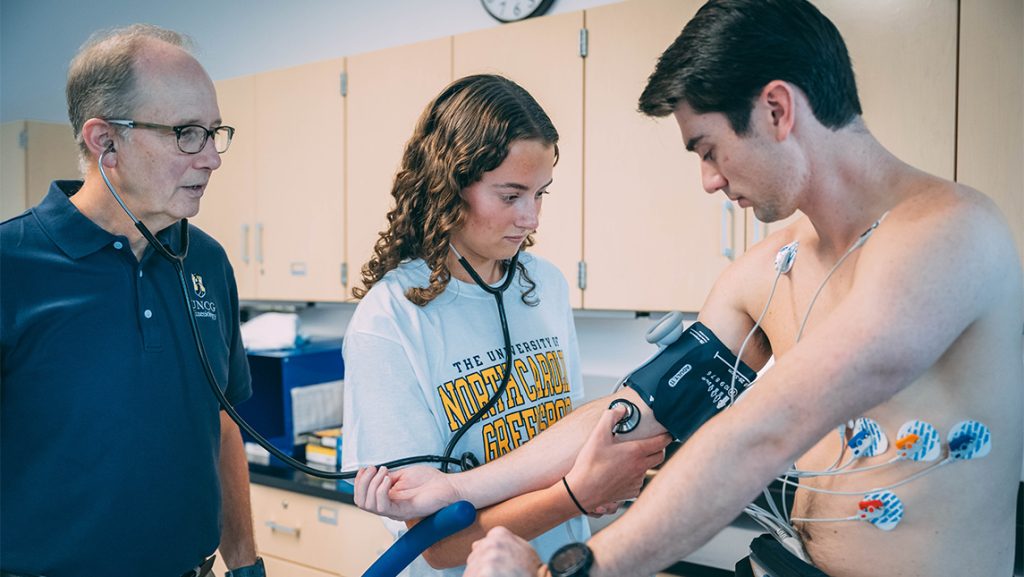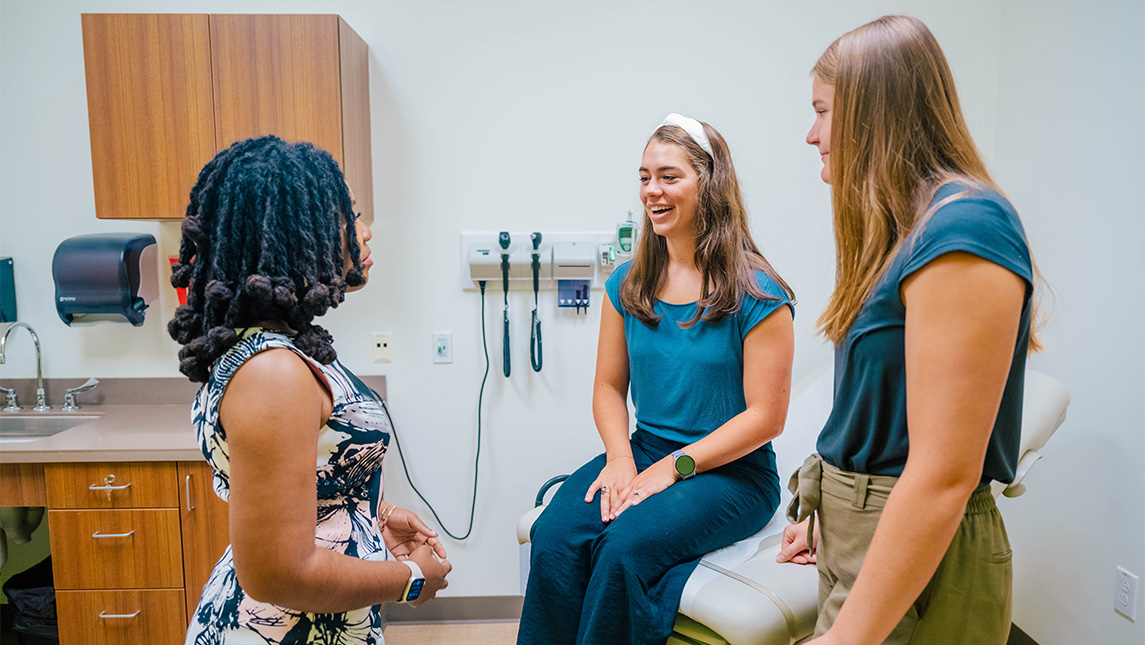
On their first day of class at UNC Greensboro, students in the School of Health and Human Sciences (HHS) bring a passion for enhancing the quality of life in individuals and throughout communities.
But once classes begin, they often discover the umbrella of health and wellness is bigger than they thought.
This is the busiest time of the semester for the advising team—four advisors, three graduate assistant academic coaches, and a full-time lecturer—helping students plot their next steps in Spring 2026.
“We always tell new students at SOAR, ‘We’re your GPS. We’re your partner in getting you where you want to go,'” says Director of Advising Erin Fox ’02, ’07 M.Ed.


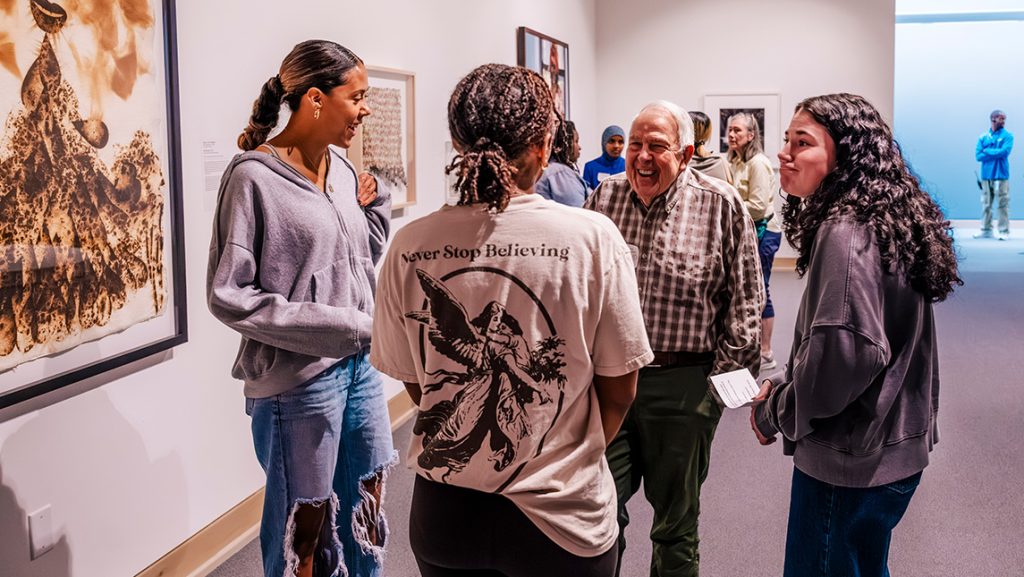
And the places HHS students want to go are as varied as the departments housed within the School.
“We have a wealth of programs,” says Fox, “From the very clinical—kinesiology and communication sciences and disorders—to community wellness—social work and peace and conflict studies.”
So, as students learn more, how do they know they’re on the right path? Fox lays out how her team makes every semester count for students along the way to their dream careers.
‘I want to work in health care, but where?‘
Not every student knows exactly what to do in their first semester. Health care is such a big field that it’s worth taking a little time to look at all the options.
The HHS advising office works closely with UNCG’s Students First Office, which covers exploratory majors. Assistant Director Megan Cayton coordinates—and all the advising staff help teach—the Minerva’s Academic Curriculum Foundations class “Design your Life III: Enhancing Personal and Academic Success 3 (HHS 150).”
“It’s open to any student,” Fox explains. “It is about finding your purpose, defining values, and exploring academic and career pathways through the lens of individual strengths and gifts.”
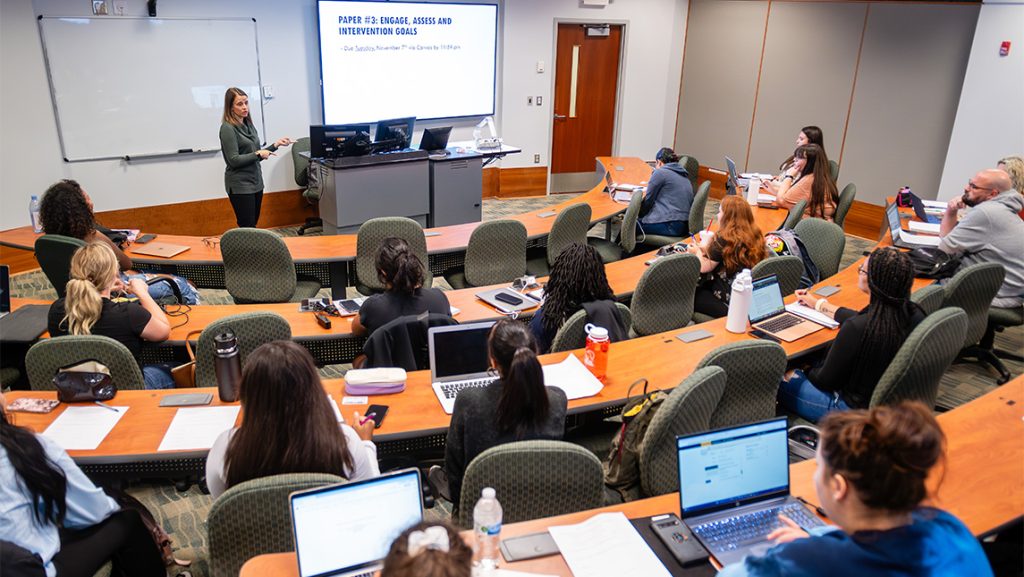
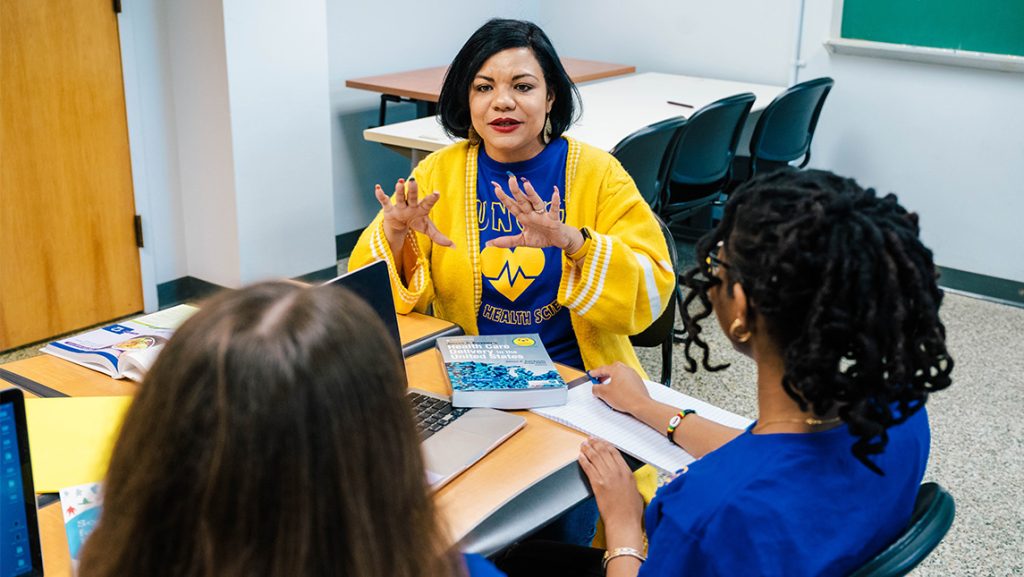

The School also has a degree that gives students a taste of all its health-oriented programs. Human Health Sciences (HHSci) gives them foundational skills for many entry-level health care jobs or for applying to a graduate program.
“HHSci encompasses two pathways,” says Fox. “It gives students on a pre-med, pre-dental, pre-occupational or physical therapy track a chance to focus on interprofessional education and practice. But it’s also for the student still deciding, who feels that ‘I want to do health care work, but I’m not sure how it will look.'”
As part of HHSci, students rotate through all the HHS disciplines. For many who are still undecided, all it takes is one class or a relationship with one professor to trigger that light bulb moment.
“We also talk a lot with students about what populations they want to work with,” Fox says. “Where do they see themselves? A clinical setting, community space, or a not-for-profit? We help them compare programs that fit their goals. Not just in HHS, but across the University.”
Thriving in HHS
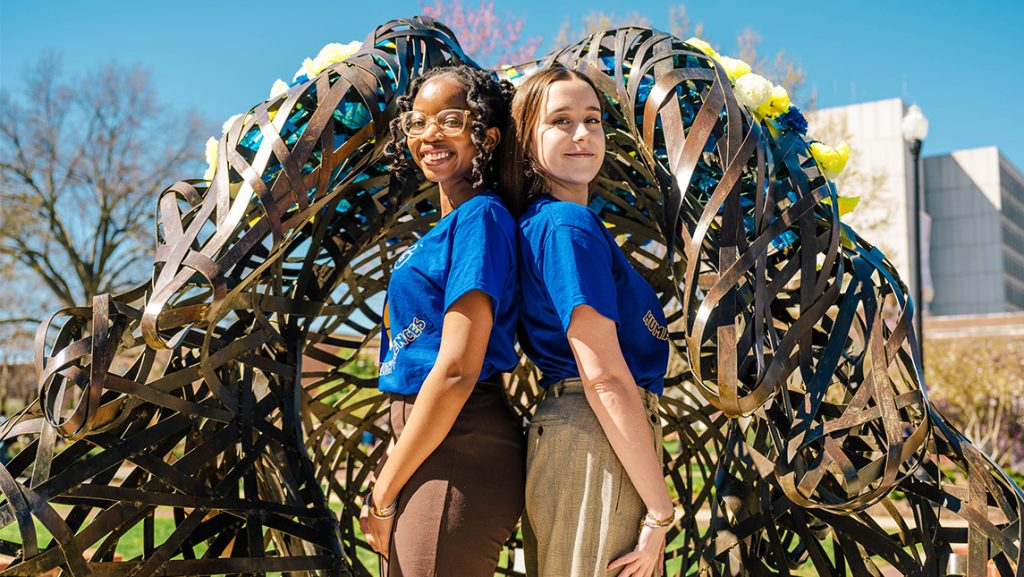
Meet Mary Blake Murphy and Yawa Eklou, among the first to enroll in the HHSci program…
And Jason Baity ’15, whose search for a new career led to a gift for delivering life-changing prosthetics.
‘I know what I want to do! How do I get started?‘
Some students show up ready to jump in with both feet. They know their dream profession, and they are confident about where their strengths lie. They just need the right classes, the right internships, and the best research and volunteer opportunities to prove themselves to a prospective employer.
Even the most committed student can be surprised at what they find. No degree can be attained solely with general education courses and a single major’s requirements. That road to 120 credit hours creates opportunities for advisors to tell them about classes that broaden their focus.


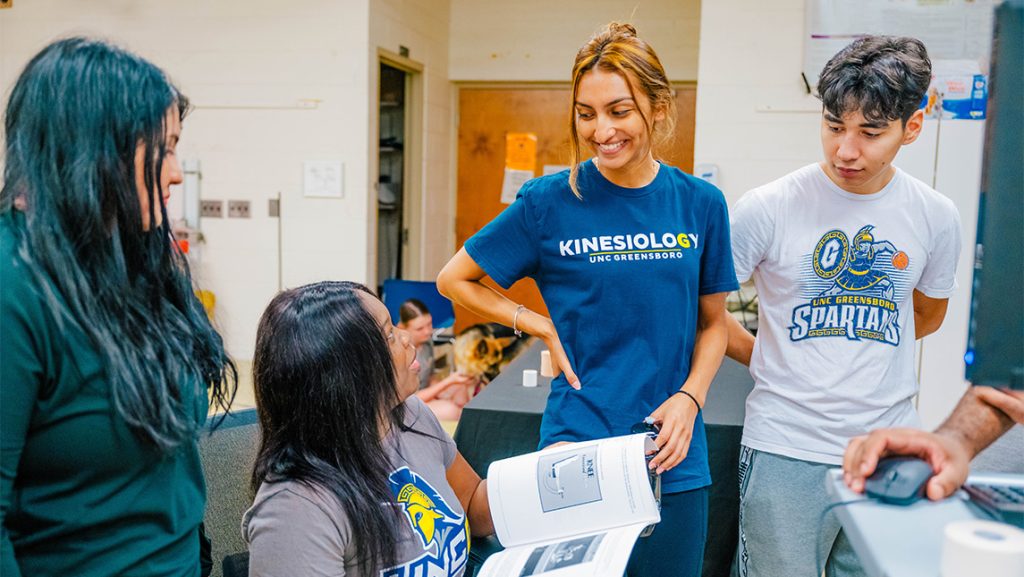
“Then, we’ll talk to them about working in a study abroad program, or adding a minor working with a specific population,” says Fox. “For example, a lot of our students are interested in the ‘Spanish for health care program’ in the College of Arts and Sciences, given the needs of our surrounding community.”
And, of course, they make sure they get their real-world experience. “Every program in HHS includes some sort of practicum or internship or field placement,” says Fox. “We make sure they’re marketable in that health care field or ready to go on to that professional program or graduate study.”
She’s always excited to open the most dedicated students to new experiences they never expected.
Thriving in HHS
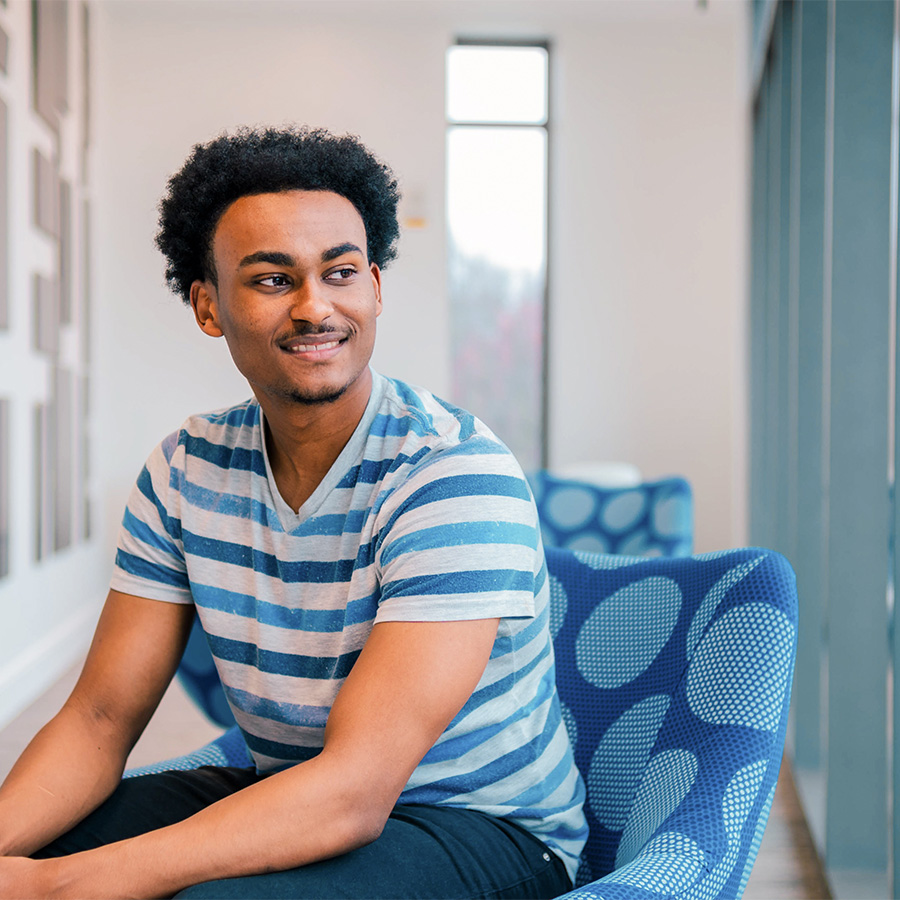
Meet Malcolm Johnson, already fulfilling his dream of empowering students and communities…
And Omar Sufian, whose personal experience with civil war led him into peace and conflict studies with a heart for change.
‘I’m changing my major. Do I have to start over?‘
It’s quite normal for a student to realize the major they picked is not what they want. “Even our students who come in with a strong passion may, for whatever reason, find that another pathway is a better fit,” says Fox.
For example, she says, it’s not unusual for a student who did not make it into the nursing program to discover new opportunities in HHS. “We will frequently have a student who starts in kinesiology but then wants to try out social work. Or they start in social work and then they find a real passion for nutrition. Or they want to add a minor.”
They’re excited to discover their true calling, but they dread the thought of starting over, but advisors can help them figure out how their completed credits fit with their new major.
Fox says the HHS advisors will talk with them about the potential career paths in a field or connect them with the program director. They also advise students on how to use the Degree Works platform and map out their options.
“Degree Works has a feature that we use a lot called ‘What If?'” she explains. “We can sit down with the student and say, ‘Okay, you’ve been on that path in this other program. What if you’re converting from nursing to the HHSci major?'” With that tool, students can see how the courses they completed map onto the requirements of the new major, and what is left.
“Most of the time, they’re farther along than they realize,” she says.


Fox can relate to this feeling. As a double alumna of UNCG, now working toward her doctoral degree, she learned a lot about health care only after enrolling.
“I found human development and family studies in my sophomore year,” she says. “Before college, I didn’t even know that was an area of study. I just fell in love with development theory, which fits with my love of college student development and supporting the ways that we connect in our communities.”
The ultimate gift that advisors bring students is the ability to see what’s happening one, two, or seven semesters later, and make sure they have access to every opportunity from Day 1 to graduation.
“The nicest thing is helping our students find that there are so many ways to help people,” says Fox.

Thriving in HHS
Meet Kaitlyn Shelton ’24, a student who kept an open mind and found her calling…
And three community and therapeutic recreation alumnae now filling wellness gaps at home.
Story by Janet Imrick, University Communications
Photography by Sean Norona, David Lee Row, and Grant Evan Gilliard, University Communications