“How would you like your mom or dad or your grandma or grandpa to be treated?”
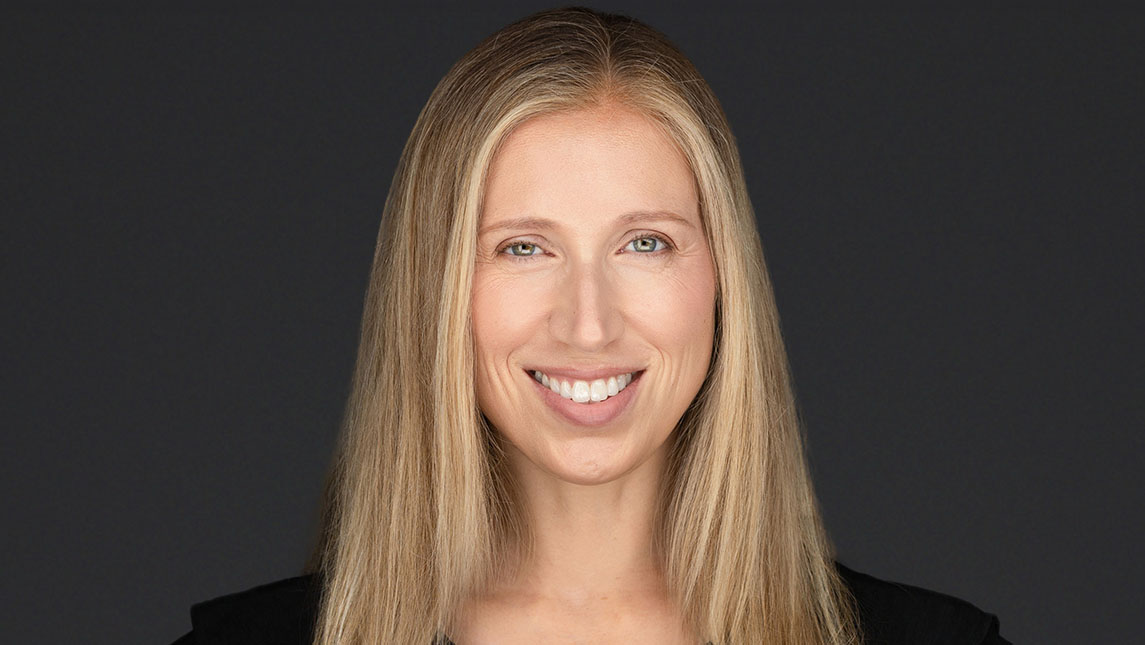
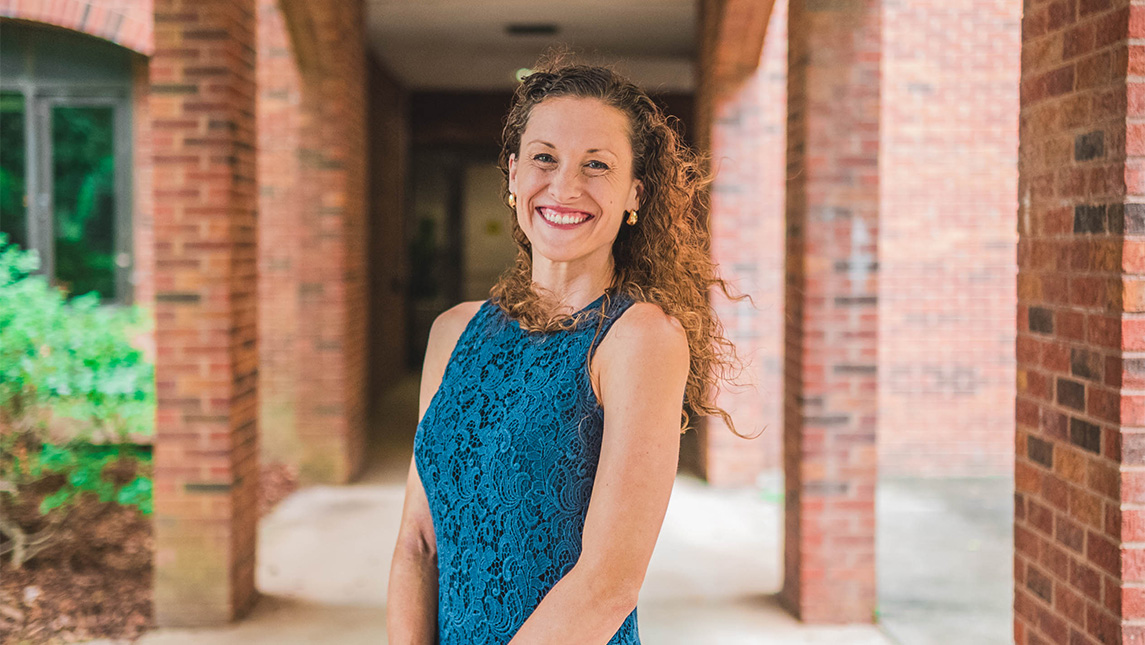
That question summarizes the ideology of Hope Niedrich, who just defended her capstone project before the faculty in UNC Greensboro’s gerontology program. That research, she hopes, will improve care for aging populations, whether they’re in her care or with another professional or family caregiver.
“Hopefully, we can all show up and treat these people like we would want the adults in our lives to be treated,” she says.
Personal and professional experiences drew Niedrich to UNCG’s master’s program in gerontology, so that she can be the one who shows up in someone’s final days. For her capstone, she created educational guides for volunteers to bridge cultural and religious differences and ensure end-of-life patients receive the utmost comfort and dignity.
Path from personal caregiver to professional caregiver
Niedrich’s interest in healthcare began with the untimely loss of her brother. The dedication of the practitioners who supported him and her family helped her navigate that trying time.
“We had some real rock star healthcare professionals through that experience,” she says. “I was really inspired and moved by them.”
After earning a bachelor of social work from Appalachian State University, she went into the caregiving sector. She was an activity director for a memory care center in Raleigh, then worked for in-home care company Arosa in Greensboro. Interacting with older patients, she found, was most fulfilling.
Then another personal experience affirmed her calling.
Niedrich and her sister, a registered nurse, became their father’s power of attorney when he was diagnosed with early-onset Alzheimer’s. They had to quickly learn how to make decisions on his behalf: health, legal, and financial. Niedrich saw how her schooling had prepared her to be his voice.
“With my undergraduate in social work, and my sister as an RN, we were really able to advocate for my dad,” she says.
That convinced her to continue her education and focus fully on gerontology. “The graduate program kind of ties a bow around all my different experiences,” she says.
Flexible graduate program opens educational doors
Niedrich chose UNCG because it offered one of two accredited gerontology programs on the East Coast. As an online program, it also offered her flexibility.
“The people in my online classes are from all over the country,” she says. “We’re not 18-year-old undergrads. A lot of us have children. We’ve got bills to pay. And we’re working in conjunction with pursuing this degree. So, it’s very self-paced. I can get off work at 10 o’clock at night and come home to write a paper.”
During the program, Niedrich drew a parallel between newborns and how easily family and friends surround them with support and comfort. But even as more Americans find themselves acting as caregivers for a parent or other relative, aging adult care has become more “medicalized” and risks becoming sterile and dispassionate.
“Older adults are oftentimes tucked away and forgotten in facilities,” she says. “I hope to inspire people that work with older people to always approach their work with empathy and respect.”
UNCG faculty like Dr. Elise Eifert, the program director, and Dr. Chantelle Caro, her faculty advisor, impressed upon her how aging adult care should be a holistic service. They call it the “biopsychosocial perspective” of gerontology.
“People don’t like to talk about getting older; they definitely don’t like to talk about dying,” she says. “But the guarantees in life are getting older and passing away. Hopefully, I can reduce the stigma around it, just by having conversations with people.”
Niedrich did a lot of talking and even more listening, broaching complicated topics with people who wanted to spend the time they have left sharing their wisdom.
Guides to a journey’s end

For her capstone, Niedrich focused on religious and spiritual beliefs about life and death. She spent this summer shadowing the staff and chaplains at Hospice of the Piedmont.
They told her they wanted more guidance for volunteers to connect with the patients. They wanted more resources for promoting cultural and religious sensitivity.
She designed three educational materials for the hospice. The “Volunteer Cultural Sensitivity Guide” briefly explains different religions’ approach to death. Volunteers can use it to know which questions to ask and how to avoid trite, insensitive comments. It contains a checklist of various cultural expectations on religious practices, modesty, and family decision-making.
It assures volunteers that they don’t need to memorize every cultural belief. Providing a calming presence with humility, respect, and listening, it states, will go toward the family’s peace of mind.
She designed the other two materials, “Spiritual Legacy Reflection” and “Playlist of Your Life,” for volunteers as well as patients, their relatives, and caregivers. “Reflection” gives prompts for conversation, such as “Are there people you would like to thank, forgive, and connect with?” and “How would you like to be remembered?”
“Playlist” lets them write out nostalgic songs — lullabies, music from their wedding, favorite tunes by decade — to focus on good memories.
Most importantly, her research came from the patients themselves. Niedrich sat with them and listened to them talk about their beliefs, favorite hymns, and pride in a life well-lived. “I was most moved by the peace and acceptance shared by these patients despite also feeling some uncertainty or still having questions about death,” she says.
May I walk you home?
With graduation coming up this fall, Niedrich shares her gratitude for Eifert, Caro, Hospice of the Piedmont, and the rest of UNCG’s gerontology program. She feels prepared to be others’ “rock star” professional, preferably by starting a career in a hospice organization or another long-term care center. Just like those who supported her family, she wants to inspire more individualized, person-centered care.
She refers to a quote by the famous American guru Ram Dass that has served as her guiding star: “We’re all just walking each other home.”
“Entering the world and leaving the world, I believe, are dignified moments of the human experience and moments to be celebrated,” she says. “While death is emotional and sad for many, it too can be a moment of reflection and celebration of who that person was and everything they meant to us.”
Story by Janet Imrick, University Communications
Photography by Sean Norona, University Communications