Five hundred. 1973. One half.
What do those numbers have to do with bees?
Five hundred is the number of bee species native to North Carolina. (Ironically, the honeybee is not one of them. They immigrated from Europe.)
1973is when North Carolina officially named the honeybee its state insect.
One half is how many human-managed beehives North Carolina lost last year.
Numbers like these stir Dr. Kaira Wagoner ’11, ’15 Ph.D., director of the UNCG Plant and Pollinator Center (PPC), to action.
“You can ask any bee researcher or butterfly advocate, ‘What do pollinators need?'” she says. “It always comes down to habitat. A habitat free of pesticides and with the right plants.”
She is improving those habitats now thanks to partnerships at UNC Greensboro and community events.
Three Tiers of a Pollination-Friendly Campaign
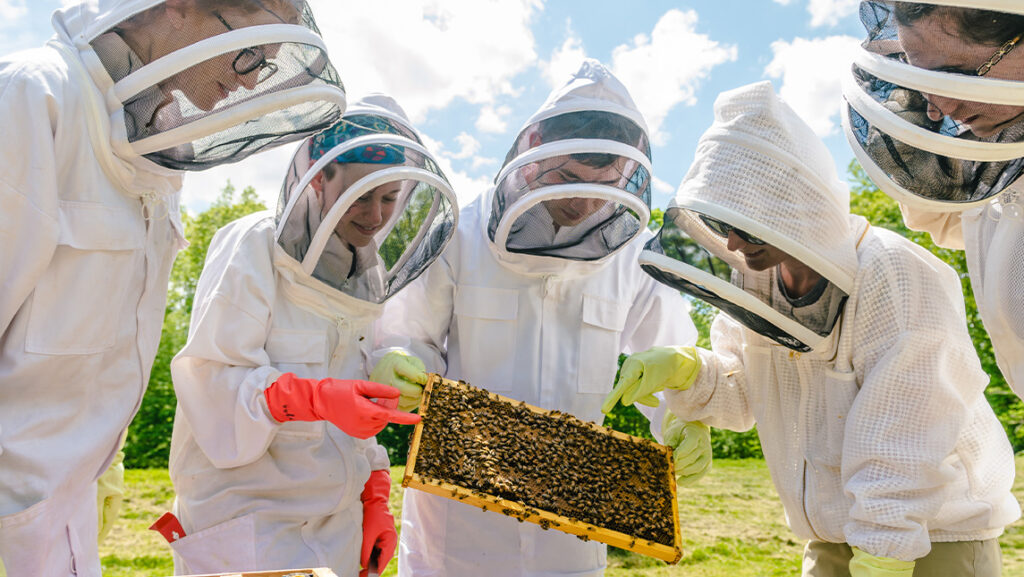
Wagoner is a bee researcher with deep roots at UNCG. Her University spin-out company Optera offers pheromone-based sprays for beekeepers. They use these to measure their bees’ pest and disease resistance — critical knowledge for breeding, given that mite infestations and viral infections are behind the majority of the state’s colony losses.
After earning her master of science in biology and her doctorate in environmental health science at UNCG, Wagoner brought the Bee Campus USA program to campus as a research scientist. This year, she was named director of the PPC in Browns Summit, NC.
Wagoner is committed to growing the PPC with a three-tiered vision.
The first tier is expansion of its research program. This emphasizes innovations similar to the UBeeO spray from Optera. “Focusing on research and innovation makes UNCG’s Plant & Pollinator Center attractive to world-class professors and students interested in studying pollination,” she says.
Workshops and Field Trips for Students of All Ages
Second, she is working to expand pollinator-focused education and outreach. This includes engaging students, staff, and faculty in the Bee Campus program. She encourages UNCG professors to weave more pollinator-themed content into their curricula.
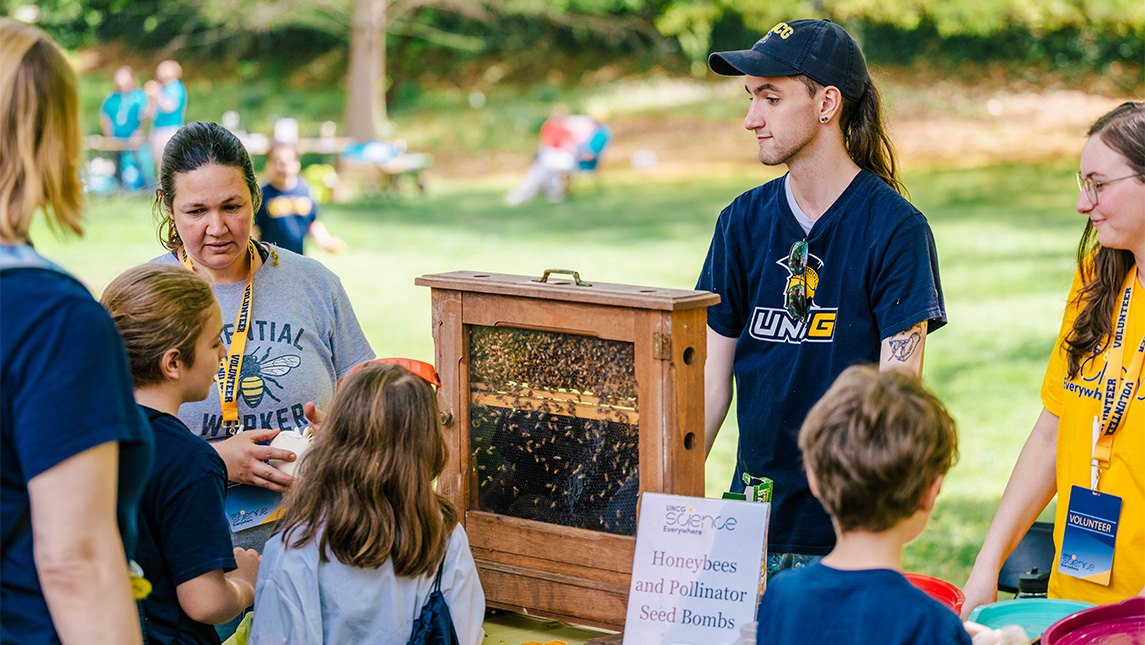
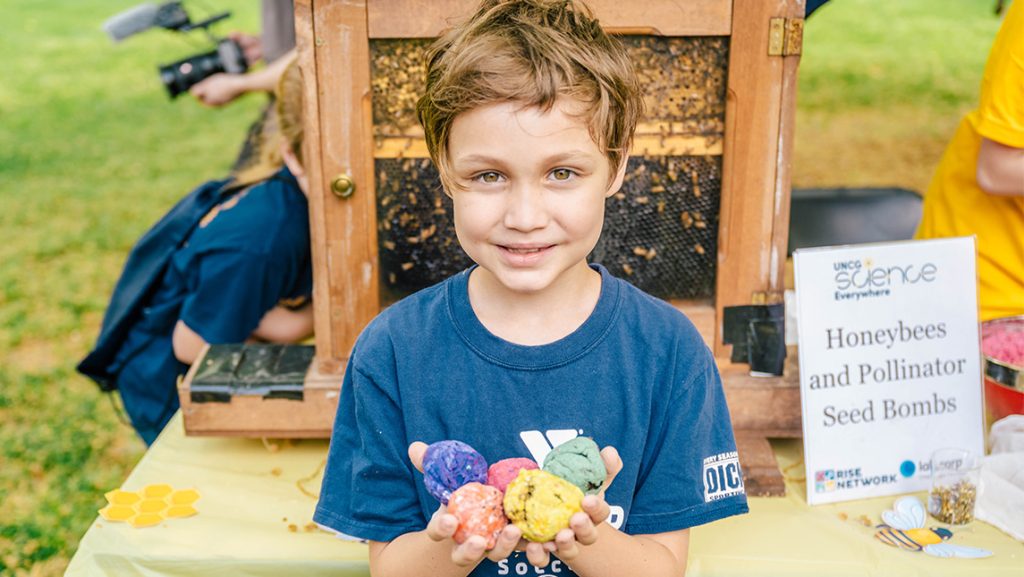
Wagoner created more community events to introduce people to the many ways bees are integral to the world around us. At the annual Science Everywhere festival on April 11, children played a game of “Find the queen” with a live bee observation hive from PPC. Center personnel showed them how to make “seed bombs” to throw onto the ground at home and grow a tiny pollinator-friendly garden.
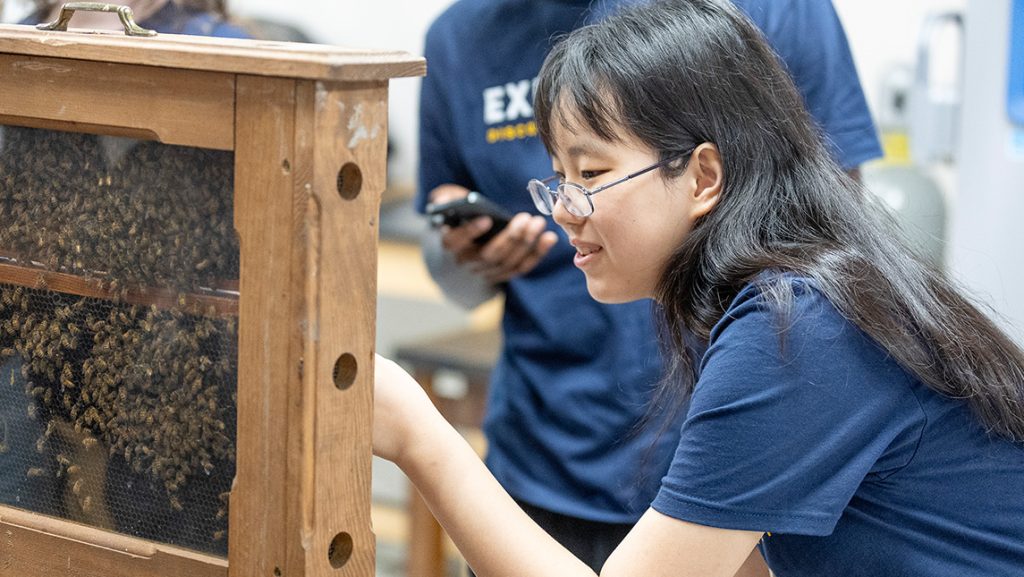
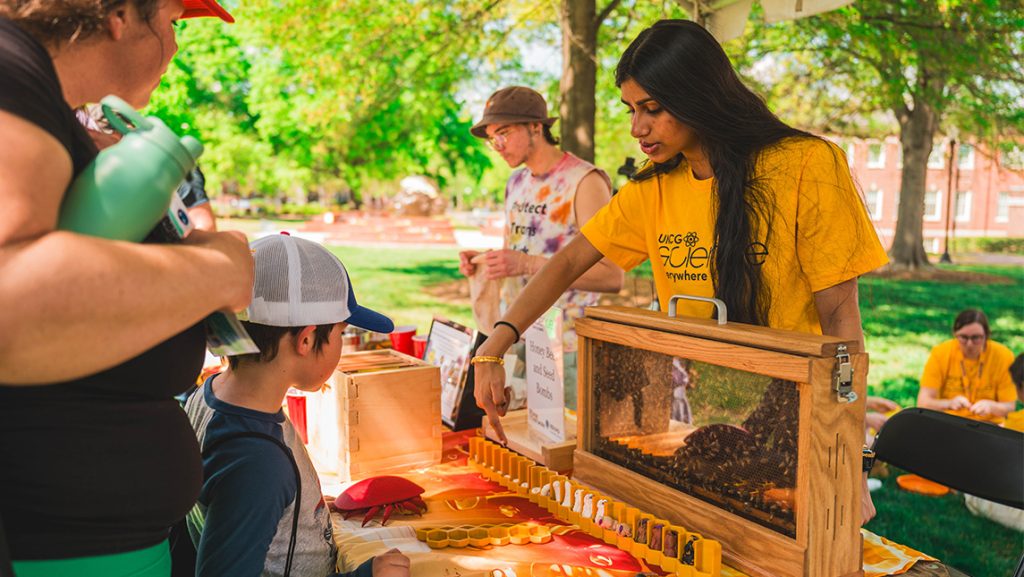
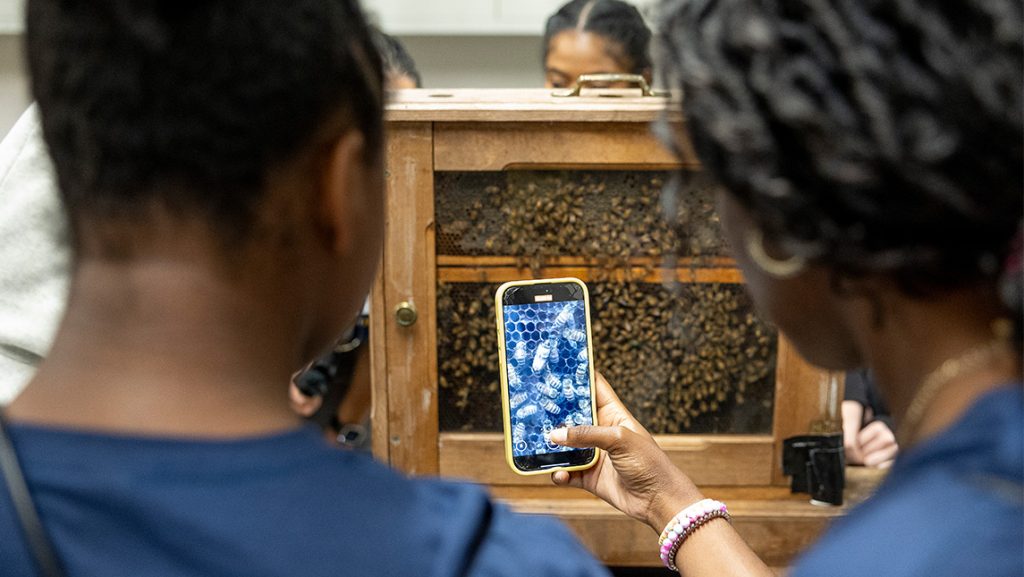
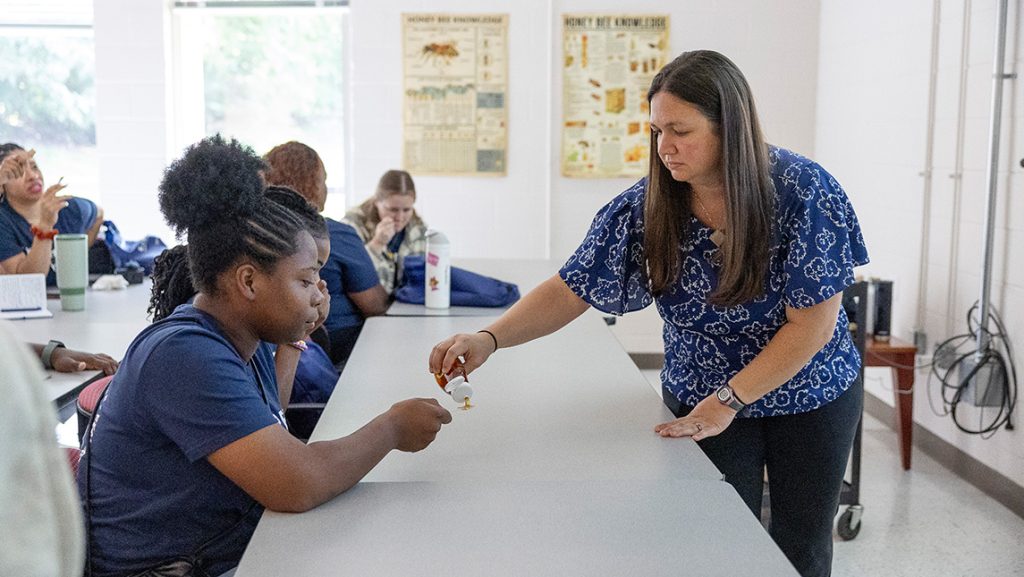
Wagoner and her team have brought their research to children of all ages: observation hive visits to preschool and elementary schools, STEAM workshops at middle schools, and field trips to the PPC laboratories for high school students. They hosted a mini workshop on sustainable insect and pest management at the Earth Day Celebration in Keeley Park.
They have more events this spring and summer to get the next generation involved in protecting pollinators:
- April 25: Earth Day at Keeley Park
- April 27: Canterbury Preschool classroom visit
- May 20: 2nd Grade field trip to the PPC
- June 25: STEAM Middle School Girls Camp
- July 21: ExPlorers Camp for high school students
Art Students Demonstrate New Places to Spark Pollination Passion
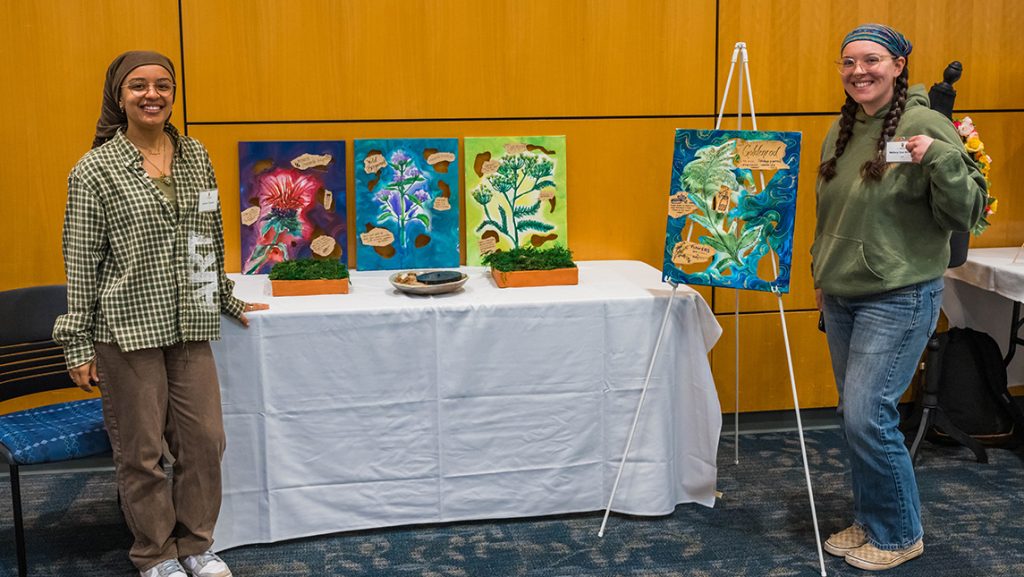
Mallory Cox-Shreffler and Aminah Coppage are prime examples of how Wagoner’s efforts have brought a diversity of programs into pollinator education. These two art majors made a bee fountain for the College of Visual and Performing Arts’ (CVPA) pollination garden, which was started by UNCG Faculty Lecturer Tara Webb. Cox-Shreffler says she learned about Bee Campus through the garden.

“We have gotten our natural wildlife habitat certification,” Cox-Shreffler said of the CVPA garden. “I made and engraved a ceramic basin using clay from UNCG’s backyard. The creek has plenty of yellow clay to spare.”
Cox-Shreffler and Coppage presented their projects at the Thomas and Carol Norwood Undergraduate Research Expo and to the T. Gilbert Pearson Audubon Society. Cox-Shreffler hopes she helped set up Bee Campus for future success after she graduates this May.
“I would say I had intermediate levels of knowledge when it came to gardening, pollinators, and impacts on the environment,” she says. “It has grown immensely since being involved in the Bee Campus. I now know a lot more about nutrients in the soils, ways to go about making natural medicines and dyes, as well as being able to identify plenty more plant and insect species.”
Webb and Leah Sobsey started the garden in Peabody Park in 2022, which grew through the Bee Campus program. In the past year, they’ve expanded its footprint and added new plants, working with the Peabody Park Association and Agriculture Extension Agency to fill it with native plants.
Practicing What She Teaches, Making UNCG More Bee Friendly
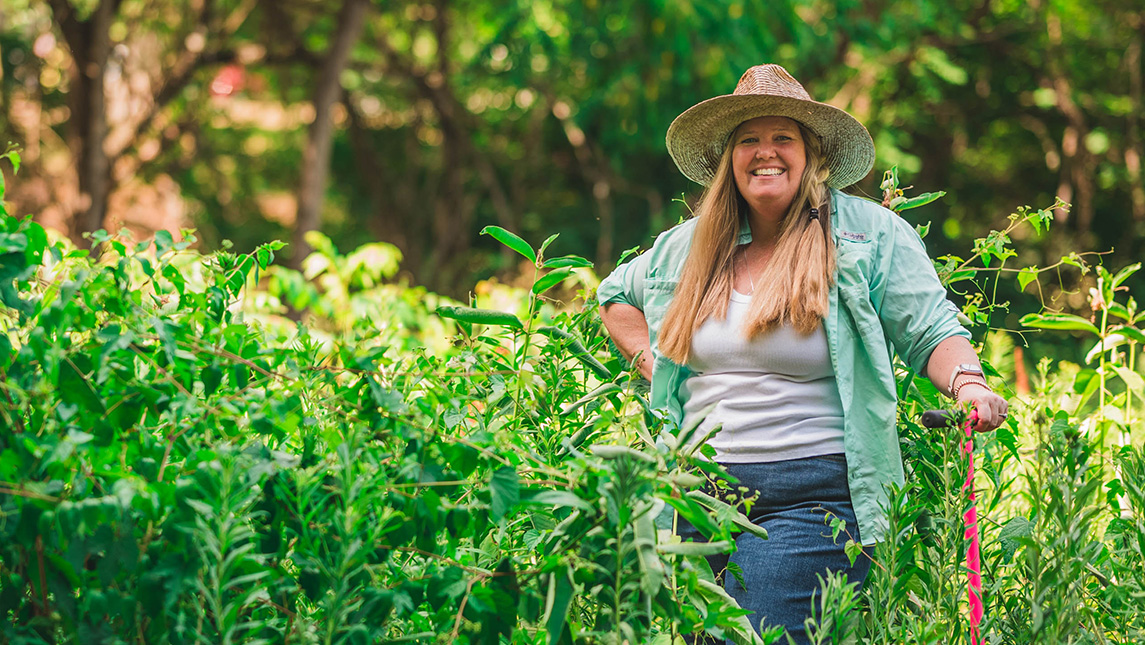
The third tier of Wagoner’s efforts is conservation and habitat creation. That’s happening on UNCG’s main campus and its satellite sites on Greensboro’s Northridge Street and in Browns Summit. “We’re up to five pollinator gardens now that we have either planted, seeded, or expanded in the last year,” she says.
She also wants to increase the amount of pesticide-free forage to ensure bees thrive everywhere at UNCG. She works with her postdoc, Arjun Khadka, and Assistant Director of Grounds, Kevin Siler, to implement an integrated pest management (IPM) plan that protects them.
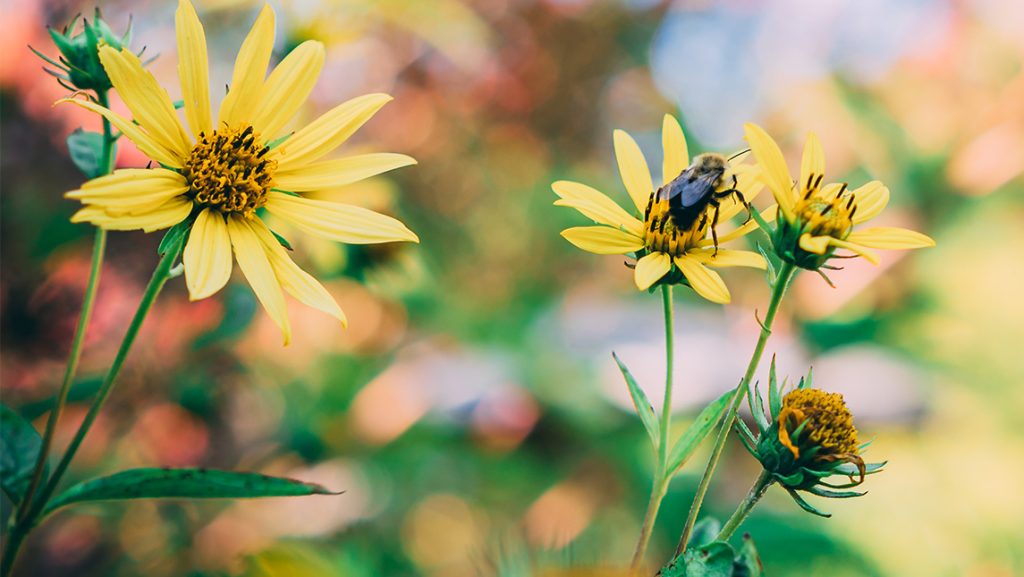
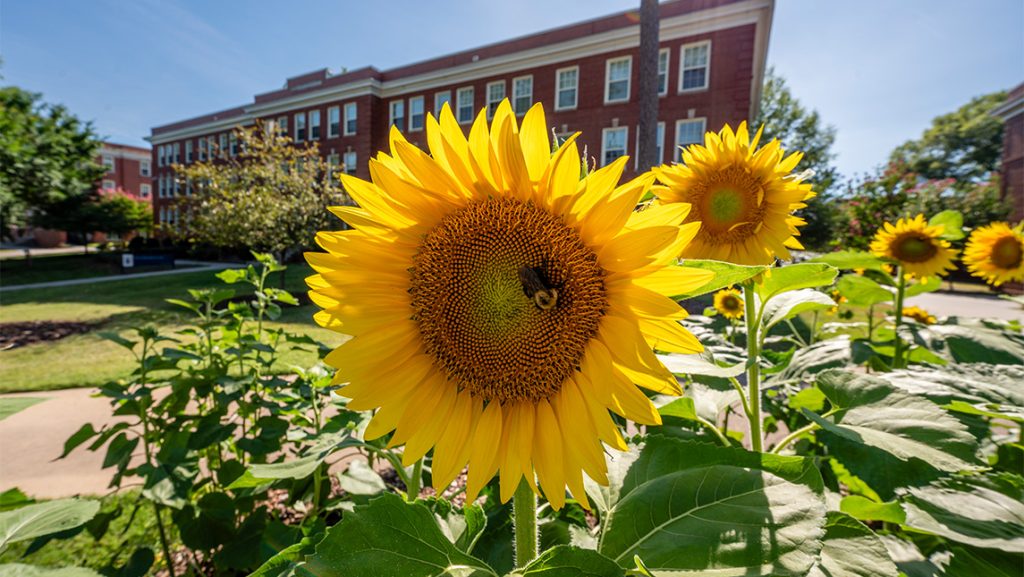
She’s excited to add more positive numbers to the state’s bee stats. Last year, Bee Campus participated in the Great Southeast Pollinator Census, which saw an increase in pollinator activity. They’ll do it again this year, on Aug. 21-22.
“One thing I really love about pollinators is that a lot of people from different backgrounds get excited by them,” says Wagoner. “And folks are generally happy to volunteer to help support pollinators, so we really have a great opportunity to involve and engage any department on campus in some way.”
Story by Janet Imrick, University Communications
Photography by Sean Norona, University Communications; Bert VanderVeen, VanderVeen Photography; and Mallory Cox-Shreffler, College of Visual and Performing Arts