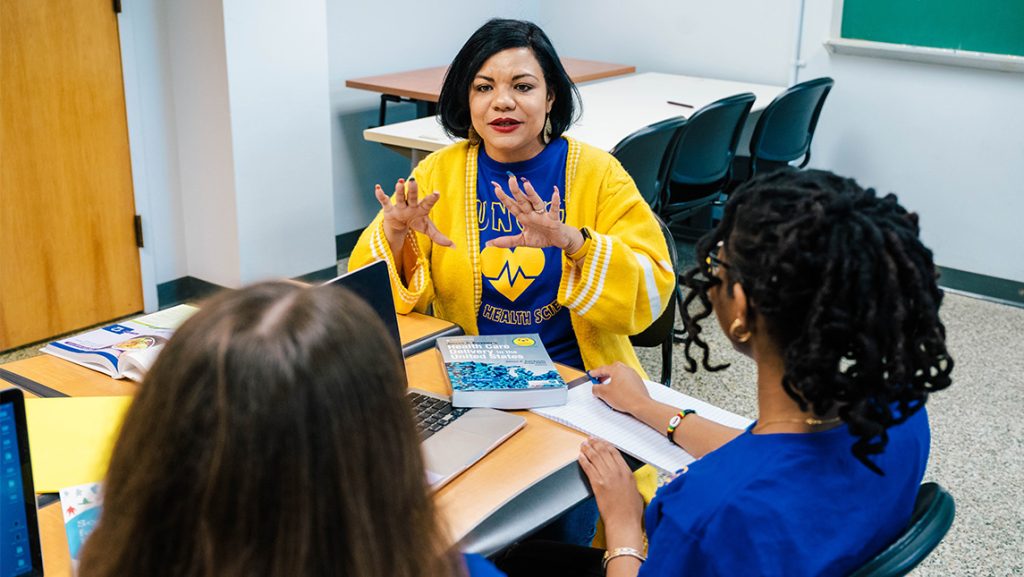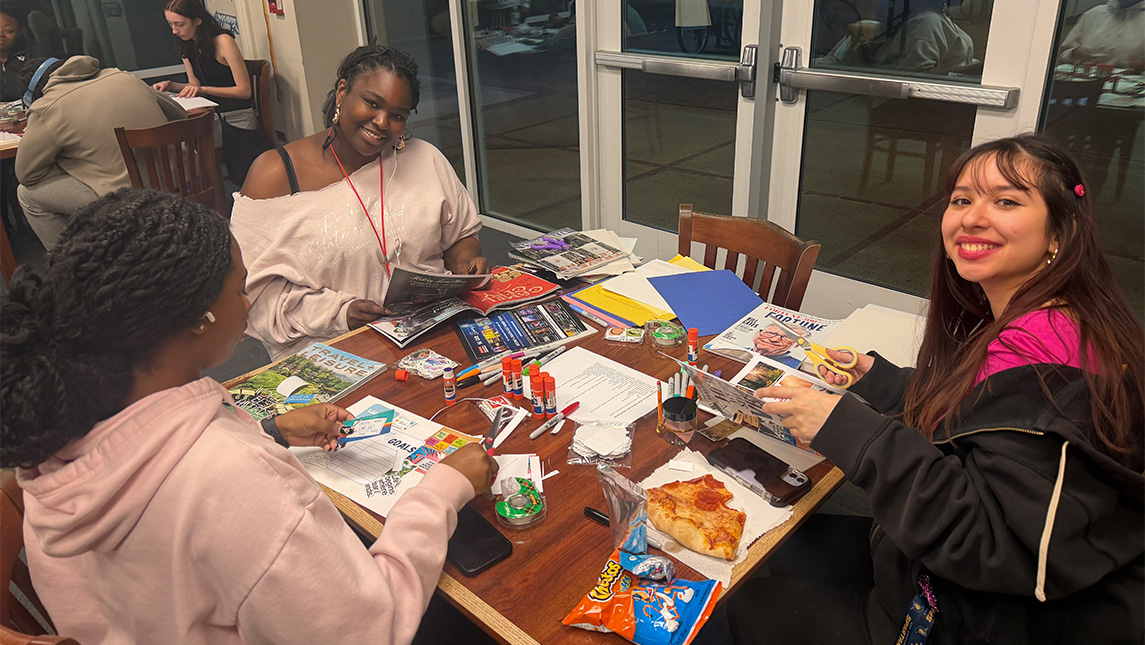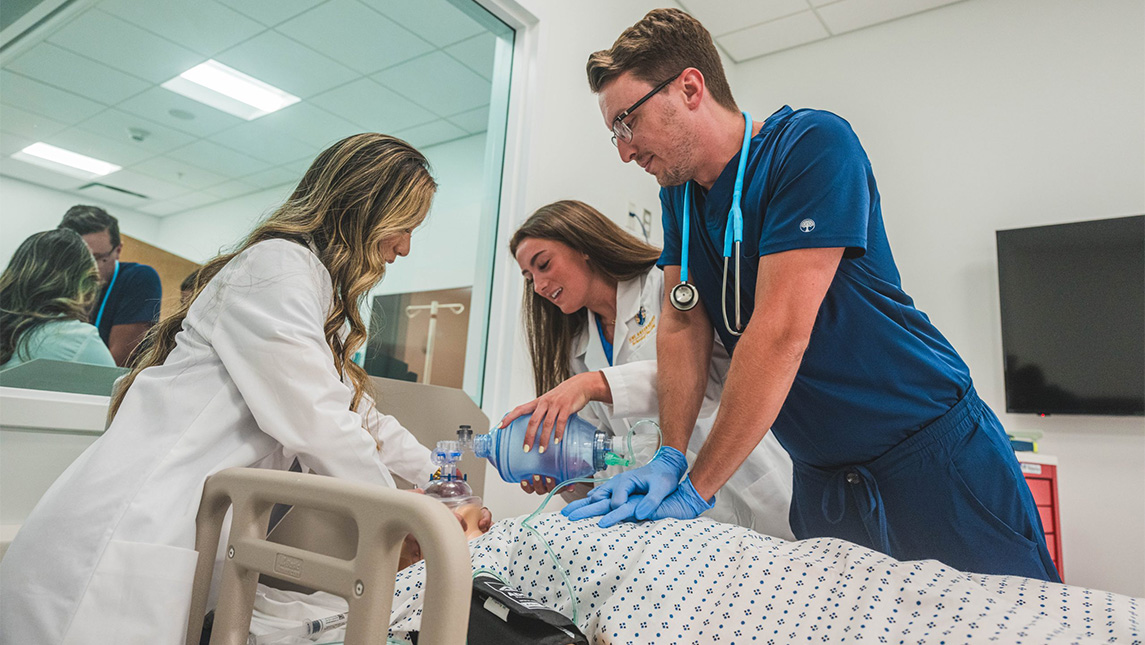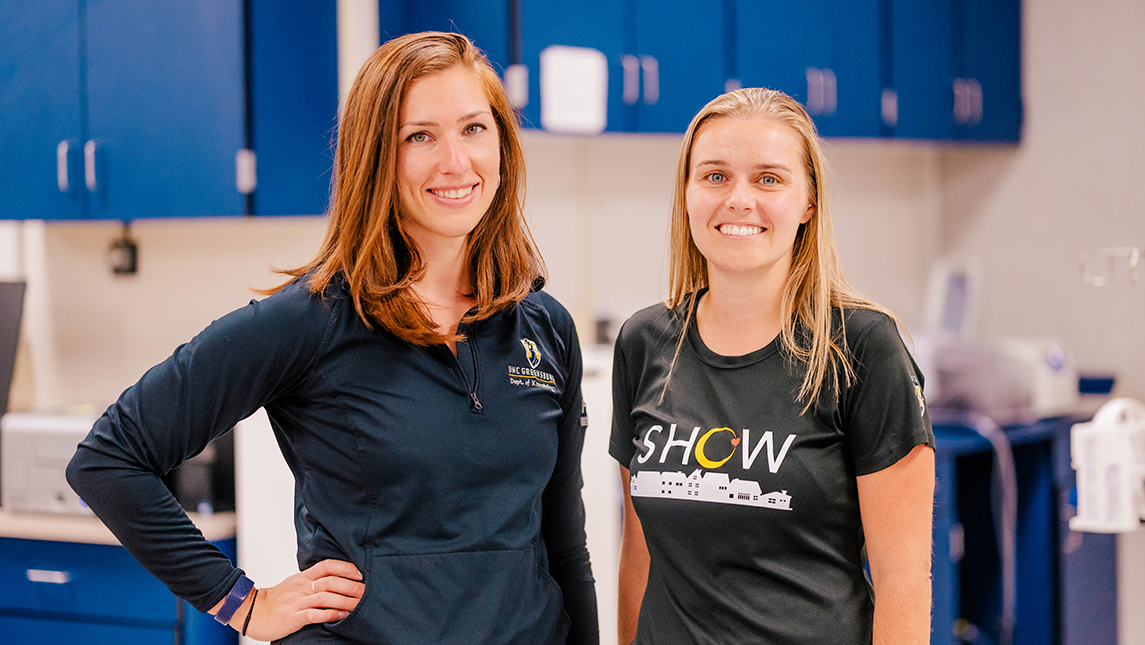
Dr. Laurie Wideman, Safrit-Ennis Distinguished Professor of Kinesiology, knows how much time, energy, and money goes into recruiting faculty members at UNC Greensboro. She believes those same resources should go into keeping them. At the School of Health and Human Sciences, that’s where mentoring comes in.
“The way that you keep them here is by helping them be successful,” says Wideman.
The Department of Kinesiology and Department of Human Development and Family Studies have intentionally developed a program to ensure faculty mentoring for the success and retention of junior faculty.
Early support leads to early success
When Assistant Professor of Kinesiology Jessica McNeil was hired in January 2021, Wideman eagerly agreed to mentor her. They were both Canadian and likely to collaborate because of their complementary research areas. The match made sense.
Just as McNeil was getting settled, she became Hannah Koch’s primary doctoral adviser. With the guidance of Wideman, they were able to navigate some of the ins and outs together.
When there was a grant call from the National Institutes of Health about McNeil’s area of expertise, sleep and cardiovascular risk in African Americans, Wideman encouraged her to apply.
She told McNeil, “I will help you all the way along. I will go through the entire process with you.” Despite skepticism about first-year faculty members entering an R01 to NIH, Wideman knew McNeil was capable.
“If I didn’t think she was ready, I wouldn’t have encouraged her,” says Wideman. “And it was great. She got funded in the second round.”
McNeil believes Wideman’s help was vital to securing the five-year award she’s working on today. “That was a pivotal moment early on for me,” McNeil says. “It definitely set me up for rapid success as a junior faculty here in the department.”
McNeil, in turn, encouraged Koch. She pushed her to do more publications and conference presentations, to take more opportunities for teaching, and to apply for travel awards to other labs.
In the last year of her doctorate, Koch became the project coordinator for McNeil’s NIH study. “I don’t know many students that get that opportunity,” Koch says.
“I think it’s always a success when you have a doctoral student who goes into academics shortly after they graduate, and I think it’s even more rewarding when it’s your first doctoral student,” says McNeil of Koch. “I am extremely proud of her, and I’m happy to continue to work with her now that she’s on our faculty.”


Research to relationships
Dr. Jocelyn Smith Lee, associate professor in the Department of Human Development and Family Studies, underscores the kind of support that propels junior faculty forward. As a mentor to visiting assistant professor Dr. Indya Walker since she arrived as graduate student in 2019, Smith Lee leveraged her network.
“Through a program that I’m part of, the Black and Brown Collective for Community Solutions to Gun Violence, I was able to connect Indya with an opportunity that resulted in her successfully competing for external funding for her dissertation,” says Smith Lee. “Indya received a $10,000 grant from the Harvard University Injury Control Research Center. That funded her doctoral dissertation.”
Part of Smith Lee’s method of building relationships was developed during the William T. Grant Scholars Program. A huge component of the research-based program was mentoring.
“We were really socialized to think about how to connect, and also thinking about paying it forward,” says Smith Lee. “At the heart of it all, mentoring is about relationships. I work hard to see my mentees as people first.”
Walker noted this as part of her connection with Smith Lee when the two met.
“We connected on the research level in terms of our interests, and her mentorship style,” she says. “She made sure that I connected to the people and resources that would advance me, and training that enhances my skillset.”
More than mentorship
Smith Lee’s primary mentor has been Professor Heather Helms, who recruited Smith Lee to UNCG in 2017 during a professional conference.
“Heather has been a champion for me, in rooms that I’ve been in, rooms that I haven’t been in, but most of all, in my ear, reminding me of who I am, of what I’m capable of,” says Smith Lee. “There are a lot of real reasons for Black women in academia to have doubts. Tenured Black professors make up about just 2% of all tenured faculty.”
Smith Lee, who also gave birth during her tenure, concurs that having Helms as a mentor who had had that experience was instrumental.
“I was up for mid-tenure review in the same semester that I was going to give birth, and I spoke very much like someone who had never delivered a baby before, saying ‘Oh, I can finish this after Cypress is born,’” laughs Smith Lee. “Dr. Helms said, ‘No, I think you really want to…just go ahead and get this in.’”
The emphasis on finding balance goes beyond work and family.
“Work-life balance is really about rejuvenating and regenerating your brain,” says Wideman. “If you work all the time, you can’t be creative. Science requires creativity.”
In 2000, when Wideman arrived in the Department of Kinesiology, formal mentorship did not exist. She serendipitously found an adviser in Dr. Cheryl Lovelady, faculty emeritus in the nutrition department, when the two taught and did research together.
“She took me under her wing and helped me navigate the process of academics and being a mom and what that looked like,” says Wideman.
Wideman currently has four mentees, but her reach extends beyond those relationships.
Koch cites her as a significant influence. Wideman served on her dissertation committee, and Koch notes that she’s been extremely helpful especially because she’s been here so long, and “she’s an awesome scientist as well.”
Smith Lee names Wideman as one of her informal mentors too, even though they are in different departments, because Wideman inhabited that role during a summer grant-writing program.
“She always makes it a point to send me notes and check in. If she sees a news story about something that I’ve done with my work, she writes to congratulate me on those things and just always reminds me that she’s available,” says Smith Lee.
“As a senior faculty member, my role is to help junior faculty to be the best version of themselves,” Wideman says. “I’m here to help the next generation of scientists be successful.”
Story by Alexis Richardson
Photography courtesy of Laurie Wideman, Ph.D., and Jessica McNeil, Ph.D., School of Health and Human Sciences