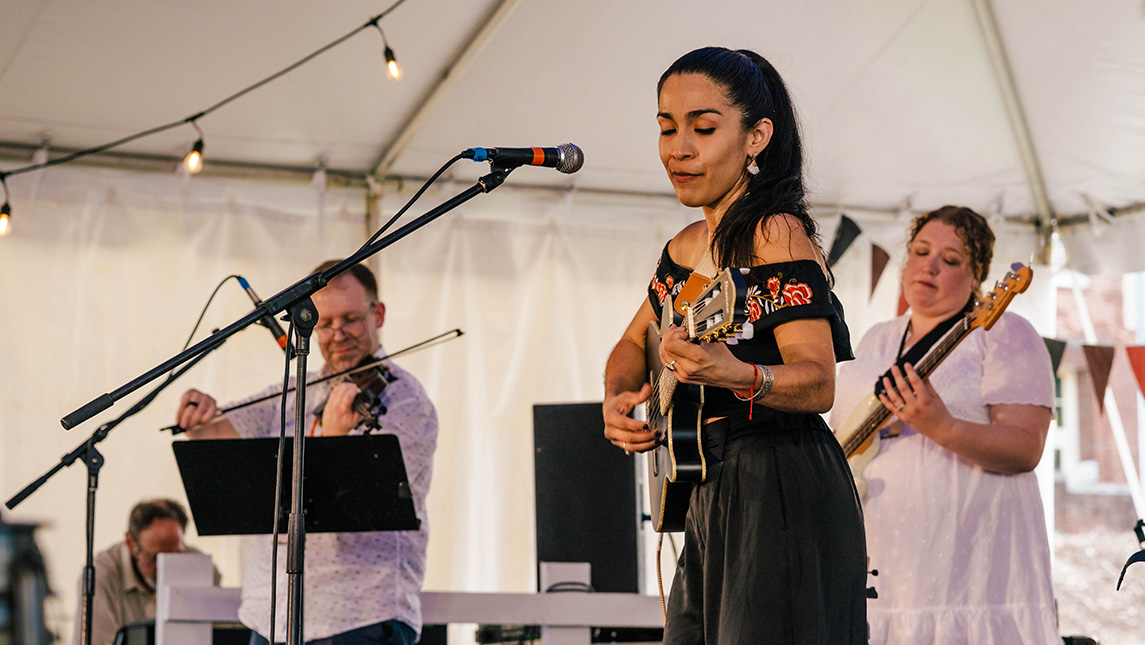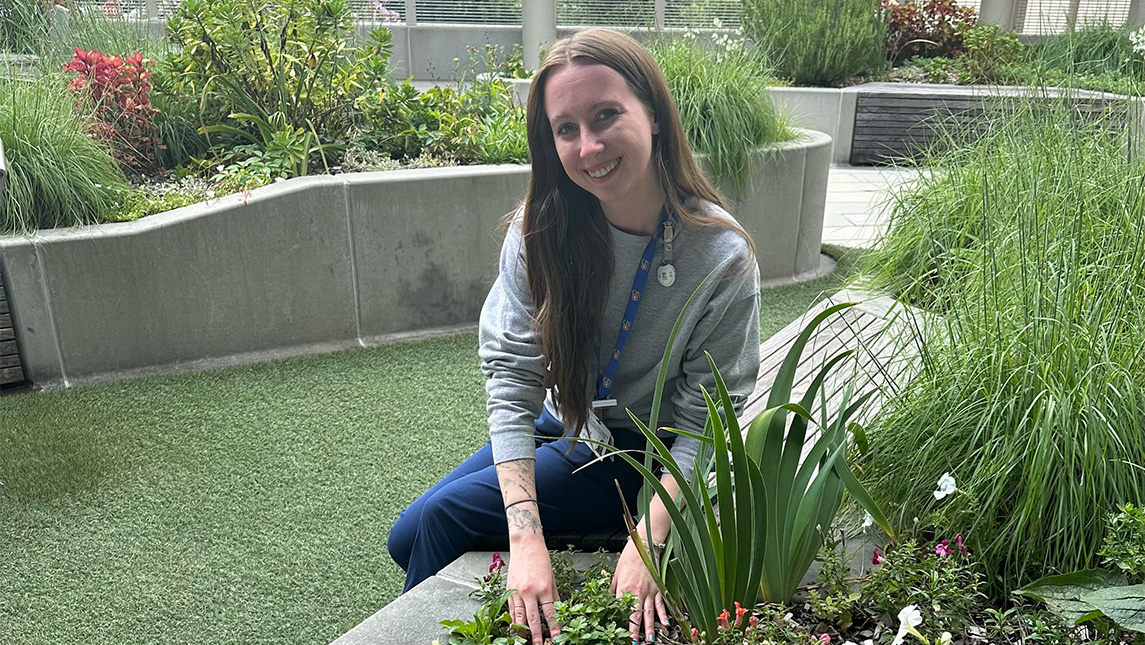
Don’t underestimate the healing power of hobbies. Plunking out a tune on the piano or digging in the dirt is all in a day’s work for Belle Downing ’21, ’22 MS, a licensed recreational therapist and certified therapeutic recreation specialist.
“Leisure is so many different things,” says Downing, who works for Duke Behavioral Health. “There are so many ways we can take our passions, personal skills, and interests and use them to truly change somebody’s life.”
With her degrees in parks and recreation management with a concentration in therapeutic recreation, Downing proves that leisure activities do more than fill free time. They help to improve mood, overcome unhealthy habits, and even recover from trauma.
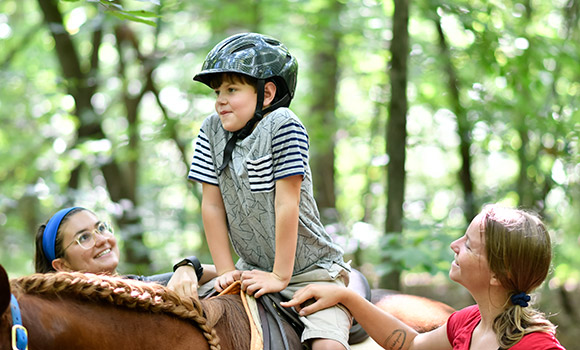
Since high school, she felt called to help people improve their lives through therapy. It was during a tour of UNC Greensboro that she learned about recreational therapy. “What I wanted in my career was to directly use things like art, music, games, and outdoor activities to help inspire people to take autonomy and control over their health,” she says.
Patient Interests Drive the Flow of Therapy
A typical day of work for Downing begins with checking the list of patients staying at Duke Regional Hospital. When someone new is admitted, she assesses their goals, interests, and overall wellbeing.

Using a concept known as flow theory, she determines what type of activity will benefit each of them. From there, she organizes individual and group interventions centered around recreation. “We want activities that challenge them, but they can’t be so challenging that they don’t want to do it,” she says.
But her job isn’t all fun and games, even the fun-and-games part. A recreational therapist has to become enough of an expert in many hobbies to lead different groups with different interests. Some are easier to pick up than others. Before working at Duke, Downing was program director for Spring Arbor Senior Living. There, she arranged daily activities for dozens of residents to do together or with visiting relatives. When the residents asked for gardening, she had to research horticulture to lead those activities.
“Admittedly, I almost got burnt out on gardening after that,” she recalls. “But I like how there’s always room to be constantly learning new things.”
Another part of her job is ensuring each environment is welcoming and safe, since some patients have gone through painful or harrowing experiences. But balancing leisure with a sense of safety and control comes naturally to Downing. It was infused into her studies at UNCG, from her undergraduate years to the defense of her master’s thesis.
Therapy Degree Broadens the Benefits of Leisure
Downing grew up in Waxhaw, N.C. When figuring out a good career to pursue, she thought about trying occupational therapy. “I wasn’t really set on it, but I had just heard about it as a way to help people with functional impairments, to help people with a variety of different creative interventions,” she says.
Then she visited UNCG, where she met Kim Miller, an associate professor in what is now the Department of Sport Management & Recreational Therapy. Downing says the rest was history: “After sitting down with Kim and telling her the things I wanted to do, she quickly said, ‘I think you want to do recreational therapy.'”

She learned the different ways recreation can spur recovery. It can restore social life and connection to the community. It can rekindle passion for hobbies a patient loved but fell out of doing because of a physical or mental condition.
“If you’re experiencing a depressive episode, for example, you’re probably losing interest in activities you usually enjoy,” Downing explains. “And when you stop doing those activities, you’re not socializing as much. You’re not challenging your cognition. Your mood’s going to decrease, and so does your engagement in activities, so that just makes you feel even worse.”
Fast Track to Trauma Informed Care
Downing qualified for UNCG’s Accelerated Master’s Program, which applies graduate-level coursework to both the undergraduate and graduate degree, speeding up the time to graduation.
During those fast-paced years, Downing’s education revolved around hands-on learning. Her internship at Atrium Health Wake Forest Baptist included exercise programming, anger and stress management, and other forms of group therapy. She completed all three levels of the UNCG Leadership Challenge, culminating in teaching leadership skills to local youth through the SHIELD Mentor Program.
One of her most defining experiences came out of her undergraduate years, when she volunteered for a local safe haven organization for survivors of human trafficking. “Through that experience, I learned just how widespread trauma is,” she says.
Downing chose to make her master’s thesis about Trauma Informed Care (TIC) in recreational therapy. Even a detail as simple as asking the patient’s permission before closing the door to the room makes a difference in their recovery.
“Anybody can follow TIC guidelines to ensure that when they’re working with somebody or even just approaching that person, they can prevent re-traumatization,” she says.
A New Career Takes Root and Flourishes
Since graduation, Downing has helped patients manage many kinds of mental health challenges, including behavioral disorders, substance abuse, and trauma.
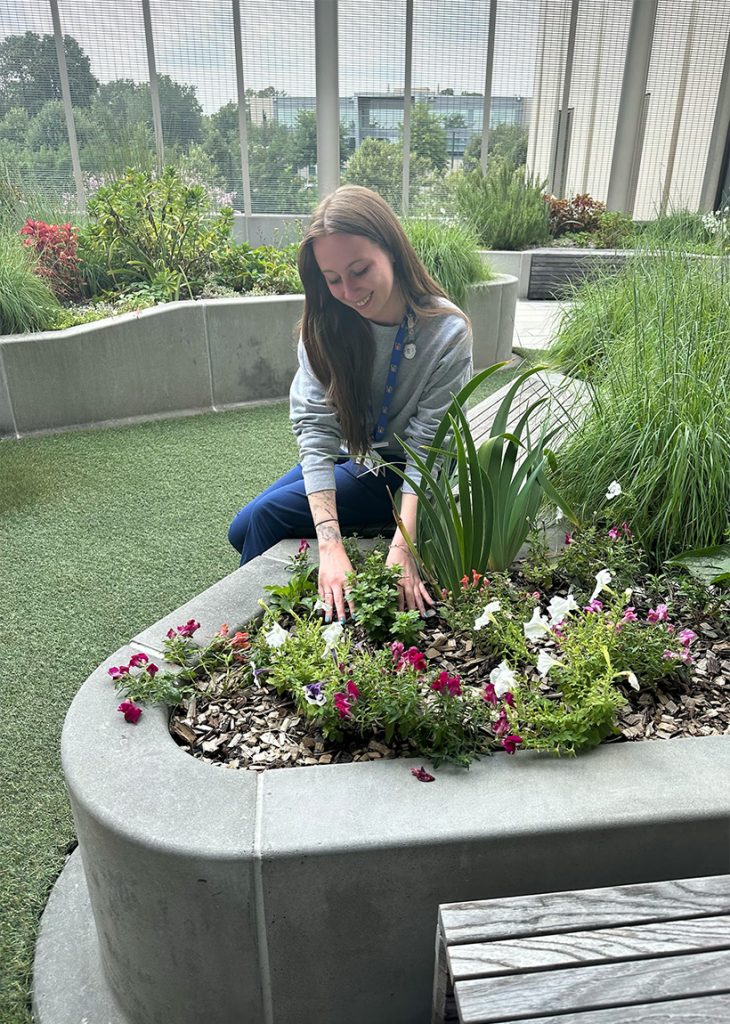
She also keeps pushing herself as a leader. When she joined the team at Duke Regional in 2024, they asked her to take the lead rolling out a new therapeutic program: gardening.
This time, Downing turned to a nearby resource, Duke Gardens. The botanical staff not only provided her with plants but with expertise for designing new activities, which she used to talk to patients about themes such as resilience.
“You could say it’s interdisciplinary,” she says, “It’s a partnership between horticulture specialists and rec therapy and physicians who make it possible.”
Aside from literal gardening, “blooming” is how she describes her time at UNCG. She credits a lot of that to the faculty. They were the “sunshine” that helped her grow.
“They were obviously bright, both smart and in personality,” she says. “It just made me feel inspired and encouraged to be creative and really tap into my leadership skills.”
Whether she works with a patient for a couple days or a few weeks, it’s rewarding to watch them bloom in their own way.
“One of my groups is about how to show gratitude for ourselves,” she says. “We have them write letters to themselves about why they matter. Oftentimes I can see the light bulbs go off in their heads, realizing that ‘I’m not as bad as I’ve been saying I am.’ To see them trying a new leisure activity, finding flow, enjoying it, and learning, I think that’s the best part of the job.”
Story by Janet Imrick, University Communications
Photography courtesy of Belle Downing, Duke Behavioral Health