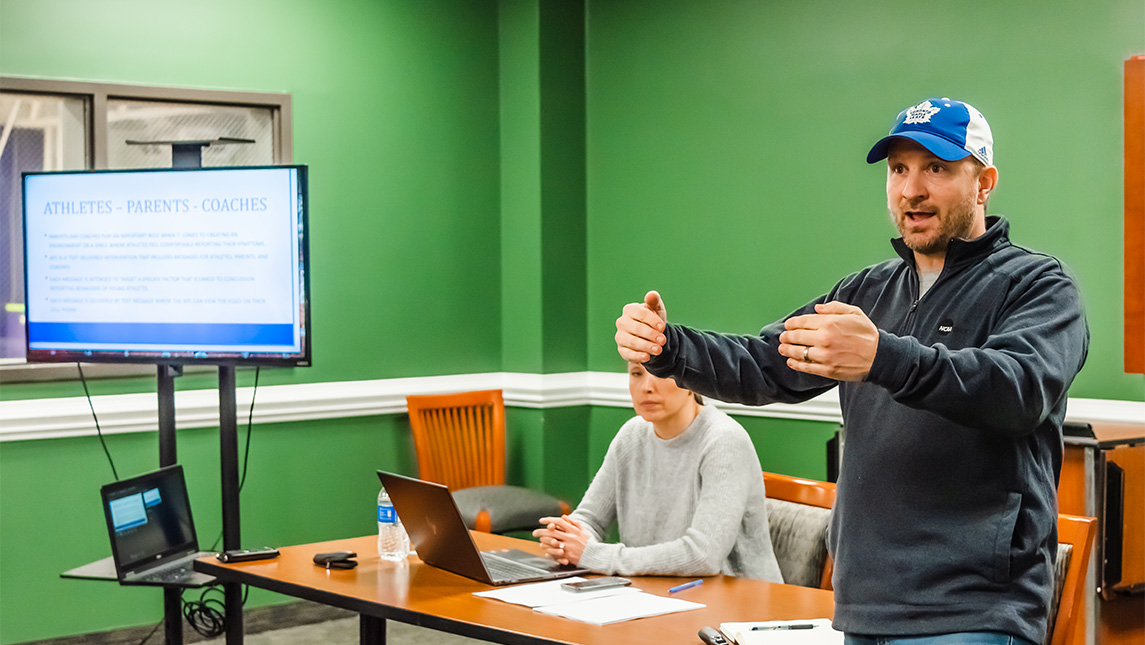
Partnering with national and local organizations, the UNCG Center of Athlete Well-Being keeps the focus on the whole person
The benefits of sports and physical activity are well-documented catalysts for improving mood, physical fitness, and even prolonging life. However, up to 35% of elite athletes in college and professional leagues have expressed mental health concerns. The top issues reported by athletes included feelings of burnout, depression, and anxiety.
Director of the UNC Greensboro Center for Athlete Well-being Jeffrey Milroy, Ph.D., is spreading the word that those negative impacts are preventable.
Since 2013, Milroy and other researchers at the Center have been researching factors that impact the well-being of athletes. He and his colleagues have become proficient at building science-based resources aimed at incorporating prevention science into sports culture to ensure that supporting athletes not only includes improving their performance but also develops character and overall well-being.
“Our goal is to ensure the athlete is getting all of the benefits sport participation can offer—social-emotional learning, how to conduct themselves with their peers, and how to develop a good coach-athlete relationship—and to prevent negative impacts to their health,” Milroy says. “We want athletes of all levels to know that sports are not just about performance; they are about developing as a human.”
An ounce of prevention is worth a pound of cure
The Center for Athlete Well-being develops programming that specifically target known risk factors and protective factors for well-being. It takes a multifaceted approach to promote well-being and prevent bodily harm among student-athletes of all ages.
“We do a lot of work in alcohol and other drug prevention where there are risk factors like social norms, attitudes, and expectancies related to that behavior,” Milroy says.
One output of the work is an online prevention program developed by the center known as myPlaybook, which addresses heavy drinking among college student-athletes.
“This behavior jeopardizes athletes’ general health and academic standing, and negatively impacts athletic performance,” Milroy says. “Effective prevention programming reduces these risks by tailoring content to college student-athletes and using theory-based factors shown to reduce future alcohol misuse.”
A June 2016 study co-authored by Milroy and published in The Sport Psychologist evaluated the effects of myPlaybook on student athletes from 60 NCAA Division II institutions, and found the program significantly impacted college student-athlete social norms to positively prevent or reduce future alcohol-related harm.
“Interventions, including myPlaybook, are an example of how we use research to be data-informed and help athletic organizations,” Milroy says. “When they know more about their athletes, they can make shifts and adjustments to create a space in which the athletes can be excellent athletes while they develop as human beings.”
Partnering for change
The Center scales its research to bring its data-based solutions to sports and beyond. To-date, they have researched a variety of topics, including alcohol misuse, the win-at-all-costs mindset, and athlete mental health.
“Wherever there are societal issues related to athletes within the health realm, that’s our area,” Milroy says. “We owe our success to our interdisciplinary approach, collaborating with public health educators, clinical and licensed counselors, sport psychologists, and social workers.”
The Center uses a collaborative approach that includes coaches, athletes, educators, and students to maximize its success.
The NCAA has adopted the Coaches Assist training developed by the Center of Athlete Well-Being. Building upon the principles of health coaching, prevention science, and motivational interviewing, the interactive workshop prepares coaches to become facilitators of student-athlete well-being. “It includes empathetic communication training to help make sure their athletes are seen and heard outside of training,” Milroy says.
The work of the Center also caught the attention of the National Football League Foundation’s InSideOut Initiative. The Initiative combats the professionalized win-at-all-cost sports culture by redefining the purpose of sports in the school community: connecting students to transformational coaches and creating culture of belonging to encourage student growth and character development.
“Our evaluation is investigating how that win-at-all-cost mentality can be detrimental across a variety of groups, including athletes, coaches, and administrators,” Milroy says. “The evaluation of the InSideOut Initiative is uncovering that intentional leadership, transformational coaches, and well-defined learning outcomes to ensure sports participation results in the development of the student’s human potential.”
Milroy is also a consultant with Prevention Strategies, founded by UNCG’s former chief innovation officer David Wyrick, Ph.D.. Prevention Strategies shares the Center’s ethos and mission, developing evidence-based programs for the health and well-being of young adults, especially athletes.
Other collaborations include working with the U.S. Olympic & Paralympic Committee, The McCrae Williams Foundations and, most recently, Beyond Sports, a Greensboro based non-profit organization devoted to addressing the disparities in access and equity for youth sports, particularly in Title 1 schools.
Collaborating with other UNCG faculty and local and national sports organizations, Milroy hopes to continue to expand the Center’s impact.
“Developing a culture of care for athletes and coaches is the goal,” he says.
Written by Alice Manning Touchette