The WC Years: Woolen togs, a forgotten field, and an attic gymnasium
“I don’t know the last time anyone was up here besides us maintenance folks,” says Zach Hyatt of the UNCG Facilities crew, who, among his other duties, helps maintain this neo-Romanesque link to University history.
Foust’s Attic Portal to Early Spartan Athletics
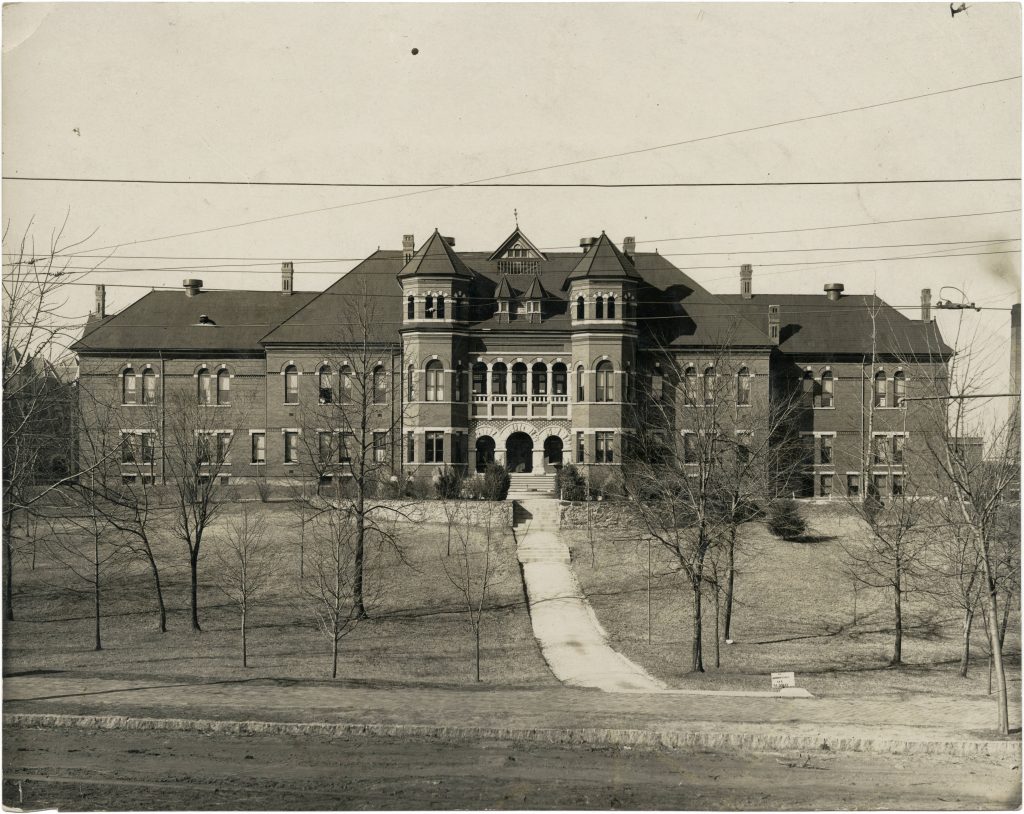
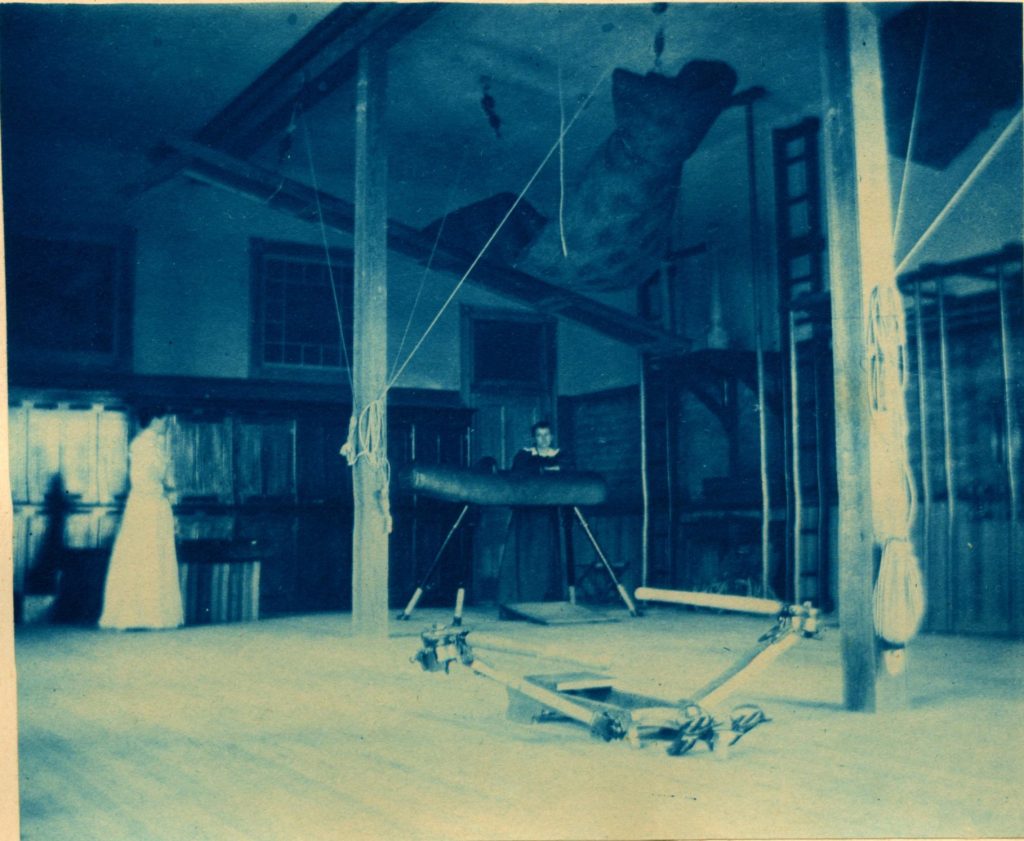
Foust was built in 1891 and opened the next year. In 1892, the University’s inaugural year, Foust, along with the McIver House, Brick Dorm, and Wooden Dorm comprised the entirety of the State Normal and Industrial School, as UNCG was first known. Between 1892 and 1900, when Foust was still known simply as the Main Building, and at the behest of the campus’ resident physician Dr. Miriam Bitting, a gymnasium was created on the top floor in a space that looked very much like this one.

University Archivist and Engagement Coordinator Erin Lawrimore has chronicled UNCG’s legacy of women’s athletics in PowerPoint presentations, PDFs, and the Spartan Stories blog. She pored over old photos and documents to piece this history together.
The gymnasium, according to her work, “A History of Physical Education and Sport at UNCG,” had “11 [exercise] bars, chest weights, Indian clubs, and a weighing machine.”
“It was open only about four months of the year,” Lawrimore says, “because, you know, it’s the attic of Foust Building and there was no air conditioning.”
The original site of the gymnasium, according to Hyatt, has been rendered inaccessible after more than a century of structural upgrades and reconfigurations to the building.
Other athletic facilities would follow during the first half of the 20th century, including a new gym established in 1907 in South Spencer, and an outdoor gym — “essentially a wooden floor about the size of a basketball court with a roof and flaps to keep out the rain,” according to Lawrimore’s history — built in 1922.
UNCG’s First Ladies of Sport
Physical activity has been part of UNCG’s DNA since the beginning, due largely to the presence of Dr. Miriam Bitting, the school’s first campus physician and one of the original faculty members who started the Department of Physiology and Physical Culture. Her successor Dr. Anna Gove, for which the student health center is now named, came on in 1893.
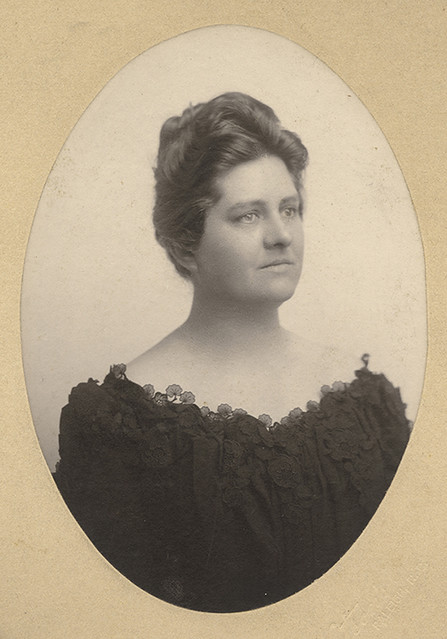

From Lawrimore’s history: “As the campus’s resident physician, Dr. Mariam Bitting not only taught physiology in the classrooms, but on her morning and evening rounds, she made suggestions about ventilation, clothing, bathing, dressing, and other points of personal hygiene.”
By 1893, when Bitting left the University to get married, Gove assumed her role. In those days, having a campus physician was a rare thing. Bitting was just the second woman physician in North Carolina; Gove was the third.
“At that time, it was pretty darn radical,” Lawrimore says. “The women who were the campus physicians were the ones who handled what we would now call public health on campus. And they were women, which was radical because there just weren’t that many women doctors. But they also were radical in that they were advocating physical activity and saying things that we now roll our eyes and laugh about, like pointing out that maybe if you corset yourself up so tight that you can’t breathe, that’s a bad thing. Maybe you shouldn’t do that.”
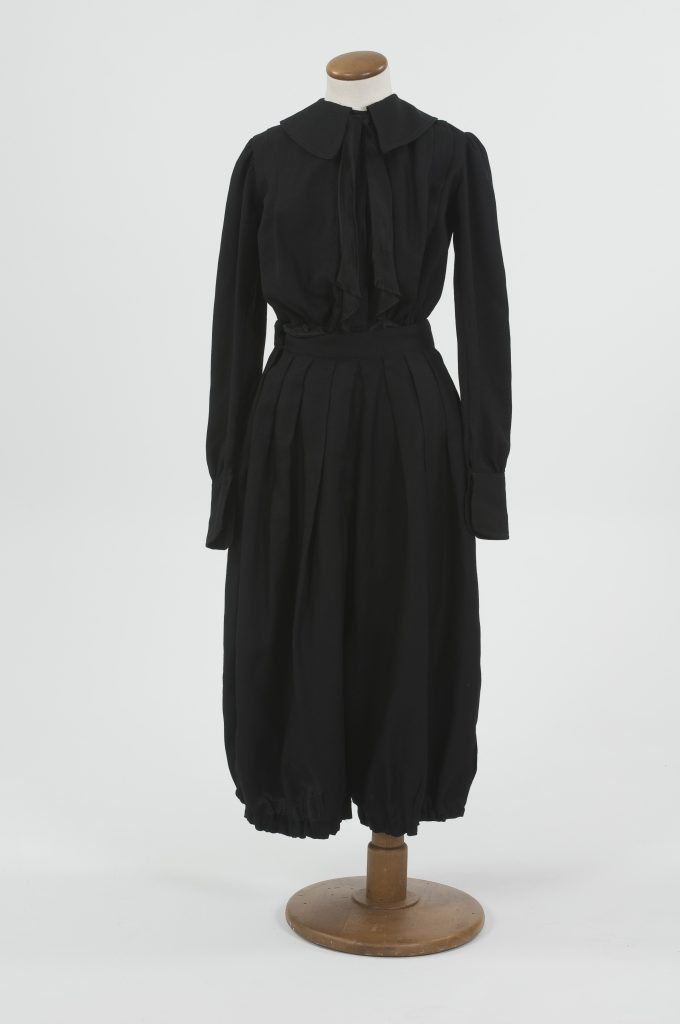
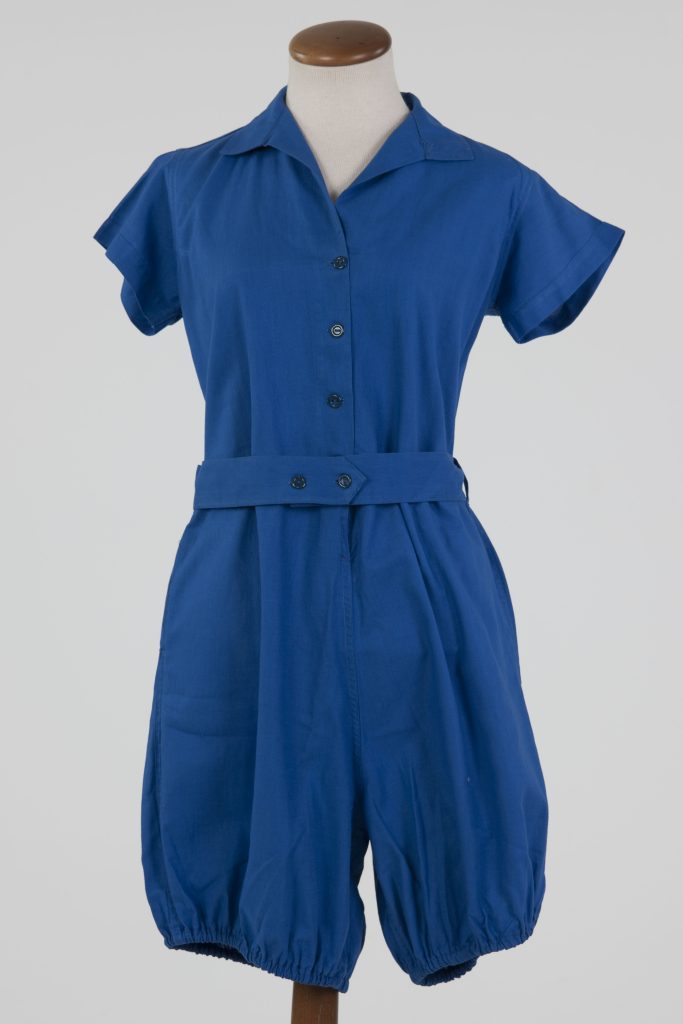
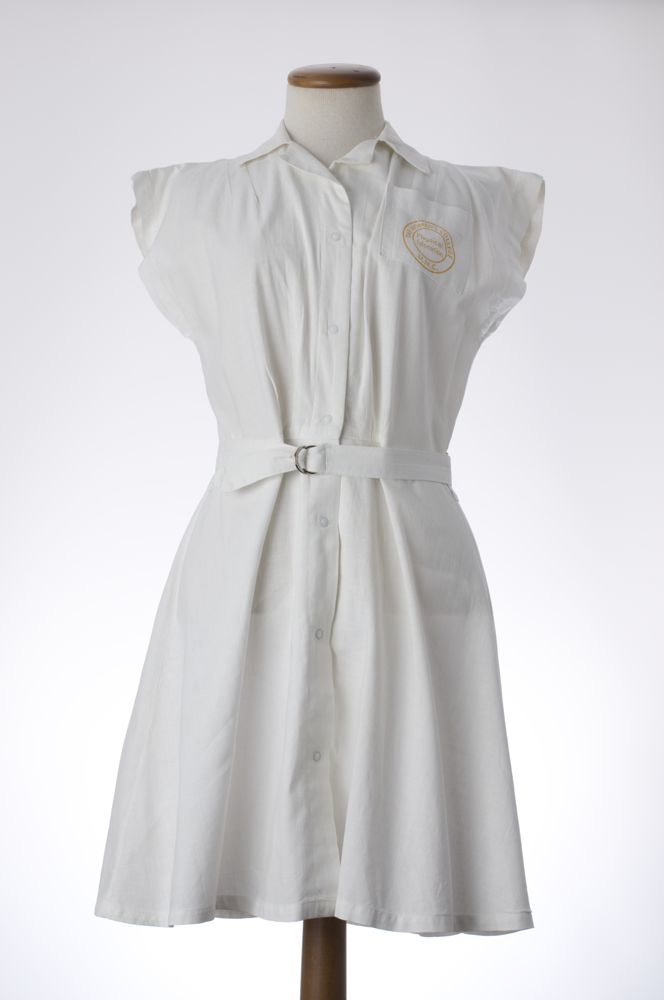
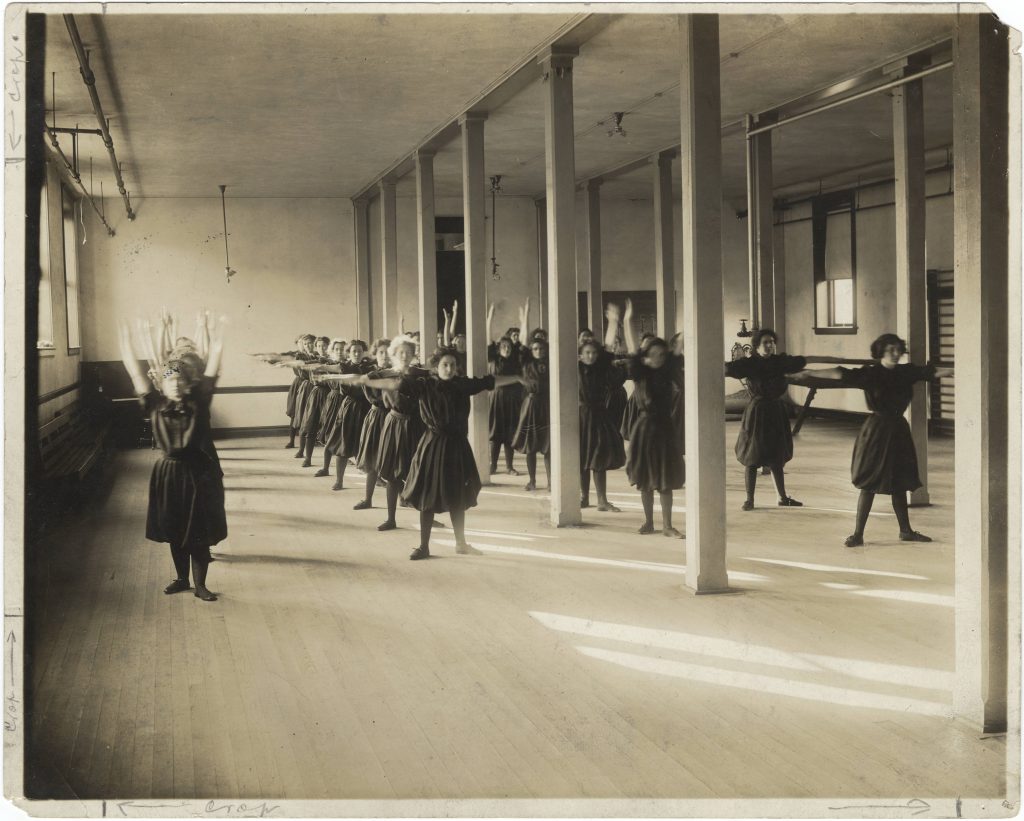
To participate in physical culture, as it was then known, students wore the University’s very first “gym suit,” a garment of black wool comprised of a long-sleeved blouse with a puritan collar and a bow, paired with calf-length bloomers.
“We have a couple of those in our collection,” Lawrimore says. “We have full sets of the gym suits as they evolved over time.”
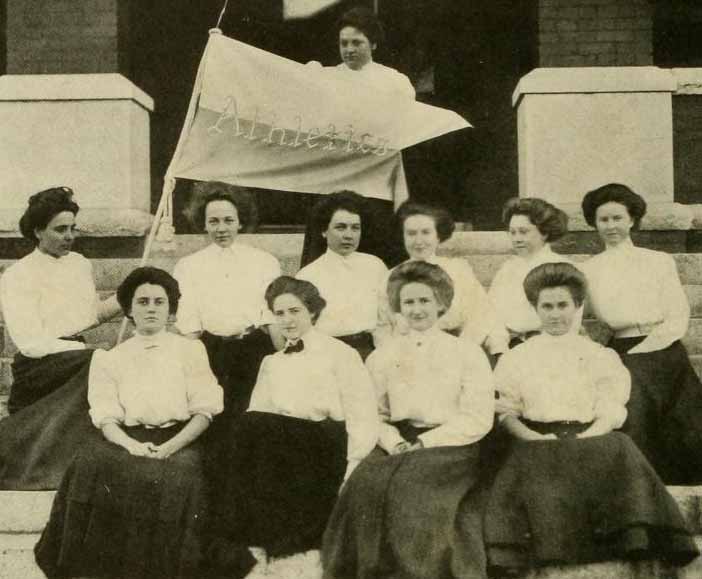
It was the Class of 1900 that, upon their graduation, convinced Charles McIver, the University’s founding president, to establish a campus Athletic Association and athletic grounds. That same year it was formally established — 15 years before the school had a student government. By 1902, its motto was “Athletics and active college work go hand in hand.”
Early Fields of Fitness
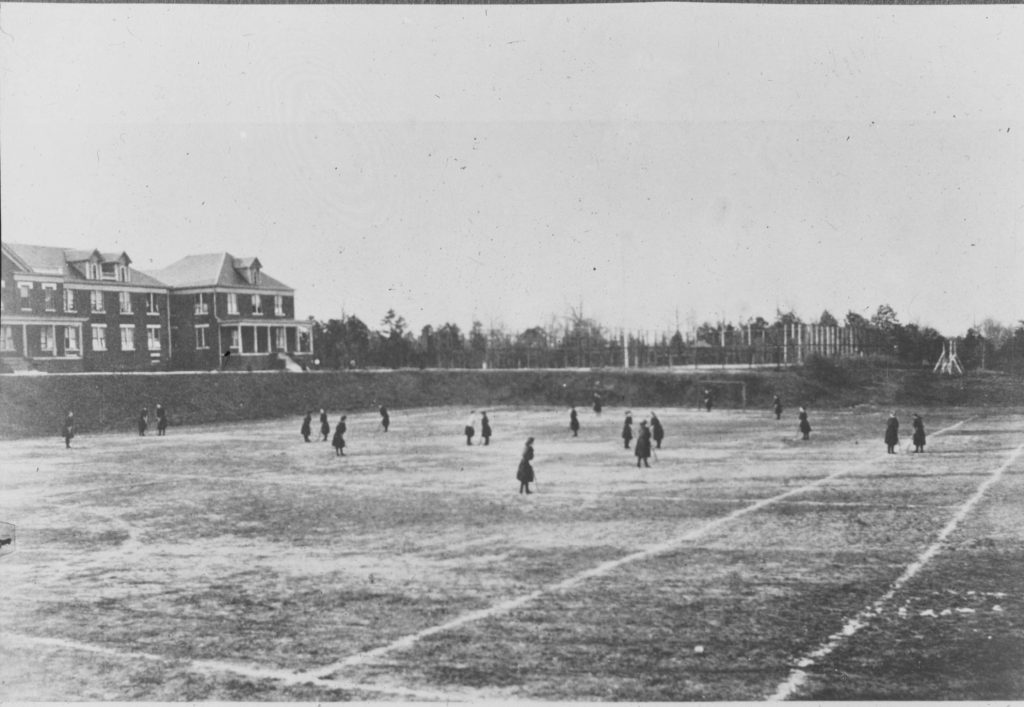
An open space on campus where the Petty Science Building now stands was designated as the school’s first athletic field. There, students could play tennis, field hockey, basketball, and other sports — strictly for recreation and fitness, Lawrimore says, as opposed to competition.
“It was not seen as proper for the women to necessarily be participating in these things for competitive reasons,” Lawrimore says. “Most of the competitions were either between the classes, so the juniors versus the seniors, or between the literary societies.”
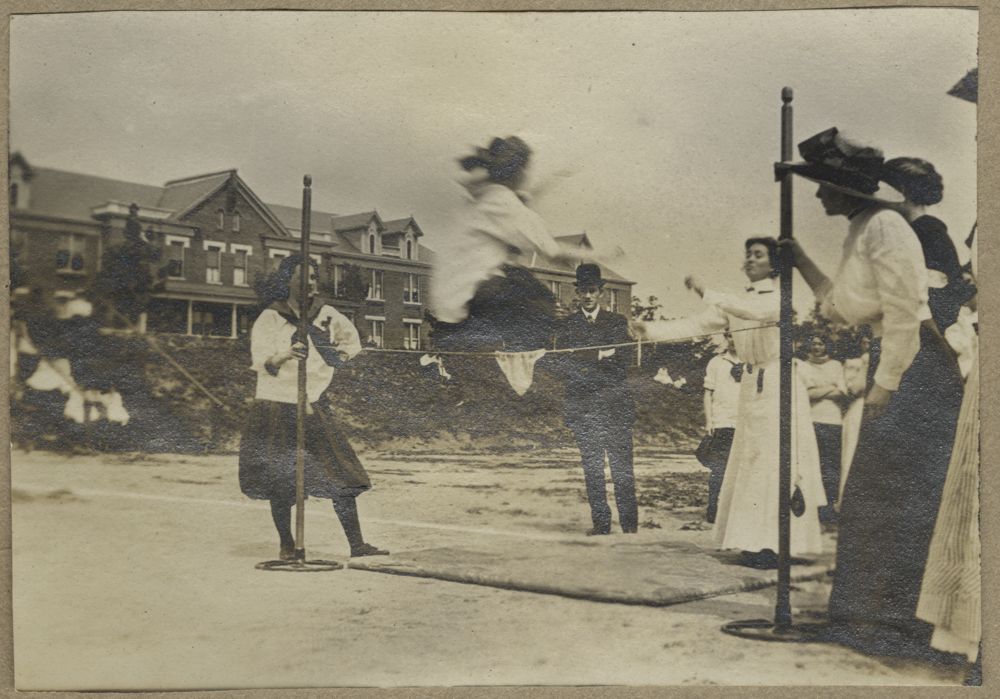
By 1909, Bertha Bell had been named director of Physical Culture. She introduced a field day that year that allowed for every student and faculty member to participate. From Lawrimore’s History: “The final games in the basketball, tennis, and baseball tournaments were played; and individual track and field events, running, broad jump, 100‐yard dash, high jump, ball throwing, and relay races, were also part of the activities. A trophy was awarded to the winning class.”
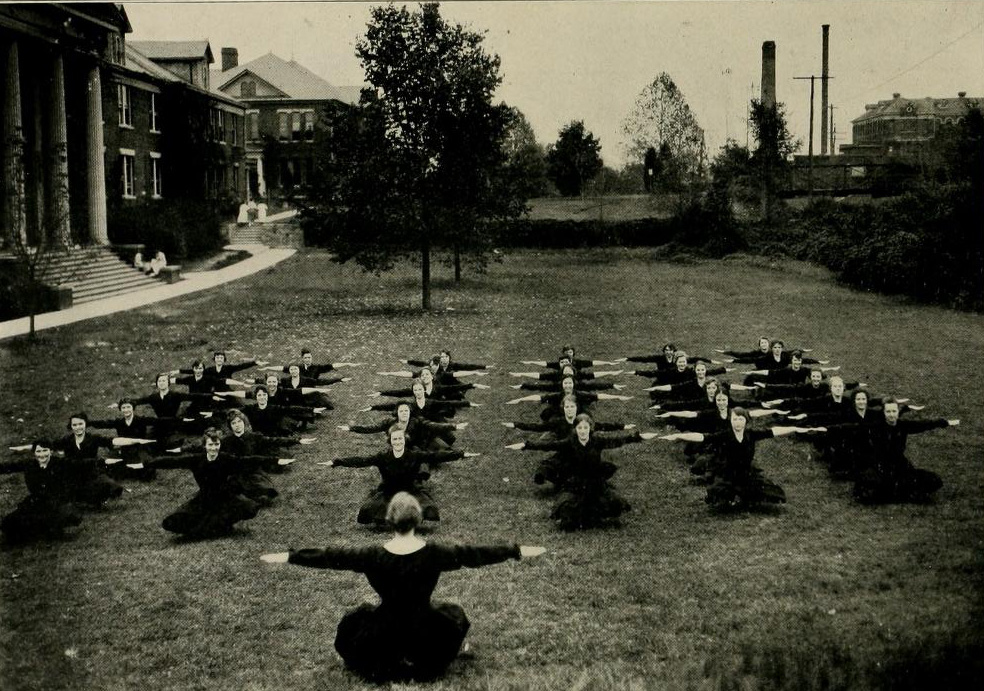
At the beginning of her tenure, Gove instituted a physical culture course as a requirement for all students, with a curriculum that included gymnastics, calisthenics, and other exercises. In those early days, the campus recognized a daily “Walking Period.”
At 4:30 p.m. each day, Lawrimore says, “they would ring the campus bell, and you had to open up your dorm room window and do something for the next hour, some sort of physical activity.”
“Now, for some of the students,” Lawrimore explains, “that meant you were going to play field hockey or basketball. And for others, it meant that’s when you’re going to go for a mandatory stroll through the woods, in your Victorian dress. And some of the students loved it, and some of the students hated it. If we tried to do that now, it would probably be the same way.”
Most students, she says, chose to spend that time walking through Peabody Park, which was established in 1895.
Hoops and Greens: The Emergence of Teams and Sports
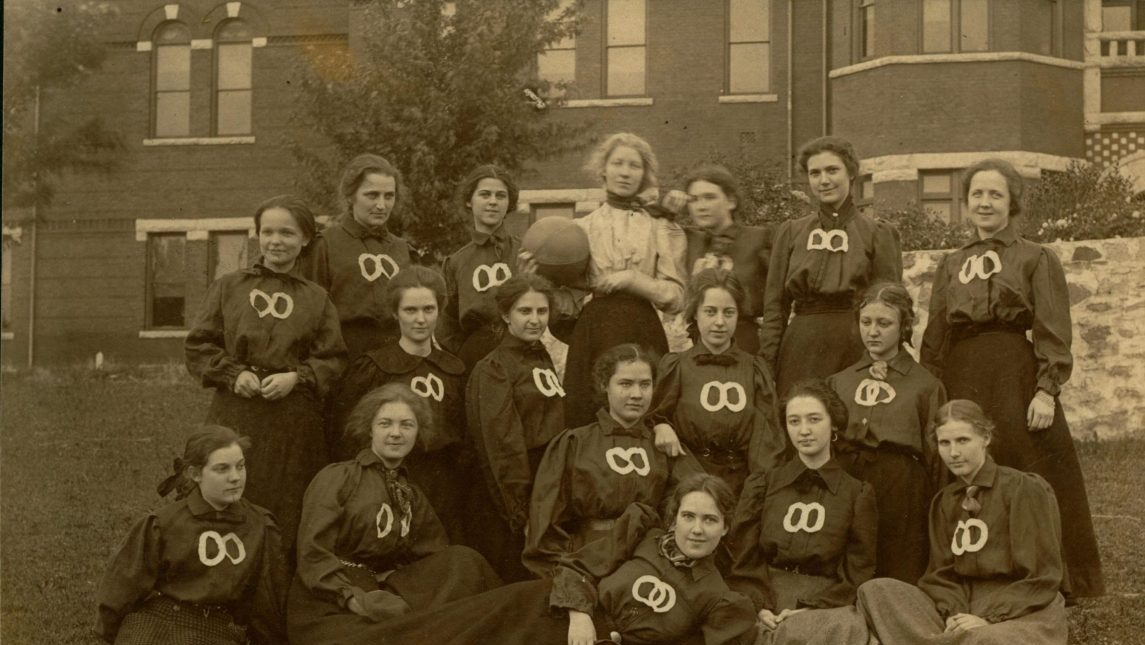
The very first athletic “team” on this campus was known as the Naughty Naughts, the Class of 1900 basketball squad. The group, comprised of 16 women, wore uniforms of long, black skirts and collared black blouses with long, puffed sleeves, each bearing entwined double-zero numbers.
The rules for women’s basketball were very different from those for men, Lawrimore says.
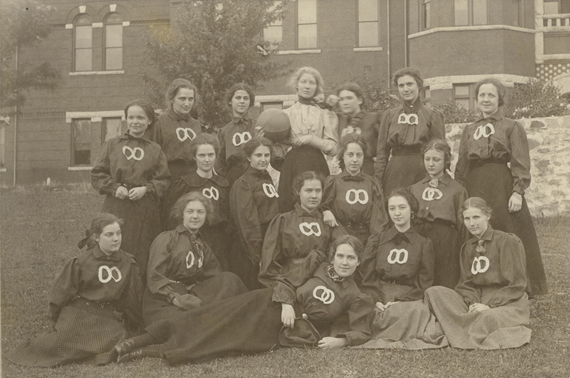
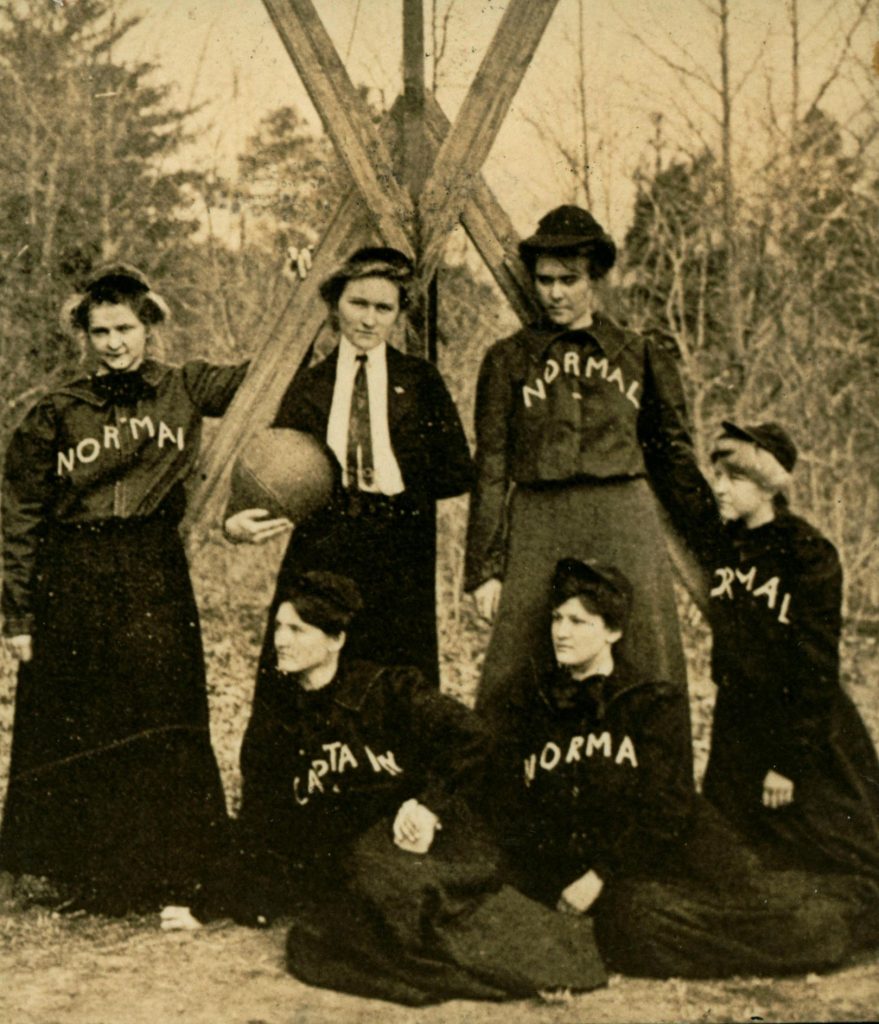
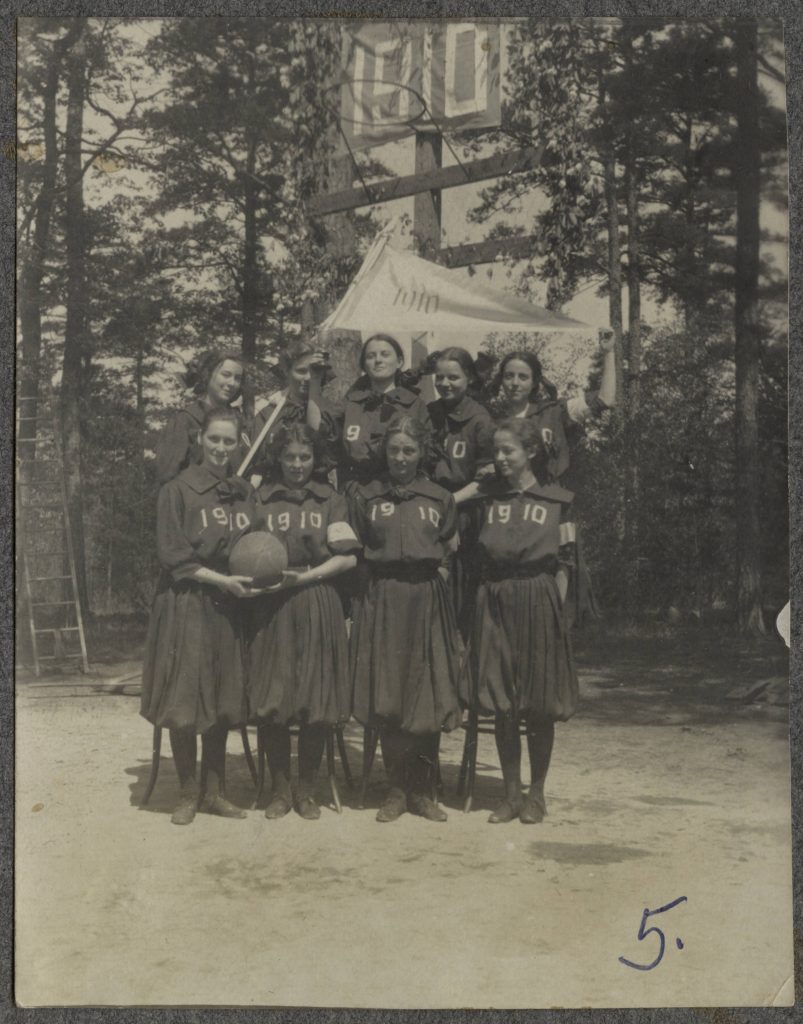
From her history: “In 1892, Senda Berenson introduced basketball for women at Smith College. The game featured modified rules, as it was feared that the women could (or should) not physically or mentally handle the strain of the men’s rules. The court was divided into three areas with three players from each team in each area (nine total players per team). The ball moved from section to section by passing or dribbling. Players were limited to three dribbles and could hold the ball for three seconds. No snatching or batting the ball away from a player was allowed.”
“It was like if you took basketball and mushed it with soccer,” she says now. “By the time UNCG began admitting men in 1963, we were playing basketball closer to the way it looks today. But those women’s rules really lasted. Oklahoma still had high schools that played that way in the 1990s.”
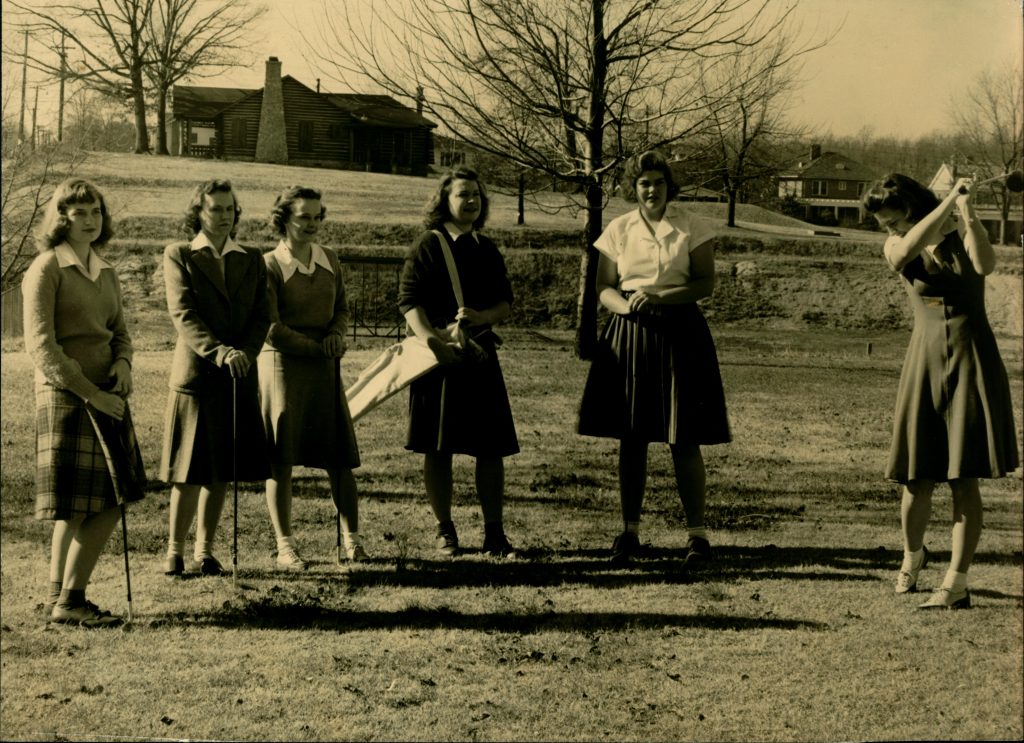
Golf has been a part of the University since 1929, when a single, par-3 hole was built on the west side of Rosenthal Gymnasium, now the Coleman Building. By 1935, the “Little Golf Course,” as it was known, was open for play and a Woman’s College Golf Club formed to maintain the course.
But within two years, Dean of Administration Walter Clinton Jackson said of the golf course in a memo: “[F]or two years and more, the whole matter was a source of unending difficulties, annoyance and trouble. Neither the faculty nor the students would support the club.”
In 1940, the course was reduced to just three holes, then allowed to overgrow during World War II. The subject would not be visited again until 1954, when plans for a new course took shape. It wouldn’t be ready for use until 1957. A vestige of that second course still exists on West Market Street today.
One Era Ends, Another Begins
The Woman’s College era officially ended when men were introduced to campus in 1963, and the legacy of sport both expanded and amplified. Teams were formed, an athletic department grew, and UNCG eventually worked its way to Division I in the NCAA, with dozens of championships and star athletes paving the way.
But it all began before the turn of the last century in an attic gymnasium where women in black wool sweated through their workouts.
Story by Brian Clarey, University Communications
Photos courtesy UNCG Special Collections and University Archives