“Do you want the long version or the short version?”
The “elevator pitch” is a staple of business, entertainment, and other industries. In a fast-paced world, professionals should learn how to introduce themselves and their big ideas in a minute or two — about the time you might share with someone in an elevator — to an executive who could give them their big break.
But graduate research is often measured in years: years of coursework, experiments, drafting a thesis, revising the thesis, and defending it. It’s difficult to compress such vast work into a “short version.”
Laura Drew, student support lead at UNC Greensboro’s Graduate School, wants researchers to consider their “elevator pitch,” so they can deliver it with clarity and confidence. “Relevance is what transforms good work into meaningful impact,” says Drew. “You can have the greatest project in the world, but if your audience doesn’t feel its relevance, then it loses its power.”
After the data is collected and the paper is written, UNCG students must be able to describe their work, whether it’s in formal proposals or to someone stopping them at a moment’s notice to ask, “What does all this mean?”
Forming that answer drives the annual Three Minute Thesis (3MT) held each year alongside the Graduate Research and Creativity Showcase and the Webinars Worth Watching competition.
Presentation is key
Communication, adaptability, and knowing your audience are essential soft skills for any academic or aspiring professional. Drew says 3MT helps students get to the heart of their research: what it is and why others should care.
“If you can’t keep me engaged and interested in your work for three minutes, I’m probably not going to be interested for 20-30 minutes,” she points out. “I always think back to my marketing days: Think up three to five takeaways. What do you want people to leave the conversation understanding?”
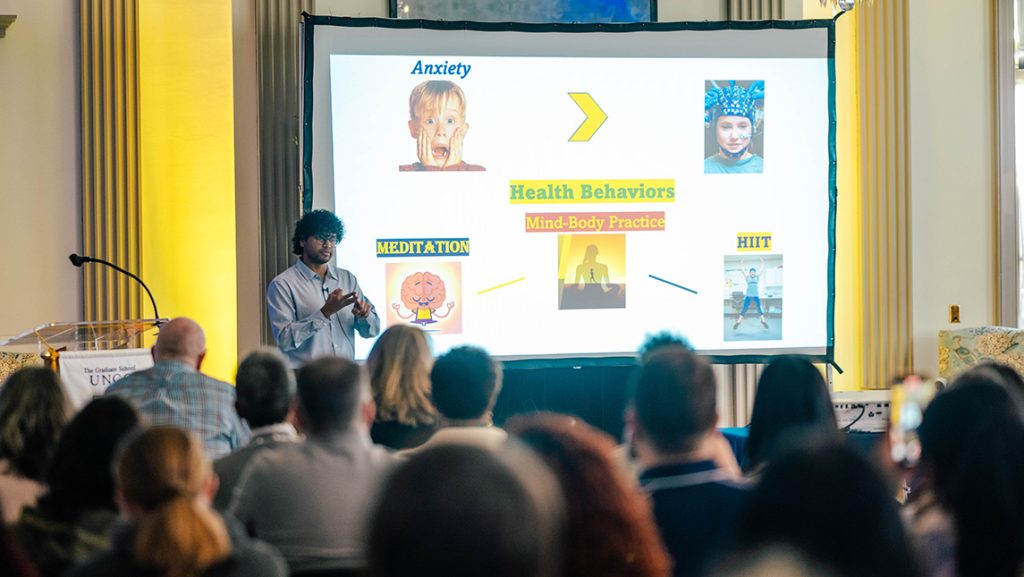
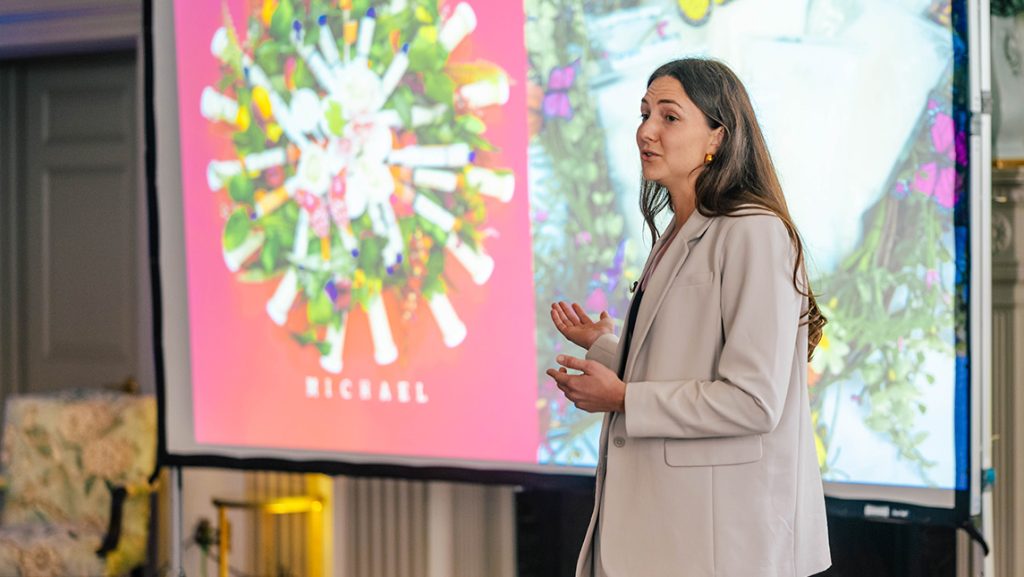
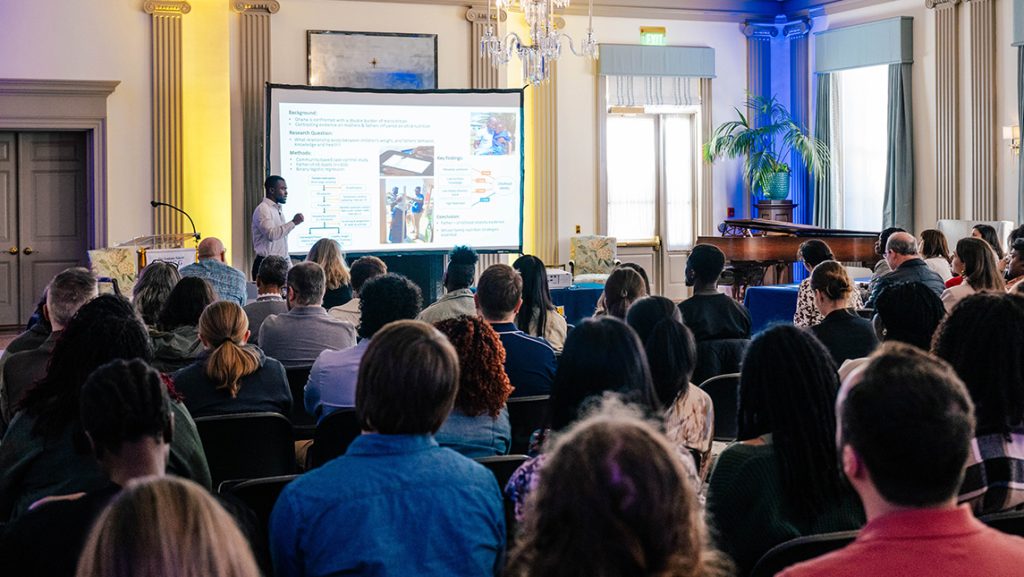
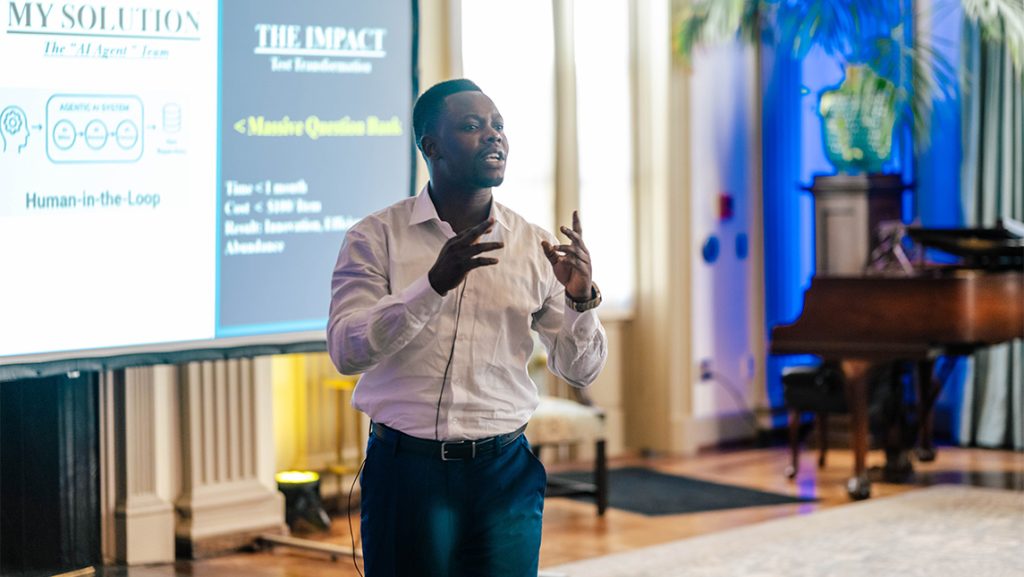
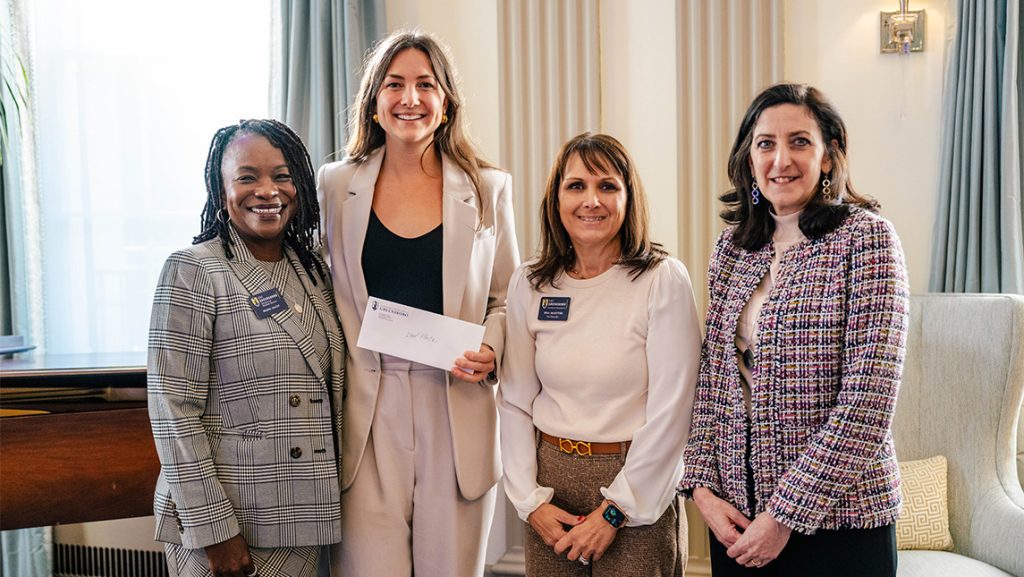
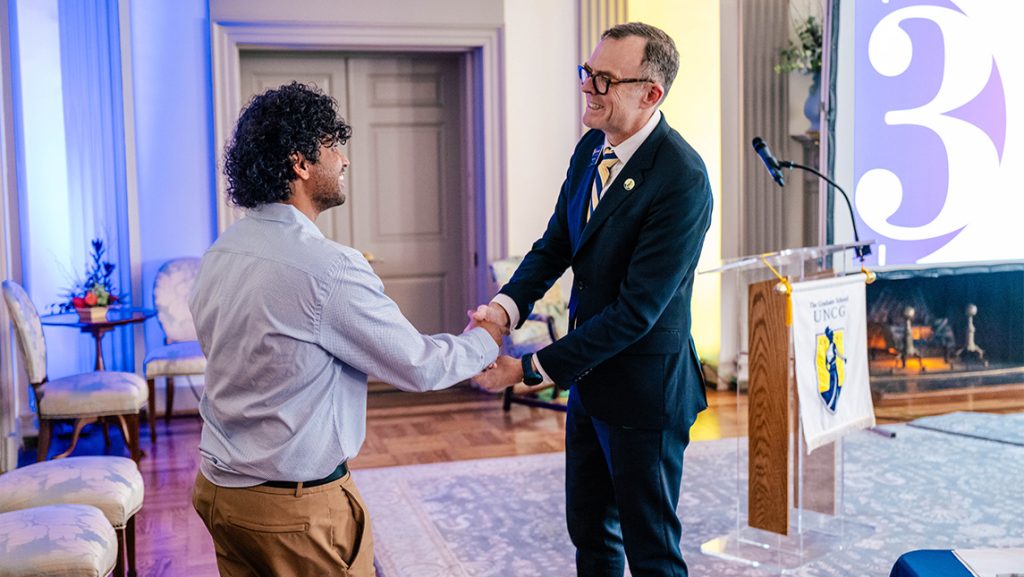
2025 3MT winners from left to right: Praveen Pasupathi, first place; Victoria Fonville, second place; Samuel Adegoke, people’s choice.
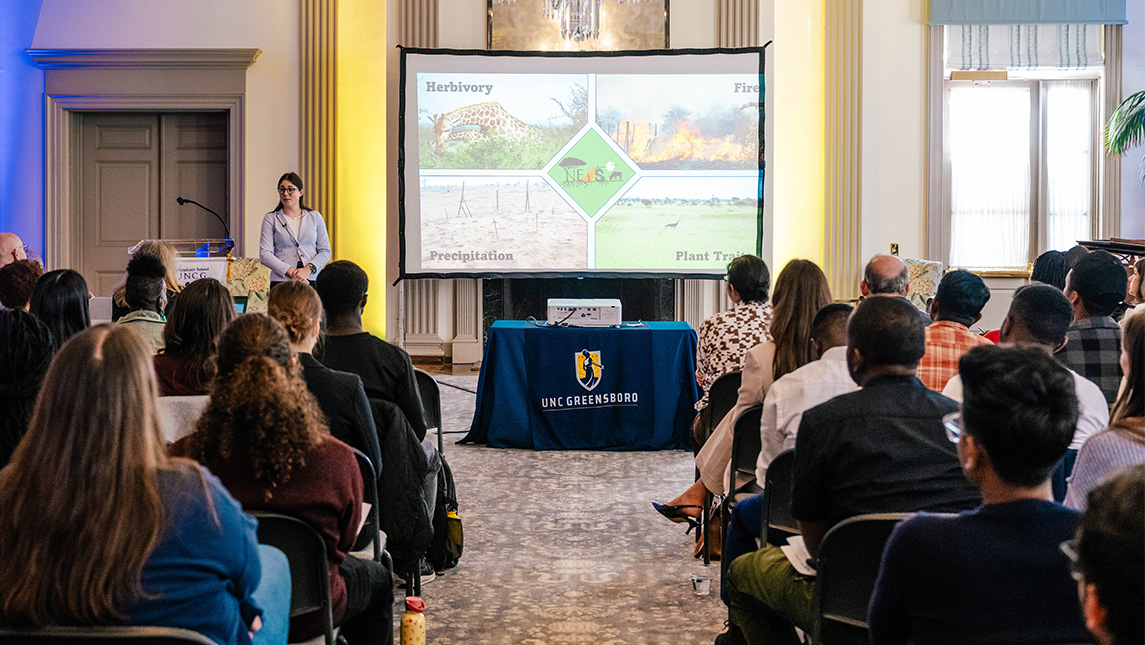
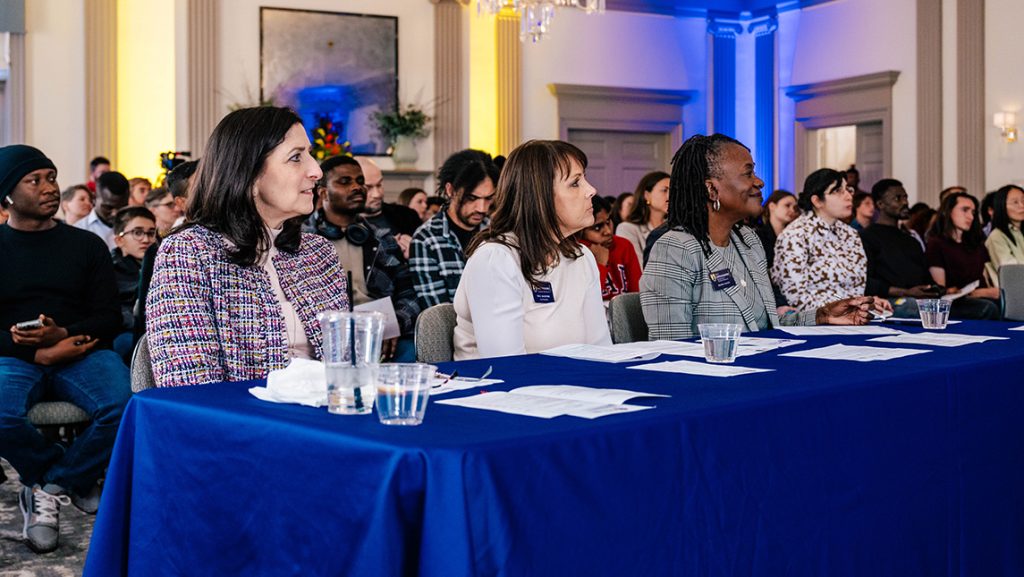
Students get three minutes and one PowerPoint slide to win over judges intentionally selected from outside their disciplines. Drew says it teaches them to strip out the jargon and focus on meaning and impact. “We ask them, ‘Why does your work matter to others? Can your mom understand it?'” she says. “Sometimes, they get so caught up in the terminology and acronyms of their degree that they forget the audience doesn’t understand them.”
Proving the Community Impact
Praveen Pasupathi took first place in the 2025 3MT. A doctoral student in the kinesiology lab of Dr. Eric Drollette, he is measuring the link between short bursts of physical or mindfulness activity and lowered anxiety in children. He wants his research to guide mental health programs in schools and communities.
He says 3MT helped him push his limits. “Experiences like this challenge you to step outside your comfort zone and trust that your research and your voice belong out there,” he says.
Mental wellness was also front and center for the second-place winner Victoria Fonville, who studies nutrition. She presented her study of best lactation and pumping practices for mothers who suffered a stillbirth or neonatal death, building upon research that shows donating breastmilk helps those parents on their healing journey.
Condensing all her data was more difficult than she expected, she says, but immensely rewarding. “Learning how to share my research with people outside of my discipline was the most valuable skill I gained from the 3MT competition, and I am so thankful I had the opportunity to participate,” says Fonville.

Free Showcase of Scholarship
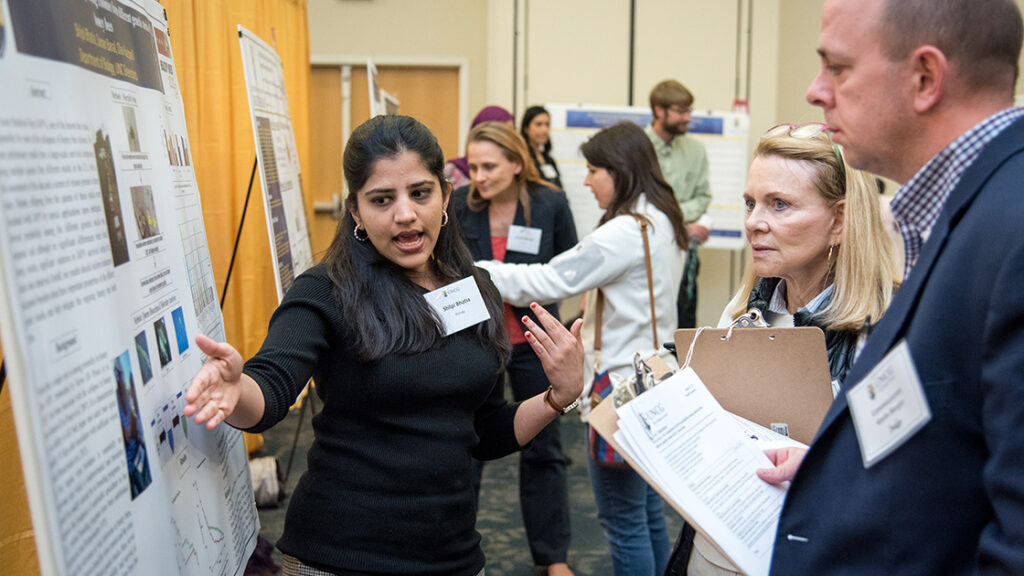
The Graduate Research and Creativity Showcase is another opportunity to present research for the whole community. Using poster presentations and in-person conversations, they share their work and develop speaking skills that will serve them well in the future, whether that be interviewing for a job, pitching a grant, or engaging with a community partner.
Dive into students’ latest discoveries at the Spring 2026 showcase:
Thursday, April 9
1–3 p.m.
Elliott University Center Cone Ballroom
Students present for the following categories: Arts and Humanities; Health Sciences; Natural, Physical and Mathematical Sciences; and Social Sciences, Education, and Business.
Virtual Adaptations
University Libraries approaches the same challenge with Webinars Worth Watching. In the live online competition, modeled in part after 3MT, graduate students present original research in a compressed format for virtual audiences. They are judged on content, clarity, engagement, and design.
“A big part of the competition is taking your research and making it absorbable by a regular audience,” says online learning librarian Sam Harlow.
She says the requirements reflect the scenarios students will face when they leave graduate school. Job interviews, national conference presentations, and even dissertation defenses increasingly happen online. Harlow does not want a technical hiccup or a rambling explanation to spell the difference between acceptance and rejection.
“We want them to feel more comfortable presenting their research in an online environment,” Harlow says. “We also want them to get comfortable with breaking down their research for everyday audiences, thinking about grants and pitching, and seeing the value of their research for the everyday world.”
Glitches happen
Before the competition, University Libraries holds optional workshops on presentation and online delivery. Contestants can also schedule one-on-one practice sessions to time their presentations and hear targeted feedback. They learn about accessibility and visual design.
“We play a ‘true or false’ game,” Harlow explains. “For example, ‘Should you wear a headset?’ And they say ‘true or false’ in the chat, and then we talk about why. That used to be a huge issue, say, if someone else in the house was watching Netflix while you were presenting.”
Just as important as polish is flexibility. Because the competition is live, the risk of technical difficulties is a real one. Students must adapt to the unexpected in real time.
“I hope it teaches students how to roll with things that can go wrong,” Harlow says. “We’ve had winners whose internet cut out, and they had to come back and finish the presentation. And they still won.”
Publishing skills
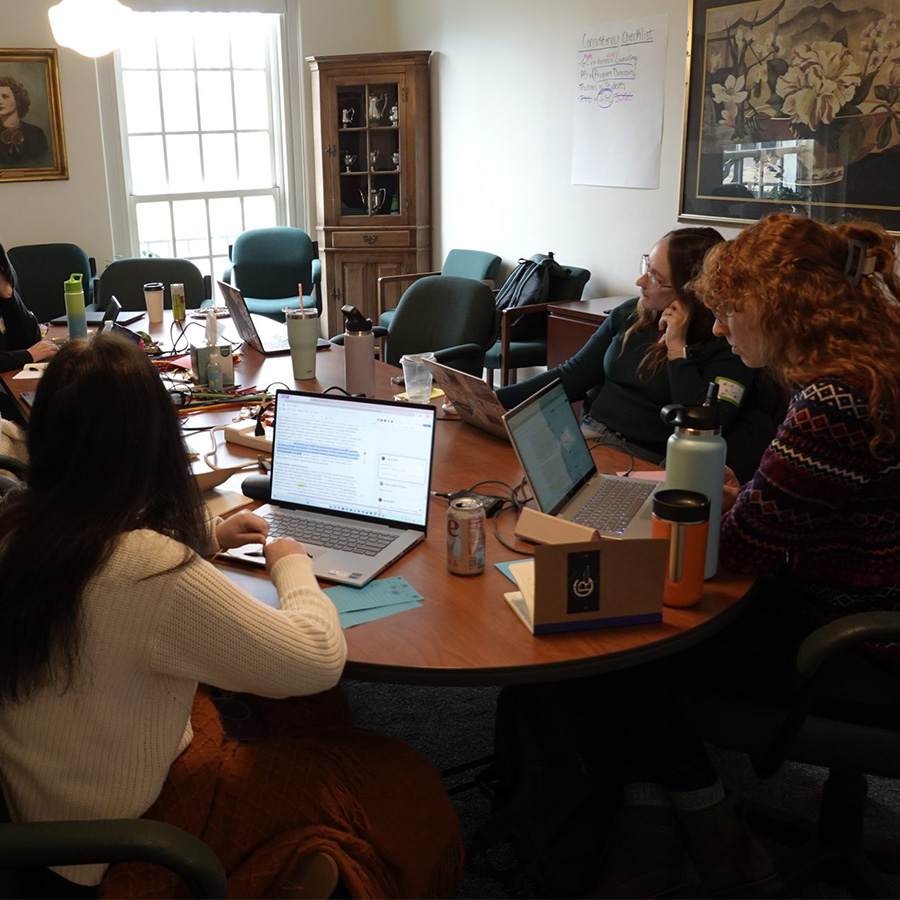
Academic writing poses its own set of presentation challenges. That’s what drew graduate students, primarily from the School of Health and Human Sciences, to take a “paper chase” workshop. Read about what they learned while turning around a paper worthy of an academic journal in just three days.
Everyone’s a winner
Each of these may choose winners at the end, but ultimately, all the students benefit from a low-stakes environment where they can make mistakes and grow. Drew remembers one student who froze during his first 3MT presentation.
“He totally lost his train of thought, tried to start again, and ended up walking out of the room,” she says. “The next year, he came back and he won. I always tell students, ‘Even if you didn’t place or do well, each time you do it, you get better and more confident.'”
And Pasupathi says there’s another winner. “Strong presentation skills help ensure that research reaches the people it is meant to benefit,” he says. “Clear communication helps communities understand why the work matters and how it can support healthier lives.”
Story by Janet Imrick, University Communications
Photograpy by Sean Norona, University Communications