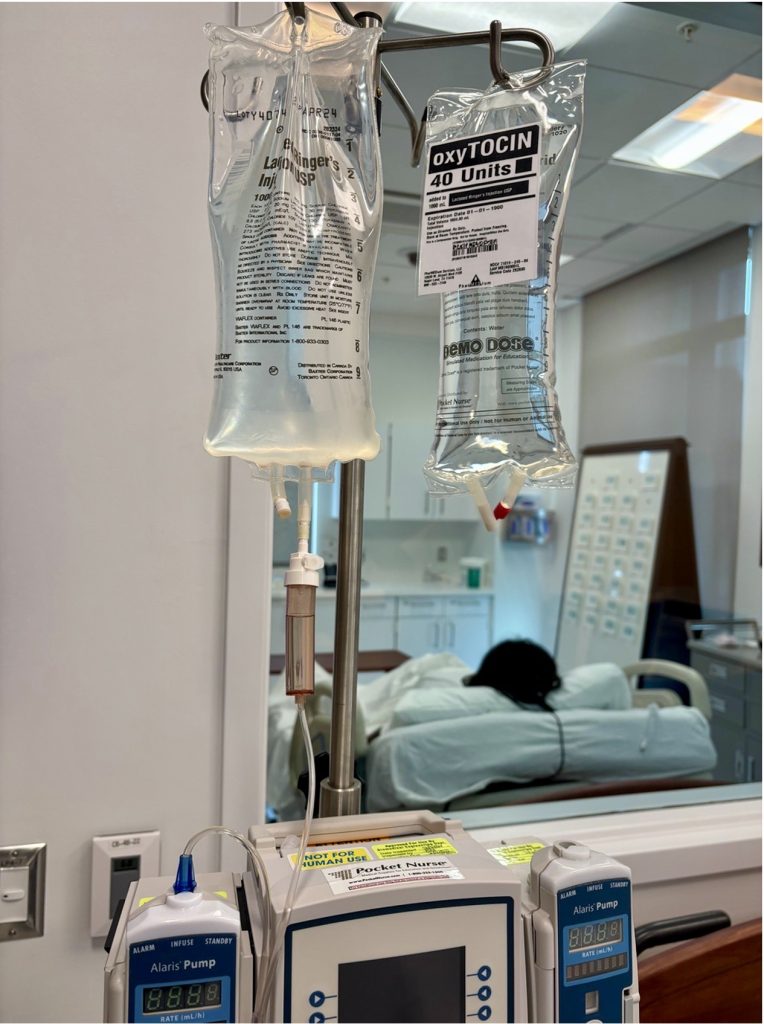
North Carolina’s maternal mortality rate has risen significantly in recent years, and UNCG School of Nursing (SON) faculty are developing new simulation‑based training to better prepare nurses to respond to postpartum hemorrhage — the leading cause of maternal deaths.
Postpartum hemorrhage (PPH) occurs in 1 to 6 percent of all deliveries. Responding to PPH requires rapid recognition, rapid intervention, and a collaborative effort by involved medical staff.
It’s why Assistant Professors Tammy Hall and Lisa Anders piloted a Rapid Cycle Deliberate Practice (RCDP) to teach nursing students an intervention practice to help prevent PPH.
The results have proved impressive.

Postpartum Hemorrhage Training Addresses Maternal Mortality
In late December 2025, the Centers for Medicare and Medicaid Services (CMS) awarded North Carolina $213 million in federal funding to improve health care for its rural residents.
Hall and Anders’ efforts align with a major initiative of the NC Department of Health and Human Services (NCDHHS)’s Rural Health Transformation Program (NCRHTP), which includes improving maternal health.
The professors recently presented their RCDP work to the UNCG Board of Trustees’ Academic Affairs Committee, with SON student Isabella Valles, and at the Association of Women’s Health, Obstetric and Neonatal Nurses (AWHONN) Convention, reviewing how the SON pilot trained nurses to activate an effective sequence to respond to PPH.
“Risk assessment must start early because the best way to prevent deaths is to prevent complications from happening at all,” Hall explains. “If that doesn’t work, the nurse needs to be able to recognize symptoms early and react quickly.”
To achieve this, she developed an RCDP to help nursing students learn the stepwise interventions to PPH. RCDP is a simulation-based instruction framework originally developed at Johns Hopkins University and also used by the military.
What is unique about this training is its routine of repeated cycles of practice and feedback.
Why RCDP is a Unique Training Method for Postpartum Hemorrhage
In traditional simulations, the student is given a scenario, administers cares to the patient, and is then debriefed with no opportunity to re-do the work.
“With RCDP, a student starts the sequence, but if they miss a step, we stop the student immediately, conduct a short debrief, and then start over,” says Anders. “We keep doing the sequence until it is second nature.”
This type of training can rapidly improve clinical skills and is particularly effective for learning interventions for high-stakes, time sensitive situations, like a patient hemorrhage.
“With this training, a nurse can intervene quickly without having to read a document or listen for a callout,” Hall says. “They know it like the back of their hand.”

RCDP Pilot Results at a Glance
Faster response times during PPH simulations
Higher student confidence levels
Improved retention of PPH intervention steps
Positive feedback from LEAD MCH scholars
How UNCG Implemented the RCDP Pilot for PPH Training
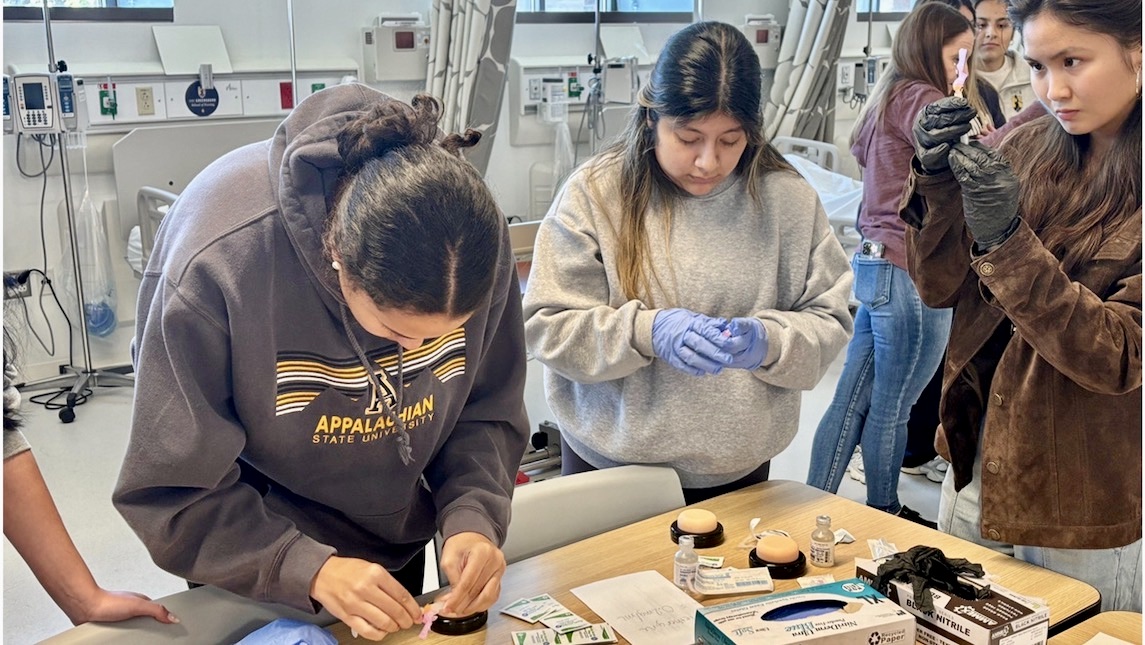
The RCDP pilot occurred in three definitive sessions over a few months. Fifteen undergraduate SON juniors and seniors participated, all of whom had either completed or were enrolled in the OB Didactic course and had received PPH didactic information.
The RCDP pilot contained three steps: review of PPH and its causes and intervention, tabletop simulation relay races, and the RCDP cycle. Students also participated in a pre- and post-RCDP survey.
“In the didactic portion, students reviewed PPH pathophysiology and etiologies and studied a detailed intervention sequence,” says Hall. “They also learned the rationale for each step in the sequence.” And this is by no means an easy sequence. Anders reveals there are 28 steps in the first two stages alone.
Both the quantitative and qualitative feedback Halls and Anders collected indicated positive results for the pilot. Not only did the team improve their response times, but students reported they thought the pre-work was important and that the training increased their confidence.


UNCG Nursing Students Leading Innovations in Maternal Care
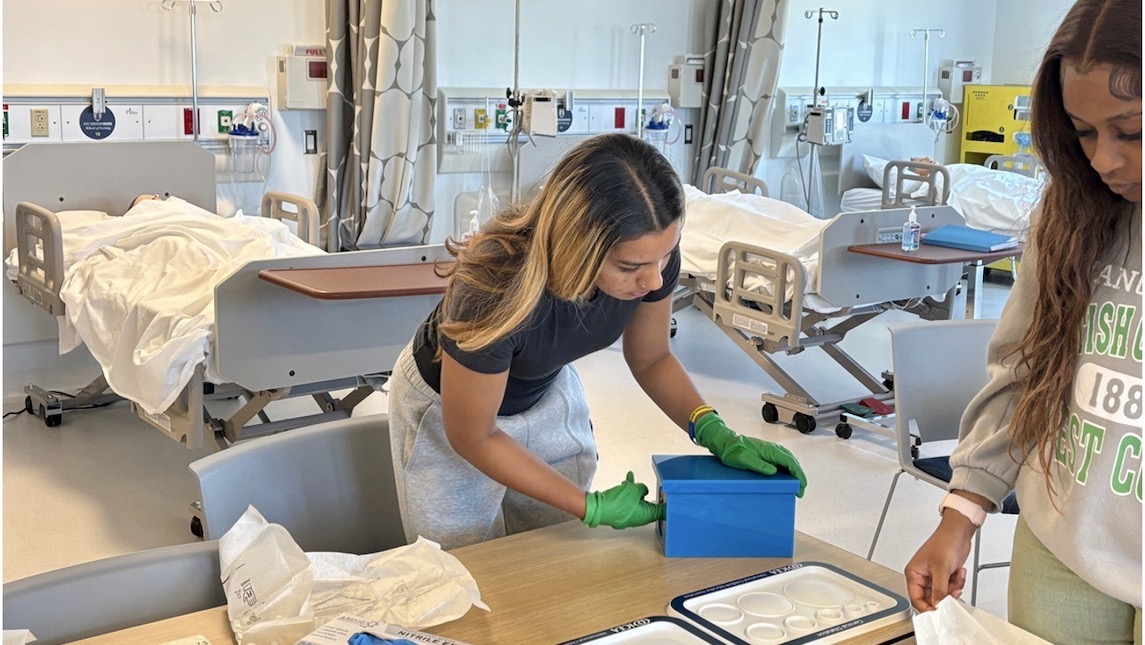
Anders also heads up the Leadership Education and Diversity (LEAD) in Maternal Child Health (MCH) program. The first implementation of RCDP was piloted by a small group of MCH Scholars.
LEAD in MCH is a Health Resources & Services Administration (HRSA) funded program, annually recruiting 10 students, named MCH Scholars, with the goal of preparing them for career and graduate education in maternal healthcare.
Both Hall and Anders’ passion around significantly improving maternal outcomes and effectively training nursing students is apparent.
“I would like to expand the offering, engaging even more students in the training as well as bringing in bedside nurses to expand their skills alongside of our students — and make it interprofessional,” says Anders.
The professors would also like to conduct a follow-up simulation to examine retention of the PPH intervention skills.
Written by Amy Burtch, AMBCopy
Photography by UNC-Greensboro School of Nursing