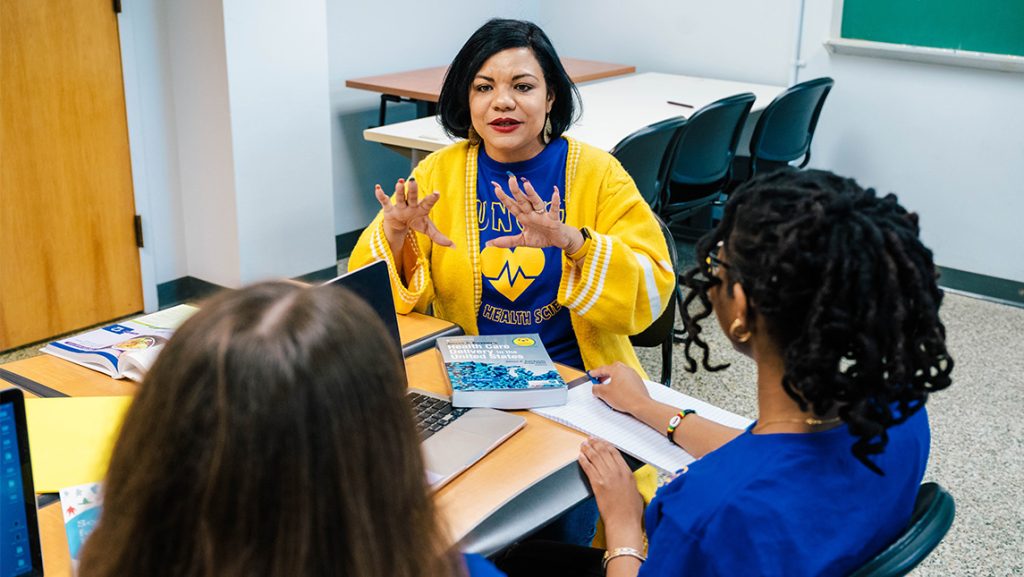
Before you can drive a new car or truck out of the dealership, tens of thousands of parts from thousands of suppliers must be put in place. Through its partnership with Volvo, the Bryan School of Business and Economics delivers well-prepared students with information systems and supply chain management degrees to promising careers with the auto manufacturer.
Staff Excellence and Ezekiel Robinson Awards Accepting 2026 Nominations
Posted on February 02, 2026
The UNCG Staff Senate is pleased to announce that nominations for the 2026 University Staff Excellence Awards and the Ezekiel Robinson Staff Emeritus Award will be open through March 1.
Staff Excellence Awards
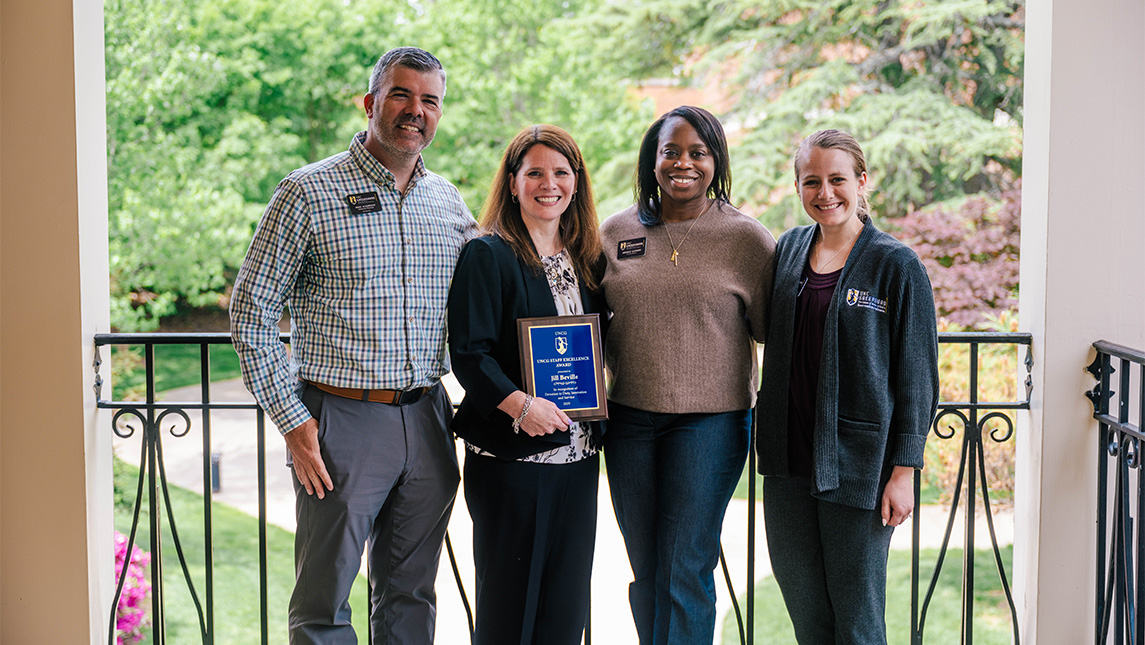
With the Staff Excellence Awards, UNC Greensboro recognizes up to two permanent SHRA or EHRA non-faculty staff members each year who demonstrate exceptional commitment to the University. Recipients each receive $1,000. Eligible nominees must be in good standing and have completed at least two years of service at UNCG by the nomination deadline.
Nominations should speak to one or more of the following areas:
Devotion to Duty: Exceptional service and dedication beyond normal job expectations that significantly enhances support for UNCG or the broader community.
Innovation: Development of new or improved work methods, practices, or initiatives that advance the mission of the University.
Service: Outstanding contributions through committee work or representing UNCG in civic or professional organizations.
Human Relations: Notable efforts that create or support a positive working or learning environment.
Other Achievements: Acts of service or accomplishment not covered above—such as safety, heroism, or extraordinary contributions.
When submitting a nomination for the University Staff Excellence Award, please include a letter of support that highlights the qualities that make your nominee stand out. Be sure to share specific examples that demonstrate their exceptional service, dedication, and impact across our campus community.
Ezekiel Robinson Staff Emeritus Award
This award honors a retired staff member whose long-term service, leadership, and dedication have made a lasting impact on the UNCG community. Current employees, faculty members, administrators or students are encouraged to submit nominations for retired staff whose contributions exemplify excellence in service and commitment to the University’s mission.
When submitting a nomination, please include a detailed explanation of why you believe the former UNCG staff member deserves the award. Your nomination should clearly describe the individual’s lasting impact on the university and the meritorious nature of their service. Please provide as much context and detail as possible so the review committee can fully understand the scope and significance of the nominee’s legacy. Strong nominations typically include:
Key achievements and accomplishments during their tenure at UNCG
Significant contributions to their department, division, or the wider campus community
Leadership, innovation, or service that strengthened university operations, advanced initiatives, or improved the student, faculty, or staff experience
Notable recognitions or accolades, formal or informal, that underscore the individual’s excellence
Evidence of sustained commitment to the mission and values of UNCG
Any other details illustrating why the nominee’s career reflects the distinction and honor associated with being granted Emeritus status
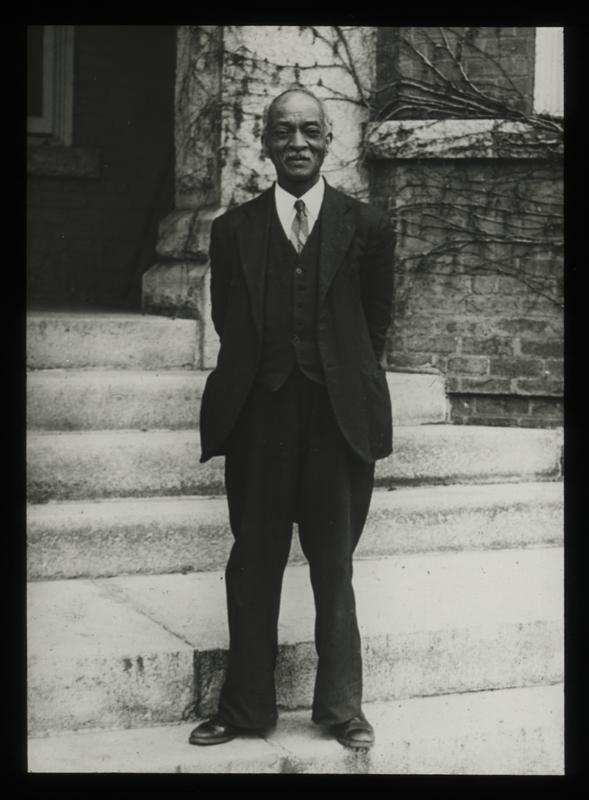
This award is named in honor of Ezekiel “Zeke” Robinson, a foundational figure in UNCG’s early history. Robinson was hired soon after the State Normal and Industrial School opened in 1892 and served the institution for 52 years, performing critical roles such as managing the African American support staff, ringing the campus bell, delivering mail, assisting with state dinners, and serving as porter for three college presidents.
He witnessed the University’s transformation, from horses to automobiles and from oil lamps to electricity, as the student body grew from 200 to more than 2,200. Robinson passed away on December 1, 1960, at the age of 93. At the time of his death, he was the last surviving member of the faculty and staff from the school’s first year.
His legacy of dedication, service, and steady presence continues to inspire generations of staff who help shape the University we know today.
Staff Senate looks forward to sharing the outstanding work of current and retired staff members with the rest of the community.
Professional services for combatting homesickness, depression, anxiety, imposter syndrome, the uncertainties of a mid-life career change, or even just finding someone to talk with about work-life balance, can make all the difference for a student excelling in college.
UNC Greensboro’s campus-wide commitment to prioritizing mental health is why The Princeton Review placed UNCG on its Mental Health Service Honor Roll for a second year in a row. It’s the only university in North Carolina to make this year’s honor roll.
“When a student tells us they finally found someone to talk to about the pressure they’re feeling, or that our peer coaching helped them balance coursework with a part-time job – that’s when we know this work matters,” says Vice Chancellor for Student Affairs Cathy Akens, Ed.D. “This recognition reflects years of intentional investment in making sure no Spartan has to navigate college alone.”
UNCG was one of 16 schools named in the inaugural honor roll last year. The Princeton Review judged universities on a set of holistic, all-encompassing parameters:
Overall administrative support through policies, including commitments to staffing and student support.
A campus quality of life for students that is both healthy and attentive to overall well-being.
How students are empowered to address their mental health through education programs and peer-to-peer offerings.
The Princeton Review praised UNCG’s “culture of care,” pointing to:
Counseling & Psychological Services programs, including the “Let’s Talk” drop-in consultations, the ACCESS program for students with ADHD, and the Free Expressions and Trauma-Informed Expressive Arts to promote wellness through artistic creativity.
Additionally, UNCG strives to support students through the JED Campus partnership. In the first year of this four-year initiative with the JED Foundation, it completed a self-assessment based on 80 evidence-based recommendations for college campuses. Student feedback showed Spartans rate UNCG high in meeting several national benchmarks.
“The support we provide to our students within Counseling & Psychological Services, and across the entire UNCG community, truly has created a culture of care,” says Jennifer Whitney, Ph.D., Director of Mental Health & Well-being with Student Health Services. “These words are not just a slogan. We know that the mental health and well-being of our students is critical to their success, inside and outside of the classroom.”
Story by Janet Imrick, University Communications Photography by Sean Norona, University Communications
Talks and seminars led by UNCG faculty and staff are a free opportunity to learn more about a unique field or discover the interesting things happening in other programs. All of them are free, and many fall during a lunch hour or offer an online option.
Browse the newest events highlighting Spartan expertise:
Making [Art] History Gallery Talk Jan. 30, 2026, Noon–1 p.m. Weatherspoon Art Museum, 2nd Floor
Join Weatherspoon curator Elaine D. Gustafson and Leila Villaverde, Ph.D., professor of educational leadership and cultural foundations, for a gallery conversation in the titular exhibition.
Model United Nations (And Beyond) Feb. 4, Noon–1 p.m. Foust Building, Room 206 with virtual option
This presentation by Assistant Professor of Political Science Michael Broache, Ph.D., will introduce UNCG’s award-winning Model United Nations program. It will include an overview of the basic structure, the one-credit peace and conflict studies course offered every spring semester, and how to get involved in the student-run Model UN Club. Attendees should register in advance.
Intelligent Molecular Systems from Nucleic Acids Feb. 6, 1–1:50 p.m. Sullivan Science Building, Room 201
MFA Writing Program Thesis Reading Feb. 6, 6–7 p.m. Scuppernong Books, 304 South Elm Street
Hailie Cochran, who currently teaches freshman composition at UNCG, is one of two MFA candidates presenting their work on this night at the popular downtown locale.
Transnational Teacher Exchanges: Why and How to Become a Teacher Feb. 7, 9–10 a.m. Online
This virtual discussion with Drs. Doris Kroiss and Ye He from the Teacher Education and Higher Education program, joined by a professor of the German institution Universität Tübingen, will delve into educator preparation in American and German contexts, shared experiences, and trans-languaging pedagogy and practice.
Women’s Table Talk: Beyond Body Positive Feb. 27, 11:30 a.m.–1 p.m. Stone Building, Room 219
This facilitated conversation with Janet Boseovski, Ph.D., and Ashleigh Gallagher, Ph.D., and will encourage reflection, discussion, and practical takeaways for navigating body image pressures at work and in daily life. Lunch is provided.
Verticillins: Reflections over 15 years Feb. 27, 1–1:50 p.m. Sullivan Science Building, Room 201
Dr. Nicholas Oberlies, Patricia A. Sullivan Distinguished Professor of Chemistry, breaks down the latest research into this potent fungal compound.
MBA Students Partner With Syngenta to Optimize Knowledge Sharing
Posted on January 30, 2026
A capstone project opportunity came from the agribusiness, which engaged Bryan School of Business and Economics students to identify the knowledge management system (KMS) that best suited the needs of its North America division.
Nominate Outstanding Students for UNCG Golden Chain Honor Society
Posted on February 02, 2026
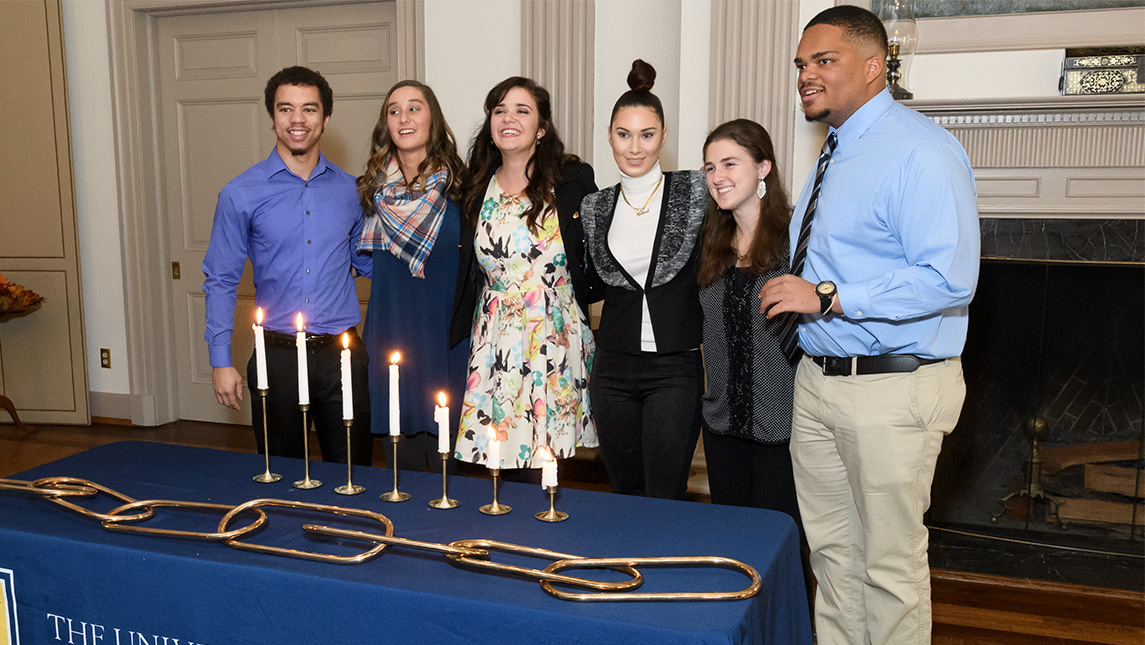
Faculty and staff are invited to nominate outstanding juniors and seniors for UNC Greensboro’s Golden Chain Honor Society, which was organized in 1948 to recognize students who have made significant and meaningful contributions to the university community.
“Golden” denotes excellence and rarity, and “chain” signifies linkage, a binding together of past generations of students who served the University with students of today and those generations yet to come. The organization is unique to the UNCG campus. Members embody the characteristics of leadership, scholarship, service, tolerance, judgement, magnanimity, and character.
Nominations are due March 16 before midnight. Nominations may be submitted by UNCG faculty, staff, Golden Chain alumni, and honorary members. Candidates must be juniors or seniors with a minimum 3.25 GPA. If you wish to nominate an eligible student, complete the Golden Chain Honor Society nomination form using your UNCG account.
Questions may be directed to Meredith Atchison at m_atchis@uncg.edu.
Solar Panels Serve Middle College with Clean Energy, New Educational Toolset
Posted on January 16, 2026
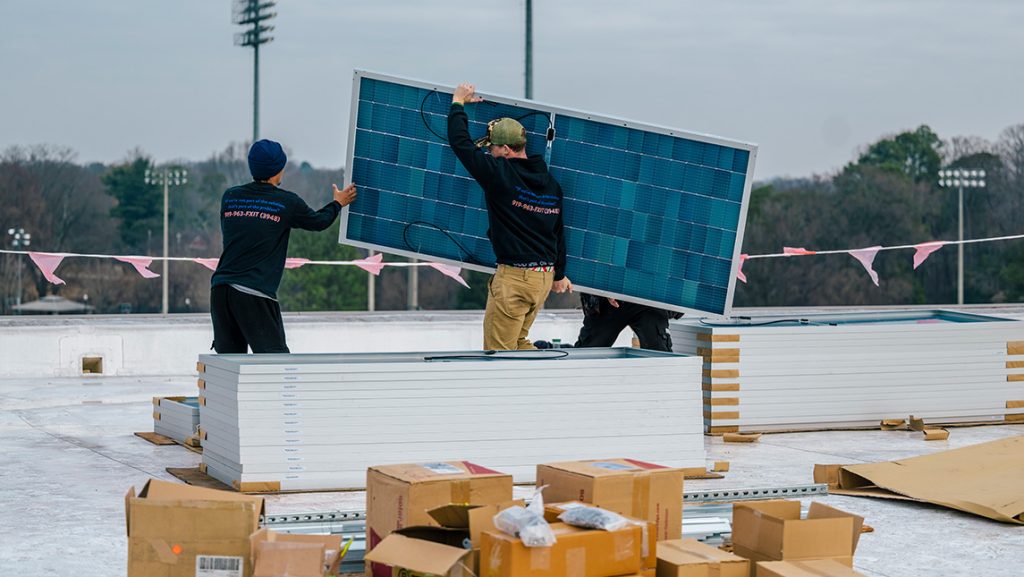
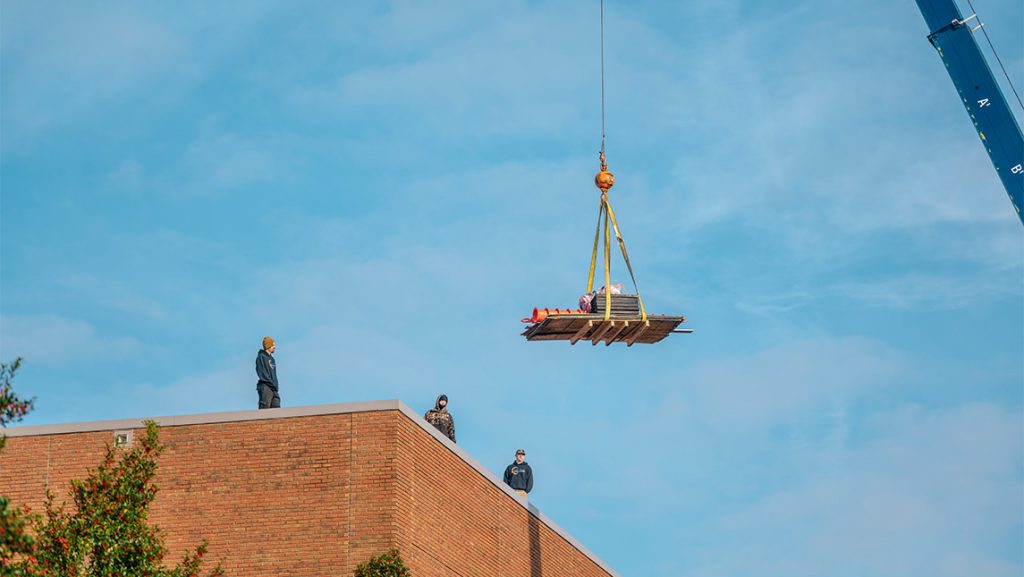
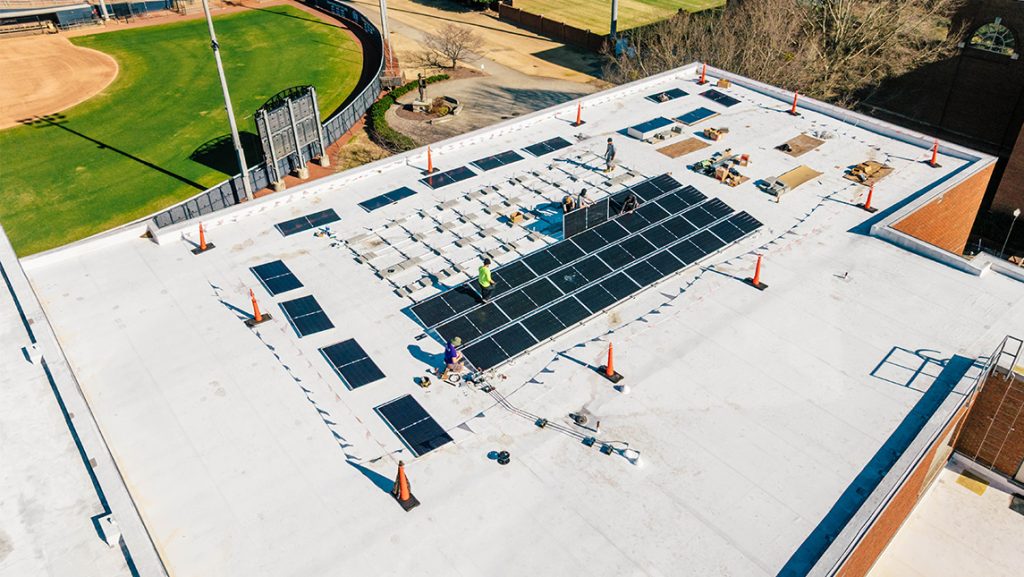
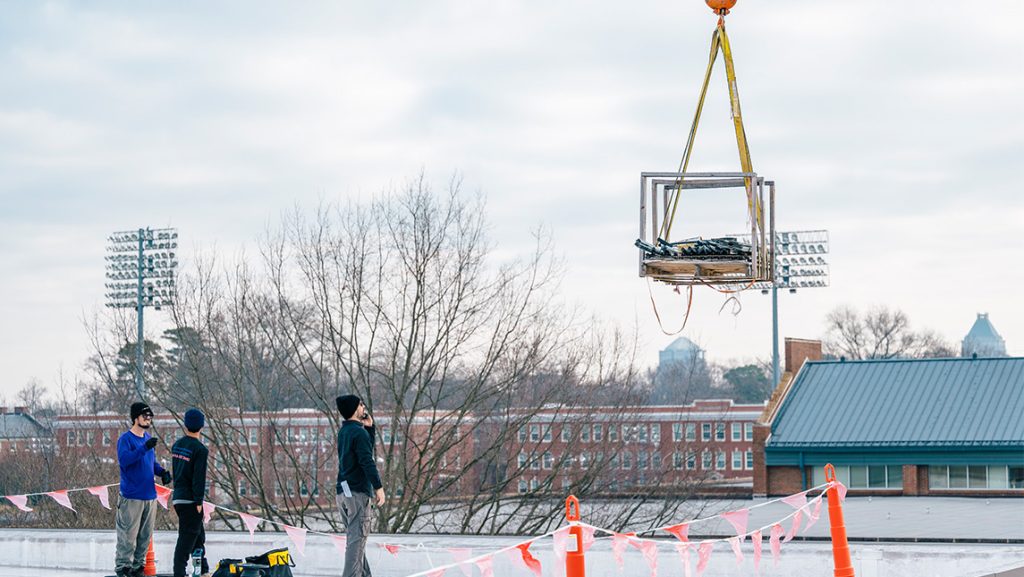
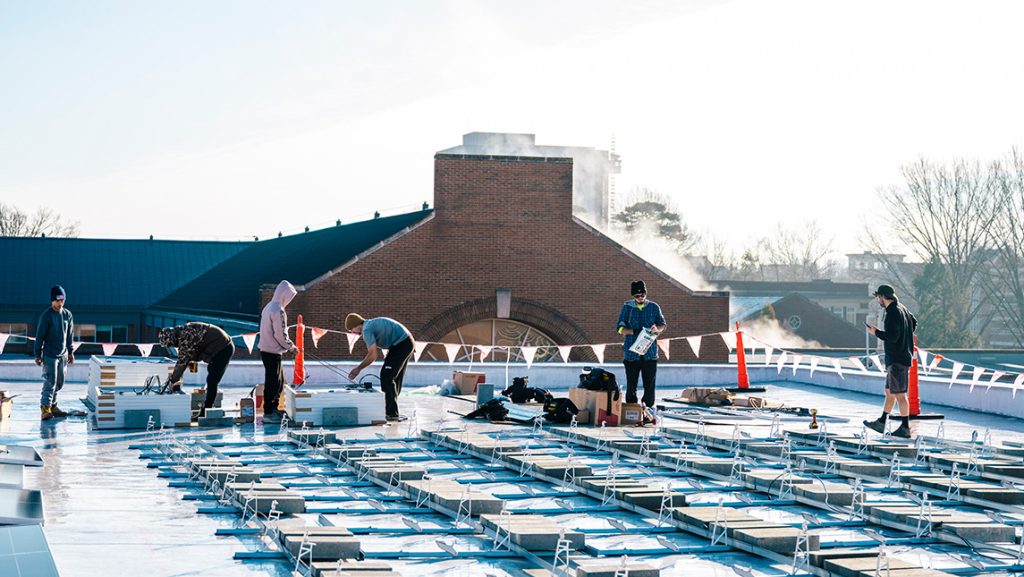
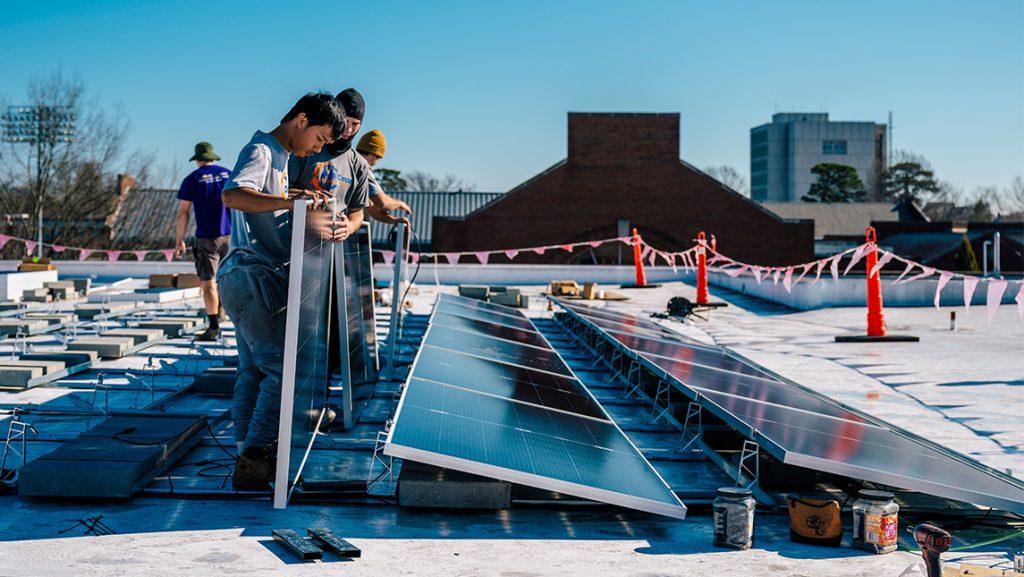
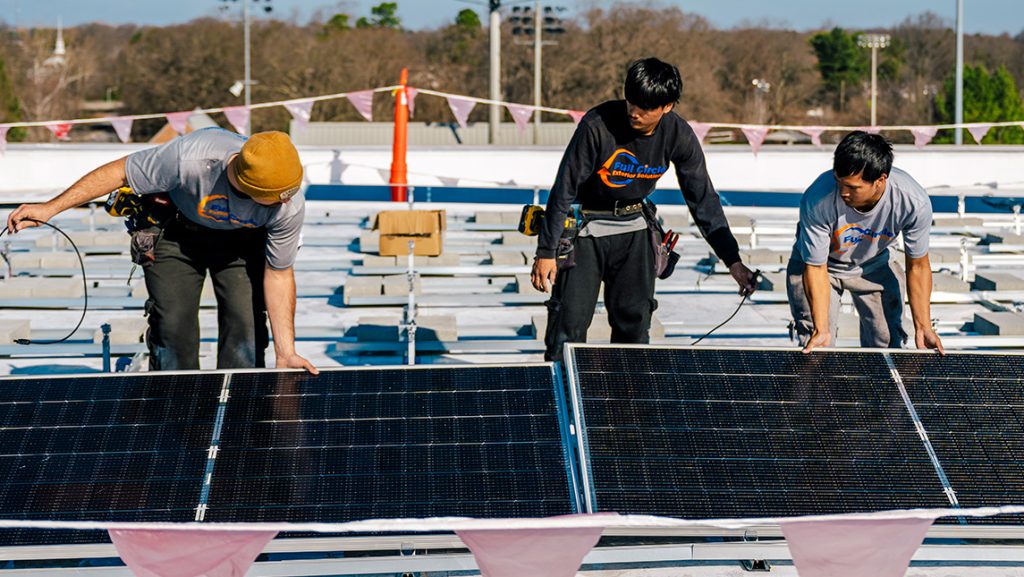
With the recent installation of a 20-kilowatt rooftop solar array, the Middle College at UNC Greensboro took a significant leap toward sustainability and hands-on STEM education.
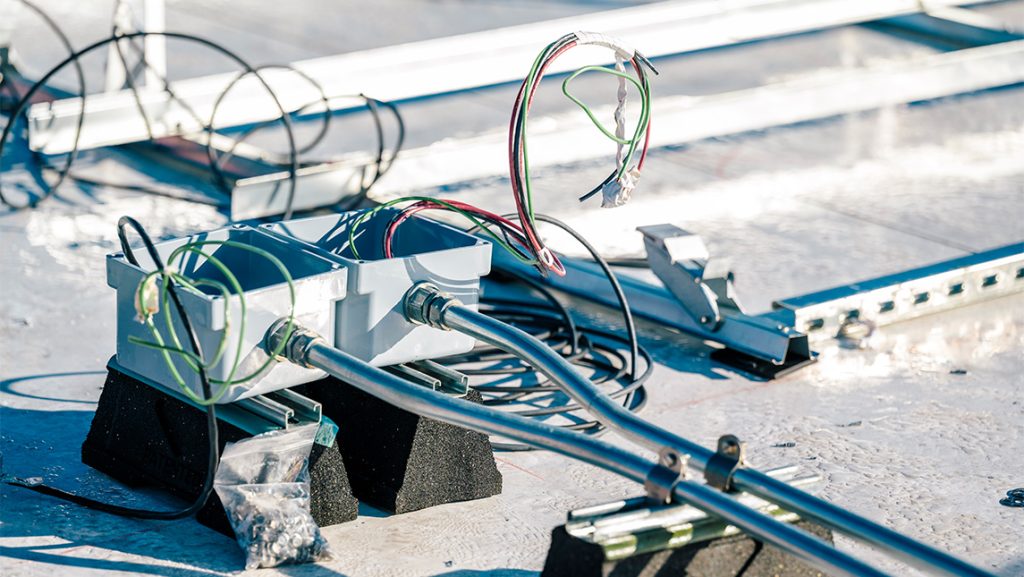
For the Middle College’s students and faculty, the solar panels offer them much more than clean energy. The installation includes a weather station and data monitoring equipment, so they can integrate real-time energy production and weather data into their classrooms. Students will read and interpret energy data, compare weather scenarios, and learn about the science behind renewable energy.
Harnessing the Sun
“This is going to be an exciting time for both the students and teachers at the Middle College,” says Thomas Hefner, a retired teacher of the Middle College who co-authored the grant application and helped train other teachers to use them in curriculums. “From reducing the campus carbon footprint to saving tax dollars with a lower electricity bill for UNCG, what excites me the most is the multiple ways the teachers will be able to bring in the solar panels as part of the coursework across so many disciplines, and not just science classes.”
There are plenty of ways to bring all the data into Earth and Environmental classes,” says Hefner. “Physics has objectives involving the study of electricity. There is chemistry in the polymers. Outside of science, courses about budgets can look at real data to see how much electricity is being produced and how that changes during the changes of the seasons. Math classes involving geometry and trigonometry can examine the angle of the sun and how that affects electrical production. Spanish and Social Studies can look at how areas of the world without a reliable electrical grid can implement solar electrical production.”
Students shared their own excitement about the new addition for the new year, including the Go Green! club’s co-vice president Anuluck Nhouyvanisvong. “I think this project is a great step towards our school going green,” said Nhouyvanisvong. “As co-vice president of the “Go Green!” club here, “I really admire the school for trying to reduce their carbon footprint and hope this project inspires students to also do what they can to protect the earth no matter how small the action.”
The solar array is part of a statewide initiative by NC GreenPower to expand public knowledge and acceptance of cleaner energy technologies to all North Carolinians through local, community-based initiatives. The Middle College was one of nine North Carolina schools in 2024 to be awarded the construction funding for a 20-kilowatt solar installation.
I am proud of UNCG and the Middle College for taking the initiative to become more environmentally conscious, as this is vital for our future.
Arbree Ware, Middle College student
It is UNCG’s second solar panel array after the 34-kW installation on the Nursing Instructional Building. Electricity output depends on the climate and weather, but the two systems combined can produce enough electricity to power approximately a dozen homes a year in North Carolina. This new array is fully funded by the Solar+ Schools grant program, sponsored by the State Employees’ Credit Union (SECU) Foundation.
Partnerships for Sustainability
According to NC GreenPower, its recipients have saved more than $50,000 cumulatively in electricity expenses. More than 280 teachers and 62,000 students in North Carolina have participated in its Solar+ Schools’ STEM and solar curriculum training. As the installation powers on, it underscores UNCG’s commitment to sustainability, real-world impact, and creating new and innovative opportunities for all students.
“It’s exciting,” said Sean MacInnes, UNCG Sustainability specialist. “We’re very thankful to NC GreenPower and to NC Solar Now for their support in funding and installing the array, to Principal Brown and Thomas for their support, and our Facilities team, who were integral to managing the project with the State Construction Office.”
For homeowners nationwide who are curious about installing solar for their homes, UNCG’s Office of Sustainability is now collaborating with EnergySage to help UNCG employees, alumni, and community members compare offers for rooftop solar installations for their homes and businesses. EnergySage is a free, 100% online comparison-shopping marketplace that connects people with vetted local installers.
The solar panels on our building have made us more environmentally friendly and have made us feel more self-conscious that we treat our planet the best we can.
Hadia Rashid, Middle College student
MacInnes says the Office of Sustainability is also promoting solar panel opportunities for local homeowners. Duke Energy is currently offering a limited time “PowerPair” pilot program that provides up to a $9,000 rebate.
This means a lot to me because when I heard we were getting solar panels, I immediately thought of my former teacher Thomas Hefner, who always advocated for people to be more eco-conscious and for a more sustainable earth.
Barack Aduwa, Middle College student
We believe this change represents an important step toward an eco-friendlier UNCG and most importantly an eco-friendly world.
Genny Arocho, Middle College student
Story by Janet Imrick, University Communications Photography by Sean Norona, University Communications
Global Symposium and More Opportunities for International Engagement
Posted on January 22, 2026
2025 Global Symposium
The Global Engagement Office (GEO) invites everyone to its second Global Symposium on Apr. 8, with a pre-event Open Mic Night on Apr. 7. Now is the time to submit ideas for topics and nominations for the Global Excellence Awards, which will be presented at the symposium.
Save the Date
The Global Symposium will last all day on Apr. 8. A schedule of events is in the works. UNCG faculty and staff can submit their ideas for sessions this year. GEO like to them to gather ideas and co-presenters and submit proposals for sessions that highlight global learning success stories and research. All proposals must be submitted by March 1.
GEO also sponsors the Global Excellence Awards, recognizing impactful work of UNCG faculty, staff, administrators, alumni, and community organizations.
Global Engagement Champion Award: This accolade honors individuals, including UNCG staff, friends and alumni, who have demonstrated exceptional commitment to global engagement and have exhibited leadership in supporting the University’s global engagement, reputation, and excellence.
Faculty Global Excellence Award: Presented to a faculty member or a group of faculty members who have demonstrated excellence in advancing global engagement through innovative projects, programs, or other internationally focused activities.
Student Global Impact Award: This recognition celebrates students, including undergraduates, graduates, international students, and visiting scholars, who have made significant contributions to our local and international communities through their studies, internships, or other forms of global community engagement activities.
On Apr. 7, mark you calendars for a new addition to this year’s symposium: the Global Arts Open Mic Night. This showcase of art and talent from around the globe will begin at 6:30 p.m. in Elliott University Center’s Claxton Room. The host this year is renowned local poet laureate Josephus III.
Anyone who would like to perform is encouraged to come early and sign up.
Apply for funding initiatives
GEO also shares two funding opportunities for UNCG faculty and staff to take advantage of this year and advance their own related research.
The Kohler Endowment is dedicated to the support of comprehensive internationalization efforts at UNCG, made possible by the generous support of Phyllis Penn Kohler and her husband, U.S. Ambassador Foy D. Kohler. GEO allocates annually a set amount of money from the Kohler Fund for awards to faculty and staff global engagement activities. The next deadline for spring applications for projects supporting international research, special projects, student programs, and internationalization of the curriculum is March 15.
The International Travel Fund, created by the Provost’s Office, supports faculty attending international conferences, presenting their work to an international audience, and interacting with colleagues from other countries. These professional conferences must be outside of North America. Applications for funding to attend international conferences for the spring and summer months are still available on a first-come first-served basis.
Mentorship Provides Immeasurable Value to Faculty Members and Advances the Science
Posted on December 18, 2025
Hannah Koch and Jessica McNeil
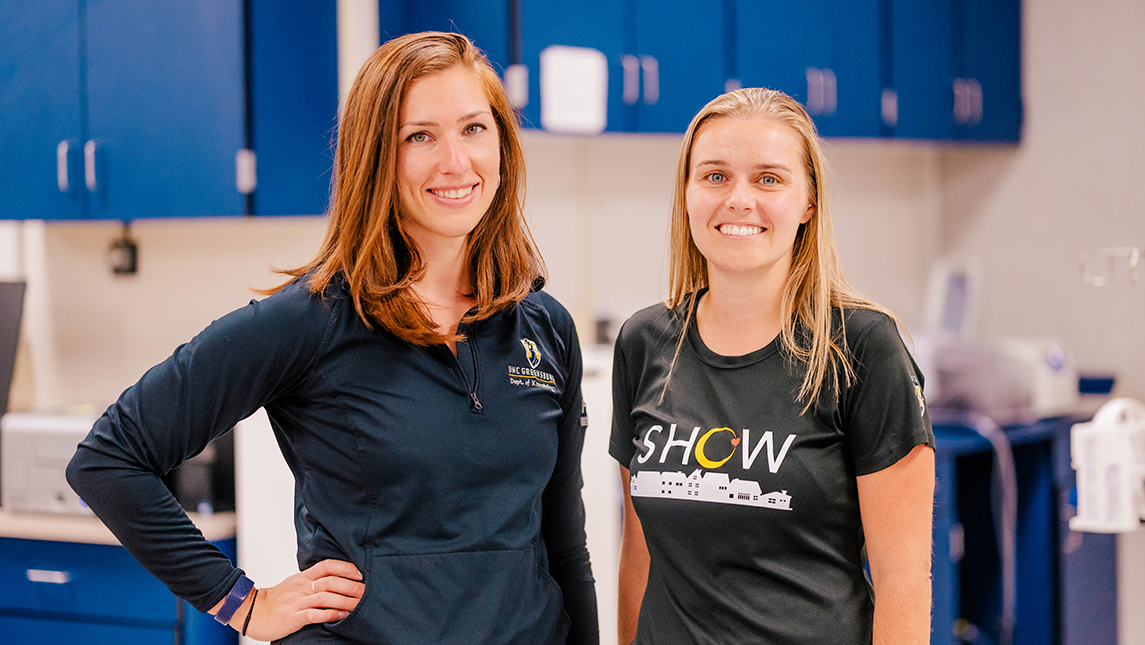
Dr. Laurie Wideman, Safrit-Ennis Distinguished Professor of Kinesiology, knows how much time, energy, and money goes into recruiting faculty members at UNC Greensboro. She believes those same resources should go into keeping them. At the School of Health and Human Sciences, that’s where mentoring comes in.
“The way that you keep them here is by helping them be successful,” says Wideman.
The Department of Kinesiology and Department of Human Development and Family Studies have intentionally developed a program to ensure faculty mentoring for the success and retention of junior faculty.
Early support leads to early success
When Assistant Professor of Kinesiology Jessica McNeil was hired in January 2021, Wideman eagerly agreed to mentor her. They were both Canadian and likely to collaborate because of their complementary research areas. The match made sense.
Just as McNeil was getting settled, she became Hannah Koch’s primary doctoral adviser. With the guidance of Wideman, they were able to navigate some of the ins and outs together.
When there was a grant call from the National Institutes of Health about McNeil’s area of expertise, sleep and cardiovascular risk in African Americans, Wideman encouraged her to apply.
She told McNeil, “I will help you all the way along. I will go through the entire process with you.” Despite skepticism about first-year faculty members entering an R01 to NIH, Wideman knew McNeil was capable.
“If I didn’t think she was ready, I wouldn’t have encouraged her,” says Wideman. “And it was great. She got funded in the second round.”
McNeil believes Wideman’s help was vital to securing the five-year award she’s working on today. “That was a pivotal moment early on for me,” McNeil says. “It definitely set me up for rapid success as a junior faculty here in the department.”
McNeil, in turn, encouraged Koch. She pushed her to do more publications and conference presentations, to take more opportunities for teaching, and to apply for travel awards to other labs.
In the last year of her doctorate, Koch became the project coordinator for McNeil’s NIH study. “I don’t know many students that get that opportunity,” Koch says.
“I think it’s always a success when you have a doctoral student who goes into academics shortly after they graduate, and I think it’s even more rewarding when it’s your first doctoral student,” says McNeil of Koch. “I am extremely proud of her, and I’m happy to continue to work with her now that she’s on our faculty.”
Graduation in December 2023, Dr. Laurie Wideman with her doctoral students Dr. Samantha Goldenstein and Dr. Emily Bechke. Faculty and students in kinesiology. Kinesiology Professor Dr. Jessica McNeil’s students conduct research for their R01 class.
Research to relationships
Dr. Jocelyn Smith Lee, associate professor in the Department of Human Development and Family Studies, underscores the kind of support that propels junior faculty forward. As a mentor to visiting assistant professor Dr. Indya Walker since she arrived as graduate student in 2019, Smith Lee leveraged her network.
Part of Smith Lee’s method of building relationships was developed during the William T. Grant Scholars Program. A huge component of the research-based program was mentoring.
“We were really socialized to think about how to connect, and also thinking about paying it forward,” says Smith Lee. “At the heart of it all, mentoring is about relationships. I work hard to see my mentees as people first.”
Walker noted this as part of her connection with Smith Lee when the two met.
“We connected on the research level in terms of our interests, and her mentorship style,” she says. “She made sure that I connected to the people and resources that would advance me, and training that enhances my skillset.”
More than mentorship
Smith Lee’s primary mentor has been Professor Heather Helms, who recruited Smith Lee to UNCG in 2017 during a professional conference.
“Heather has been a champion for me, in rooms that I’ve been in, rooms that I haven’t been in, but most of all, in my ear, reminding me of who I am, of what I’m capable of,” says Smith Lee. “There are a lot of real reasons for Black women in academia to have doubts. Tenured Black professors make up about just 2% of all tenured faculty.”
Smith Lee, who also gave birth during her tenure, concurs that having Helms as a mentor who had had that experience was instrumental.
“I was up for mid-tenure review in the same semester that I was going to give birth, and I spoke very much like someone who had never delivered a baby before, saying ‘Oh, I can finish this after Cypress is born,’” laughs Smith Lee. “Dr. Helms said, ‘No, I think you really want to…just go ahead and get this in.’”
The emphasis on finding balance goes beyond work and family.
“Work-life balance is really about rejuvenating and regenerating your brain,” says Wideman. “If you work all the time, you can’t be creative. Science requires creativity.”
In 2000, when Wideman arrived in the Department of Kinesiology, formal mentorship did not exist. She serendipitously found an adviser in Dr. Cheryl Lovelady, faculty emeritus in the nutrition department, when the two taught and did research together.
“She took me under her wing and helped me navigate the process of academics and being a mom and what that looked like,” says Wideman.
Wideman currently has four mentees, but her reach extends beyond those relationships.
Koch cites her as a significant influence. Wideman served on her dissertation committee, and Koch notes that she’s been extremely helpful especially because she’s been here so long, and “she’s an awesome scientist as well.”
Smith Lee names Wideman as one of her informal mentors too, even though they are in different departments, because Wideman inhabited that role during a summer grant-writing program.
“She always makes it a point to send me notes and check in. If she sees a news story about something that I’ve done with my work, she writes to congratulate me on those things and just always reminds me that she’s available,” says Smith Lee.
“As a senior faculty member, my role is to help junior faculty to be the best version of themselves,” Wideman says. “I’m here to help the next generation of scientists be successful.”
Story by Alexis Richardson Photography courtesy of Laurie Wideman, Ph.D., and Jessica McNeil, Ph.D., School of Health and Human Sciences
Conway Gift Paves the Way for First Class of Scholars
Posted on January 15, 2026
A $3 million scholarship, supported by the Bedford Falls Foundation donor-advised fund, helps ease financial barriers for students as the University’s new Direct Admit program works to address North Carolina’s projected nursing shortage.