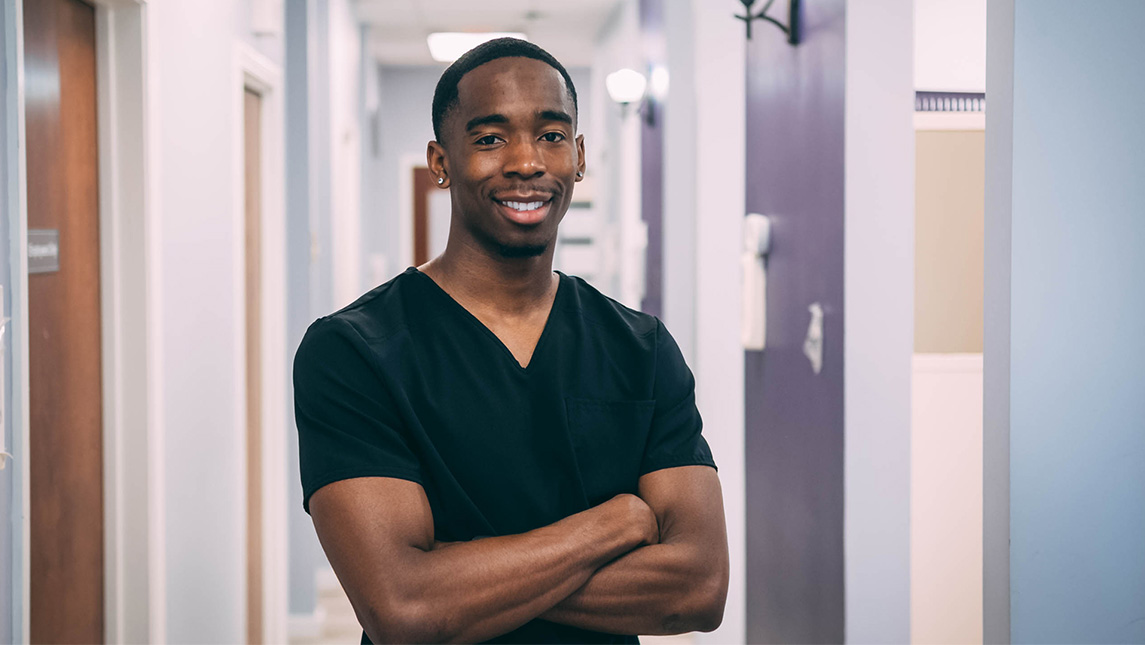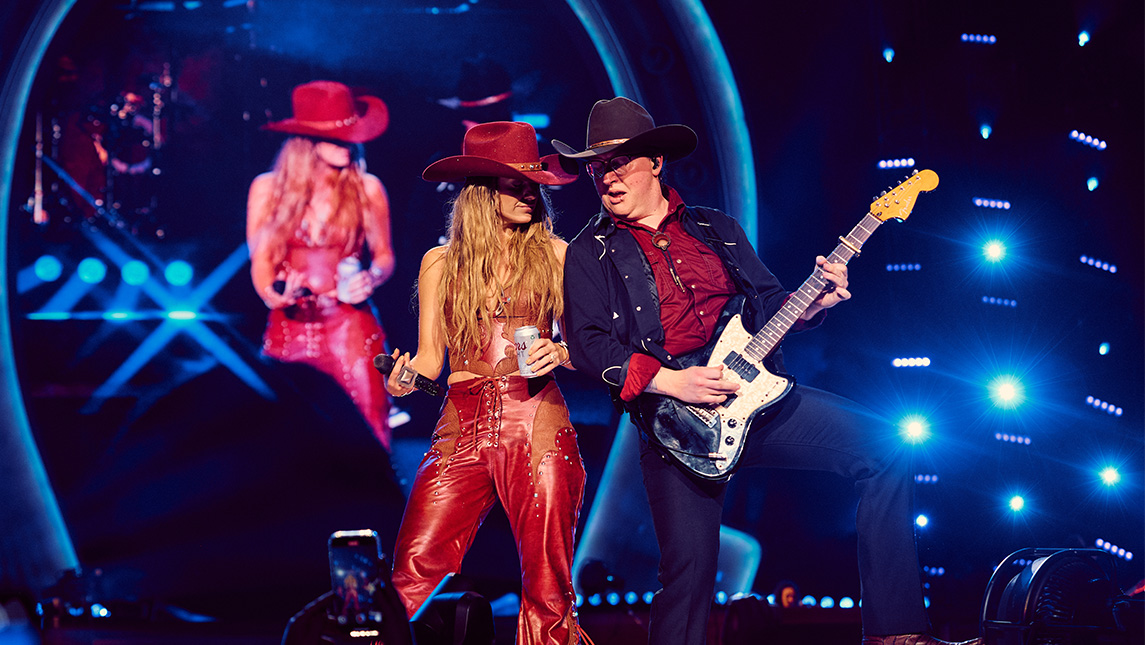
It’s been a winding journey from childhood performances on small-town community theater stages, but as the lead guitarist for country music star Lainey Wilson returns to his home state on June 20 to play for a sold-out crowd at Bank of America Stadium, it’s safe to say this UNC Greensboro School of Music alumnus has made it.
Wilson and her band, with Aslan Freeman ’11 at the helm as bandleader, have just wrapped their Whirlwind World Tour with stops across the US and in Europe, Australia, and New Zealand. Before he geared up for their 2026 festival season, Freeman talked North Carolina music roots, his college days in Greensboro, and how preparation met opportunity — or in his words, “stubbornness met luck” — unlocking his success.
A Theater Kid Finds His Way
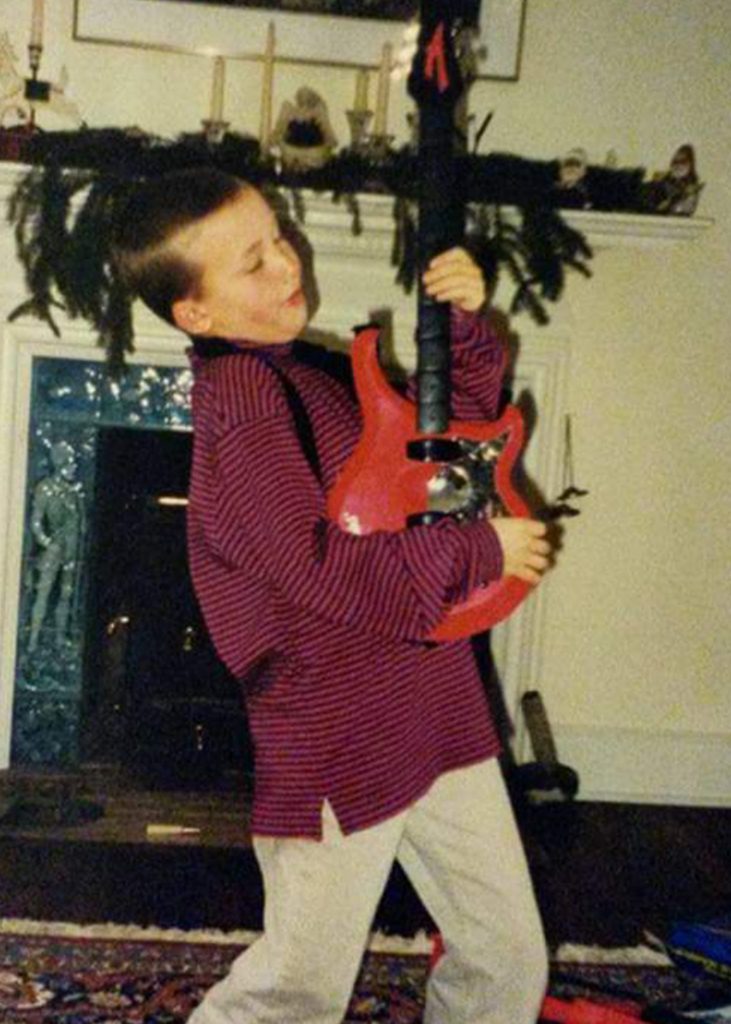
Freeman grew up in a performance household in the small town of Sanford, N.C. In the early ’90s, his father Bill Freeman helped run the local Temple Theatre. Freeman remembers his father and family friends pulling him into productions “whenever they had a kid’s role to fill.”
This exposure molded his early aspirations for performance, but college was always part of the plan. He remembers watching his dad go back to school in his 40’s for a degree at UNCG: “I was growing up in the Temple Theatre and often riding with him to UNCG to turn in projects, so Greensboro just became a place I was familiar with.”
In high school, Freeman’s artistic interests shifted from acting to music. He played the drums in the marching band, was proficient in piano, and could also sing. He took up the guitar, joining friends in garage bands where he wrote songs, gravitating towards the punk genre.
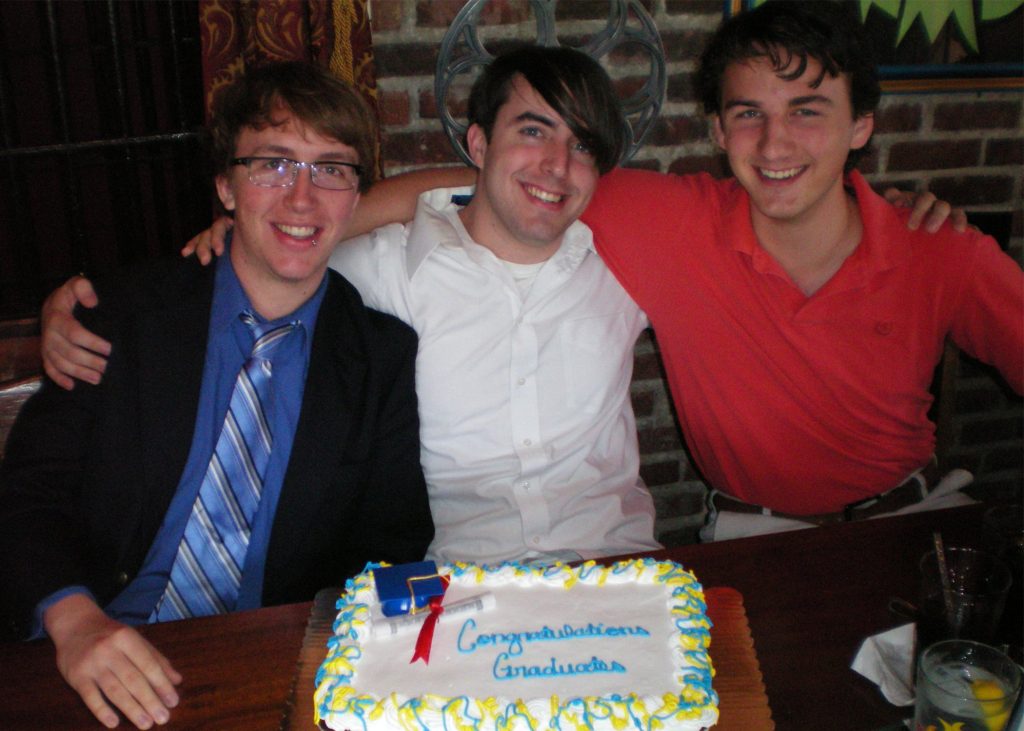
Later, when Freeman considered colleges, he was drawn towards the classical guitar program offered by UNCG’s College of Visual and Performing Arts. The campus felt comfortable, and he was awarded the Ethel Virginia Butler Centennial Scholarship, a full ride to the Lloyd International Honors College, that sealed the deal. After his first year, Freeman switched to a music composition major for a broader knowledge of music.
“I knew I wanted to be a touring musician with my own band, and if my mom hadn’t insisted that I go to college, I may have gone straight to that,” he explains. “But my back-up plan was producing for others, and the composition degree was much more helpful with that. Learning how to write sheet music and orchestrate for different instruments has come in handy. In addition to songwriting, I’ve been able to write string arrangements and choral arrangements for Lainey thanks to that foundation.”
Skill Meets Hustle in Local Music Scene
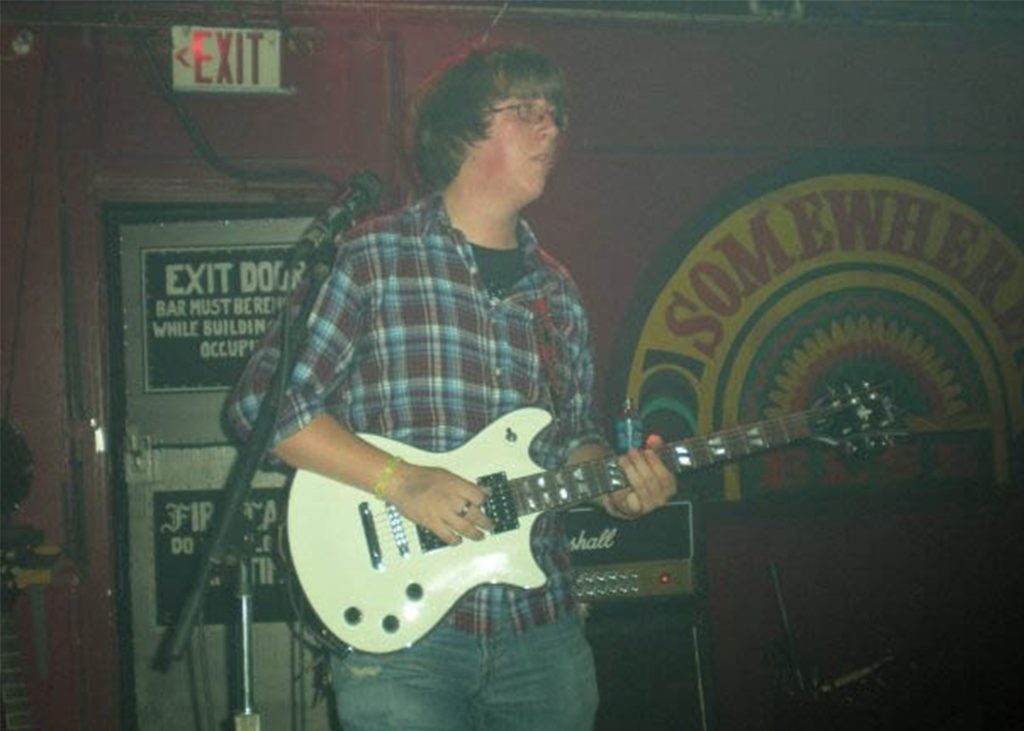
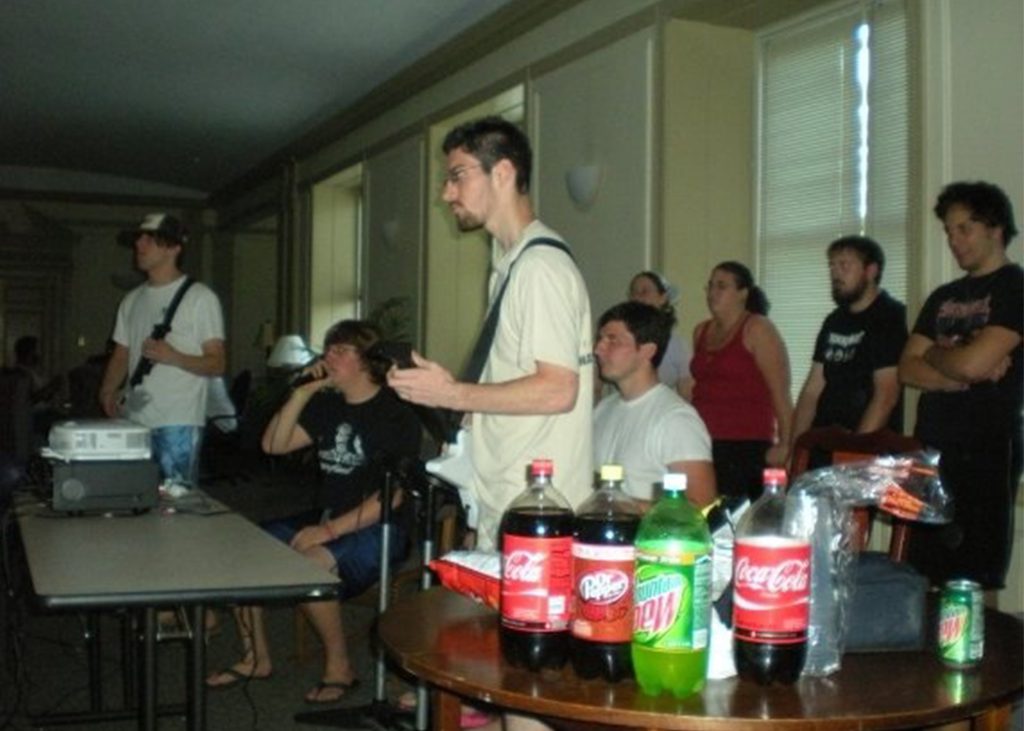
Freeman continued to play in punk bands in college. Plus, his theater background gave him skills to work lighting or sound in local venues. He recalls running lights for free as an intern at Greene Street Nightclub in downtown Greensboro. “I was barely 18 working shows in bars,” he admits.
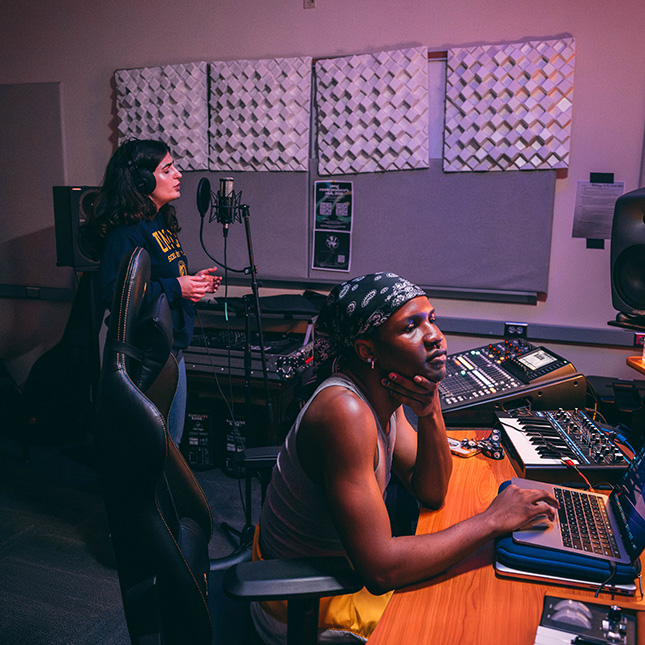
Freeman said ‘yes’ to every opportunity that presented itself in Greensboro’s music scene. Along the way, he taught himself how to operate a studio soundboard. He watched talented peers give up their bands to get “real jobs,” but Freeman was able to make ends meet between gigs by applying his diverse music skills to help up-and-coming artists make demo recordings.
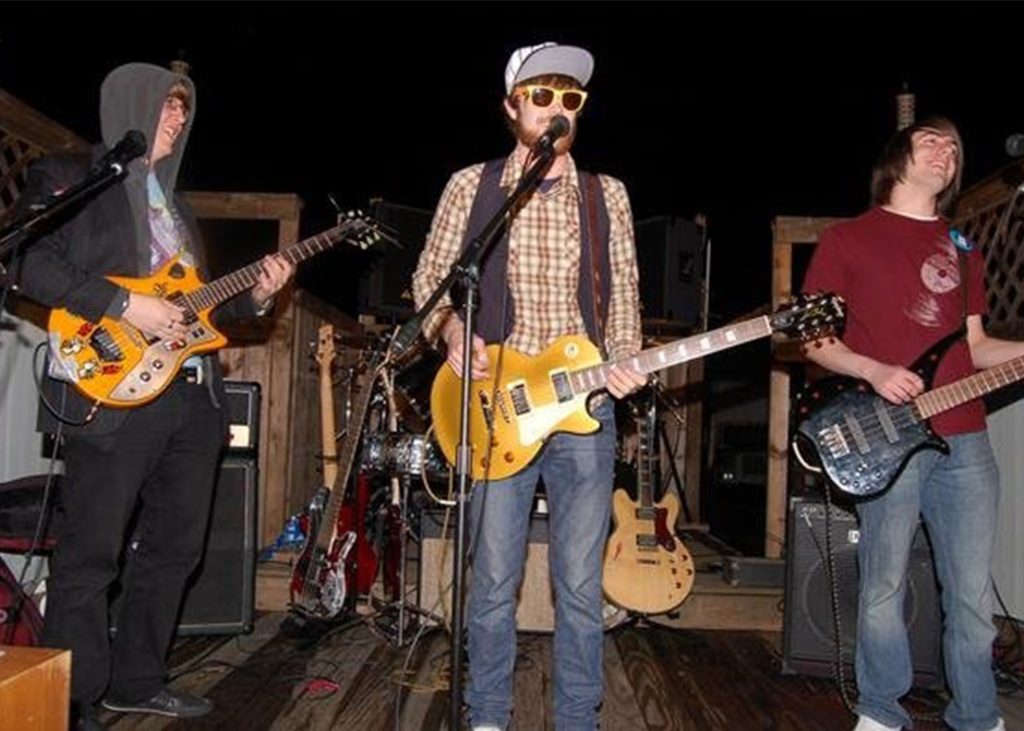
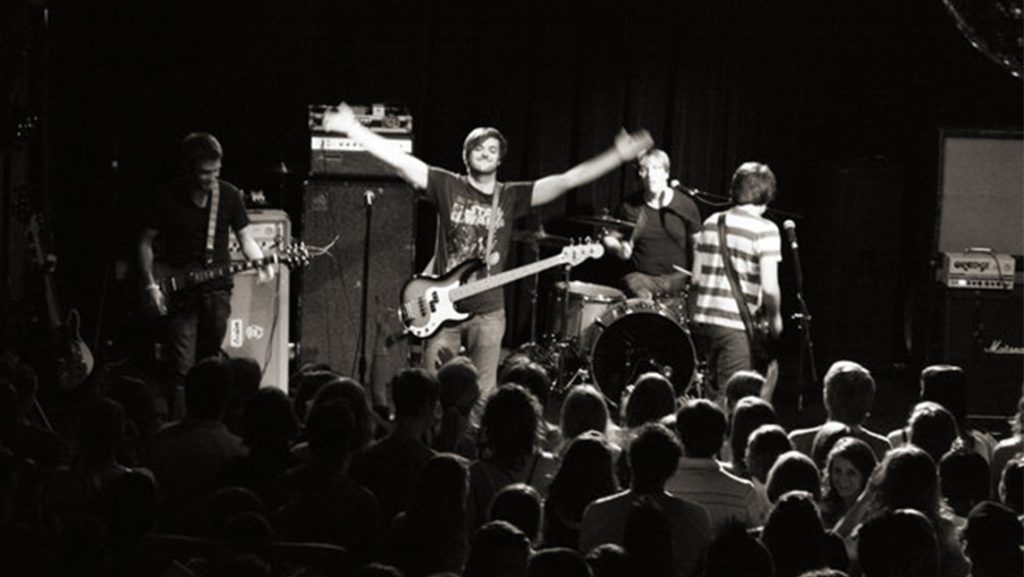

After graduating in 2011, he moved from band to band, playing in his hometown as well as popular venues like the Blind Tiger, formerly on Walker Avenue, or the Cat’s Cradle in Chapel Hill. Eventually his connections landed him with Deep South Entertainment, a company that managed bands, produced shows, and partnered with a bar called City Limits Saloon in Raleigh.
City Limits is where Freeman first met a young Lainey Wilson, who was opening for Frank Foster, an independent artist from her home state of Louisiana; but their connection wouldn’t solidify until Freeman made a crucial decision that proved to be a defining move for his career.
“Being a part of the NC music scene so thoroughly and for so long was very impactful, but I was burnt out and needed a change of scenery,” Freeman says. “North Carolina has such a diverse music scene and it’s so good, but very few export it. It bums me out that some of the best musicians I know are not sharing their music more broadly.”
Nashville Calls and Destiny Answers
Knowing he had to take a chance to bring his music to a larger audience, Freeman moved to Nashville in 2016.
He compares Nashville’s mid-sized industrial vibe to what he loved about Greensboro as a teenager. His plan was to take a break from producing, maybe get a job at a bar, and play in a few bands with vocalists he’d met.
“I went to a writers’ round that my friend and fellow North Carolinian, Kasey Tyndall, was playing,” he explains. “As it turned out, Lainey was performing there as well.”
Freeman was really impressed with the new music she’d written and offered to help her produce it. Since they were connected through friends, he promised to keep the expenses low. It wasn’t a stretch considering he could sing backup vocals and play almost all the instruments she’d need for a fully produced demo. Just a few months later, they were recording new music in a studio space that Freeman rented, “which was basically the closet of a former optometrist’s office.”
He played with her for a few bookings, and soon Wilson asked him to join her for a Frank Foster event in Ruston, near her hometown of Baskin, Louisiana. As broke musicians do, they road-tripped from Nashville and stayed overnight in her parents’ house.
“We spent the entire eight-hour drive sharing our favorite artists with each other, talking about music and life, and eating BBQ,” says Freeman.
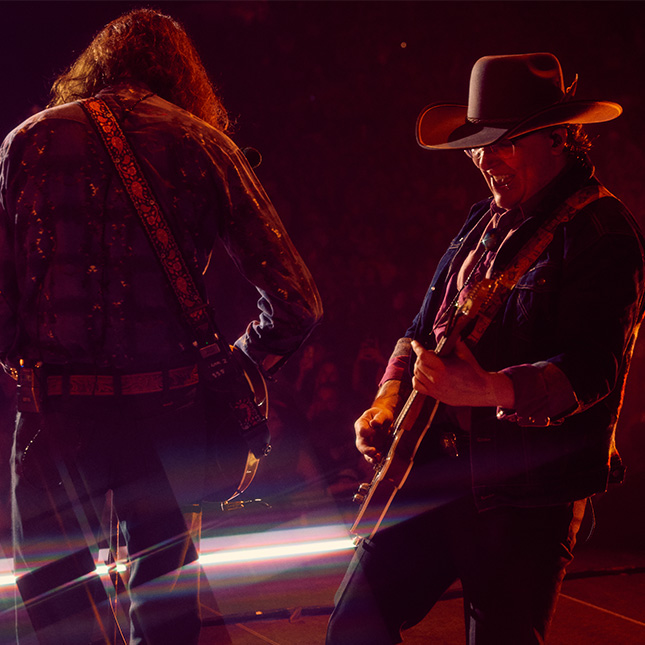
Although he never thought he’d end up playing country music, they connected creatively and found inspiration from many genres. “Meeting Lainey made me look at country music differently,” he explains. “The songwriting is just insane. I love the meaningful stories you can tell.”
Freeman eventually helped Wilson put a new band together, reaching out to contacts he’d met in North Carolina like bass player Tommy Scifres, who was also a UNCG alumnus. Freeman’s vast knowledge and experience was now advancing Wilson’s career as well as his.
“I met her as a producer, and then because I played everything on the record, she asked me to put a band together for her,” he explains. “Now I’m a touring bandleader.”
A Band on the Rise
As Wilson’s new songs were released, the band began opening for well-known artists like Jason Aldean, and playing small venues, festivals, and state fairs.
“I remember in those days we were playing large clubs and really beautiful theaters throughout the South, and I thought, ‘Yeah, this is exactly what I wanted,’” he says. “I just thought that if I can make the same amount of money my parents make but by playing music, I’ll be happy. And then we put out “Things a Man Oughta Know” in 2020 and everything snowballed very quickly.”
He remembers playing the World-Famous Armadillo Festival in Arkansas in May 2021. They typically ended shows with a 4 Non Blondes cover. “It was always a crowd pleaser for us,” Freeman explains. “But this time, we followed it with ‘Things a Man Oughta Know’ because we’d just released it. When the crowd sang every word louder than the ‘What’s Up?’ cover, that’s when we knew it would be a hit.”

When most musicians were taking a break during COVID, Wilson was busy with self-promotion and pushing for radio play of her new song.
“Then when venues opened back up, the crowds showed up,” says Freeman.
Wrangling Opportunities

The popularity of the hit Paramount series “Yellowstone” was also on the rise during this time. “The very first song that Lainey and I produced in that tiny optometrist’s office was in Season 2, which premiered in 2019,” says Freeman. “Workin’ Overtime” is the soundtrack for the famous scene when the Yellowstone ranch hands sneak an angry bull into a bar to get revenge on a biker gang inside.
Wilson’s music fit perfectly in the “Yellowstone” score; and the show’s creator Taylor Sheridan was so taken by Wilson’s stage presence, he created a character for her. Despite her lack of acting experience, Wilson was a recurring member of the cast in the last season of Yellowstone. She essentially played herself in the role of young country singer, Abby — with Freeman at her right hand on guitar when she performed at fairs and barbecues in the storyline.
Freeman was also there when Wilson met Sheridan. It was pre-“Yellowstone” when he was producing a rodeo competition called “Run for a Million.” Wilson and the band played in the arena after the rodeo for Sheridan and other VIPs. As he tells it, “Lainey is so quick to make friends and in a matter of 20 or 30 minutes, Sheridan thought she was the coolest thing ever.”
Stubborn Enough for Stadium Shows
The pinch-yourself moments have continued for Freeman as he comes home this week to play the Carolina Panthers’ stadium with Wilson. They open for the legendary Chris Stapleton as part of his All-American Road Show. Through it all, he’s quick to keep it real with aspiring music students like he was back in 2011.
“Once you’re good enough to do the work you want to do — maybe not the best, but you’re good enough — then it’s about waiting for the opportunity to present itself,” he explains. “You have to be stubborn enough to wait, and then say yes to the scary thing that you’re not sure you can do.”
“I’ve also been insanely lucky,” he continues. “But really that desire to keep showing up is what you need to find some kind of success, especially in an artistic field.” He pauses before adding humbly, “I’m just happy to be sitting in a brand-new studio that I built in the basement of my house. It’s a real studio; I never thought I’d make enough money to do that.”
Freeman’s success can be attributed to thorough preparation, the connections he made along the way, and the hard work he put in for a profession he was unwilling to give up, but he still seems like that eager theater kid performing for his community in Sanford.
“The job is exactly the same, genuinely,” he says. “No matter what size stage you’re on — whether it’s a stadium with 50,000 people or a theater with 500. When we walk out there, we’re doing the exact same job and treat it the exact same way.”
Story by Becky Deakins, University Communications.
Photos submitted by Aslan Freeman.