Phosphorus is essential to life. It helps grow the food we eat, strengthens our bones and teeth, and plays a critical role in our DNA and how our cells use energy. There is no substitute for it.
Yet about 80% of the phosphorus used in our food system is lost along the way to soils, waterways, and waste streams. Only about 20% ultimately makes it into our diet. That loss creates a double problem: The phosphate rock we rely on to grow food is a finite resource. The phosphorus that is lost can pollute waterways and fuel harmful algal blooms.
Solving that problem is the focus of a research effort underway at UNC Greensboro, where scientists are developing new ways to detect, recover, and reuse phosphorus before it is lost for good. This summer, that research also became the foundation for a new generation of student scientists.
WHY PHOSPHORUS MATTERS
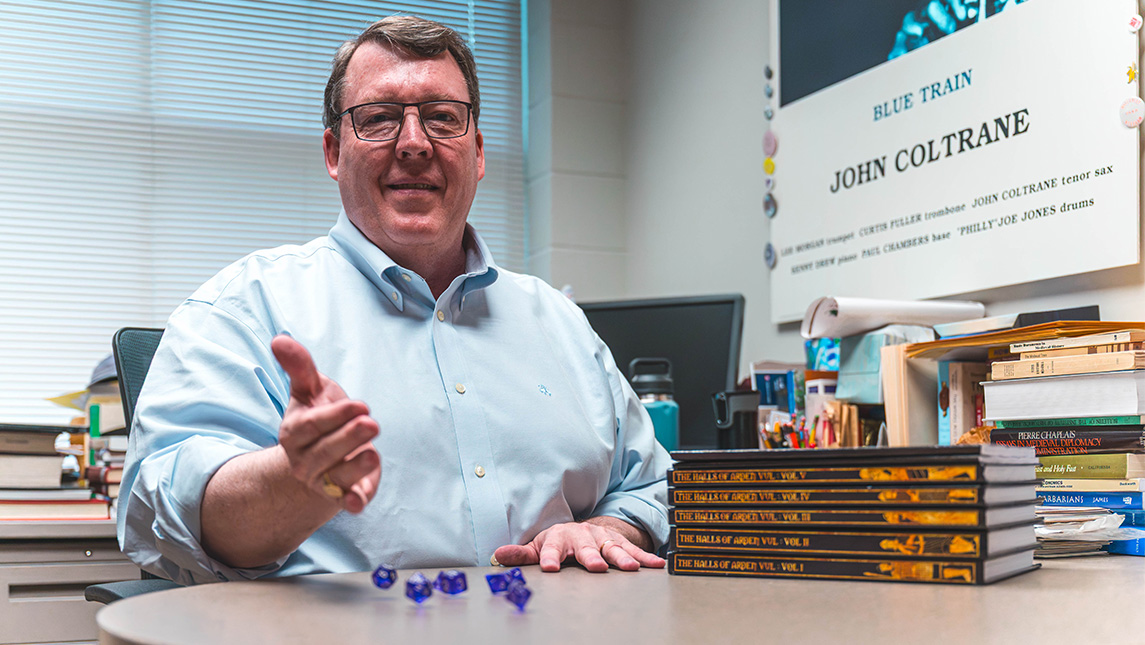
“Phosphorus is very important for DNA and RNA,” says Dr. Jason Reddick, head of UNCG’s Department of Chemistry and Biochemistry. “Phosphates are part of the frame of the DNA ‘ladder’ that provides its stability to connect the nucleotides. It’s what our cells need to put all the pieces together.”
Plants need phosphorus, too, which is why it is used in fertilizer and modern food production. The problem is that phosphorus does not always stay where we need it. When excess phosphorus moves into lakes, rivers, and coastal waters through runoff, erosion, and waste streams, it can fuel algal blooms. As those blooms grow and decompose, they can reduce oxygen in the water and harm fish and other aquatic life.
Most of the phosphorus we use comes from phosphate rock, which is mined from the earth. The supply is not endless, and much of the world’s phosphate rock is concentrated in relatively few places, making the global food system vulnerable to supply disruptions. That is why researchers study the entire phosphorus cycle: how we use it, where we lose it, and how more of it might be recovered and reused.
UNCG RESEARCH AT THE CENTER OF A NATIONAL EFFORT
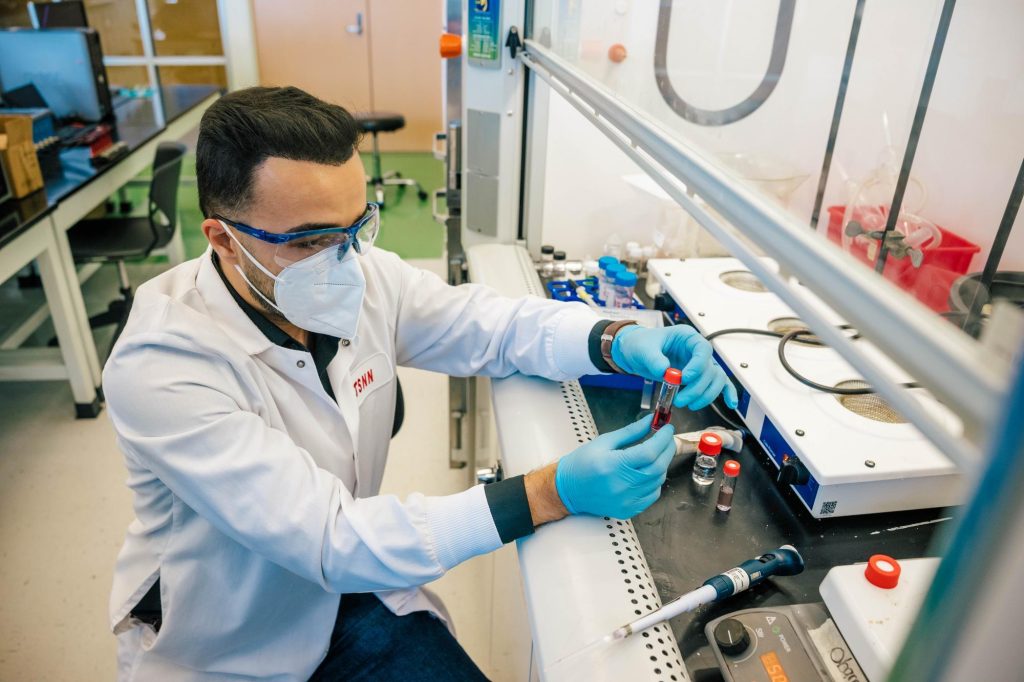
UNCG is one of 11 institutions participating in the Science and Technologies for Phosphorus Sustainability (STEPS) Center, an interdisciplinary research center funded by the National Science Foundation and led by NC State University. The University supports the STEPS Center through materials science research and workforce development, contributing new technologies for phosphorus detection and recovery. while preparing students for careers in the field through hands-on programs like ExPlorers Camp.
At UNCG, Vice Chancellor for Research and Engagement Dr. Sherine Obare leads a research group tackling one of the first and most fundamental steps in the phosphorus sustainability challenge: finding faster, simpler ways to detect phosphorus in water. Before phosphorus can be recovered, recycled, or reused, researchers must first know where it is.
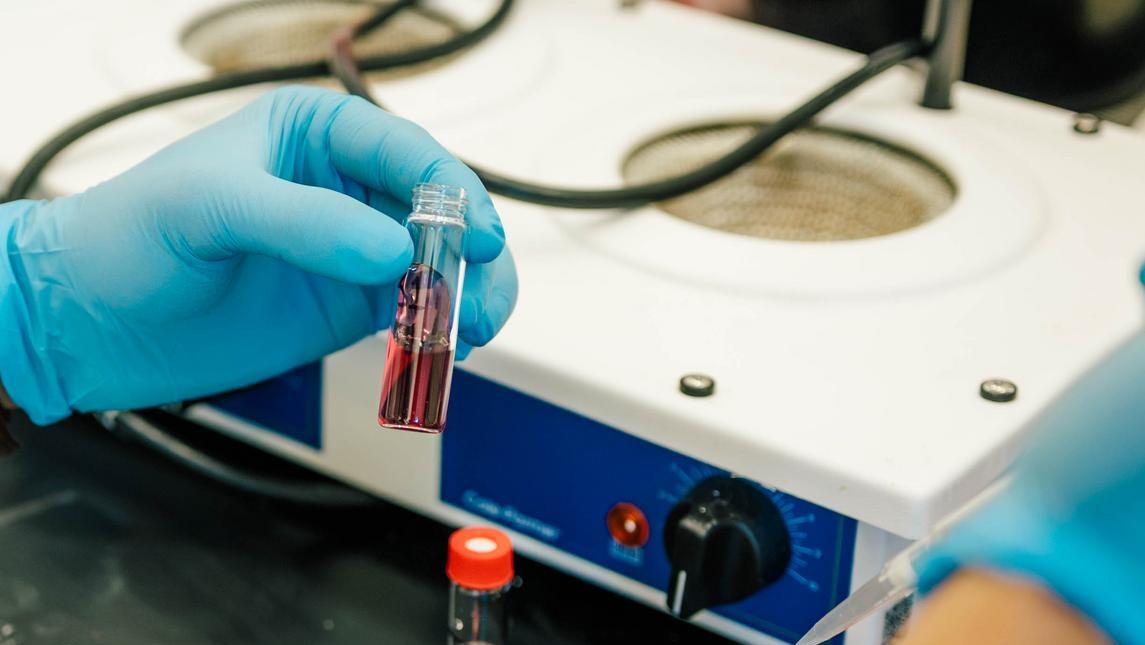
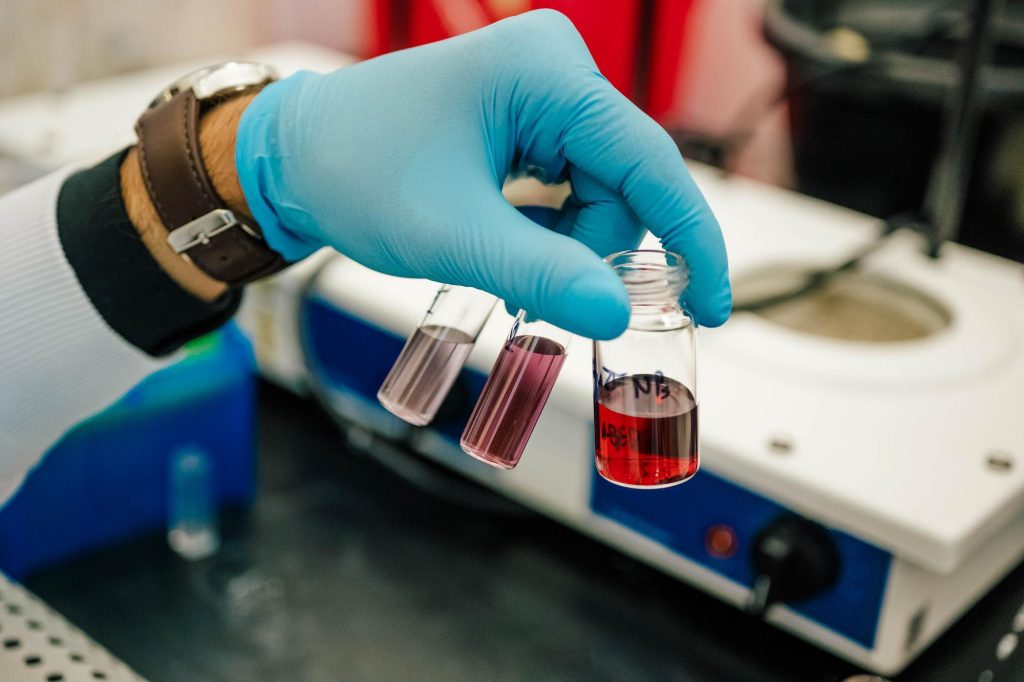
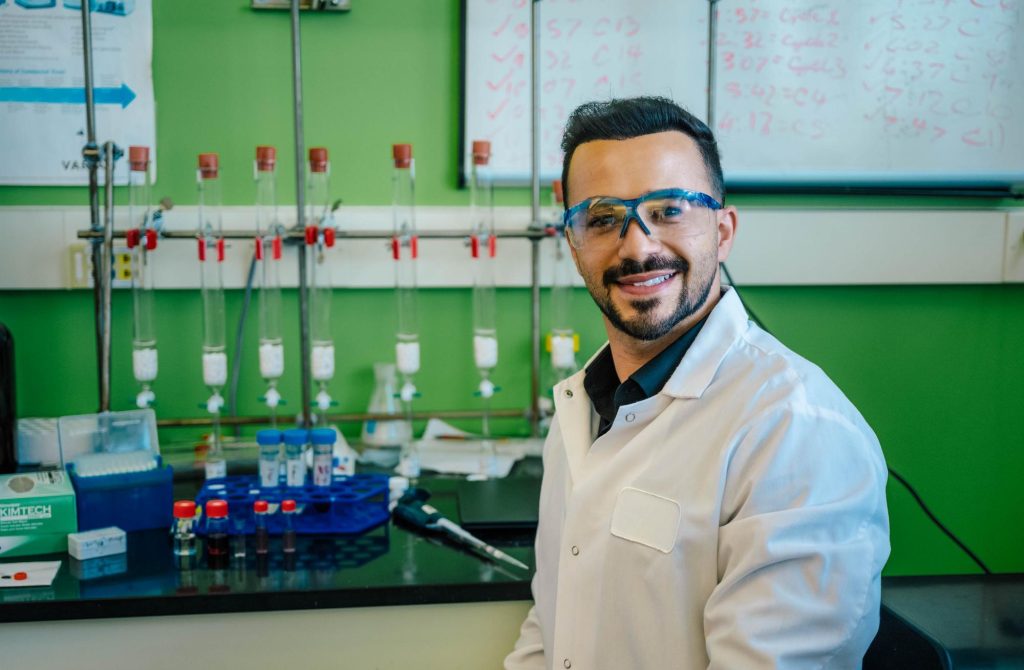
The specialized instrumentation and complex procedures for current phosphate detection methods limit how quickly and widely they can be deployed. In a recent project with UNCG doctoral student Abed Alqader Ibrahim and researchers from the University of Florida, the Obare Research Group developed a gold-zinc ferrite nanocomposite sensor that detects different forms of phosphate in water through visible color changes, offering a path toward rapid, selective phosphate detection in environmental water samples.
“Rapid, low-cost phosphate detection is the first step toward actually solving this problem,” said Obare. “The faster and more easily we can measure where phosphorus is in a water system, the sooner we can act to recover it before it becomes waste or pollution. We are working to move this technology from the lab bench toward tools that water systems and farms could use directly.”
But Obare and her colleagues are quick to note that solving the phosphorus sustainability challenge will take more than new technology. It will also take people who understand the problem, can examine it from different angles, and are ready to imagine new solutions. That is the thinking behind UNCG’s annual ExPlorers Camp.
FROM THE LAB TO THE CLASSROOM: RESEARCH IN ACTION


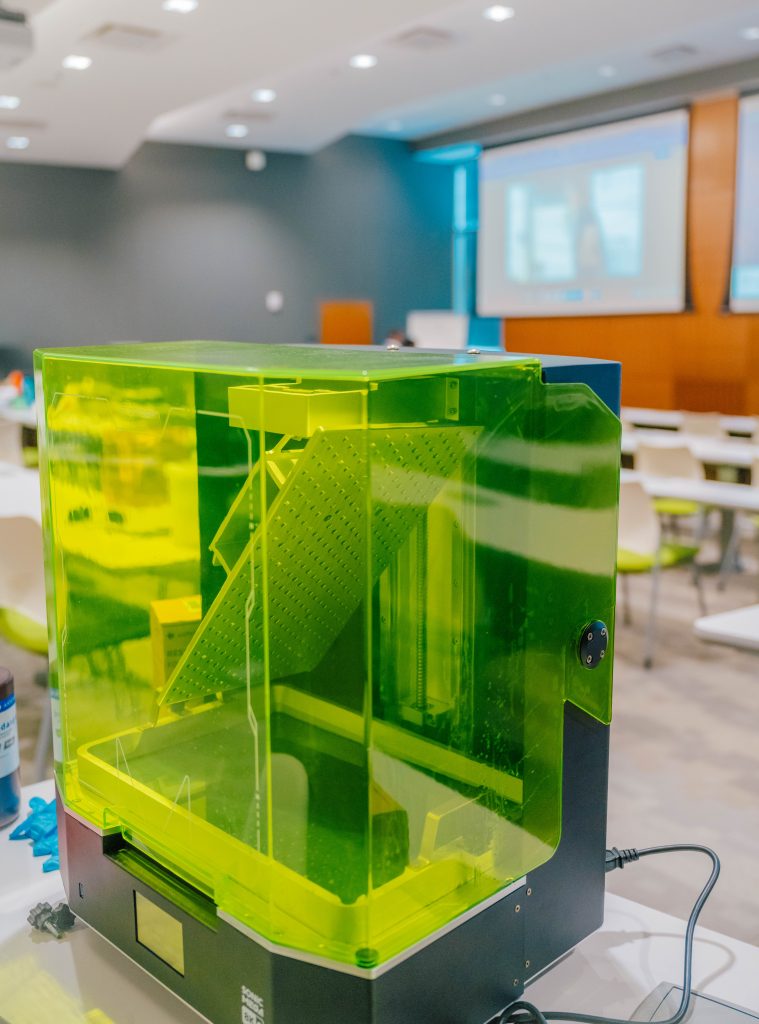
This summer, Dr. Chartanay Bonner, a UNCG research scientist with the STEPS Center and Director of Strategic Initiatives and Research Development, turned the Obare Research Group’s work into a hands-on learning experience for a group of high school students. Bonner created and leads the ExPlorers Camp, building the curriculum around the same real-world questions UNCG and the STEPS Center are working to answer: How phosphorus moves through our food and water systems, and how to preserve more of it.
That design is what makes ExPlorers Camp a premier model for STEM education rather than a standard summer enrichment program. By anchoring the camp in an active research problem, Bonner created a convergence experience. Students do not merely study phosphorus purely as chemistry. They encounter it as it actually exists, as a challenge that spans chemistry, environmental science, agriculture, urban planning, and public policy at once. It demonstrates to the students how a problem like phosphorus sustainability cannot be solved within a single discipline. Preparing the next generation to take a cross-disciplinary approach is as much a part of the solution as the science itself.
For Yatin Koduru, a rising junior who will attend the North Carolina School of Science and Mathematics this fall, phosphorus was not exactly top of mind before he arrived at camp. “I didn’t know much about phosphorus before ExPlorers Camp,” Koduru said. “I knew it was used in fertilizer, and that sometimes it runs off into nearby lakes and streams and causes algal blooms, but other than that, not much.” That was exactly the point.
Throughout the week, campers explored the same phosphorus challenge driving UNCG’s research, from multiple angles. They visited a wastewater treatment facility and the UNCG Plant and Pollinator Center, learned about the City of Greensboro’s approach to stormwater, participated in a town hall on water sustainability, and examined the connections among agriculture, urban development, water quality, and the environment. These activities not only teach students what phosphorus is but also encourage them to explore how it affects food, water, agriculture, cities, technology, and public policy. Then the camp challenges them to think about what could be done differently.
On the final day of camp, five teams took the stage in Curry Auditorium to present research-driven proposals of their own. One group focused on increasing urbanization and proposed permeable pavement and green spaces to reduce runoff. Another developed a farm simulator to explore ways of reducing phosphorus loss. A third designed a natural filtration system for wastewater.
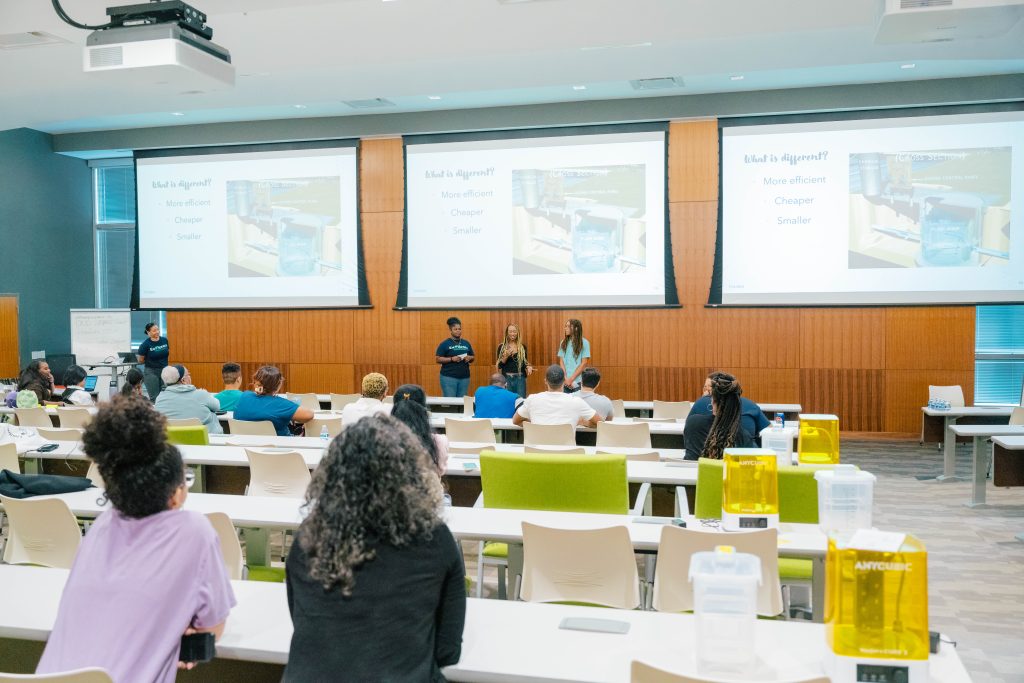
Koduru’s team focused on phosphogypsum, a waste product created during phosphate processing that contains naturally occurring radioactive materials. “I learned that for every ton of phosphate that’s mined for commercial use, five tons of phosphogypsum are produced,” Koduru said. “Our team focused on getting the radioactive elements out, then extracting other things like rare earth elements that can be sold to industries, or we can convert the phosphogypsum into fertilizer.”
By the end of the week, the campers had moved from learning what phosphorus is to proposing, in miniature, the same kinds of solutions UNCG researchers are pursuing in the lab: faster detection, smarter recovery, and new uses for what would otherwise be waste.
THE NEXT GENERATION OF PHOSPHORUS SOLUTIONS

Phosphorus may be something most people rarely think about. But with no substitute for it, and as so much is lost to soils, waterways, and waste streams, the need for better solutions is only growing.
At UNCG, that need is driving research on faster phosphorus detection and recovery — work that is already shaping how the next generation of scientists learns to think about the problem. Looking ahead, the Obare Research Group plans to expand testing its phosphate sensor technology in real-world water systems. Meanwhile, UNCG continues to grow its role in the STEPS Center, from materials science research to workforce development programs that prepare the next generation to carry this work forward.
Story by Brian Clarey, University Communications
Photos by Sean Norona, University Communications