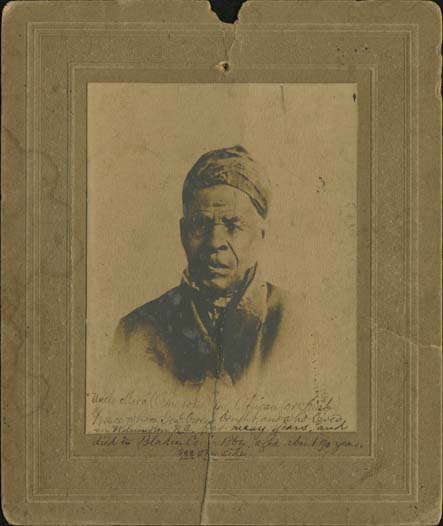
Omar ibn Said wrote in Arabic. Educated in the Senegal region, he converted as an American slave to Christianity, but his writings lead one to believe he continued to follow Islam. His autobiographical slave narrative, written in Arabic, became a part of the Library of Congress collection this year.
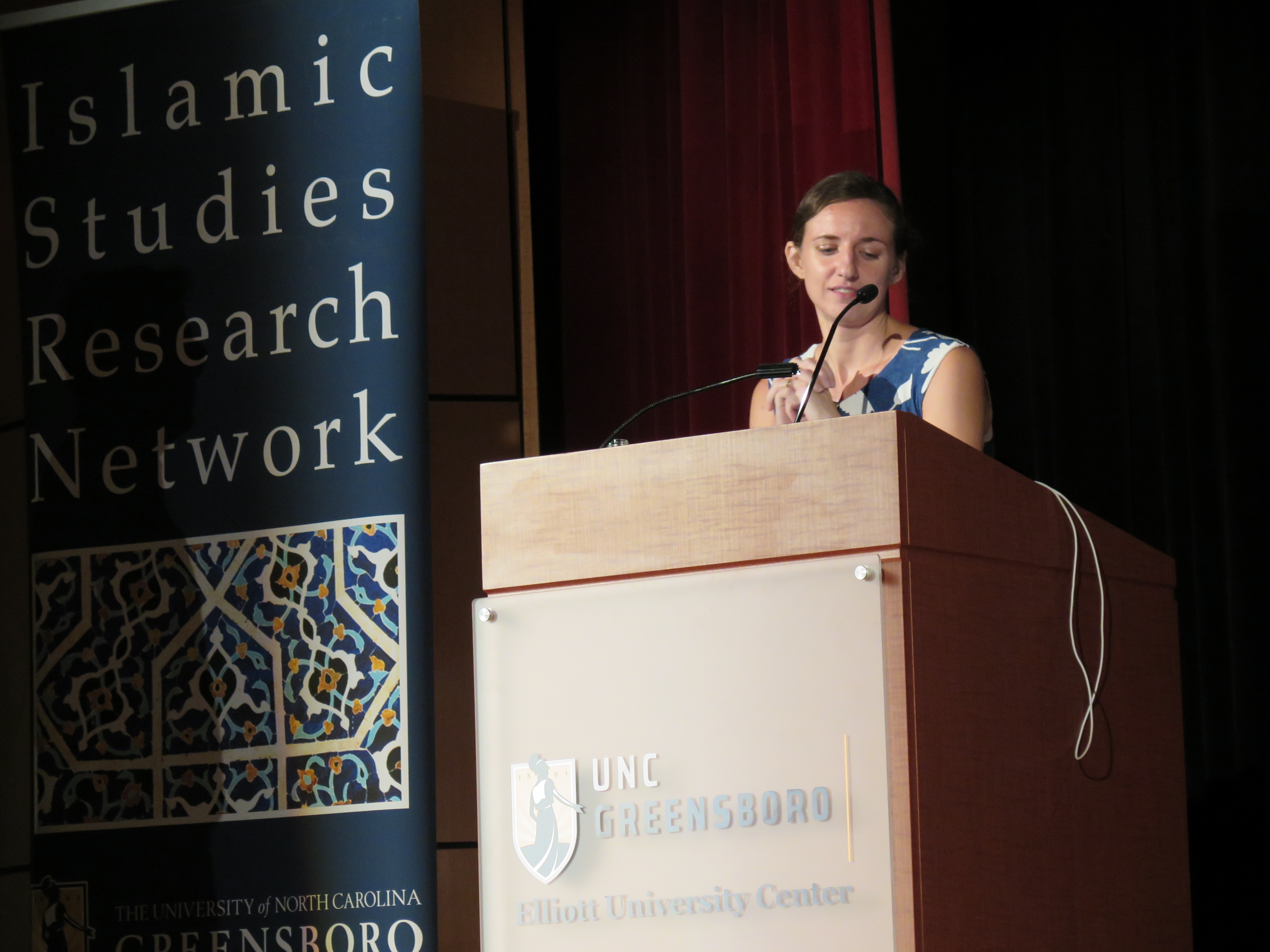
Ayla Amon, curatorial assistant at the Smithsonian’s National Museum of African American History and Culture in Washington, DC, spoke last Tuesday in the EUC Auditorium on Omar ibn Said and many other slaves in 18th and 19th century America who were Muslim.
Dr. Omar Ali – who noted that UNCG has a new Islamic Studies minor – introduced the speaker. Dr. Asa Eger assisted in ensuring all the questions were addressed during the Q&A portion.
Perhaps 20 percent of the slaves in the Americas were Islamic, she said.
As Amon noted, our society has tended to believe slaves arrived in America with a blank slate of religion, and were converted to Christianity. It’s a simplistic, inaccurate narrative. The fact is: Many had been Muslim and many more had been exposed to Muslim views and culture. Slaves were bringing their spiritual beliefs and cultures with them.
Writing in Arabic and retelling the Koranic passages they remembered (if imperfectly) were acts of rebellion and ways of retaining and expressing their identity.
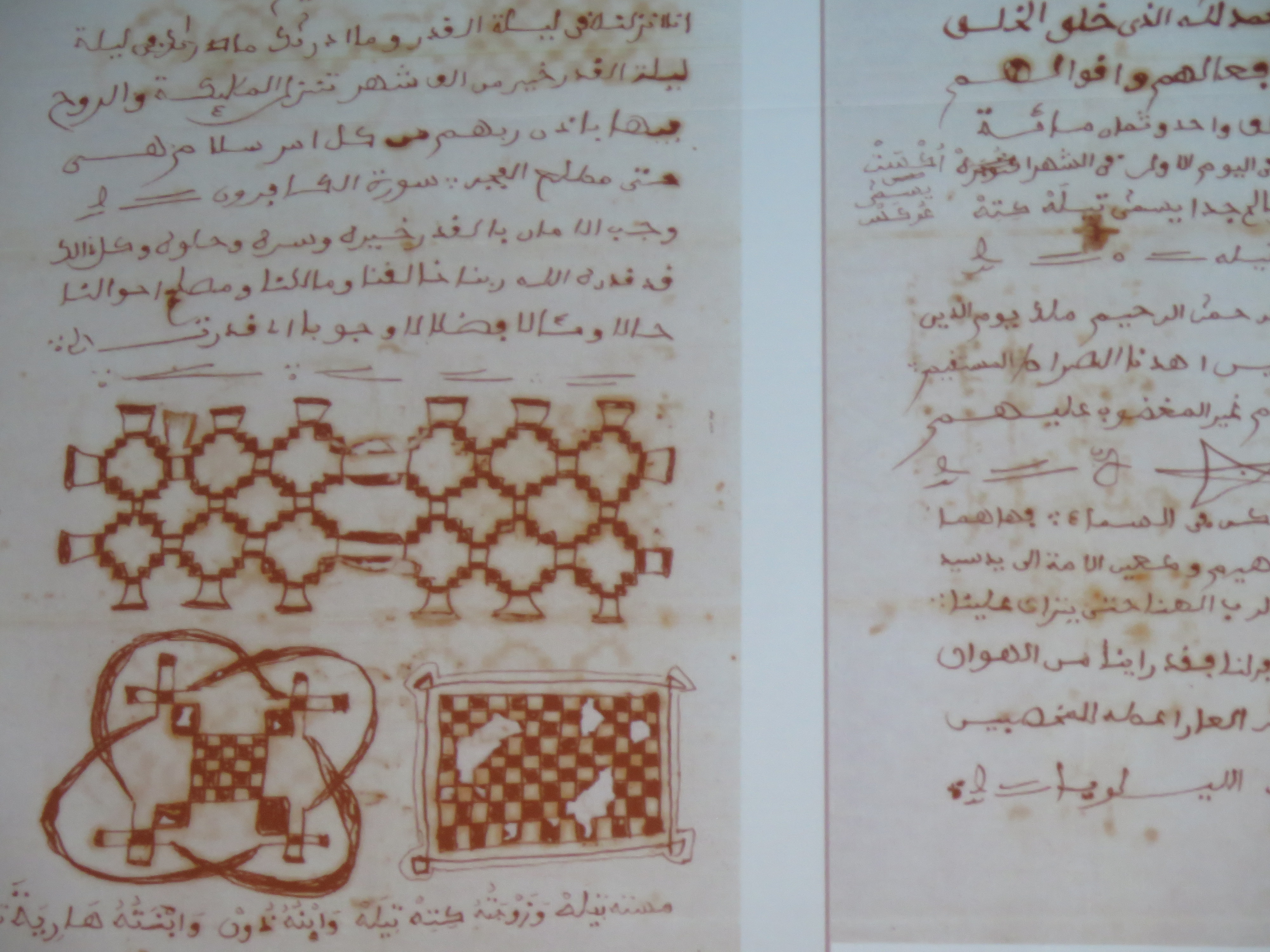
Some of the existing writings of Islamic slaves are in museums and archives labeled as “Lord’s Prayer” or “John 3:16.” In fact, when you translate it, you often see it’s actually a passage from the Koran.
There’s a lot more to know, she explained. As she said, many of the original writings were destroyed or are lost. But she suspects there are more that exist – perhaps stored away in attics.
Another rich area to explore: Some writings of ibn Said and other Muslim slaves in America included visuals. She showed an example, written by ibn Said. Are they related to Koranic amulets?
Editor’s note: Twelve months ago, UNCG alumna Rhiannon Giddens in a Q&A with Dr. Ali and Francisco Turrisi told the audience she was working on a project about Omar ibn Said. (Story here.) Both she and Ali spoke about him that evening. This summer, the New York Times reported she is writing an opera for next year’s Spoleto Festival in Charleston based on the autobiography of Omar ibn Said.
Story and Amon photograph by Mike Harris