An Immersion Blender of Schools, Culture, and Style
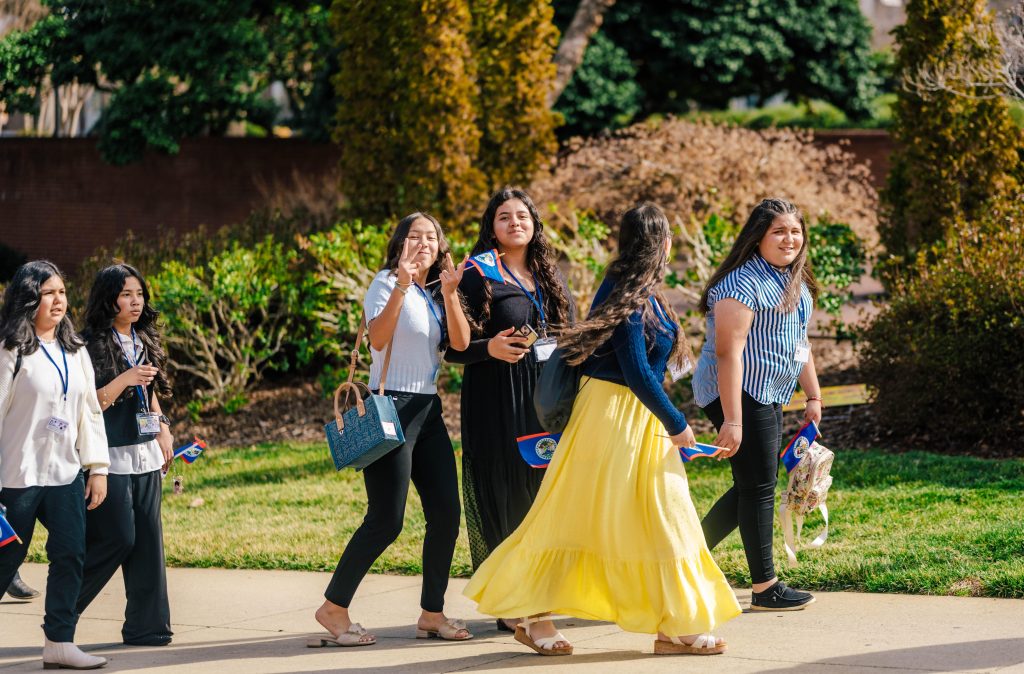
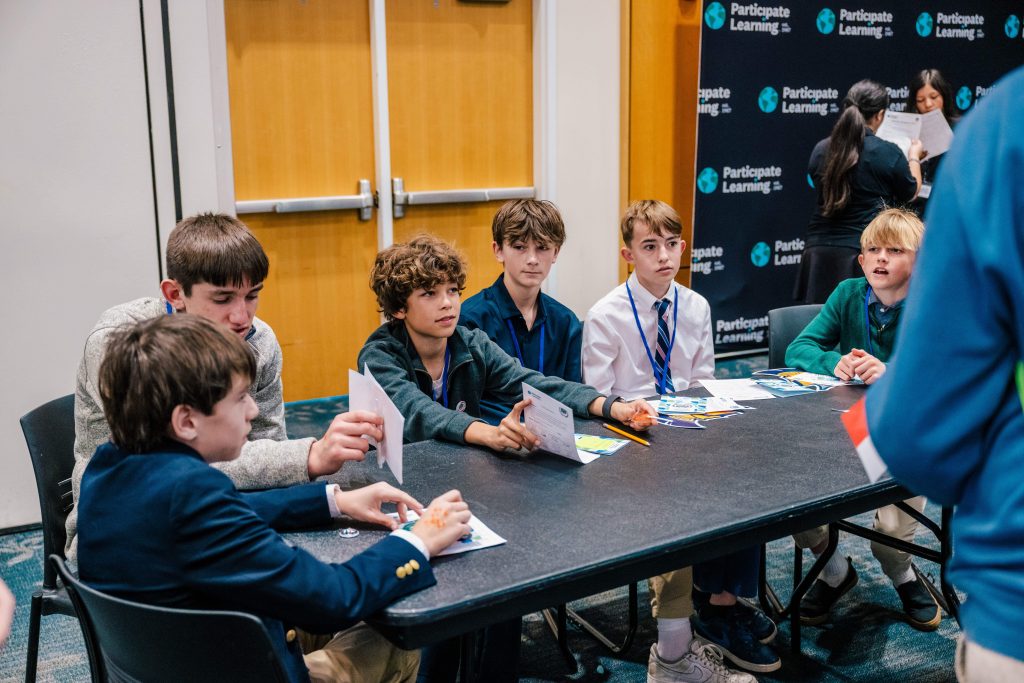
The students, more than 500 of them, come to the UNC Greensboro campus by the busload. They’re middle-schoolers from 28 counties around the state — from AC Reynolds and Cane Creek middle schools in the mountain county of Buncombe to the International School at Gregory, a part of New Hanover Schools in Wilmington.
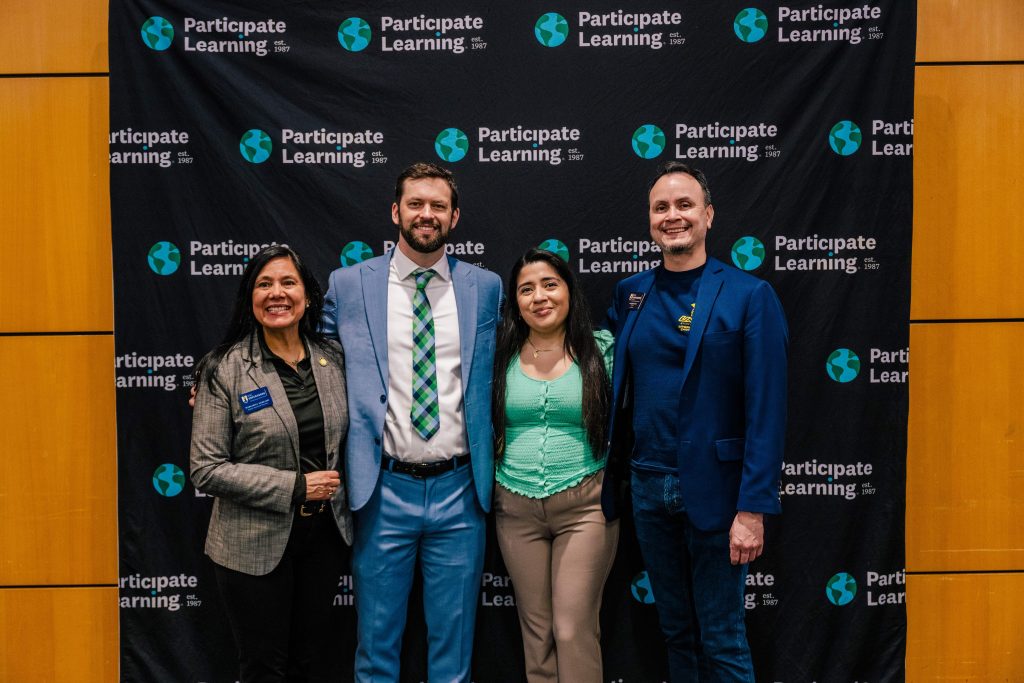
Outside UNCG’s Elliott University Center on a cool, sunny morning, they pick up their T-shirts, pose for photos, and then filter inside for a day of lectures, debates, crafts, and the kind of learning that happens when disparate groups like this get together and confab.
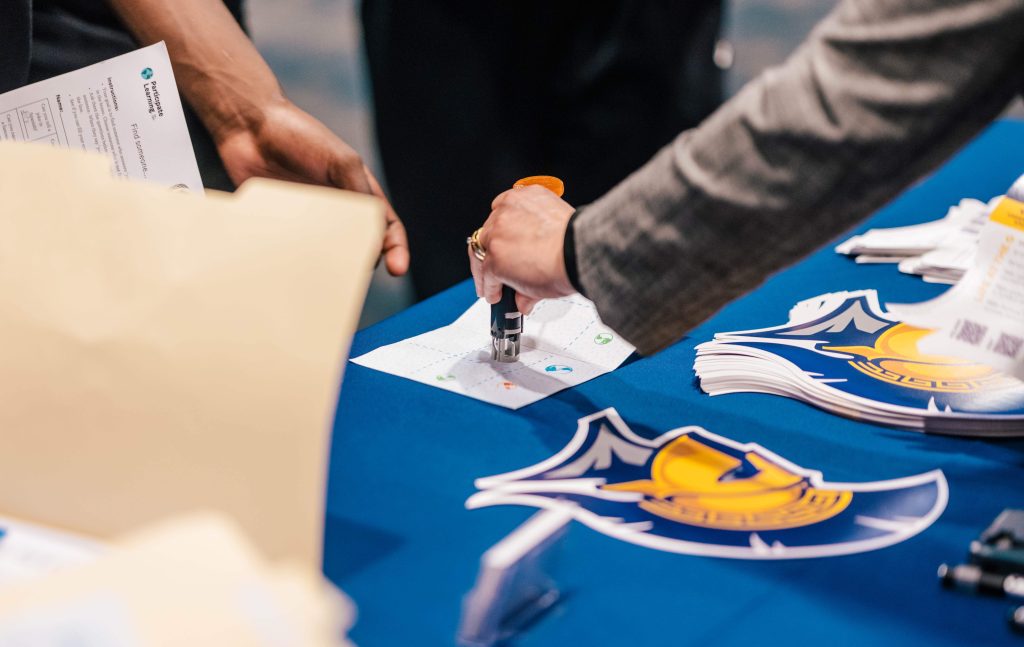
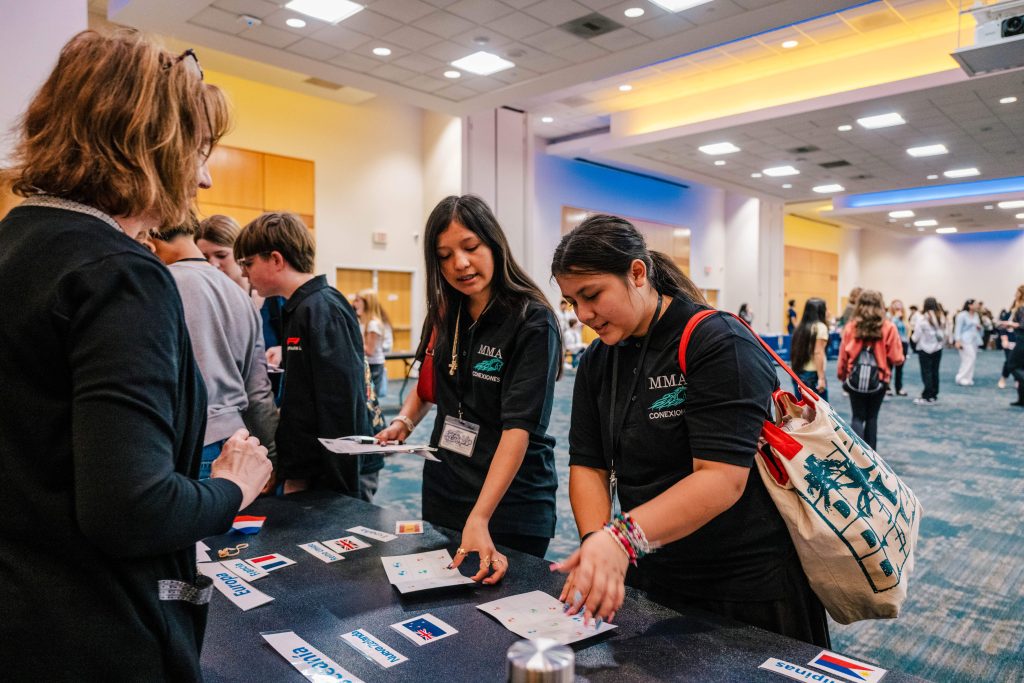
The difference here is that all day long, from the campus tours to the lectures and debates in the EUC Auditorium to the crafts and information tables in the Cone Ballroom, these students will be speaking and learning in Spanish.

A Different Sort of Model UN
This is the fourth year UNCG has hosted this Model UN in partnership with Participate Learning, an educational nonprofit that, according to its website, works to “prepare students for career success through cultural exchange, dual language programs, and global learning.”
They accomplish this by recruiting teachers from around the world for positions in North Carolina, South Carolina, and Virginia. They help establish language-immersion programs in schools, in both Spanish and Mandarin. They also provide professional development for teachers interested in creating language-immersion programs or working for one.
And once a year, since 2023, they bring their talents to the G along with busloads of middle-schoolers.
It’s part of Participate Learning’s Conexiones program, a framework of learning built around mastering the Spanish language — or, in the case of native Spanish speakers, appreciating the utility of this skill.
About 27% of the participants come from Spanish-speaking households. All of them are in Spanish immersion programs in their schools.
Jason Strauss, senior manager of Conexiones, elaborates: “Our students are bilingual,” he says. “Some of them already speak Spanish. Some of them are learning Spanish. And it’s an incredible opportunity for them to be on this campus, to get this experience, all in Spanish.”

The UNCG Connection
Participate Learning chose UNCG for this event because of its affinity for Spanish. In the Spring 2026 semester, more than 2,800 students, or almost 16% of the student body, identify as Hispanic or Latino, the highest percentage of all UNC System schools. And though UNCG isn’t the only UNC System school that gives tours in Spanish — UNC-Chapel Hill gives them by appointment — it is the only one to incorporate Spanish-language tours into its regular schedule.
“UNCG has always been really intentional about welcoming all students in our area,” Strauss says.
It’s a reflection of the state in which we live. More than 1 million North Carolina residents identify as Hispanic or Latine, which is more than 10% of the population It is the state’s fastest growing demographic.
Augusto Peña, director of UNCG’s Office of Intercultural Engagement, stresses the importance of personal relationships in the partnership. Conexiones was once a virtual program, before Marisa Gonzáles ’16, ’19, an educational developer with UNCG’s Teaching and Learning Commons, got involved.
“Marisa knew someone with the Conexiones program,” Peña says. “That relationship opened the door for Participate Learning to make this an in-person event.”
A native Spanish speaker himself, Peña recognizes the impact an experience like this can have on kids from Spanish-language households.
“Their parents are seeing them use their native language as an asset in school, which is rare,” he says. “And when they go back home and they talk about the college campus and what’s up the road for them after high school, that extends the runway they can see so much further. That’s powerful.”
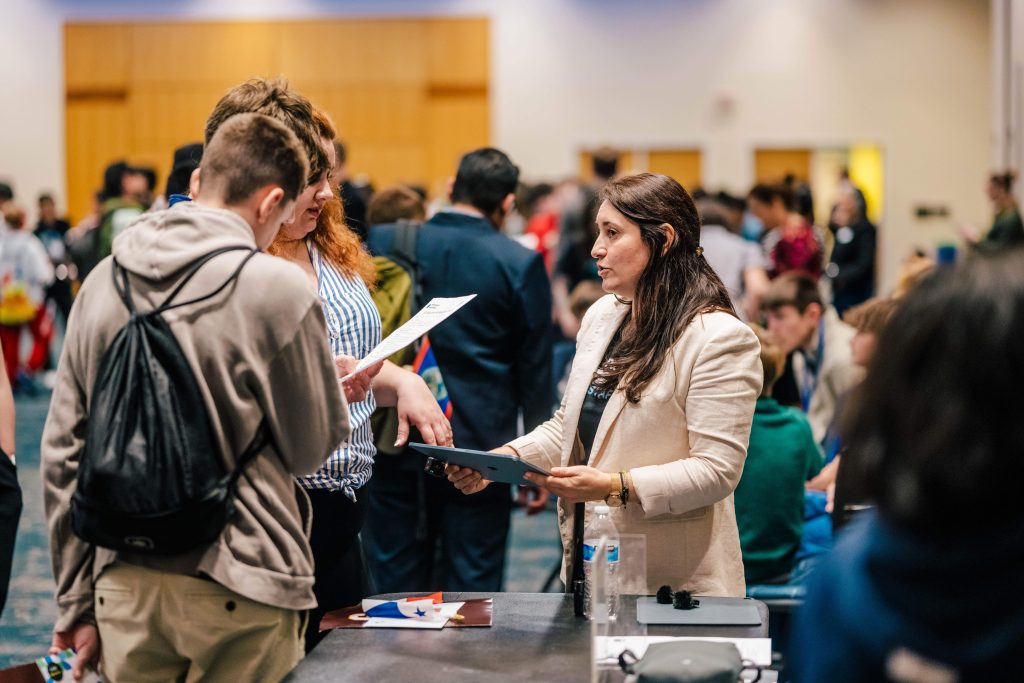
Gonzáles is here today, too, checking in students, giving campus tours, and working a table in the Cone Ballroom. She still has a hand in the classroom, and 14 of her own students are here for the program. “I think it’s going great,” she says. “There’s a lot of excitement from the different schools and the students.”
There are 50 student-volunteers from UNCG’s School of Education on hand to give tours, lead groups, and staff information tables. For their efforts, they’ll be awarded a micro-credential for their résumés, which will give them an edge when they’re looking for teaching positions.
The Power of Language
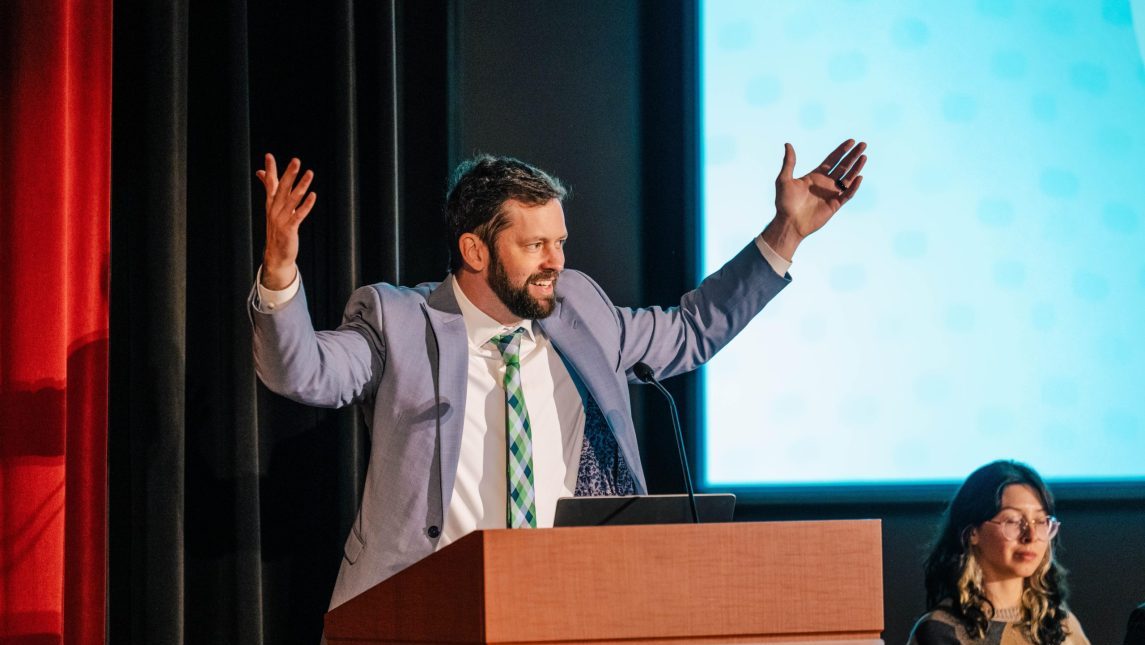
Now, Strauss stands at the podium of the EUC Auditorium in front of the assembled delegates for the opening remarks. Later on, the students will debate this year’s theme — Animal Well-Being and Protecting Biodiversity — as pseudo-representatives of their respective countries.
But first, Strauss has an empowering PowerPoint presentation.
One slide reads: “¿Qué porcentaje de la población mundial hablan, por lo menos, dos idiomas?” What percentage of the world’s population speaks at least two languages?
The answer worldwide, Strauss explains in Spanish, is 60%. In the US, it’s 20%, a third of that. And in North Carolina, Strauss says, the figure is 12.4%. The kids are shocked.
And when he calls their bilingualism a “superpower,” they believe him.
Story by Brian Clarey, University Communications
Photos by Sean Norona, University Communications