At UNC Greensboro’s next graduation ceremony, more than 900 students will don their caps and gowns to celebrate their transition from student to alumni. Excitement will mingle with nervousness as they anticipate the next chapters of their lives. Even as they bask in the cheers of family and friends, for many, that step off the stage may feel like a leap into the unknown.
Raven Dial-Stanley ’20 knows those tangled emotions, although her Commencement Day looked quite different. She accepted her diploma for a bachelor of science in consumer, apparel, and retail studies (CARS) at a virtual ceremony. With the COVID-19 pandemic in full force, it was harder than ever to predict when and where she might land in the workforce.
“Having that confidence, that support from my Indigenous community at UNCG, that was so essential for me,” she reflects.


Five years later, she took another big leap. After four years in the corporate realm, In January she struck out and became her own boss. She’s now the proud owner of her fashion brand Original Peoples.
She says, “My art gets to be a platform to tell the stories of my people in a narrative that is often untold, and rarely through the lens of an actual Indigenous person.”
What never changed was her north star: raising awareness of cultures like her own Lumbee tribe. She did so as a student involved in UNCG’s Native American Student Association and the Alpha Pi Omega sorority.
Now, as an alumna, she reaches new audiences through art, apparel, and advocacy.
“Art can be whatever you want it to be,” says Dial-Stanley. “To me, it’s the emotions that come out of the artists while they’re creating, but also the audience receiving it. Art can be used to educate.”
Family Gift Turned Community Project
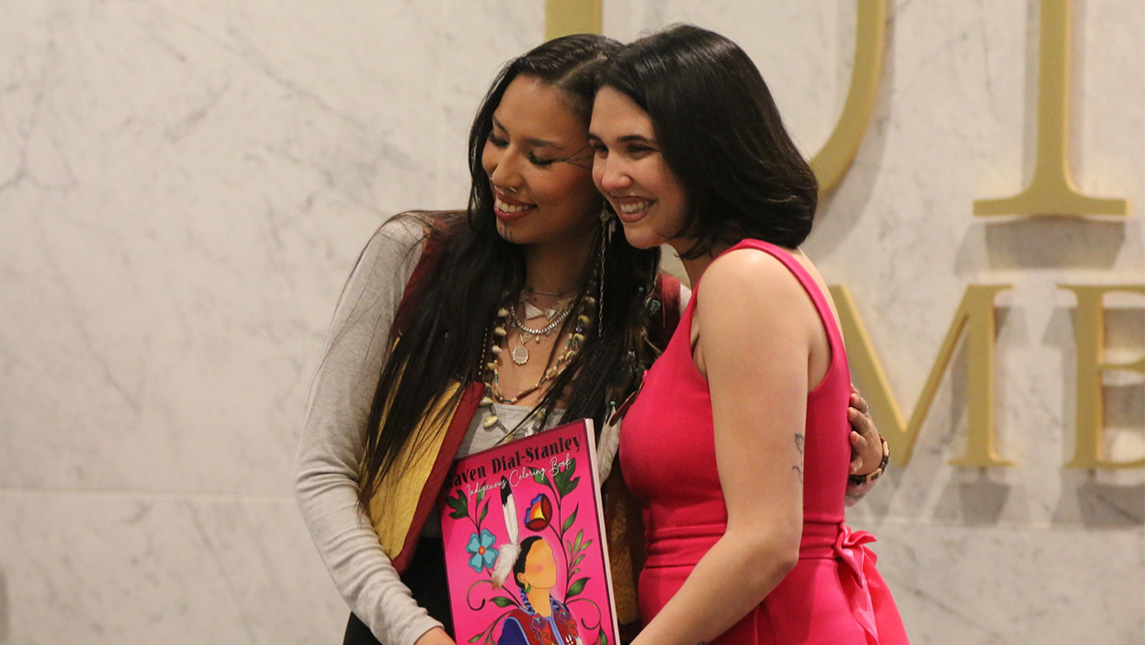
“If I draw it, will you color it?”
That question inspired a project that remains near and dear to Dial-Stanley’s heart, and that’s not just because it’s her creative work. It’s a tribute to her creative inspiration.
“My grandmother was a girly, do-it-yourself kind of woman who I really admired,” she says. “After my grandfather passed, she turned her home into a Barbie dreamhouse.”
Recently, her grandmother moved into assisted care, and Dial-Stanley worried that she was not taking part in the programming provided. During one visit, she started doodling for her grandmother.
“I was like, ‘Here, Grandma, you can have it and hang it up.’ And when I came back, she had colored it,” she recalls. “I thought, ‘I’ll draw more for you, and I’ll get you to color and do things with your hands.'”
She decided to turn that experience into a coloring book full of stories from Indigenous culture. What began as a therapeutic project became a new outlet to put her heritage front and center for people of all ages.
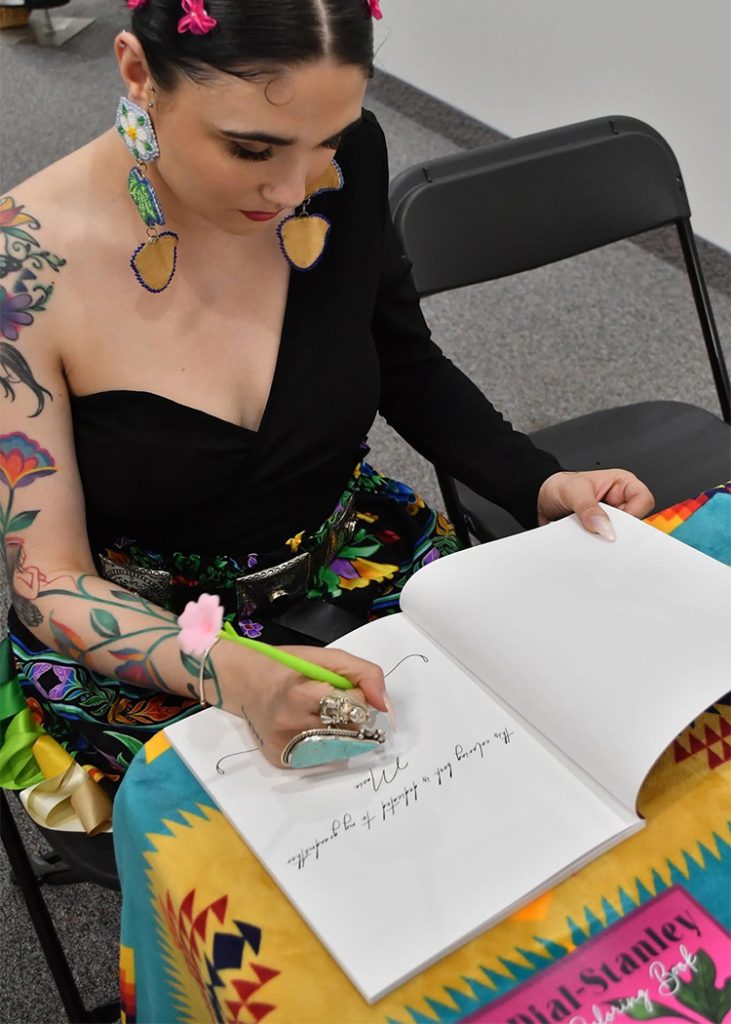
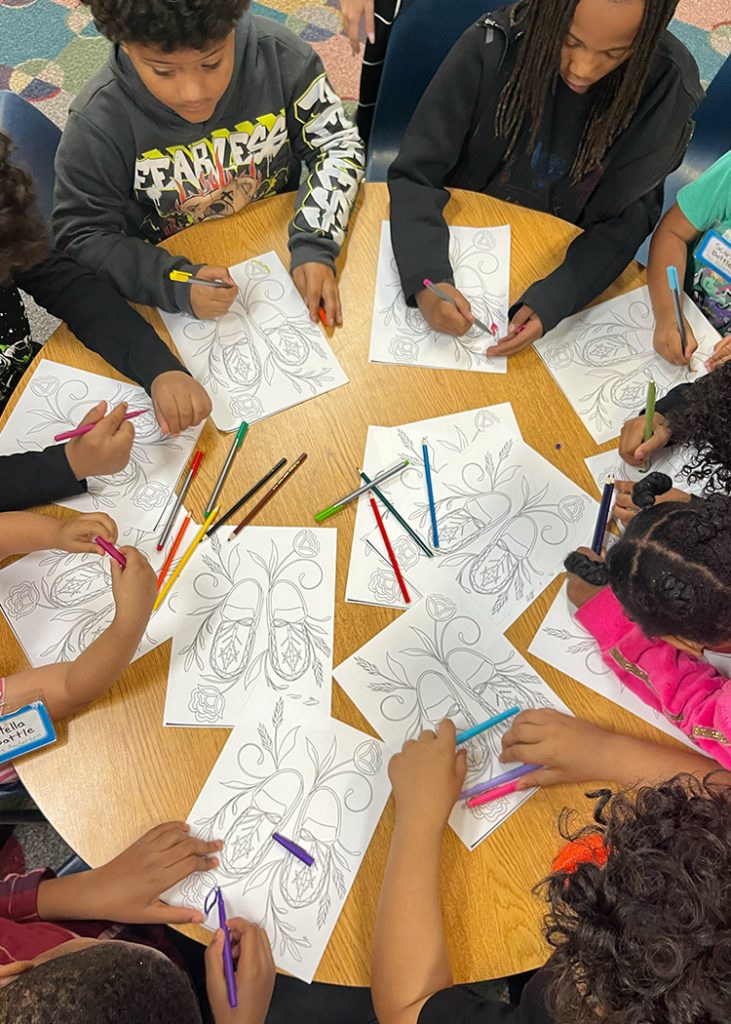

“It isn’t just for Native people,” she says. “I wanted this to sit in any community and resonate with anyone, so everyone can appreciate Indigenous culture.”
Fashion Statements
But Dial-Stanley’s creativity isn’t confined to paper. Her new streetwear brand, Original Peoples, encompasses everything she likes: Indigenous culture, education, graphic design, and the avant-garde.
“Fashion can be its own voice,” she says. “Oftentimes, we don’t hear our names spoken in many spaces. So, even as something simple as, ‘Hey, I got my Original Peoples hoodie on today’, is making a nod to our inclusion.”
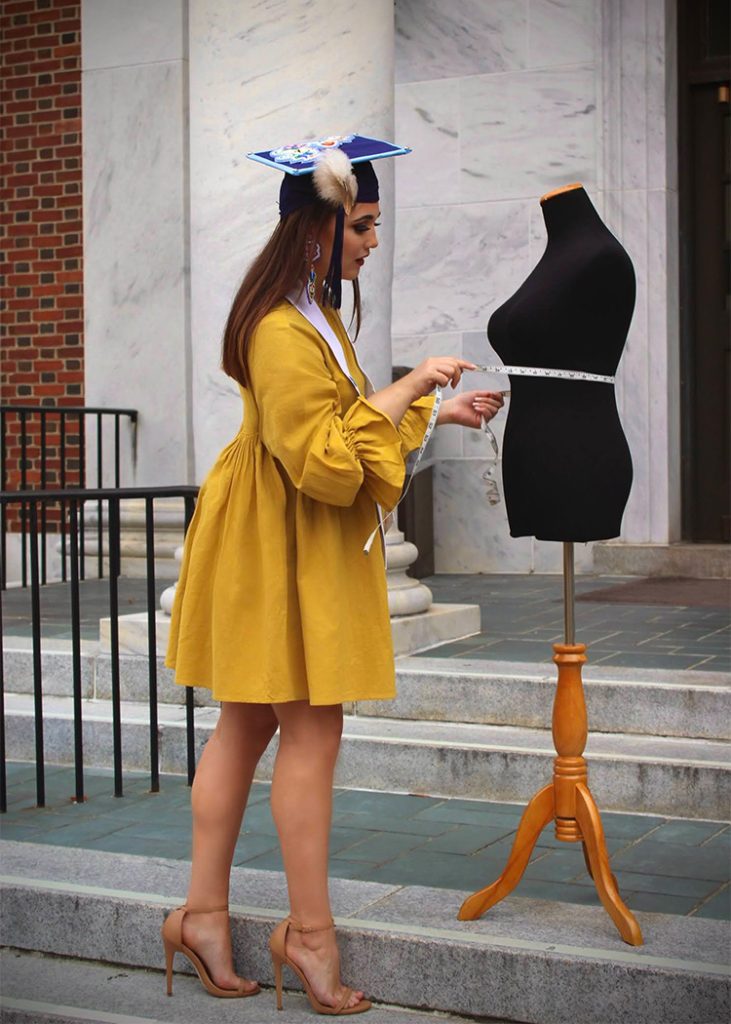
She’s using skills she learned at UNCG and developed while working in Lee men’s fashion at Kontoor Brands, an apparel company headquartered in Greensboro.
“I was fortunate that UNCG and the CARS program have such a great relationship with Kontoor,” she says. “It’s a great leading company in North Carolina if you want to tap into the fashion industry and get your feet wet.”
Dial-Stanley is grateful that the CARS faculty helped her land that job so soon after graduation, amid the uncertainty of finding employment during COVID-19. Her professor, Melanie Carrico, M.F.A, was instrumental in keeping that door open.
“Raven was a standout student—confident, creative, and driven—so it’s no surprise to see her thriving as an entrepreneur with Original Peoples,” says Carrico. “What makes her journey especially inspiring is how she uses her brand to celebrate and advocate for Indigenous culture while showcasing her artistic talent.”
Still, she knows that since leaving Kontoor, she is headed to where she was always meant to be. A year into this new venture, she’s seen tremendous success.
“I’m hoping that we will be one of the most known Indigenous streetwear brands across Turtle Island,” she says, using an Indigenous term that describes North America.
Next Step in Her Journey
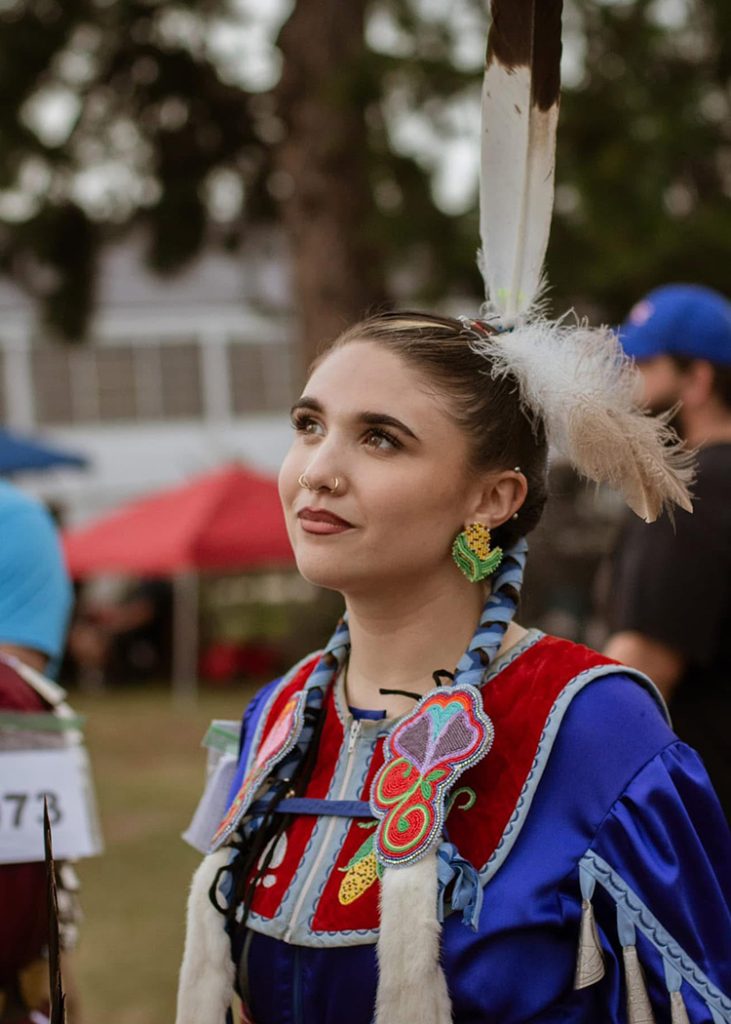
Dial-Stanley’s design work reflects her calling to be an ambassador, but she also takes her living history on the road, building upon volunteer work she did while a student.
Today, she serves as a consultant for the American Indian Science and Engineering Society. She teaches Native American culture in schools and promotes getting more Indigenous students into STEM.
“I really have a love for it, and now I travel across North Carolina and even outside of North Carolina to host cultural workshops at different educational institutions,” she says.
What’s next for Dial-Stanley? She will continue expanding Original Peoples’ success with hopes of it becoming a six-figure business. She says, “What I love about designing my brand is that I get to create art that reminds people, ‘Hey, we’re still here.'”
She’s thankful each day for UNCG’s formative role in her life, particularly the encouragement of the Indigenous students she met in NASA and the sorority. Because of their support, whenever she takes a leap into the unknown, she feels confident that she’ll land on her feet. She shares that encouragement with students graduating now:
“Making the move from Corporate America was very scary. It was a risk I was taking on myself,” says Dial-Stanley. “But even in the slow seasons, I have the freedom to do what I want. The journey is not linear. Don’t give up on yourself. Trust the process and allow it to be a little bumpy, a little abstract.”
Story by Janet Imrick, University Communications
Photography by Gordon Allen, Ashley Salaz, and Grant Evan Gilliard; additional photography courtesy of Raven Dial-Stanley