Across all grades, the hurdle a teacher often faces on the first day of class is not lack of knowledge, but intimidation. In many cases, their students are reluctant to step up in front of classmates and risk making a mistake, cowed by Imposter Syndrome or the challenges of the coursework that came before.
The UNC Greensboro faculty who received the 2025-26 Teaching Excellence Awards are among the top role models for settling those nerves. At the end of the semester, their students feel empowered to explore avenues they never expected and make mistakes, knowing they can learn from them.
Though the faculty are all pioneers in their fields, students and colleagues repeatedly say that the following stand-outs never lose their approachability with students just starting their college experiences.
Dr. Jeff Sarbaum, Sue W. Cole Distinguished Senior Lecturer of Economics
UNC Board of Governors Excellence in Teaching Award

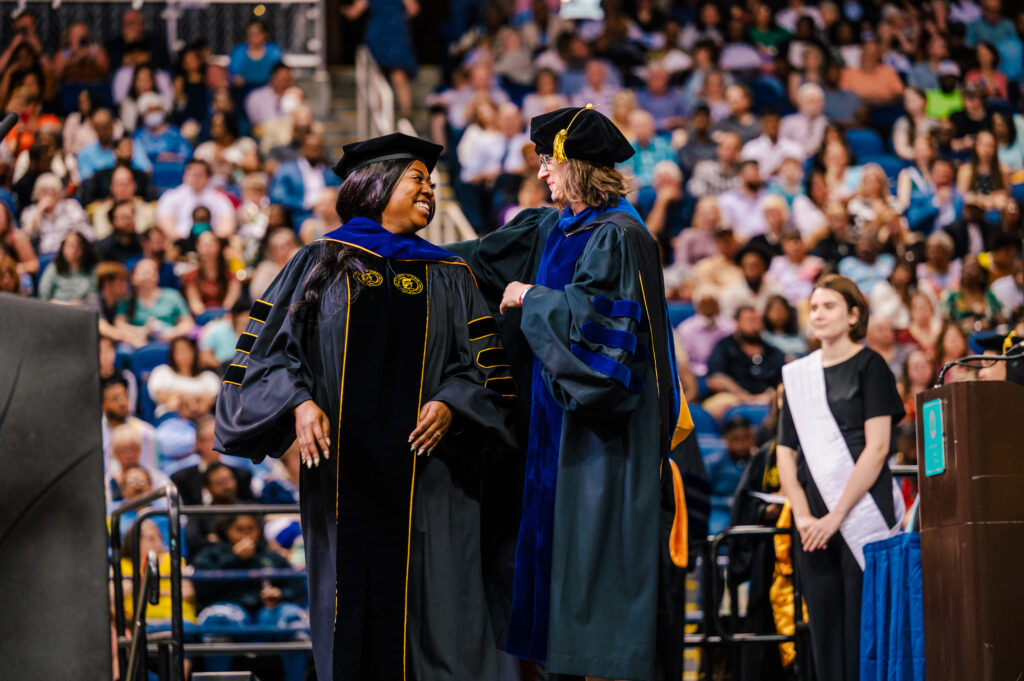
This year’s highest post-secondary award in the state goes to a faculty member who has helped students transition into successful business careers for more than two decades. One look at the career of Dr. Jeff Sarbaum proves economics are anything but dry or boring. From an online Flash game, a website themed around making coffee, and multimedia textbooks, he emerged as an entertaining instructor, inspiring students and faculty alike to follow in his footsteps. Read all about the gamer, the barista, and the man who wrote the books on economics.
Dr. Faye Stewart, Associate Professor of German and German Studies
Mary Settle Sharpe Alumni Teaching Excellence Award
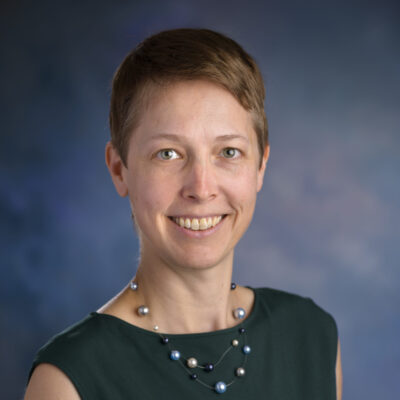
In a letter of recommendation for Dr. Faye Stewart, Ellis Ash Hiser ’22 describes transferring to UNCG to major in languages, literatures, and cultures (LLC). By the time he enrolled in the class Gender and Sexuality in German Film, he’d gone a full semester without a German class and was worried he would not be able to keep up with his peers. Stewart constantly encouraged him to stay engaged and push his skills to the next level.
“Taking this course got me back into the rhythm of engaging with the German language and increased my confidence in my speaking and writing abilities,” Hiser says.
Students who study under Stewart — she also teaches for Lloyd International Honors College and the Women’s, Gender, and Sexuality Studies Program — quickly learn their lessons aren’t limited to textbooks. They use graphic novels, food, music, movies, and games. Stewart has found great success by creating multisensory learning environments, crafted especially for students who have never traveled abroad to experience the culture.
In a class on global graphic novels, students create comics that engage with multiple languages and cultures. In her upper-level film classes, students perform oral film reviews and act out their own “interviews” with the actors or characters from the movies they watched. In an upper-level culture class, students create 3-D sculptures from recycled materials to represent what they learned about nature, sustainability, and the environment in German-speaking countries.
Dr. Mariche Bayonas, Department Head of LLC and professor of Spanish linguistics, describes Stewart as “kind and generous with her knowledge and time with students. She is always willing to take on tasks that involve them and is extremely passionate about teaching and prioritizing the wellbeing of the students.”
Beyond UNCG, Stewart is part of the international collaboration behind Grenzenlos Deutsch, a free and open-access curriculum featuring gender plurality and social justice in language classrooms. She has partnered with the German Embassy on co-curricular programming about German politics and culture.
Fellow faculty compliment her ability to juggle in-person and online classes, as well as the way she makes students feel comfortable in addressing challenges with the grammar and vocabulary. Dr. Alejandro Hortal, senior lecturer of Spanish, as co-taught with Stewart several times. He says, “Feedback from our courses frequently highlighted her as a standout instructor who made the material accessible and thought-provoking.”
For Stewart, it’s important to lead by example so that students also encourage their classmates to make them feel valued. “It is especially important in language courses,” she says, “that students have a safe space for making mistakes and testing out ideas, so that they can feel better prepared and more confident before presenting their findings to the class as a whole.”
Dr. Insa Lawler, Assistant Professor of Philosophy
James Y. Joyner Alumni Teaching Excellence Award
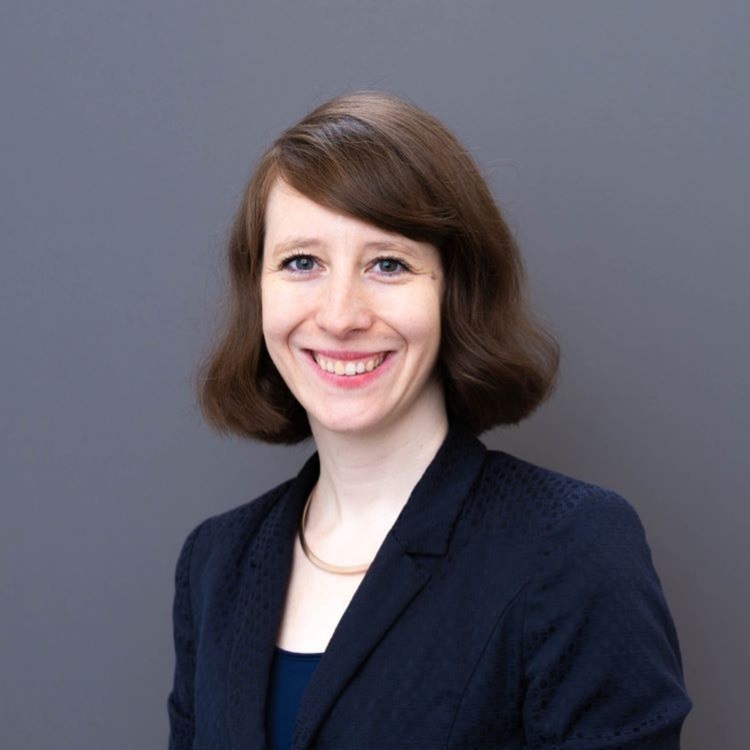
Logic lessons rely on specific rules and math-like skills. Dr. Insa Lawler’s ability to break down the barriers to understanding tricky concepts inspires her students to explore the concepts more deeply.
She begins courses with an anonymous survey including questions about the students’ background knowledge and personal learning goals. She explains, “Some students take my classes because they are excited about the topics treated; others take them mainly to complete a general education [GenEd] requirement.”
Then she includes questions at the end of each assignment about what they found easiest and most challenging. “I get information that might prompt me to repeat or deepen course content or to meet with a student,” she says. “Equally important is that the students appreciate what they mastered and identify what they still struggle with.”
Lawler always thinks outside the box. She used UNCG’s lightboard to create easy-to-follow video lectures. Her adjustments to one foundational course, rearranging the complex language lessons to be taught earlier in the semester, made it one of the highest-rated classes in her student evaluations. When student feedback in an online class showed they had trouble switching from asynchronous instruction to synchronous discussions, likening it to “a kind of pop-quiz,” Lawler restructured the breakout sessions so they would feel better prepared and less intimidated.
By broadening her own education, she leads by example, spending several years on new certifications, including the Certificate for Effective College Teaching from the Association of College and University Educators.
She creates clever ways for students to practice logic outside the Department of Philosophy. She developed UNCG’s first humanities course for the GenEd Qualitative Reasoning category. Every year, she organizes the Ethics Bowl, in which multiple teams compete to debate ethically difficult scenarios.
Participating in the Ethics Bowl was a milestone for pre-law student Abigail Gallegos, given her early qualms about the subject. She recalls logging onto her first online logic course at UNCG worried about navigating the material on her own, and Lawler quickly put her fears to rest. “It was clear she genuinely wanted her students to succeed,” she says. “Dr. Lawler welcomed students with a thoughtful and detailed announcement outlining course expectations, available resources, and strategies for success, not only for students, but also for herself as an instructor.” Gallegos’ experience was so good that she sought out electives focused on logic.
Cohan Council says Lawler went above and beyond to help him pursue other opportunities. “She made the study of logic accessible, engaging, and intellectually rewarding,” he says.
Dr. Lindsay Draper, Associate Professor, Professional Track of Advanced Nursing Education
Anna Maria Gove Alumni Teaching Excellence Award

Nursing students need a reliable guide for their demanding, ever-evolving field. At UNCG, they have many touchpoints with Dr. Lindsay Draper along the way, as she has taught everything from early undergraduate to doctoral-level courses.”
“My teaching philosophy is grounded in the belief that education is a collaborative and transformative process that empowers students to become critical thinkers, reflective practitioners, and lifelong learners,” she says. “Active learning strategies are reinforced through low-stakes assessments such as reflective journals, discussion activities, and short quizzes that encourage students to regularly engage with course material.”
Dr. Wanda Williams, associate professor of Advanced Nursing Education, points out Draper’s average student evaluation score across more than 30 courses is 4.7 out of 5. “Her academic credentials are complemented by her extensive experience in both clinical and educational settings, making her a well-rounded educator who bridges theory and practice effectively,” Williams says.
And just as Draper adapts easily to changes in nursing technology and culture, she’s also innovating the field. She is one of the School of Nursing’s faculty introducing students to artificial intelligence’s applications, developing a two-week module for graduate students. She customized two AI tools named Navi and Kate. Students can ask them questions or get feedback on drafts of professional memos, emails, and executive summaries. She also contributed to the UNC System’s Foundations of AI course, leading development of its “AI in Health Sciences” module.
“Innovation is a central component of my teaching practice, particularly through the integration of emerging technologies such as AI and virtual simulation,” says Draper.
On top of all that, she supports her fellow faculty as a mentor, textbook author, and a lead faculty of the UNC System’s Nursing Open Educational Resources initiative. Eloise R. Lewis Excellence Professor Pamela Rowsey says, “Her contributions to nursing education and her leadership in curriculum innovation and development make her a role model for colleagues and an inspiration to students.”
“Ultimately, my goal as an educator is to prepare nurses who are not only clinically competent but also capable of leading change within complex healthcare systems,” says Draper.
Story by Janet Imrick, University Communications
Photography by Sean Norona, University Communications