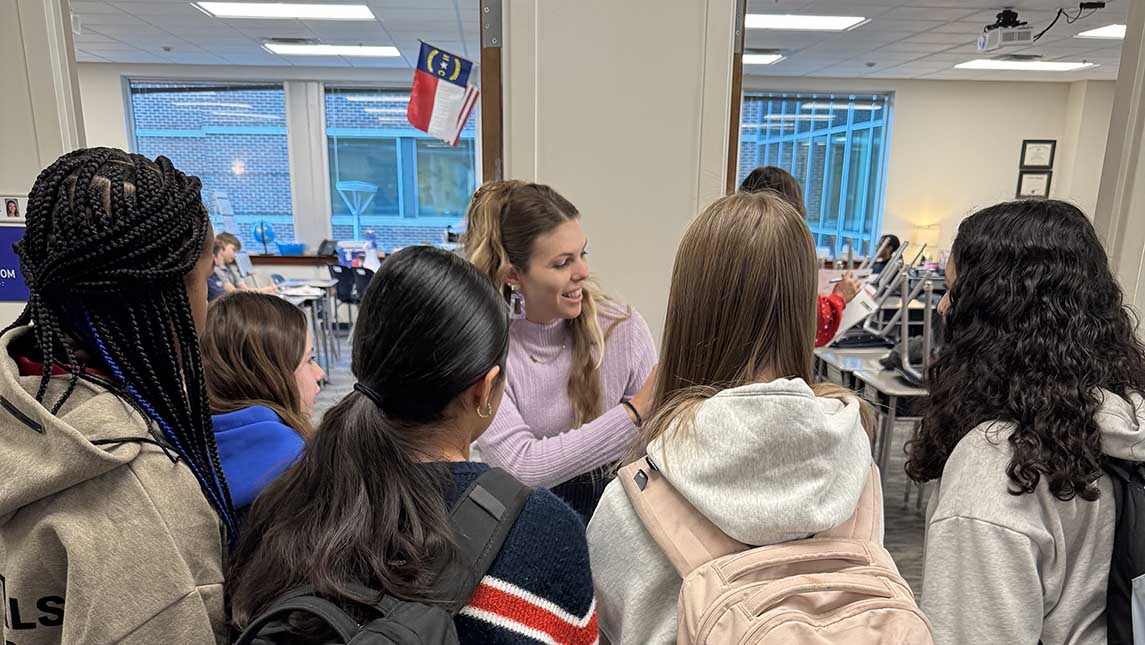
In recent years, elementary school teachers have prioritized instructional time for reading and mathematics, sometimes to the detriment of science lessons. As teachers grapple with the finite hours in a school day, science experiments are often relegated to enrichment activities, which leaves young minds with limited opportunities to be inspired by the science all around them.
When he saw this play out in his own children’s elementary school, Dr. Nicholas Oberlies, Patricia A. Sullivan Distinguished Professor in the Department of Chemistry and Biochemistry, offered a solution. And in the process, he initiated a community outreach that inspired his UNCG students as well.
Chemistry Matters
“A fellow Lindley Elementary parent came to me with an idea for a family science night back in 2010,” explains Oberlies.
Back then, Lindley’s Parent Teacher Association (PTA) was brainstorming solutions for their students’ waning interest in science. Science lessons for the lower grades were decreasing each year, optional participation in the county science fair was lackluster, and Lindley needed a fun event to connect the diverse families in the community.
As a parent and professor of young scientists, Oberlies saw further upsides to the partnership between Lindley and UNCG: “When I considered the diversity represented by my students at UNCG, I knew this would not only be an impactful outreach for my kids’ school, but also a personal one for my chemistry students.”
Inspiring Reactions
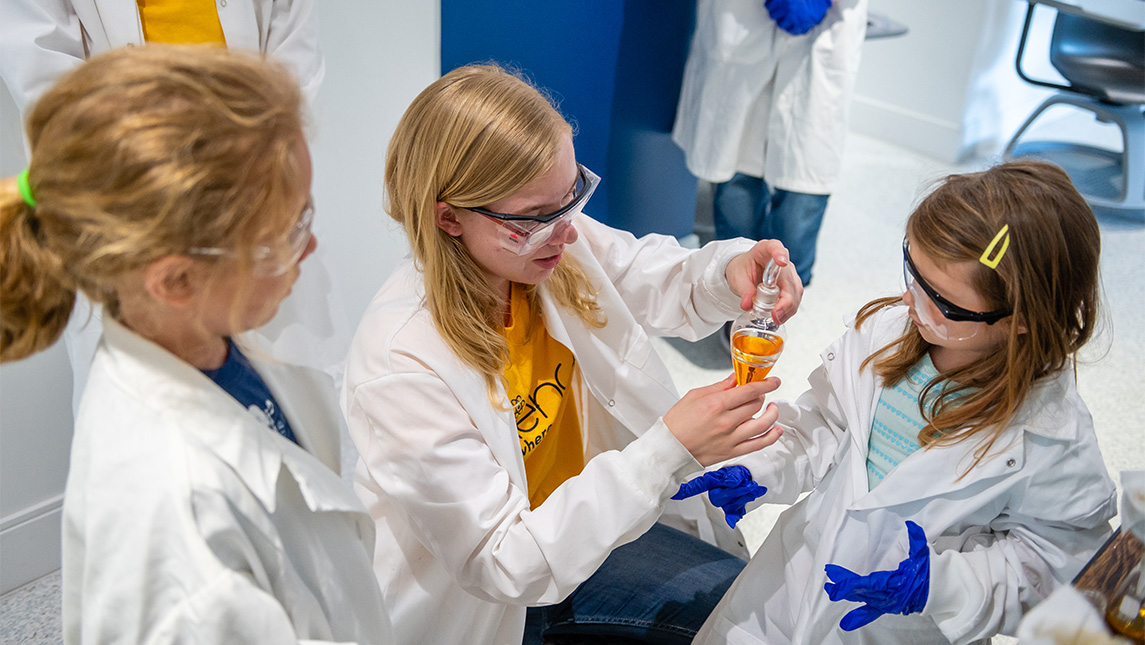
For nearly 15 years, Oberlies has tapped a team of chemistry and biochemistry students to help develop a program to get 5- to 11-year-olds excited about science.
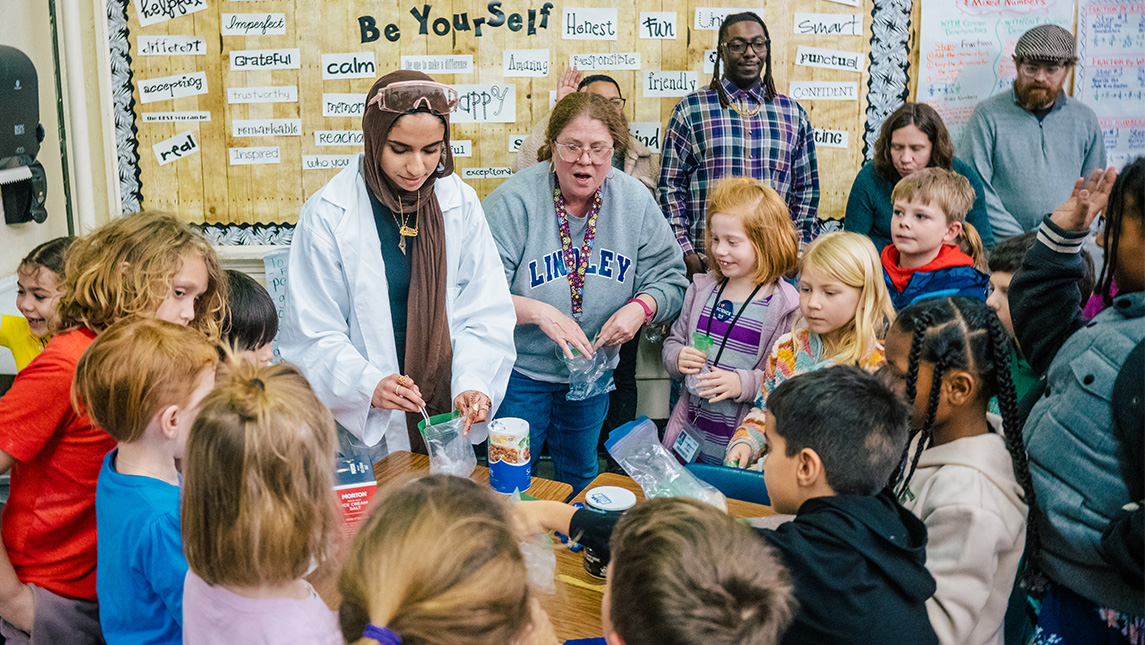
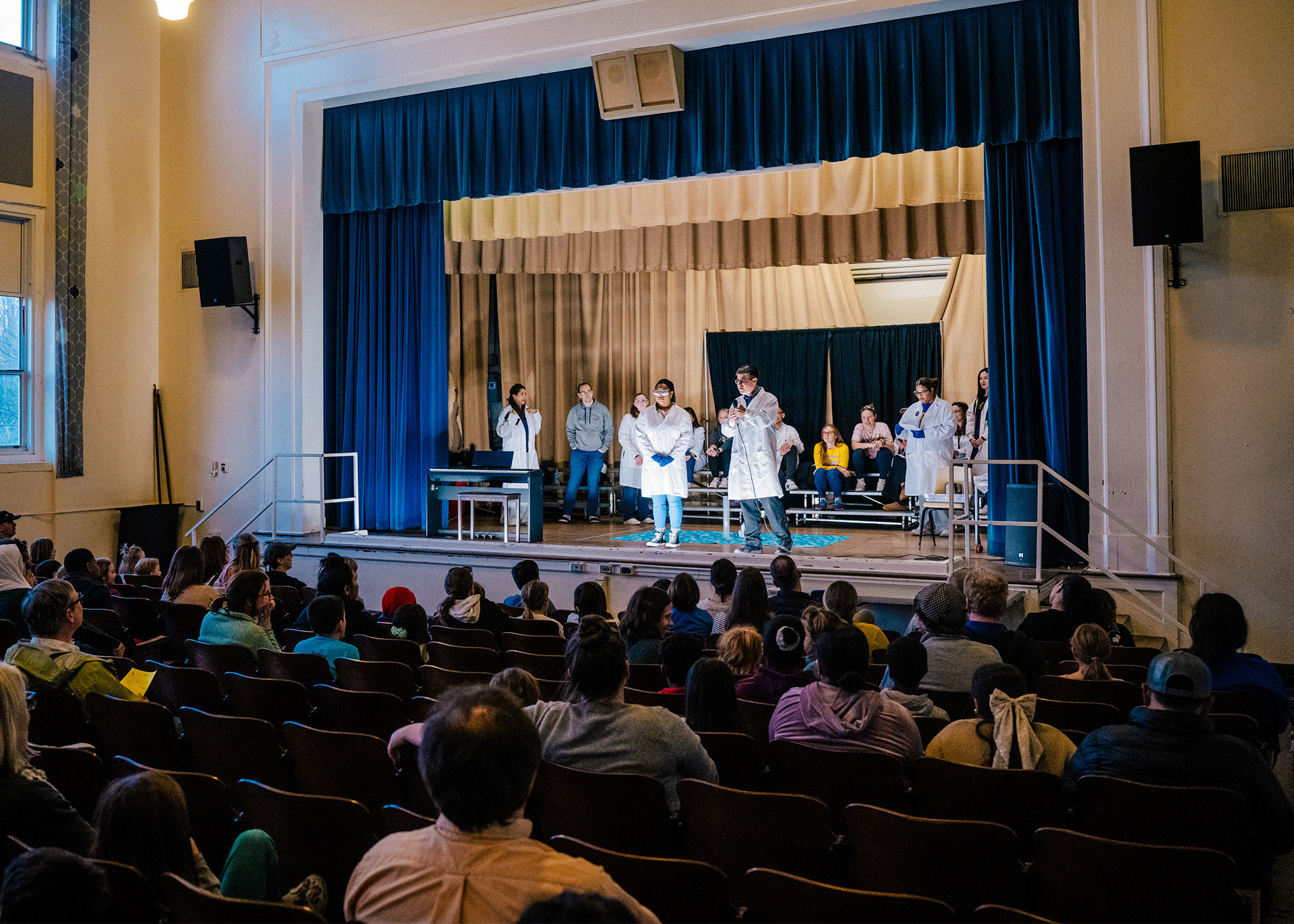
The format includes an introduction in the auditorium with flashy experiments that ooze and fizz and smoke. Afterward, the UNCG students, decked out in lab coats and safety goggles, lead breakout experiments throughout the school in which the elementary students can make their own chemical reactions.
“An important aspect of science night is encouraging students to work with their parents and guardians on the experiments,” says Oberlies. “It’s more than a demonstration. We want them to share in the learning of science together.”


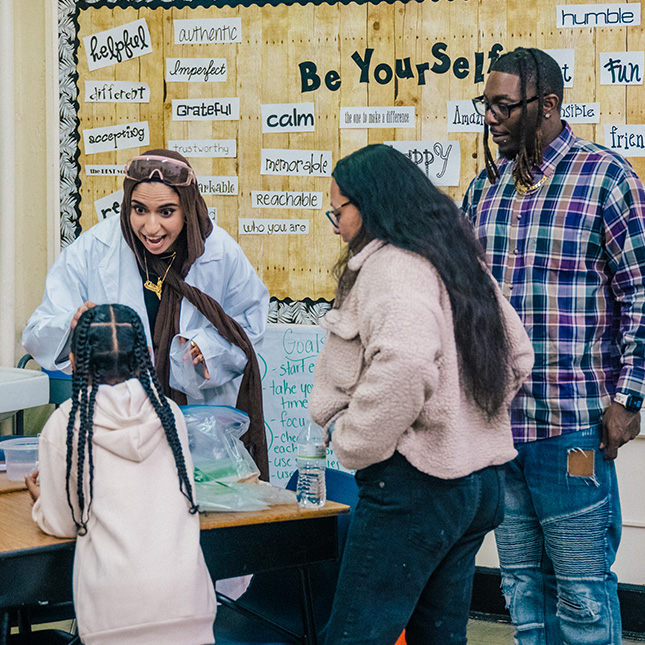
This year, T’ea Cameron was lead organizer for Lindley Family Science Night, held on February 6. She’s a fourth-year chemistry and biochemistry doctoral student who has been involved in this outreach for three years. She began two months before the event, recruiting peers to help with the program, collaborating with the PTA to choose experiments like making ice cream or racing balloons, and securing supplies for the hands-on activities.
“I want to be the science representation that I did not have as a child,” says Cameron, who is a founder of UNCG’s chapter of the National Organization for the Professional Advancement of Black Chemists and Chemical Engineers (NOBCChE). “I hope we are making science less intimidating and inspiring future careers for these students.”
Lindley Principal Kevin Smith agrees: “It’s great for our students to see scientists from different backgrounds so they can see people who are just like them being successful in science career paths.”
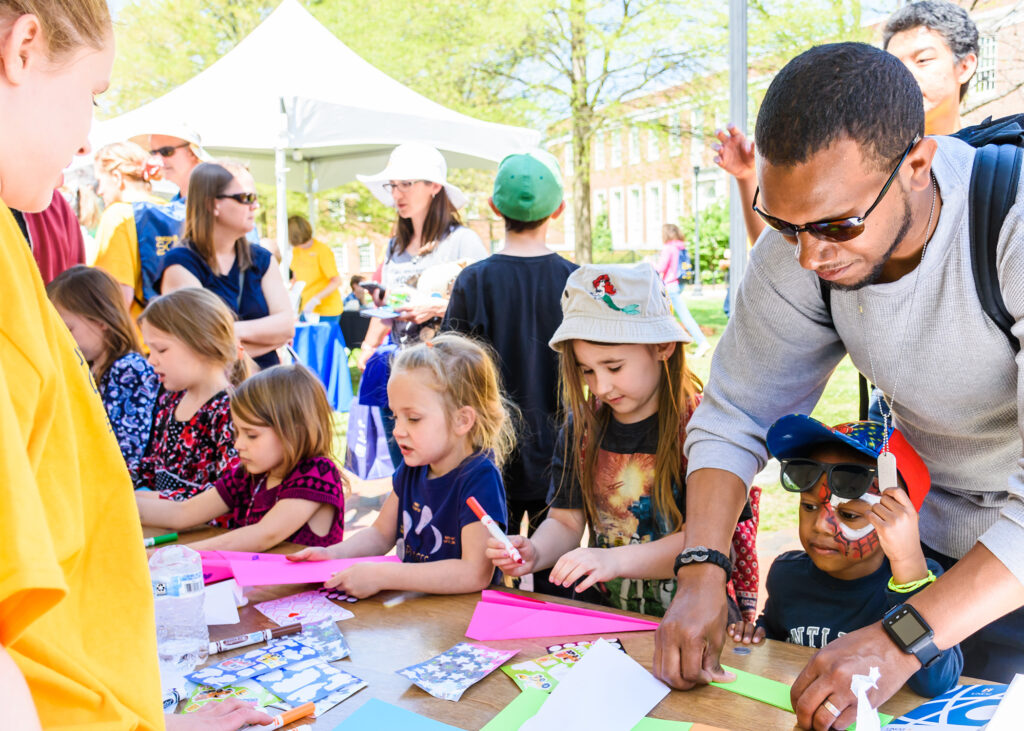
Local families looking for a similar experience on an even larger scale should check out
Science Everywhere
April 5
This annual event held on UNCG’s campus is open to the public and includes a variety of hands-on activities to spark scientific interest in students of all ages.
Lasting Impacts
Even though his own children are now in college, Oberlies takes pride in the legacy of Family Science Night at Lindley. He invariably runs into UNCG students on campus who remember him from science nights when they attended Lindley. “It’s totally possible that one of our experiments back then sparked a curiosity that led them to become a Spartan today!”
Cameron, for one, definitely feels the impact of science night on her educational journey. “My long-term goal is to be a lead scientist at a pharmaceutical company and continue being a mentor to young scientists,” she says. “This project has taught me the importance of working with our community and sharing science in a way that everyone can understand.”
Story by Becky Deakins, University Communications.
Photography by Sean Norona, University Communications.