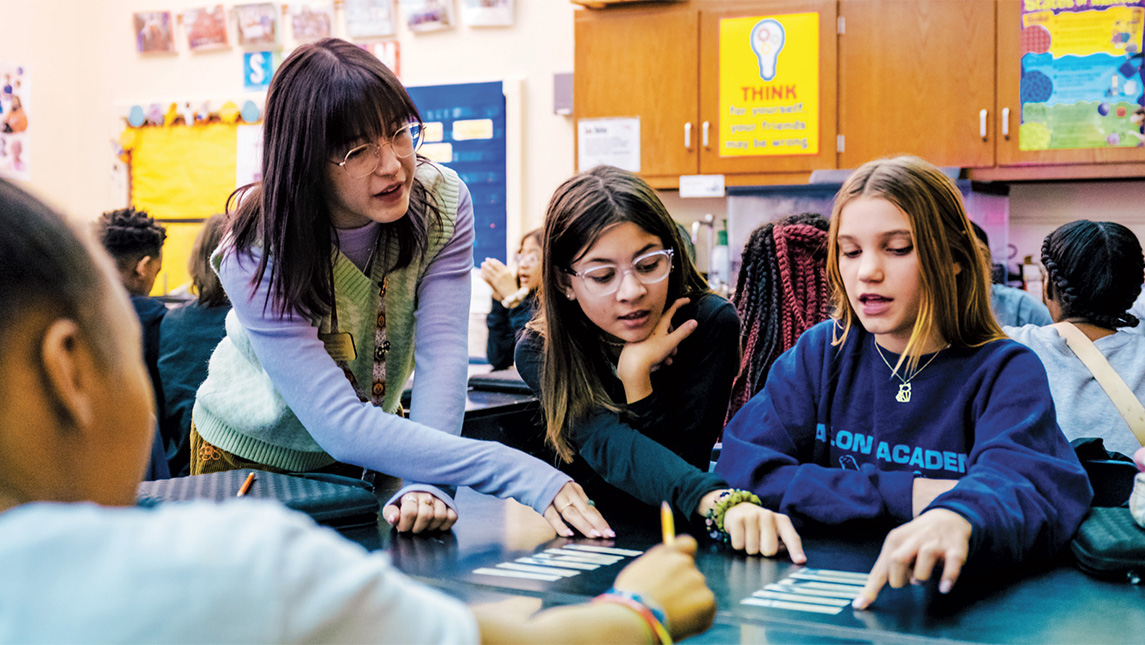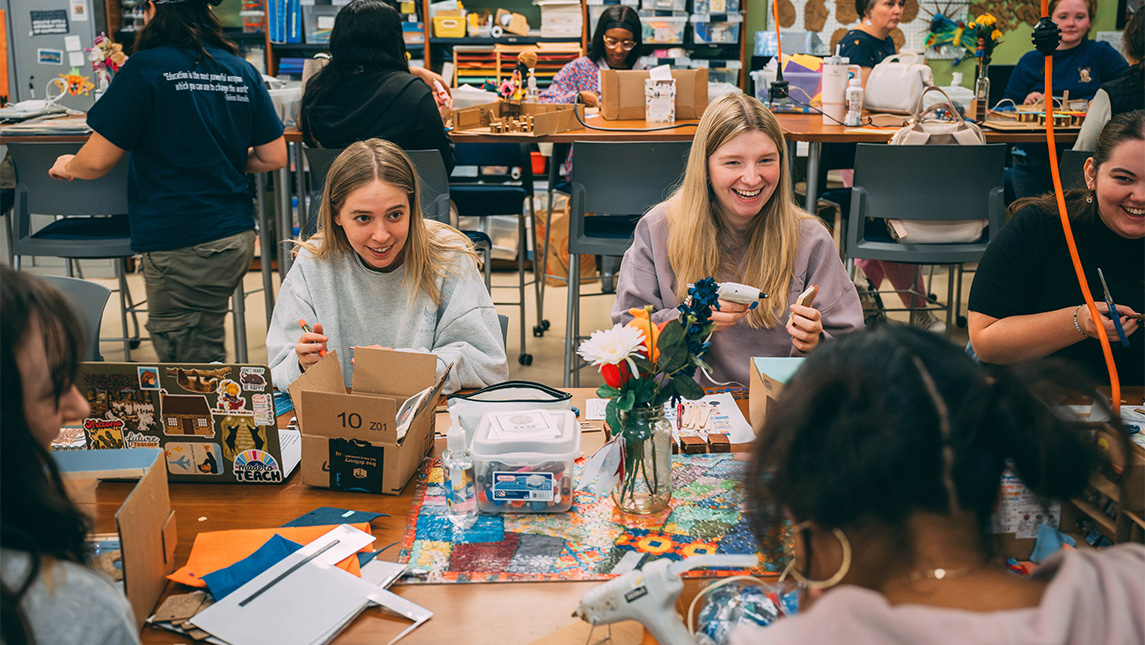
In between their internship hours in local classrooms, 53 students in the elementary education program at UNC Greensboro sit down at tables covered in cardboard and ask questions:
What should I put in my future classroom? How will I arrange the desks? How many posters should go on the walls? What colors do I use?
Between the instructions on teaching math and reading, one might be tempted to ask, is it really all that important?
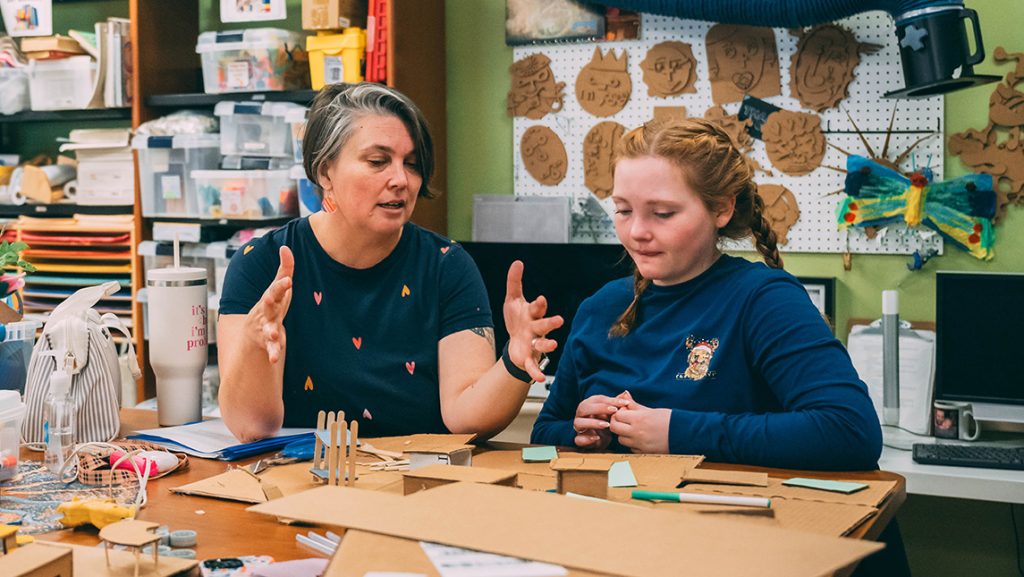
Dr. Sara Porter, associate professor of Teacher Education and Higher Education (TEHE) in UNCG’s School of Education, says it’s critical:
“Classroom environment matters,” she says. “How they set up the room sends messages to students about what they’re going to learn and how they are going to learn it.”
Culture of Learning
Porter brings that idea to the forefront in TED 345 Humanizing Pedagogies. The course is about classroom culture and how teachers can create a culture of learning for all of their students. It’s comprised of three hours a week of internship in local elementary schools and two hours of in-class lecture and activity.
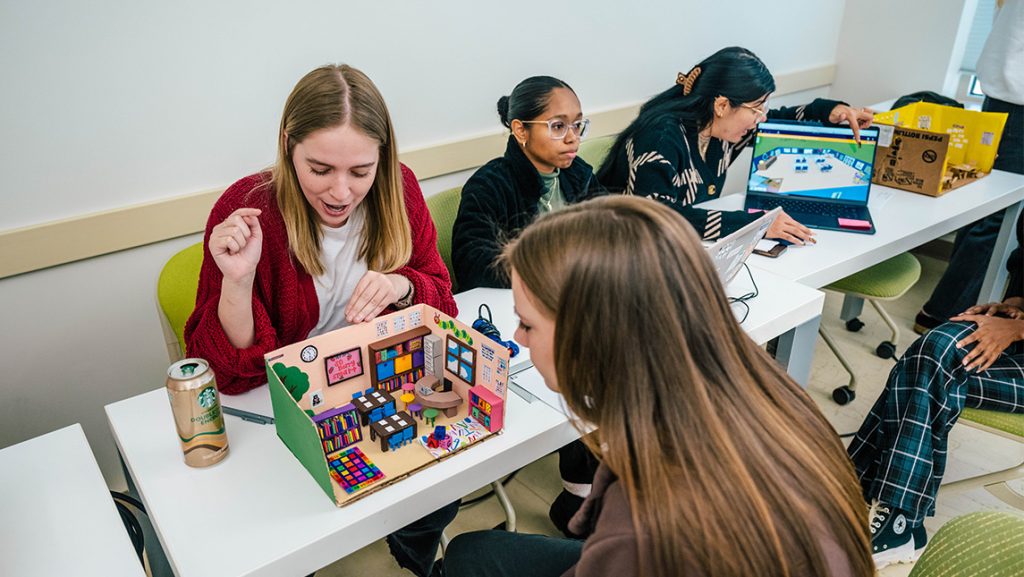
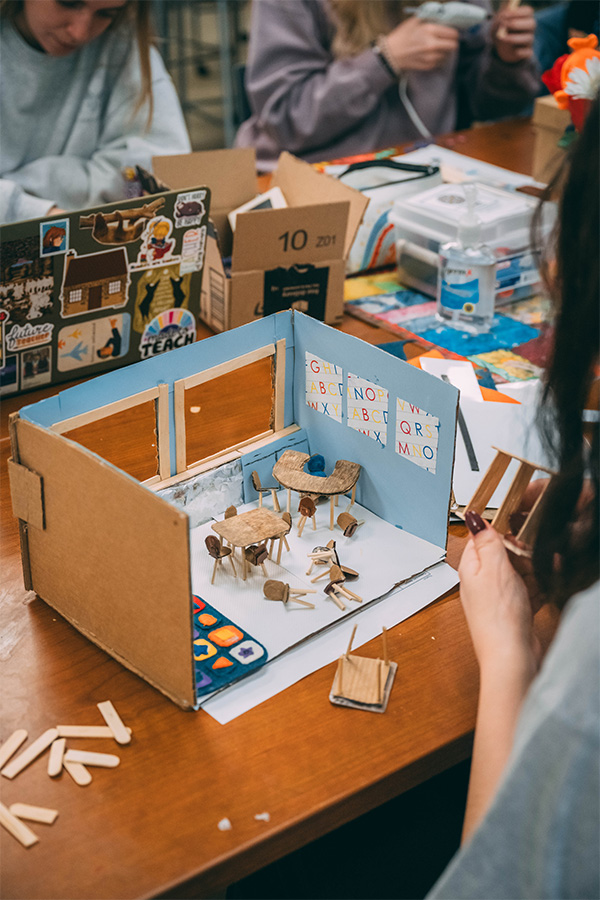
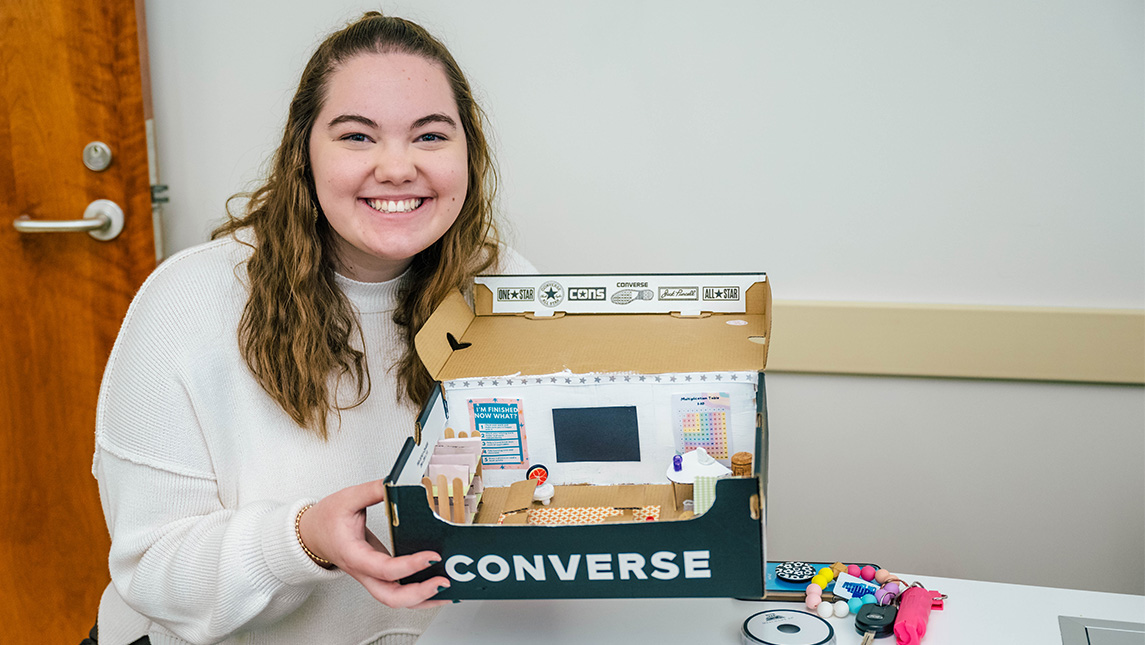
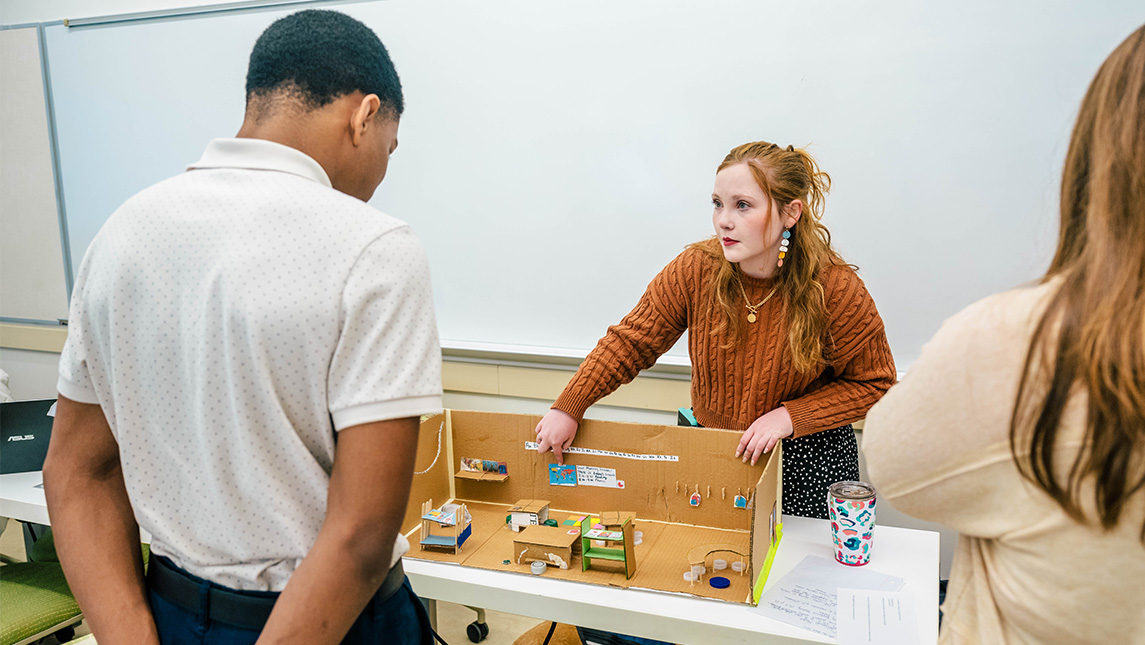
As part of the course, each student builds a model classroom. They can choose a physical or virtual model. To do that, they partner with Matt Fisher, assistant director of UNCG’s makerspace, the SELF Design Studio; and Tricia Bacon with the Department of Information, Library, and Research Sciences. They learn to build with cardboard or use VR software coSpaces. Next, they create a floor plan, and then they decide what signs and symbols – such as posters, banners, and colors – will best reflect their classroom culture.


“The criteria is to make sure students can collaborate and interact with one another, they feel safe and ready to learn, and they have some autonomy and choice in their learning,” says Porter.
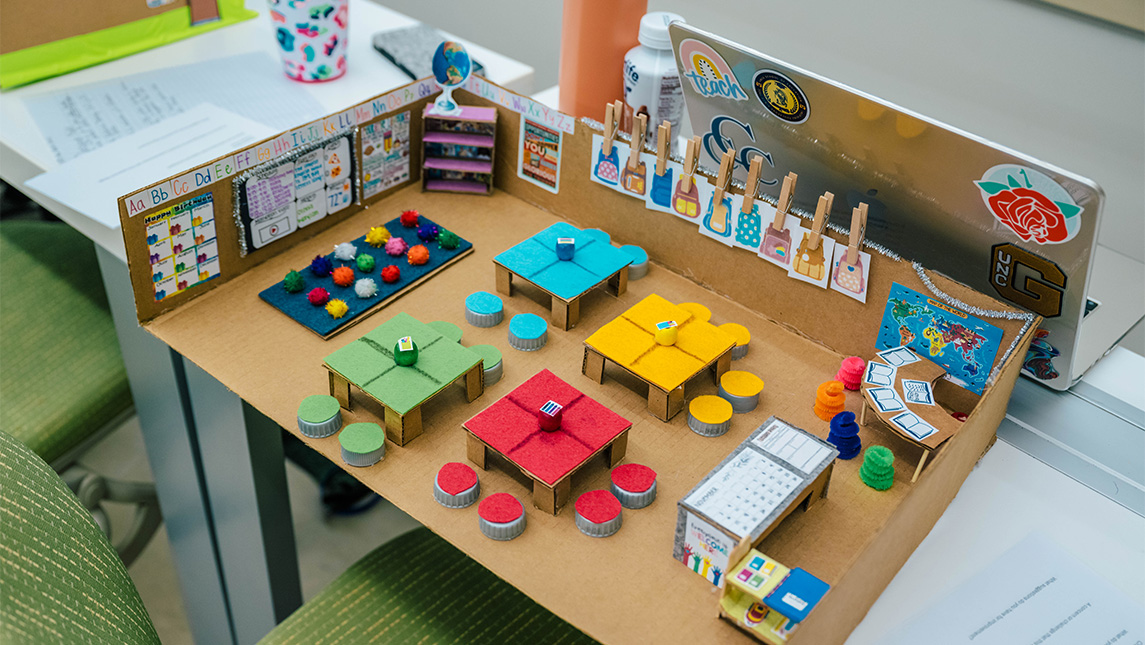
Many of the models configured desks into U-shapes instead of rows. By having students face each other, they hope to encourage more interaction. They chose posters of diverse individuals and encouraging phrases, so that every student would feel like they belonged there.


Seating Arrangements and Colors with Purpose
Malcolm Jones, a junior majoring in elementary education, put a lot of thought into which colors boost creativity and innovation. “I’ve been learning about the mood meter, which is a place where students can track their mood within the classroom,” he says. “I feel like it’s very beneficial for my students, because I’m able to match my teaching to how they are feeling that day.”
Crystal Ivey, an early childhood development major in her senior year, added a calming corner. Children can work through their positive or negative emotions there. “I also placed my desk in the corner, so it doesn’t feel like I’m so focused on the students, that they feel intimidated,” she says.

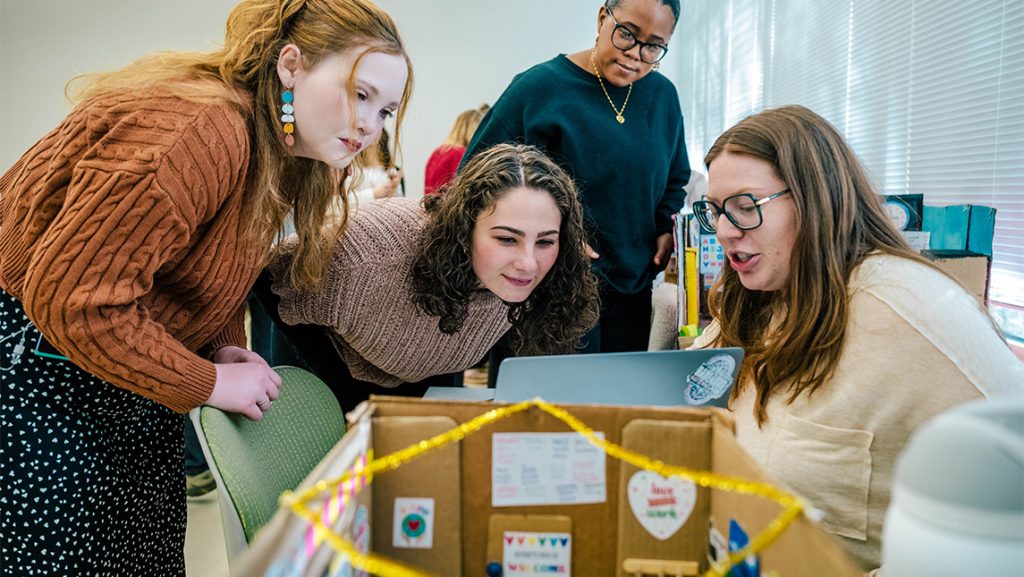
Junior Emma Malone, another elementary education major, interned at Irving Park Elementary School. She appreciated how the class complemented her experiences there. “I personally love the way my internship’s classroom is set up. I’ve taken a lot of what I’ve learned from there and put it into my design model,” she says.
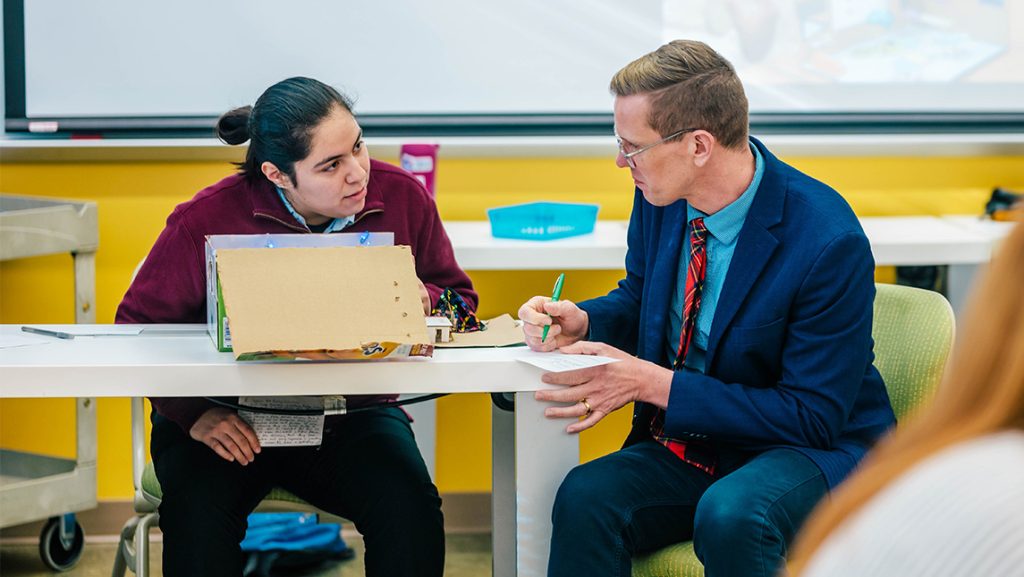
At the end of the semester, the class held a model showcase for other faculty. They explained and debated their designs based on their research of how children learn.
Porter is grateful for the SELF Design Studio partnership, which helps frame her students’ own learning experience. “I believe firmly that when students can construct something that reflects how they’re thinking, and when they can see it out in front of them, it really solidifies their learning. It all becomes less abstract.”



Story by Janet Imrick, University Communications
Photography by Sean Norona, University Communications
Video by David Lee Row, University Communications