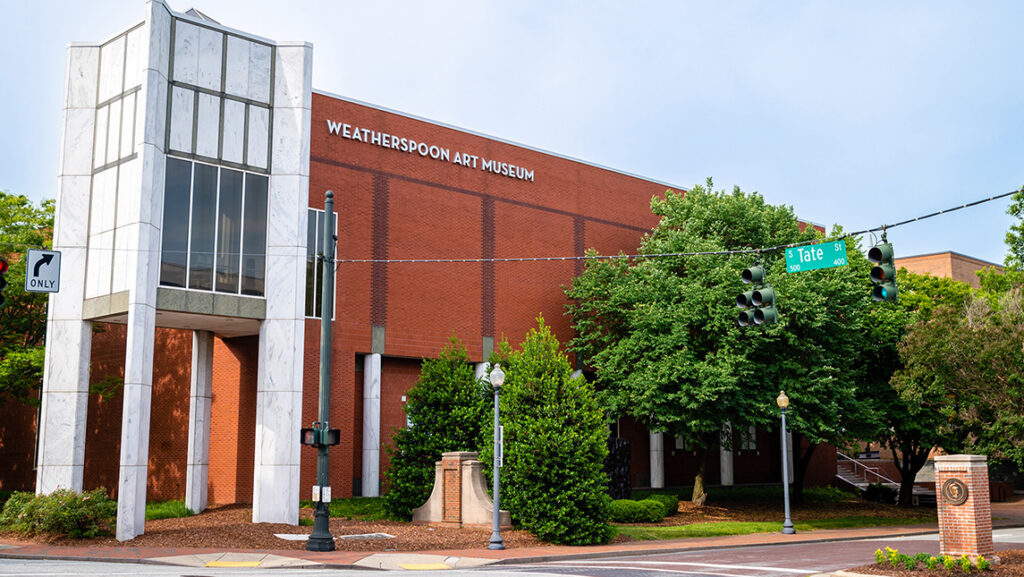
The story of one of the most impactful women in quiltmaking comes alive within the Weatherspoon Art Museum. Harriet Powers, born enslaved in Georgia in 1837, eventually became a landowning farmer and gained recognition at local fairs for her appliquéd quilts depicting biblical stories, scenes of rural life, and cosmic events.
The sound of evening cicadas, a woman’s conversation, and collective humming greet visitors as they enter the space of artist Precious D. Lovell’s Harriet’s Powers, a site-specific, multimedia tribute. The collaged soundscape evokes an old-fashioned quilting bee, where women like Powers might have enjoyed the company of their neighbors and exchanged stories while stitching together the quilts that would earn her the moniker “the mother of African American quilting.”
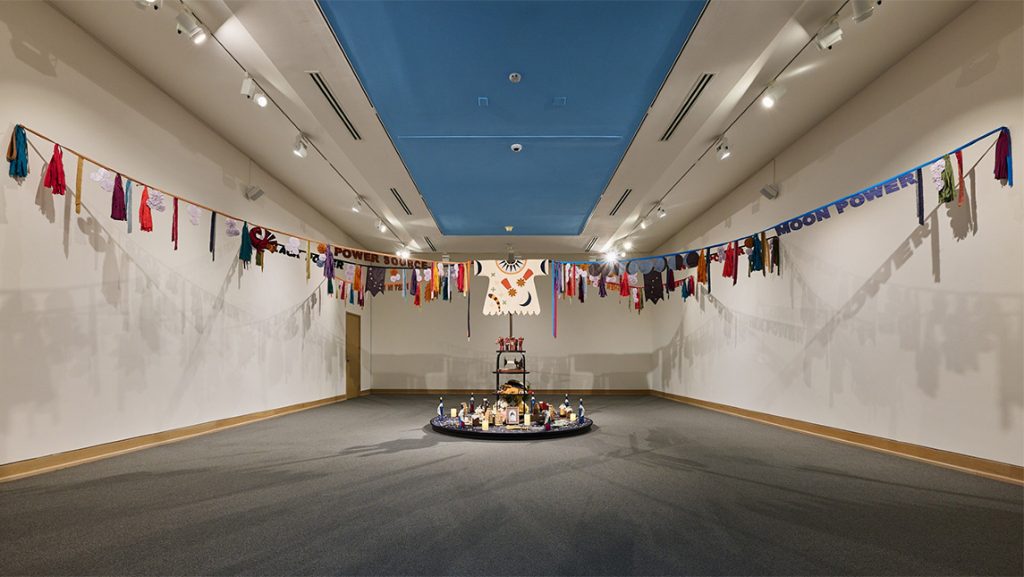
Image courtesy of the Artist. Photographer Sally Van Gorder.
Like quilters who add blocks to a bee’s latest project, UNC Greensboro students were honored to contribute a touch of their artistry to Lovell’s installation, which opened alongside Of Salt and Spirit: Black Quilters in the American South, an exhibition on loan to the Weatherspoon from the Mississippi Museum of Art.
Harriet’s Powers and Of Salt and Spirit will be open to Weatherspoon visits into the summer. On April 23, Lovell will be in conversation with Of Salt and Spirit curator, Dr. Sharbreon Plummer. Starting at 5:30 p.m., they will delve into the legacies of Black Southern quilting as part of the Weatherspoon’s spring open house; a community reception will follow.
Students’ hand-sewn work becomes a piece of a bigger story
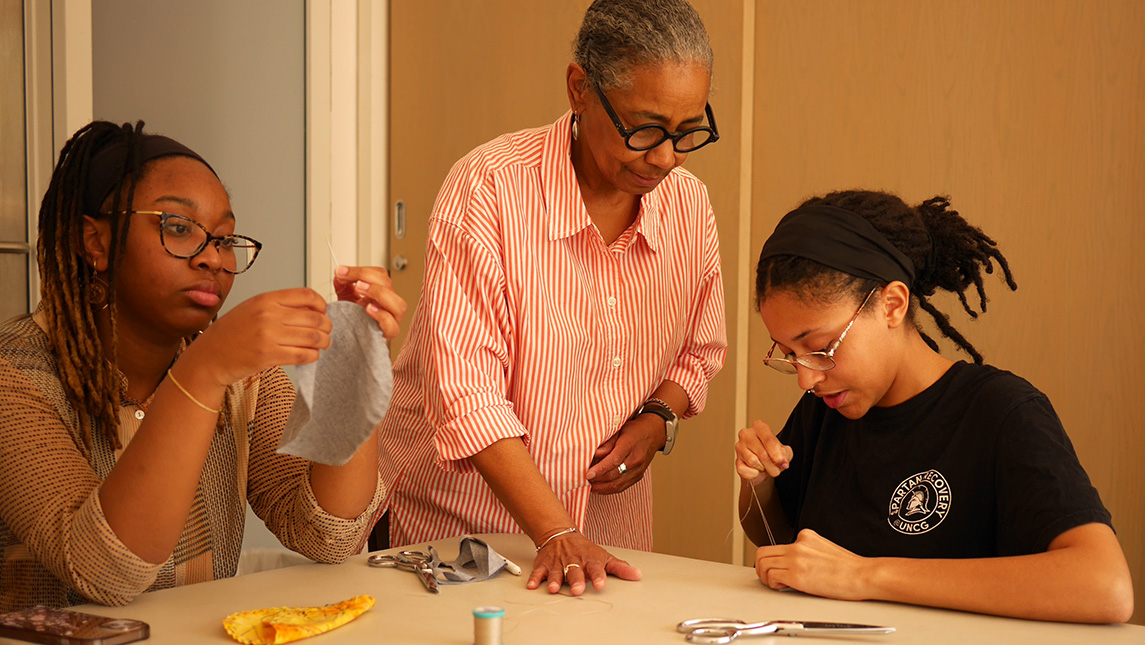
Gabrielle Wilson, an apparel design major, is one of the students from the Department of Consumer, Apparel, and Retail Studies (CARS) who worked with Lovell to create some of the visual elements in Harriet’s Powers. She and four of her fellow students helped sew the circular bunting elements, called “yo-yos,” that extend joyfully from the installation’s sculptural center up into the gallery’s ceiling.
As a whole, the artwork incorporates color, symbols, and artifacts to situate Powers’s history within a larger narrative of Black female lives in the South.
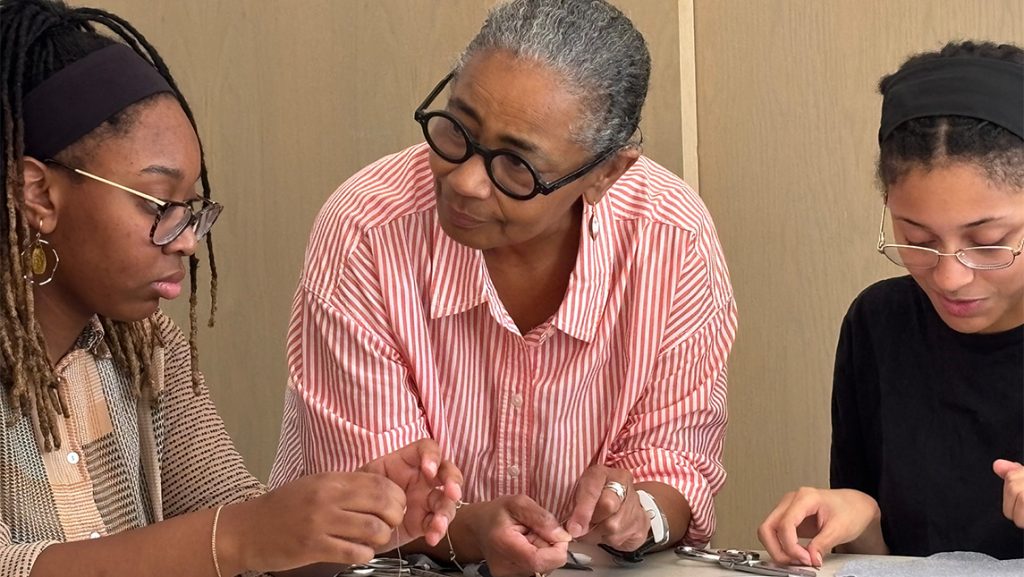
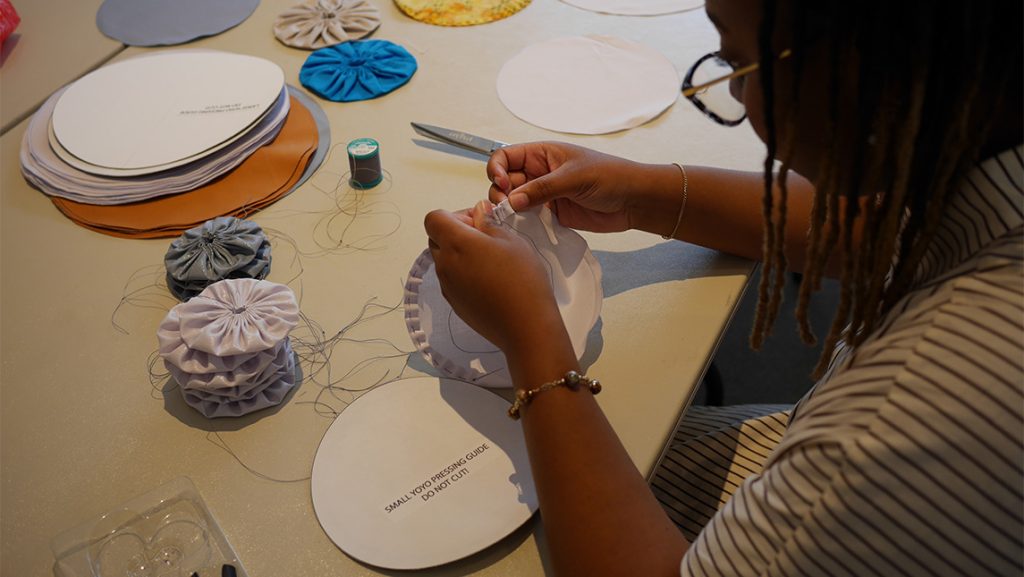
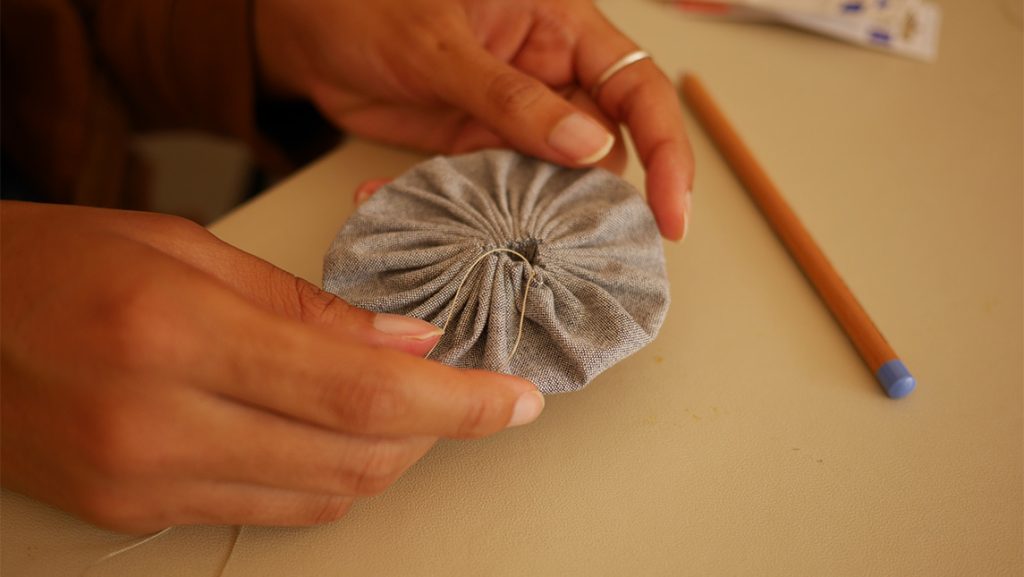
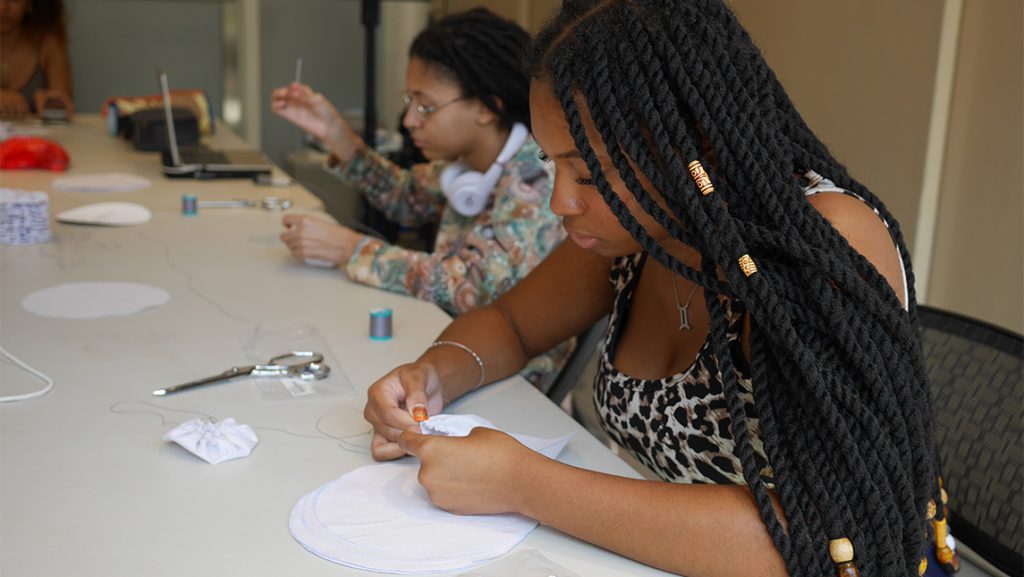
Precious D. Lovell (top left photo, center) works with CARS students.
It was a tangible learning experience for Wilson to see how art and needlework have been a part of American history.
“What stood out to me most about Harriet Powers was her dedication to quiltmaking and the intricate beauty of her designs,” says Wilson. “Many enslaved individuals had talents and gifts that they were not able to fully embrace or take pride in, which I find very saddening. However, it was also meaningful to see how Lovell paid tribute to her and her extraordinary skill in hand-sewing.”
CARS Associate Professor Melanie Carrico appreciates the opportunity Lovell’s project brought her students. “I was excited for them to collaborate with a practicing artist who values sewing and has a fashion industry background,” she says.
Music students lift their voices
While CARS students helped form the visual components, students in the popular music and technology program (PopTech) added to its aural dimension. With their Assistant Professor of Commercial Voice Janinah Burnett and Grammy-nominated musician Bill Toles, they performed the songs woven into the soundscape.
Burnett says the soundscape elevates the message of the whole piece.
“Visitors not only see the profoundness of the many dimensions of the visual experience, but they hear unison singing, harmonies, rhythm, tone, text, silence, and depth,” says Burnett. “It is captivating. This audial connection makes the experience visceral for visitors, and therefore unforgettable.”
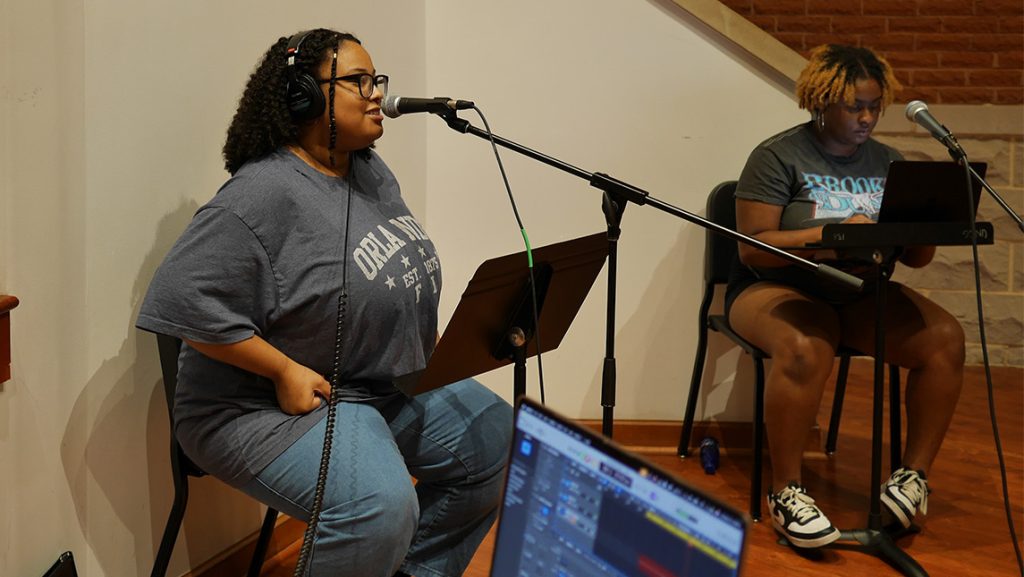
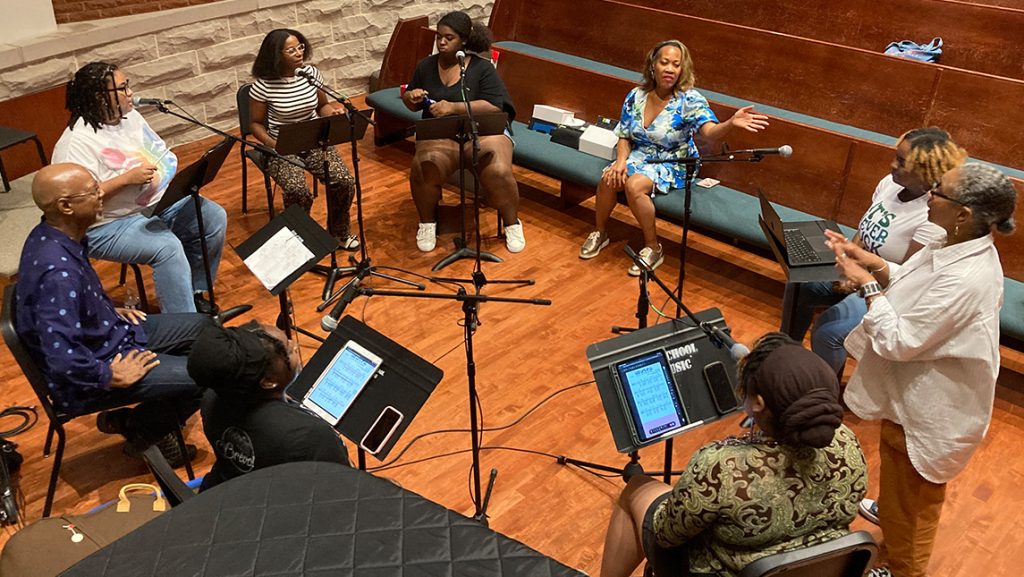
It also serves as a reminder, says Burnett, that the PopTech program is about more than contemporary trends; it reaches back into the past, including music’s technical grounding, creation, performance, and distribution.
“The meaning in every single object and action of Lovell’s artwork is deliberate and contains so much powerful depth of messaging that is more than meets the eye,” says Burnett. “It is only natural that PopTech participate in such profound work, as it too embodies, expresses, and is grounded in more than meets the eye.”
Carrico echoes the theme of linking students to history. “Contributing to an artist’s large-scale installation,” she says, “helped CARS students see how their skills connect not only to fashion, but to cultural storytelling, interdisciplinary art, and creative work beyond traditional design pathways.”
Of Salt and Spirit and Harriet’s Powers are on display at Weatherspoon through Aug. 1, 2026 and July 25, 2026.
Story by Janet Imrick, University Communications
Photography courtesy of Weatherspoon Art Museum