The national designation is presented by the American College Personnel Association in partnership with The EDU Ledger and highlights student affairs divisions that demonstrate strong commitments to workplace well-being, supportive environments, professional development, and work-life balance.
Recipients are selected based on survey data examining workplace climate, benefits, and opportunities for growth within student affairs divisions. The designation reflects Student Affairs’ ongoing commitment to fostering a supportive environment for the professionals who help Spartans thrive.
Behind the Wheel: The Team Driving Spartan Success
Posted on March 11, 2026
The Parking Operations and Campus Access Management department (POCAM) supports students, faculty, staff, and visitors at UNC Greensboro in getting from destination to destination. There’s a wide range of parking, transportation, and access services at UNCG, and POCAM is entrusted with such a big part of what makes campus life real for every Spartan.
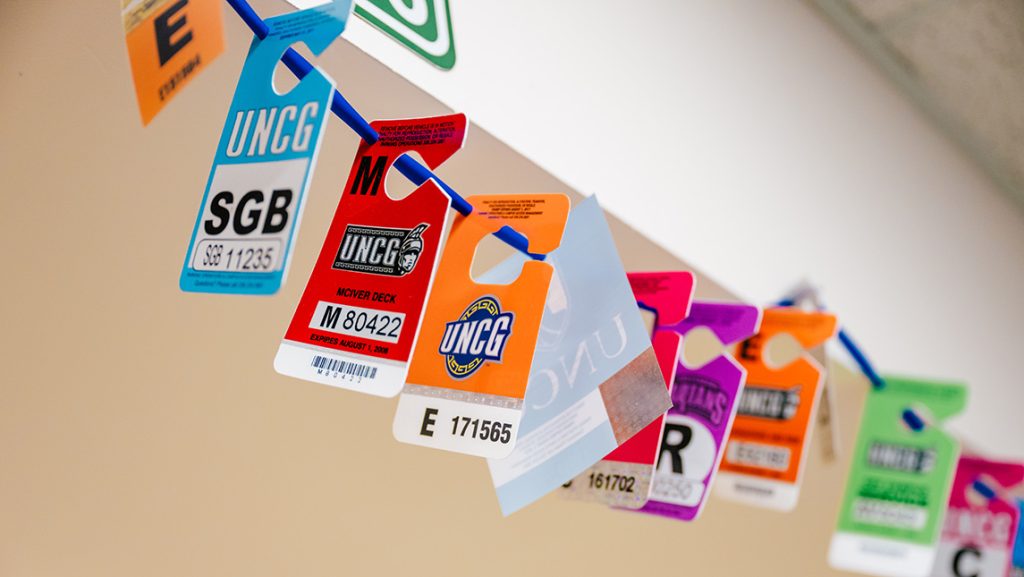
POCAM responsibilities range from complimentary motorist assistance, Spartan Chariot shuttle bus operations, parking permit registration and management, to motor-pool vehicle rentals and after-hours temporary SpartanCard issuance.
If you think you’ll ever be in need of a jump start, a ride to and from your Spartan Village apartment, or a last-minute parking permit registration solution, get to know some of the faces who show up every day just to make this one thing a little less difficult for our campus community.
Fare‑free public transit access: By providing UMO codes for Greensboro Transit Agency (GTA) buses, we give the campus community a no‑cost option for traveling anywhere GTA serves, reducing financial and transportation barriers.
Comprehensive shuttle services: Our Spartan Chariot campus shuttle bus system — including the Campus Loop, Spartan Village Express, and Park & Ride routes — creates dependable connections between housing, academic buildings, parking areas, and key campus destinations.
Motorist assistance: Free jump starts and tire inflation keep individuals mobile and reduce disruptions that could prevent them from getting to class, work, or home safely.
After‑hours support: Temporary SpartanCard issuance during evenings and weekends ensures that students and employees can continue to access buildings and food even when the main office is closed.
— Desiree Coltrane and Grant Harris, Parking Operations and Campus Access Management
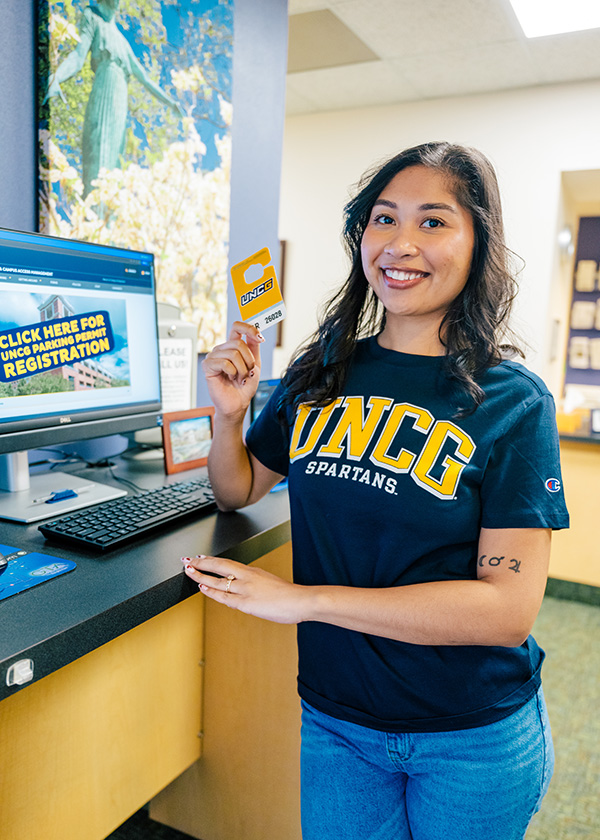
Chakra Cook Front Office Customer Service Representative
What does a typical day look like for you?
Every morning is a bit of a mystery, and the job is mostly about rolling with whatever comes your way. That said, August and the beginning of January are our “Super Bowl seasons” because parking permits take over everything. During those times, my days are packed, fast-paced, and fueled by problem-solving – but the rest of the year keeps me on my toes in different ways.
What fun activities do you like to pass the time during work or at the end of the day?
Downtime is a great excuse to connect with my coworkers. Since we spend so much time together, I really enjoy learning about their hobbies, interests, and families — it makes work feel more human. When I get a moment to myself, I tend to fall down research rabbit holes on things I’m curious about. Recently, I’ve been learning about Lesley Riddle and his huge influence on the Carter Family.
What skills should students develop to succeed in any workplace environment?
If I had to narrow it down, I’d say communication, emotional intelligence, and resilience are the holy trinity. Being able to clearly express yourself, read a room, handle feedback, and bounce back when things don’t go your way will take you far — no matter the job title. Technical skills are important, but these are the ones that keep you thriving when work gets complicated. I’m still pretty new in the workforce, but these are things I’ve been working on.
What’s an interesting fact about yourself?
I didn’t leave the United States until October 2025, but by August 2026, I’ll have visited four other countries. Once I started traveling, I was hooked. It’s become a huge part of my life because it pushes you out of your comfort zone and teaches lessons you just can’t learn by staying in one place. Travel has a funny way of testing you and helping you grow at the same time.
Park, Ride, & Thrive
Each semester brings something new: incoming freshmen, busy dorms, and another round of classes underway. Students can prepare for the best by simply knowing what resources are out there.
Over 650 students rely on Park & Ride services daily. Providing a reliable spot to park their vehicles, this option works to accommodate commuters living off campus and prevents both students and employees from facing the challenges of everyday traffic. Park & Ride Shuttles operate Monday through Thursday, 7 a.m.–10 p.m., and Friday, 7 a.m.–7 p.m.
POCAM encourages students to explore other alternatives to driving, such as the Greensboro Transit Agency (GTA), riding a bike, or carpooling. Oliver Murdick, a deck operations associate, says, “The Spartan Chariots and the free pass for the GTA are a fantastic service to combat the walking problem.”
Got somewhere to be but don’t have a parking permit? No problem! You can use the ParkMobile app to locate approximately 200 spaces on campus, with instructions at the site on how to pay for parking. To ensure convenience for all visiting motorists, the maximum length of occupancy is two hours.
Along with ParkMobile, Passio Go! helps students stay up to date with bus routes like the Campus Loop and Spartan Village Express. The Campus Loop passes through 13 stops while the Spartan Village Express serves five. An average of 7,850 bus trips are taken each week. All chariots are equipped with wheelchair lifts.
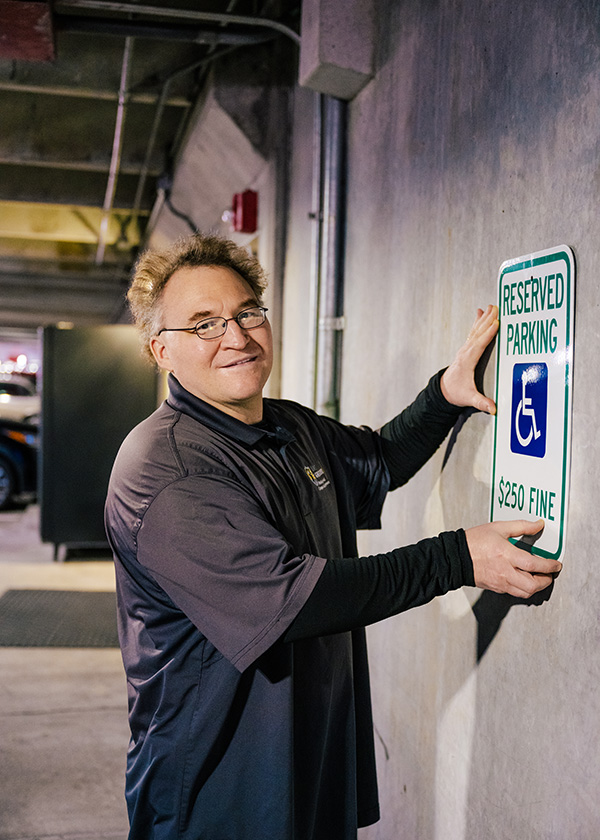
Oliver Murdick Deck Operations Associate
What’s one thing you wish more students knew about your job?
I wish students knew that we can see them on the cameras.
What does a typical day look like for you?
I oversee parking operations at night.
What fun activities do you like to pass the time during work or at the end of the day?
I like to juggle.
What skills should students develop to succeed in any workplace environment?
The best skill to have in a workplace is patience.
What’s an interesting fact about yourself?
I’ve never owned a car.
Every Trip Counts
When it comes to figuring out permits or paying a ticket, Chakra Cook, front office customer service representative, says, “A lot of students come into our office looking like they’re about to receive a court summons — and I get it; parking can feel intimidating. But honestly? We genuinely try to help.”
Parking enforcement can sometimes feel overwhelming, but here are a few comforting details students should keep in mind about parking citations:
The UNCG Parking School Community Service Initiative offers students an opportunity to complete community service to remove one specified parking citation per academic year. Learn more about eligibility here.
Most parking fine revenue goes to North Carolina’s public K-12 schools, including those in the Guilford County area.
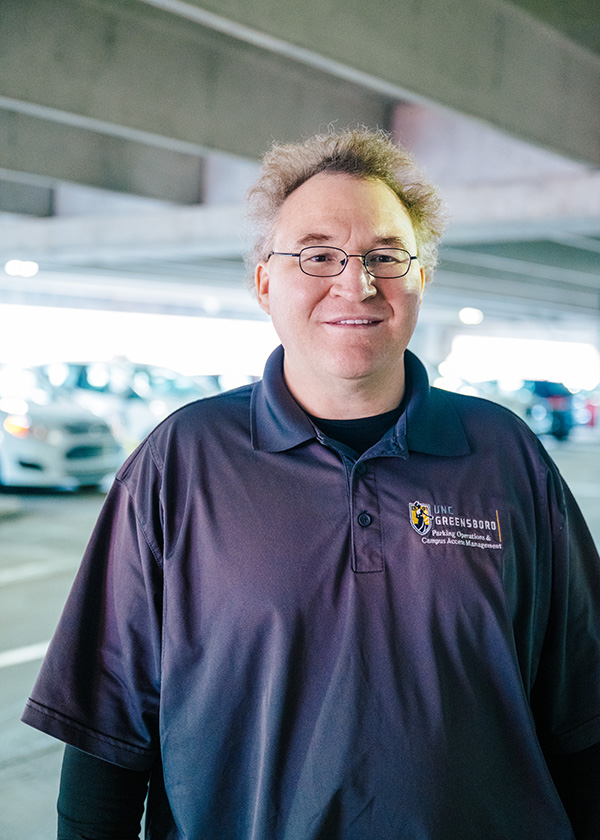
Andrew Clapp Maintenance Supervisor
What’s one thing you wish more students knew about your job?
It is dangerous; we are among cars all day, with only a reflective vest or coat to ensure we are highly visible to drivers.
What does a typical day look like for you?
I go to every coin-operated meter on campus. I collect the coins and replace the battery if necessary. The rest of the week varies depending on the needs of the parking infrastructure; I may be replacing poles and signs in parking lots or decks. I will also be putting in new stop blocks in parking lots, including drilling holes for the rebar to secure them to the asphalt. The campus has many parking needs to attend to.
What fun activities do you like to pass the time during work or at the end of the day?
Growing up in Colorado, I love to ski.
What skills should students develop to succeed in any workplace environment?
Interpersonal social skills, even in a modern workplace, you must learn to interact with coworkers on a personal level.
What’s an interesting fact about yourself?
I am a veteran of the US Navy Seabees.
“Our goal is to work with students and staff to find parking options that actually fit within the rules,” says Cook. “Ticketing, booting, and towing are last resort situations, not our favorite hobbies. If you come talk to us, chances are we’re trying to help you avoid those outcomes, not create them.”
Understanding even a small part of the process can help provide greater context around parking enforcement and encourage students to lean on the campus programs available to them.
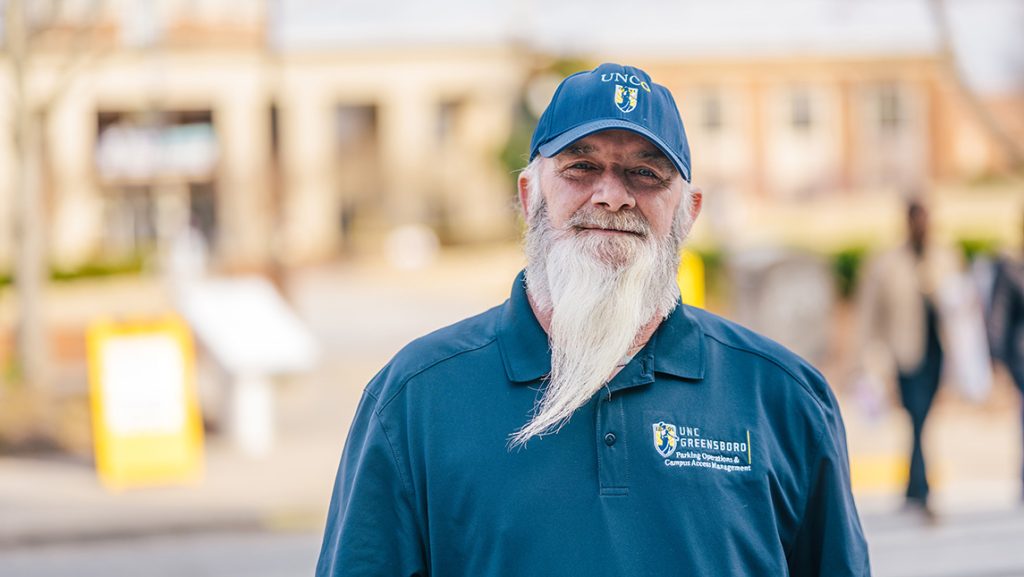
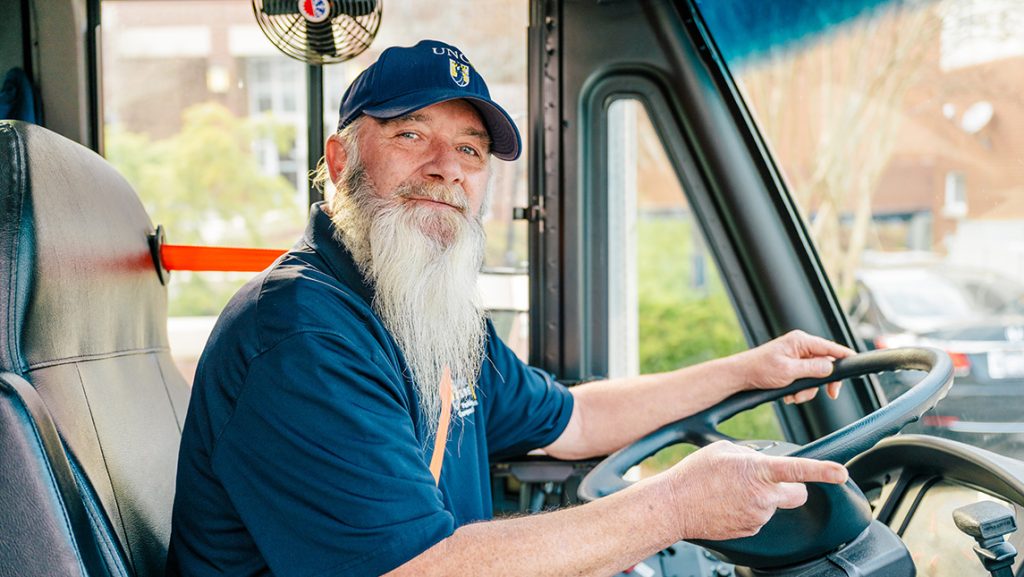
James Knight Parking Enforcement (Formerly a Spartan Chariot Driver)
What’s one thing you wish more students knew about your job?
The amount of noise, from both inside and outside the bus (traffic, passenger conversations, radio, etc.), is more prevalent than most students would believe. Also, the process of navigating different weather conditions while operating the bus makes each shift both different and interesting.
What does a typical day look like for you?
Volunteering to help vulnerable populations at various non-profit organizations during the day, then working 2nd shift driving the Spartan Chariot.
What fun activities do you like to pass the time during work or at the end of the day?
Listening to Music, Walking/Getting Exercise, and Learning New Things.
What skills should students develop to succeed in any workplace environment?
Communication, Teamwork, and Problem Solving.
What’s an interesting fact about yourself?
I have met several musicians, comedians, athletes, and politicians over the years! Each meeting made for a great memory and a great time!
Moving Campus Forward
Getting around campus takes many forms, and POCAM helps coordinate them all. At times, the team adapts services to accommodate special events, with a Spartan Chariot reserved to provide direct transportation to destinations such as Greensboro’s First Horizon Coliseum for athletic events or the Kaplan Center for professional development opportunities like the recent career fair.
These adjustments reflect the intentional effort to meet the needs of students, faculty, and staff and contribute to a broader mission of enhancing the University experience.
Parking is the first step, but succeeding as a Spartan is the next. Reach out to POCAM with any questions or concerns about how to improve your campus parking experience.
Story by Lauren Segers, University Communications Photography by Sean Norona, University Communications
In Memoriam: Dr. Sarah Shoffner, a Lifetime Educator
Posted on March 17, 2026
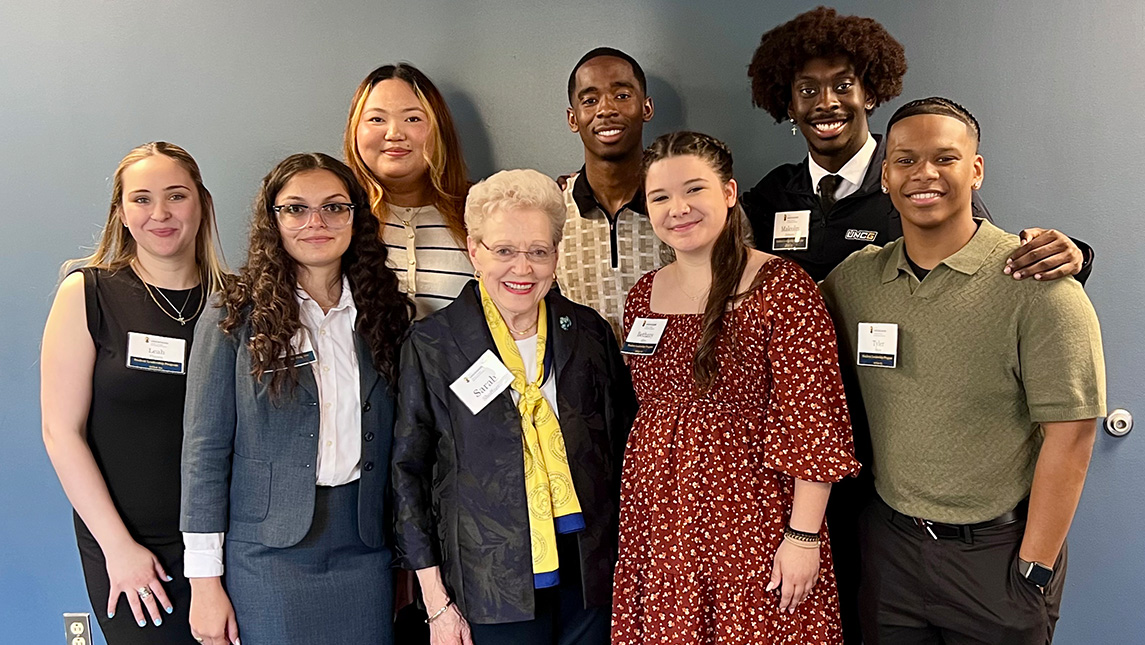
A March 20 memorial ceremony for the late Sarah Shoffner ’62, ’64 MS, ’77 Ph.D. will be held in Marcus T. Johnson Alumni House. Shoffner’s impact spans decades, from three-time student to educator and administrator, and later chair of the Alumni House Committee.
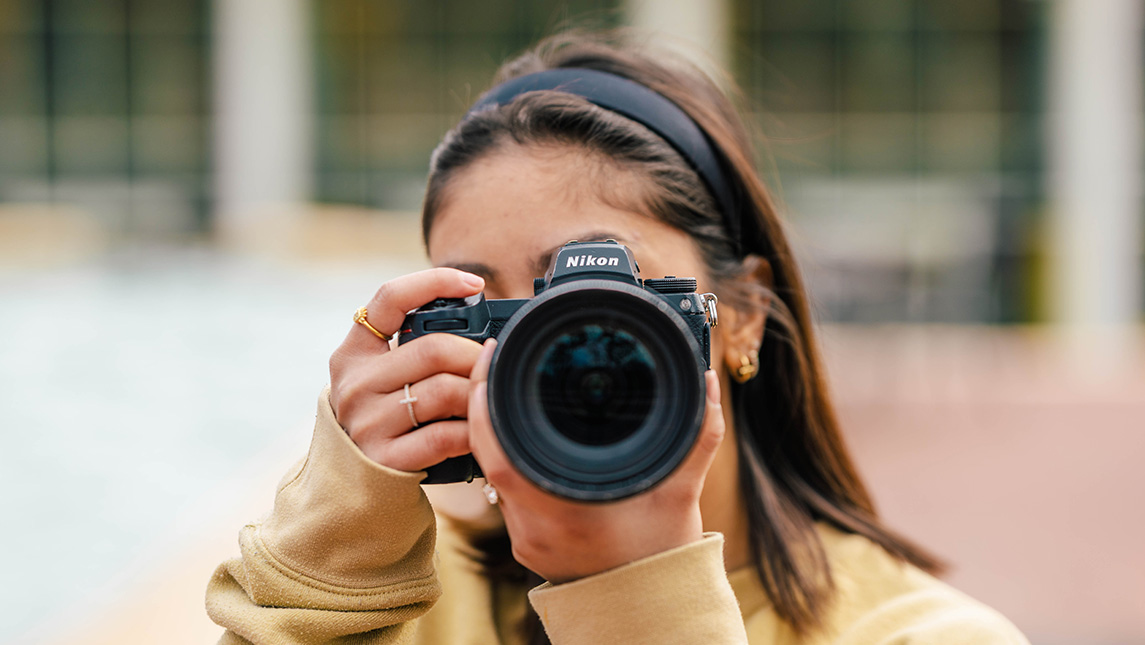
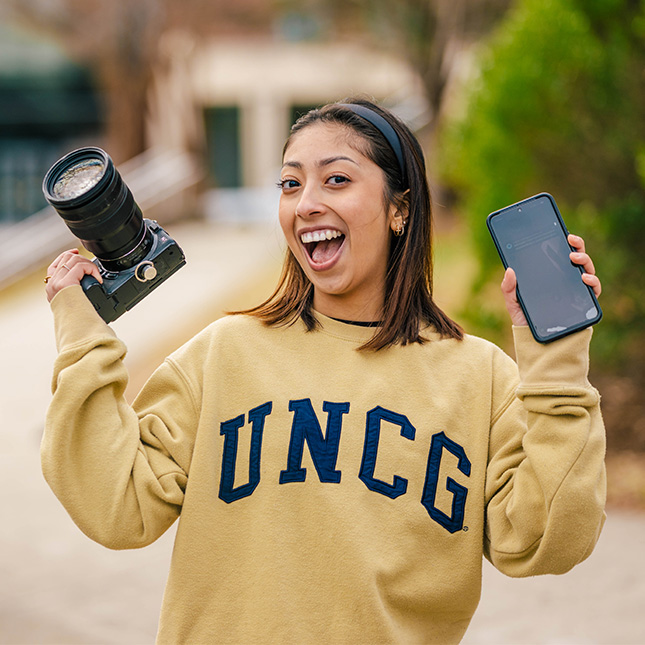
On March 23-27, the entire Spartan community will be participating in a photography project known as A Week at the G. This will be the fourth annual A Week at the G event, where faculty, staff, and students share snippets of life at UNC Greensboro by taking photos and submitting them to our online daily photo journal.
Capture the Moments
During A Week at the G, professional and hobbyist photographers will be lending their viewpoints, along with everyday observers snapping photos on their phones. A blooming dogwood tree on campus, a group gathered for lunch at Moran Fountains, a focused student in a biology lab, softball players encouraging each other at batting practice, smiling Spartan Dining staff, film majors working on a project at Carmichael Studios — just about everything you see can be part of A Week at the G.
With strong participation across campus, the collaboration will leave us with a collection of photos and video clips illustrating what it’s like to be a Spartan. Check out the video from our last Week at the G in October 2024 and get inspired!
Submit and Be Social
Let’s say you are walking through campus and happen to witness a moment that feels too UNCG not to capture. Once you take the photo, there are a couple of ways you can participate:
Submit your photo to our Week at the G daily online photo feed. (An online submission form will go live on weekattheg.uncg.edu beginning Mar. 23.)
Post it on Instagram, LinkedIn, and X using the hashtag #AWeekattheG.
There are a few commonsense guidelines to follow, including making sure the subjects know you are sharing their photo, being mindful of children and sensitive subjects, and avoiding other university’s logos. But otherwise, let your inner Spartan be your guide.
Prize Worthy Photos
If Spartan pride isn’t enough to spark your collaborative spirit, this year there are prizes to sweeten the deal. The best photos posted through our online submissions will be selected by the University Communications team and shared on social channels for public voting. The following prizes will be awarded:
Students: Photos submitted by students are eligible to win a Panasonic LUMIX G7 mirrorless camera ($800 value), UNCG swag, and have their photo enlarged for display on a billboard along Gate City Boulevard.
Social Posters: Photos posted by anyone during March 23-27 with our hashtag #AWeekattheG are also eligible to win a Polaroid Hi-Print Generation 2 Everything Box Set photo printer ($120 value) and UNCG swag as part of a “Photo of the Week” contest on Instagram, LinkedIn and X.
Keep in mind that everything from quiet, small moments to sweeping campus vistas are worthy of submission to our Week at the G daily photo journal. Together they paint an incredible picture of life at the G — one that isn’t complete without your unique POV.
Mark your calendar and clear your lens for all the beauty waiting to be captured March 23-27 during A Week at the G!
Story by Becky Deakins, University Communications. Photos by Sean Norona, University Communications.
Never Stop Dreaming: Forward-thinking Saxophonist Thrives on Jazz Culture
Posted on March 12, 2026
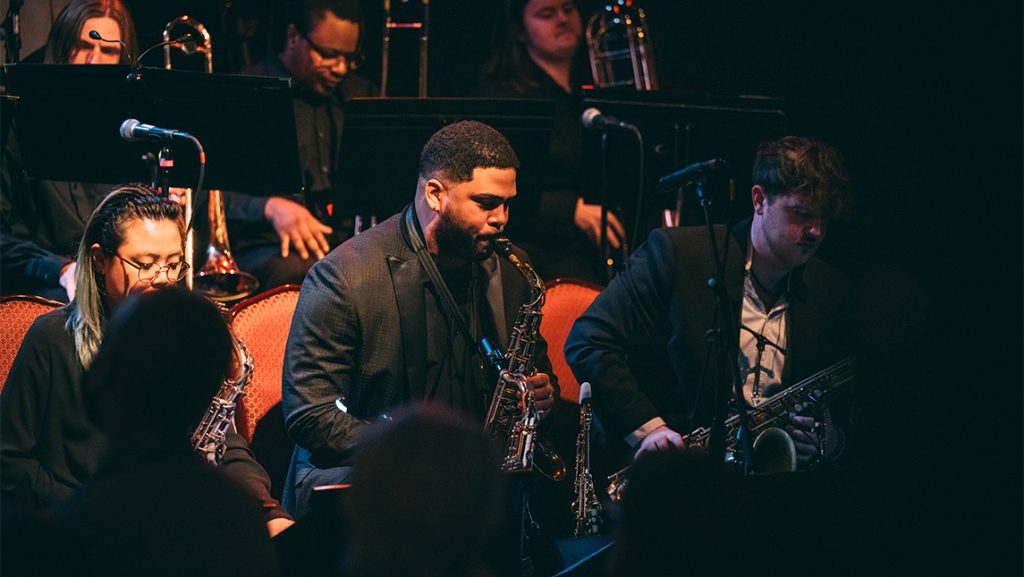
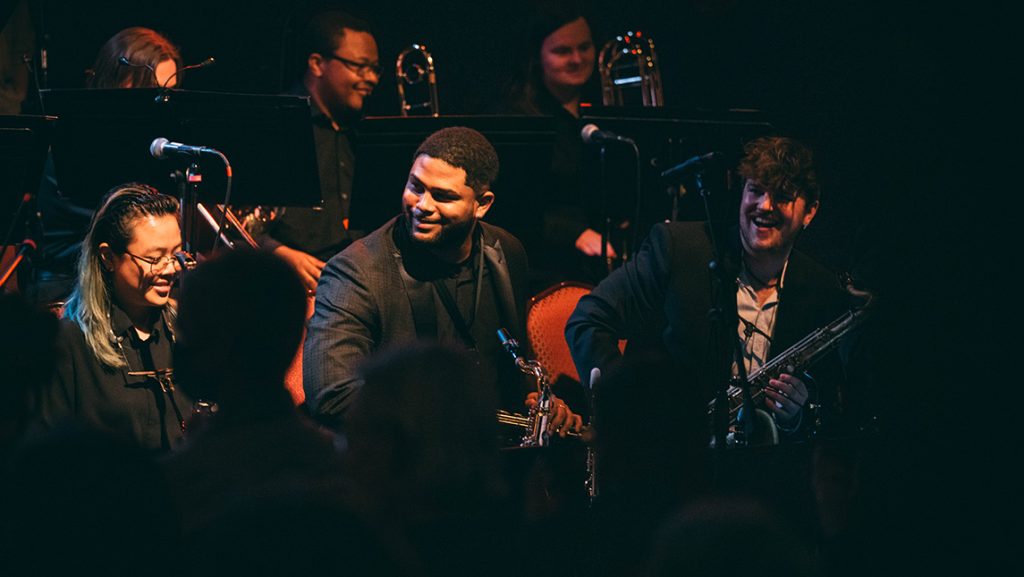
The chatter of intermission fades as a new band takes the stage at the Carolina Theatre of Greensboro to begin their warm-ups. Sonorous tones from the brass instruments usher the crowd of all ages to return to their seats inside the black box theater. The brick walls and columns evoke a mood that takes them back to the 1960s, ready to hear the legendary jazz musician Miles Davis himself, but this evening his music will be performed by UNC Greensboro’s Jazz Ensembles I and II.
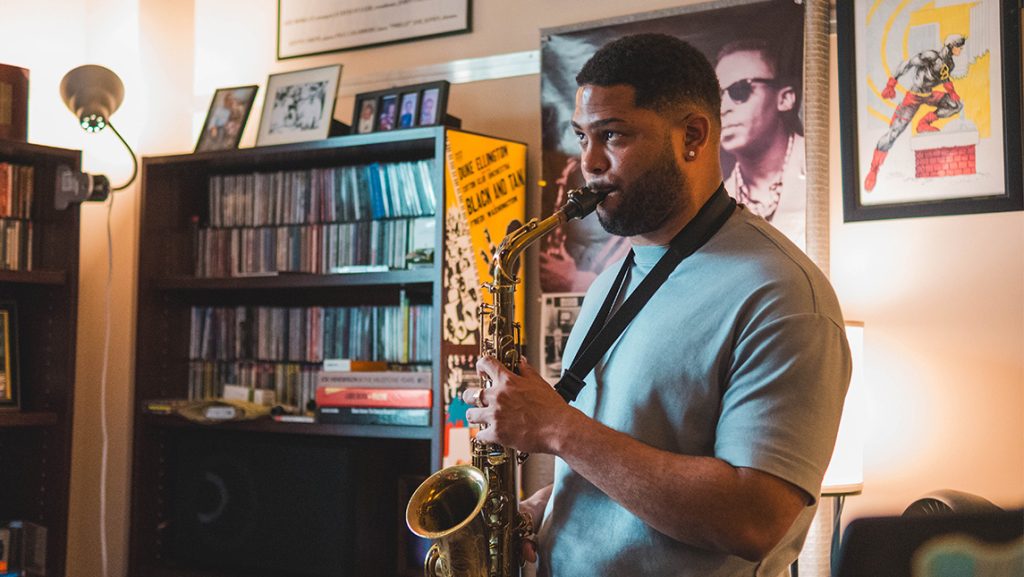
Franco Romero signals his bandmates to begin their first set, his own arrangement of Davis’s 1961 classic “Teo.” When he rises for a solo, the audience listens, enraptured by the warm, powerful, lilting tones of his saxophone.
The evening’s air is crisp as Greensboro closes out a mild week that melted away all signs of the 10 inches of snow left by back-to-back winter storms. On stage, the skill of Romero and his peers settles any nerves of their professor, Dr. Thomas Heflin, who acknowledges to the audience how they lost two weeks of group rehearsals while the UNCG campus was closed. Judging from the applause after each solo, the weather’s interruption hadn’t soured their notes.
His history in music does not go back as far as the jazz king Davis, but his own musical story is off to an inspiring start, including a childhood fascination with jazz, work on a Grammy Award-winning album, a special meeting with a UNCG professor, and the generosity that brought him to the United States for college.
Dreams Set to a Jazz Tempo
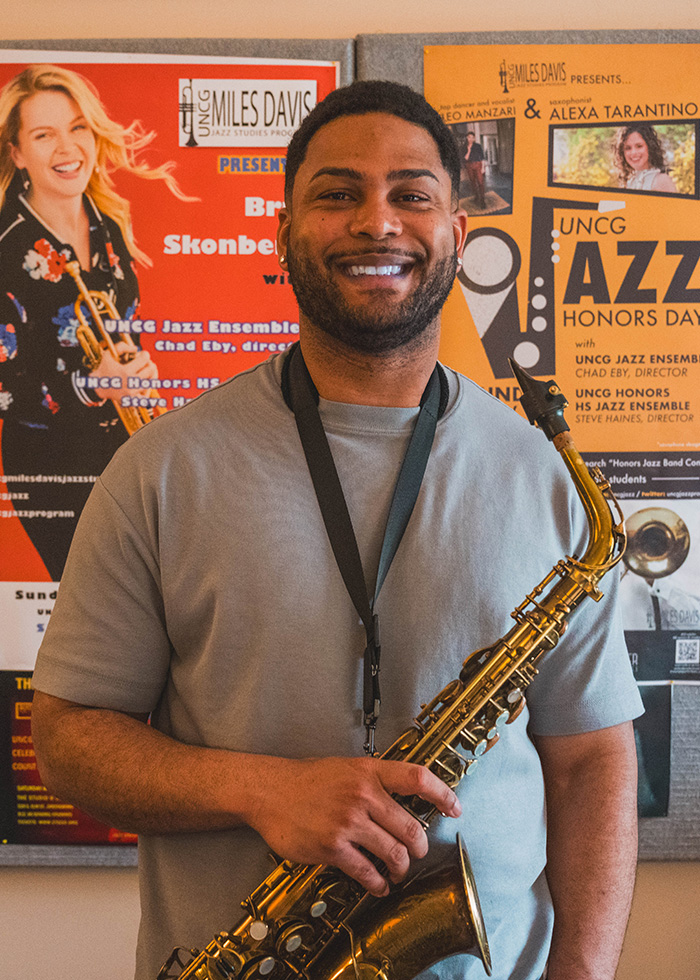
Romero
Music runs in his family. As a child in Cuba, Romero grew up listening to his aunt, a cellist. According to his mother, when he was very young, he would cry whenever his aunt played a sad melody.
He tried a few instruments before finding his calling: “I started playing saxophone and knew that was where I really wanted to be,” he says.
He proved so talented that his tutors recommended he go to Alejandro Garcia Caturla Art School and then the Amadeo Roldan Conservatory for high school — institutions both named after Cuban composers.
While grateful for the teachers of his early years, connecting to professionals who could expand his skills proved difficult. Furthermore, most of the musical instruments available in Cuba were subpar. Then, in 2016, his school introduced the nonprofit-led program Horns to Havana. Finally, he and his classmates had access to better quality instruments and master classes from musicians from the United States.
The award-winning saxophonist and composer sits on Horns to Havana’s educational council and teaches at the UNCG School of Music. Eby saw Romero’s potential and began looking for ways to bring him stateside.
“It’s always been a dream for a Cuban student to have the opportunity to study outside the country,” says Romero. “We are lovers of jazz and music in general, but the dream is to go out there and learn from the place where jazz originates.”
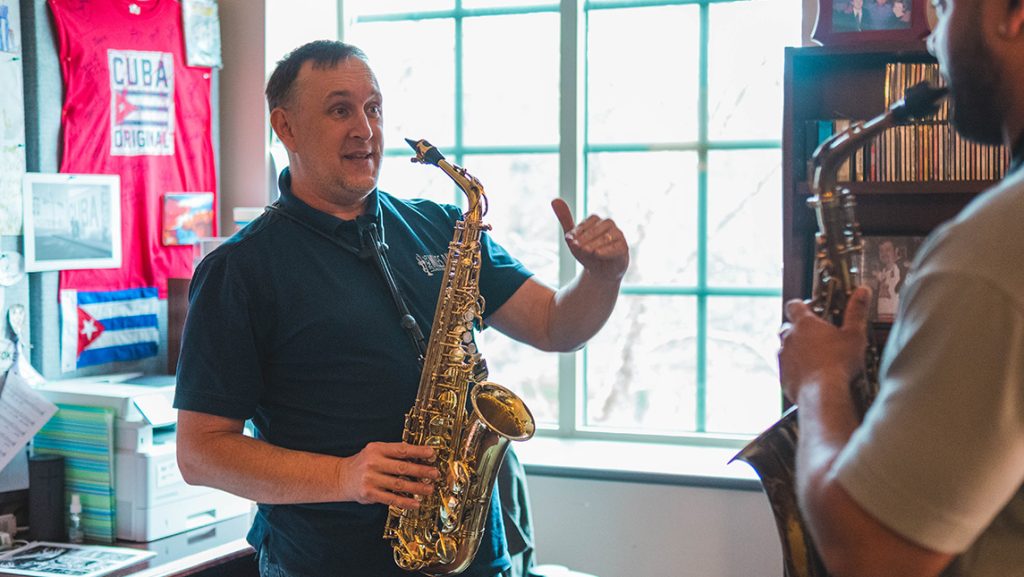
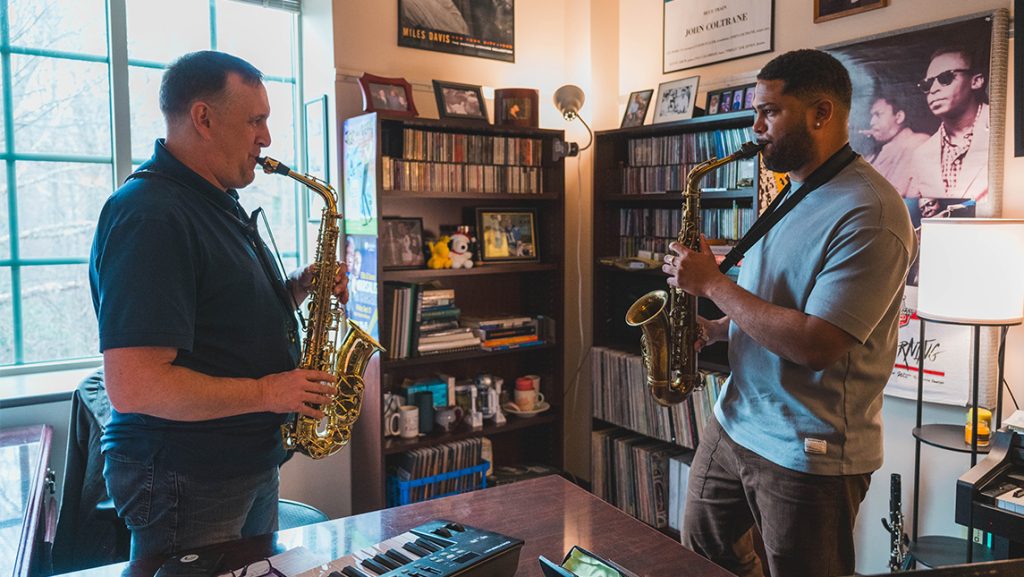
Romero practices with Eby.
Romero and Eby looked at schools in Florida and North Carolina. Then they found a donor who would pay for Romero’s first year of tuition to study jazz at UNCG. In 2022, Romero saw his dream take hold, “to come here, have a real education, and the opportunity to go to college.”
Romero’s American Dream
Over the past three years, Romero has experienced so much of the United States, traveling to other cities to share his sound with diverse audiences. While many performers aspire to build their careers in major cities like Los Angeles or New York, Romero has developed a deep appreciation for Greensboro’s hospitality and vibrant musical community.
“The people here are incredibly welcoming,” he says. “The area is beautiful, and the campus itself is just inspiring. Greensboro is a smaller city, and like many musicians, I often dream about experiencing bigger cities and bigger stages. But there’s something about Greensboro that keeps bringing me back. It’s a place that has truly become meaningful to me.”
The Best of Miles Davis
Romero, with the UNCG School of Music, celebrates Miles Davis’s centennial year this spring. They’ll pay tribute to more of his music throughout the semester with concerts at the Carolina Theatre on April 7 and May 7.
For Romero, the Gate City has also been a springboard. After hearing about scholarship opportunities offered by the Latin GRAMMY Cultural Foundation, he applied and was awarded the scholarship twice. It would cover half of his tuition for the following two years while his sponsor covered the remainder. The support allowed him to continue his studies and focus on developing his career as a musician.
He traveled as one of the Foundation’s ambassadors, including to Miami where he performed alongside friends from Cuba and renowned artists such as Sebastián Yatra and Elena Rose. He was invited to the 2025 Latin GRAMMY Awards in Las Vegas to perform in their Spotlight event dedicated to the legendary Cuban singer Celia Cruz.
Grammy Dream Come True
In Vegas, he got to see, hear, and meet some of the most influential figures in Latin music and some of his own personal idols: Alejandro Sanz, Susana Baca, Malena Burke, Lena Burke, Meme Solís, Bad Bunny, Rauw Alejandro, Karol G, and Emilio and Gloria Estefan, Ca7riel y Paco Amoroso, among many others.
“I was there the whole week,” says Romero. “Meeting artists, meeting producers, musicians, the whole industry in general.”
One of the most memorable moments for Romero was giving an award to Ivan Lins, one of Brazil’s most celebrated composers and songwriters, presented by the Latin Recording Academy in honor of Lins’s extraordinary contributions to Latin American music and culture. After the ceremony, Romero personally interviewed Lins, gaining insight into the legendary composer’s career, musical philosophy, and dedication to preserving his cultural roots.
The trip to Las Vegas also represented a full-circle moment, as before Romero got involved with Grammy events, he was already part of a Grammy-winning project. Before coming to UNCG, while still living in Cuba, Romero was one of the musicians who performed on Mendó, the album by Cuban-Canadian artist Alex Cuba. It went on to win Best Latin Pop Album in 2022.
“It’s always special to see your work recognized,” Romero says. “When you put so much passion into music, moments like that remind you why you chose this path.”
It’s always been a dream for a Cuban student to have the opportunity to study outside the country. We are lovers of jazz and music in general, but the dream is to go out there and learn from the place where jazz originates.
Franco Romero
Already soaring, always dreaming
Now entering his senior year at UNCG, Romero continues performing for audiences on campus and beyond, including recent shows at the School of Music. It’s also a moment of reflection for the young saxophonist, who carries with him the legacy of a deeply musical family, his Latin American roots, and the ever-evolving language of jazz.
Like Miles Davis, an artist who was never afraid to reinvent himself even after achieving success, Romero believes the journey of a musician is defined by exploration. For him, there are still many directions to pursue and many sounds left to discover.
For younger musicians and fellow School of Music students, his advice is simple: stay grounded in the fundamentals, seek opportunities to share your music, and learn from the mentors around you.
“Work hard and keep dreaming,” Romero says.
Story by Janet Imrick, University Communications Photography Sean Norona, University Communications
Staff Senate Endowed Scholarship Applications Open
Posted on March 23, 2026
The scholarship from Staff Senate supports staff members or one of their family members wishing to further their education. Applications can be made through March 25.
With April events and Graduation quickly approaching, our catering calendar is filling up fast. If you are planning to place a catering order for any April events or Graduation celebrations, we kindly ask that you submit your order as soon as possible to ensure availability.
Placing your order early allows our team to properly plan menus, staffing, and service so we can provide the best possible experience for your event.
Team Norway Selects Greensboro as World Cup Base Camp, Training at UNCG
Posted on March 10, 2026
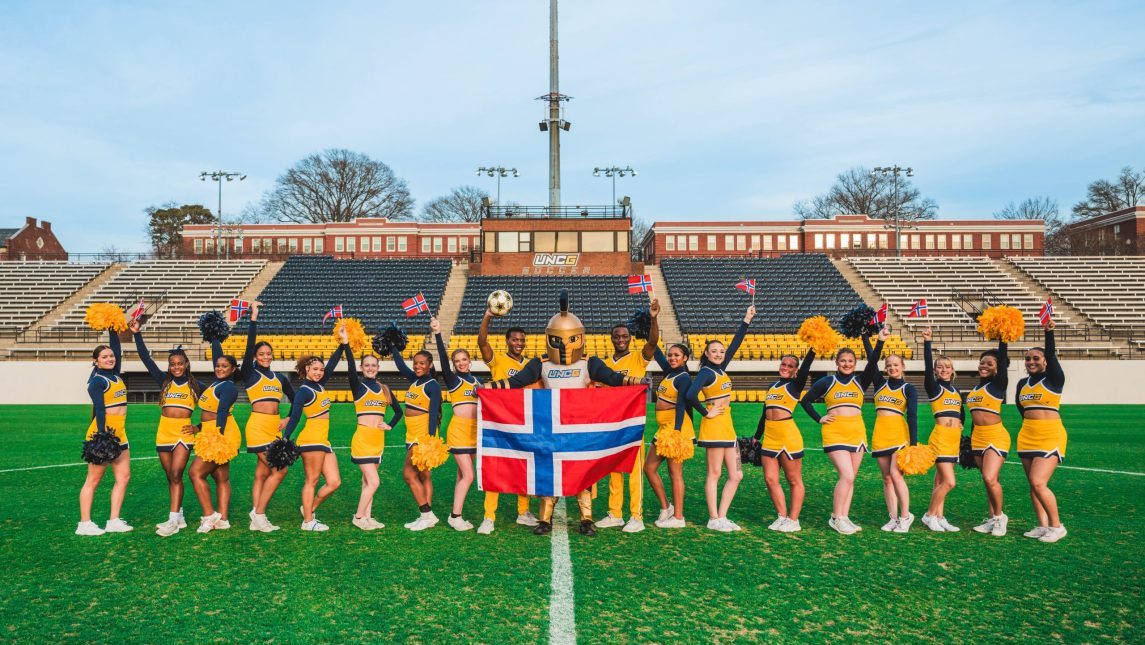
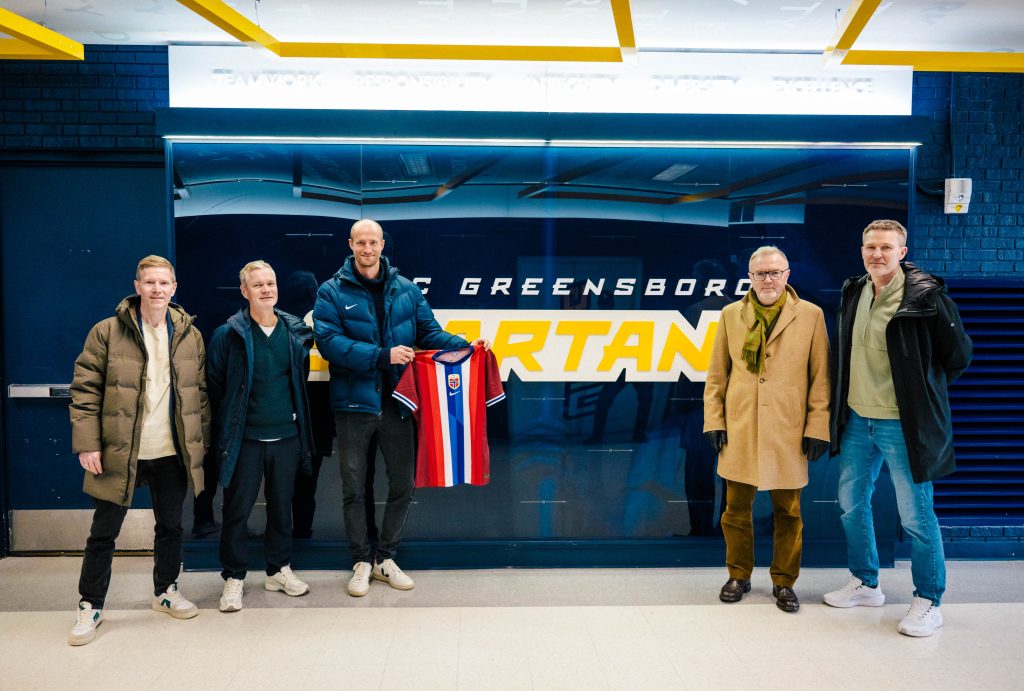
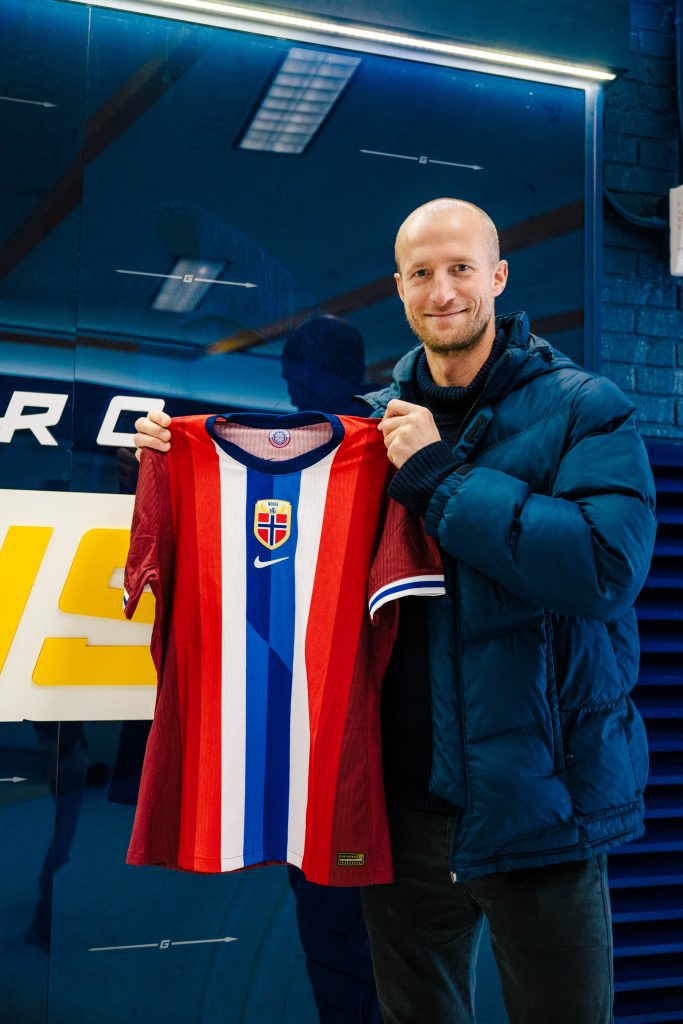
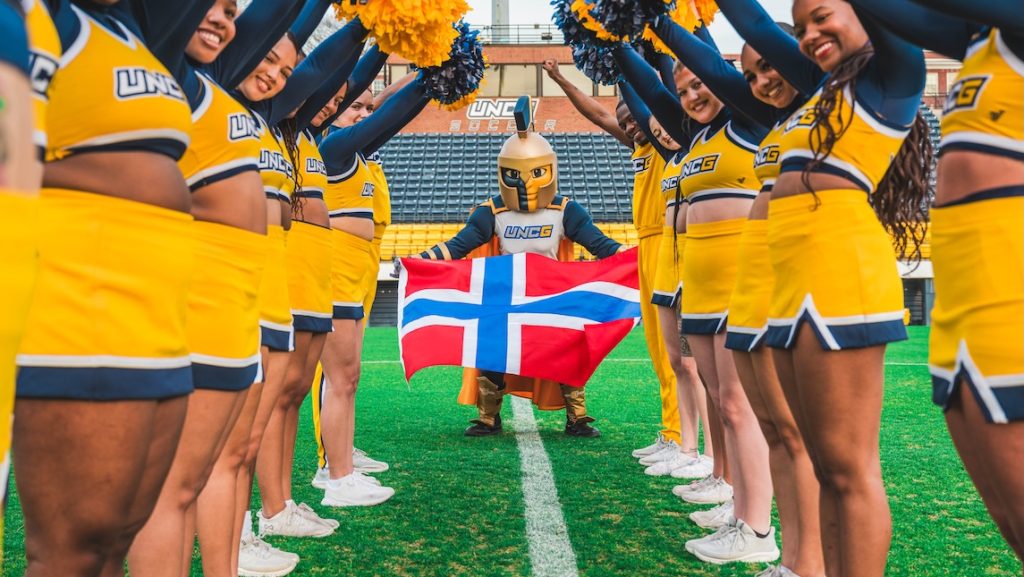
UNC Greensboro has been named as the official training facility for the Norwegian National Football Team ahead of the 2026 World Cup. The team has chosen the city of Greensboro for its Team Base Camp, continuing the city and the university’s role in supporting international athletic competition.
“UNCG is proud to support an international team of this caliber as it prepares to compete on the world stage,” said UNCG Chancellor Franklin D. Gilliam, Jr. “This opportunity reflects the strength of our campus and the partnerships that make Greensboro and UNCG a premier destination for global athletics.”
(L to R) Richard Beard, George Hoyle, Chancellor Franklin D. Gilliam, Jr., Mayor Marikay Abuzuaiter, Anthony Cordo, Brian Mackin
Elite Spartan Facilities for the Global Game
The World Cup is the most-watched sporting event in the world. Viewership of the 2022 games were estimated at 5 billion. More than 1.5 billion watched the final match between Argentina and France.
“We are proud that Team Norway will prepare for the 2026 World Cup here at UNCG,” said University Director of Athletics Brian Mackin. “Our athletics facilities and support teams are ready to deliver an elite training environment worthy of international competition.”
UNCG’s $3.6 million Soccer Stadium, opened in 1991, features Bermuda-style grass, TV-friendly lighting, a modern scoreboard with a message center, and seating for 3,540 spectators. In 2025, during FIFA’s inaugural Club World Cup, UNCG served as a training facility for Brazil’s SE Palmeiras club, demonstrating the University’s capability to support elite international soccer programs.
“We went around to see eight different places before we chose Greensboro,” said Team Norway Project Manager Truls Dæhli. “We wanted a hotel with nature and fresh air. We didn’t want a city hotel; we wanted to be a little bit outside, and we thought Greensboro was the perfect choice for us. It’s only 20 minutes to the airport, only 20 minutes to the training facilities. So, it was an easy choice.”
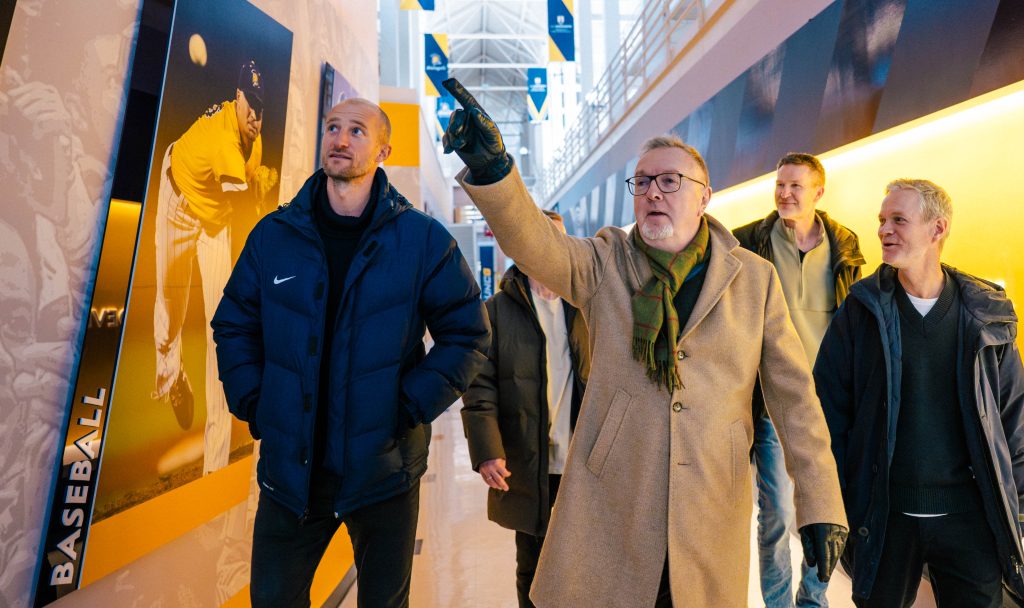
Representatives from Team Norway take in the UNCG campus.
A Product of Community Partnerships
The Greensboro Sports Foundation led the local organizing committee in partnership with the City of Greensboro, UNCG, and the Greensboro Area Convention and Visitors Bureau. UNCG’s world-class training facilities, proximity to downtown Greensboro, and access to Piedmont Triad International Airport were key factors in Norway’s decision, which identified Greensboro as the top choice for its Team Base Camp.
“We’ve worked closely with FIFA for over a year to bring a national team to Greensboro, and having Norway choose our city as its base ahead of the World Cup 2026 is a tremendous honor. It elevates Greensboro’s reputation as a global ‘tournament town’ and showcases our community’s world-class facilities and hospitality on the international stage,” said Greensboro Sports Foundation President Richard Beard.
The 2026 games will be held in the US, Canada, and Mexico. Team Norway arrives in Greensboro this summer to begin their World Cup journey.
“Greensboro is honored to welcome Team Norway as they prepare for the 2026 World Cup,” said Greensboro Mayor Marikay Abuzuaiter. “This selection reflects the strength of our partnerships, UNCG’s outstanding facilities, and our city’s commitment to international athletics.”
The World Cup games begin on June 11. Team Norway’s first game is on June 16 in Boston’s Gillette Stadium against the winner of a play-in round. Be on the lookout for community watch parties and other opportunities to cheer on our guests.
“Hosting the Norwegian National Football Team exemplifies Greensboro’s legacy as one of the foremost destinations for professional sports in the Southeast,” said Greensboro Area Convention and Visitors Bureau Chief Executive Officer Anthony Cordo. “Welcoming fans and sports enthusiasts to experience our city and engage with local businesses will contribute an estimated $4.2 million to Greensboro’s local economy, underscoring our mission to increase tourism and support economic development in Guilford County.”
Story by Brian Clarey, University Communications Photos by Sean Norona, University Communications
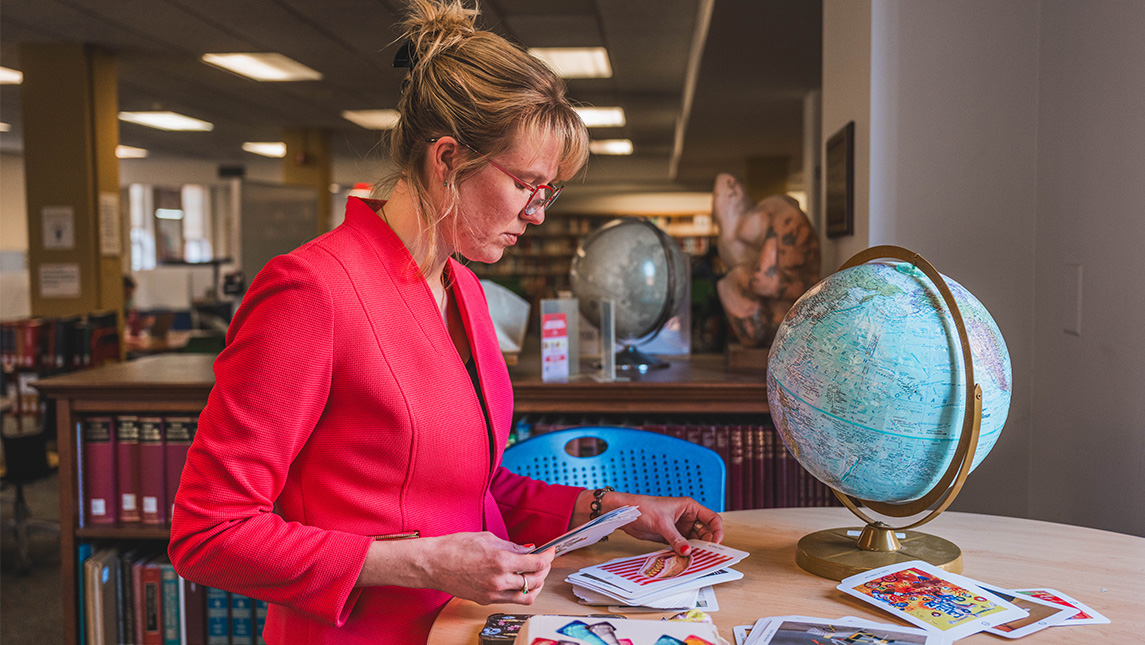
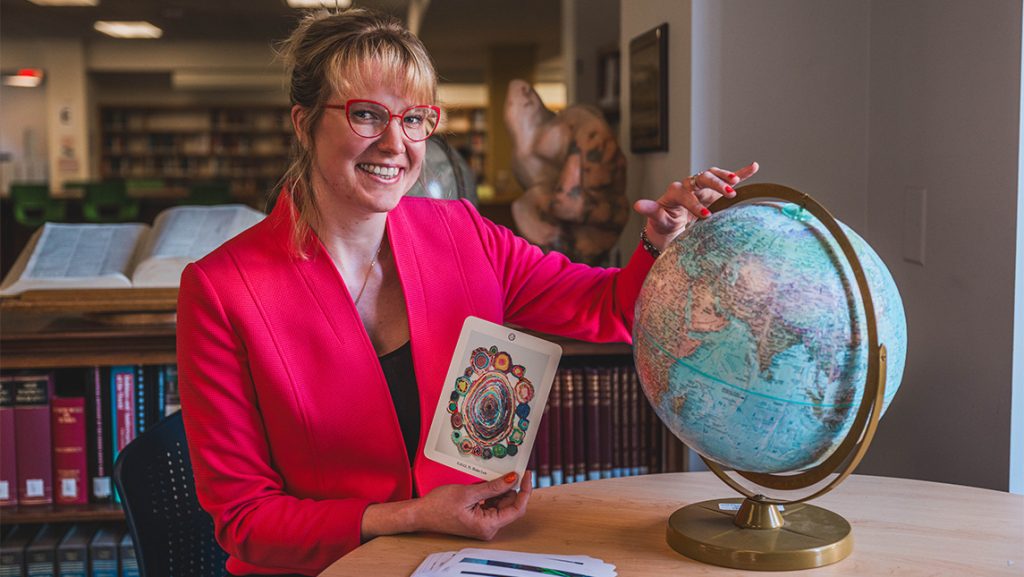
H. Blake-Lee studies artwork by Pat Healy and Emily Furr.
MLIS Researcher Designs AI-Themed Games for Academic Libraries
Libraries have always been the place to go when you have questions. Right now, people have lots of questions about artificial intelligence (AI) and its place in the workforce, recreation, the arts, research, commerce, and more.
But AI, primarily generative AI, has moved so quickly that many librarians are trying to catch up. Although they’ve made strides in learning more, they may not be comfortable using the technology themselves, let alone explaining how it works to a student who wants to use it for a project.
H. Blake-Lee ’19 ’22 MA, a graduate student at UNC Greensboro, wants to move that needle. “I started my master’s of information and library science (MLIS), not specifically to work as a librarian, but to work with the community within libraries,” she explains. “My work focuses on bridging different perspectives, and I think that it’s really important to start those connections internally.”
While researching her IRB-approved capstone, “Understanding Generative AI in Academic Libraries,” a few statistics stood out:
While the majority are aware of AI-related concerns, “librarians’ comfort and confidence level in using, teaching, or talking about AI is only in the 30-35 percent range,” she says. “About 70 percent want to learn about AI, but not from a computer. They want to learn from engaging with others.”
Bridging Gap Between ‘I Want to Know’ and ‘What I Know’
Blake-Lee saw that open discussion of AI in academic settings has become more difficult due to librarians’ divergent perspectives and expressed emotional conflict.
Her proposal centers not only on sharing her capstone research findings in lectures and conferences, but in facilitating conversation and social connection using hands-on gameplay.
But first: How does someone without a computer science degree visualize the process, results, and long-term implications of a computer communicating high-speed responses to a human?
Fortunately, Blake-Lee’s previous studies at UNCG, starting with a bachelor’s degree in studio art and master’s degree in sociology, helped her connect this new challenge to something people have done for generations.
From Family Photos to Generative AI Perceptions
If you’ve ever looked at an old family photo, you know you do more than reflect on that fraction of a second captured. Your mind cycles through memories and emotions — positive, negative, or mixed — related to the event and the people involved.
When you show that photo to another family member, they may have a different reaction based on their own perspective of that experience or their life afterward. “I fell in love with that type of research method, using a visual object and seeing how it creates something to talk about,” says Blake-Lee.
She saw this in play during her Terra Foundation for American Art grant-funded sociology internship at UNCG’s Weatherspoon Art Museum. Weatherspoon staff had created a card game with artworks in its collection to facilitate responsive learning and interaction. Blake-Lee facilitated game sessions with students and museum visitors, studying how people reacted to the art based on their values and lived experiences.
Blake-Lee works with cards from a previous game she developed. Artwork by Patrick Healy, Emily Furr, Alma Stott, Neeraj Sebastien, and Madison Brown.
Blake-Lee also built on her background in game design and community-centered research. For example, she has helped develop programs focused on art and music at the McGirt-Horton Public Library and a board game for people with intellectual and developmental disabilities for the nonprofit InFocus Advocacy.
To strengthen the educational foundation of her AI-focused game, she conducted additional data gathering in libraries and art museums in Greensboro and globally. Thanks to the MLIS study-abroad experience led by Department Chair Lisa O’Connor, she got to see art spaces in Ireland. That, with her own independent trips to London, Prague, and Italy, let her watch how different pieces of artwork triggered different discussions and interpretations.
“From all my experiences,” says Blake-Lee, “I thought it would be best to introduce visuals around a theme, specifically AI, that people might have different perspectives of. I found a card game is a really great way to connect people.”
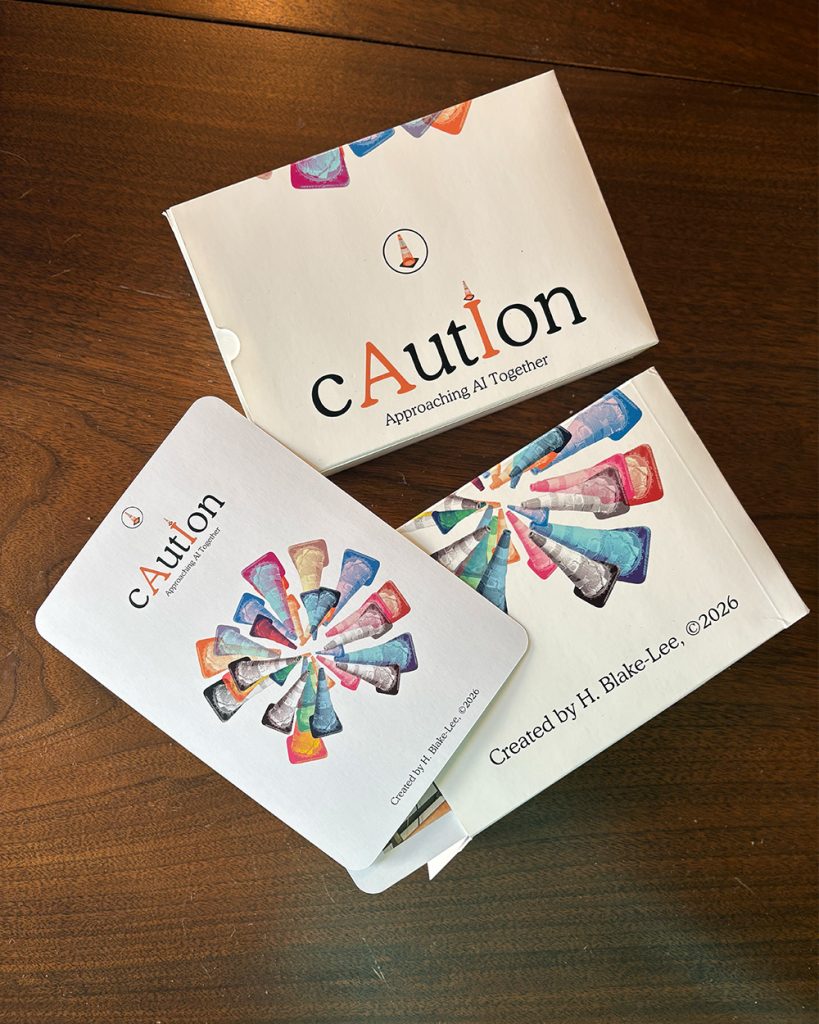
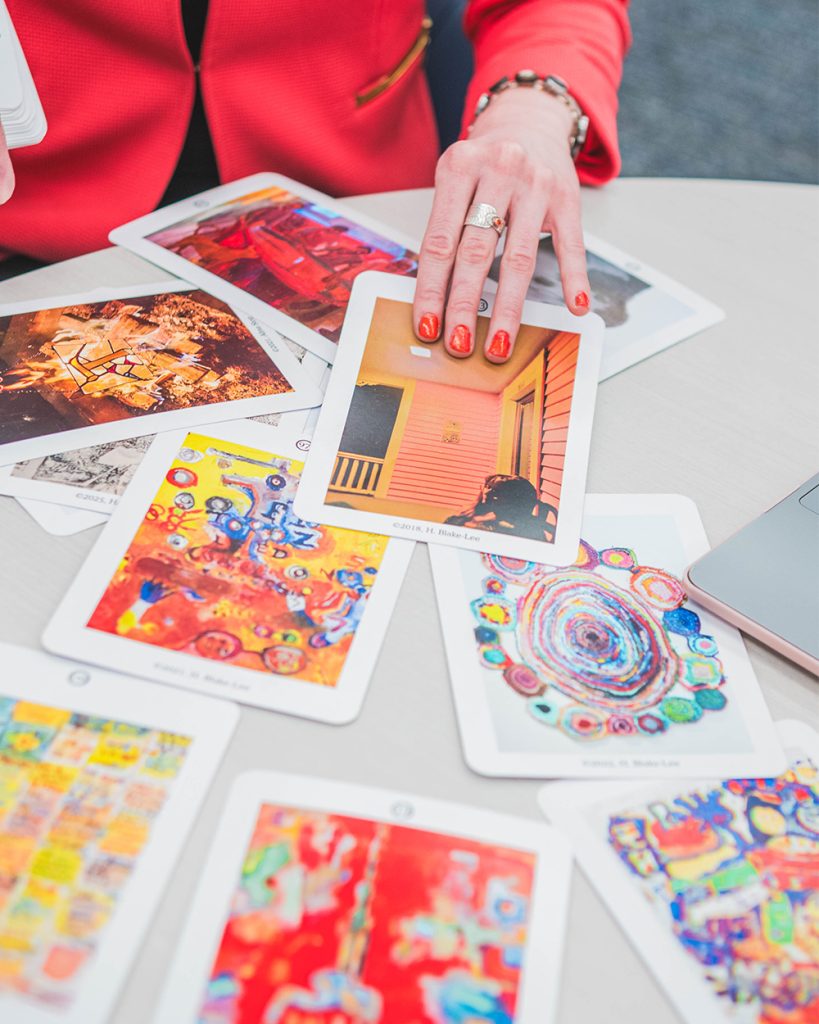
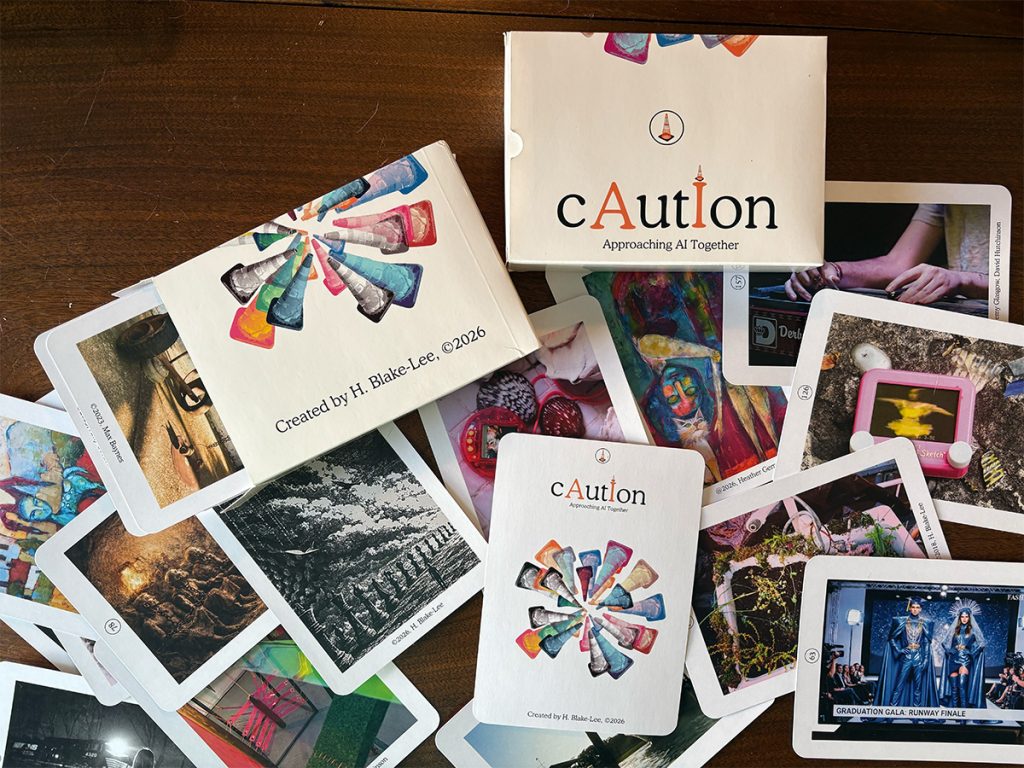
The cards will have 200 illustrations, some generated by AI and some contributed by local artists and UNCG alumni. Players are asked to think up words or ideas about AI based on the images they draw.
Left and right: Examples of the final card illustrations. Middle: Blake-Lee uses cards from a similar game about studying people’s different values. Artwork by Heather Gerni, Max Baynes, Kate Robinson, Robert Benson, Maggie Murphy, Jeremy Glasgow, and David Hutchinson
The point, Blake-Lee says, is not to figure out which one is AI, but to diversify the deck, let librarians absorb different types of digital art, and facilitate even more discussion by people with different perspectives on AI.
“During group gameplay, everyone passes around a card and thinks of one word to describe it,” she says. “They all say their word out loud at the same time, so not to influence one another’s perspective.”
From there, players then search for an image they think best represents one of the other players’ words. Then they can talk about why they connected that particular image to that word.
The conversation for each round of “Caution!” can be as long or as short as they want. She says, “The point is that they’re all listening to one another, using cards to connect with others’ perspectives, creating a welcoming space to approach AI together.”
Faculty and staff were critical to helping her create this, particularly her faculty mentor, Dr. Sonia Archer-Capuzzo. “Sonia is a great resource to turn to,” says Blake-Lee. “I could always ask if we could meet for a few minutes. Her help with proposal and conference writing helped lead to my success in many educational endeavors.”
She also worked closely with Steve Cramer, MLS — a business librarian and professor in University Libraries who researches how AI is being incorporated into his field.
Read more stories about AI implementation at UNCG
AI@Work in Business: Learn about the new Executive Education: AI for Impact workshop designed by Bryan School for business leaders AI@Work in Nursing: Meet the School of Nursing AI champions exploring how to safely and ethically integrate it into health care.
Next Step, Expanding her Global Footprint
With the support of ITI, Blake-Lee hopes to adapt the game to different types of libraries, and perhaps other professions one day. She will collect feedback from early players on their interpretations of the visuals and the discussions the game sparked.
“We’ve even talked about introducing it in counseling groups for people who are so connected to AI that they distance themselves from human relationships,” she says. “There’s lots of social, emotional, and educational scenarios left to investigate.”
Her work also piqued the interest of people outside UNCG. While studying abroad, she got to talk with staff at the National Library of Ireland. They thought her visual card-game approach could be a viable art research tool and talked about inviting her back to their side of the Atlantic Ocean for future collaborations, using their art collections for similar games and community-centered research.
It’s exciting for Blake-Lee to see her work become part of the worldwide conversation about AI and ultimately help librarians feel they’ve got a handle on the rapidly evolving technology.
“What I’ve learned from my research,” she says, “is just because every person has a different interpretation, connection, understanding, or perception of AI, that doesn’t mean they can’t join together to provide students the resources they need to be successful.”
Rewriting the Playbook on Athlete Health: Kier named RWJF Scholar
Posted on March 03, 2026
For Lexi Kier, sport has always been more than competition — it’s an intersection of joy and loss, community and pressure, and resilience and vulnerability. As a doctoral student in public health education at UNC Greensboro, she is building a research agenda that challenges how institutions understand athletes, particularly Black athletes.
“I come from an athletic background,” Kier says. “And I’ve seen these challenges firsthand.”
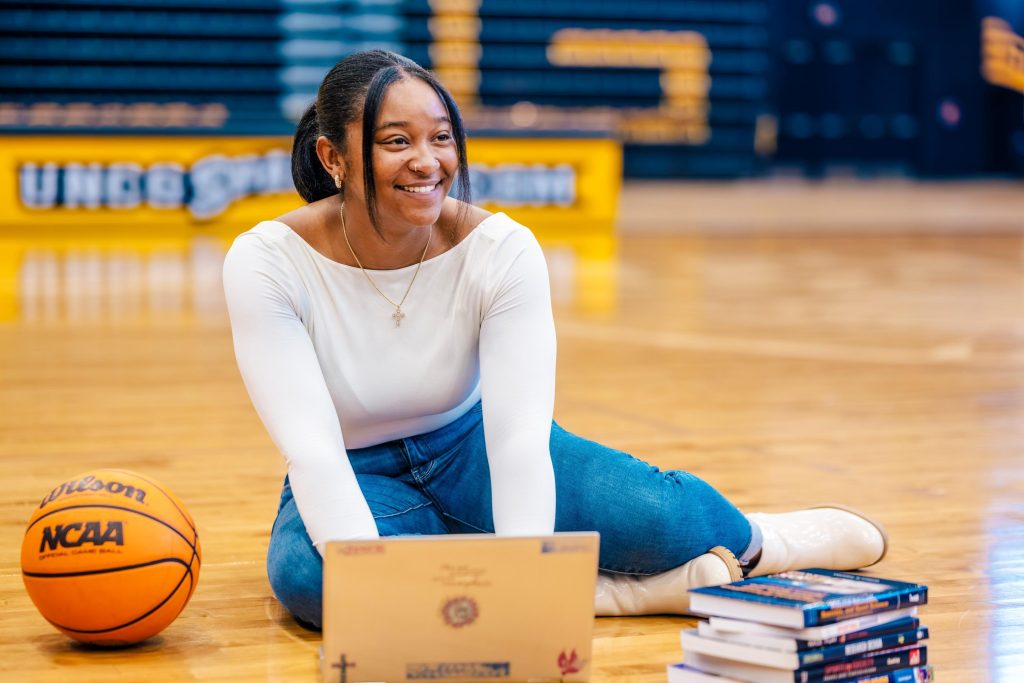
Kier grew up in Winchester, Va., in a family deeply rooted in athletics. She played competitive basketball in high school and dreamed of continuing at the collegiate level until her two knee surgeries—one a total reconstruction — ended her playing career.
At the same time, she watched her brothers navigate the intense demands of elite sport.
One brother played football at the University of Virginia. There, he experienced a concussion that, Kier says, changed his demeanor and mental health. Another rose from walk-on status at Marshall University to the NFL, where he now plays for the Kansas City Chiefs, bringing both extraordinary success and ongoing injury-related challenges.
“Seeing athletes, especially Black athletes, go through what they go through, and not being able to do anything about it, really motivated me,” says Kier, who also worked with the Virginia Tech women’s basketball team for several years. “I couldn’t just keep watching.”
That motivation led her first to a master’s in kinesiology at UNCG, concentrating in sport and exercise psychology, and eventually to a Ph.D. in public health education. There she found a disciplinary home that allowed her to examine not just behavior, but the broader systems shaping athlete health.
Broadening the definition of athlete health
Since beginning her doctorate in the School of Health and Human Sciences, Kier’s research portfolio has expanded rapidly. Recent work examines multiple dimensions of athlete health and transitions.
One recently accepted commentary in the Journal of Physical Activity and Health, critiques what Kier and her mentors, Drs. DeAnne Brooks and Erin Reifsteck, describe as the “miseducation” of athletes. The paper argues that sport culture prioritizes winning at the expense of long-term physical and mental health, leaving athletes unprepared for life after sport.
“There’s this sport ethic of ‘win at all costs,’ even over your body and your health,” Kier says. “Then when athletes transition out, they don’t know how to sustain physical activity, and mental health often declines.”
In another article in Journal of Clinical Sport Psychology, Kier, Reifsteck, and Kier’s doctoral advisor Dr. Jeff Milroy examine how pain intensity and pain interference affect symptoms of depression and anxiety in athletes across different sport types.
Their findings suggest that even when athletes can still perform daily activities, pain alone can significantly impact mental health. This insight carries important implications for injury management and psychological support.
Kier is also interested in the research tools used to study athlete health. During her master’s work at UNCG, she initially planned to examine concussions using electroencephalography (EEG) but encountered racial limitations embedded in the technology related to Black hair types and styles.
With support from an internal grant, she evaluated how open Black athletes are to participating in research with current EEG caps. The resulting publication in the International Journal of Kinesiology in Higher Education reinforced a principle that continues to guide her work: inclusion must be built into research from the start, not added later.
Research in community, research with purpose
Kier currently serves as a mental-skills trainer for Karenni youth soccer players in Winston-Salem. Her work with the community originally from Myanmar is part of a randomized controlled study focused on emotional regulation, cognitive restructuring, problem-solving, and teamwork.
Working with a refugee community required humility and adaptability, Kier says. “Black culture and Southeast Asian cultures are very different. I had to learn how to build trust, how to listen, and what leadership looks like in that context.”
The experience reflects her evolving interest in blending sport psychology, public health, and community engagement — an approach that aligns closely with her work as a Robert Wood Johnson Health Policy Research Scholar.
The prestigious program is designed for researchers whose work has clear policy relevance, even if they do not come from traditional policy backgrounds. The highly competitive program provides $124,000 in funding.
Kier was encouraged to apply to the program by mentors — including faculty members Drs. Michelle Martin Romero,Amanda Tanner and Tamar Goldenburg — who recognized the implications of her work before she herself fully did.
“I was like, ‘Policy? I didn’t do any policy,’” she said. But she discovered the program is intentionally designed for scholars whose research already intersects with policy questions, even if they have not been formally trained in policy analysis.
“I don’t want to be a policymaker,” she said. “But I want to know what to say, how to say it, and when to say it when I’m in the room with policymakers.”
As a scholar, Kier is learning how to frame athlete-health research in ways that resonate beyond academia, translating evidence into conversations that can influence systems, institutions, and decision-making.
“I’m learning how to communicate my work in ways that matter beyond academia,” Kier said. “It’s about making sure research reaches the people and systems that can change things.”
Looking ahead
Kier credits much of her growth at UNCG to strong mentorship, including from Milroy.
“He’s incredibly supportive,” she said. “He reminds us that we’re doing well, even when it feels overwhelming.”
As she continues her doctoral work, Kier remains open to where her research will ultimately land, whether that be in sport psychology, public health policy, or a space that bridges both.
What remains constant is her commitment to athlete health, equity, and accountability.
“I just want to get this figured out,” she said. “Because athletes deserve better.”
by Sierra Collins, Division of Research and Engagement photography by Sean Norona, University Communications