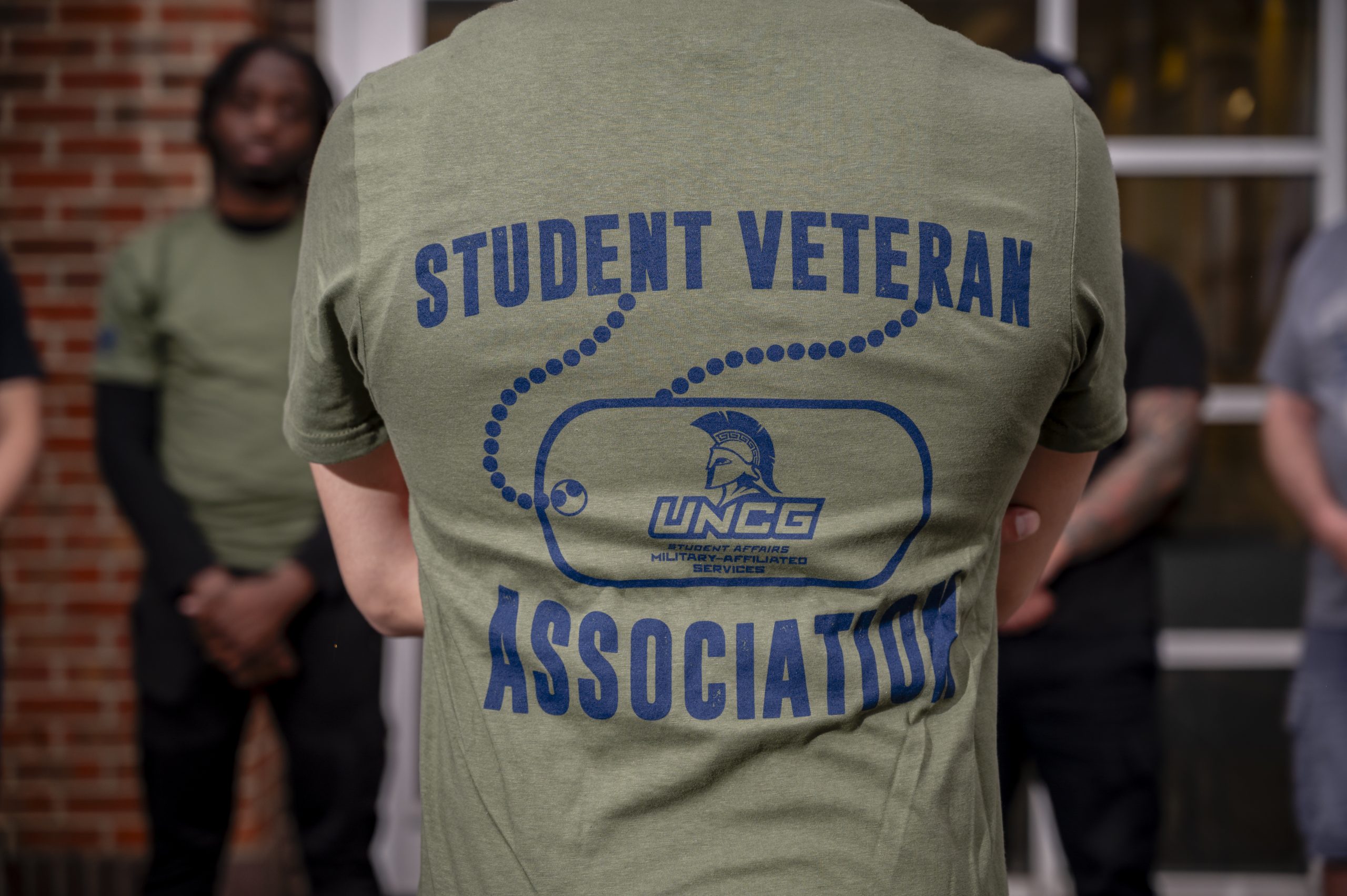
Posted on March 26, 2026

Featured Image for UNCG Recognized as Top 10 Military Friendly School 
Student and alumni veterans support the annual "Believe in the G" campaign.

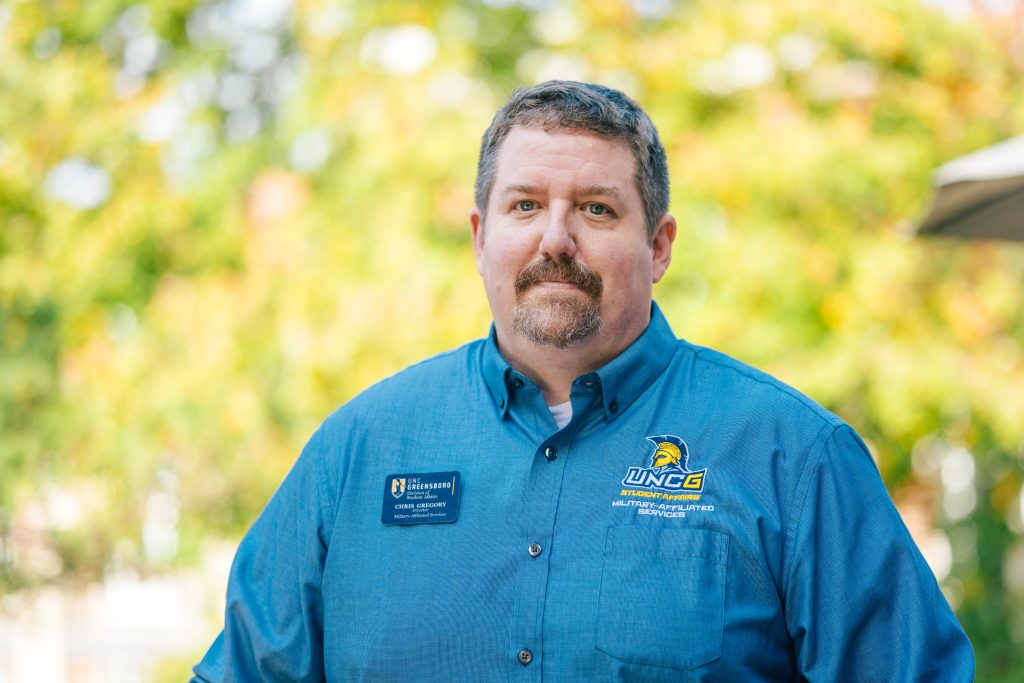
Chris Gregory, UNC Greensboro’s director of Military Affiliated Services, has been with the University for more than 20 years and has helmed the office since 2022. But when his department is recognized for excellence, as it was once again this year by MilitaryFriendly.com, he’s quick to credit our military-affiliated students — veterans, active-duty service members, and military family members.

“I think the Top 10 recognition really belongs to our students,” he says. “Their success stories are the real measure of the excellence we’re trying to achieve on campus. So anytime we get one of these accolades, it’s great for us, but I also think it just reflects how successful our students are.”

For the fourth year running, UNCG was named among the Top 10 schools nationwide for military friendliness and ranked No. 1 in North Carolina. The outlet also designated UNCG as a Military Spouse Friendly School for its accommodations and services to military families.

These are two of six military accolades the University has been granted during the 2025-26 academic year. US News & World Report recognized UNCG in its Best Colleges for Veterans category, as well as Best Online Bachelor’s Degree for Veterans and Best Online Master’s Degree in Education for Veterans. Military Times ranked UNCG at No. 3 in NC as Best for Veterans.
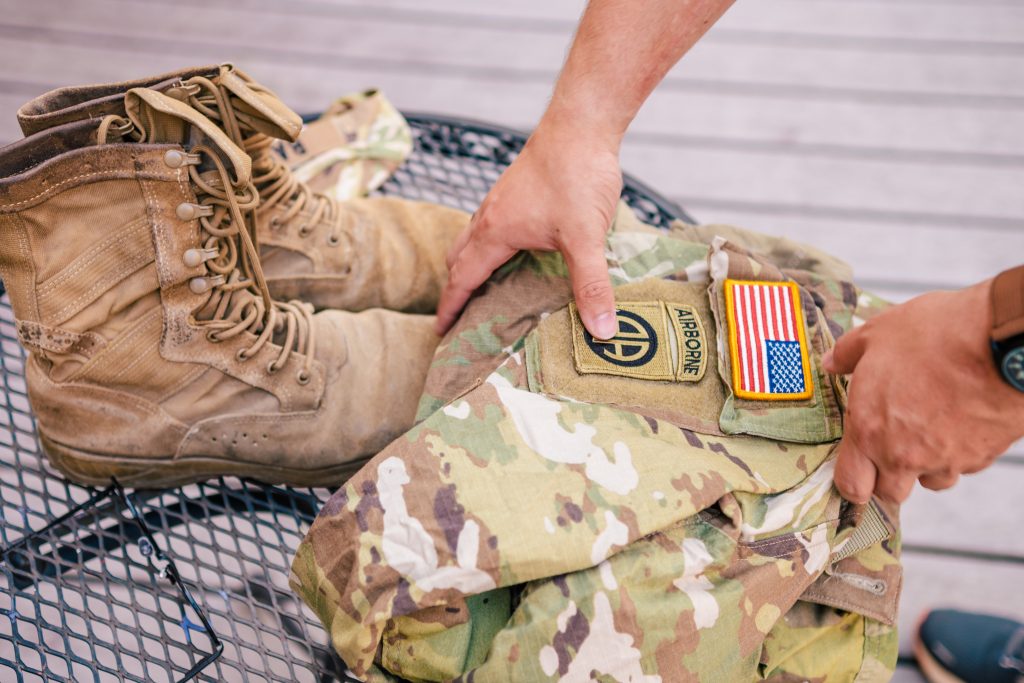
A Place for Veterans and Their Families

More than 10 percent of UNCG’s student body has a military affiliation. During the Spring 2026 semester, 501 of more than 17,000 students are veterans. Another 87 of them are on active duty in the National Guard or Reserves. And 1,244 of them are part of military families.

UNCG has several programs that cater to members of the military and their families, all channeled through Gregory’s department. Military-affiliated students get prioritized class registration. The Veterans Access Program in the School of Nursing grants students with military medical specialties an accelerated path to a B.S. in nursing.

Gregory and his staff help with federal tuition assistance through the GI Bill and other programs, scholarships, health services and counseling, career development, recreation, accessibility resources, civic engagement, and even housing. Any veteran who chooses to live on campus qualifies for the upper-class residence halls regardless of their year.

Additionally, UNCG’s Division of Student Affairs established a faculty fellow position in 2024 — the first of its kind in the UNC system — focused on expanding support provided to student veterans

“Chris and I recognized a need for more meaningful faculty connections with student veterans,” says Dr. Erin Reifsteck, UNCG’s Faculty Fellow for Student Veteran Well-Being. “The faculty fellow role was envisioned to not only advocate for student veterans through tailored research and programming, but also to serve as a bridge with other faculty who want to be more inclusive and supportive of student veterans in their teaching and mentoring.”
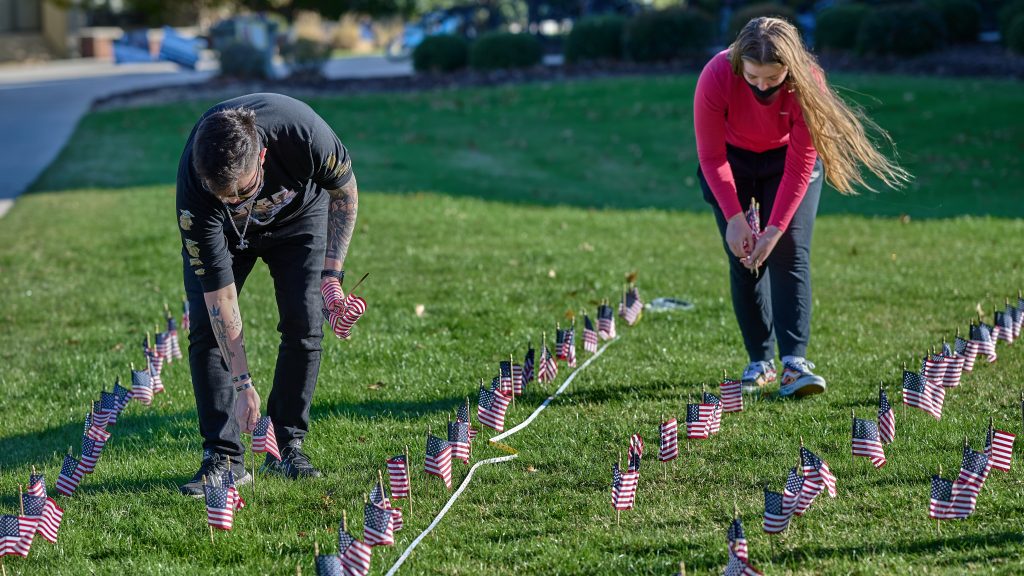
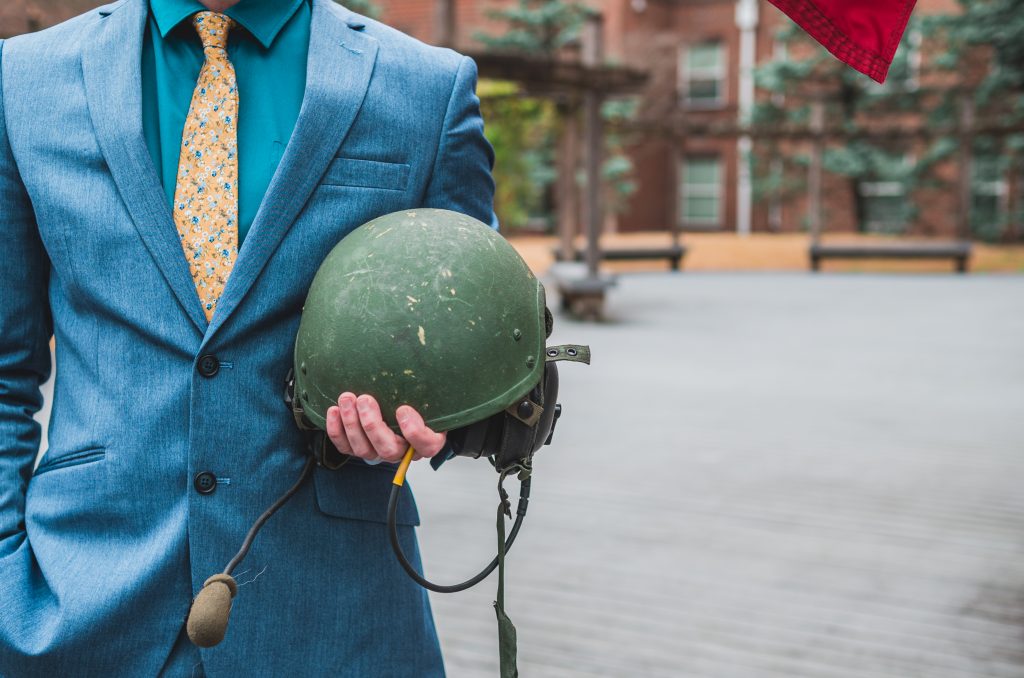
Military veteran students setting up a flag display to recognize our military community

Military Life vs College Life

There’s a social aspect to military affiliation as well.

“I think any time you have a group with the same kind of lived experiences, that helps bring a commonality to that community,” Gregory says. “For dependents, if you grow up moving every couple of years, you get pretty good at navigating new spaces and learning new things, making new friends quickly. And obviously, that can be a real benefit in college. For our military students who have served or are serving, there will be many shared experiences. They may have been in the same branch, served in the same area or the same country of the world, or the same base. Whatever the case may be, those experiences give them a different understanding of life and of each other.”

The Veteran’s Resource Center in Gregory’s office acts as a physical space where students with military affiliations can gather, swap stories, share information, and otherwise build community.

“There’s always coffee on the kettle, to speak. We really want it to be a place where folks can come and interact,” he says. “Military students can print documents for free. My favorite conversations are when the older students who have been here a year or more help the newer students transition to university life.”

Gregory’s office organizes social events like the annual cookout at Piney Lake, works with academic programs to help faculty understand the nuances of military-affiliated students, and coordinates with other student groups, such as the UNO Club, all of which help establish a sense of community.
‘A University commitment’

“Maybe our office leads the way,” Gregory says, “but it is definitely a University-wide commitment to make us a welcoming place for military-affiliated students.”

He is proud of the accolades UNCG has gathered during his time here and recognizes their impact in exposing this population to the school.

“The awards definitely help people looking to transition out of the military to find us,” he says. “Any time we get one of these accolades, it’s great for us. But really, it reflects just how successful our students are. These rankings are largely based on graduation and retention rates, as well as other student performance metrics. So I think they are a reflection of our wonderful students.”

Story by Brian Clarey, University Communications
Photos by Sean Norona, University Communications
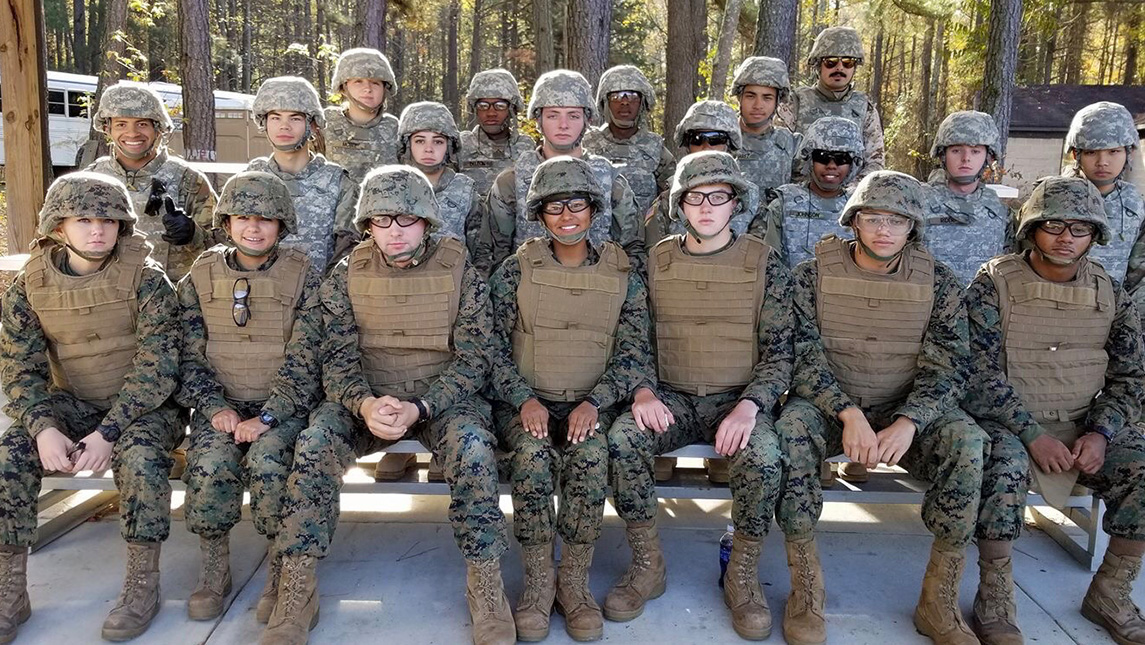
Group of Marine Corp members sit together

 You served. Now it’s our turn. 

Latest News

April 1, 2026

UNCG Graduate Students Compete to Quickly (and Clearly) Present Research

Three minutes and one PowerPoint slide or one posterboard to explain years of research. It's all about making a long-term impact on ...

March 31, 2026

Science Everywhere Festival creates fun for all ages on UNCG Campus

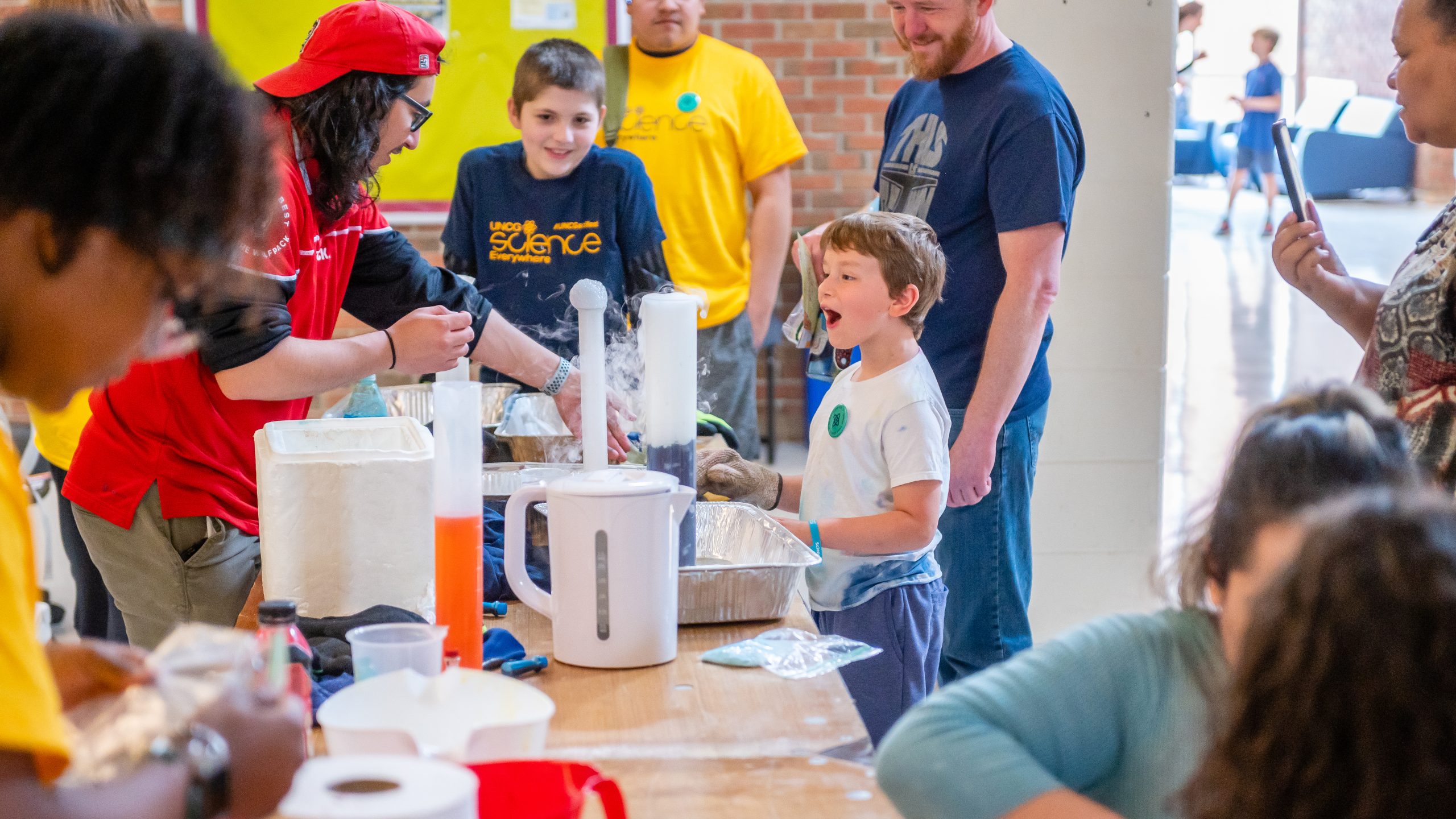
Experience science like never before — talk to robots, witness honeybees in action, dive into colorful chemistry, and explore the ...

March 26, 2026

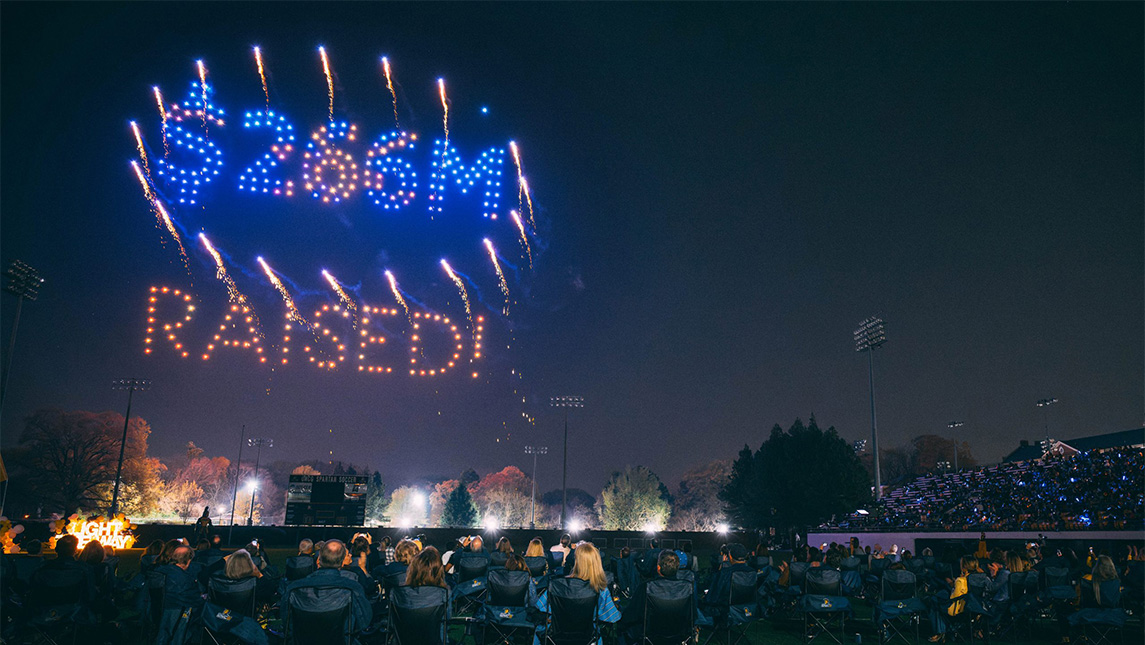
Light the Way Campaign Concludes with More than $266M raised

Thanks to the generosity of donors, the campaign exceeded its goal by 33 percent. Students are already feeling the impact, with more...

What's Trending

Connect with Us

Subscribe to our Top 5

Subscribe today to our Top 5 Weekly email

This field is for validation purposes and should be left unchanged.

Share Your Story

For the Media

Posted on March 24, 2026

Featured Image for The Early History of Women’s Athletics At the G, 1892-1950

The WC Years: Woolen togs, a forgotten field, and an attic gymnasium 

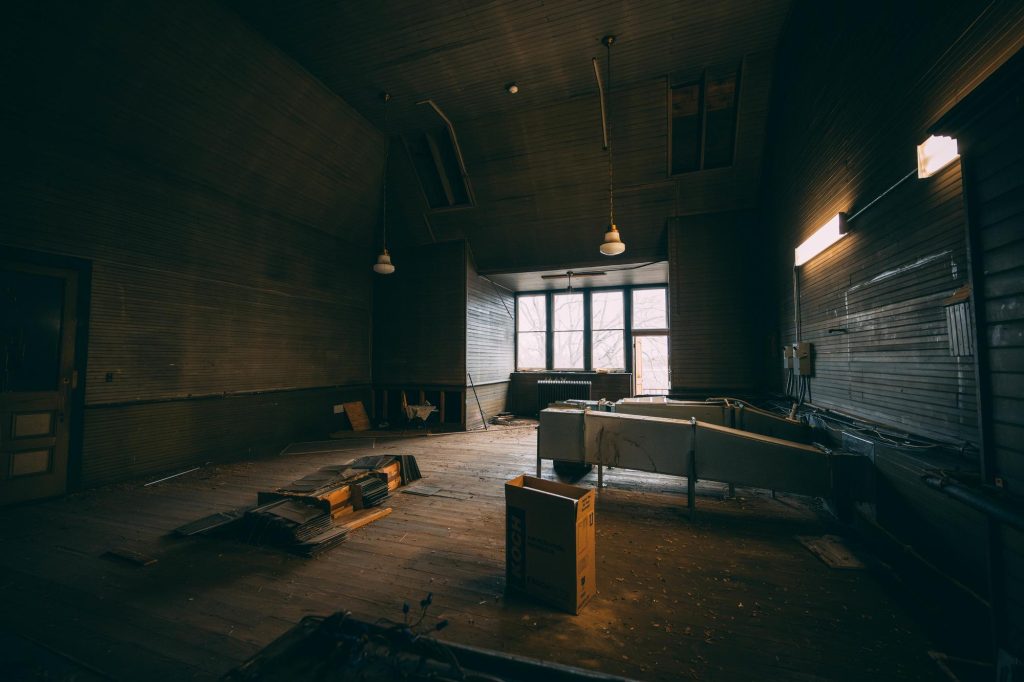
In the upper reaches of the Julius I. Foust Building, the oldest structure on the campus of UNC Greensboro, sits a dusty, wood-paneled room that has been largely undisturbed for decades. It’s accessible only by a wall ladder hidden behind a closet door in the Global Engagement Office. You have to know where to look.

“I don’t know the last time anyone was up here besides us maintenance folks,” says Zach Hyatt of the UNCG Facilities crew, who, among his other duties, helps maintain this neo-Romanesque link to University history.

Foust’s Attic Portal to Early Spartan Athletics

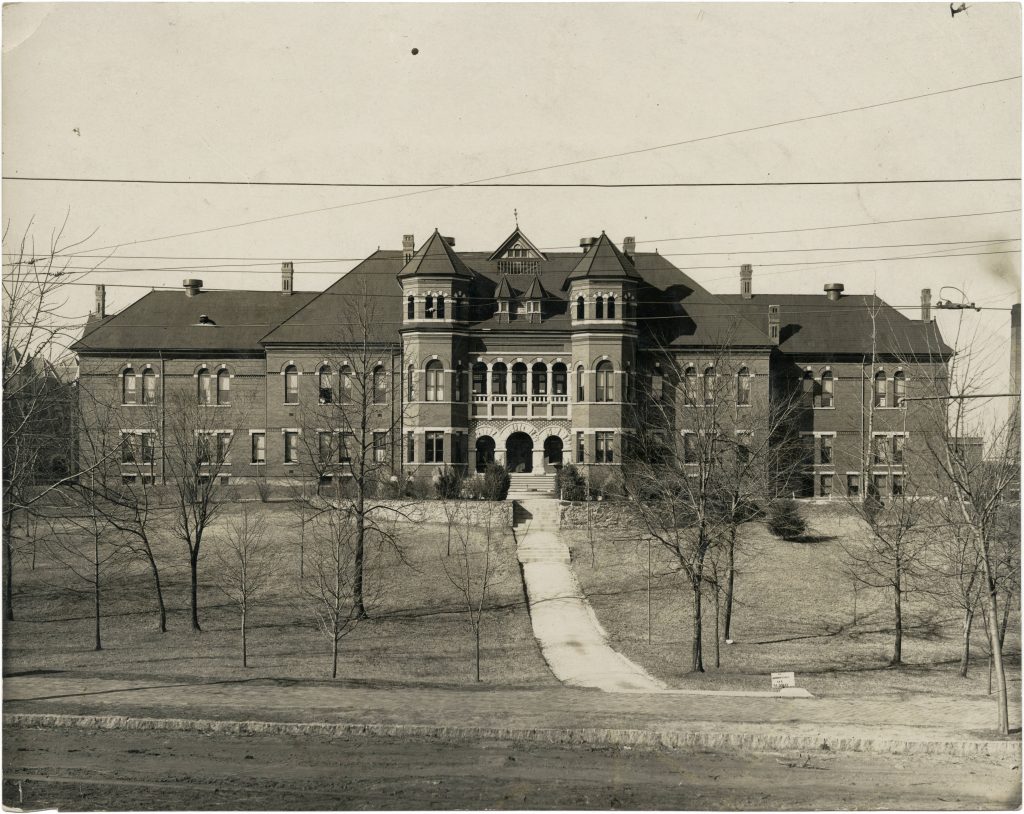
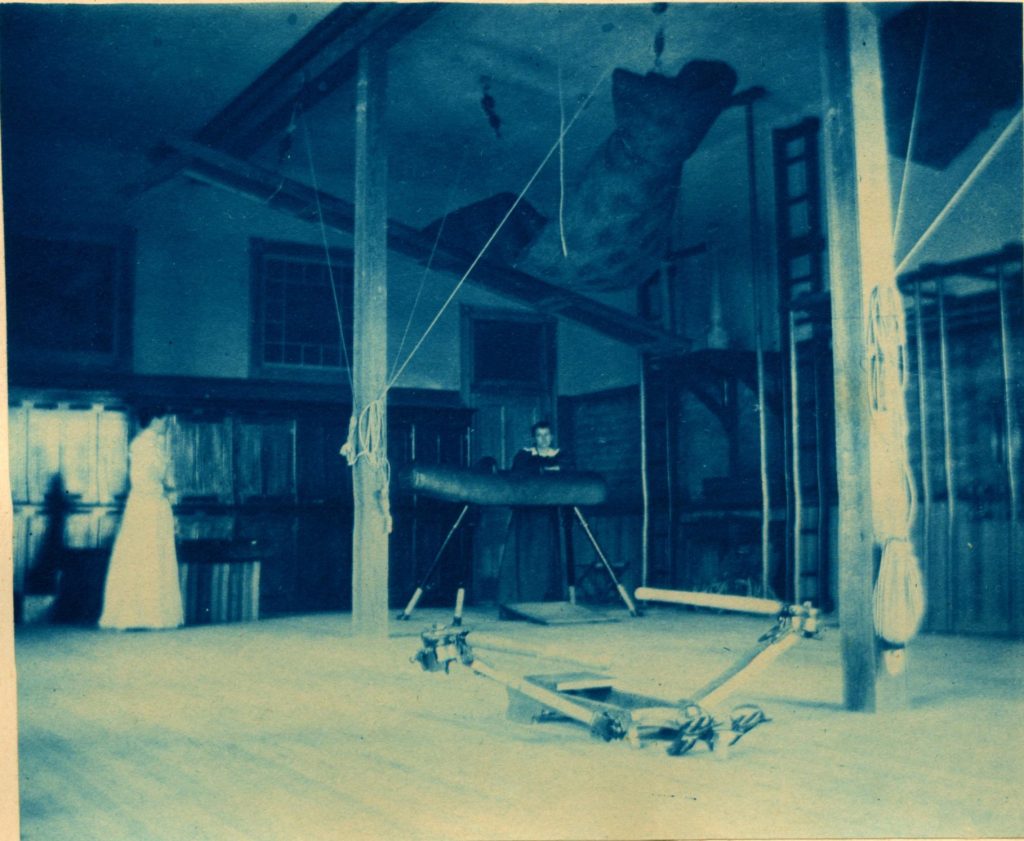
Foust was built in 1891 and opened the next year. In 1892, the University’s inaugural year, Foust, along with the McIver House, Brick Dormitory, and Wooden Dormitory comprised the entirety of the State Normal and Industrial School, as UNCG was first known. Between 1892 and 1900, when Foust was still known simply as the Main Building, and at the behest of the campus’ resident physician Dr. Miriam Bitting, a gymnasium was created on the top floor in a space that looked very much like this one.

A forgotten space on the top floor of the Foust Building as it looks today. [Photo by Sean Norona]

University Archivist and Engagement Coordinator Erin Lawrimore has chronicled UNCG’s legacy of women’s athletics in PowerPoint presentations, PDFs, and the Spartan Stories blog. She pored over old photos and documents to piece this history together.

The gymnasium, according to her work, “A History of Physical Education and Sport at UNCG,” had “11 [exercise] bars, chest weights, Indian clubs, and a weighing machine.”

“It was open only about four months of the year,” Lawrimore says, “because, you know, it’s the attic of Foust Building and there was no air conditioning.”

The original site of the gymnasium, according to Hyatt, has been rendered inaccessible after more than a century of structural upgrades and reconfigurations to the building.

Other athletic facilities would follow during the first half of the 20th century, including a new gym established in 1907 in South Spencer, and an outdoor gym — “essentially a wooden floor about the size of a basketball court with a roof and flaps to keep out the rain,” according to Lawrimore’s history — built in 1922.

UNCG’s First Ladies of Sport

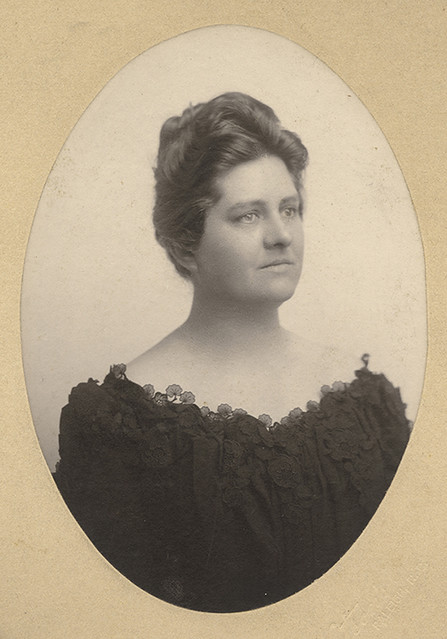
Physical activity has been part of UNCG’s DNA since the beginning, due largely to the presence of Dr. Miriam Bitting, the school’s first campus physician and one of the original faculty members who started the Department of Physiology and Physical Culture. Her successor Dr. Anna Gove, for which the student health center is now named, came on in 1893.

From Lawrimore’s history: “As the campus’s resident physician, Dr. Mariam Bitting not only taught physiology in the classrooms, but on her morning and evening rounds, she made suggestions about ventilation, clothing, bathing, dressing, and other points of personal hygiene.”

By 1893, when Bitting left the University to get married, Gove assumed her role. In those days, having a campus physician was a rare thing. Bitting was just the second woman physician in North Carolina; Gove was the third.

“At that time, it was pretty darn radical,” Lawrimore says. “The women who were the campus physicians were the ones who handled what we would now call public health on campus. And they were women, which was radical because there just weren’t that many women doctors. But they also were radical in that they were advocating physical activity and saying things that we now roll our eyes and laugh about, like pointing out that maybe if you corset yourself up so tight that you can’t breathe, that’s a bad thing. Maybe you shouldn’t do that.”

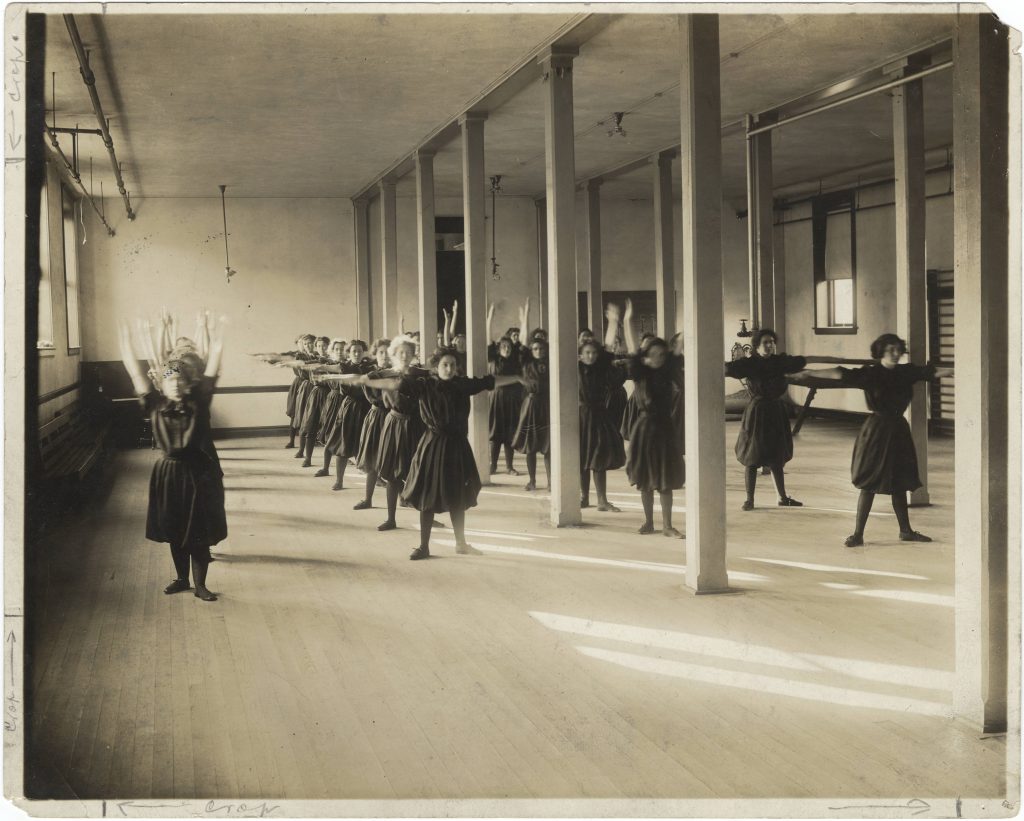
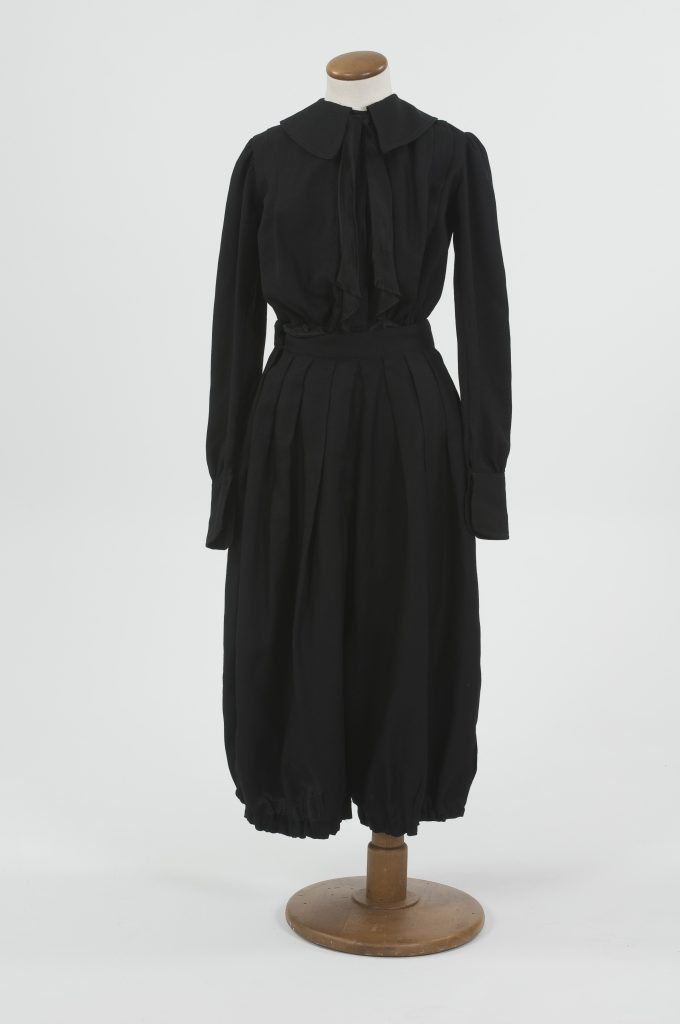
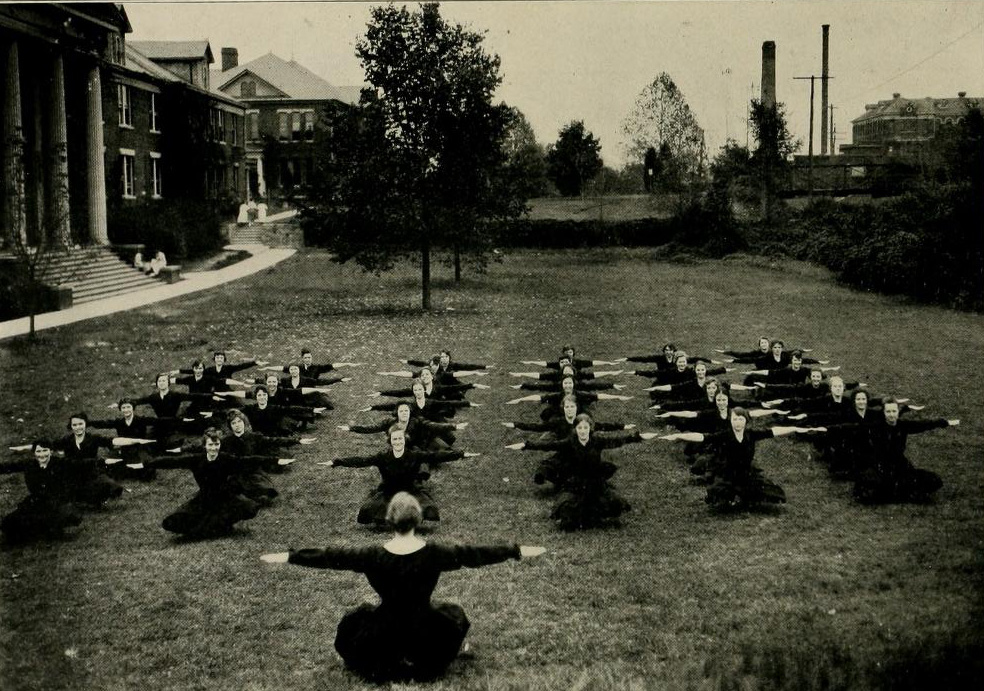
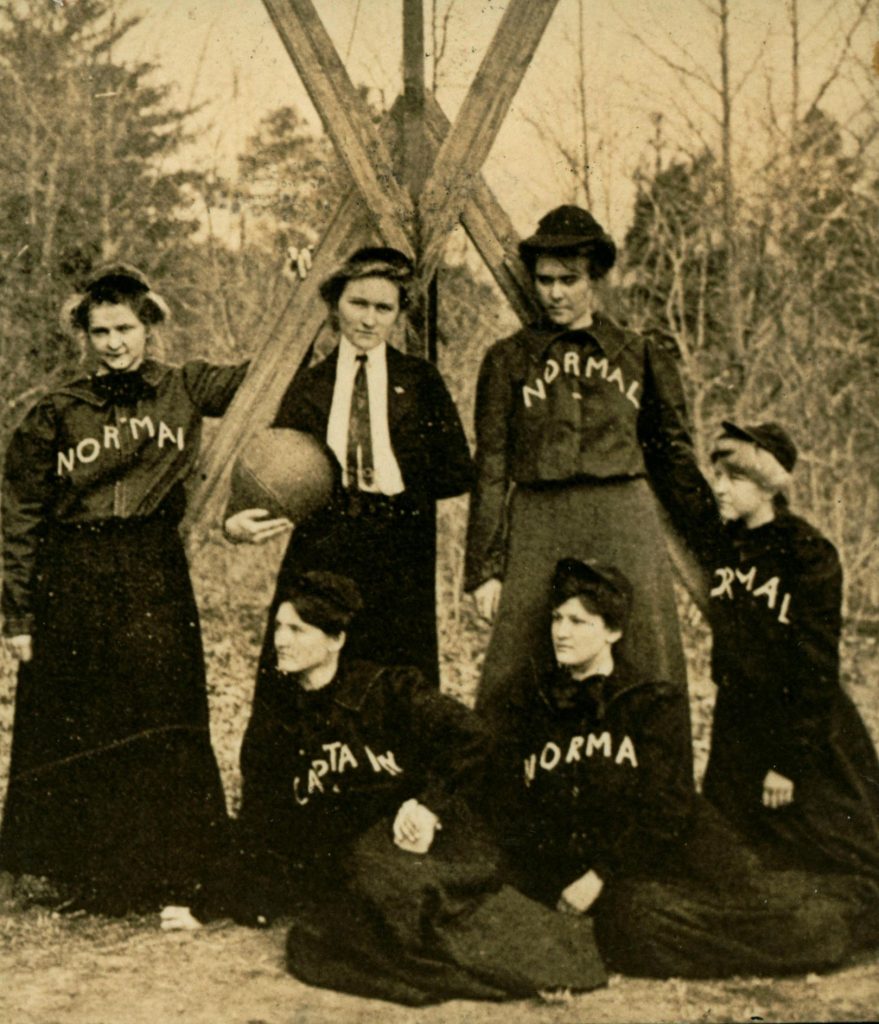
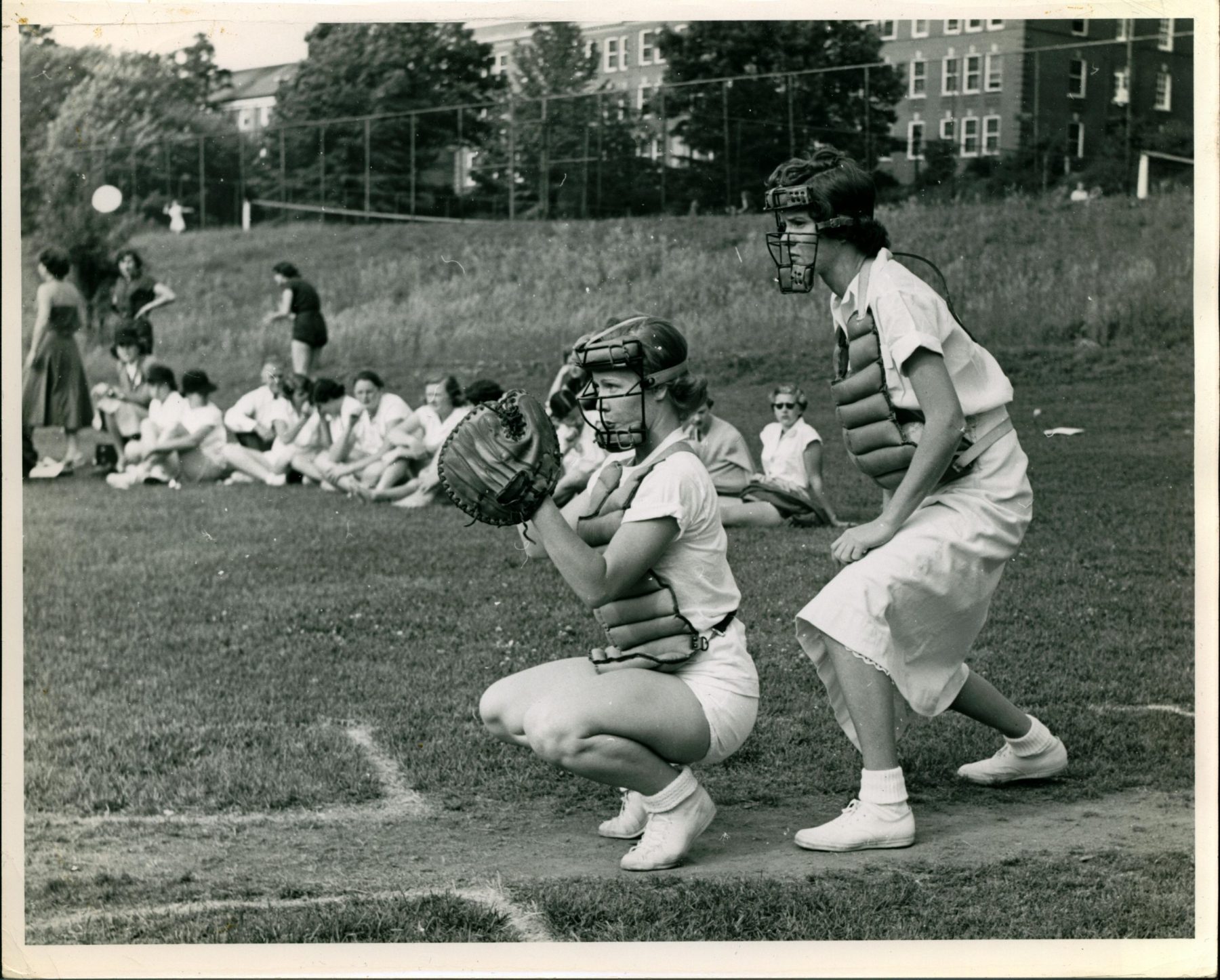
To participate in physical culture, as it was then known, students wore the University’s very first “gym suit,” a garment of black wool comprised of a long-sleeved blouse with a puritan collar and a bow, paired with calf-length bloomers.

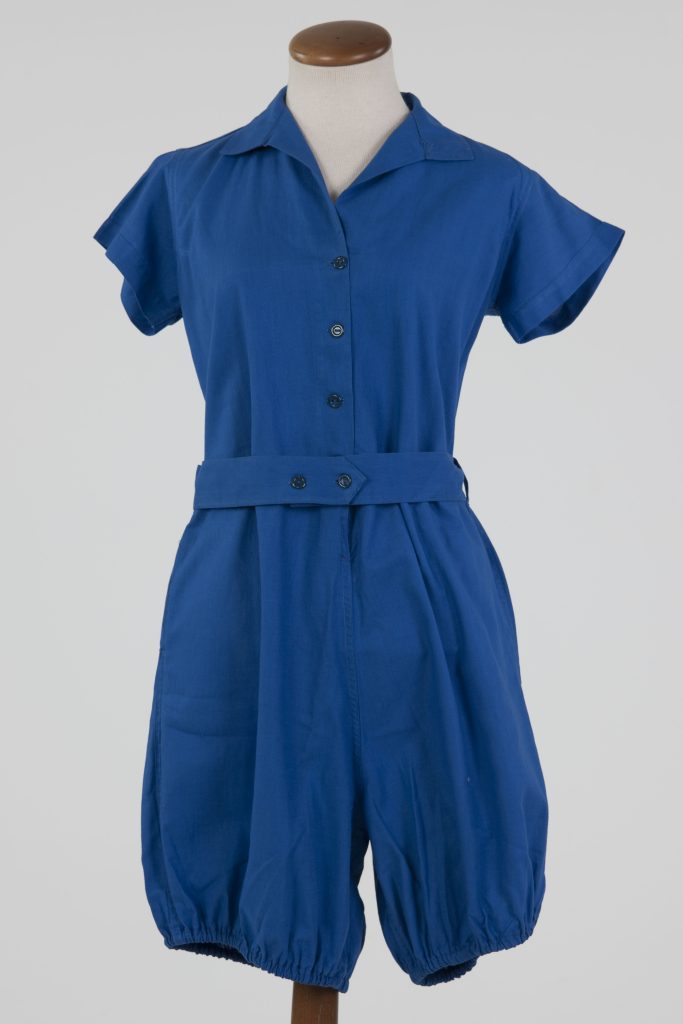
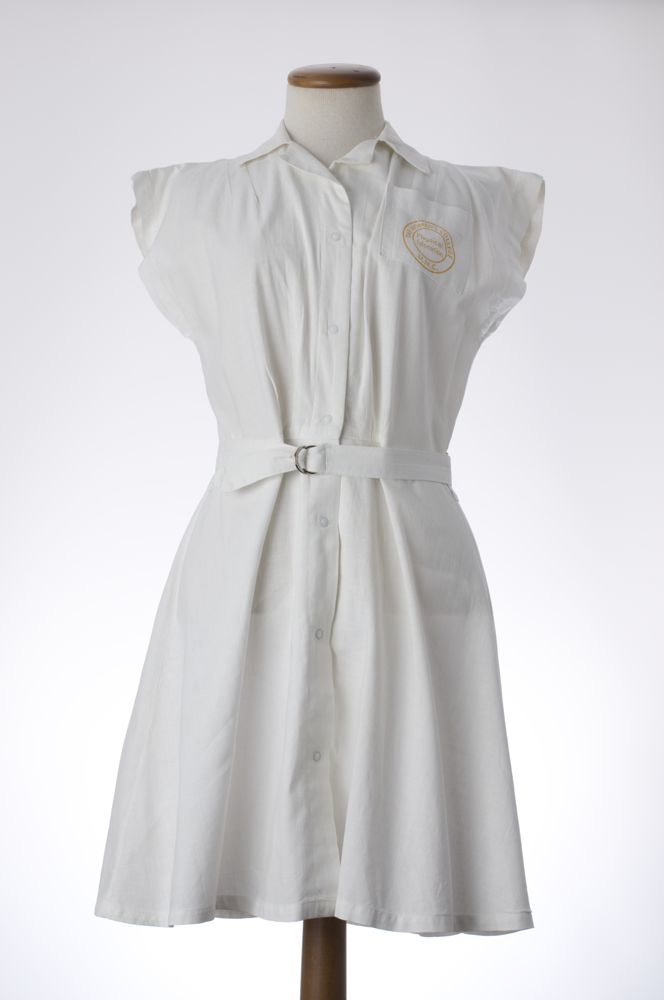
“We have a couple of those in our collection,” Lawrimore says. “We have full sets of the gym suits as they evolved over time.”

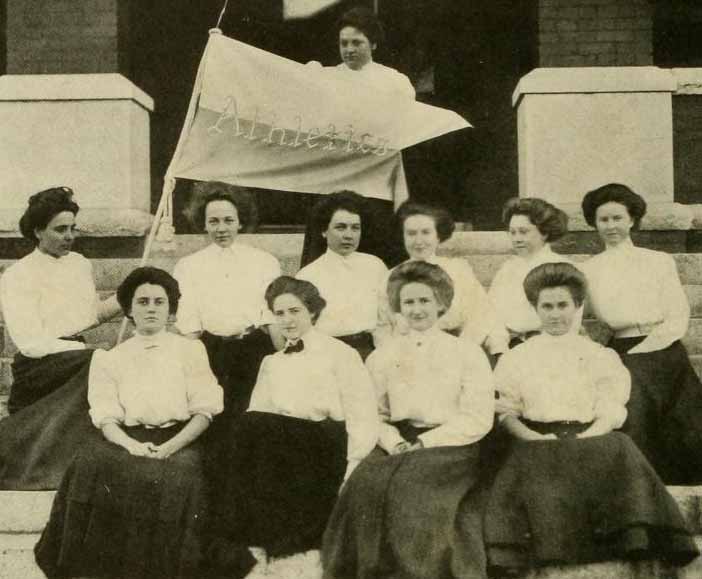
It was the Class of 1900 that, upon their graduation, convinced Charles McIver, the University’s founding president, to establish a campus Athletic Association and athletic grounds. That same year it was formally established — 15 years before the school had a student government. By 1902, its motto was “Athletics and active college work go hand in hand.”

The Athletic Association of 1909

Early Fields of Fitness

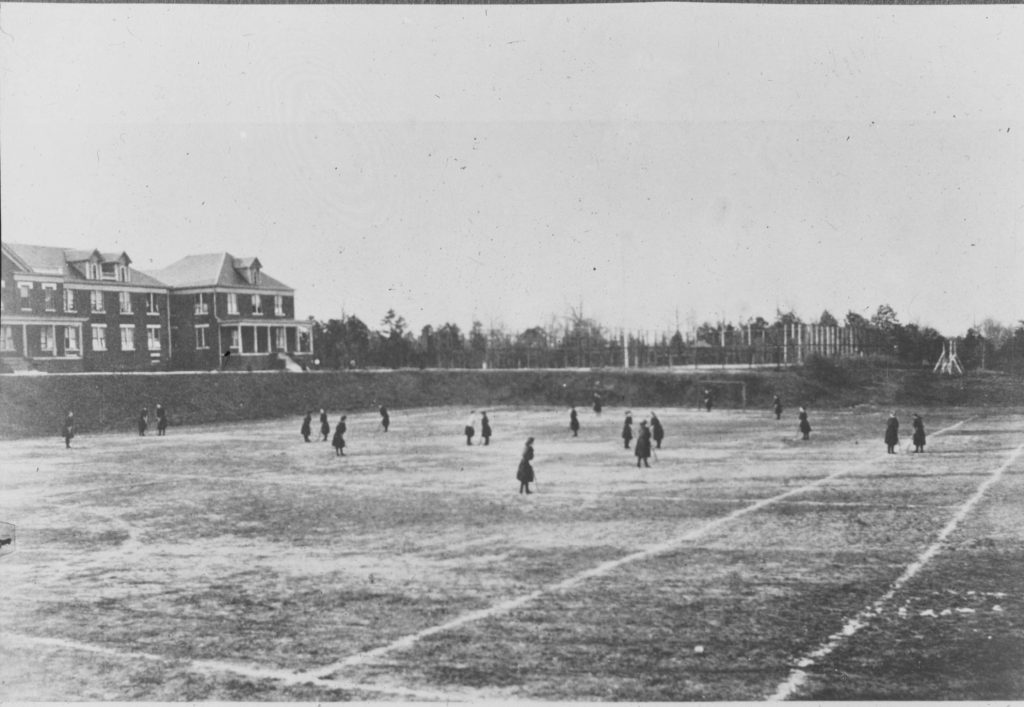
An open space on campus where the Petty Science Building now stands was designated as the school’s first athletic field. There, students could play tennis, field hockey, basketball, and other sports — strictly for recreation and fitness, Lawrimore says, as opposed to competition.

“It was not seen as proper for the women to necessarily be participating in these things for competitive reasons,” Lawrimore says. “Most of the competitions were either between the classes, so the juniors versus the seniors, or between the literary societies.”

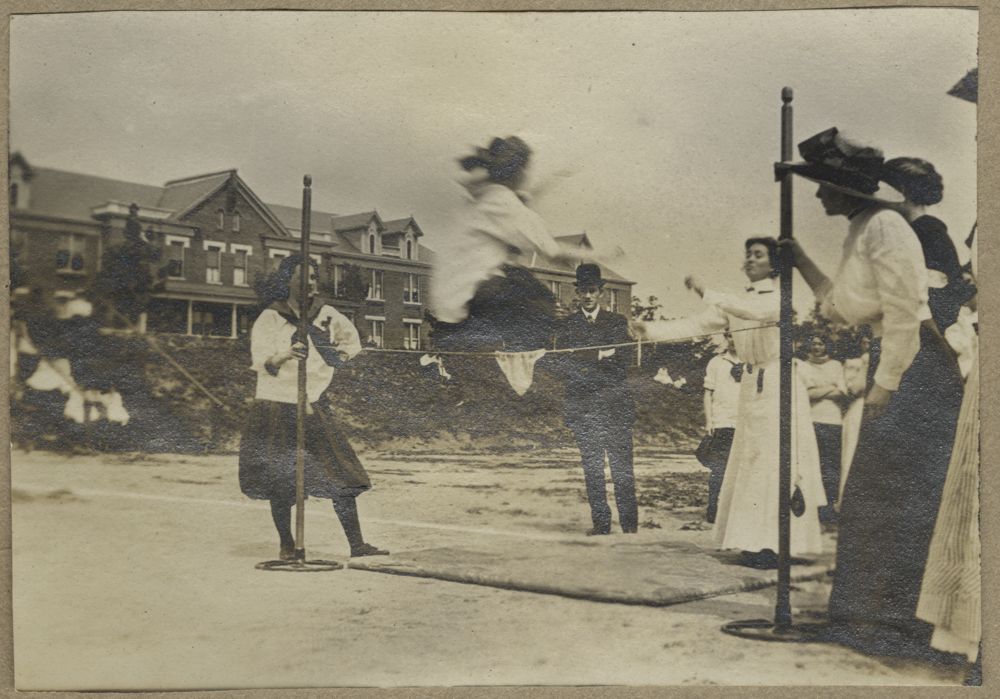
By 1909, Bertha Bell had been named director of Physical Culture. She introduced a field day that year that allowed for every student and faculty member to participate. From Lawrimore’s History: “The final games in the basketball, tennis, and baseball tournaments were played; and individual track and field events, running, broad jump, 100‐yard dash, high jump, ball throwing, and relay races, were also part of the activities. A trophy was awarded to the winning class.”

At the beginning of her tenure, Gove instituted a physical culture course as a requirement for all students, with a curriculum that included gymnastics, calisthenics, and other exercises. In those early days, the campus recognized a daily “Walking Period.”

At 4:30 p.m. each day, Lawrimore says, “they would ring the campus bell, and you had to open up your dorm room window and do something for the next hour, some sort of physical activity.” 

“Now, for some of the students,” Lawrimore explains, “that meant you were going to play field hockey or basketball. And for others, it meant that’s when you’re going to go for a mandatory stroll through the woods, in your Victorian dress. And some of the students loved it, and some of the students hated it. If we tried to do that now, it would probably be the same way.”

Most students, she says, chose to spend that time walking through Peabody Park, which was established in 1895.

Hoops and Greens: The Emergence of Teams and Sports

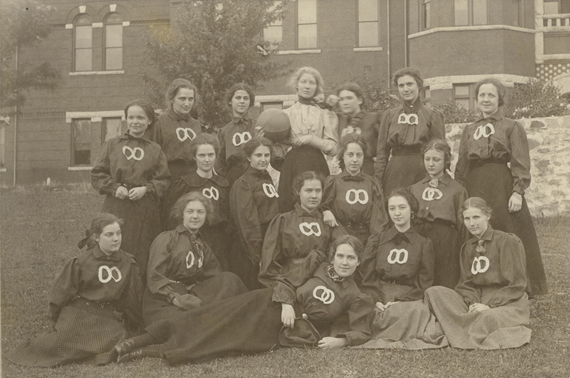
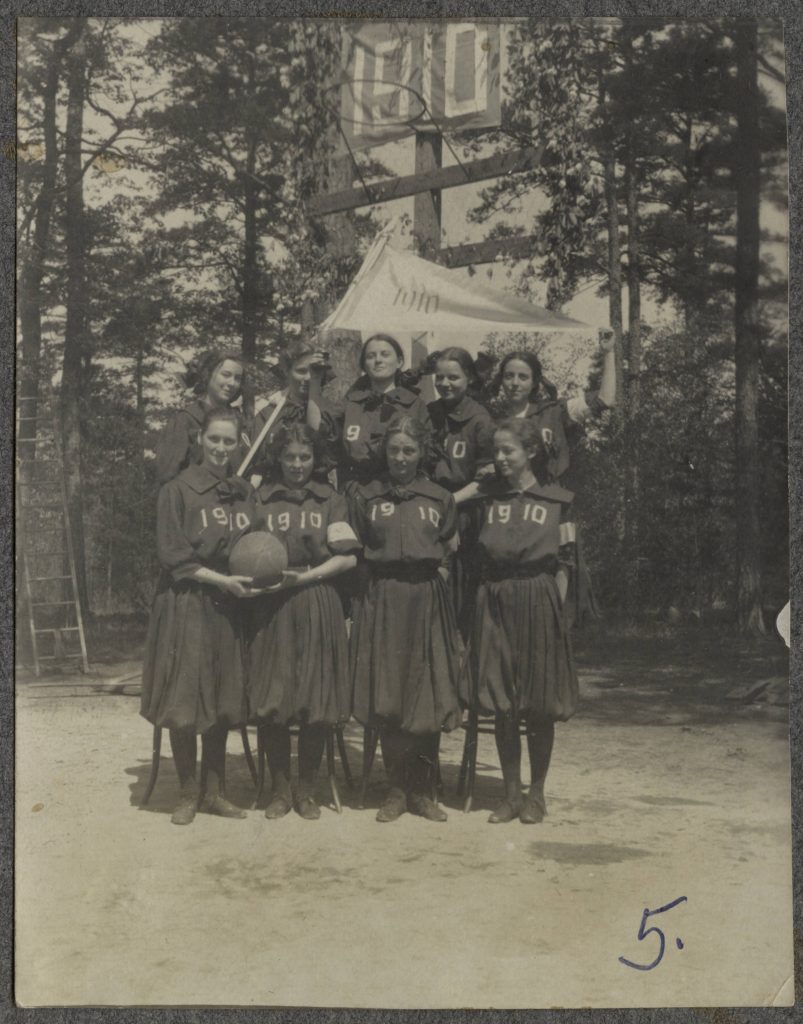
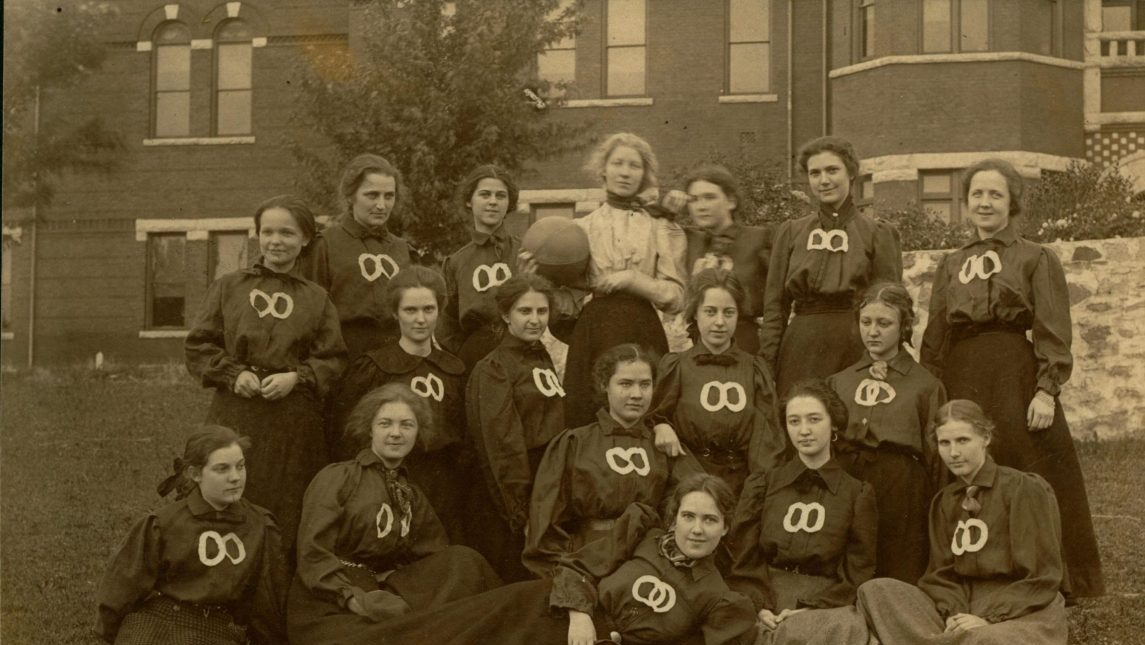
The very first athletic “team” on this campus was known as the Naughty Naughts, the Class of 1900 basketball squad. The group, comprised of 16 women, wore uniforms of long, black skirts and collared black blouses with long, puffed sleeves, each bearing entwined double-zero numbers.

The rules for women’s basketball were very different from those for men, Lawrimore says.

From her history: “In 1892, Senda Berenson introduced basketball for women at Smith College. The game featured modified rules, as it was feared that the women could (or should) not physically or mentally handle the strain of the men’s rules. The court was divided into three areas with three players from each team in each area (nine total players per team). The ball moved from section to section by passing or dribbling. Players were limited to three dribbles and could hold the ball for three seconds. No snatching or batting the ball away from a player was allowed.”

“It was like if you took basketball and mushed it with soccer,” she says now. “By the time UNCG began admitting men in 1963, we were playing basketball closer to the way it looks today. But those women’s rules really lasted. Oklahoma still had high schools that played that way in the 1990s.”

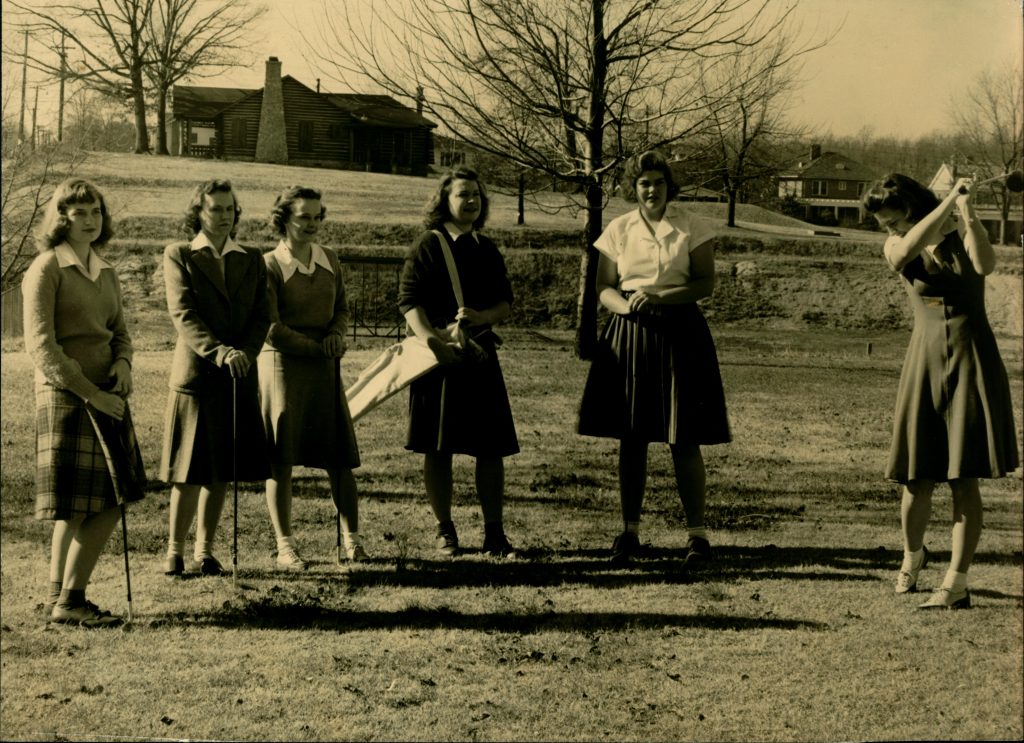
Golf has been a part of the University since 1929, when a single, par-3 hole was built on the west side of Rosenthal Gymnasium, now the Coleman Building. By 1935, the “Little Golf Course,” as it was known, was open for play and a Woman’s College Golf Club formed to maintain the course.

But within two years, Dean of Administration Walter Clinton Jackson said of the golf course in a memo: “[F]or two years and more, the whole matter was a source of unending difficulties, annoyance and trouble. Neither the faculty nor the students would support the club.”

In 1940, the course was reduced to just three holes, then allowed to overgrow during World War II. The subject would not be visited again until 1954, when plans for a new course took shape. It wouldn’t be ready for use until 1957. A vestige of that second course still exists on West Market Street today.

Woman’s College students playing golf on campus, 1940.

One Era Ends, Another Begins

The Woman’s College era officially ended when men were introduced to campus in 1963, and the legacy of sport both expanded and amplified. Teams were formed, an athletic department grew, and UNCG eventually worked its way to Division I in the NCAA, with dozens of championships and star athletes paving the way.

But it all began before the turn of the last century in an attic gymnasium where women in black wool sweated through their workouts.

Story by Brian Clarey, University Communications
Photos courtesy UNCG Special Collections and University Archives

Take a long look back  

Latest News

April 1, 2026

UNCG Graduate Students Compete to Quickly (and Clearly) Present Research

Three minutes and one PowerPoint slide or one posterboard to explain years of research. It's all about making a long-term impact on ...

March 31, 2026

Science Everywhere Festival creates fun for all ages on UNCG Campus

Experience science like never before — talk to robots, witness honeybees in action, dive into colorful chemistry, and explore the ...

March 26, 2026

Light the Way Campaign Concludes with More than $266M raised

Thanks to the generosity of donors, the campaign exceeded its goal by 33 percent. Students are already feeling the impact, with more...

What's Trending

Connect with Us

Subscribe to our Top 5

Subscribe today to our Top 5 Weekly email

This field is for validation purposes and should be left unchanged.

Share Your Story

For the Media

Posted on March 26, 2026

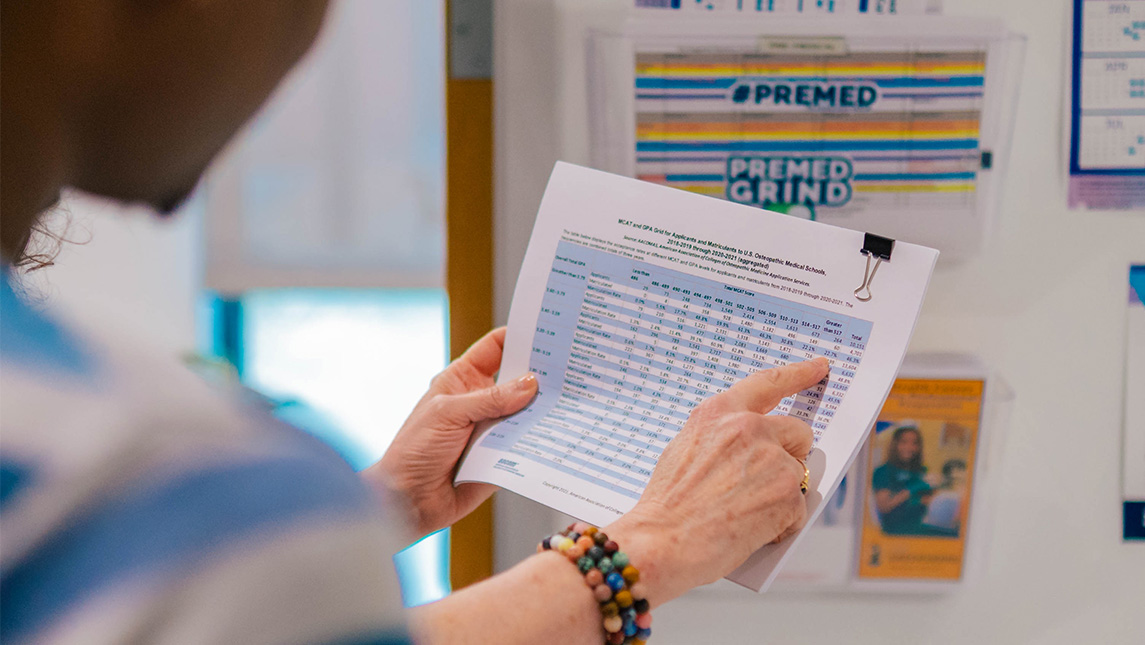
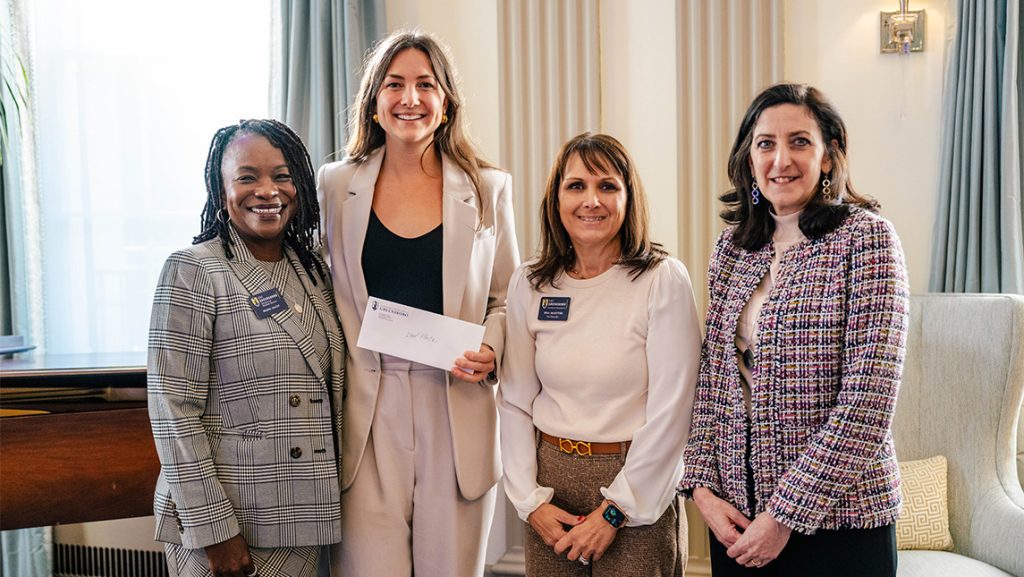
Close-up on a UNCG student's class schedule sheet.

The three recipients of the academic year’s UNCG Student Success Awards, sponsored by the Division of Student Success, have been announced.

The UNCG Advising Excellence Awards recognize the commitments of faculty and staff who make significant contributions to student success through the delivery of exemplary academic advising. Two UNCG Advising Excellence Awards are presented each spring term honoring a faculty advisor and a professional academic advisor. Both awards and the selection criteria have been modeled to reflect the regional and national advising awards established by the National Academic Advising Association (NACADA).

The Outstanding First-Year Student Advocate Award recognizes and celebrates the efforts and significant contributions of UNCG faculty and staff who provide leadership in creating a positive transition to college and a successful learning environment for first-year students.

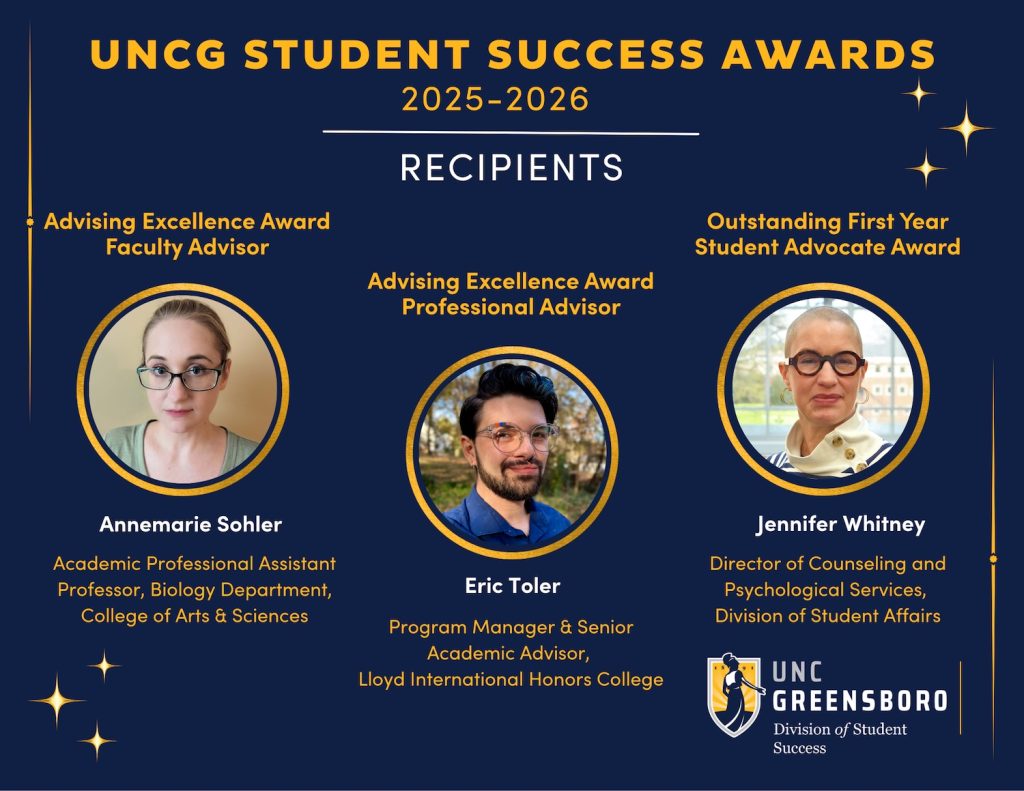
The recipients this year are:

Academic Advising Excellence, Faculty Advisor
Annemarie Sohler, Academic Professional Assistant Professor
Department of Biology, College of Arts & Sciences

Academic Advising Excellence, Professional Advisor
Eric Toler, Program Manager and Senior Academic Advisor
Lloyd International Honors College

Outstanding First-Year Student Advocate
Jennifer Whitney, Director of Counseling and Psychology Services
Student Health Services, Division of Student Affairs

Photos of UNCG 2025-26 Advising Excellence Awardees.

Latest News

April 1, 2026

UNCG Graduate Students Compete to Quickly (and Clearly) Present Research

Three minutes and one PowerPoint slide or one posterboard to explain years of research. It's all about making a long-term impact on ...

March 31, 2026

Science Everywhere Festival creates fun for all ages on UNCG Campus

Experience science like never before — talk to robots, witness honeybees in action, dive into colorful chemistry, and explore the ...

March 26, 2026

Light the Way Campaign Concludes with More than $266M raised

Thanks to the generosity of donors, the campaign exceeded its goal by 33 percent. Students are already feeling the impact, with more...

What's Trending

Connect with Us

Subscribe to our Top 5

Subscribe today to our Top 5 Weekly email

This field is for validation purposes and should be left unchanged.

Share Your Story

For the Media

Posted on April 01, 2026

Cover of International Poetry Review depicts a man's shadow on a wall.

The poems gathered by the Department of Languages, Literature, and Culture for this issue confront a struggle over meaning: who assigns it and what meaning is imposed on experience. These diverse voices speak of memory, loss, and endurance, insisting on the right to speak plainly when language proves unstable or inadequate.

Latest News

April 1, 2026

UNCG Graduate Students Compete to Quickly (and Clearly) Present Research

Three minutes and one PowerPoint slide or one posterboard to explain years of research. It's all about making a long-term impact on ...

March 31, 2026

Science Everywhere Festival creates fun for all ages on UNCG Campus

Experience science like never before — talk to robots, witness honeybees in action, dive into colorful chemistry, and explore the ...

March 26, 2026

Light the Way Campaign Concludes with More than $266M raised

Thanks to the generosity of donors, the campaign exceeded its goal by 33 percent. Students are already feeling the impact, with more...

What's Trending

Connect with Us

Subscribe to our Top 5

Subscribe today to our Top 5 Weekly email

This field is for validation purposes and should be left unchanged.

Share Your Story

For the Media

Posted on March 23, 2026

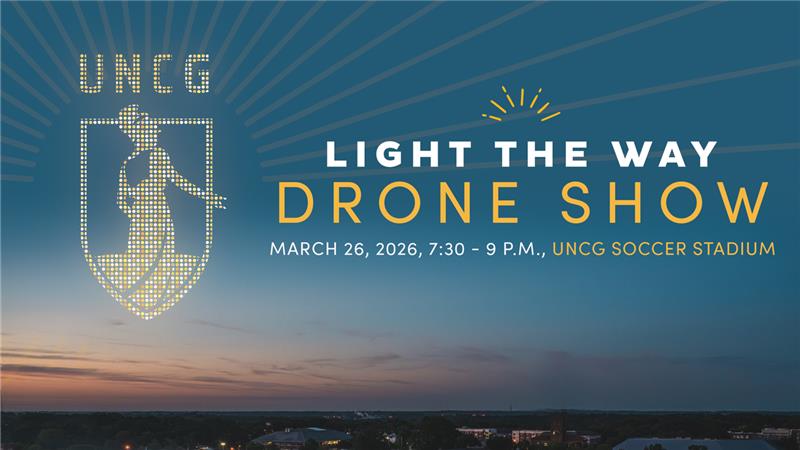
Promotional image for UNCG drone show.

On March 26, UNCG is celebrating the success of its historic giving campaign with Greensboro’s first-ever drone show. Students, faculty and staff, and the community are all invited to come see the show at the soccer stadium and to enjoy music, performances, food, and giveaways.

Latest News

April 1, 2026

UNCG Graduate Students Compete to Quickly (and Clearly) Present Research

Three minutes and one PowerPoint slide or one posterboard to explain years of research. It's all about making a long-term impact on ...

March 31, 2026

Science Everywhere Festival creates fun for all ages on UNCG Campus

Experience science like never before — talk to robots, witness honeybees in action, dive into colorful chemistry, and explore the ...

March 26, 2026

Light the Way Campaign Concludes with More than $266M raised

Thanks to the generosity of donors, the campaign exceeded its goal by 33 percent. Students are already feeling the impact, with more...

What's Trending

Connect with Us

Subscribe to our Top 5

Subscribe today to our Top 5 Weekly email

This field is for validation purposes and should be left unchanged.

Share Your Story

For the Media

Posted on March 23, 2026

Featured Image for Undergrad Researcher Maps New Pathways in Bone Biology at UNCG

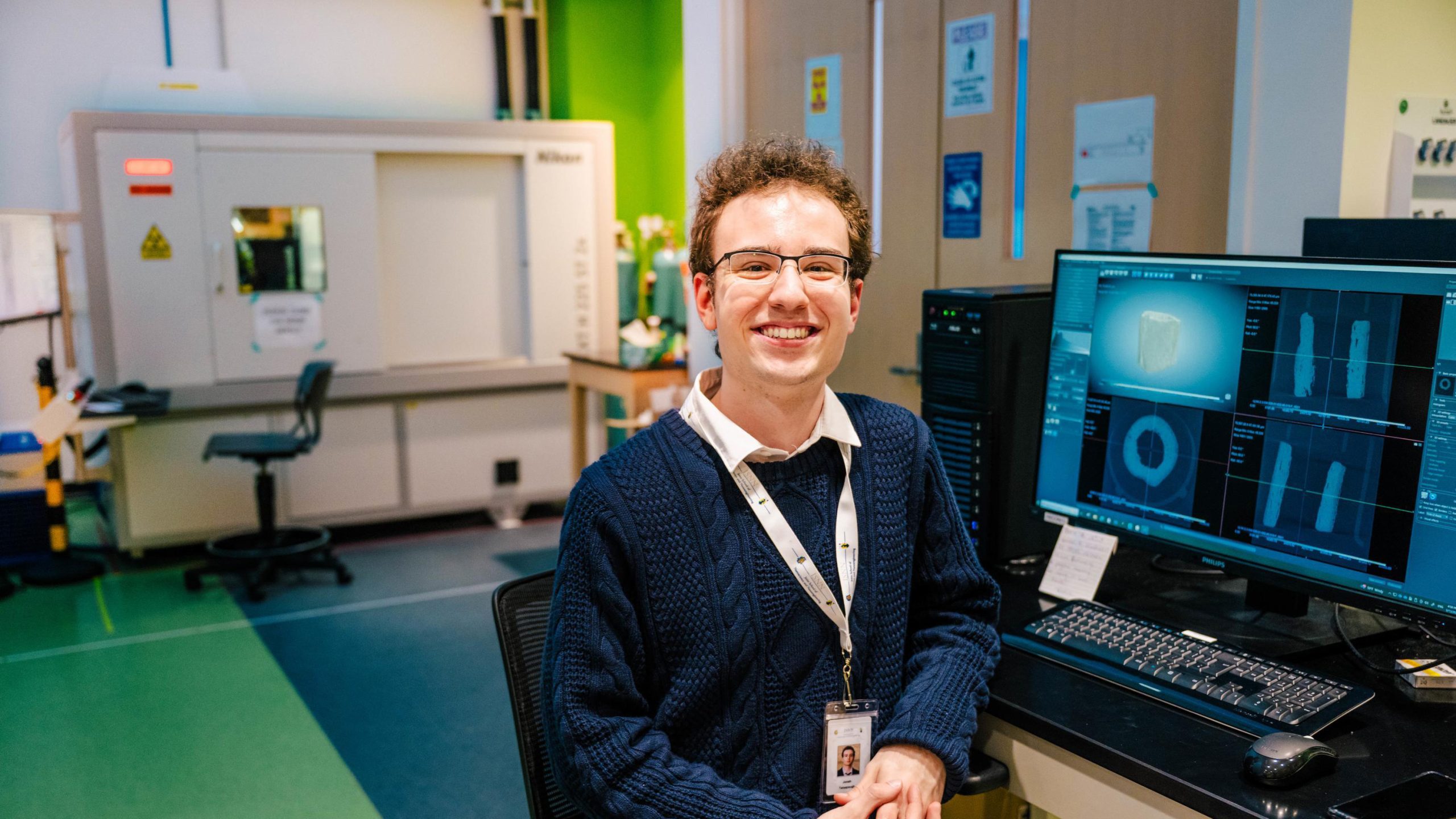
When Jonah Tatsapaugh walked into the UNCG Human Diversity Lab in the Sullivan Building, he wasn’t just logging hours toward graduation. He was stepping into what he calls the highlight of his day — a space where he could ask questions, build solutions, and contribute to a project that is pushing the boundaries of what scientists know about human bone development.

A biology major with a minor in chemistry, Jonah spent the last three semesters developing an innovative method to analyze the microstructural growth of thigh bones of individuals aged 3 months to 18 years.

His project, titled “Filling in the Holes: An In-Depth Look at Microstructural Variation in Subadult Femurs,” uses cutting-edge imaging technology to build the first comprehensive 3D model of normal bone growth patterns in children and adolescents.

“Studying biology in the classroom is one thing, but researching — finding problems and looking for solutions — that’s what really excites me,” he says.

Jonah’s work uses fragile, historically-sourced bone samples from Jordan. Many of these samples come from archaeological contexts such as church ossuaries or burial pits, where they’ve been preserved long enough for detailed study.

Cutting-edge Tech

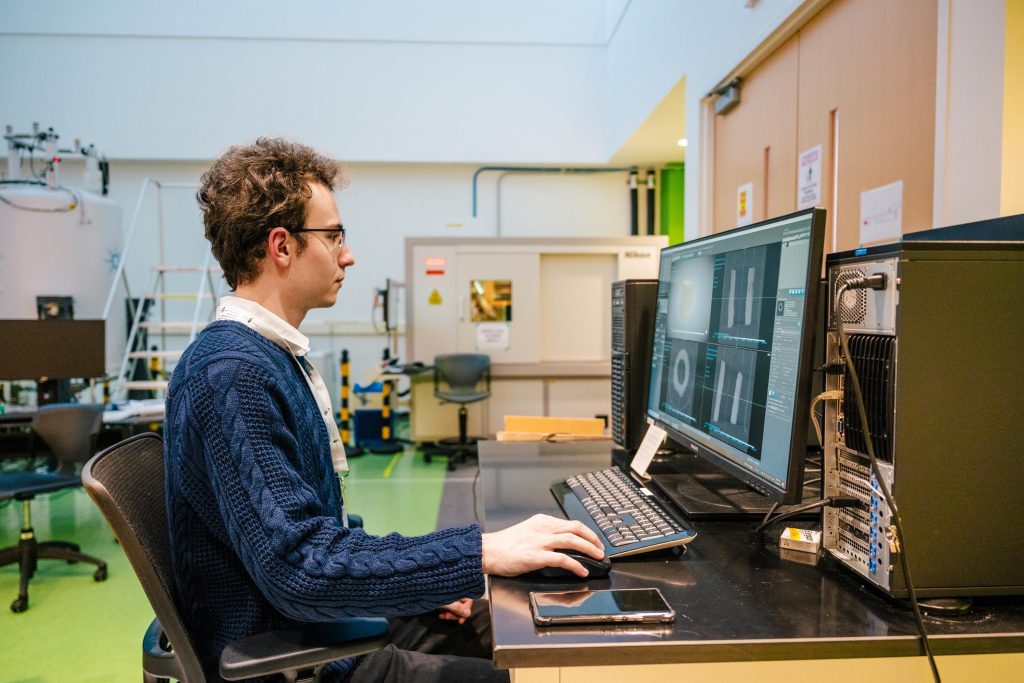
At UNCG, Jonah scanned these samples with the University’s high-resolution micro-CT machine, a sophisticated imaging tool that produces detailed 3D renderings at a level impossible to see on living humans due to radiation limitations.

UNCG acquired this machine only a few years ago, and Jonah is part of the first generation of researchers to build protocols around it.

Using the software program Dragonfly, Jonah analyzes porosity, thickness, and microstructural patterns within the bones — data that forms the foundation for understanding how healthy bones grow over time.

Baselines for Healthy Bones

While 2D bone histology has existed for decades, this is among the first attempts to establish a fully 3D developmental standard for subadult bone microstructure.

“We’re developing a baseline for what normal bone growth should look like,” Jonah explains.

“Once we have that standard, we can compare it to bones affected by things like vitamin deficiencies, mineral deficiencies, or diseases that alter bone growth.”

One disease Jonah is particularly interested in is leprosy, a chronic infection that still exists today in South America, Asia, and Africa. The lab has access to one of the oldest physical specimens of leprosy in the world — an invaluable sample for studying how the disease has changed over centuries.

Jonah’s fascination with bone biology unfolded somewhat unexpectedly.

“I’m pre-dental, so I wanted something biological, something related to the body,” he says. “This project stood out because I could actually learn to use micro-CT technology and do the scans myself.”

What began as a technical curiosity quickly deepened into a passion. Working hands-on with specimens, refining imaging techniques, and troubleshooting complex questions in bone biology reshaped the way Jonah approaches science.

“It’s so exciting to come across something we don’t have an explanation for yet and then get to go find that explanation,” he says.

That excitement has been nurtured by his mentor, Dr. Gwen Robbins Schug.

“Working with Dr. Robbins Schug has been great!” he says. “She loves teaching and cultivating students’ interests. She guides me when needed but also gives me room to explore questions on my own. Having the freedom to ask my own questions and find their answers is extremely fulfilling.”

Inspiring Curiosity

When asked what he would tell other UNCG students who are considering getting involved in research, Jonah doesn’t hesitate.

“Get in there,” he says. “Look up professors and the research they’re doing, then go talk to them in person. It shows you’re interested and professors love talking about their research.”

He emphasizes that curiosity is one of the most important qualities an undergraduate researcher can have.

“If something doesn’t seem right or you have a question, look for answers,” he says. “A lot of the work I’m doing in this lab came from noticing things that didn’t have explanations. Now those answers are what I’m planning to publish at the end of the semester.”

He will carry his research experience into his next steps, whether in dental school or a future scientific career.

But for now, he is proud to have contributed something new to the field of bone biology, and to have done it as an undergraduate researcher at UNCG.

“This experience has shaped the way I think about biology,” he says. “Being in the lab, learning how to ask questions, and being part of something that hasn’t been done before — it’s been an incredible opportunity.”


by Sierra Collins, Division of Research and Engagement
photography by Sean Norona, University Communications
Look beneath the surface

Latest News

April 1, 2026

UNCG Graduate Students Compete to Quickly (and Clearly) Present Research

Three minutes and one PowerPoint slide or one posterboard to explain years of research. It's all about making a long-term impact on ...

March 31, 2026

Science Everywhere Festival creates fun for all ages on UNCG Campus

Experience science like never before — talk to robots, witness honeybees in action, dive into colorful chemistry, and explore the ...

March 26, 2026

Light the Way Campaign Concludes with More than $266M raised

Thanks to the generosity of donors, the campaign exceeded its goal by 33 percent. Students are already feeling the impact, with more...

What's Trending

Connect with Us

Subscribe to our Top 5

Subscribe today to our Top 5 Weekly email

This field is for validation purposes and should be left unchanged.

Share Your Story

For the Media

Posted on April 01, 2026

A UNCG student gives a PowerPoint presentation inside Johnson Alumni House.

“Do you want the long version or the short version?”

The “elevator pitch” is a staple of business, entertainment, and other industries. In a fast-paced world, professionals should learn how to introduce themselves and their big ideas in a minute or two — about the time you might share with someone in an elevator — to an executive who could give them their big break.

But graduate research is often measured in years: years of coursework, experiments, drafting a thesis, revising the thesis, and defending it. It’s difficult to compress such vast work into a “short version.”

Laura Drew, student support lead at UNC Greensboro’s Graduate School, wants researchers to consider their “elevator pitch,” so they can deliver it with clarity and confidence. “Relevance is what transforms good work into meaningful impact,” says Drew. “You can have the greatest project in the world, but if your audience doesn’t feel its relevance, then it loses its power.”

After the data is collected and the paper is written, UNCG students must be able to describe their work, whether it’s in formal proposals or to someone stopping them at a moment’s notice to ask, “What does all this mean?”

Forming that answer drives the annual Three Minute Thesis (3MT) held each year alongside the Graduate Research and Creativity Showcase and the Webinars Worth Watching competition.

Presentation is key

Communication, adaptability, and knowing your audience are essential soft skills for any academic or aspiring professional. Drew says 3MT helps students get to the heart of their research: what it is and why others should care.

“If you can’t keep me engaged and interested in your work for three minutes, I’m probably not going to be interested for 20-30 minutes,” she points out. “I always think back to my marketing days: Think up three to five takeaways. What do you want people to leave the conversation understanding?”

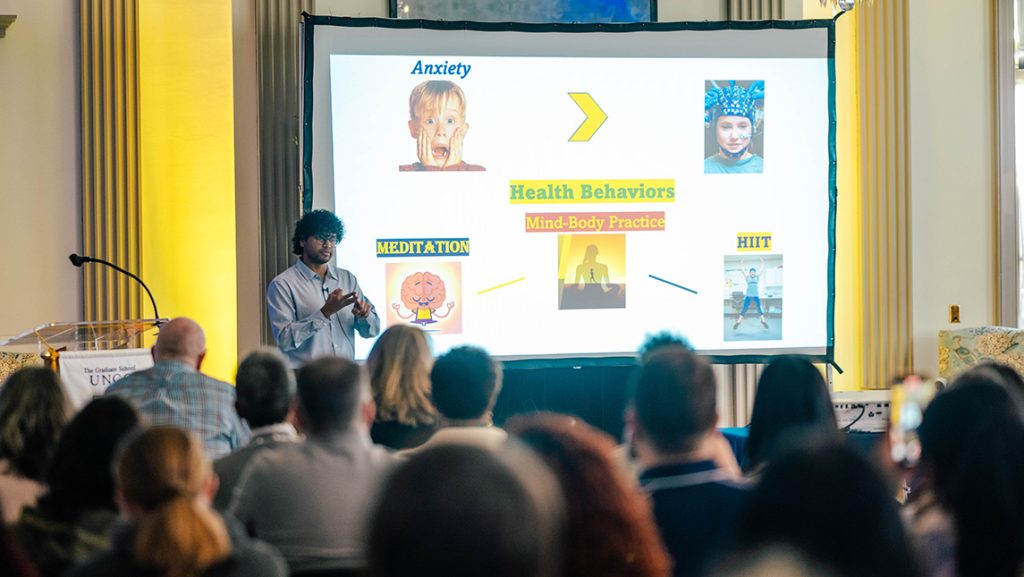
2025 3MT winners from left to right: Praveen Pasupathi, first place; Victoria Fonville, second place; Samuel Adegoke, people’s choice.

Students get three minutes and one PowerPoint slide to win over judges intentionally selected from outside their disciplines. Drew says it teaches them to strip out the jargon and focus on meaning and impact. “We ask them, ‘Why does your work matter to others? Can your mom understand it?'” she says. “Sometimes, they get so caught up in the terminology and acronyms of their degree that they forget the audience doesn’t understand them.”

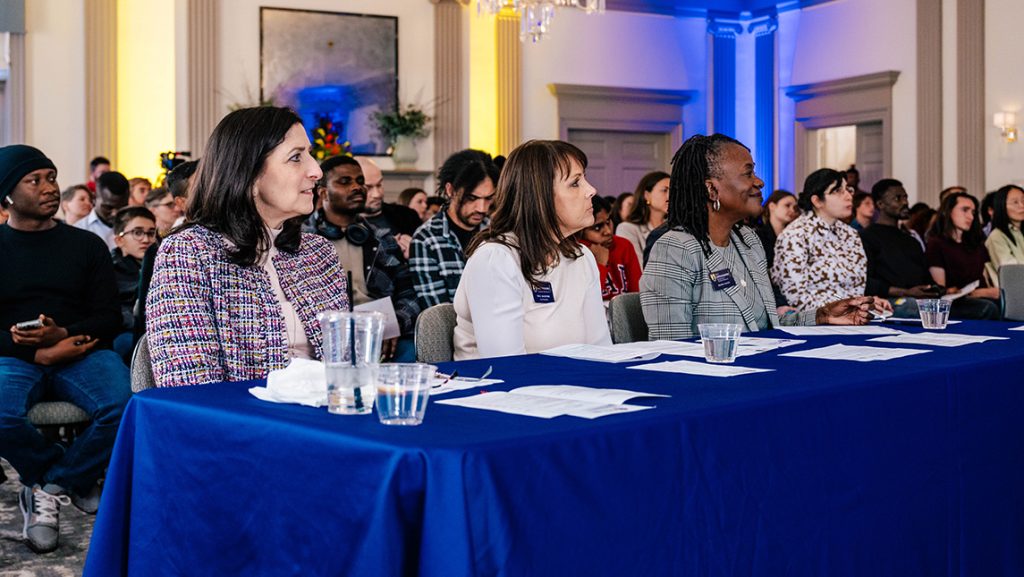
Judges of the Three Minute Thesis competition.
Drs. Jodi Pettazzoni, Tina McEntire, and Regina McCoy judged the 2025 3MT competition. As members of UNCG’s senior leadership, they provided the perspective of someone outside students’ field of expertise.

Proving the Community Impact

Praveen Pasupathi took first place in the 2025 3MT. A doctoral student in the kinesiology lab of Dr. Eric Drollette, he is measuring the link between short bursts of physical or mindfulness activity and lowered anxiety in children. He wants his research to guide mental health programs in schools and communities.

He says 3MT helped him push his limits. “Experiences like this challenge you to step outside your comfort zone and trust that your research and your voice belong out there,” he says.

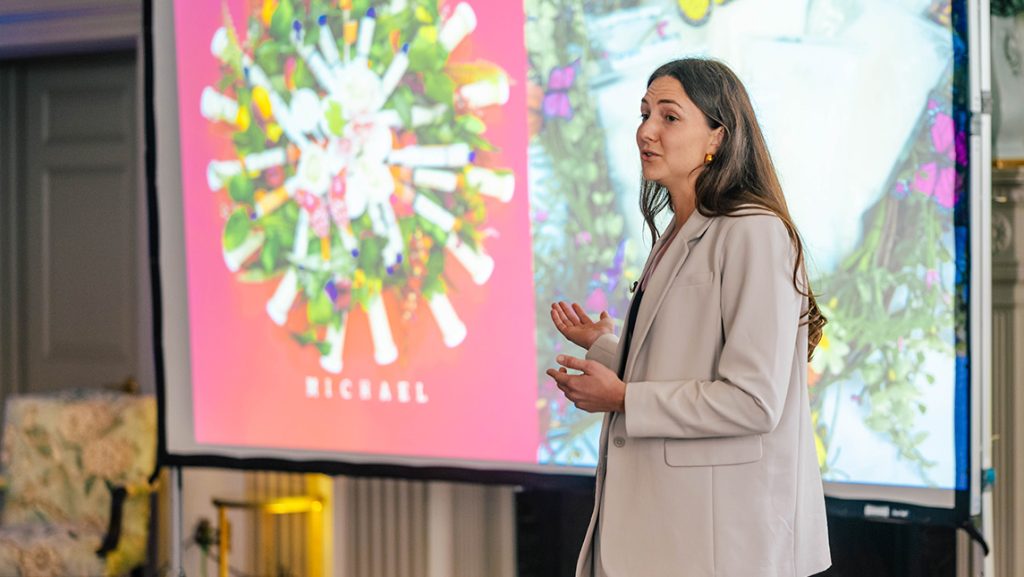
Mental wellness was also front and center for the second-place winner Victoria Fonville, who studies nutrition. She presented her study of best lactation and pumping practices for mothers who suffered a stillbirth or neonatal death, building upon research that shows donating breastmilk helps those parents on their healing journey. 

Condensing all her data was more difficult than she expected, she says, but immensely rewarding. “Learning how to share my research with people outside of my discipline was the most valuable skill I gained from the 3MT competition, and I am so thankful I had the opportunity to participate,” says Fonville.

graduate research event

Free Showcase of Scholarship

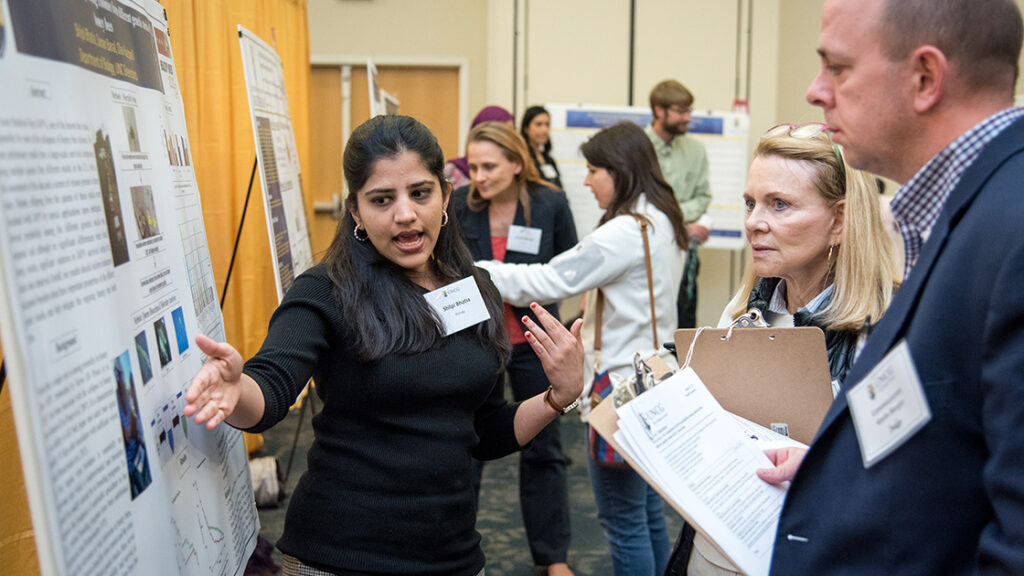
The Graduate Research and Creativity Showcase is another opportunity to present research for the whole community. Using poster presentations and in-person conversations, they share their work and develop speaking skills that will serve them well in the future, whether that be interviewing for a job, pitching a grant, or engaging with a community partner.

Dive into students’ latest discoveries at the Spring 2026 showcase:

Thursday, April 9
1–3 p.m.
Elliott University Center Cone Ballroom

Students present for the following categories: Arts and Humanities; Health Sciences; Natural, Physical and Mathematical Sciences; and Social Sciences, Education, and Business.

Virtual Adaptations

University Libraries approaches the same challenge with Webinars Worth Watching. In the live online competition, modeled in part after 3MT, graduate students present original research in a compressed format for virtual audiences. They are judged on content, clarity, engagement, and design.

“A big part of the competition is taking your research and making it absorbable by a regular audience,” says online learning librarian Sam Harlow.

She says the requirements reflect the scenarios students will face when they leave graduate school. Job interviews, national conference presentations, and even dissertation defenses increasingly happen online. Harlow does not want a technical hiccup or a rambling explanation to spell the difference between acceptance and rejection.

“We want them to feel more comfortable presenting their research in an online environment,” Harlow says. “We also want them to get comfortable with breaking down their research for everyday audiences, thinking about grants and pitching, and seeing the value of their research for the everyday world.”

Glitches happen

Before the competition, University Libraries holds optional workshops on presentation and online delivery. Contestants can also schedule one-on-one practice sessions to time their presentations and hear targeted feedback. They learn about accessibility and visual design.

“We play a ‘true or false’ game,” Harlow explains. “For example, ‘Should you wear a headset?’ And they say ‘true or false’ in the chat, and then we talk about why. That used to be a huge issue, say, if someone else in the house was watching Netflix while you were presenting.”

Just as important as polish is flexibility. Because the competition is live, the risk of technical difficulties is a real one. Students must adapt to the unexpected in real time.

“I hope it teaches students how to roll with things that can go wrong,” Harlow says. “We’ve had winners whose internet cut out, and they had to come back and finish the presentation. And they still won.”

Publishing skills

Academic writing poses its own set of presentation challenges. That’s what drew graduate students, primarily from the School of Health and Human Sciences, to take a “paper chase” workshop. Read about what they learned while turning around a paper worthy of an academic journal in just three days.

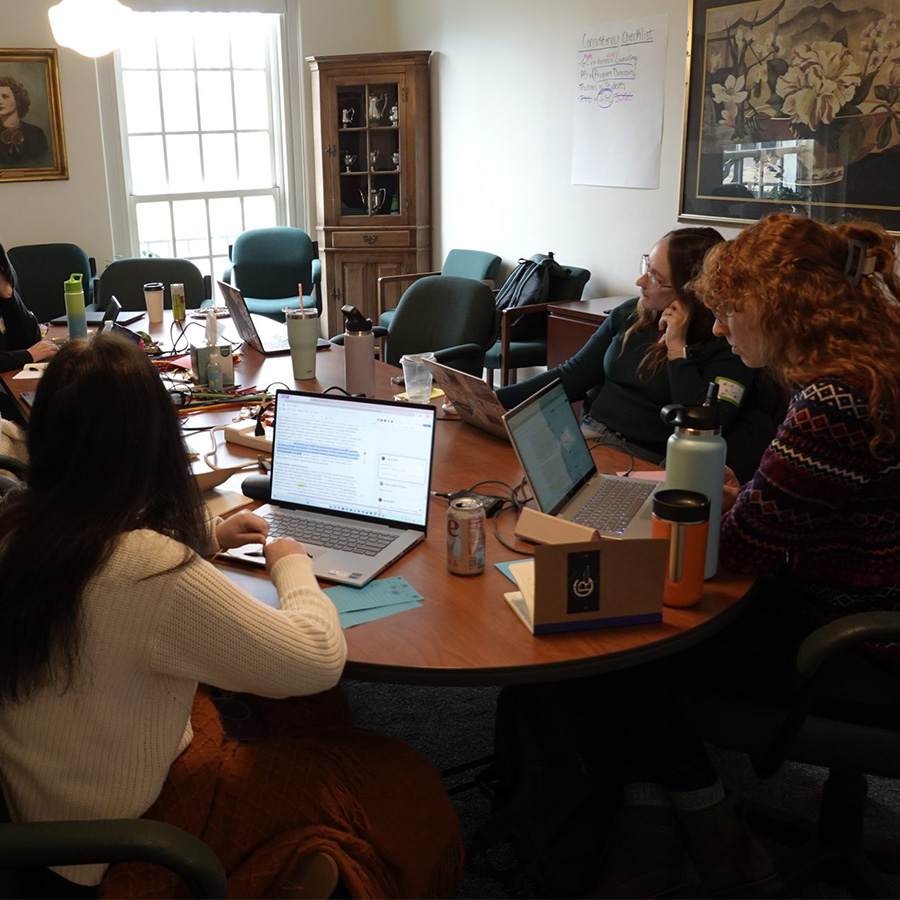
A group of UNCG students around a table writing an academic paper.

Everyone’s a winner

Each of these may choose winners at the end, but ultimately, all the students benefit from a low-stakes environment where they can make mistakes and grow. Drew remembers one student who froze during his first 3MT presentation.

“He totally lost his train of thought, tried to start again, and ended up walking out of the room,” she says. “The next year, he came back and he won. I always tell students, ‘Even if you didn’t place or do well, each time you do it, you get better and more confident.'”

And Pasupathi says there’s another winner. “Strong presentation skills help ensure that research reaches the people it is meant to benefit,” he says. “Clear communication helps communities understand why the work matters and how it can support healthier lives.”

Story by Janet Imrick, University Communications
Photograpy by Sean Norona, University Communications
A UNCG student points at a point on her posterboard.

Bring innovative ideas into the public conversation.

Latest News

April 1, 2026

UNCG Graduate Students Compete to Quickly (and Clearly) Present Research

Three minutes and one PowerPoint slide or one posterboard to explain years of research. It's all about making a long-term impact on ...

March 31, 2026

Science Everywhere Festival creates fun for all ages on UNCG Campus

Experience science like never before — talk to robots, witness honeybees in action, dive into colorful chemistry, and explore the ...

March 26, 2026

Light the Way Campaign Concludes with More than $266M raised

Thanks to the generosity of donors, the campaign exceeded its goal by 33 percent. Students are already feeling the impact, with more...

What's Trending

Connect with Us

Subscribe to our Top 5

Subscribe today to our Top 5 Weekly email

This field is for validation purposes and should be left unchanged.

Share Your Story

For the Media

Posted on March 19, 2026

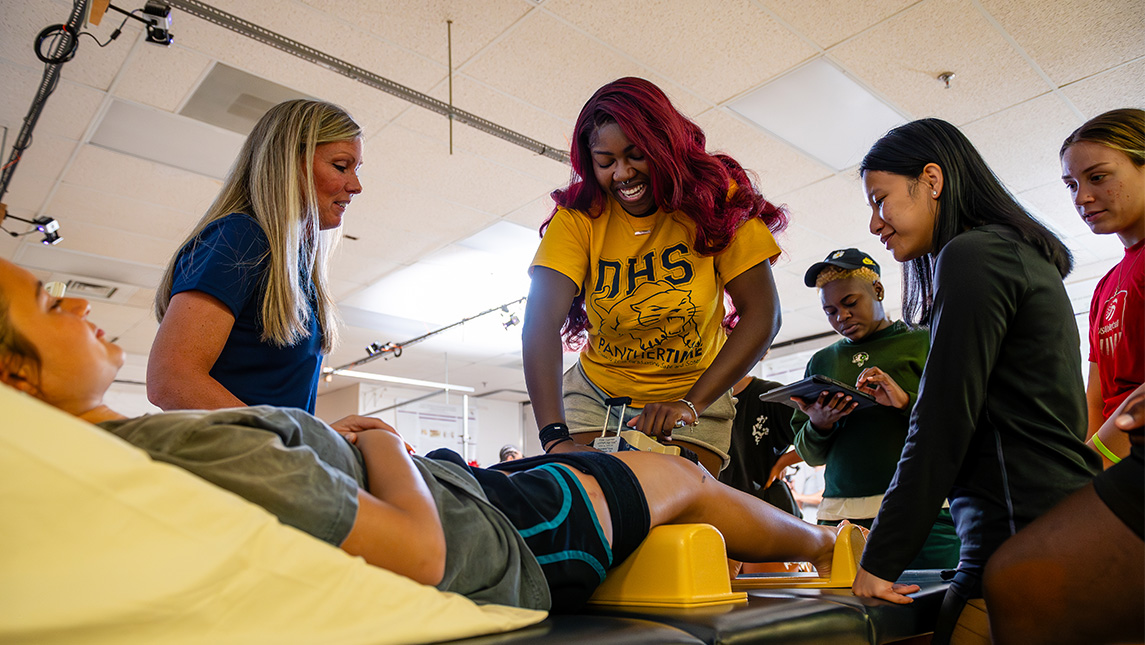
Kinesiology students work in the lab to stabilize a patient's knee.

It’s March in North Carolina, which means daffodils are blooming, days are warmer and longer, and all eyes are on college basketball. Even though our Spartans are not competing in national tournaments this year, UNC Greensboro is still relevant in basketball conversations with the announcement of Jerod Haase as our new basketball coach.  

It’s a reminder that sports teams are much bigger than their players, and only as strong as the supportive staff who keep them physically and mentally fit. Beyond coaches, professionals like trainers, advisors, physical therapists, and nutritionists make up the “team behind the team.”  

Career fields in sports and health sciences are growing to serve athletes of all ages, from children on recreational teams to collegiate and professional athletes. Building those workforces in our state is the mission of UNCG’s School of Health and Human Sciences (HHS). 

Here are a few examples of how HHS’s programs in kinesiology, public health education, nutrition, and athletic training give students hands-on experience for in-demand careers and develop research that improves the experience of sports teams at every level.  

Athletes and Fans Find Their Way Here 

Kat Reyes in her graduation gown holding a soccer ball.
Former athlete turns her love of sports into a passion for athletic training.
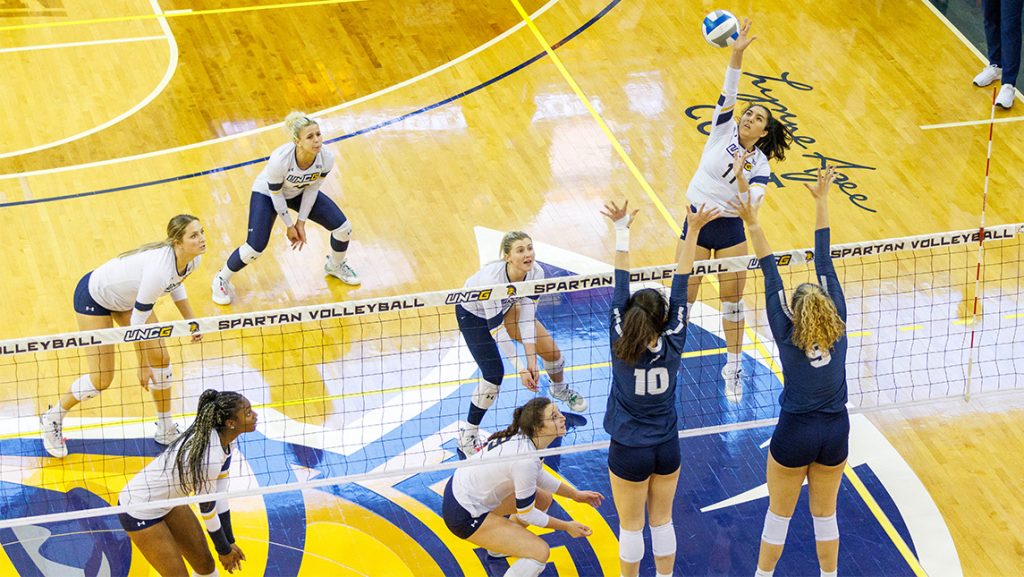
Volleyball game
Volleyball player sets goals for PA school thanks to UNCG pre-medical advising.

Winning Experience 

Dr. Aaron Terranova overlooks the SoCon Tournament basketball court at Harrah's Cherokee Center.
Professor Aaron Terranova gives students real-world athletic training experience at the SoCon basketball tournament. 
Desmond Moore holds a football.
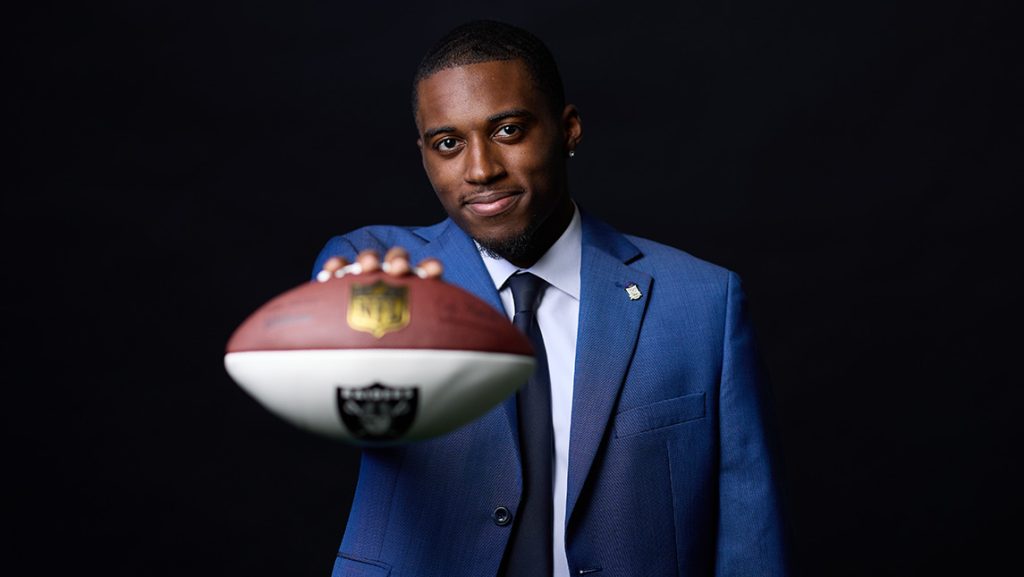
Sports psychology student’s dream internship pulls back the curtain on team cohesion at the professional level. 
UNCG's Madeleine Meinhold is the team nutritionist for the Greensboro Grasshoppers this baseball season.
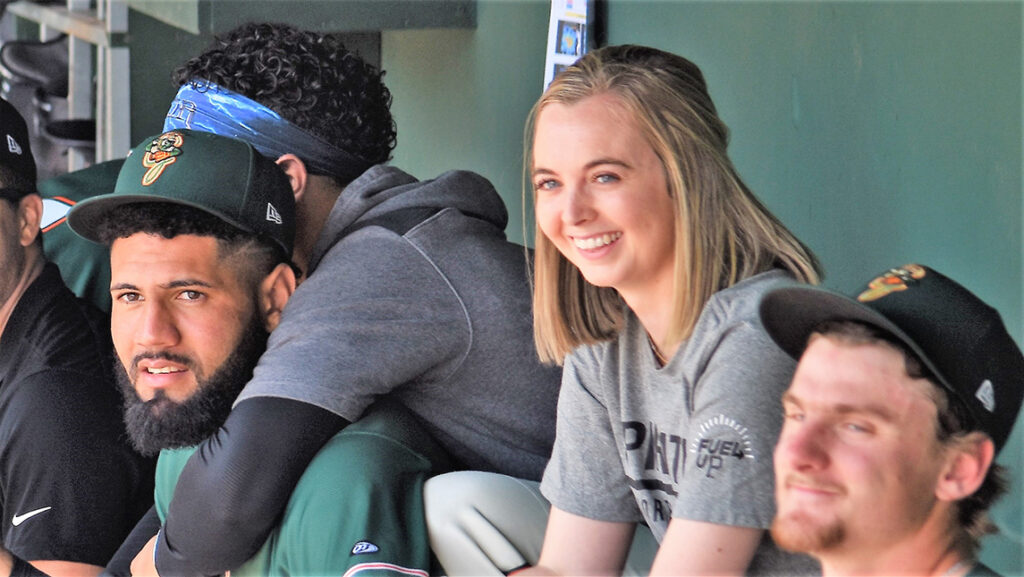
Nutrition alumna fuels her career with a summer job fueling baseball players on the Greensboro Grasshoppers team.

Competitive Research 

Kinesiology students and professor work with a fake leg in a boot with skeleton in the background.
UNCG research of ACL injury prevention for teenage girls. 
Student with books leans on a wall painted with UNCG Spartans.
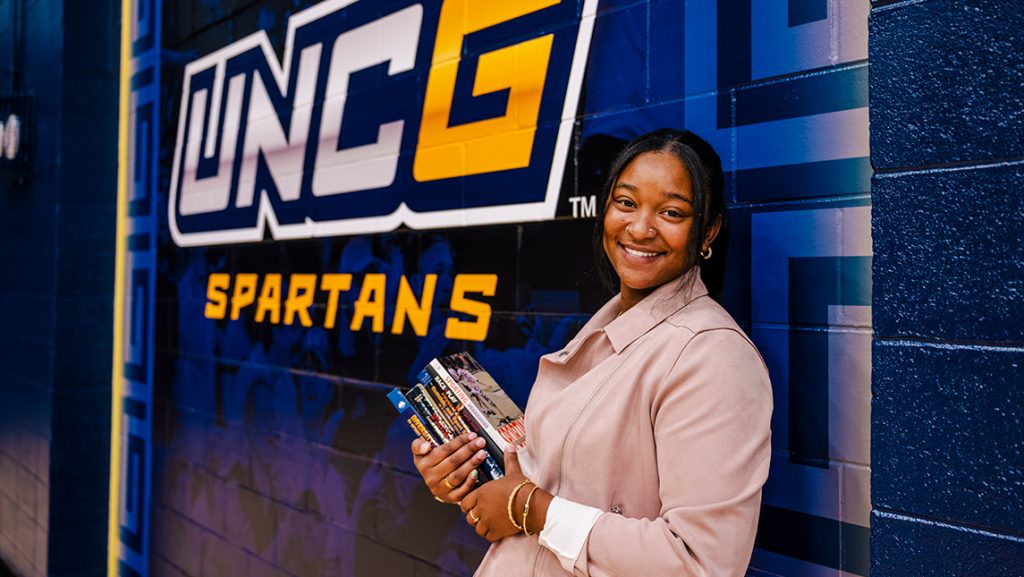
Doctoral student researches win-at-all-cost sports culture. 

Changing the Game 

UNCG professor Mike Perko fist bumps a Spartan statue
Public health education professor turns a simple act into a big confidence booster for young athletes.
Man in apron in a workshop making molds of prosthetic limbs.
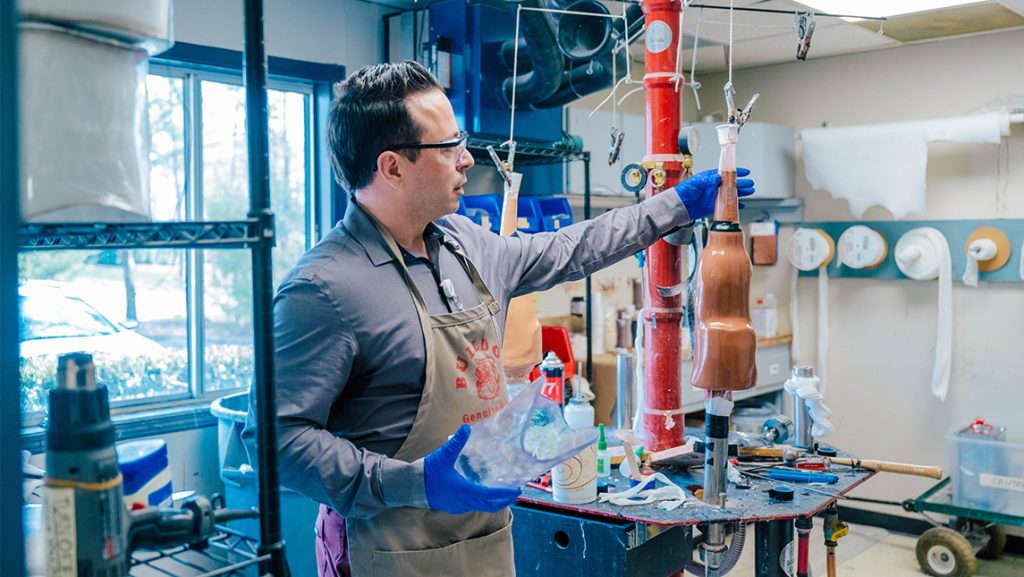
Alumnus Jason Baity’s kinesiology degree keeps amputees moving with life-changing prosthetics. 
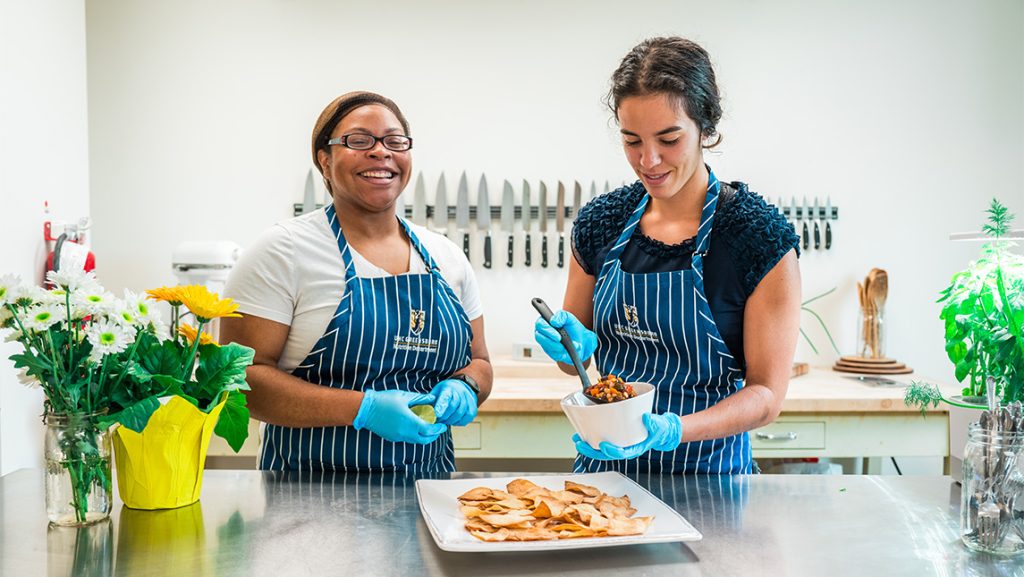
UNCG nutrition students prepare food in a kitchen.
UNCG nutrition students learn to promote health, treat chronic conditions, and fuel athletes with food. 

Story by Becky Deakins, University Communications.
Photography by Sean Norona, University Communications.

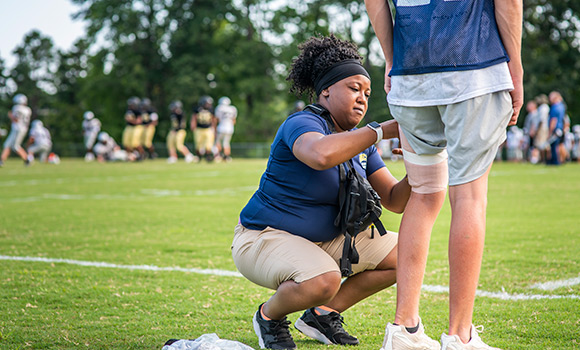
Photo of UNCG student applying bandage to athlete's leg

Wanna Get in the Game?

Latest News

April 1, 2026

UNCG Graduate Students Compete to Quickly (and Clearly) Present Research

Three minutes and one PowerPoint slide or one posterboard to explain years of research. It's all about making a long-term impact on ...

March 31, 2026

Science Everywhere Festival creates fun for all ages on UNCG Campus

Experience science like never before — talk to robots, witness honeybees in action, dive into colorful chemistry, and explore the ...

March 26, 2026

Light the Way Campaign Concludes with More than $266M raised

Thanks to the generosity of donors, the campaign exceeded its goal by 33 percent. Students are already feeling the impact, with more...

What's Trending

Connect with Us

Subscribe to our Top 5

Subscribe today to our Top 5 Weekly email

This field is for validation purposes and should be left unchanged.

Share Your Story

For the Media

Posted on March 20, 2026

UNCG School of Nursing professor Tommy Mann stands in one of the classrooms that uses AI stimulation as a tool for students.

How UNCG’s School of Nursing Is Leading in AI Integration

Artificial intelligence (AI) is no longer on the horizon for UNC Greensboro’s School of Nursing. It is already woven into the fabric of how the school teaches, trains, and prepares the next generation of nurses.

AI tools enhance instructional design, accelerate content development, improve faculty efficiency, and deepen student engagement.

Tommy Mann is one of the School of Nursing’s AI Champions, a formal group of Dean-appointed faculty and staff dedicated to integrating AI into the teaching of nursing. Mann serves as assistant professor and director of the Simulation Center for Experiential Nursing Education (SCENE), a state-of-the-art facility offering hands-on experiences that bridge theory and practice.

Dean Debra Barksdale knows the School of Nursing (SON) needs to be on the “bleeding edge” of AI — and therefore drives her faculty and the AI Champions to achieve this goal.

A self-proclaimed “technology enthusiast,” Mann recognized early that AI was advancing rapidly and believed it could do so much for academia, particularly within curriculum and simulation development.

“This is a large passion of mine,” he says. “We continually seek to understand what’s new in AI and how we can use it, to question whether it has value, and to consider how it fits in our workflow.”

Using AI to Support Student Learning

From talking with Mann, it appears AI is all about new ways of thinking, recognizing that the way something has always been done is not necessarily the best way to do it now.

The SON AI Champions use AI in curriculum development, Student Learning Outcomes (SLO) creation, and content generation. In fact, 70% of SON faculty are actively using AI in some fashion.

“By using AI, faculty can engage different student learning styles simultaneously in one classroom,” says Mann, “thus meeting students where they are and enhancing student engagement with the content.”

There is a common assumption that today’s college students, because of their age and generational fluency with technology, are natural AI users. Mann pushes back on that.

“Once they get in the classroom, students are not using AI as much as people believe,” he says.

But Mann knows they could use it to improve their academic performance.

For example, if a student’s schedule demands they need to listen to class material to study, they can use NotebookLM to convert a PowerPoint into a podcast, producing content in a way that meets their needs.

Therefore, the SON is working to support faculty in becoming AI leaders, so they can educate students on helpful AI platforms — pointing them in the right direction and demonstrating effective usage.

Image used to convey AI.

Supporting Faculty in AI Integration

The four-person simulation team, consisting of Merry Prior, Brittany Norman, Derrick Owsley, and Mann, conduct ongoing research to identify the latest generative AI models that meet the Simulation Center’s and faculty’s needs.

Each team member uses AI differently, pulling from resources from the International Nursing Association of Clinical Simulation and Learning (INACSL) and the Society for Simulation in Healthcare (SSH), both organizations increasingly focused on AI’s role in simulation.

The team deliberately seeks free, easy-to-use platforms for faculty use, prioritizing tools that lower barriers rather than create them.

Mann provides one example scenario for content generation: A faculty member could use Microsoft Copilot to develop a video script based on research or lecture notes. Then, they could use the video production platform HeyGen to create a video for students.

All of this SON faculty AI training directly benefits nursing students, according to Mann.

“The more we train and integrate AI within the faculty community, the better prepared they are to deliver that content to the students,” he says.

Mann’s team hosts faculty AI training and discovery sessions to better understand the ways faculty experience AI use in the classroom.

The session curriculum explores questions like: How are faculty using AI? What was the outcome for the faculty member? For the students? Was using AI less or more work for the faculty member? Understanding what is working and what is not shapes the team’s next steps.

AI Nursing Education Resources

Embracing AI in Nursing Education  

AI is not going away, and academia cannot afford to ignore it, Mann says. UNCG’s School of Nursing is leading the way.

This work aligns with a growing national consensus: The National League for Nursing, the American Nurses Association, and the American Academy of Nursing (AAN) recently issued formal statements calling on nursing programs to integrate AI literacy into education and practice.

The AAN “supports the responsible and ethical use of artificial intelligence (AI) as a transformative force in health care…,” states AAN. “The rapid and expansive growth in AI technology presents a remarkable opportunity for advancing innovations in person-centered care and health care delivery.”

The school will continue educating its faculty on what AI platforms students can use, how to use them ethically and effectively, and how AI helps students grow and succeed in the classroom.

“The integration of AI across simulation, skills labs, and didactic courses has significantly strengthened our ability to deliver innovative, efficient, and student-centered nursing education at UNCG,” says Mann.

Written by Amy Burtch, AMBCopy
Photography by Sean Norona, University Communications
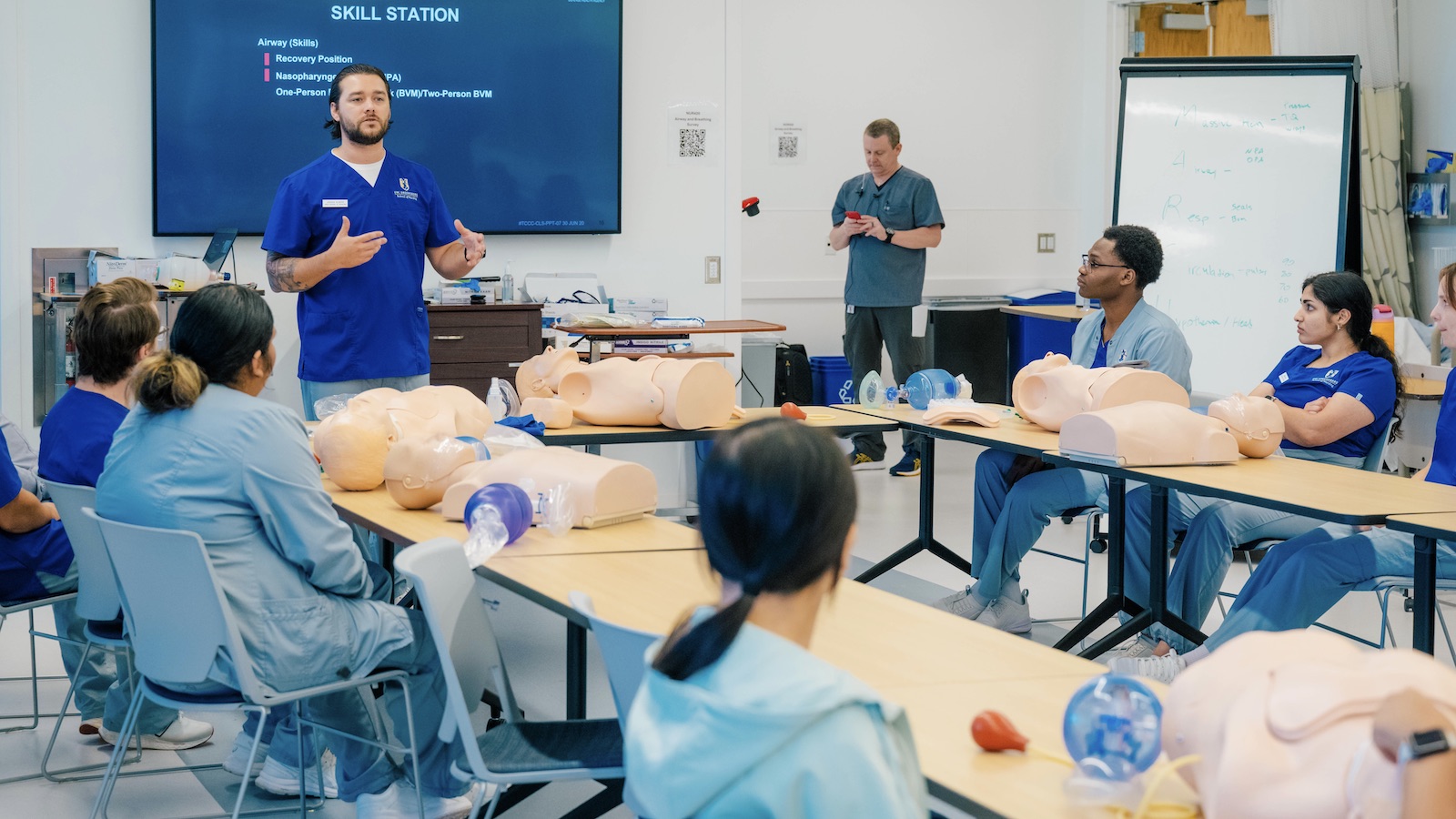
UNCG School of Nursing students learning in the classroom with AI stimulation and powerpoint presentations.
Be on the Cutting Edge of AI Integration.

Latest News

April 1, 2026

UNCG Graduate Students Compete to Quickly (and Clearly) Present Research

Three minutes and one PowerPoint slide or one posterboard to explain years of research. It's all about making a long-term impact on ...

March 31, 2026

Science Everywhere Festival creates fun for all ages on UNCG Campus

Experience science like never before — talk to robots, witness honeybees in action, dive into colorful chemistry, and explore the ...

March 26, 2026

Light the Way Campaign Concludes with More than $266M raised

Thanks to the generosity of donors, the campaign exceeded its goal by 33 percent. Students are already feeling the impact, with more...

What's Trending

Connect with Us

Subscribe to our Top 5

Subscribe today to our Top 5 Weekly email

This field is for validation purposes and should be left unchanged.

Share Your Story

For the Media

Posted on March 18, 2026

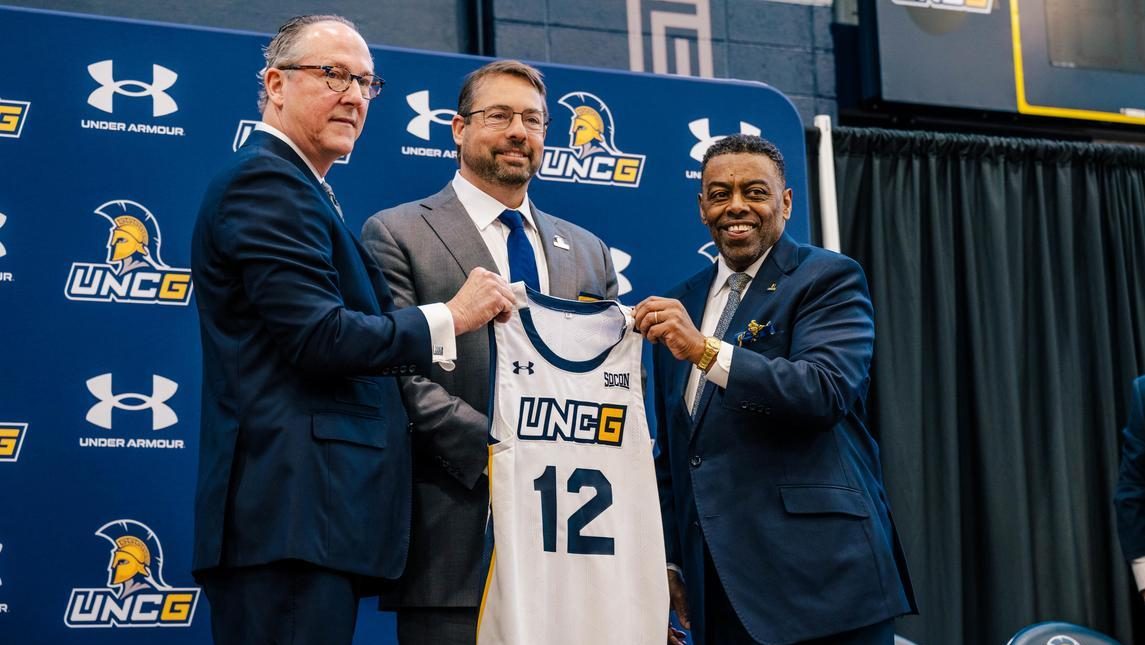
Coach Jerod Haase holding up a UNCG basketball jersey during the press conference.
UNCG announced Jerod Haase as its new Men's Basketball coach at a press conference at Bodford Arena on March 18th, 2026.

GREENSBORO, N.C. – UNC Greensboro (UNCG) today announced Jerod Haase as the new head coach for the men’s basketball program. He is the 12th head coach in UNCG men’s basketball history.  

Latest News

April 1, 2026

UNCG Graduate Students Compete to Quickly (and Clearly) Present Research

Three minutes and one PowerPoint slide or one posterboard to explain years of research. It's all about making a long-term impact on ...

March 31, 2026

Science Everywhere Festival creates fun for all ages on UNCG Campus

Experience science like never before — talk to robots, witness honeybees in action, dive into colorful chemistry, and explore the ...

March 26, 2026

Light the Way Campaign Concludes with More than $266M raised

Thanks to the generosity of donors, the campaign exceeded its goal by 33 percent. Students are already feeling the impact, with more...

What's Trending

Connect with Us

Subscribe to our Top 5

Subscribe today to our Top 5 Weekly email

This field is for validation purposes and should be left unchanged.

Share Your Story

For the Media