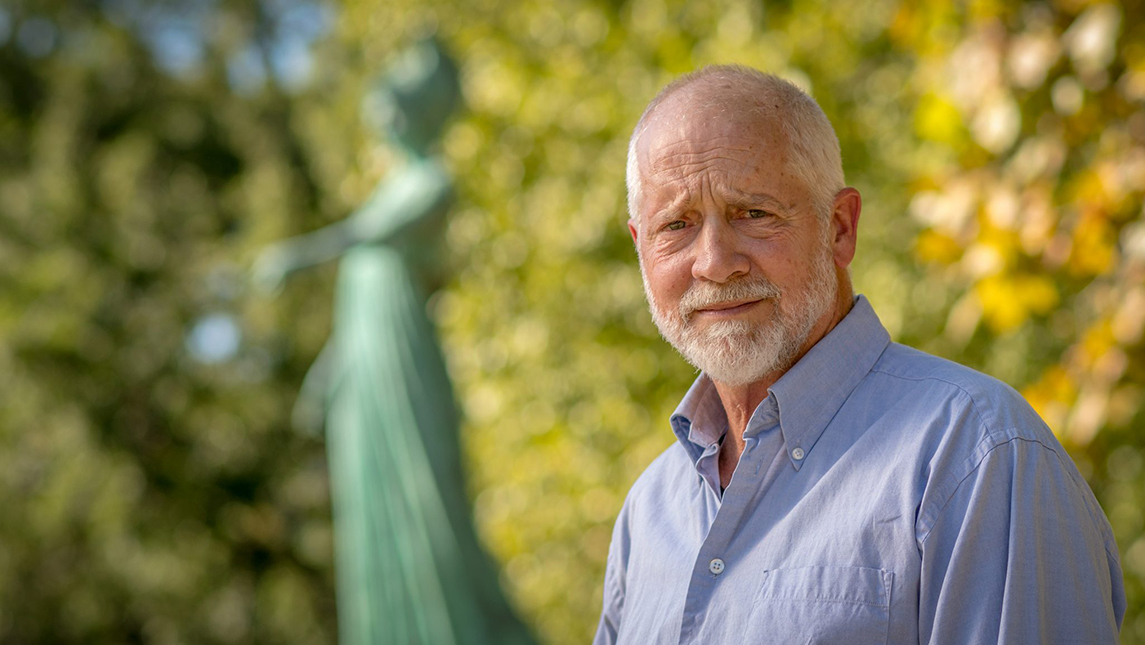
Some of Greensboro’s most iconic artwork — Nathanael Greene, the February One sit-in leaders, and UNCG’s own iconic Minerva — sprang from the mind of alum James Barnhill ’82 MFA. He’s also mentored thousands of students and displayed his sculptures across the nation. An exhibition of 30 works by Barnhill will open to the public on May 8 at Greensboro’s Continental Club Gallery.
Student Affairs Announces Next Associate Vice Chancellor for Student Affairs and Dean of Students
Posted on May 07, 2026
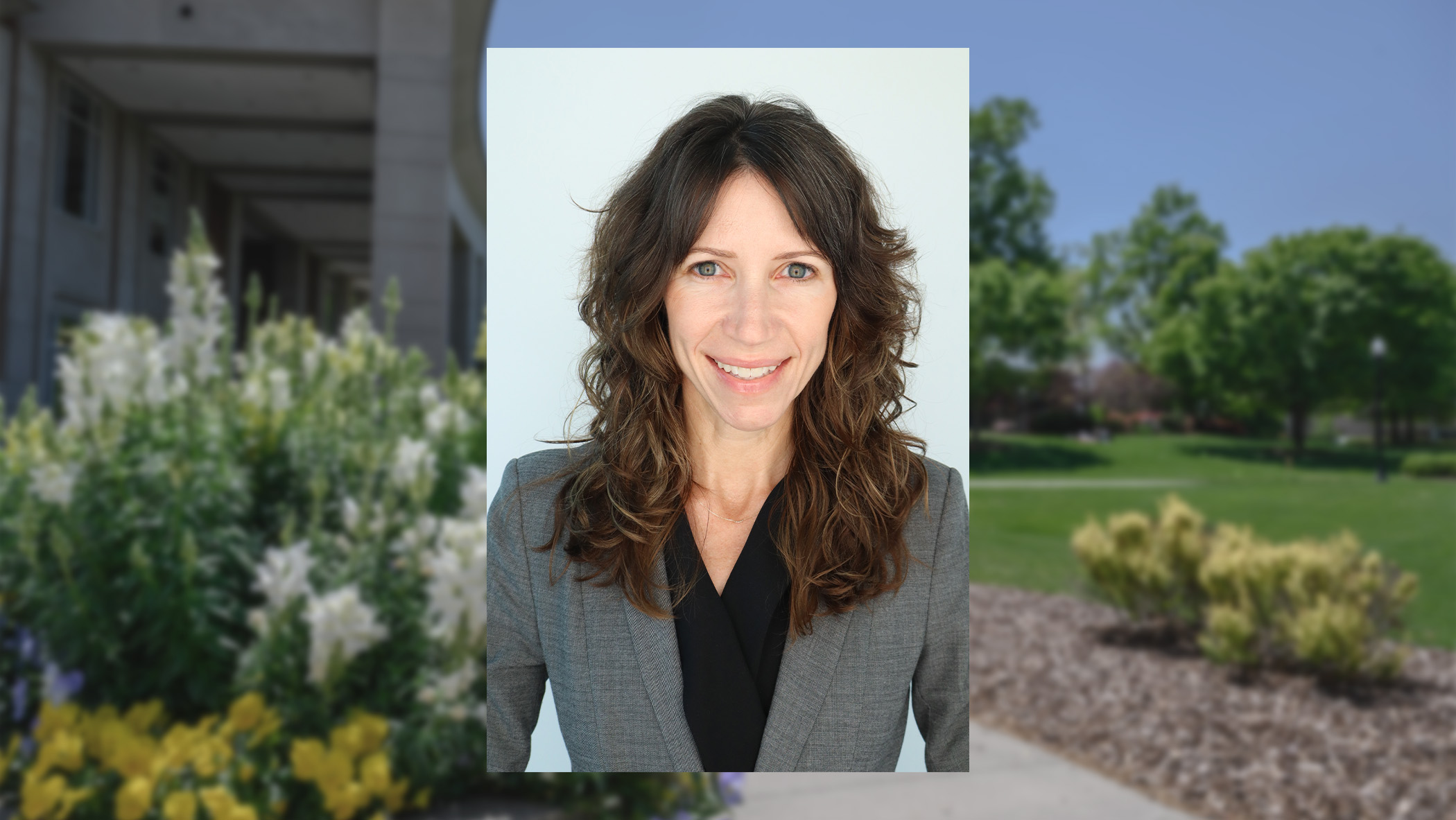
Following a comprehensive national search, UNC Greensboro has appointed Dr. Emily Gaspar as the next Associate Vice Chancellor for Student Affairs and Dean of Students, effective June 15, 2026.
Gaspar has significant experience in student affairs leadership, crisis management, behavioral assessment, and case management. She served in various administrative roles at Coastal Carolina University for the last nine years, including director of Accessibility and Disability Services and interim assistant vice president for Student Affairs. Prior to that, she served as Assistant Dean of Students at UNC-Chapel Hill. Her professional background also includes roles in the Dean of Students Office at the University of Arizona and in Housing at Colorado State University.
“We are pleased to welcome Dr. Emily Gaspar to UNC Greensboro and the Student Affairs team,” says Vice Chancellor for Student Affairs Cathy Akens. “She is a strategic, student-centered leader with deep experience and a commitment to advancing the well-being and success of all students. I am confident Dr. Gaspar will provide exceptional leadership as we continue to strengthen our work in well-being and cultivate the culture of care that is central to our mission.”
Gaspar earned her Ph.D. in education sciences with a specialization in higher education administration from Coastal Carolina University. She holds a master of science in student affairs in higher education from Colorado State University, and a bachelor of arts in communication from Arizona State University.
In Spring 2025, she received a Fulbright postdoctoral research award hosted by Deakin University in Australia. Her research explored the employment experiences of disability services practitioners who identify as disabled, and work at institutions of higher education in Australia.
UNCG thanks members of the search committee led by Chief of Police Chris Jasso for conducting a robust and successful search. Gaspar will succeed Dr. Brett Carter, who is retiring after 30 years of distinguished service to UNCG.
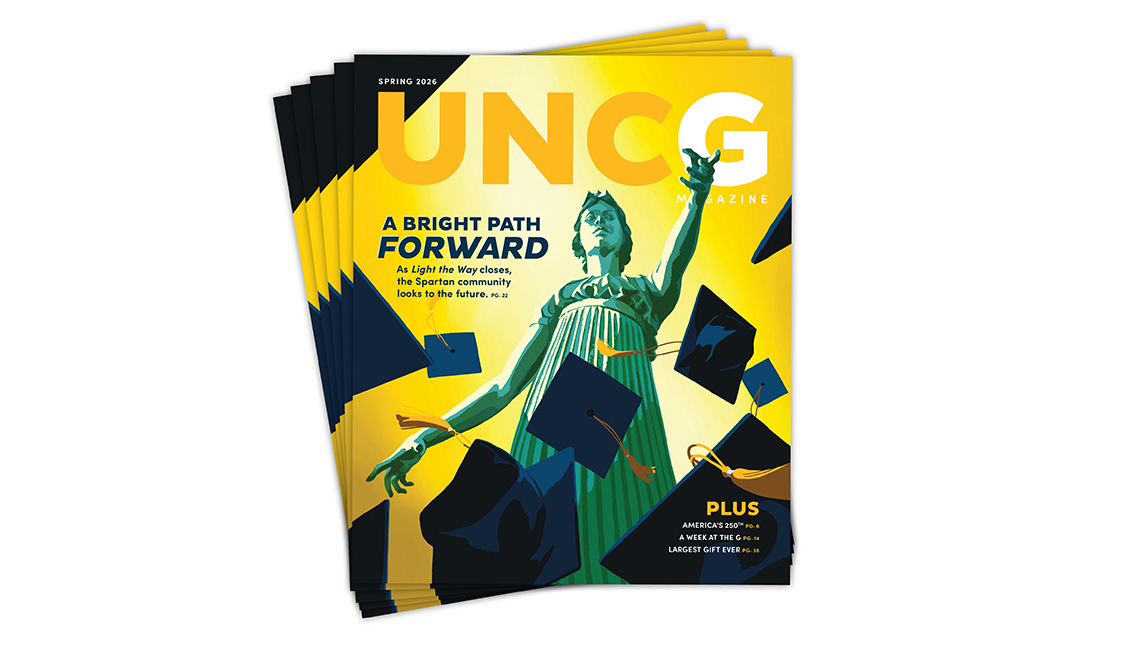
The spring UNCG Magazine is now available, featuring stories of real-world impact thanks to the Light the Way campaign, the most successful in UNCG history.
In addition to that Light the Way feature, “A Bright Path Forward,” this issue includes:
Largest Gift in UNCG History Invests in Generations of Educators
Posted on May 07, 2026
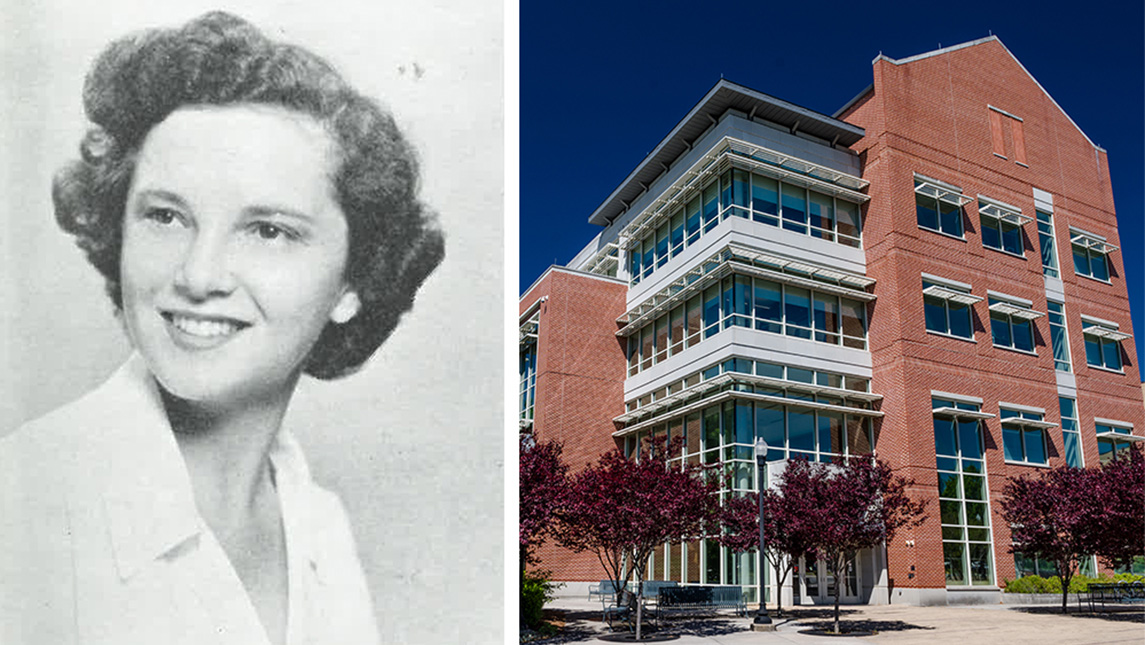
Harriet Shain Evenson ’53 built her legacy around a simple charge: make more teachers. Her lifelong commitment to public education — shared with her husband, Jerome — culminated in the largest gift in UNCG history, which will transform the School of Education beyond her expectations.
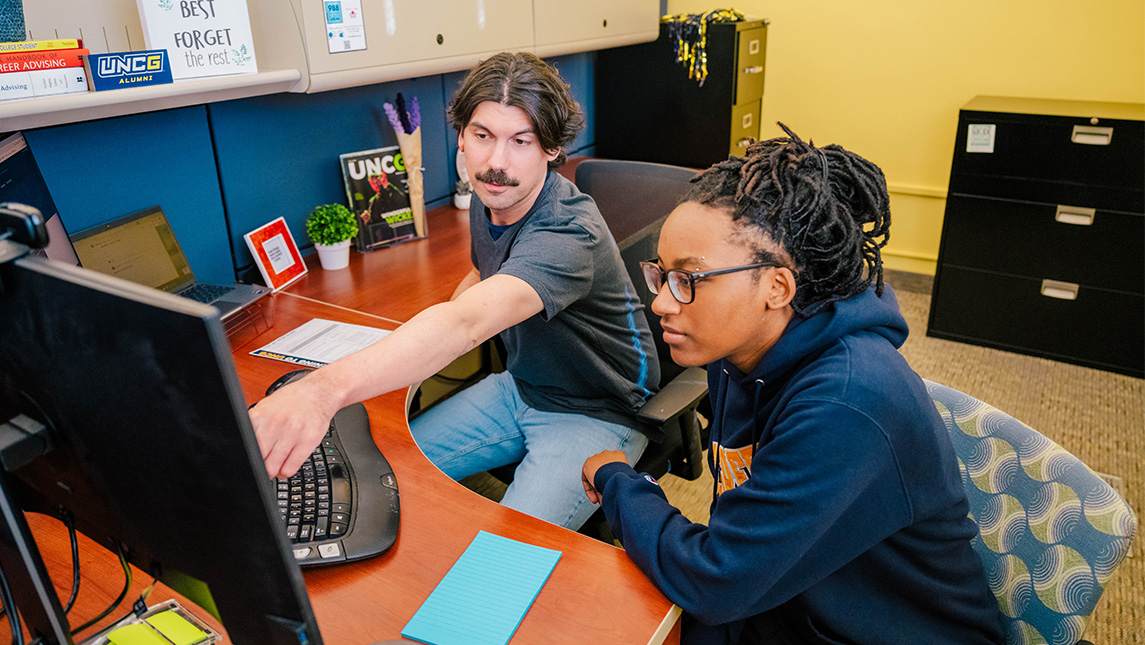
UNCG’s advising model reflects a collaborative, campus-wide commitment to student success. Professional advisors in school and college advising centers partner with faculty advisors in academic departments to provide students with both broad guidance and discipline-specific mentorship. Together, these advisors help students navigate important academic decisions while building confidence and clarity about their goals.
Academic advisors at UNCG do far more than assist with course registration. They serve as guides, coaches, and advocates, helping students connect their academic experiences to their personal and professional aspirations. Through ongoing conversations and proactive outreach, advisors play a critical role in helping students persist and thrive.
This work is reflected in the University’s continued progress in student success outcomes. In recent years, UNCG has seen positive momentum in retention and enrollment — trends supported, in part, by the strength of its advising network and the meaningful relationships advisors build with students.
“Advising is at the heart of student success at UNCG,” says Dr. Regina McCoy, Vice Provost for Student Success. “Our advisors are deeply committed to meeting students where they are. Each and every day, they are providing the guidance, encouragement, and support students need to navigate their academic journey and achieve their goals.”
UNCG also recognizes excellence in advising through annual awards that honor both faculty and professional advisors who go above and beyond in their work with students. These recognitions reflect their dedication and impact across the institution and underscore the important role they play in the student experience.
As UNCG celebrates Global Advising Week, Student Success extends its sincere appreciation to the advising community. Through their daily work, they not only support individual students but also strengthen the academic experience and success of the broader Spartan community.
UNCG Groups Invited to Table at Games in Education Summit
Posted on May 01, 2026
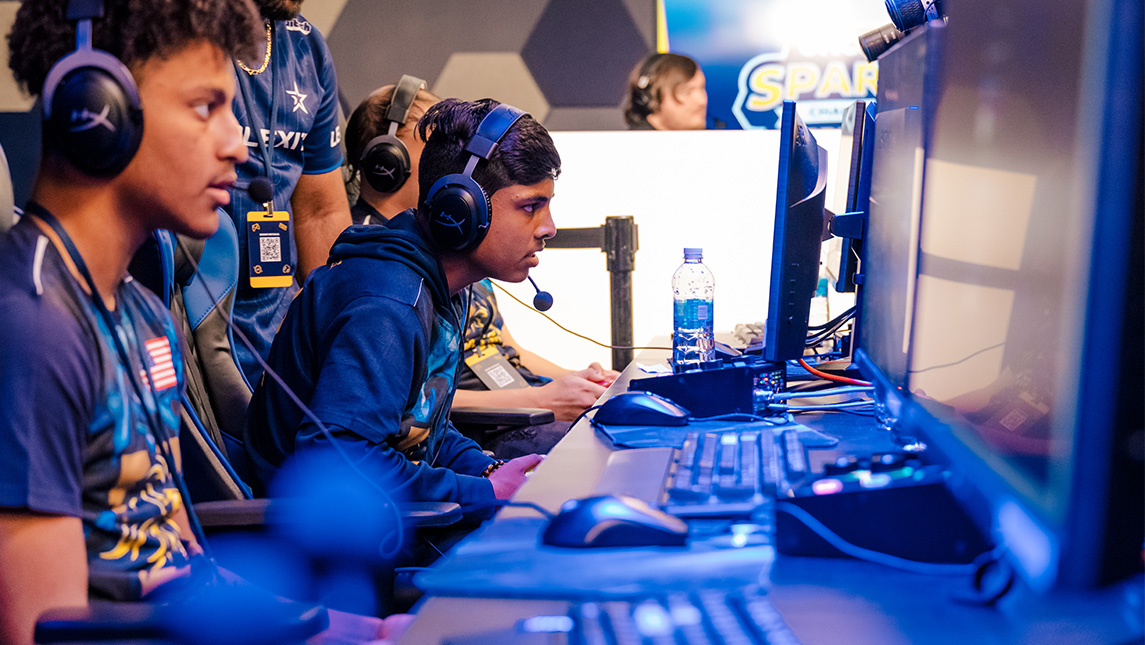
The UNCG Scholastic Esports Alliance is looking for groups to table at the upcoming North Carolina Games in Education Summit (NCGIES).
This gaming and STEM education conference provides students and educators with game development workshops to develop valuable technical skills. It will be held at Moran Commons on May 16-17.
Exhibitors will receive a table and two chairs. The tabling times each day will be from 11 a.m.-1 p.m. This is a great opportunity for any departments or groups wanting to advertise to educators.
This year’s summit also serves as the official launch of North Carolina’s new Gameplan Unreal Engine 3D Fundamentals Certification, giving districts and educators a clear entry point into the expectations, resources, and opportunities tied to the NC middle and high school computer science requirement. By connecting the requirement with game design, digital creativity, and hands-on technical learning, NCGIES helps schools see how video games and video game technology can be integrated meaningfully into the student experience.
Anyone interested in tabling can email Sophie Priest at sepriest@uncg.edu.
UNCG Heralds Retiring Faculty With 500+ Combined Years of Service
Posted on April 27, 2026
The UNCG Association of Retired Faculty recognizes, honors, and thanks the 2025-26 retiring faculty for all their years of dedication in providing outstanding instruction to students, conducting excellent research, and serving on various University committees.
Together, these 22 faculties have amassed 590 years of teaching and service to UNCG, making invaluable contributions to the overall quality of this institution.
10–19 years
Michael Crumpton, 19 years, Dean of University Libraries Greg Daniels, 11 years, Department of Kinesiology Kristine Lundgren, 19 years, Department of Communication Sciences and Disorders Michael Perko, 18 years, Department of Public Health Education Pamela Rowsey, 10 years, School of Nursing
20-29 years
Amy Lynn Adamson, 26 years, Department of Biology and Associate Dean for Research Beverly Faircloth, 26 years, Department of Teacher Education and Higher Education Nancy J. Hodges, 28 years, Department of Consumer, Apparel, and Retail Studies Venkataraman Iyer, 27 years, Department of Accounting and Finance Jennifer Keith, 28 years, Department of English Hamid Nemati, 29 years, Department of Information Systems and Supply Chain Management Harper Roehm, 27 years, Department of Marketing, Entrepreneurship, Hospitality, and Tourism Jonathan Zarecki, 20 years, Department of Ancient Mediterranean Studies and Archaeology
30-39 years
Timothy Bucknall, 32 years, University Libraries Brett Carter, 31 years, Associate Vice Chancellor and Dean of Students Alice Haddy, 32 years, Department of Chemistry Edward Hellen, 32 years, Department of Physics and Astronomy Promod Pratap, 32 years, Department of Physics and Astronomy Paige Hall Smith, 31 years, Department of Public Health Education Lisa Tolbert, 32 years, Department of History David Wharton, 37 years, Department of Ancient Mediterranean Studies and Archaeology
40-49 years
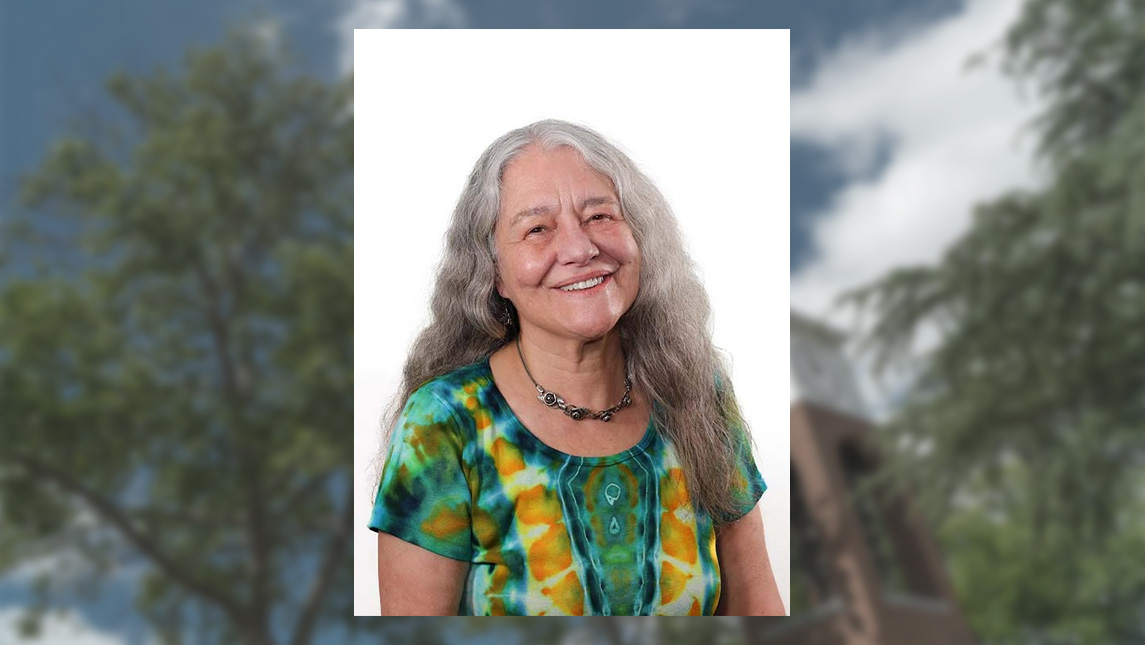
Rebecca Adams, 43 years, Department of Sociology and Gerontology
UNCG Celebrates Undergraduate Researchers and Their Mentors
Posted on April 14, 2026
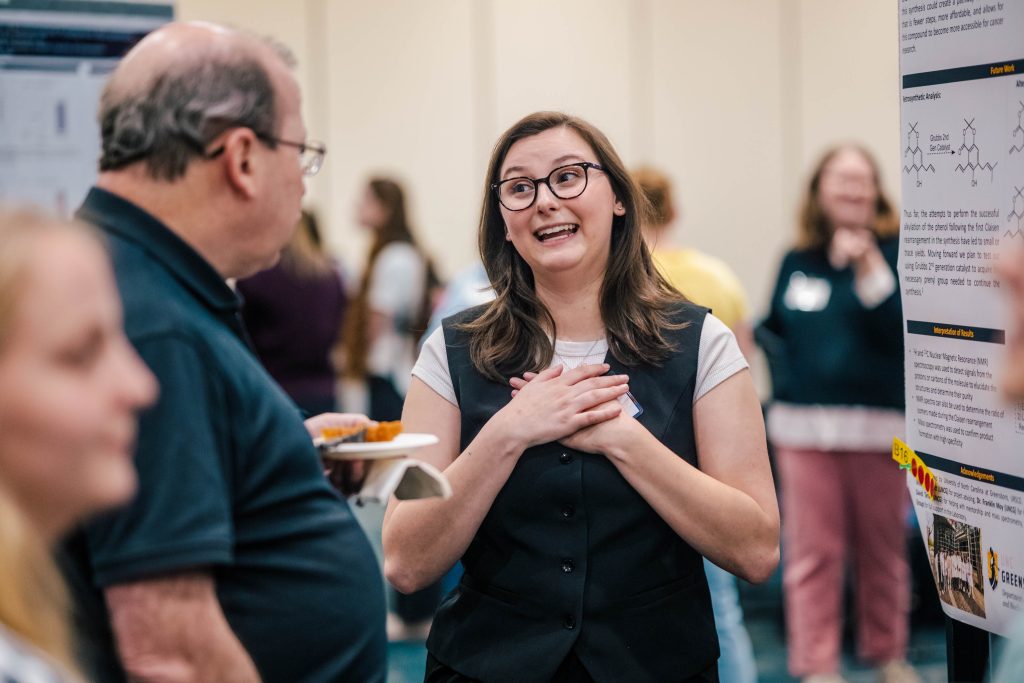
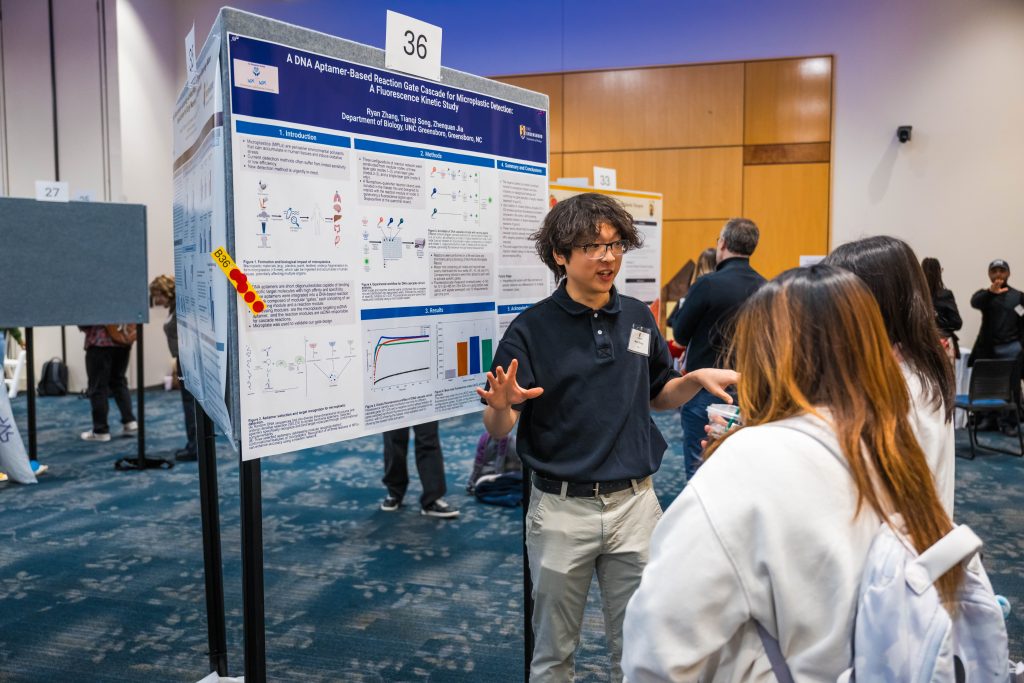
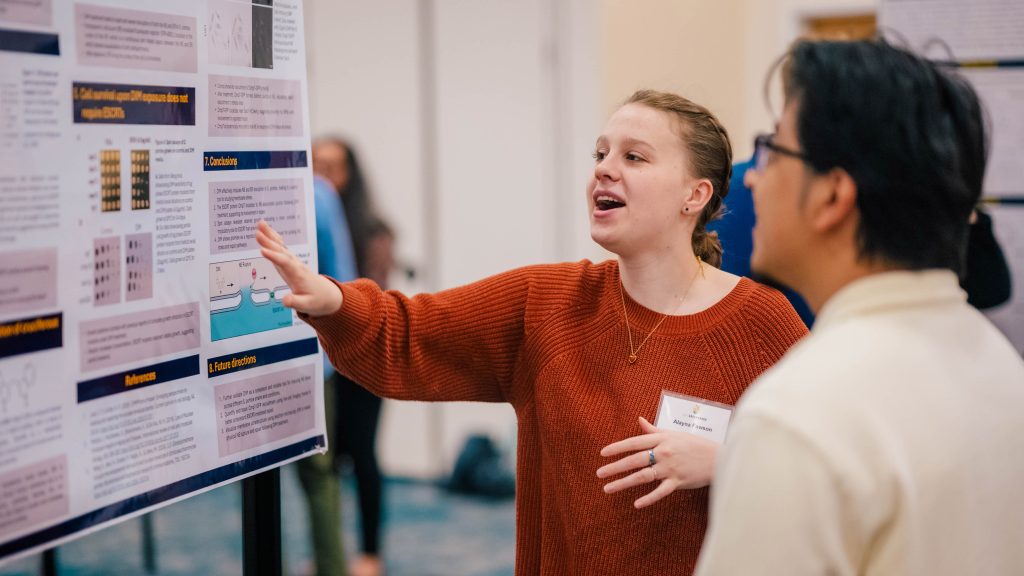
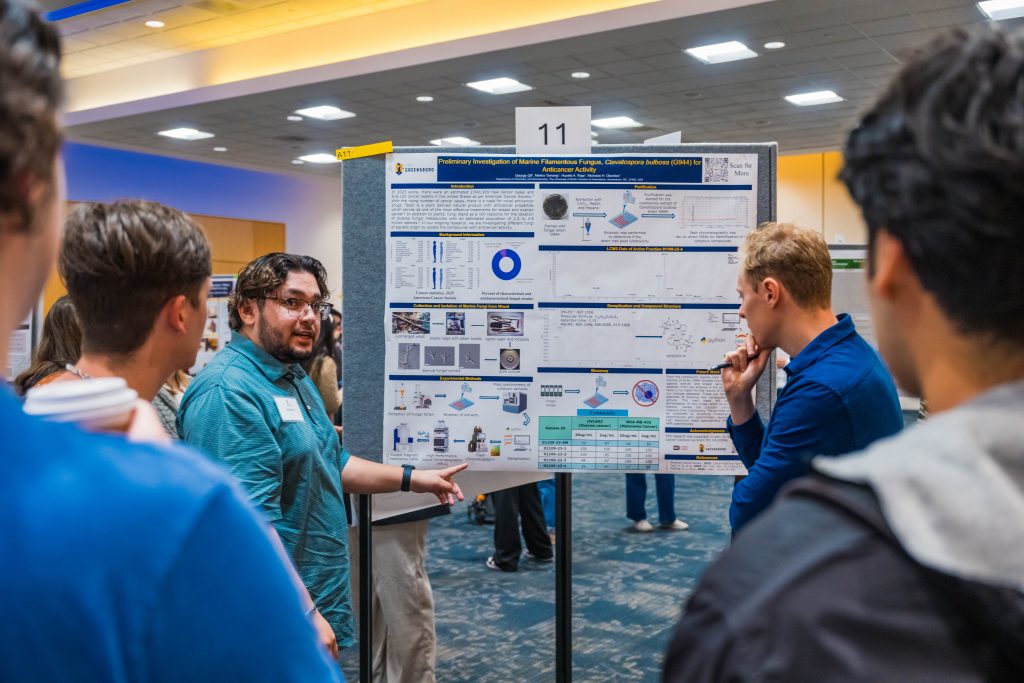
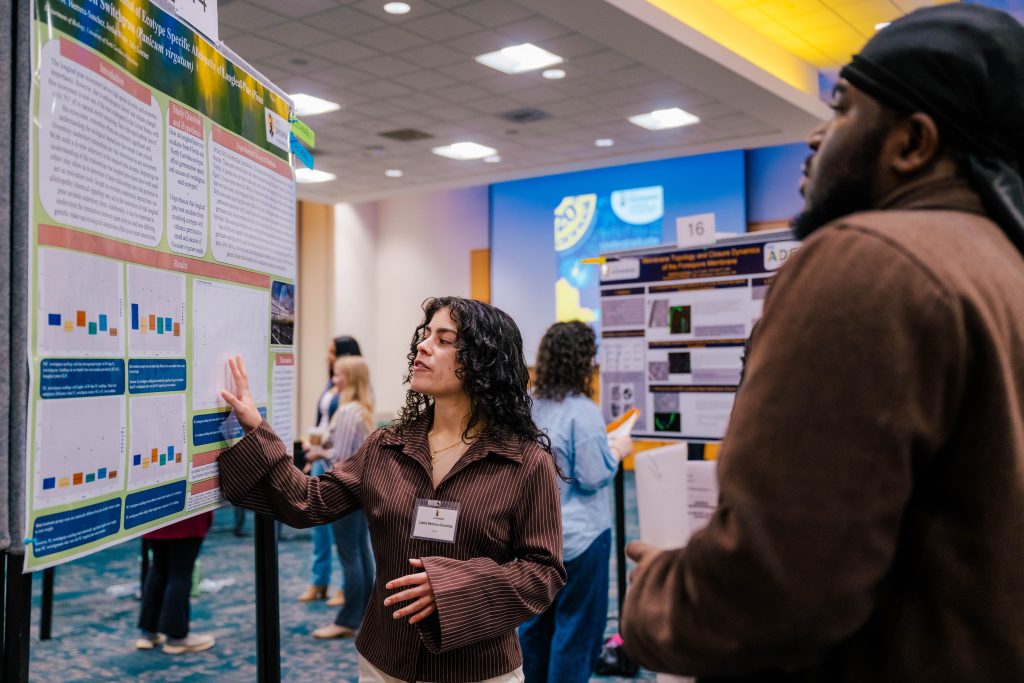
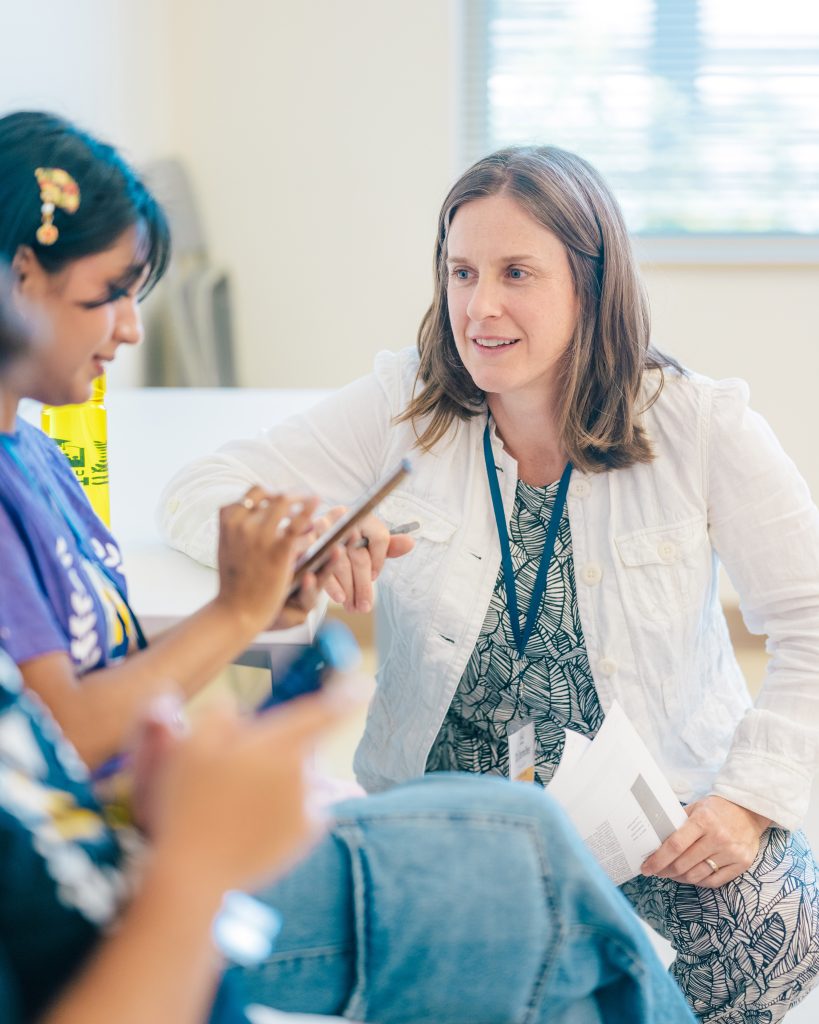
On April 7, 2026, students across campus gathered in Cone Ballroom for the Thomas Undergraduate Research and Creativity Expo. At this annual event, students engaged in faculty-mentored research, scholarship, and creative activity share the results of their projects, celebrate their accomplishments, and compete for prizes in seven categories.
The event also recognizes the faculty whose guidance makes the expo possible, honoring recipients of the 2026 Undergraduate Research Mentor Awards.
Visual Arts Exhibition Cole Smith, Senior (Media Studies) Faculty Mentor: Paula Damasceno (Media Studies) Community Hub: Entrepreneurship and Black Los Angeles
Mathematics, Life, and Physical Sciences Janae Wofford, Senior (Biochemistry) Faculty Mentor: Nadja Cech (Chemistry and Biochemistry) Addressing the Global Antibiotic Resistance Crisis: Isolation and Characterization of Antibacterial Metabolites from Fagus grandifolia
Humanities Sheza Khurram, Senior (Archaeology) Faculty Mentor: Geoffrey Hughes (Anthropology) The Write Way: Re-Evaluating Writing Systems on Palm Leaves
Business, Economics, Education, Behavioral and Social Sciences Ellie Acree, Senior (Political Science) and Ramon Almeida, Senior (Political Science) Faculty Mentor: Michael Broache (Political Science) Cold War Alignments and Constitutional Design in Post-Independence African State Formation: Liberia, Angola, Tanzania
Performing Arts Ainsley Goodyear, Junior (Drama) and Caleb Van-Doornewaard, Junior (Drama) Faculty Mentor: Mya Brown (Theater)
Mentor award, Tenured category
Dr. Jennifer Toller Erausquin, associate professor in the Department of Public Health Education, has been selected as the 2026 recipient of the Thomas Undergraduate Research Mentor Award in the tenured faculty category.
An epidemiologist whose work centers on HIV prevention, sexual and reproductive health, and health disparities among marginalized populations, Erausquin is known for the rigor of her research and the depth of her mentoring relationships.
Visual Arts Exhibition Shayla Scales, Senior (Art) Faculty Mentor: Jennifer Meanley (Art) A Southern Love Letter
Mathematics, Life, and Physical Sciences Sydney Jones, Senior (Biochemistry) Faculty Mentor: Mitchell Croatt (Chemistry & Biochemistry) Towards the Total Synthesis of the Novel Antifungal Natural Product Jesterone
Humanities Alex Parsons, Senior (Nursing) Faculty Mentors: Tiffany Gibson (Nursing) and Sarah Apel (Nursing) Minerva Mobile Health Unit (MMHU): Sustainable Mobile Health Care Delivery
Business, Economics, Education, Behavioral and Social Sciences (tie) Kennedy Strong, Post-Baccalaureate (Human Health Sciences) Faculty Mentors: Andrea Lewis (Public Health Education) and Jeannette Wade (Public Health Education) Created for Us, by Us: The Construction of Sexual Health Education [SHE Rises] Intervention for Sexual Violence among Black Women
&
Nikolai Tassin, Senior (Psychology) Faculty Mentor: Kari Eddington (Psychology) Testing the Impact of a Self-Regulation-Based Micro Intervention on Depression and Subjective Well-Being
Mentor award, Tenure-Track category
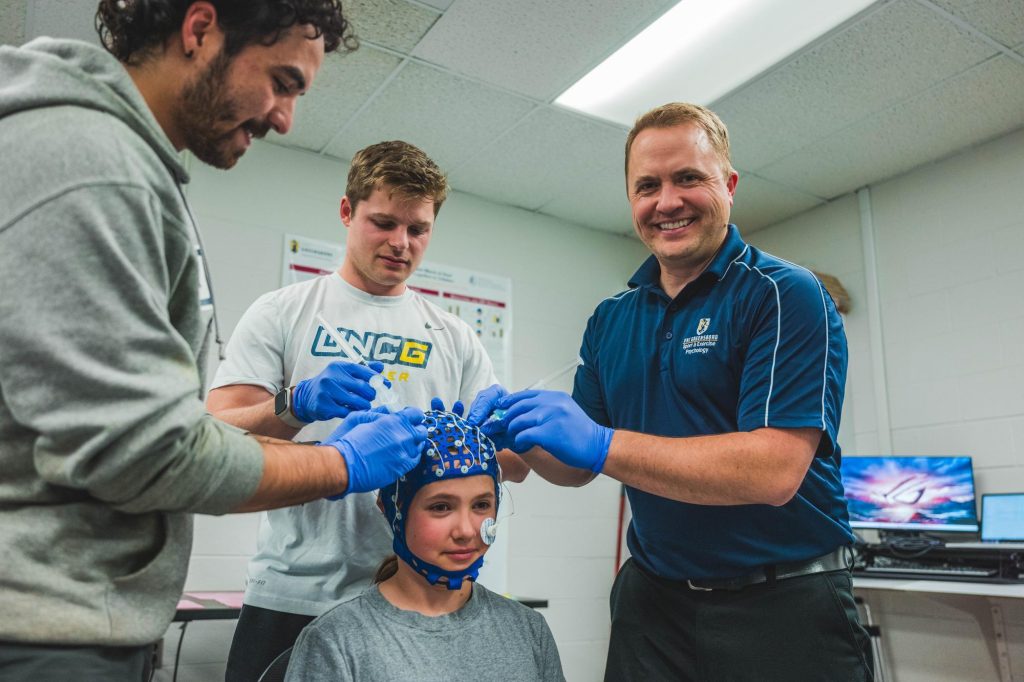
Dr. Eric Drollette, assistant professor in the Department of Kinesiology, has been selected as the 2026 recipient of the Thomas Undergraduate Research Mentor Award in the tenure-track faculty category.
Drollette’s Exercise and Neurocognitive Health Laboratory uses neuroimaging to explore the relationship between physical activity behaviors and cognition and brain function in children and young adults.
Visual Arts Exhibition Summer Null, Senior (Interior Architecture) Faculty Mentor: Asha Kutty (Interior Architecture) The Hour of Bloom Birth Center
Mathematics, Life, and Physical Sciences Keesha Jazzlyn Go, Junior (Computer Science) Faculty Mentor: Sarah McClymont (Biology) Computational Prioritization of Schizophrenia Risk Variants via Integration of GWAS and Open Chromatin Annotations
Humanities (tie) Victoria Charles, Senior (Liberal & Interdisciplinary Studies) Faculty Mentor: Robyn Le Blanc (Classical Studies) How It’s Made: The Craftsmanship and Daily Use of the Etruscan Bronze Mirror
&
Lila Thomas, Junior (Arts Administration) Faculty Mentor: Marian Taylor-Brown (Art) The Value of The Nutcracker: An Exploration of the Value That the Asheville Ballet’s Nutcracker Creates & Captures
Business, Economics, Education, Behavioral and Social Sciences Daijah Elliott, Senior (Public Health Education) Faculty Mentor: Andrea Lewis (Public Health Education) The Burden of Being the ‘Only One’: Hyper-Visibility and Invisibility in the Career Trajectories of Black Women Physician Assistants with Doctoral Degrees
Mentor award, Professional-Track category
Dr. Jessica Caporaso in the Department of Psychology has been selected as the 2026 recipient of the Thomas Undergraduate Research Mentor Award in the professional track faculty category.
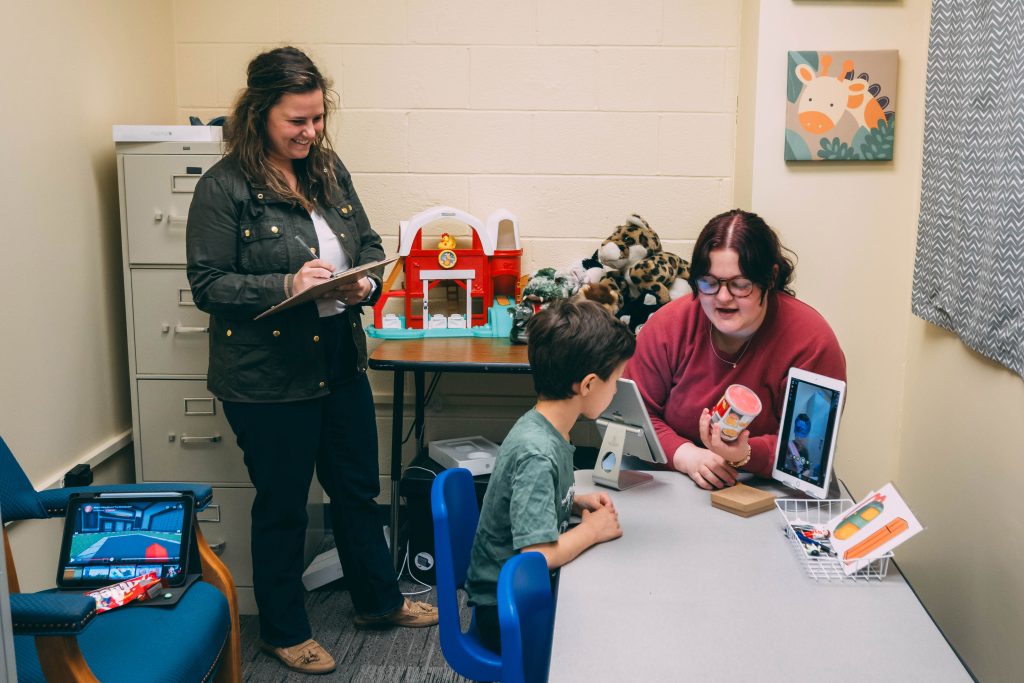
Caporaso, who is an academic professional assistant professor, serves as co-primary investigator of the Development and Understanding of Children’s Knowledge Lab in collaboration with Dr. Stuart Marcovitch and Dr. Janet Boseovski. She specializes in experimental research with young children, studying the development of children’s regulatory capacities and how it relates to peer conflict resolution, moral reasoning, and temperament.
UNCG is continuing its work to improve digital accessibility following a one-year extension to the ADA Title II compliance deadline announced by the U.S. Department of Justice. While the timeline has shifted, the University’s commitment remains the same.
Rewriting nightmares: Bringing evidence-based dreamwork to counseling
Posted on April 23, 2026
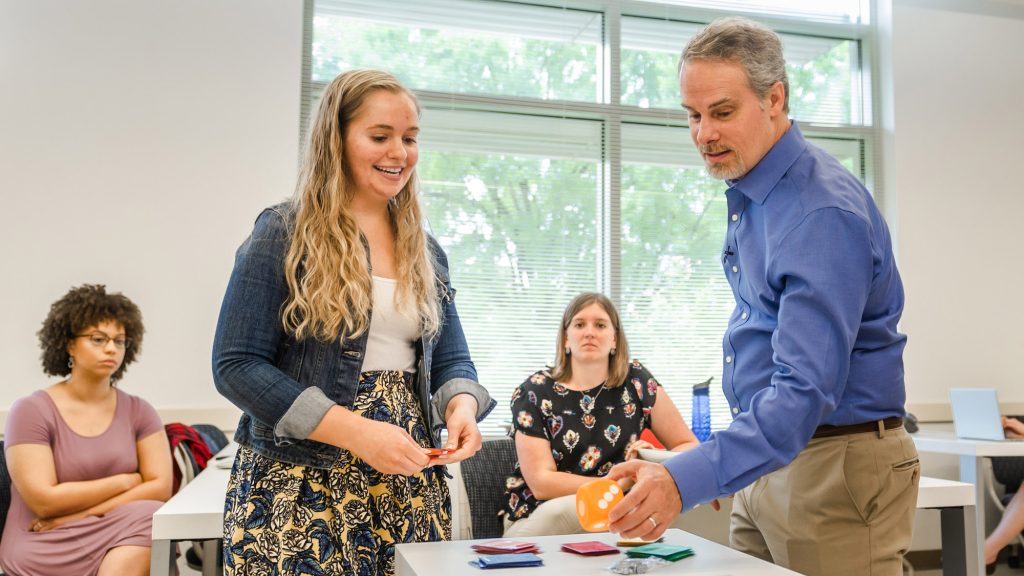
Young leads a counseling and educational development class.
For most people, dreams are fleeting — strange stories that fade with the morning alarm. For Dr. Scott Young, UNC Greensboro counseling and educational development professor, dreams can offer powerful insight into emotional well-being and clinical care.
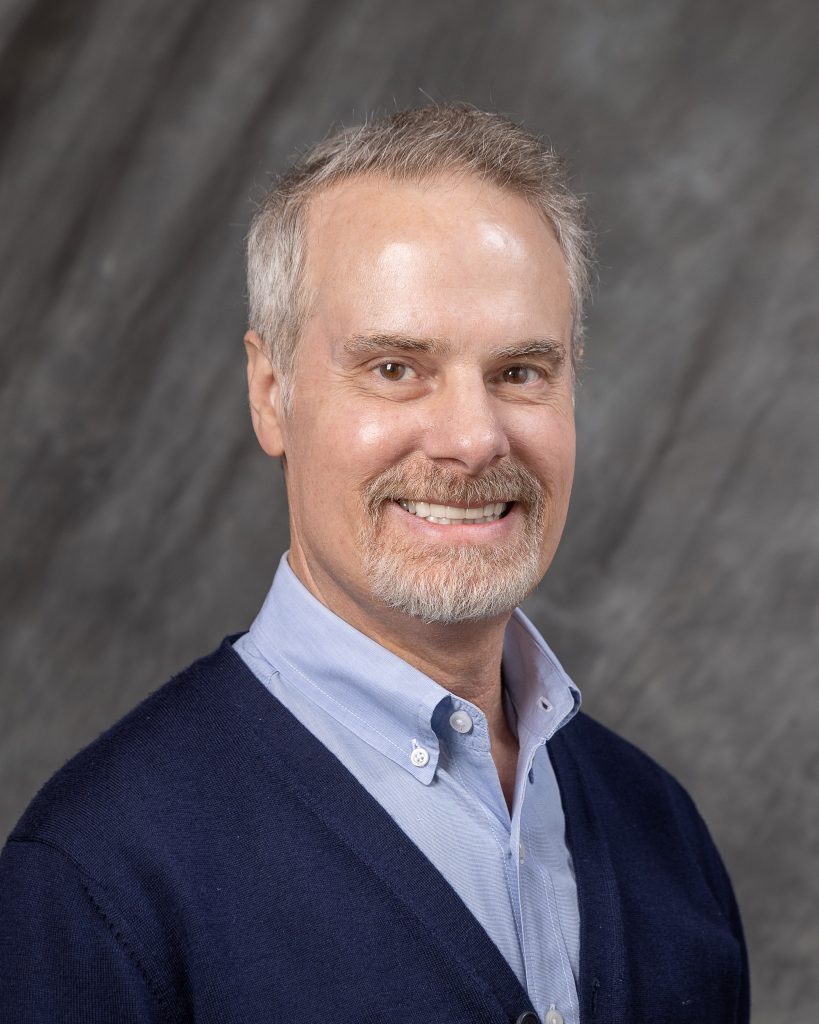
Dr. Scott Young, UNCG counseling and educational development professor, is working to bring dream research back into practical counseling.
Young and his former student Dr. Alwin Wagener are working to bring dream research back into practical counseling conversations. Their recent publication, “Nightmare Relief: Implementing Image Rehearsal Therapy in Counseling,” promotes a research-supported intervention to help clients reduce the frequency and severity of nightmares — including those related to trauma and post-traumatic stress disorder.
Image rehearsal therapy (IRT) is a behavior technique that invites clients to intentionally revise distressing dreams. Rather than remaining passive recipients of recurring nightmares, clients rescript troubling elements of the dream narrative and mentally rehearse the new version before going to sleep.
“People don’t think about dreams as something that can be shaped or modified, but they can be,” Young explains. “When people learn to do that, they often stop having the same repetitive nightmare.”
Citing research previously published in the field, the counselors say IRT not only reduces nightmare frequency but also decreases broader negative mental health symptoms associated with trauma. In their article, published in the Journal of Mental Health Counseling, Young and Wagener provide clear, step-by-step guidance, so counselors can confidently implement the technique in everyday practice.
Wagener, who graduated with his doctorate from UNCG in 2015, is Young’s former mentee and frequent collaborator and is now director of the Clinical Mental Health Counseling Program at Farleigh Dickinson University.
“One of the things Alwin and I have tried to do is keep up with the research that’s happening in different places and then communicate it in ways that are helpful to people sitting in front of clients trying to bring about change,” Young says.
“We’ve been arguing that you can empower the dreamer and let them take more of the lead on what’s important to them,” Young says.
Dream meaning, they emphasize, is deeply embedded in cultural, religious, and personal context. For example, some individuals may view dreams as neurologically random, while others interpret them through spiritual or cultural frameworks.
“The real question is what it means to them,” Young says. “If somebody grew up in a very religious context, the same imagery could be very comforting for one person and very distressing for another.”
Their model encourages counselors to begin by exploring clients’ own beliefs and associations before offering interpretations or interventions. Even structured techniques like IRT, they note, should be delivered with sensitivity to cultural frameworks and personal meaning-making.
A practical tool for everyday clinicians
Across both recent publications, Young and Wagener aim to demystify dreamwork.
They outline a streamlined process that counselors can use without specialized dream-analysis training. The collaborative approach guides therapists to:
Explore the dream narrative with the client
Identify emotionally significant moments
Notice key images and feelings
Invite the dreamer’s own meaning-making
Consider possible revisions or insights
They hope their work will help restore dreams as a meaningful tool in mental health care.
“Most people are curious about their dreams if they pay attention at all,” he says. “Often, they’ll say, ‘I don’t know what that was about, but it was really powerful.’”
Young is helping counselors respond to that curiosity, not with rigid interpretations, but with cultural awareness and practical strategies that support healing.
By Sierra Collins, Division of Research and Engagement Photography by University Communications