Jaila Lee’s Career Defined by Strength and Resilience
Posted on March 06, 2026
Senior guard Jaila Lee of UNCG’s women’s basketball team reflects on her journey through unexpected health concerns and personal challenges. Through it all, she pressed her way back to the court, helping her team secure a win during the 2025 SoCon Tournament.
CYFCP Celebrates 30 Years With Night with the Gargoyles
Posted on March 23, 2026
CYFCP's Early Childhood Specialist Amanda Flynt.
For 30 years, UNCG’s Center for Youth, Family, and Community Partnerships (CYFCP) has been serving the community. Its team will celebrate with a night of fun, family, networking, and hockey!
Join them on Saturday, April 11 at 7 p.m. to watch the Greensboro Gargoyle’s take on the Worcester Railers at First Horizon Coliseum.
If you purchase tickets using this link, $10 of your purchase will go directly to CYFCP and the communities we serve.
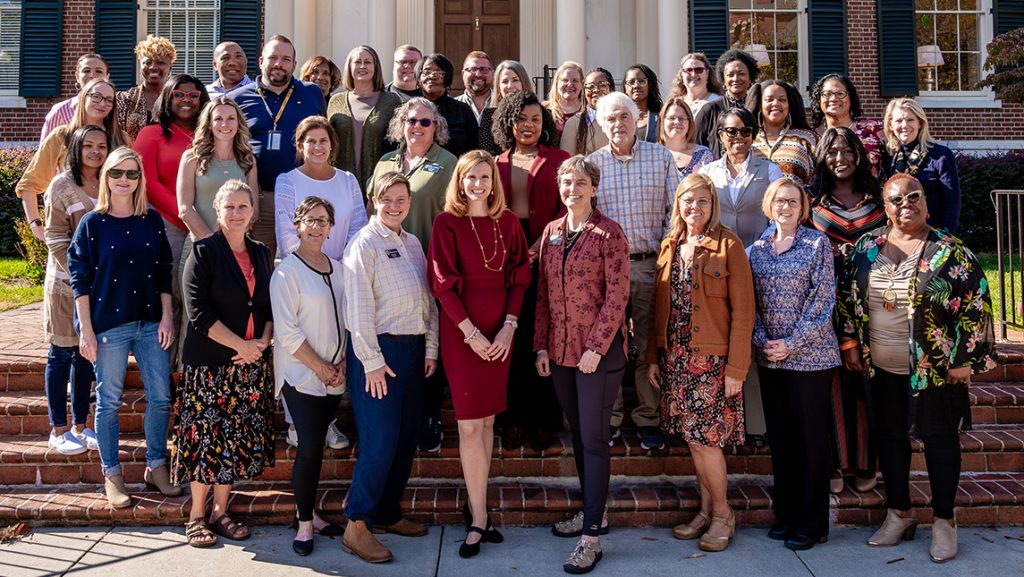
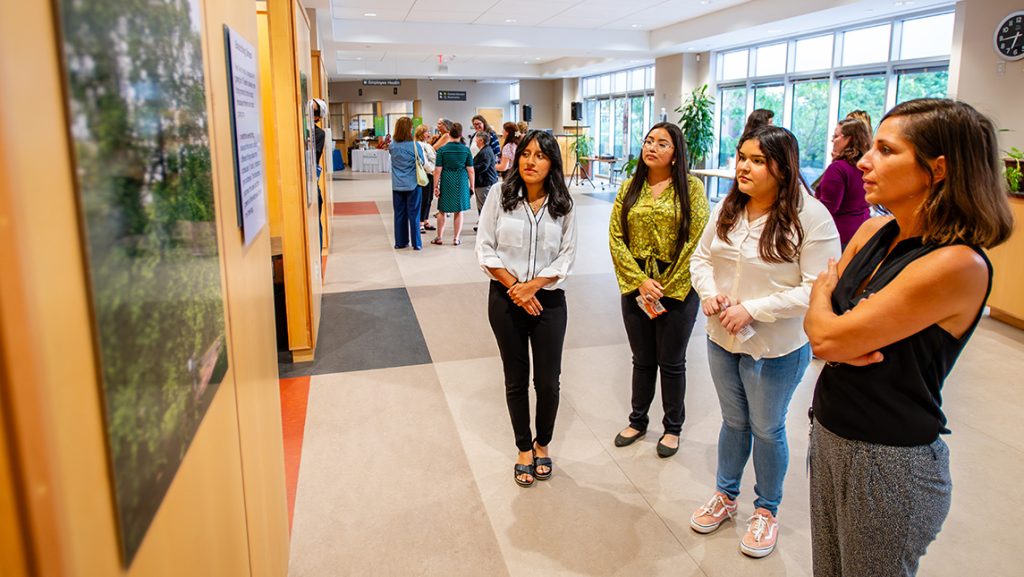
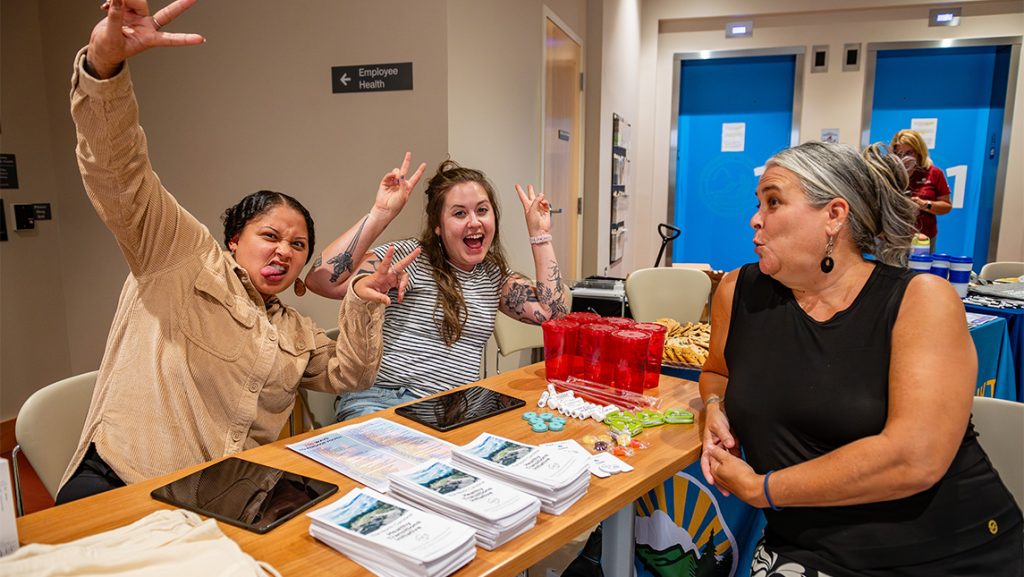
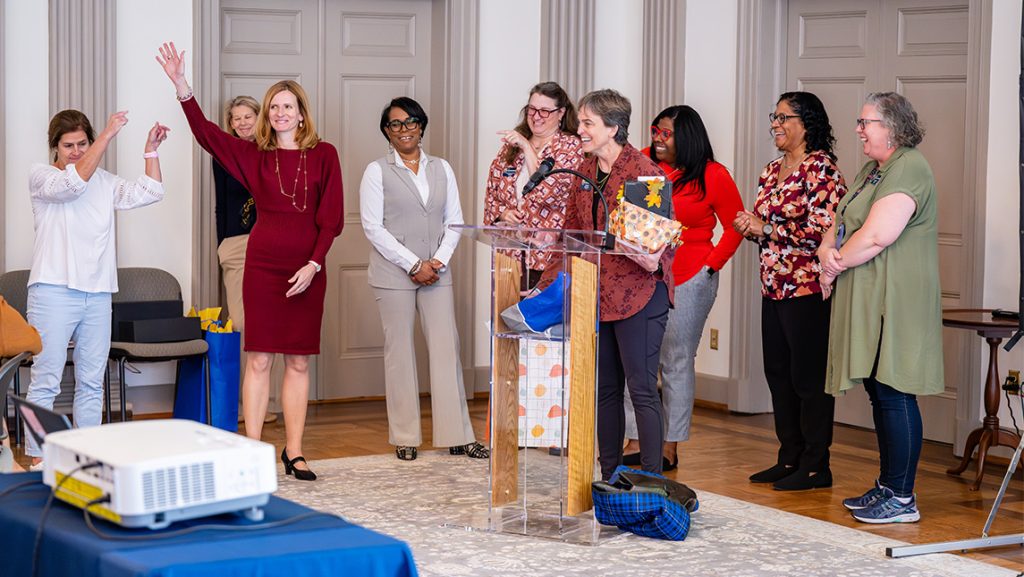
The Bringing Out the Best team.Center for Youth, Family, and Community Partnerships’ team photo.Health Transitions exhibit in Asheville.Fun times together during the “Health Transitions” exhibition.A luncheon celebrating CYFCP and outgoing director Christine Murray.
Inside the Winning Designs from Interior Architecture Students’ Awards Sweep
Posted on February 27, 2026
An old, unused building on a busy street can mean something different to each person who passes by. Where some might experience a burst of nostalgia, others might see a dilapidated relic from a fading point in time.
And thanks to that mindset, they also saw a clean sweep. Three proposals by IARc students to revitalize historic properties snagged every student category in the 2025 AIA Winston-Salem Design Awards.
Merit Award winner Maya Monteverde with interior architecture faculty, Dr. Asha Kutty and Matt Jones.
Aaron Solar ’25 had recently moved to Baltimore, Md., for a job with the Patrick Sutton design firm. After the awards ceremony on Dec. 4, a UNCG friend called with the news that his proposed redesign of Greensboro’s historic Fordham’s Drug Store won the Honors Award, the highest student category. He also shared the Citations Award won by a group that worked on another locale: the Douglas J. Galyon Train Depot.
“What really took these projects to the next level were the real-world implications,” says Solar. “It was cool to see my design fit into an existing space, to work with constraints I don’t always have when working on a hypothetical.”
Restaurant design mixes new and old flavors
Aaron Solar ’25
Old buildings pose unique challenges. Students must work around structural limitations while making the spaces suitable for new business needs. AP Assistant Professor Matt Jones, MFA challenged Solar’s class to turn Fordham’s, a century-old drugstore on South Elm Street, into a mixed-use project with apartments, retail, and a restaurant.
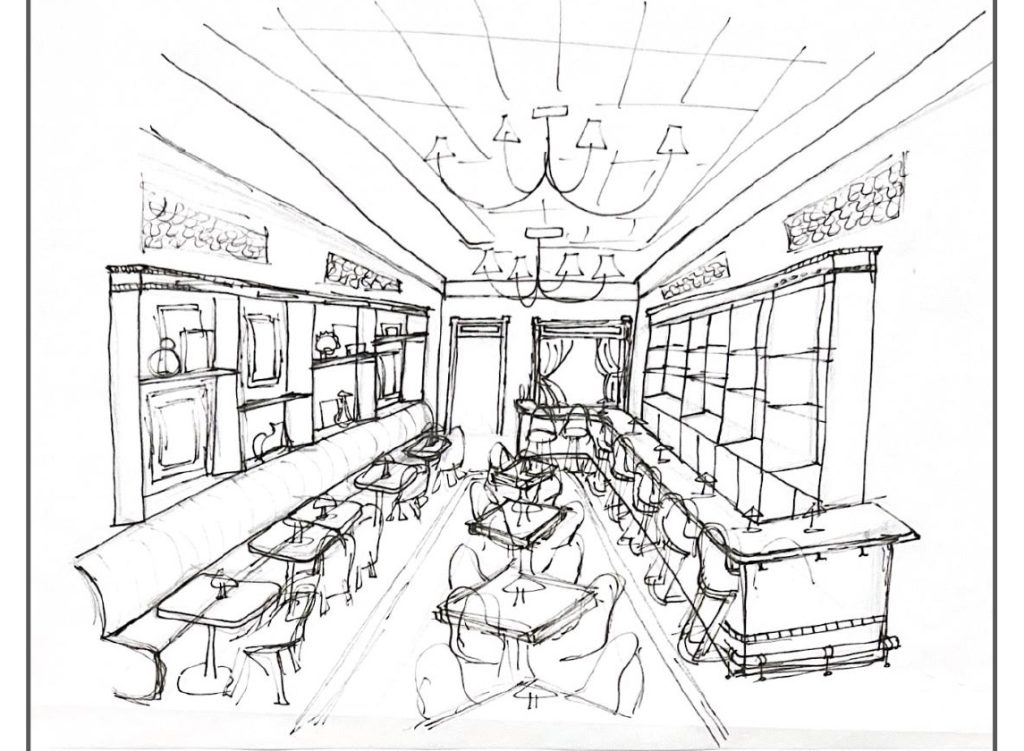
Solar came up with an English-themed restaurant for the ground floor, but he wanted the building to maintain its 19th century downtown character.
“It had these really old bookshelves along the walls, this beautiful mosaic tile floor, these tin ceilings that were sort of falling apart at this point,” he describes. “It’s amazing. When you walk in there, you get the feeling there are so many stories that you really want to keep alive.”
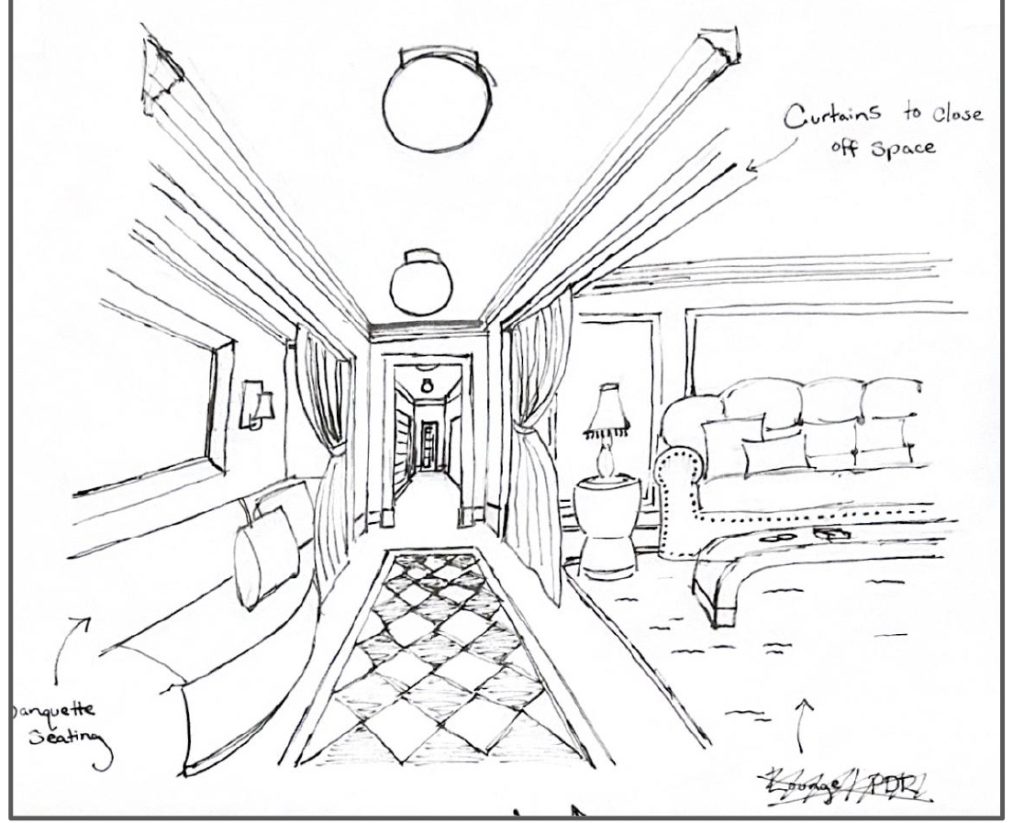
One limitation he learned to work around was Fordham’s narrow layout. Jones and Solar practiced with smaller projects called charettes to help him allocate space for seating and the kitchen. “I took heavy influence on old-world train cars,” Solar says. “The building is located very close to the train tracks, and so I wanted to bring in the details of what you might find in an old train car.”‘
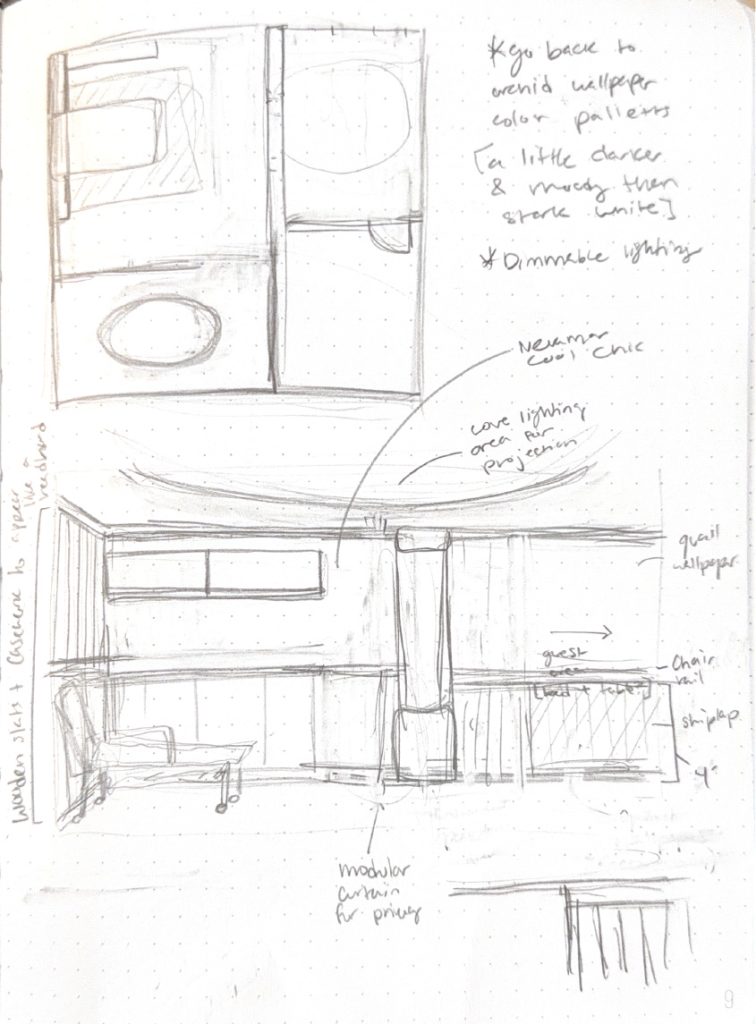
Solar’s sketches and renderings.
It came as no surprise to Jones that Solar’s design won, especially after seeing him present the project at an event for Creative Greensboro.
“That was a huge success,” Jones says. “They weren’t just presenting to their peers, but hundreds of people from the community were coming through, and we got a lot of great feedback.”
Style meets comfort in maternity-minded makeover
Maya Monteverde
Historic significance and emotional well-being inspired Maya Monteverde, who won the Merit Award for her Nia and Vida Birthing Center concept. She was tasked with designing a property of MAAME, Inc. in Durham’s Hayti District, a neighborhood deeply connected to its African American history.
Its health care purpose posed additional challenges. “The building is very small, and a lot of medical equipment is very large,” she explains.
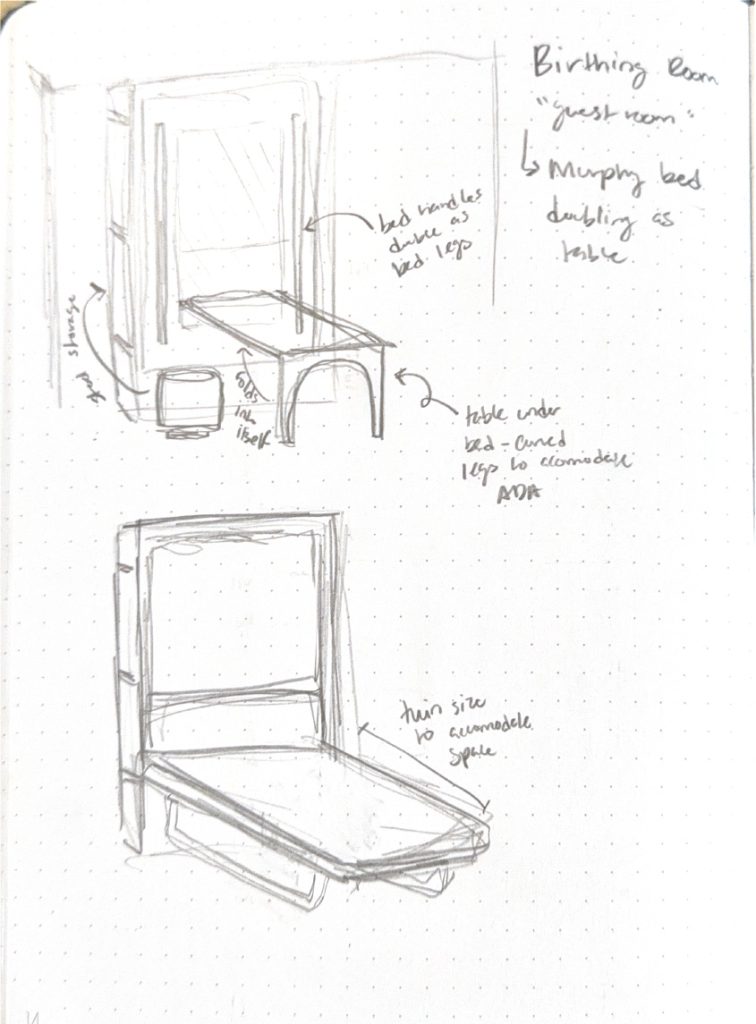
She designed built-ins to maximize floor space in the reception area and birthing units. She added birthing tubs and other relaxing spaces for families separate from the beds, while leaving room to maneuver a wheelchair or stretcher.
Monteverde also spoke with parents and doulas about what to avoid. Many people she surveyed described hospital interiors as feeling too cold and sterile.
“I drew a lot of material selections and colors from traditional African patterns, as well as earth tones,” says Monteverde. “I tried to use a lot of stone, wood, and glass to help open up its spaces. Soft color palettes, a lot of relaxing tones, so as not to overwhelm families.”
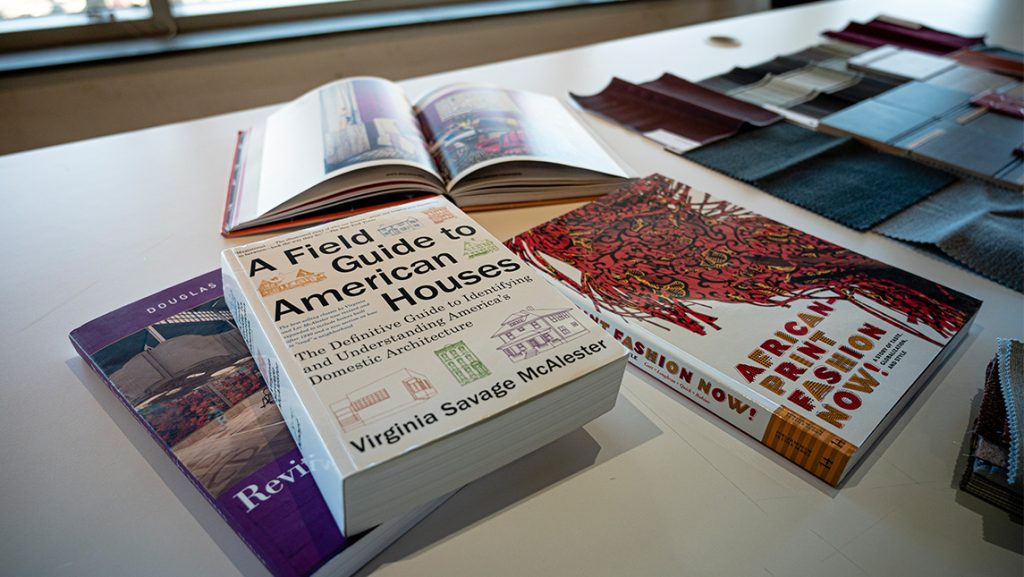
Monteverde’s sketches and renderings.
Monteverde enjoyed developing a design connected to one of the clients of her faculty mentor, Dr. Asha Kutty. “She’s probably one of the most involved professors I’ve ever had,” she says. “All the projects I’ve done in her studio involved real clients. We can talk to them face to face and figure out their needs.”
Kutty says Monteverde’s designs stood out because of how well she researched and prioritized mental health needs. “Working with real community sites fosters a sense of ethical responsibility, as students understand their designs represent real people and lived experiences,” says Kutty. “She demonstrated a strong understanding of how interior environments influence emotional safety, dignity, and agency during childbirth.”
Award-winning work with real-world application
The AIA awards sweep means a great deal to the IARc department, one of the few programs of its kind in North Carolina. Department Head Travis Hicks, who mentored the winning Gaylon Depot group project, says “Our department has a deep and rich history of community-engaged design, following principles and practices that connect our talented faculty and students with community partners in impactful, real-world projects. It’s encouraging to have professional architects and designers validate this engaged way of teaching and learning with AIA design awards.”
Monteverde, who graduates this May, says UNCG gave her the place to develop interests she’s had since childhood. “My mom studied art curation and pushed me to be creative,” she says. “Her influence made me realize how much deeper we can go into designing a space, and how it can bring people together, especially communal and public spaces.”
Jones says the work of Spartans made such an impact that it might create new opportunities for students outside North Carolina.
“The jurors for this were from northern Alabama,” he explains. “They told us that their chapter currently does not have student awards categories, but because of the quality of these, they want to start having student designs as part of their show. That’s a win-win for everyone.”
For the awardees, these accolades go beyond a wall plaque or a point for a résumé. Solar says his concepts became great practice for the work he takes on in his full-time career. “The Fordham project was a great precursor for jumping into the real world and working on high-level restaurant projects,” he says. “I see so many restaurants that are like this, that make you think, ‘How do I fit a restaurant in a 15,000 square foot, 100-year-old building?'”
Monteverde says older buildings are full of life, and it’s great to have projects about keeping them in use. “It’s a very powerful feeling, to stand somewhere that’s old, to think about how someone made this wall by hand, carved out details like on a door frame. I think it’s essential to keep that life in them while moving forward.”
Story by Janet Imrick, University Communications Photography by David Lee Row, University Communications Additional images courtesy of Aaron Solar, Patrick Sutton; and Maya Monteverde, Department of Interior Architecture
Create designs that honor history and build community.
Dr. Susan Keane, who came to UNCG in 1983, has advanced research that can help families identify behavioral problems early and treat them. Her Candace Bernard and Robert Glickman Distinguished Professorship also helps her students get ahead in their own cutting-edge research.
SparkNC, UNCG and GCS Launch partnership to prepare students for technology careers
Posted on February 18, 2026
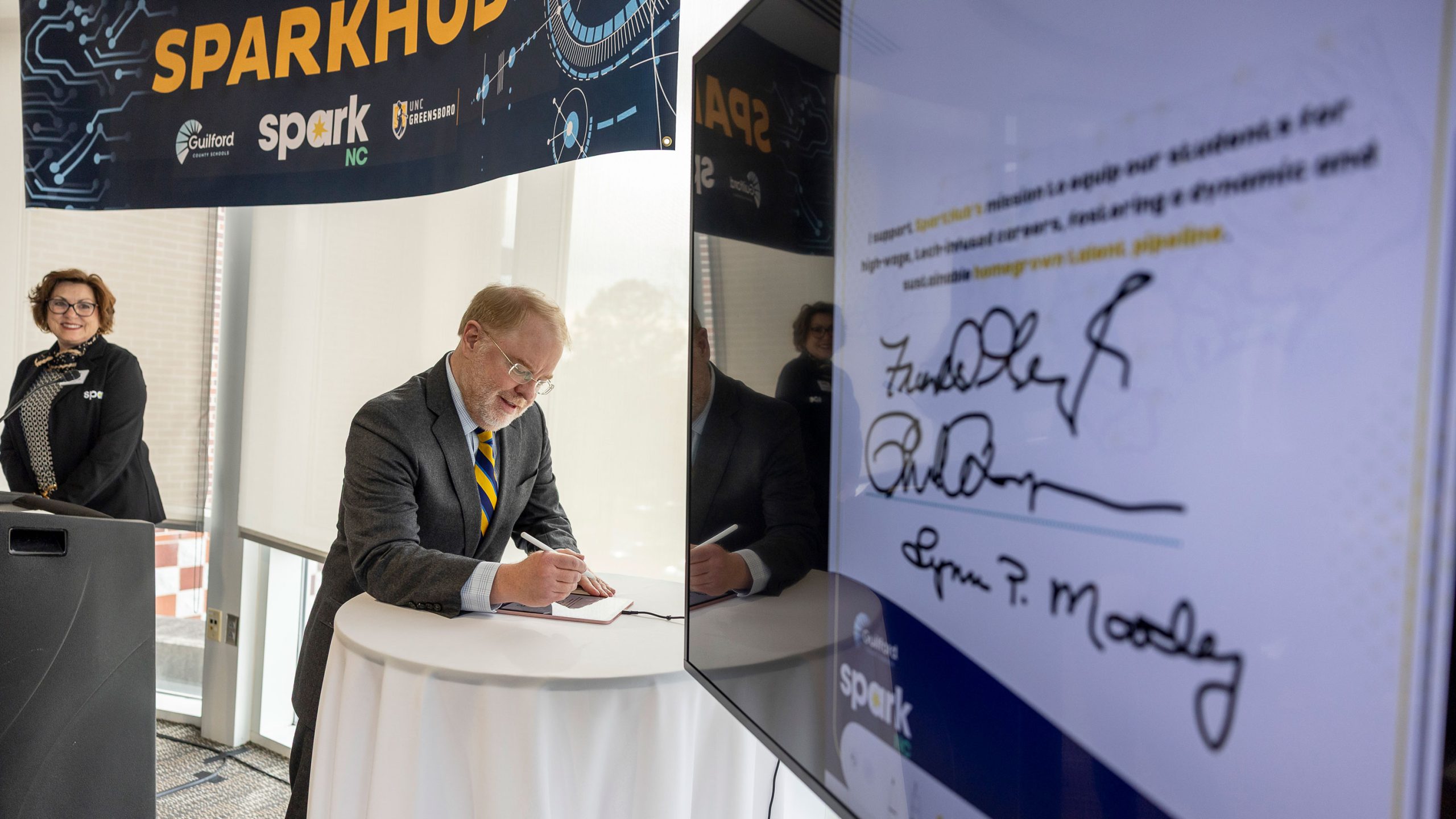
UNC System President Peter Hans signs the agreement launching NC's first SparkHub
New SparkHub at UNCG creates a first-of-its-kind bridge between K-12, higher education, and the global workforce
To bridge the gap between K-12 education, higher education, and the global workforce, SparkNC, UNCG, and Guilford County Schools (GCS) have launched North Carolina’s first SparkHub. This new learning environment is designed to connect high school students with innovative higher education experiences and in-demand technology careers.
Located on the UNCG campus, the SparkHub serves as a physical and intellectual bridge between K-12 education, higher education, and the global workforce. Through this partnership, GCS students will participate in immersive, hands-on learning experiences developed in collaboration with global technology leaders, including Apple, IBM, Epic Games, Lenovo, TEKsystems and Cisco. The launch is supported in part by Live Oak Bank, reflecting a shared commitment to expanding access to technology education.
The UNCG SparkHub is part of SparkNC’s growing inter-district network, enabling GCS students to collaborate with peers and technology professionals across North Carolina while gaining exposure to real-world career pathways.
“This partnership is about more than just teaching code — it’s about creating opportunity, confidence, and belonging,” said SparkNC President Lynn Moody. “By opening a SparkHub on the UNCG campus, we are breaking down barriers between high school and higher education and showing students where their potential paths can lead.”
“As a public research university, UNCG is committed to building pathways that expand access and drive economic mobility,” said Chancellor Franklin D. Gilliam, Jr. “This partnership demonstrates how higher education, K-12 schools and industry can work together to create meaningful opportunities for students across our state.”
NC’s first SparkHub launched on Tuesday with a digital signing ceremony including UNC System President Peter Hans, Guilford County Schools Superintendent Whitney Oakley, NC Senator Phil Berger, SparkNC President Lynn Moody, and UNCG Chancellor Franklin D. Gilliam, Jr.
High-tech curriculum for a digital future
Students participating in the SparkHub will engage in modular learning experiences aligned with some of the fastest-growing, most in-demand fields in the modern economy, including:
Artificial intelligence (AI) and machine learning
Game design and esports
Cybersecurity
Software development
UX/UI design
Data analytics
Exploring technology careers
The curriculum emphasizes experiential, project-based learning and is designed to evolve alongside industry needs.
A unique pathway to credit
Moving beyond fixed class periods and schedules, the SparkHub allows students to progress through learning modules at their own pace. By completing six learning experiences and building a professional portfolio students may earn a high school computer science credit through GCS.
This modular approach provides students with greater flexibility, autonomy, and ownership over their learning while aligning academic achievement with real-world skills.
The SparkHub launch event included remarks from signatories, current SparkNC students, and technology partners, followed by a tour of the UNCG ARCADE lab and technologies that will be available to incoming students.
Mentorship and innovation
The SparkHub’s location within the UNCG ecosystem provides students with access to faculty expertise and cutting-edge research through ARCADE (Applied Research in Computer Arts, Digitization and Esports). UNCG faculty will provide mentorship and guidance, connecting students to advanced technology applications across disciplines.
The initiative also serves as a living classroom for UNCG students, particularly future educators and researchers, who will support programming while gaining hands-on experience in next-generation teaching and learning environments.
Bryan School Introduces AI Workshop for Business Leaders
AI is everywhere. Some business professionals were early adopters; some questioned the tool’s possibilities.
Whatever one’s initial reaction to artificial intelligence (AI), it is here to stay. And since that is the case, Marketa Rickley, Bryan School of Business & Economics professor, wants to support organizations in ensuring AI strengthens their overall success.
UNC Greensboro was an AI “early adopter,” and Rickley’s January launch of a new Bryan School Executive Education: AI for Impact workshop adds to the University’s forward-thinking cache of AI initiatives.
The four-part, hands-on series — either taken online or in-person — digs deep into the practical, strategic, and ethical implementation of AI in business, drawing from Rickley’s expertise in strategic management and applied AI.
She launched the workshop earlier this year, with first client NEST, a New Jersey integrated facilities management company, whose leadership includes two UNCG alumni, CEO Rob Almond ’02 and VP of Strategy Jon Brumbaugh ’02, ’07 MA.
“Although we have been embracing AI at NEST for some time, we want to be cutting edge and competitive with our AI offerings,” says Almond. “When Dean Joy Bhadury told me about this curriculum, I immediately signed up.”
Faculty Expertise Drives AI Workshop
For Rickley, working in the AI field was borne from broader strategic thinking about the role of faculty. When considering this, she thought about her research, her students, and the community.
“My role is to push the knowledge domain further with research and to encourage students to be effective in changing the workplace but also to share insights with our broader community,” says Rickley.
The last objective really resonated with her. She wanted to ensure businesses in the community were taking advantage of advancement in tools like AI and applying them effectively for their future success, which led her to create the workshop.
Rickley focuses on generative AI (GAI) and predictive AI (PAI) in her research and work with business managers. GAI learns patterns from data to create new content while PAI projects future outcomes by analyzing historical data.
“I find it inherently interesting to be part of this ‘paradigm shift’ due to changes in technology,” she says. “I also like how AI enables us to think about difficult questions in a new way.”
Read more stories about AI implementation at UNCG
AI@Work in Libraries: MLIS Researcher Designs AI-Themed Games for Academic Libraries
How “AI for Impact” Evolved to Help Businesses
The Bryan School has readily adopted aspects of AI, using the tool in faculty training and adding an AI concentration and graduate certificate, and with support from Dean Bhadury, development of this program also gained momentum.
Rickley sought to contribute her skills by creating a workshop that makes AI accessible through a business lens.
“I wanted to get business professionals comfortable using AI and provide them a window into where AI is headed,” she says.
The course was then developed and road-tested before its official launch with NEST in February. The format is four, 60–90 minute modules, focused on AI for productivity, AI agent development, strategic AI integration, and ethical AI implementation.
The module format enables the program to flex its emphasis according to the clients’ needs, either further emphasizing or de-emphasizing certain topics.
“Without the combination of the forward-thinking leadership and the connections the Bryan School has built over the decades, we could not have launched this program,” Rickley says.
Delivering Practical AI Applications, Strategic Clarity
Participants should gain a clear and actionable sense of how AI can benefit their organizations in this workshop, explains Rickley.
“GAI can offer inspiration for marketing, HR training, and many other functional roles,” she says. “PAI can analyze a company’s business model, for example, and make recommendations.”
Due to her background, Rickley knows how to discuss AI in a way that resonates with business leaders; she does not approach the conversation from a technical perspective.
“Rather than getting into the technical details, I focus on helping business leaders build intuition about how AI works and how it can be integrated to strengthen their business model,” she says.
Organizations that are excited about AI are a good fit for this program. In other words, they want to use the technology — know they need to use it — but need help navigating the sometimes intimidating expanse of information about AI.
“The thought of using AI may overwhelm businesses,” Rickley says. “This course breaks it down into digestible pieces, helping leaders decipher what is worth investing in and what should be skipped.”
NEST’s Realistic Approach to AI
Rickley reflects on the workshop launch with NEST, a company led by UNCG alumni Almond and Brumbaugh offering integrated facility management support, which allows for brand consistency, cost effectiveness, and efficient processes.
NEST’s strong group of forward-thinking managers were already pursuing AI integration, which made the workshop engaging yet realistic.
“The NEST leadership had a great blend of curiosity and strategic realism,” she says. “We examined their current use of AI and what they could realistically build out in 6, 12, or 18 months.”
Following the workshop, Almond says NEST continues to focus on automation and efficiencies gained from AI implementation, without losing their personal touch with clients.
“We offer customized solutions to each customer because of their unique processes,” he says. “But we can apply AI to each of their ‘playbooks,’ allowing for increased response times and greater staff efficiency.”
Since they took the course, NEST now has a “sounding board” in Rickley. She sees their benefits as communal clarity and greater alignment in terms of AI.
“Participation in this course gives them a path to perhaps think differently about certain strategic questions,” she says. “From there, they can decide how to adjust their processes to make the most of AI.”
The leaders at NEST agree. In fact, one of their clients flew across the country to join the AI session.
“This client, like my team, was blown away by what we learned in the workshop,” says Almond. “He confirmed that we were doing the right thing be embracing AI on a whole different level.”
Looking Ahead: Rapidly Changing AI Landscape
In this workshop, Rickley helps businesses navigate the intricate world of AI by exploring questions: Why AI? What problem does it solve? Do you need it? Where will it create value?
With GAI, PAI and the responsible use of AI constantly evolving, AI for Impact will change and develop as well, based on the needs of the businesses it serves.
Teaching this workshop enables Rickley to stay at the forefront of the AI conversation.
“Teaching AI for Impact allows me to see in which direction industry is moving as well as offers me a birds-eye view into what modern businesses are considering in terms of AI,” she says.
Written by Amy Burtch, AMBCopy Photography provided by Bryan School of Business & Economics
YuJa Panorama Replaces UDOIT for Canvas Accessibility
Posted on March 05, 2026
ITS is making the change to YuJa Panorama, an accessibility tool built into Canvas to support new ADA Title II requirements. The full launch is planned for August.
All state agencies, universities, community colleges, and other public entities are eligible to receive this award if they meet the highest standard of fiscal accountability.
“This award reflects the Controller’s Office’s commitment to accuracy, transparency, and fiscal stewardship,” says UNCG Controller Ghazala Bibi. “Achieving this level of audit excellence requires diligence, technical expertise, and year-round collaboration. I am incredibly proud of our team for upholding the highest standards of financial reporting and compliance on behalf of UNCG.”
OSA focused on three criteria: timely submission of the entity’s unaudited financial statement package, no record of any significant audit adjustments upon completion of the OSA’s financial statement, and no record of any audit findings (significant deficiencies, material weaknesses, or other findings required by auditing standards).
UNCG thanks all the staff within the Controller’s Office for their hard work to earn this achievement.
For the 2024 fiscal year, OSA recognized 27 institutions or agencies overall for financial statement audits or single audits.
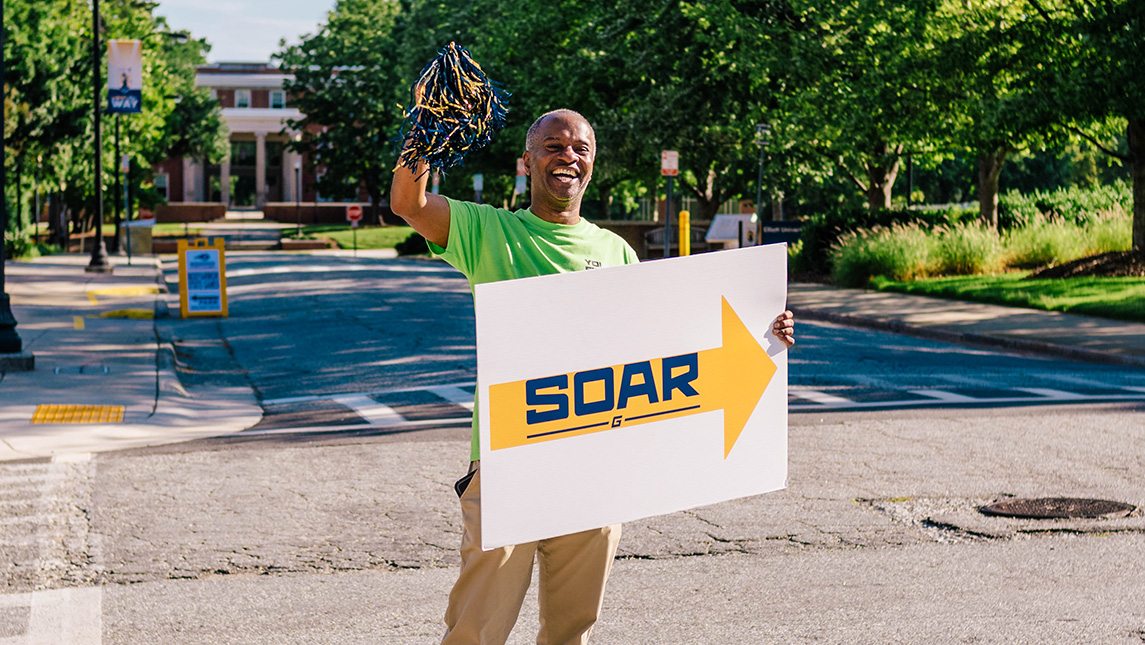
SOAR Signing Up Volunteers to Support Summer Orientation
Posted on March 05, 2026
Help UNCG make a direct impact on the newest Spartans by helping create a welcoming, supportive, and unforgettable orientation experience.
New Student Transitions & First Year Experience seeks faculty and staff volunteers to support SOAR sessions this June. They create a warm first impression by greeting students and guests, assisting with directions near parking and check-in, and answering general questions.
All interested should sign up by Friday, May 4 at 5 p.m.
Volunteer shifts are two hours in the morning and take place outdoors near SOAR check-in locations. Volunteers will receive a t-shirt, pom-pom, lunch voucher, and other helpful material. They’ll also be invited to attend the SOAR Preview on June 1 at 3 p.m.
Interested volunteers should speak to their supervisor before signing up, as flex or comp time is granted at their discretion, and supervisors will be notified of participation.
Students Can Enter Now to Win University Libraries Research Awards
Posted on March 05, 2026
The ULRA awards are given in recognition of an outstanding original paper or project in any media format. Two individual undergraduates and one graduate student will be awarded a $500 prize. Application materials are due March 20.