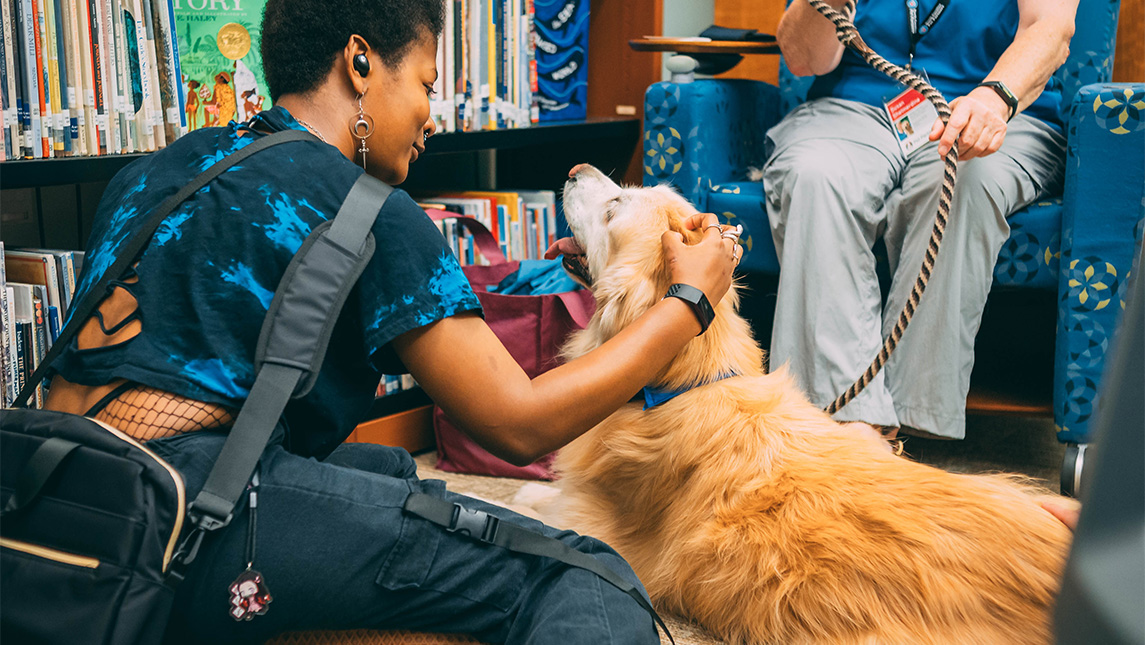
Therapy dogs make regular visits to give students a boost of positive energy.
University Libraries will host free events for students, staff, and faculty to celebrate the end of another successful semester. They are also sharing important end-of-year reminders.
Non-linear Educational Path Leads to Right Place, Right Time for Fox Brown
Posted on April 08, 2026
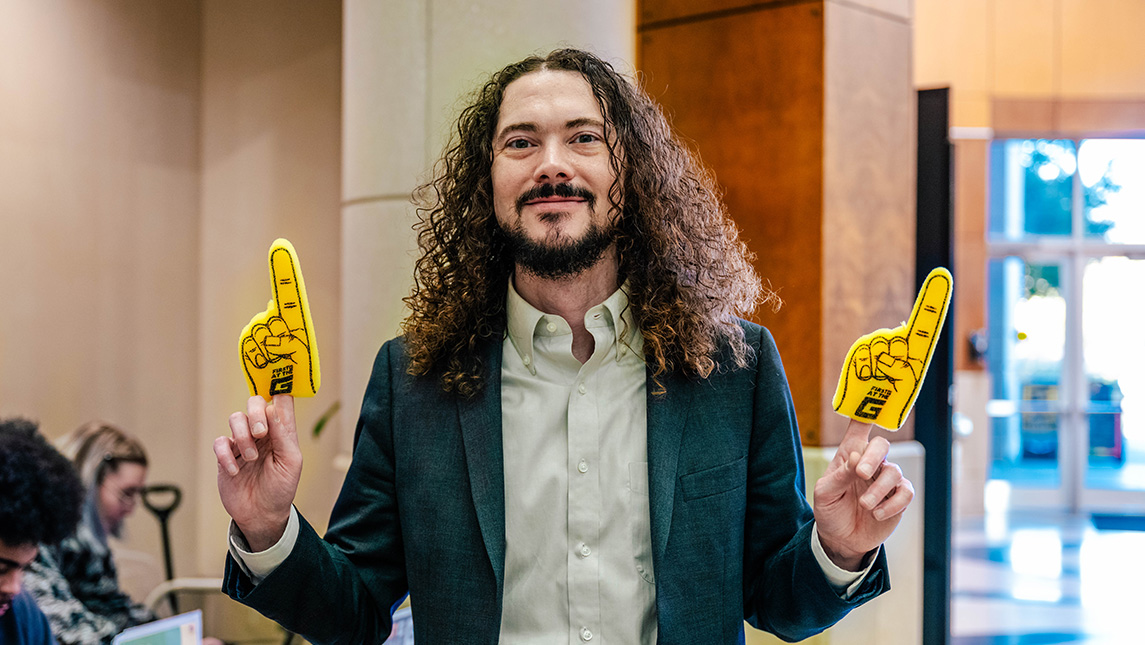
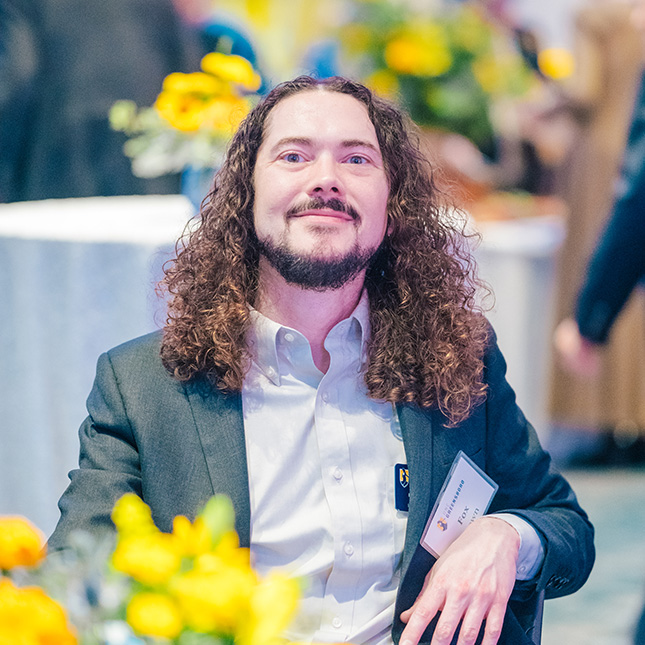
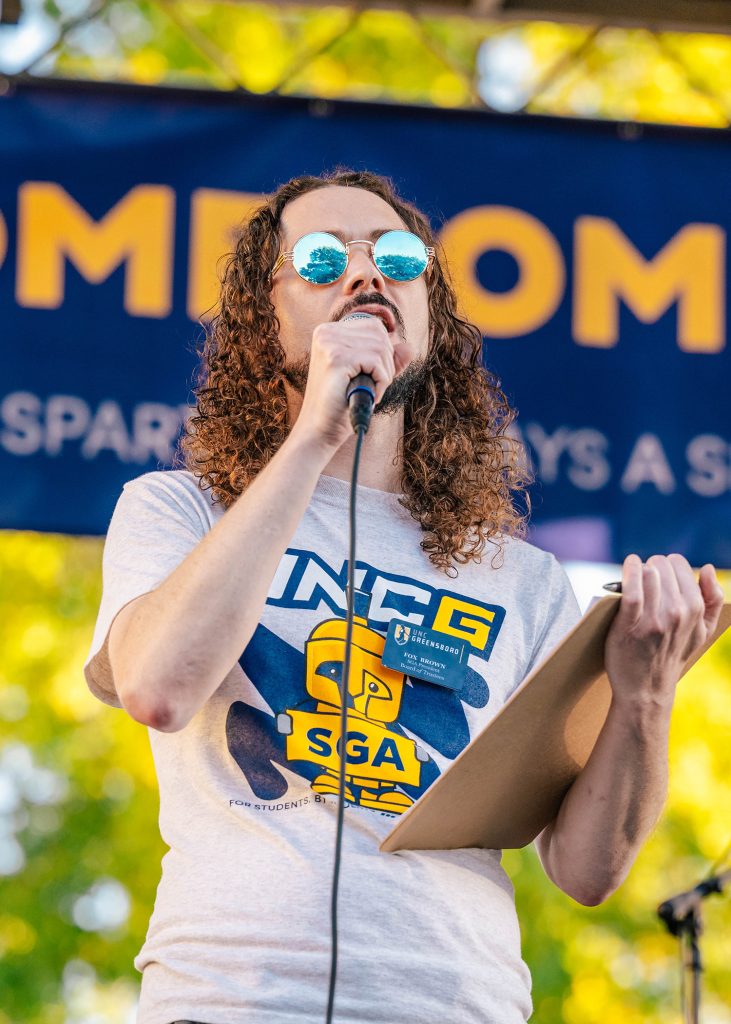
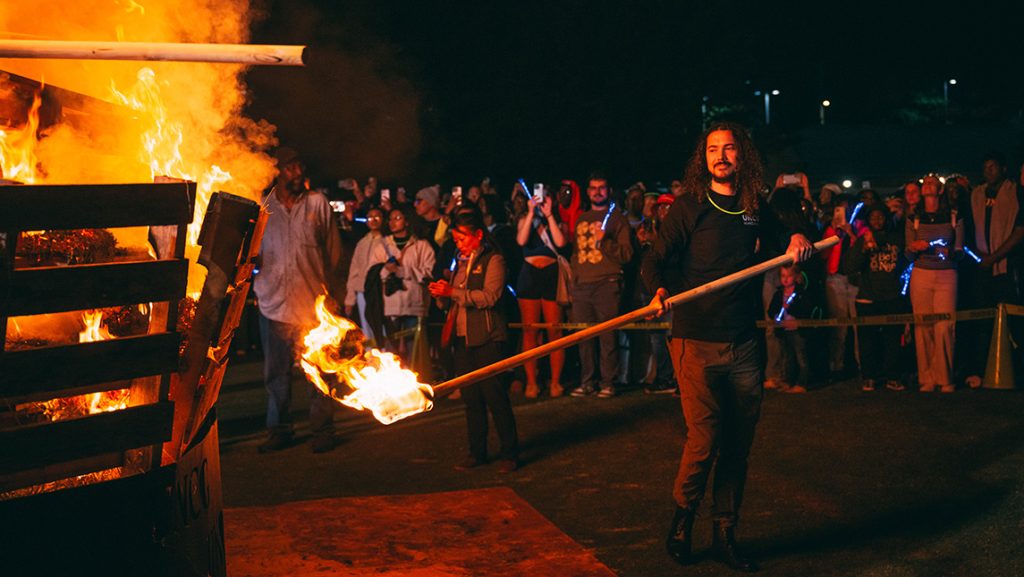
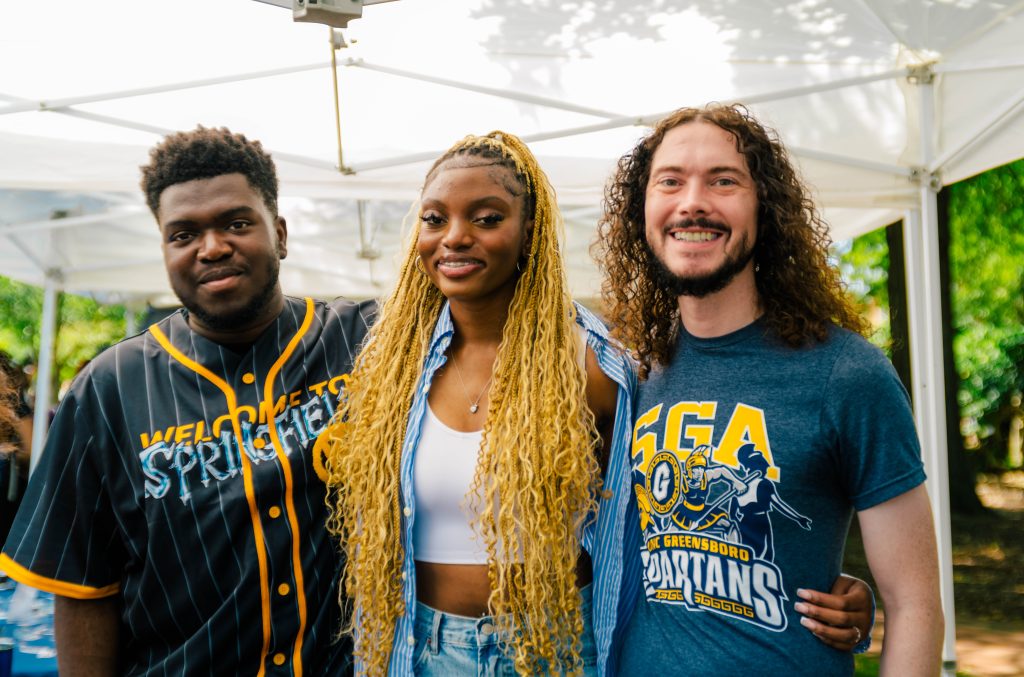
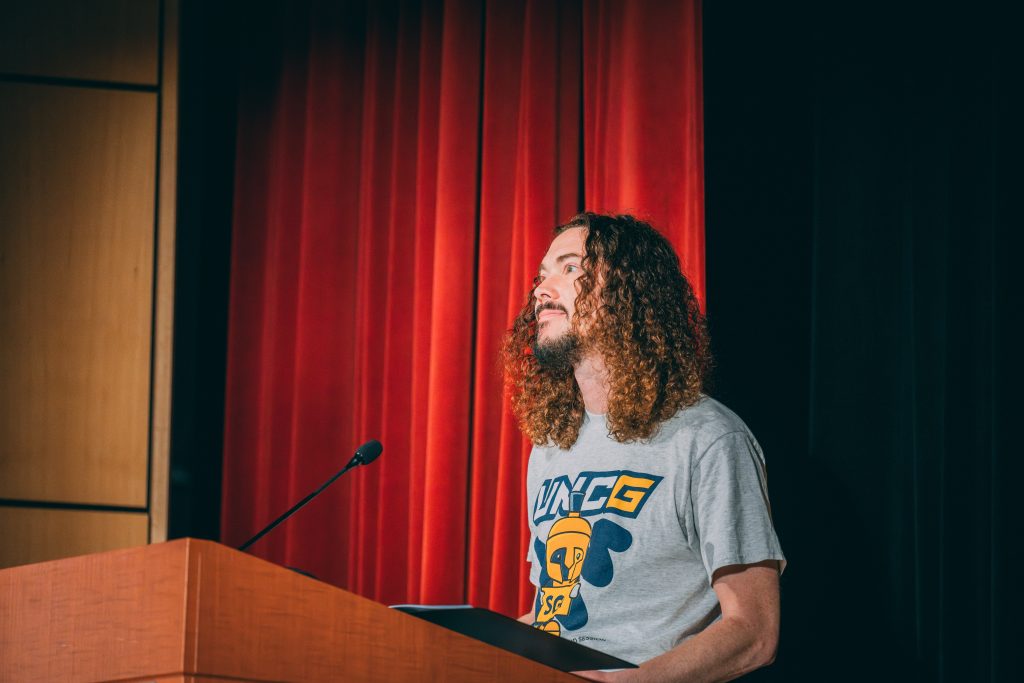
Fox Brown may represent all UNC Greensboro students as president of the Student Government Association (SGA), but he couldn’t be further from the stereotype of a typical college student. Between his family responsibilities, the multiple degrees he’s earning, and the commitments he’s made to make UNC Greensboro better during his time here, Brown keeps lots of balls in the air. Life experiences have driven his educational choices and molded the UNCG pre-law student we see today.
A Path Diverged
Being a non-traditional student is nothing new for Brown. Although he attended public school until fifth grade, his mother’s love for the Montessori method shaped the way Brown learned. He was homeschooled in later years as his family moved from Southern Pines to Kernersville, NC to be closer to family after the death of a grandparent.
His family’s hardworking Quaker values shaped Brown’s goals, but he received little guidance from his parents about higher education. His mother attended college briefly, and his father earned an associate’s degree in applied science for automotive technology. Brown tested into Forsyth Technical Community College and began taking courses for an applied science degree with plans to work in computer engineering.
“I actually started college when I was 15 and finished my first degree at 17,” says Brown. “At Forsyth Tech, I found it easy to blend in with students from all stages of life.”
Even as the youngest on campus, Brown thrived in a collegiate atmosphere. He joined a service fraternity, got his first taste of student government as treasurer and public information officer, and excelled in his classes — which made him curious about different degrees and his transfer options.
He considered Guilford College but wasn’t able to get the scholarship support he needed. UNCG offered a more reasonable tuition, but Brown hit a roadblock because he didn’t have the associate’s degree in arts needed to transfer as a junior. Instead, he decided to join the workforce, taking jobs in retail and hospitality management.
Mind for Politics
Even during his break from college, Brown’s interest in service and civic engagement continued. Voting rights struck a chord with him from the time he reached voting age.
“I started to really take a deeper interest in politics and the law when I was involved in a gerrymandering case in my voting district,” he explains. “They picked me to be one of only two voter plaintiffs from the state to go to Raleigh and testify before three judges.”
The experience gave Brown a passion for representing citizens and exposed him to the many career paths in political science. Around that time, he lost both parents within a couple of years of each other, which meant care for his grandmother and disabled brother now rested on his shoulders.
Realizing the limited wage possibilities for the jobs he was working, he decided to go back to school full-time. “I’m so thankful I broke out of that rut,” Brown remembers. “I just didn’t feel like I was making a meaningful impact with anything I was doing.”
Ironically, after much life experience, Brown had finally landed on a four-year college campus but was still a non-traditional student: “I felt the same way I did when I was 15 in community college. UNCG’s diversity, with a broad array of people at different stages of life and different ages, helped me to blend in.”
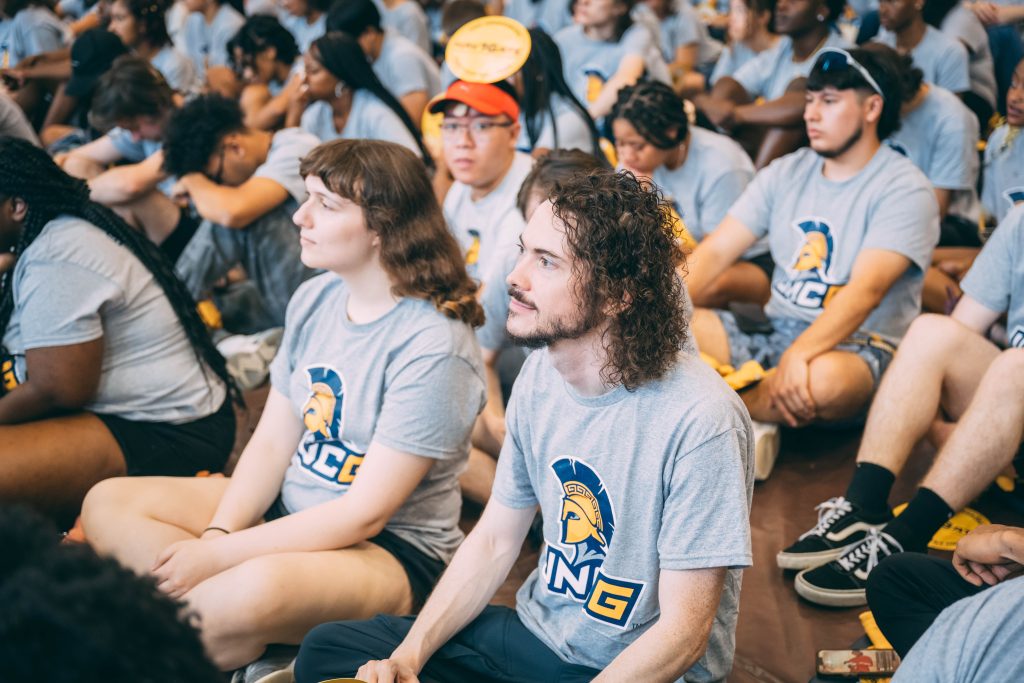
Fox Brown at NAV1GATE on his first day at UNCG.
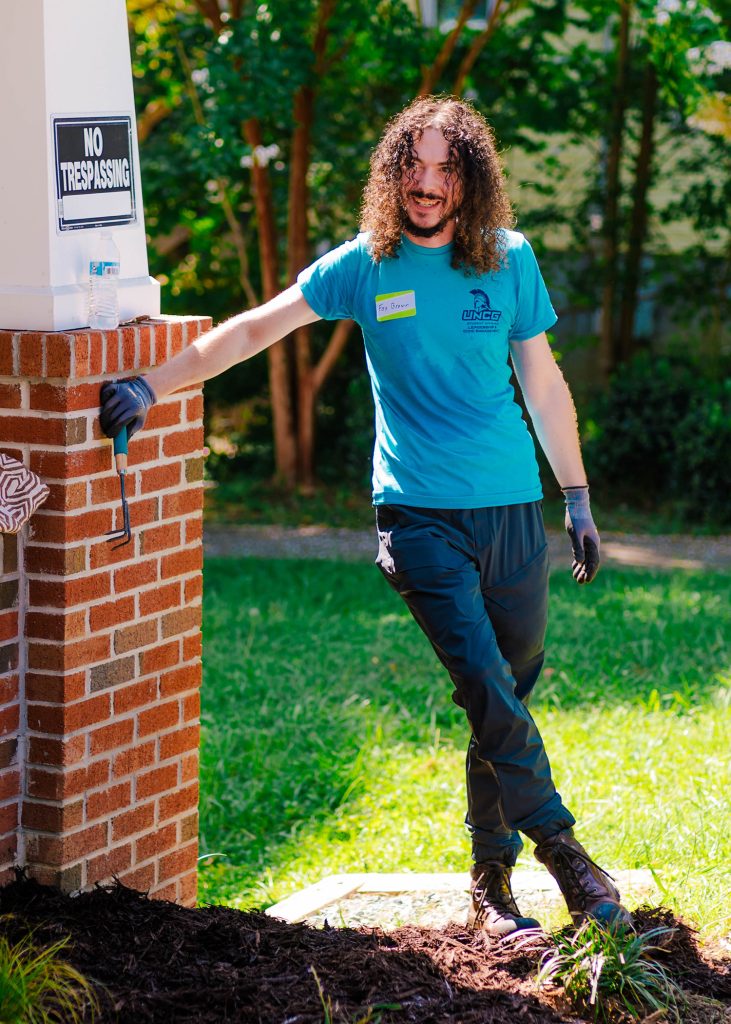
He joined Theta Delta Chi fraternity, took up fencing, and became the transfer representative for SGA. He also found himself drawn to the University’s motto of service. As a regular at UNCG’s service days, Brown loves volunteering in the Greensboro community. “It gives me a taste for how things work in life and the need for things to get better.”
At UNCG, he could be a fully involved college student while caring for his family and pursuing his dreams. He began a pre-law professional track and then added another major in business.
Brown loved how his classes complemented each other. Political science classes taught the judicial process, international law, and environmental law, all of which applied to his service work. Business classes focused on organization, management, and matching skill sets to workflows.
He credits professors for helping him to find practical applications of his studies: “You can learn theory in textbooks, but you need a professor to help you work through examples of how you’ll use what you’re learning in real life.”
When he ran for SGA president and won in 2025, he applied the theory he’d learned in both fields of study.
“My class about the American presidency helped me understand how my position would work and how power works,” Brown explains. “It matters who you pick for your cabinet because you’re working through people so much. And I use my business classes when I’m managing my cabinet and trying to get my ideas across.”
Practicing Politician
This year, Brown has used both his studies and life experiences in his role as SGA president.
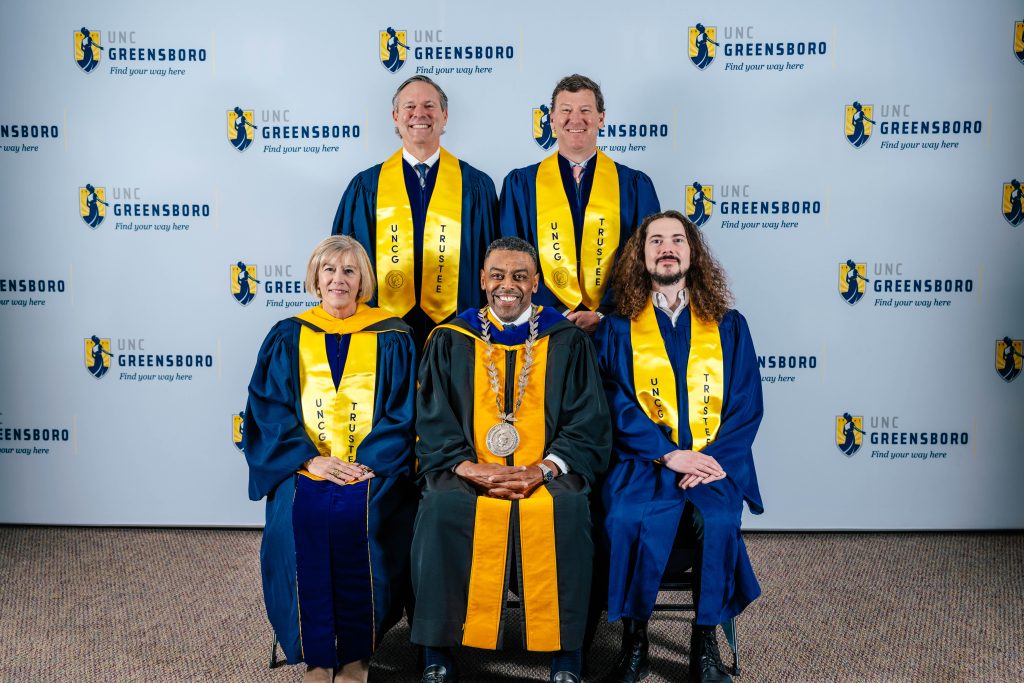
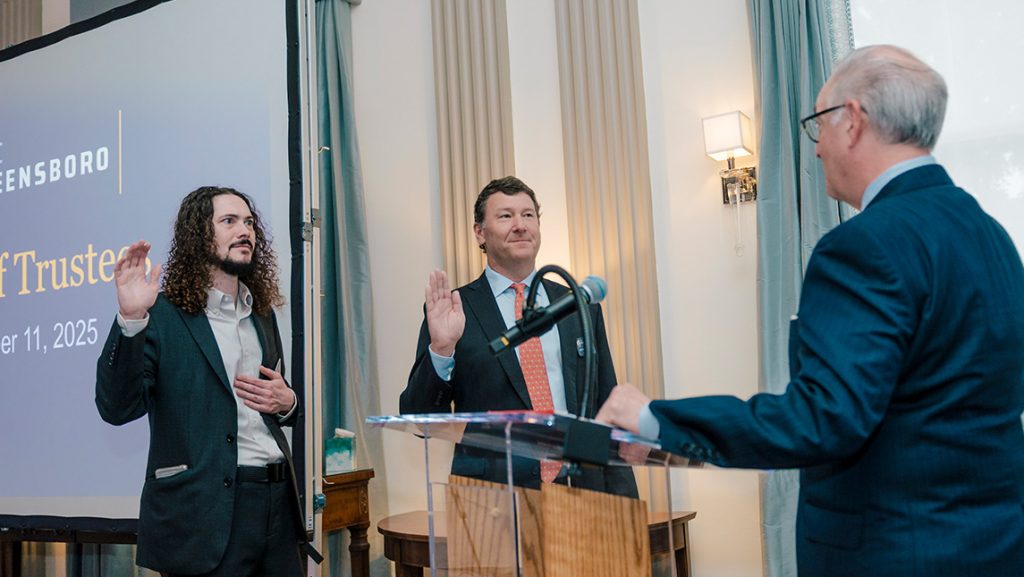
“I have learned to meet people where they are and always start by listening,” he says. This helps him relate to students he represents and work with professionals he serves with on UNCG’s Board of Trustees. “I’d have a hard time finding an internship that could match working with the experience around that table,” he adds.
Another highlight of Brown’s presidency was writing a constitutional amendment — the first one UNCG had seen in many years. “It was very simple. It just made sure we were compensating our director of sustainability the same way we were the other directors,” he says. “I wrote it up, got it on the ballot, and it was passed.”
In the process, Brown realized the importance of understanding the process and governing documents: “That’s where my pre-law training came in. I understood where there was a problem and knew how to fix it.”
He praises the diverse group that works with him in SGA and the successes they’ve enjoyed together. “Our delegation consistently shows up and works hard,” he says. “We’ve had better attendance than UNC-Chapel Hill, which has a much larger SGA, in our system-wide Student Government Association meetings this year.”
Brown is wrapping up his term as the 112th president this spring, which will allow him to focus on academics before graduating in May 2027. He’s decided to take an extra year so he can graduate with honors with double majors in political science and business and a minor in history. After that, he’s already identified some Ivy League schools where he can dual-enroll as a law and MBA student.
The opportunities he’s taken advantage of at UNCG should certainly help him achieve these lofty goals, but serving others is always top of mind for Fox Brown: “I hope I’ve made a difference on this campus as I kind of practice to make an even bigger difference in the world.”
Story by Becky Deakins, University Communications. Photos by Sean Norona, University Communications.
Commitment to Spartan Service Exemplified By 2026 Gladys Strawn Bullard Winners
Posted on April 16, 2026
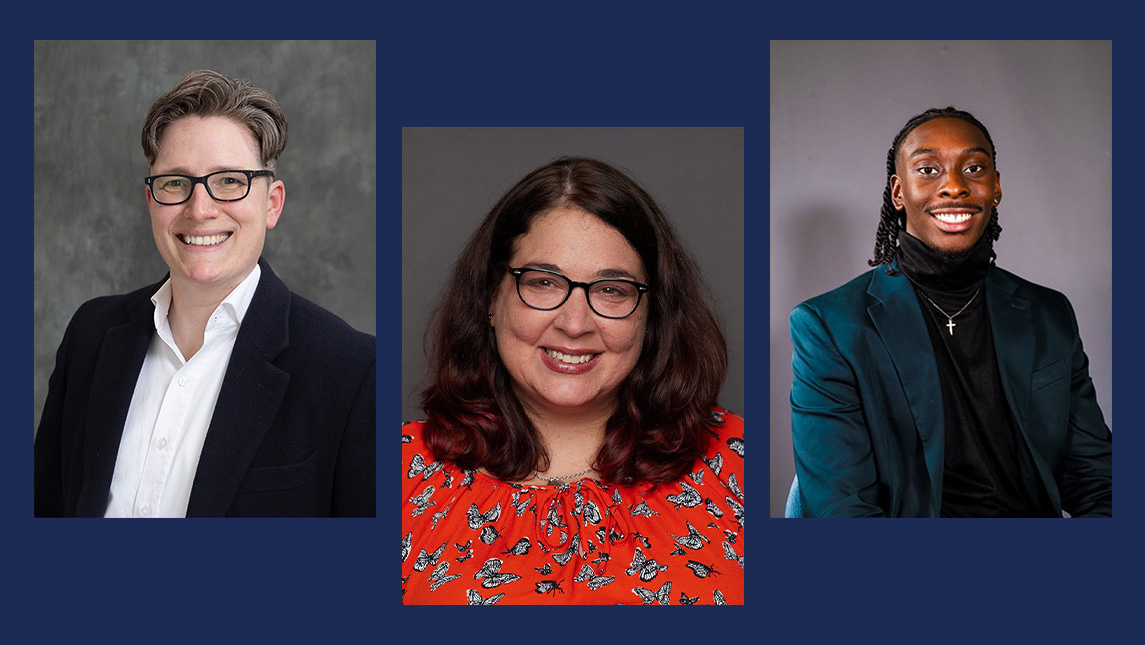
Please join the UNCG community in congratulating this year’s winners of the 2026 Gladys Strawn Bullard Award.
The Bullard Award is given in recognition of those faculty, staff and students members who have shown commendable initiative and perseverance in their leadership or service roles at UNCG. In addition, award winners have demonstrated their ability to conceive and develop creative ideas and programs that advance the University.
Faculty awardee: Dr. Jennifer Feather, professor and department head of English; cross-appointed faculty, women’s gender and sexuality studies program.
Follow along Johnson’s day in the life as a student in the “Follow Me” video series, including his role in the Public Health Impact Network, and hear how he feels his leadership skills have developed during his time at UNCG.
First TEACH Class Graduates, Improving the Piedmont Educator Pipeline
Posted on April 21, 2026
Asheboro City Schools will hold a ceremony for its first graduates of the new TEACH program on April 21. For the last two years, UNCG’s Institute for Partnerships in Education have worked with aspiring educators, helping them complete college credits and network with community partners so they can get to work in local classrooms.
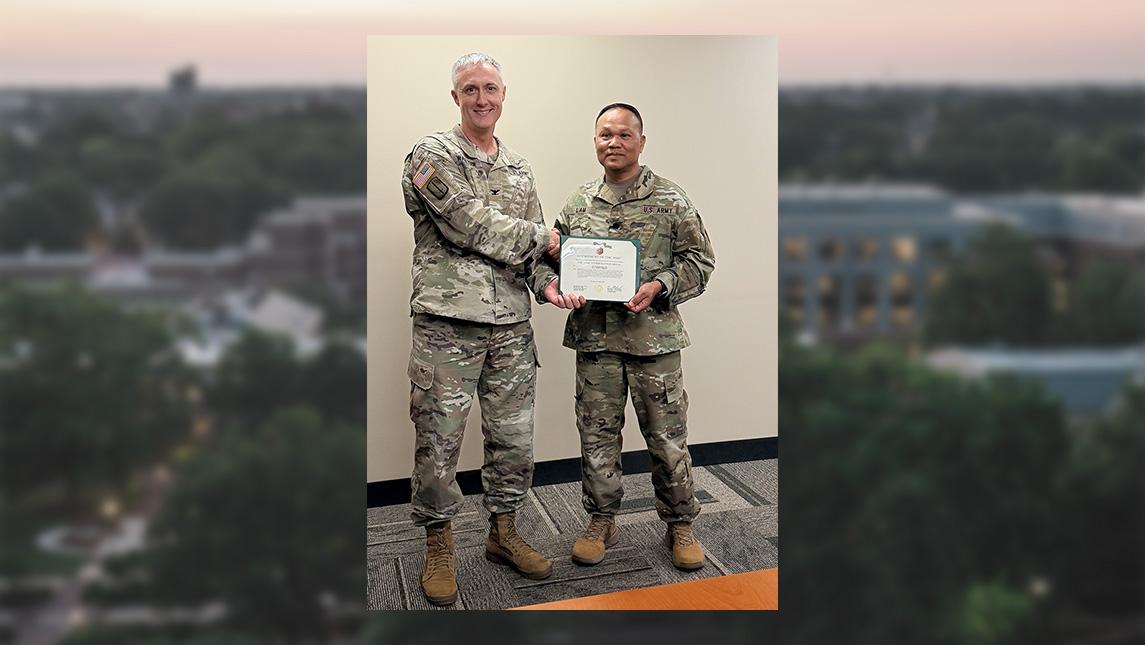
Lt. Col. SaQuang Lam, assistant director of Student Health Services, was awarded the Army Commendation Medal in recognition of his exceptional service and leadership with the 60th Troop Command.
Presented by the Department of the Army, the award honors Lam’s contributions as Chief Information Officer from March 2020 through July 2023. During this period, he played a pivotal role in strengthening knowledge management systems and enhancing operational readiness across the command.
According to the official citation, Lam demonstrated “critical thinking and anticipatory planning,” enabling senior leaders to navigate complex challenges and make informed, timely decisions. His efforts directly improved efficiency, ensured data accuracy, and supported mission success at scale.
Colleagues describe Lam as a steady, disciplined leader with a unique ability to translate complex information into actionable strategy. His approach to leadership reflects a quiet commitment to serving others first, ensuring that teams, leaders, and missions are set up for success.
The medal was formally presented on April 16 at Headquarters 60th Troop Command in Raleigh, North Carolina, by Colonel David Walliser. Fellow service members, colleagues, and supporters gathered to recognize Lam’s accomplishments and service.
For UNCG, Lam’s recognition underscores a broader narrative. Members of the University community continue to serve and contribute beyond campus, impacting the local community, the state, and the nation. His leadership reflects enduring values of honor, service, integrity, and commitment, principles that resonate across both military and academic environments.
The Army Commendation Medal is awarded to service members who distinguish themselves through sustained acts of heroism or meritorious service. For Lieutenant Colonel Lam, it marks a period of leadership defined by foresight, discipline, and an unwavering dedication to those he serves.
Honors College students who are selected for the program receive a stipend and funds for supplies. They each have a mentor for their projects, and the cohort meets online every other month to share process and progress, and to receive feedback.
A Percussionist Presents a Novel Idea
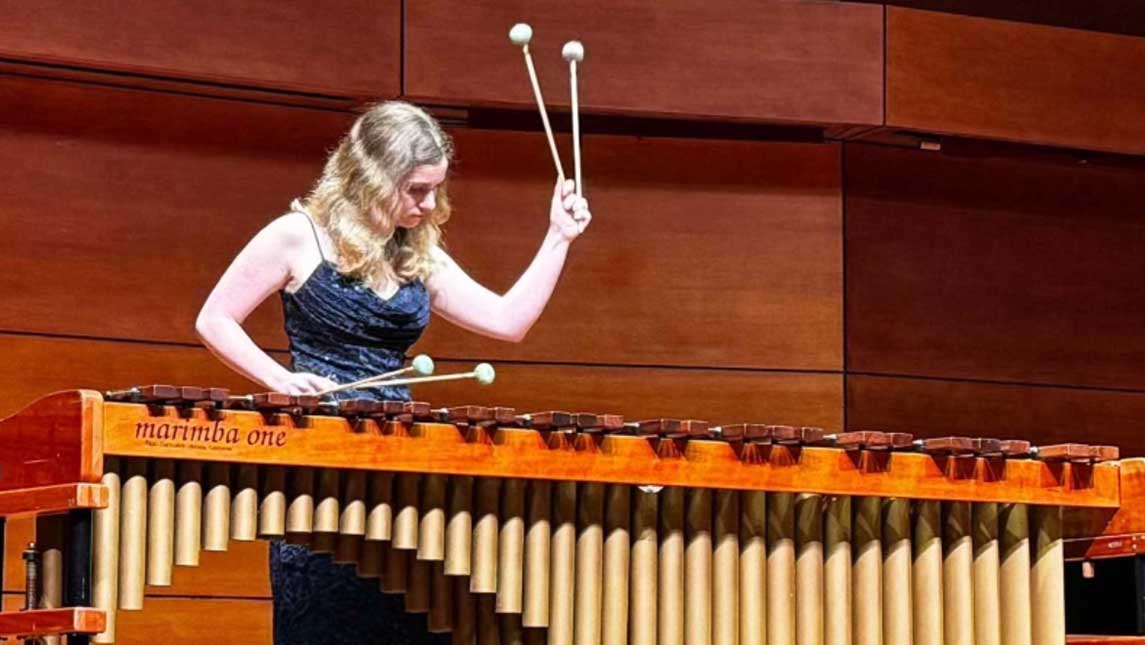
Second year student Madison Karan hopes to challenge modern-day narratives with her multimedia novel. Karan is a percussionist and music in performance major who plays “anything you can hit,” but primarily the marimba.
Last spring, prior to her decision to apply for the Pubantz Artist in Residence, the symphonic band played Karel Husa’s “Apotheosis of the Earth,” about the destruction of humanity through their own means. She thought to herself, “What would this look like if it was fictionalized?”
“My story, entitled ‘Apotheosis,’ centers around three human characters and their interactions with a rapidly evolving AI,” says Karan. “Through forces outside of their control, the Earth is destroyed, and only the AI is left to reflect on the events that led to this point. Uniquely, the AI is the narrator of ‘Apotheosis,’ and we follow its point of view as it transforms from a simple machine into a complex, sentient being.”
Although Karan’s novel does not directly address the human impact on Earth’s ecosystem like Husa’s score does, the two pieces are similar in tone. “While there are moments of lightheartedness; the bulk of the novel is solemn and reflective,” she says.
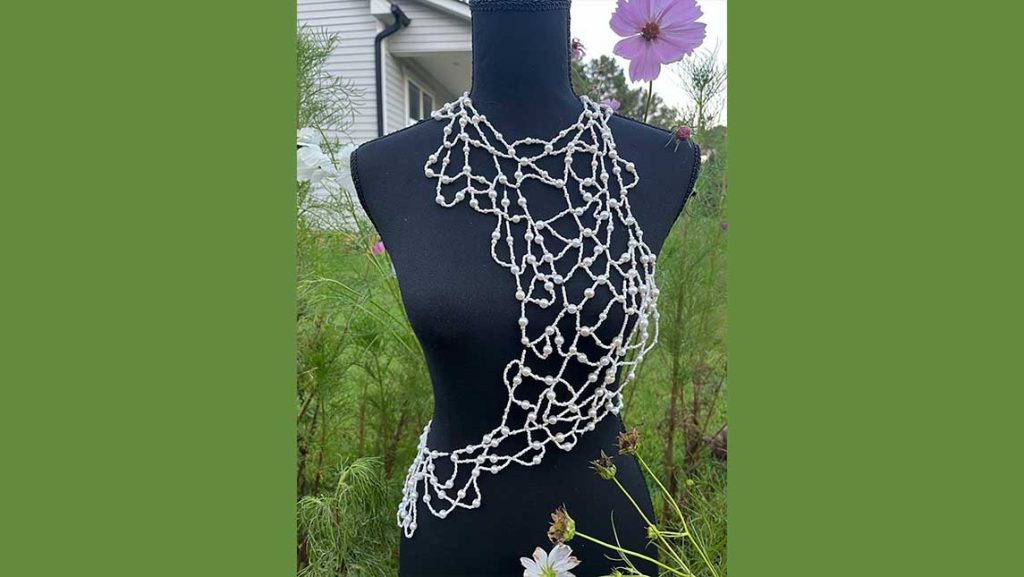
The novel includes features such as jewelry created by Karan. All her characters represent a type of media she works with — music, writing, and jewelry.
“For instance, one of my characters is a musician, and at one point in the story, he discusses a composition he made,” she says. “The QR code I put there directs to a piece I wrote, but in-universe, it is his.”
“The arts are a fundamental part of the human experience that cannot be replicated by a machine,” says Karan. “While there are necessary uses for AI, that place is not within art. When people see my work, I want them to consider their own beliefs about the topic at hand. Of course, I would love to see the reader enjoying the experience, but the questions ‘Apotheosis’ asks the reader are the most important part of it all — in this way, the story is a vehicle to inspire reflection.”
A Sustainable Design Project for Grandmother’s Furniture
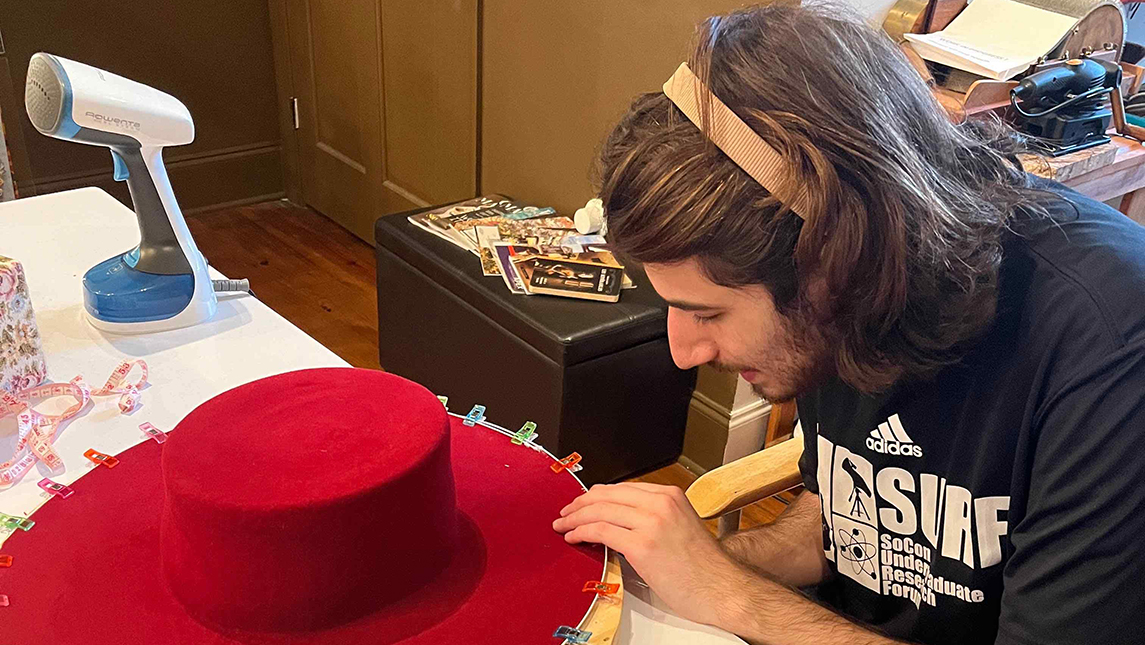
Interior architecture major Sophia Weaver commits to a theme of sustainability by repurposing her grandmother’s furniture. The 1900s furniture is mostly dark, solid wood and some of it is quite ornate. There are unique features we do not see anymore, like tile on top of wood.
“I thought ‘What if I take all these pieces of furniture and give them a new life instead of them going to a landfill?’” she says.
Her process has been to take the furniture apart, lay out all the pieces, and then combine them in unusual ways. For instance, she took a bed frame and side tables and turned them into an armoire.
In her grandparents’ house, she not only found old furniture, but also tools like finishes and wood glue to use for her project. “The whole purpose of the project was that I didn’t want to spend any money on buying something new,” says Weaver.
She is producing 10-12 pieces of furniture, but not all of it will be on display. The goal is to have one completed set, and the rest will be proposed later.
Using Palm Leaves to Push the Boundaries of Linguistic History
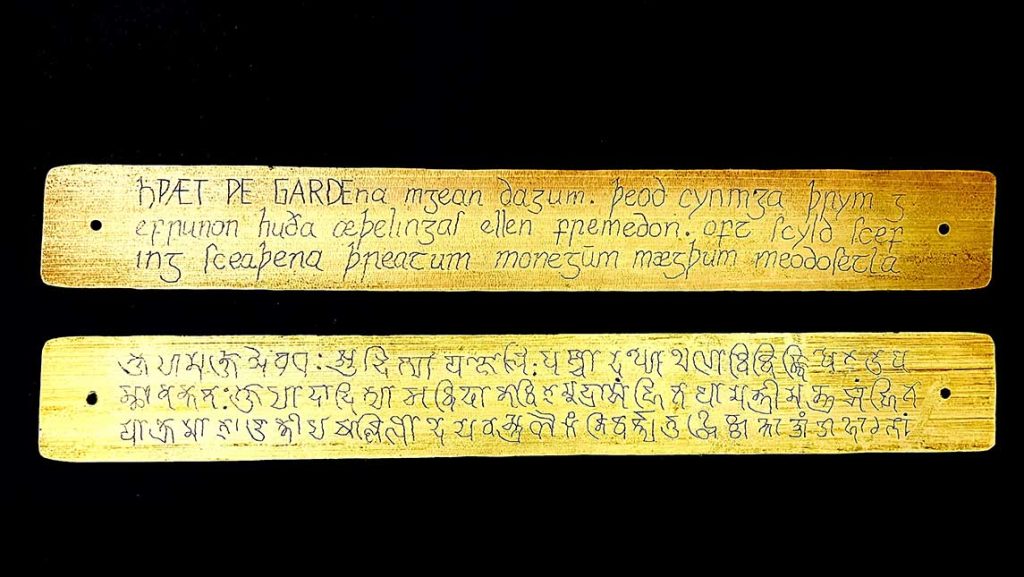
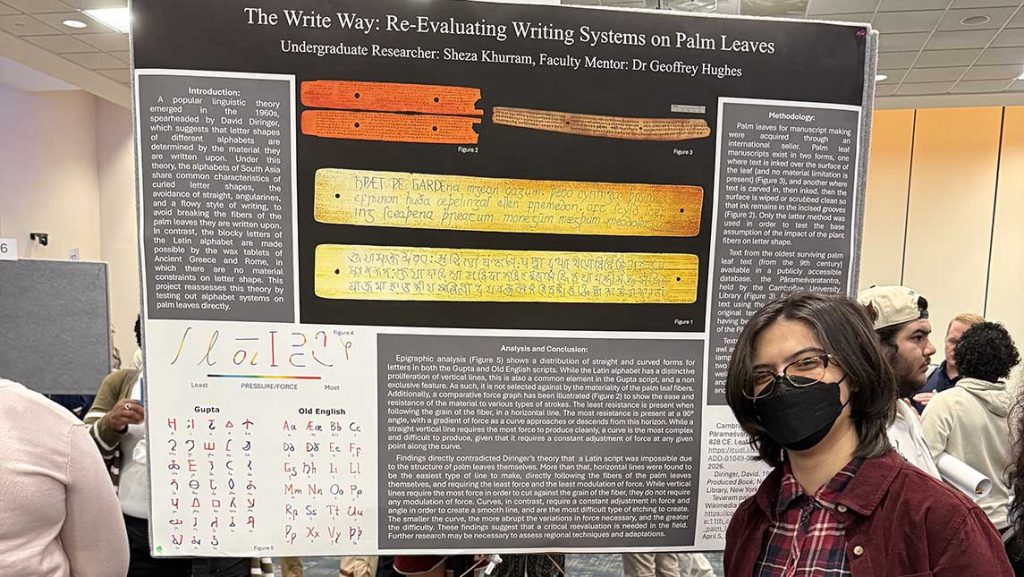
Senior Sheza Khurram knew from the beginning that her work would be reconstructive and linguistic in nature. Her project, “The Write Way — Re-evaluating Writing in Palm Leaf Manuscripts,” is an experimental archaeology project merging historical linguistics and language reconstruction. It is based on the theory that Latin letters look blocky because they were originally made with wax, and South Asian letters are curly because they were written on palm leaves.
Khurram engaged in two different methodological practices. She reproduced existing palm leaf manuscripts in the Hindu script, then she inscribed English letters from the Latin alphabet on palm leaves.
“After this process, I do a cross-sectional analysis to measure the incisions and other details and see how that matches up to museum artifacts,” she says.
“I wanted to do something original and push boundaries in my field,” says Khurram. “This program allowed me to do that.”
In addition to some creative craftwork and student workshops in the School of Education’s makerspace, Khurram is an officer of Make Cool Stuff, which offers opportunities for students to create on campus.
“This is the first opportunity I’ve had to do my own research on an entirely independent project, so it’s been huge,” she says. “It’s a feeling of success and triumph because I’m getting to branch out into my field in a way that’s self-led, but then there’s also the pressure of ‘I want this to turn out well, and I want to prove that I can succeed in this field.’”
‘A Southern Love Letter’ Inspired by Italian Sculpture
Shaye Scales, a senior with a double major in painting and arts administration, is serious about her work.
“Art is a craft. I hope to shock the audience at the Undergraduate Research Expo and inspire them to take a second look and take it seriously at least for a moment,” she says.
Scales’ work “A Southern Love Letter” centers on Christianity and being Black in the American South. She says she got inspired last year during a trip to Florence, Italy.
“I saw Renaissance and Baroque sculptures about Catholicism, and I thought ‘What if I did that, but I did it about being Black in the South?’” she says.
Her focus is on the positive aspects of growing up in the Black church. She hopes to combat, or at least challenge, some of the negativity of how Christian nationalism is manifesting in the country right now.
When not in class, Scales plays rugby and is the art director of the Coraddi, UNCG’s art and literature magazine. Off campus, she volunteers at least once per month at the Tiny House, where she gives people experiencing homelessness space to create art.
“Helping to bridge the community and the arts is an experience that I really enjoy,” says Scales.
Her project includes paintings, prints, multimedia, and wood sculpture. She says working on the Pubantz project is similar to working on any type of art.
“You go through a bunch of turmoil, you go through inspiration, motivation, a bunch of lulls, and then you actually start to see the piece come alive,” she says, “and you get excited again, and then you start working again and then it happens—the piece is done.”
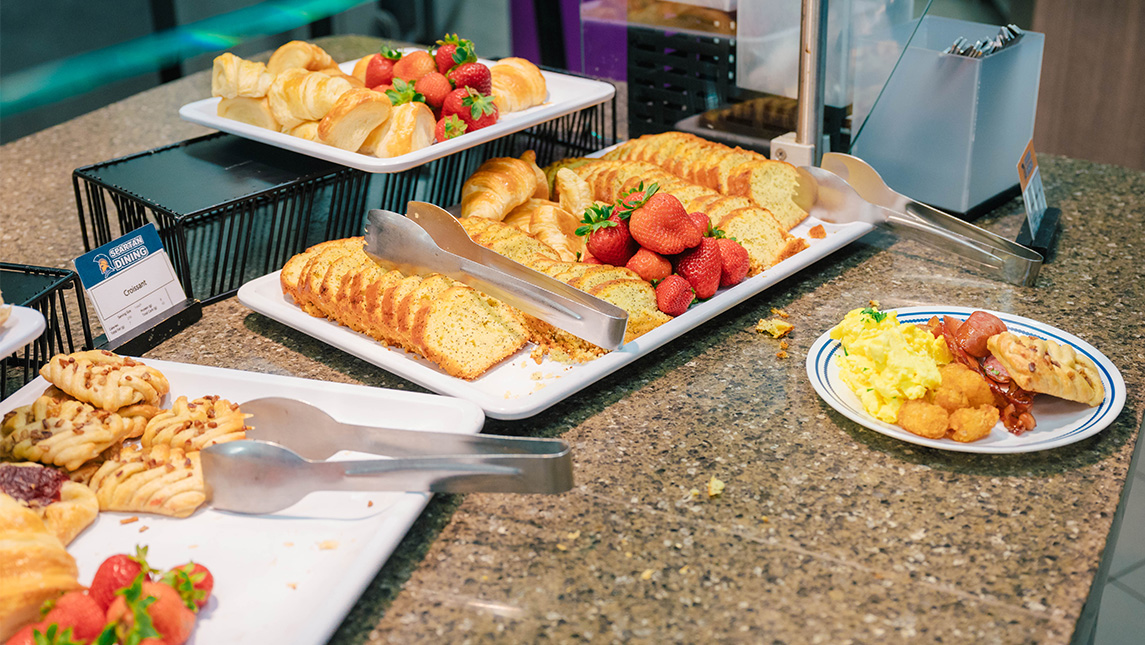
Late Night Breakfast is back, and Spartan Dining is looking for volunteers to help make it a great experience for students.
On Wednesday, April 29, they will serve up a fun night of breakfast favorites once classes end and before exams begin. Volunteers will assist with serving, stocking food and beverages, and engaging with students throughout the event.
Volunteer shifts run from 6:30–9 p.m. The event starts at 7 p.m.
Science Everywhere Festival creates fun for all ages on UNCG Campus
Posted on March 31, 2026
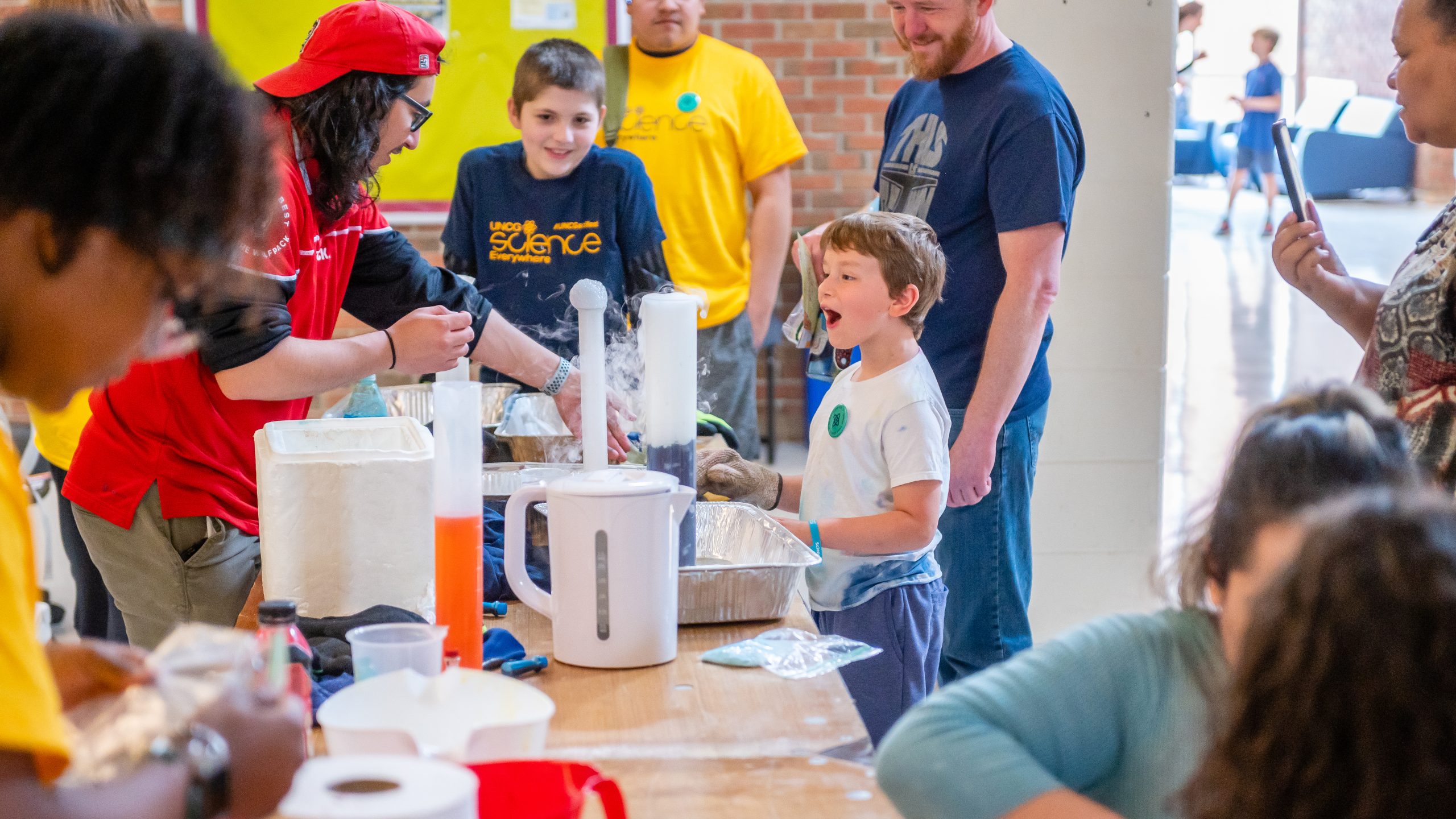
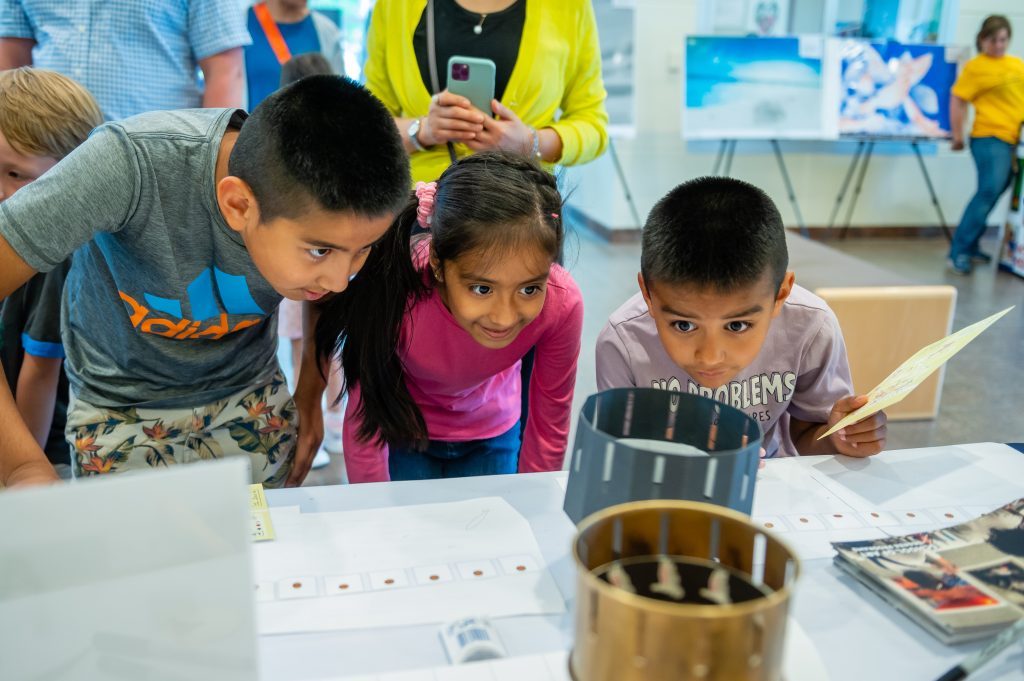
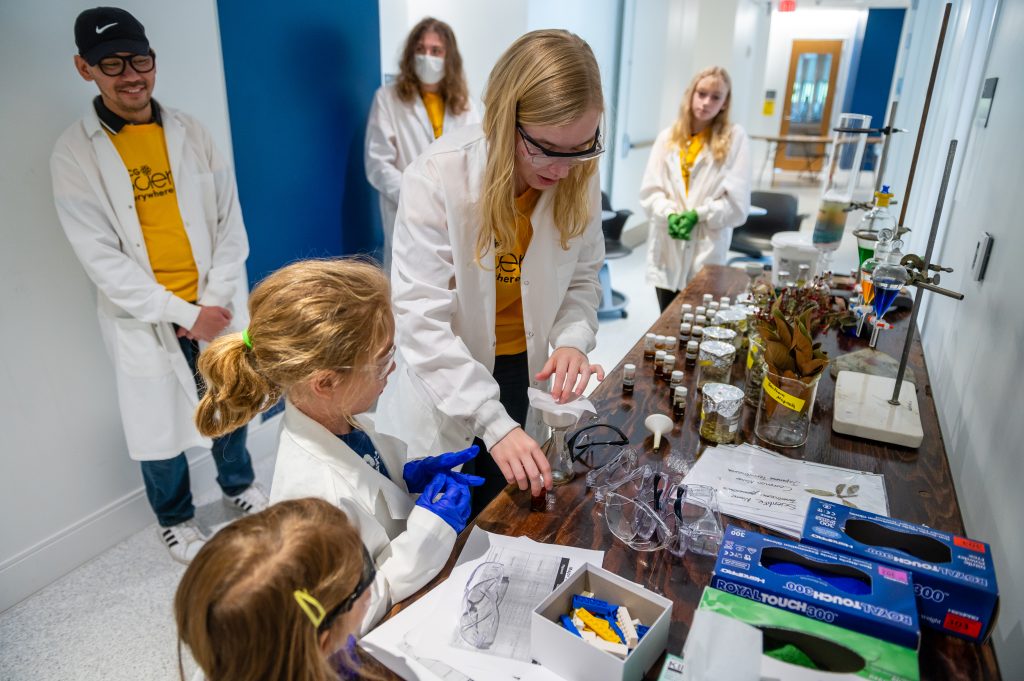
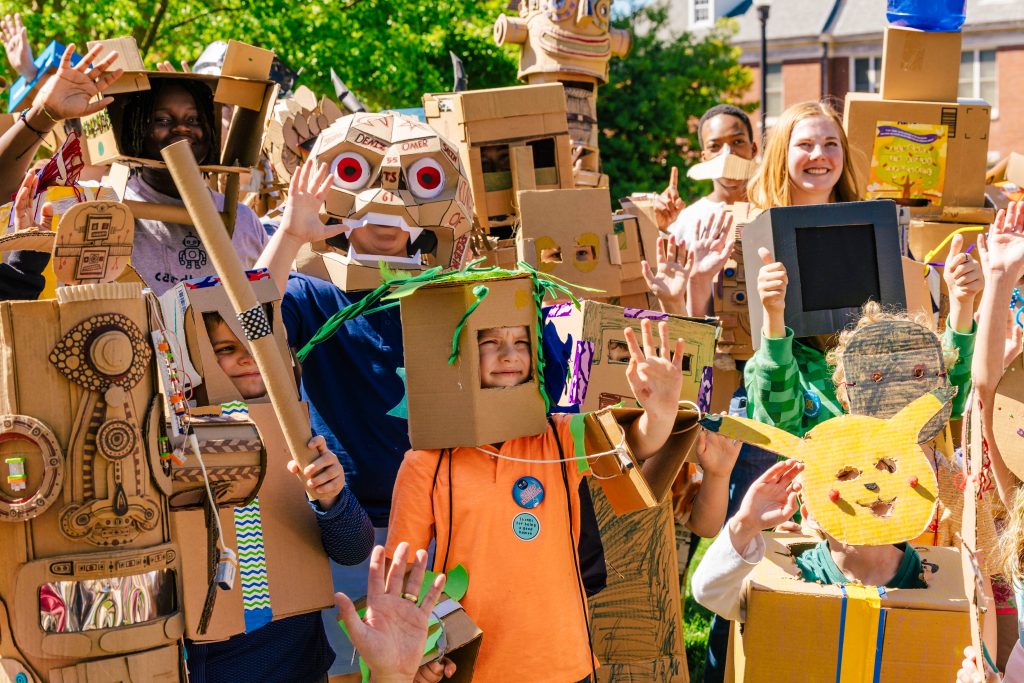
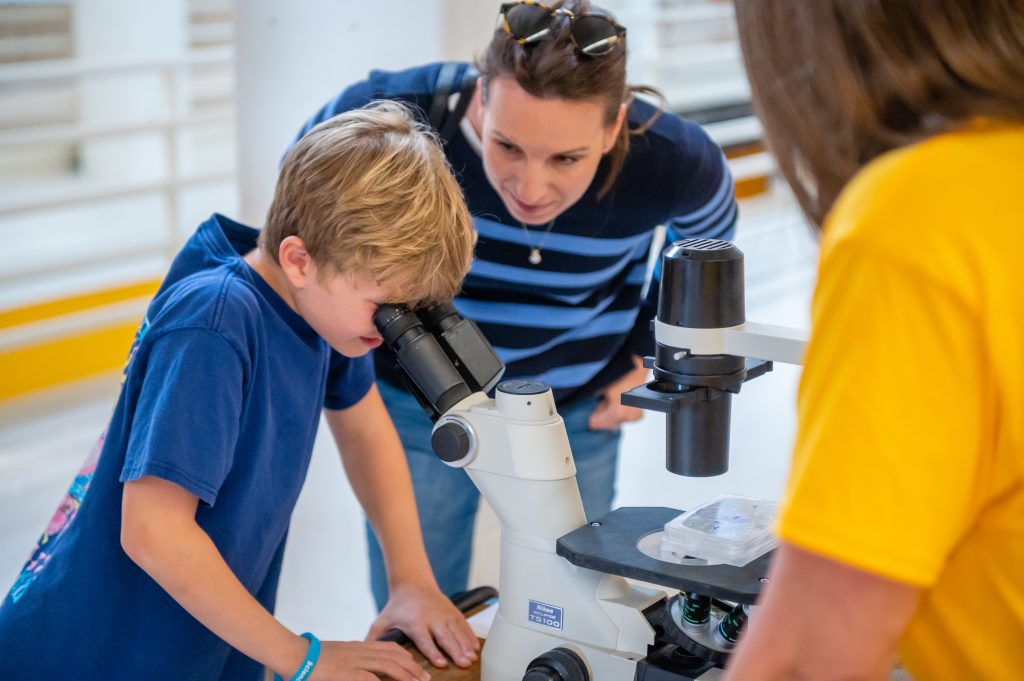
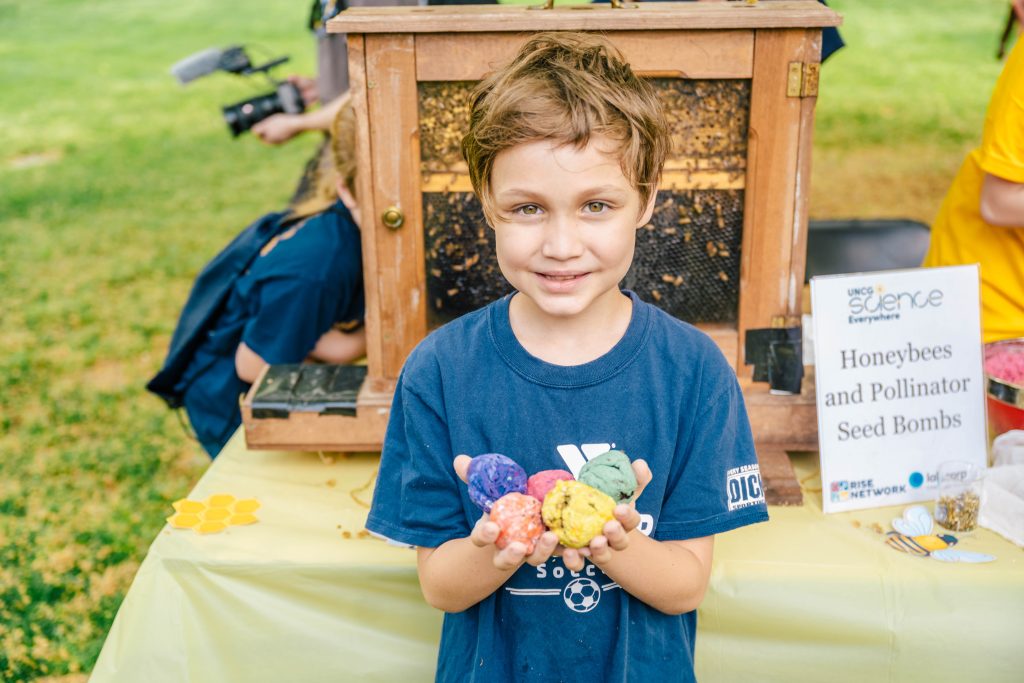
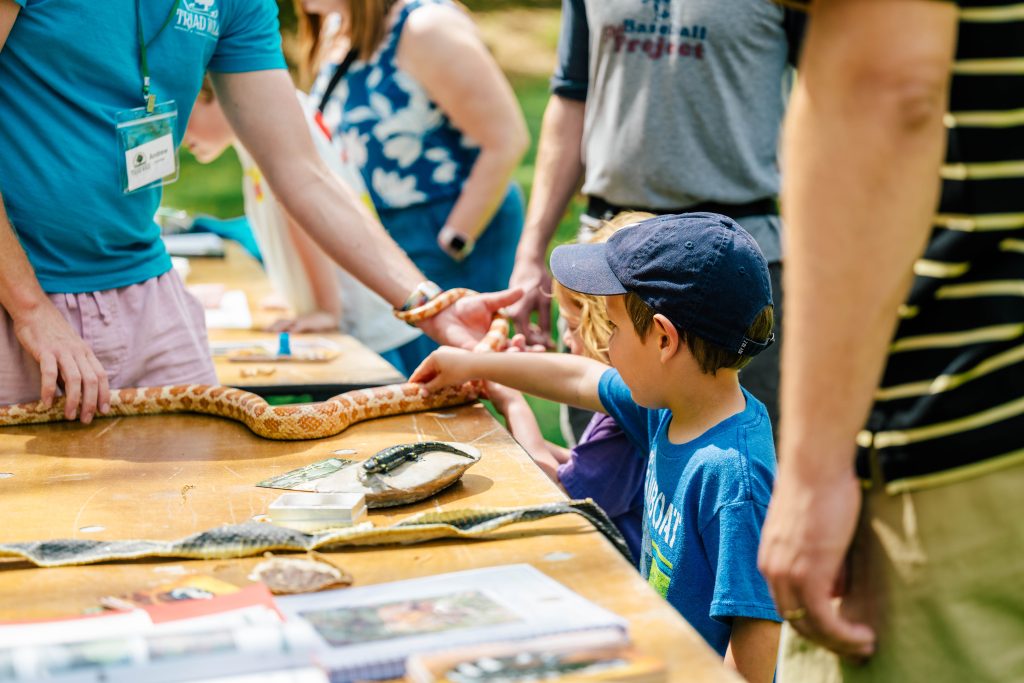
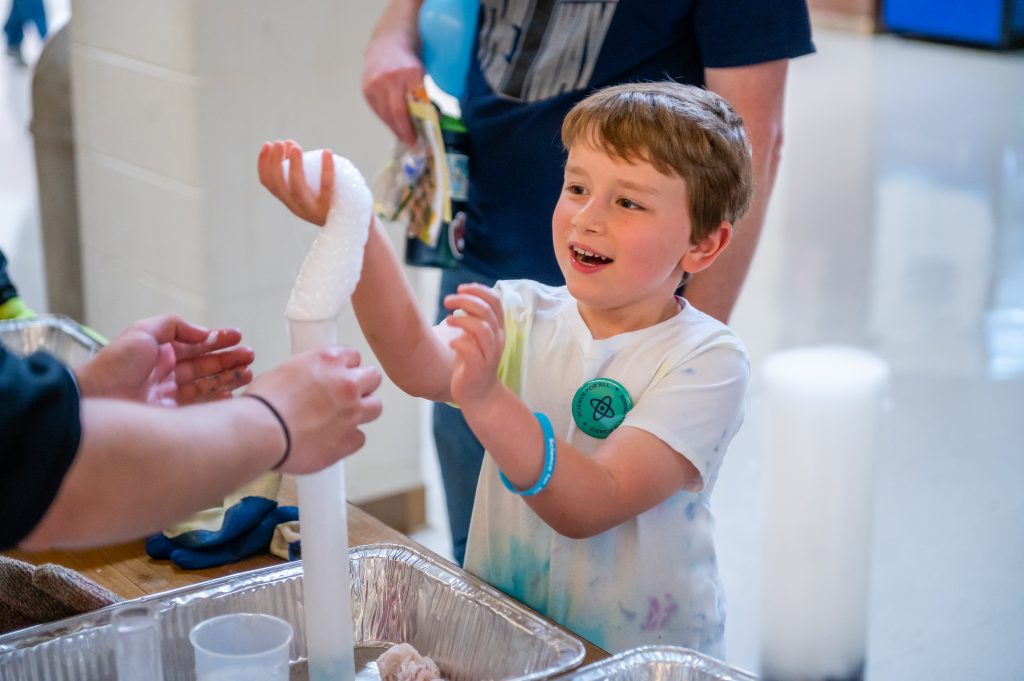
Experience science like never before — talk to robots, witness honeybees in action, dive into colorful chemistry, and explore the fascinating science of anesthesia using a live cricket model.
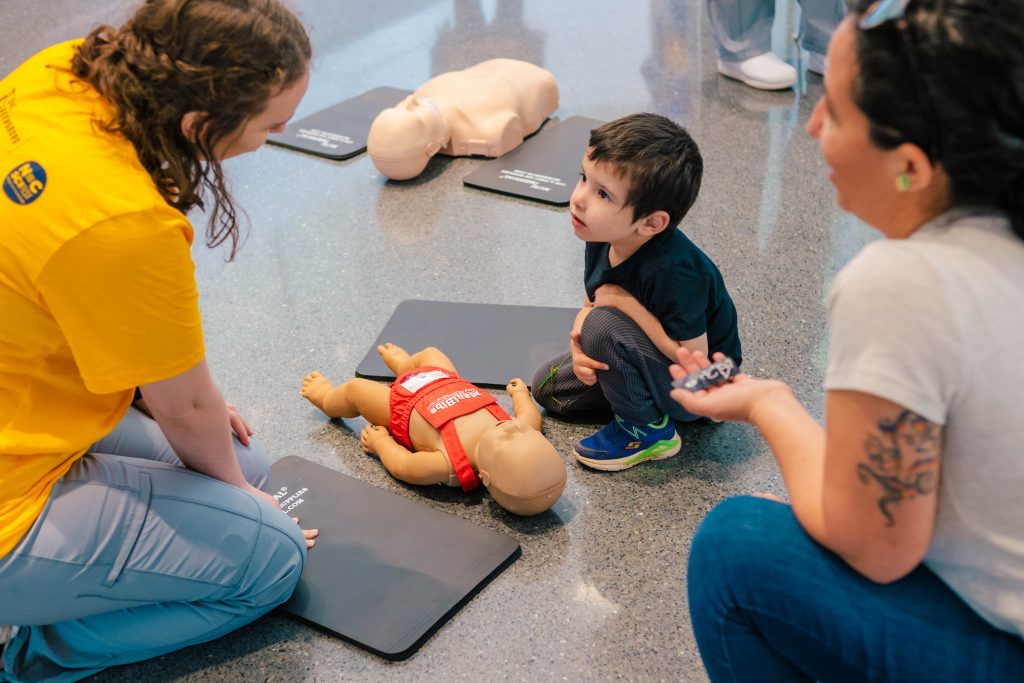
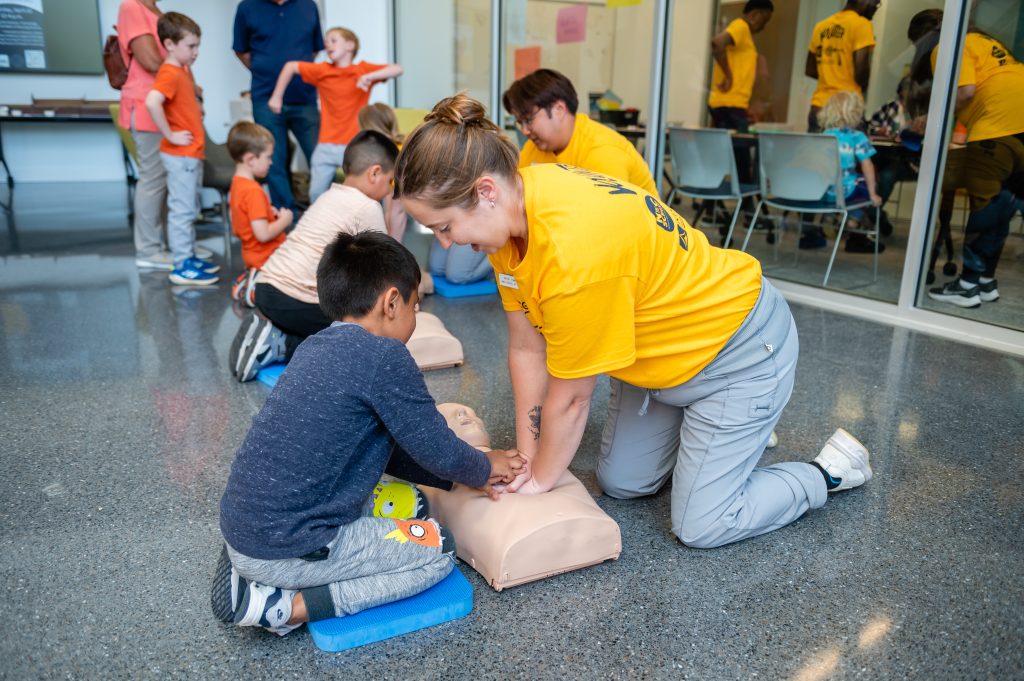
These are just a few of the fun activities available to visitors who attend this year’s Science Everywhere Festival at UNC Greensboro. The event, which is free and open to the public, takes place on Saturday, April 11, 2026, from noon to 4 p.m. It features over 50 stations of interactive experiments, tours of science research labs, presentations by student and faculty scientists, a cardboard robot parade, food trucks, and more.
UNC Greensboro has hosted Science Everywhere for 12 years. The event contributes to the North Carolina Science Festival, a month-long, statewide celebration of science in April designed to engage youth with interactive activities and experiments and to encourage their pursuit of science-related careers.
“Science Everywhere is an opportunity for UNCG to welcome neighbors of all ages to our university to experience hands-on science and technology,” says Dr. Jerry Walsh, UNCG professor of chemistry and biochemistry and director of Science Everywhere. “Active engagement in science activities has been shown to lead young people to consider careers in science. We want kids to get involved, to perform experiments, and to learn some of the accomplishments of science — to inspire the next generation of scientists.”
Something for everyone
The Science Everywhere Festival draws thousands of attendees to campus each year and includes activities and exhibits for all ages and interests. Activities cover fields of study representing nearly all of UNCG’s colleges and schools including biology, chemistry, earth science, health, nursing, kinesiology, human development and family studies, art, and nanoscience.
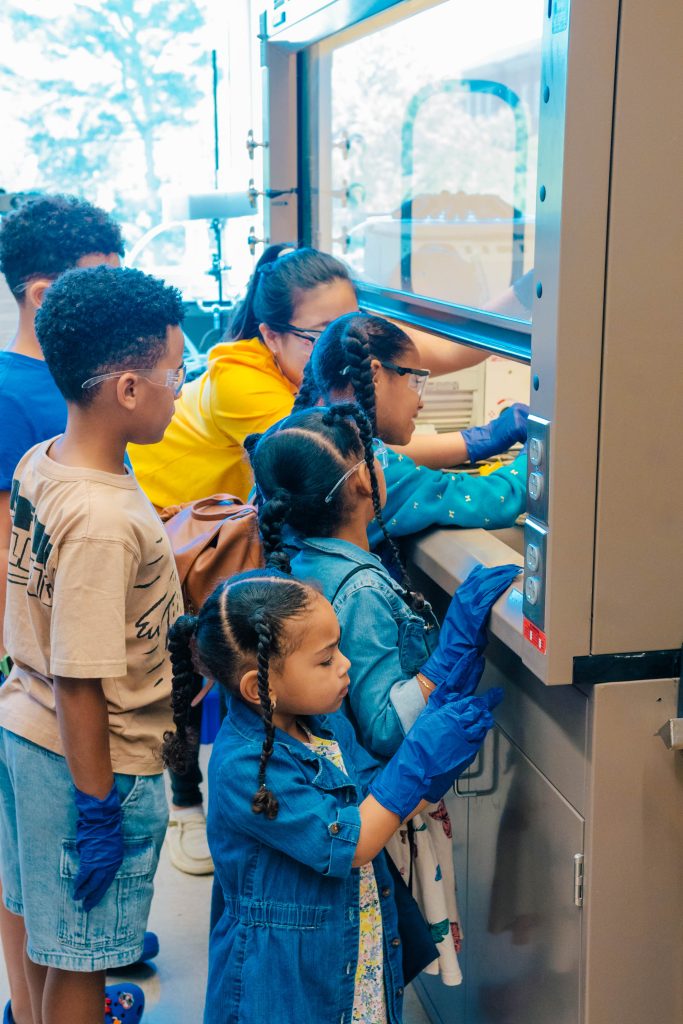
Middle school and high school students enjoy designing and programming robots and touring chemistry or biology labs. The event also gives older students a taste of a college campus and the resources available to UNCG students. Favorite activities for elementary school children include taking part in an obstacle course that teaches them how their muscles work, learning about “creatures of the night,” and bringing home origami from a DNA learning activity or seeds to attract honeybees to their yards.
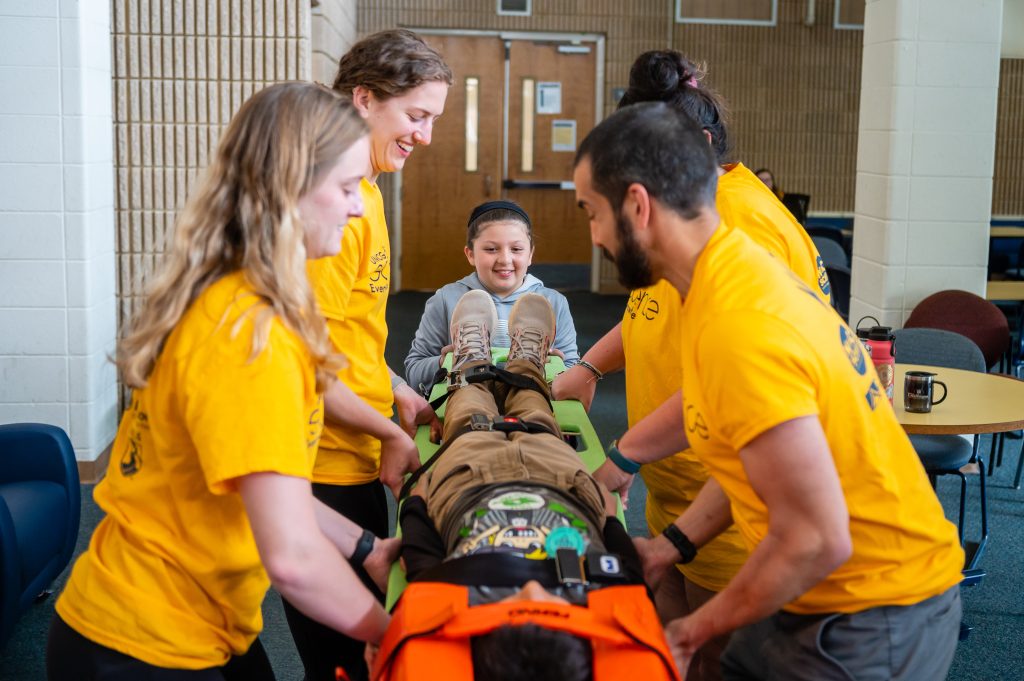
A particularly popular activity over the last four years has been the Cardboard Robot Parade, run by Teaching Resources Center Assistant Director Matt Fisher in the School of Education. In this arts experience, kids engineer wearable cardboard robot costumes with the help of UNCG students and then take part in a parade and a robot dance party at the end of the festival.
Festival attendees receive stamps for participating in activities in different sections on campus. Those with fully stamped cards receive t-shirts as prizes.
The UNCG Native American Student Association will also host its annual Spring Powwow on campus on the same day this year. The free event, which includes intertribal dancing and indigenous vendors selling crafts and food, will include its own Science Everywhere display.
While most Science Everywhere activities take place April 11, Greensboro residents will have one more opportunity on April 17 to get their science on at the Star Party at the Three College Observatory, where participants will get to peer through the 32-inch telescope, listen to a one-of-a-kind storyteller, and learn about the night sky.
Community Building, Career Building
Science Everywhere would not be possible without hundreds of UNCG faculty, staff, and student volunteers. Fourth-year chemistry student Jasmin Grillo, who is completing her third year as the festival’s student co-director, says the big lift is worth it.
“I’m one of the kids who went to programs similar to Science Everywhere, and it’s the reason I chose chemistry as my career goal. I’m giving back to the community something that will literally carry me throughout my lifetime.”
She says it is important for kids to engage with science outside of the classroom, in a more approachable context.
“We must give kids opportunities to see how science isn’t this super daunting thing. It’s everyday life, and it’s cool and fascinating.”
UNCG Vice Chancellor for Research and Engagement Sherine Obare agrees, adding that the rich community event is particularly important in Greensboro. “As STEM and advanced manufacturing companies expand in our region, investing in workforce development is key to driving economic growth, strengthening communities, and preparing the next generation for high-impact careers,” says Dr. Obare.
“Inspiring kids by giving them hands-on opportunities with science and introducing them to working scientists is the first step in a pipeline that goes from elementary and high school to college education to careers in STEM. Building and strengthening that pathway is one of the reasons UNCG exists.”
by Sangeetha Shivaji and Becky Deakins, University Communications photography by Sean Norona, Martin Kane, and Jiyoung Park, University Communications
UNCG Names Dr. Morgan Chitiyo the New Dean of the School of Education
Posted on April 08, 2026
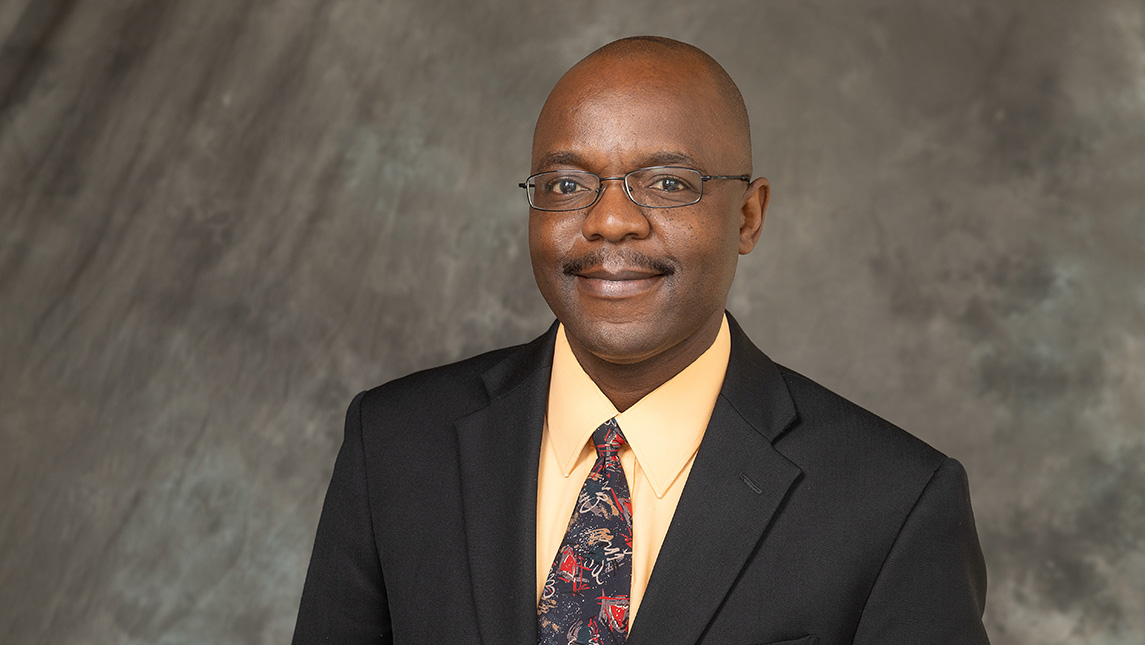
Chitiyo, who has served as interim dean, will assume the permanent role on May 1. The internationally recognized scholar was also chair of the Department of Specialized Education Services, and before coming to UNCG, he held leadership positions at Duquesne University’s School of Education.
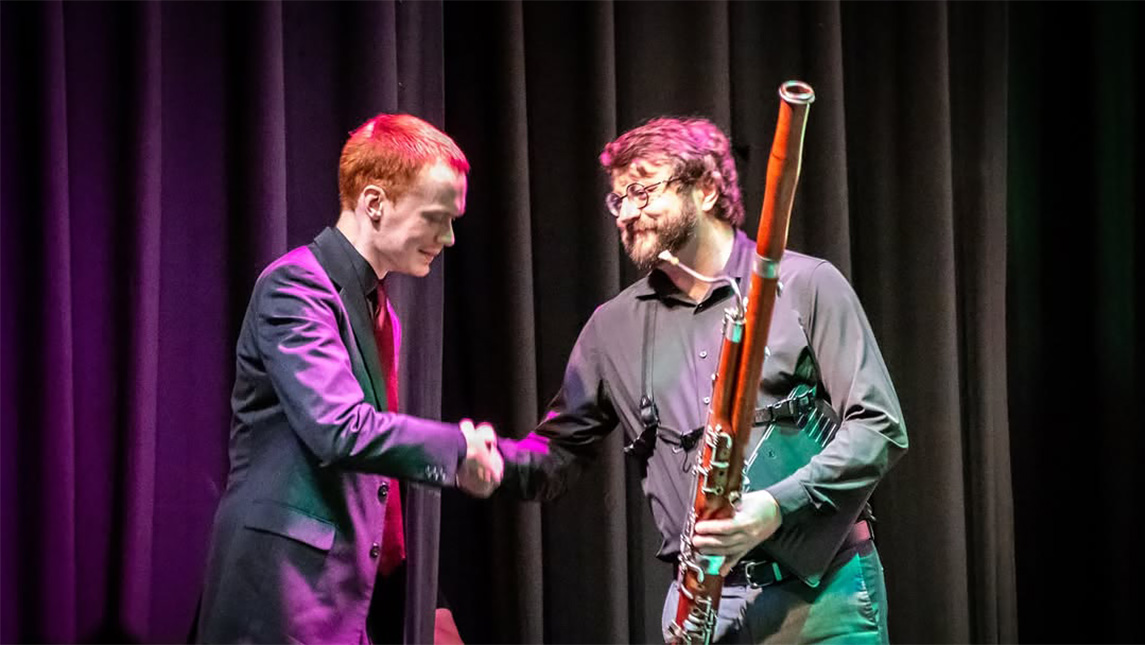
Bassoon Professor Retools Concert To Help Young Musicians
Posted on May 22, 2026
A comment made by an alum to his former UNCG professor, Dr. Ryan Reynolds, got the latter thinking how he might put more instruments in the hands of young, eager students. He delivered on that goal with his most recent winter concert.