Professor Gideon Wasserberg, above right, has been awarded a prestigious $3.7 million National Institutes of Health R01 grant to advance his research on controlling sand flies, the vectors of the parasitic disease leishmaniasis.
Leishmaniasis affects over 1 million people each year and is found in approximately 90 countries in tropical and arid regions of the world, putting approximately 1 billion people at risk. The most common form, cutaneous leishmaniasis, typically causes skin ulcers, which can last months or even years and leave significant scars. The more serious visceral form of the disease, which attacks internal organs, often affects children and is usually fatal if left untreated, says Wasserberg.
“Leishmaniasis is considered a neglected zoonotic disease because cases are distributed in poorer regions of the world,” the biologist says. “Cases are under-reported, research is underfunded, and health care is inadequate, so the numbers reported are probably lower than the reality.”
Wasserberg and his collaborators are studying the behavioral and chemical cues that entice egg-bearing—or gravid—P. papatasi sand flies to lay their eggs. P. papatasi is the most common vector of leishmaniasis in the Middle East, North Africa, and central Asia, he says.
Drs. Loganathan Ponnusamy and Coby Schal at North Carolina State University are co-investigators on the project.
The Ecology of Rodents and Sand Flies
“Understanding rodent and sand fly ecology is the key to controlling the sand fly population and reducing human cases of leishmaniasis,” says Wasserberg.
The microscopic parasite that causes leishmaniasis lives harmlessly in rodents and transfers to sand flies that feed on their blood. Infected sand flies then transfer it via bite to other wild rodents, wild canids, and humans.
“In this ecological system, wild rodent burrows provide a shelter and breeding site for sand flies. We hypothesized that a trap that mimics the shape and odors of a burrow would attract egg-bearing females.”
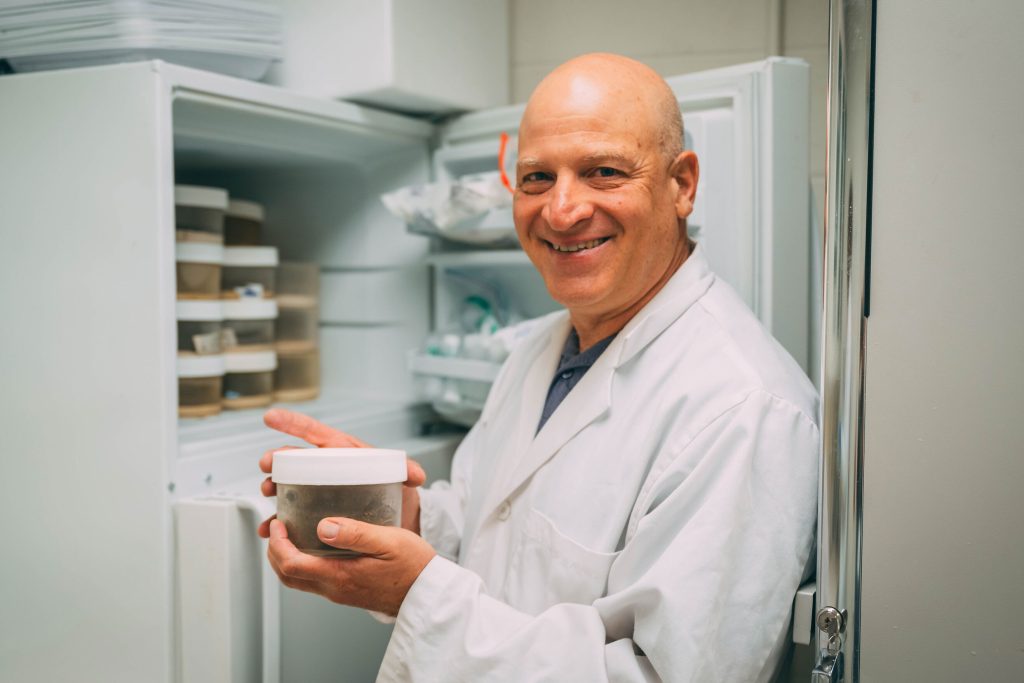

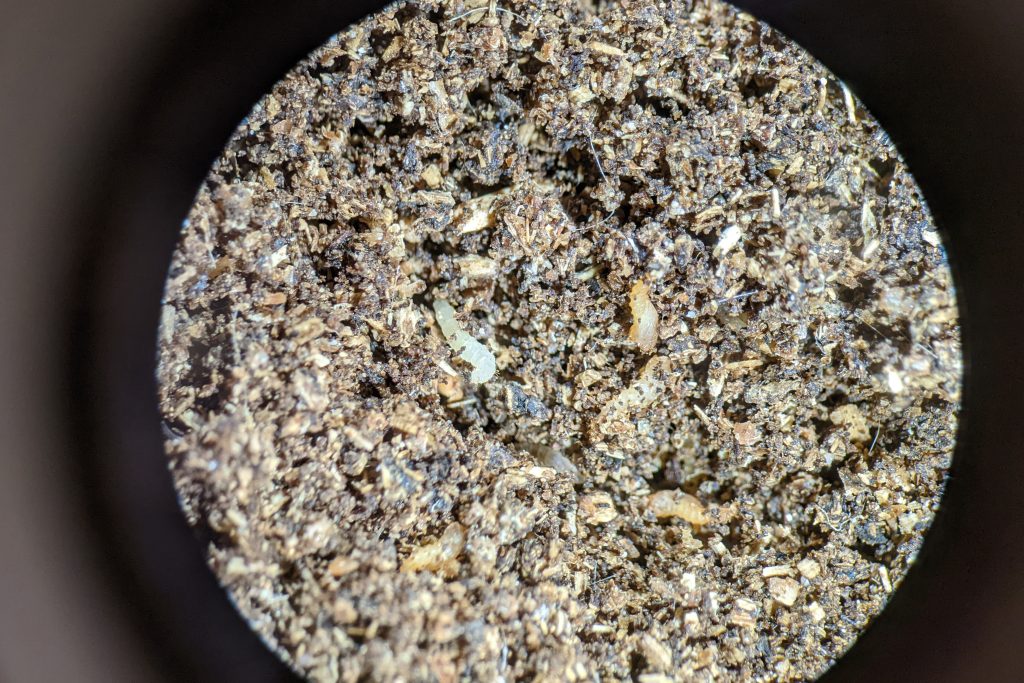

Dr. Gideon Wasserberg and undergraduate researcher Chelsea Akabueze work with sand flies in the lab.
Current Findings, Next Steps
Wasserberg’s prior research has netted over $2 million in funding from the National Institutes of Health, Department of Defense, National Science Foundation, and North Carolina Biotechnology Center.
As part of that work, his team found egg-bearing females were attracted to sites containing previously laid eggs and larvae. The researchers identified several bacteria and fungi in sand fly larvae nests that produce chemical attractants. “The odors they produce likely indicate larval nutrition, so they predict a suitable egg-laying site,” says Wasserberg.
Given that blood-feeding and mating also occur in the burrow, the researchers are testing whether the same attractants that draw gravid sand flies might also draw males seeking female sand flies and female sand flies seeking blood.
“Dr. Wasserberg’s groundbreaking work addresses one of the world’s most neglected but devastating diseases through innovation rooted in ecology, chemistry, and public health. His efforts not only advance scientific understanding but also protect communities worldwide. We are proud research of this caliber, that is driven by both excellence and compassion, is being conducted right here at UNCG.”
In the United States, most people who develop leishmaniasis contracted the infection while out of the country. However, there have been some cases of locally contracted cutaneous leishmaniasis in Texas, Oklahoma, and Arizona. Currently, there is no vaccine, and infection prevention focuses on avoiding sandfly bites.
“This work will not eradicate leishmaniasis in the world, but it could be helpful in reducing human exposure in affected areas,” Wasserberg says.
Story by Sangeetha Shivaji, University Communications
Photography by Sean Norona, University Communications
Learn more about Dr. Wasserberg and his work in UNCG Research Magazine.