


The B.A. in Chemistry at UNC Greensboro offers a flexible pathway for students who want a strong foundation in the chemical sciences while exploring interdisciplinary interests or pursuing a double major. Guided by award‑winning faculty, students gain hands‑on experience in modern laboratories and develop the analytical, problem‑solving, and communication skills needed for careers in medicine, biotechnology, pharmaceutical sciences, education, and other chemistry‑related fields.
Bachelor of Arts in Chemistry PROGRAM DISTINCTIONS
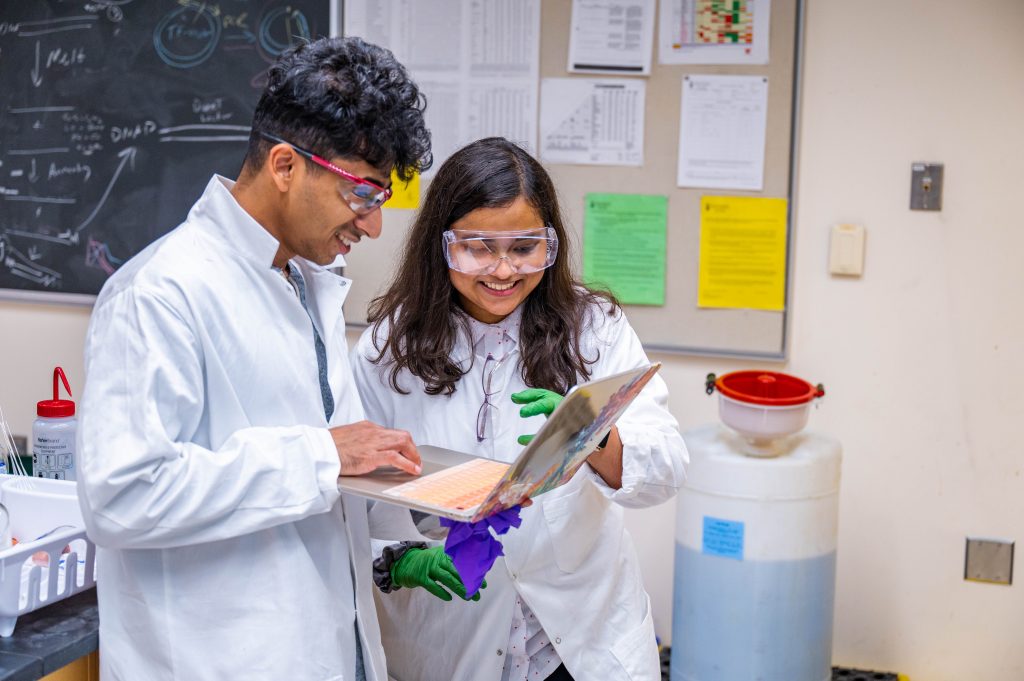
- Hands‑on Laboratory and Research Experience: Faculty mentor students in a variety of research topics. Students can pursue research internships and work as lab and research assistants.
- Awarding Winning and Funded Faculty: Faculty research is funded by National Institutes of Health, National Science Foundation, the N.C. Biotechnology Center, and the American Chemical Society Petroleum Research Fund.
- State-of-the-Art Equipment and Facilities: The Patricia A. Sullivan Science Building is home to the Department of Chemistry & Biochemistry. It houses 29 research and teaching laboratories.
- Medicinal Chemistry Collaborative (MC2): The MC2 brings together research scientists from UNCG and the greater NC Triad to research and develop effective treatments for cancer and infectious diseases, and offers opportunities for you to join this groundbreaking research-led quest to improve lives as an undergraduate research partner. Learn more about MC2 and its mission.
B.A. OR B.S. — WHICH Chemistry DEGREE IS RIGHT FOR YOU?
The Bachelor of Arts (B.A.) in Chemistry program is less specialized than our B.S. in Chemistry degree. However, it offers solid foundational training in chemistry and greater flexibility to explore interdisciplinary interests. It’s well-suited for students planning careers in secondary education, certain roles within the chemical industry, or pre-health fields that allow more room for broader academic pursuits.
The Bachelor of Science (B.S.) in Chemistry program provides a rigorous, in-depth exploration of chemistry, featuring advanced coursework and research opportunities. This program is ideal for students planning to attend graduate school, pursue careers in the chemical industry, or enter competitive pre-health pathways.
THE B.A. in Chemistry STUDENT EXPERIENCE
Students in the B.A. program learn chemistry through hands‑on experimentation, collaborative research, and real‑world applications. Coursework emphasizes scientific reasoning, quantitative analysis, and the ability to communicate complex ideas clearly, skills valued across scientific and professional fields.
- Conduct undergraduate research with faculty in areas such as biochemistry, environmental chemistry, and materials science.
- Research internships, a chemistry/biochemistry internship course, and work as lab assistants and research assistants are available for students.
- Work in modern teaching and research labs using advanced instrumentation.
- Build a flexible academic plan that supports double majors, minors, or pre‑professional tracks. View a sample B.A. in chemistry study plan.
- Interested in teaching chemistry at the high school level? B.A. in chemistry students may add a Comprehensive Science High School Teaching Licensure concentration.
- Join chemistry‑focused student groups and professional organizations.
- The Skeptical Chemists Club organizes lectures and seminars for students and arranges social outings. The Environmental Awareness Foundation promotes responsible scientific practices to maintain a healthy ecosystem.
AFTER GRADUATIng with a Bachelor of Arts in Chemistry
Graduates of the B.A. in Chemistry program at UNCG are prepared for careers in the biochemical sciences, medicine, biotechnology, pharmaceutical research, science communication, and education. Many students pursue professional or graduate programs, while others step directly into laboratory, regulatory, or analytical roles in North Carolina and beyond.
Where UNCG Chemistry Alumni Work
- Certifying Scientist – Ameritox, Greensboro, N.C.
- Laboratory Manager – Mass Spectrometry Facility, UNC-Chapel Hill.
- Staff Scientist in analytical sciences/metabolomics – David H. Murdock Research Institute in Kannapolis, N.C.
- Analytical/R&D Lab Manager – Qvape Juice, Raleigh, N.C.
- Analytical Scientist – Nutramax Labs
- Lab Technician – Pfizer
- Assistant Editor – Discovery magazine
Potential Career Paths
- Analytical Chemist
- Doctor
- Research professor
- Chemical Engineer
- Chemistry Teacher
- Forensic Scientist
- Geochemist
- Hazardous Waste Chemist
- Materials Scientist
- Pharmacologist
- Toxicologist
Program Details
Degree Type: Bachelor's
College/School: College of Arts and Sciences
Program Type: Majors & Concentrations
Class Type: In Person
Catalog Name: Chemistry, B.A.
Similar Degree Offerings
Contact Us
Daniel Christen
Director of Undergraduate Studies, Department of Chemistry & Biochemistry
dpchrist@uncg.edu