With funding from NASA, a UNC Greensboro (UNCG) lab and Virginia-based technology company Luna Labs are exploring the use of fungus as a building material in space.
The project, led at UNCG by chemistry professor Nicholas Oberlies, will investigate whether certain fungi can be combined with regolith—loose rock and soil found on the surface of the Moon and other planets—to create materials that could one day support construction in places other than Earth.
“When you think about building on the Moon or Mars, you’re not going to fill up a rocket ship with bricks and mortar,” Oberlies says. “The goal is to explore whether we can create materials using what’s already available on-site.”
Building with biology
Instead of transporting heavy construction supplies across space, researchers are increasingly interested in in-situ resource utilization—using local materials to support exploration and long-term habitation.
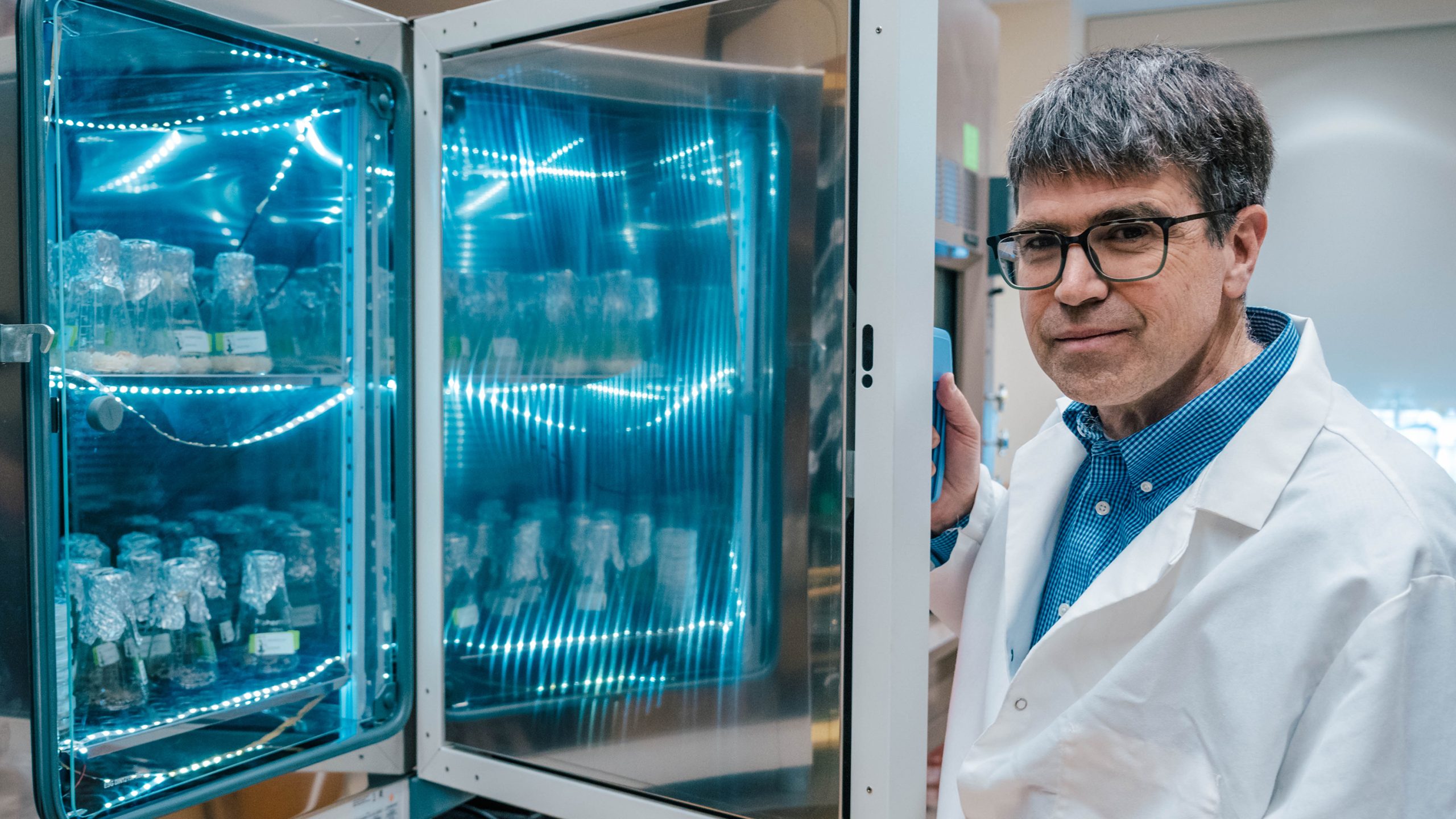
Oberlies’ research team will attempt to culture fungi—which grow on dead and decaying matter and form dense webs of thread-like structures called hyphae—on a mixture of regolith and simulated human waste. The goal is to cultivate the hyphae so they link the regolith together into a solid composite, which can be sterilized and compressed into something resembling a brick.
“Astronauts will need to recycle as much as possible in space,” Oberlies says. “This is an early-stage exploration of whether mycology can help us turn limited resources into something useful.”
The researchers are particularly interested in shelf fungi and other species known for their rigidity.
“If you’re hiking in the woods and see fungi growing on the side of a tree in little steps, those fungi are actually pretty strong,” says Oberlies.

New frontiers in fungal ecology
The NASA funding was awarded to Luna Labs, a Charlottesville-based product development company with expertise in advanced materials testing and structural analysis.
“Luna Labs brings the engineering side, measuring the strength and how much you can compress it,” Oberlies says. “Our expertise is in fungal ecology: which species are good candidates and how we can grow them.”
While Oberlies’ laboratory is best known for studying fungi’s bioactive compounds, the NASA-supported project represents an exciting new application of their expertise.
“This isn’t what we do every single day,” Oberlies says. “But as a geeky scientist who’s read The Martian, the idea of contributing something to NASA is cool.”
The project is exploratory but reflects the growing reality that future missions to the Moon and Mars will require innovative, sustainable ways to live and build far from Earth.
Feature photo by Sean Norona