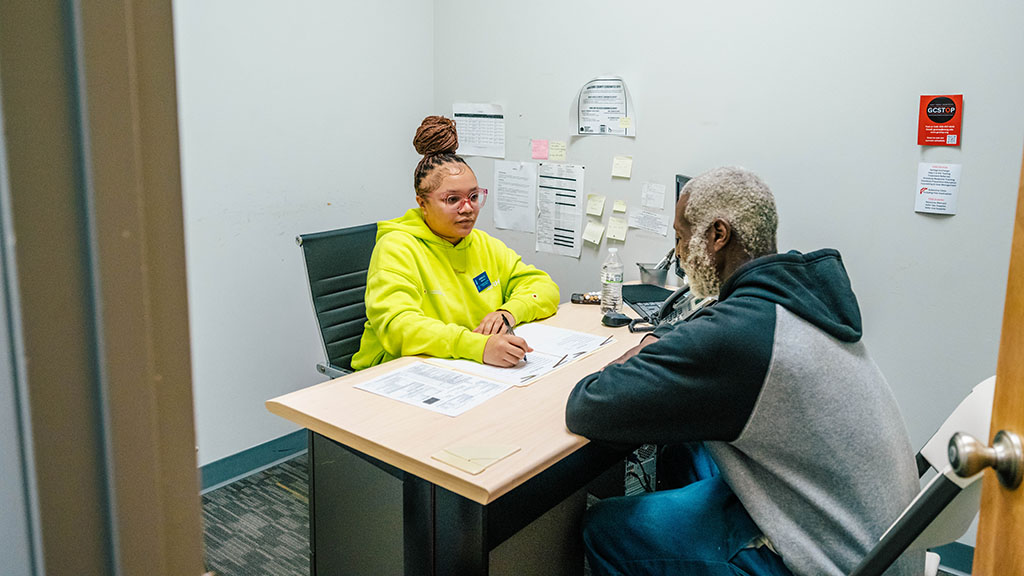
Rural health providers understand the needs unique to their communities. That is obvious when you step inside the small Clara Gunn Community Clinic in Rockingham County, North Carolina. There one room is stocked with canned goods and other non-perishable foods. Patients who complete a health screening can take home some healthy food, one example of how rural health providers respond to needs that extend beyond medical care.
This semester, UNCG social work students are helping extend that network of care through Integrated Community Access to Resources and Emotional Health and Well-Being, or iCARE Rural. Supported by a two-year, $200,000 grant, students receive stipends to serve Rockingham County residents 16 hours each week.
“Students often have limited exposure to rural communities or an understanding of their unique needs,” says Johnette Walser ’08, ’10 MSW, iCARE Rural’s lead principal investigator (PI) and program director. “In addition to offering psychoeducation, we want them to gain a better understanding of the many services and resources already in place.”
The program also brings in UNCG psychology students, who connect with Rockingham County clients through telehealth from the UNCG Psychology Clinic.
Students Go Where the Need Is Greatest
When the UNC System opened applications for its Rural Healthcare Transformation Grant, faculty in the School of Health and Human Sciences knew they were in a good place to get a program running quickly and efficiently. They already had internships in the county through the Congregational Social Work Education Initiative (CSWEI).
Rockingham County is designated a Tier-1 underserved group, which means the U.S. Health Services Administration found it does not have enough primary care providers, a high number of elderly, high rate of homelessness, or high mortality rate.
Older adults in rural communities can face transportation barriers that make it difficult to get to appointments. Limited access to mental and behavioral healthcare can also lead patients to seek nonemergency care in emergency departments, further straining those resources. One of CSWEI’s contributions is hospital diversion by providing people with active mental health screenings, community placements, and early intervention and treatment.
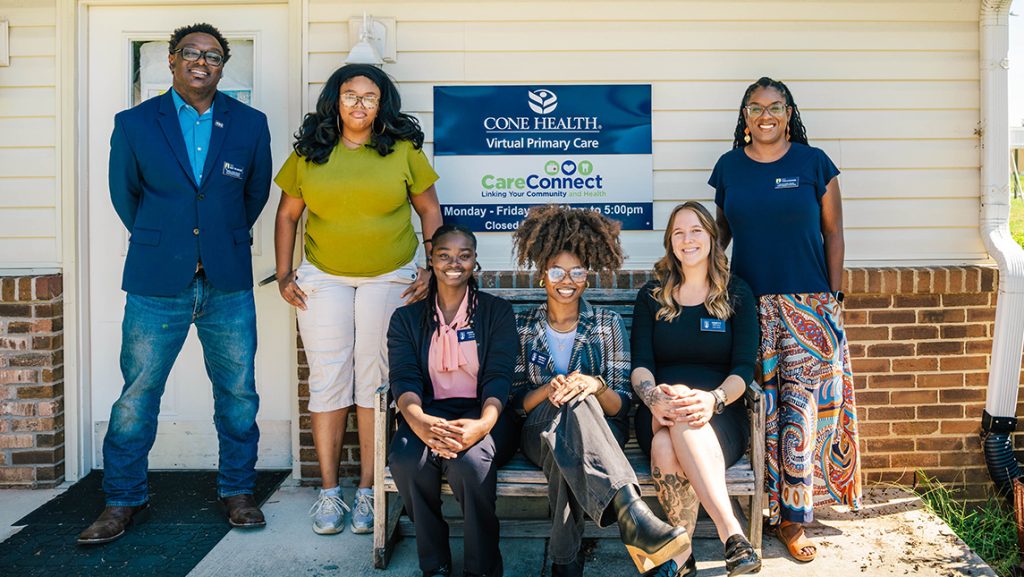
The iCARE Rural grant helps address those gaps by providing internships for six UNCG students with organizations in Rockingham County, specifically Clara Gunn and Lot 2540 ministry.
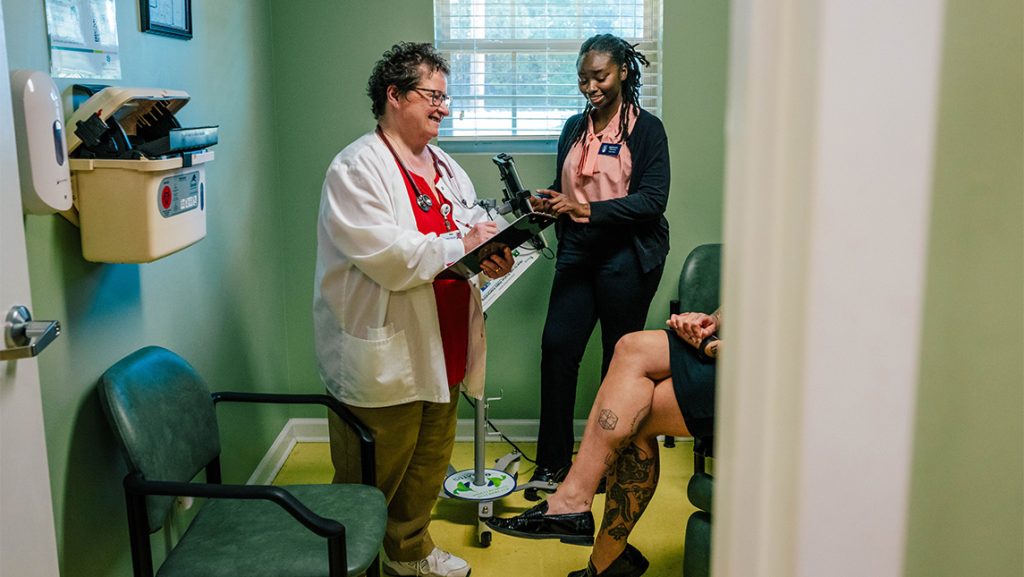
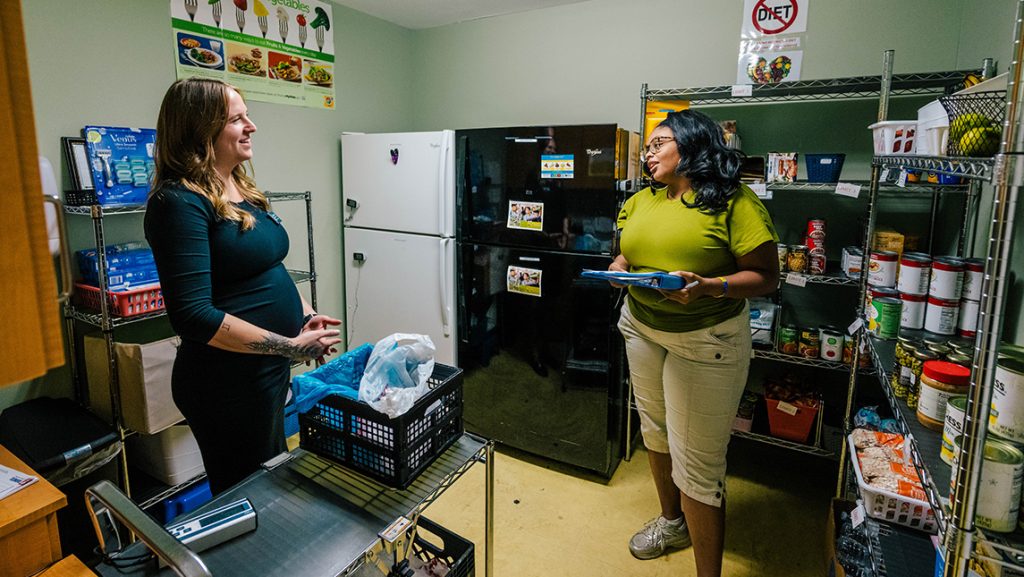
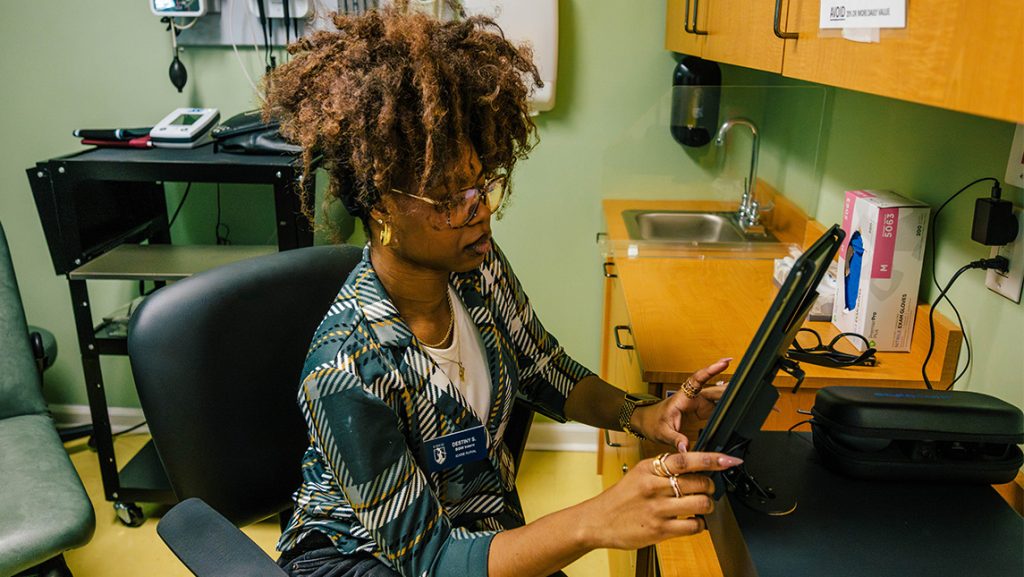
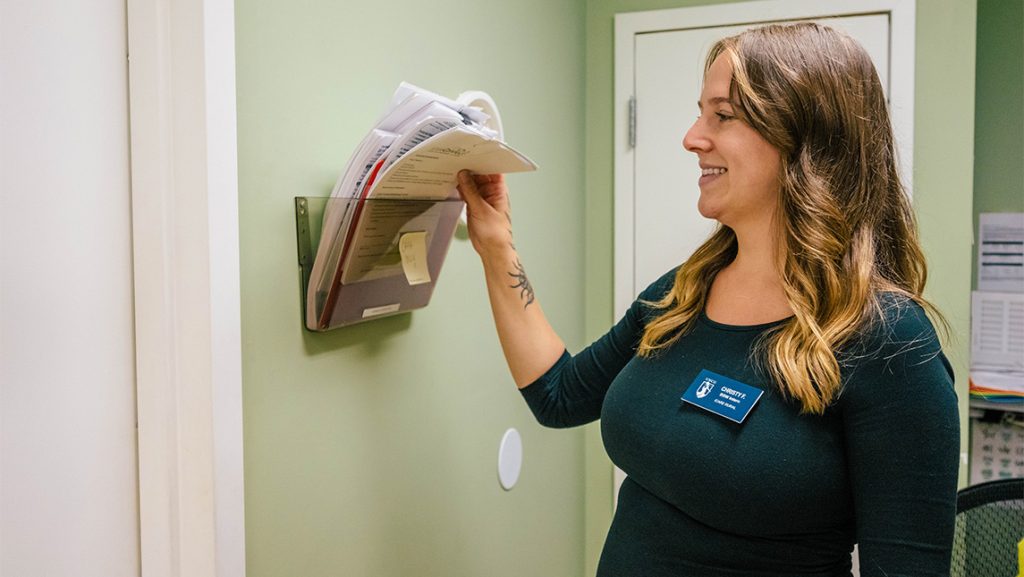
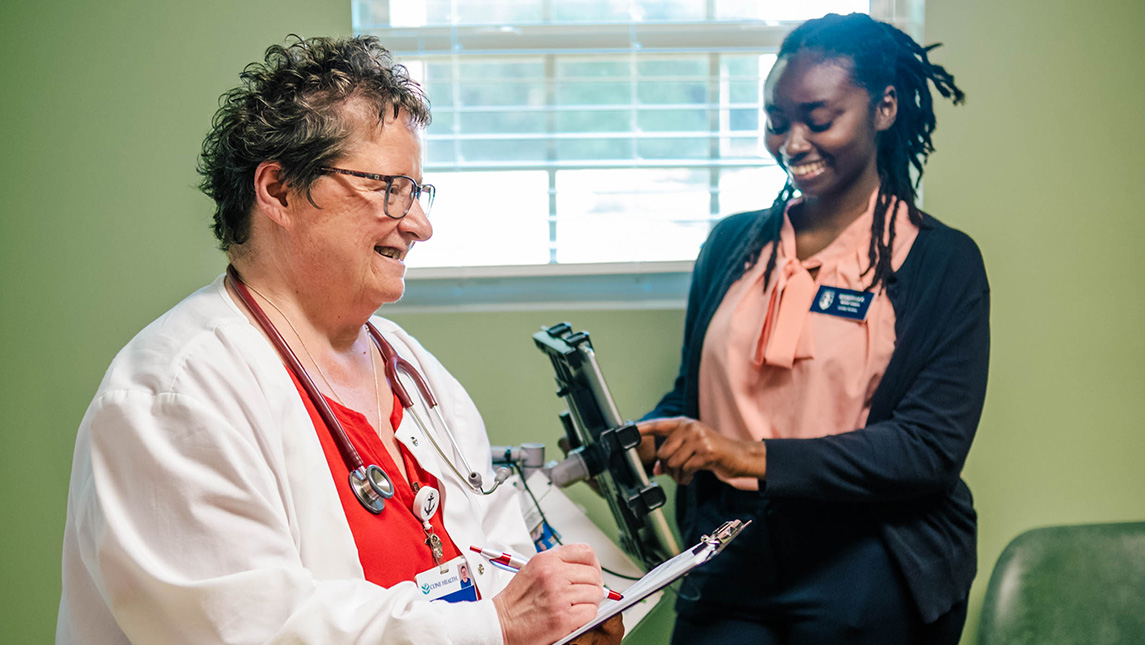
Four students are earning their bachelor of social work (BSW) or master of social work through the joint master of social work program (JMSW). They receive training from professionals in CSWEI and Cone Health’s Congregational & Community Nurse Program. Their work includes mental health screenings, supportive counseling, psychoeducation, and referrals to community-based services.
Time spent at Clara Gunn and Lot 2540 allows students to get to know the community on a personal level while building professional skills and relationships with agencies that could eventually become employers.
“Our power is in partnerships,” says Professor of Social Work Fran Pearson. “When students stay anywhere for a chunk of time, they don’t want to move. It becomes their area of security. But when you get them immersed in that community, it can generate interest and a sense of comfort. It becomes a place where they might want to occupationally nest.”
Many Levels of Experience Provide Excellent Care
Dr. Hermeet Kohli, department chair of Social Work, and co-PI for iCARE Rural, says one of the m program’s strengths is that BSW and JMSW students work alongside one another at various levels of practice. Undergraduate students develop skills for generalist practice, while graduate students provide specialized services such as brief solution-focused therapy and motivational interviewing.
“They are not only getting to immerse in the community,” says Kohli, “but our JMSW students, who are clinicians-in-training, get to practice all of that once networks are set and community trust is built.”
Their faculty co-PIs serve as familiar faces leading the way. Pearson is the program director for CSWEI. She’s spent two decades developing service delivery, health literacy, and education in Rockingham County. Her close contacts with congregational community nurses open pathways into clinics, nonprofits, and faith communities.
Kohli’s career likewise centers on interdisciplinary community work in Appalachia and with rural and immigrant and refugee communities in Maine. Walser, who completed her graduate internship through CSWEI, spent three years as a school social worker in Reidsville.
They are joined by Assistant Professor of Social Work Chauncey Greene ’03 MSW, undergraduate director of field education. He partners with local agencies and community organizations to secure practicum placements for BSW students. Greene and Walser stay on site with them, serving as points of contact with the providers.
“It is an honor to work alongside the BSW and JMSW students and the dedicated rural health providers of Rockingham County as we meet the needs of county residents,” says Greene. “These types of partnerships create meaningful learning opportunities for students to learn, serve, and make a positive impact in the communities they serve.”
Psychology Adds Telehealth to Community Support
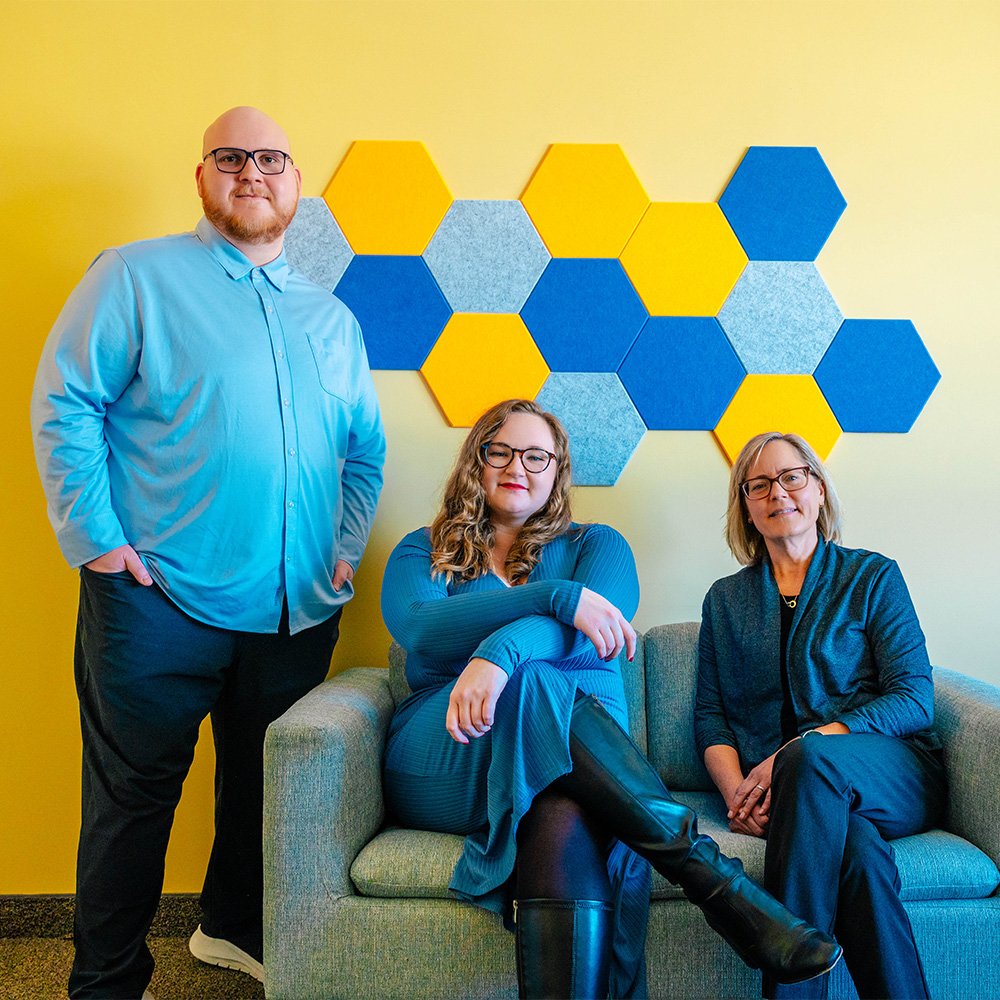
When clients need more intensive or ongoing care, psychology trainees can step in through the UNCG Psychology Clinic.
Dr. Kari Eddington, director of clinical training in psychology, oversees this side of iCARE Rural. Two doctoral students provide services through secure telehealth appointments. They serve as a second line of support when social work students identify clients who require more in-depth assessment, continuing therapy, or crisis intervention.
Eddington says the experience helps them go beyond the textbooks to better understand all-encompassing, quality service. She says, “What’s exciting for us is for psychology students to learn more about the broader context of rural healthcare, such as the importance of addressing things like economic instability and stigma.”
Eddington is also using the grant to examine how the psychology program prepares them for rural practice, identify gaps, and create sustainable changes for future cohorts.
“We’ve got a sort of junior colleague model with these students,” she says. “They are really helping to shape what this program looks like and how we train students to work in rural settings, and that’s going to benefit students beyond those funded by this grant.”
A Vision for Growth and Potential
iCARE Rural begins with the strengths already present in Rockingham County: knowledgeable agencies with dedicated people. Patients gain expanded access to mental and behavioral health care, students explore potential career paths, and faculty identify new opportunities for community collaboration.
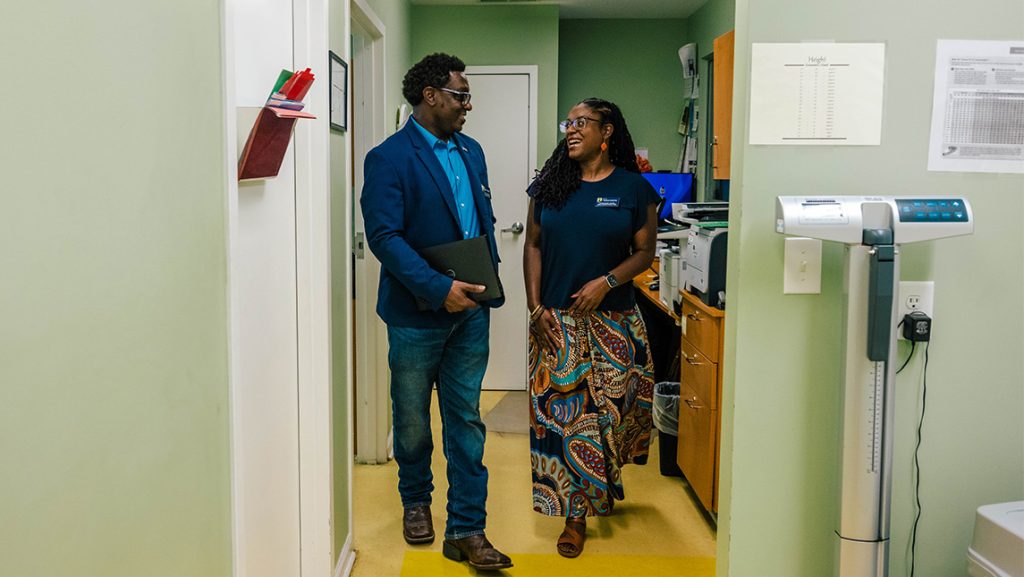
The project is a personal one for Walser. She feels honored to work alongside her colleagues, especially Pearson, who mentored her when she was a UNCG student. “I believe we have a responsibility to be good community partners,” she says. “With Greensboro and UNCG being as resource-rich as we are, it’s important that we use those strengths and resources to support our surrounding communities.”
Pearson adds, “We are brokers in potential. Seeing that delivered in housing and food connections and substance services, expanding that effort to a population that is often invisible because of their distance and the geographic barriers, that is powerful. This will be transformational.”
Story by Janet Imrick, University Communications
Photography by Sean Norona and Jefferson Castillo, University Communications