Posted on May 01, 2026

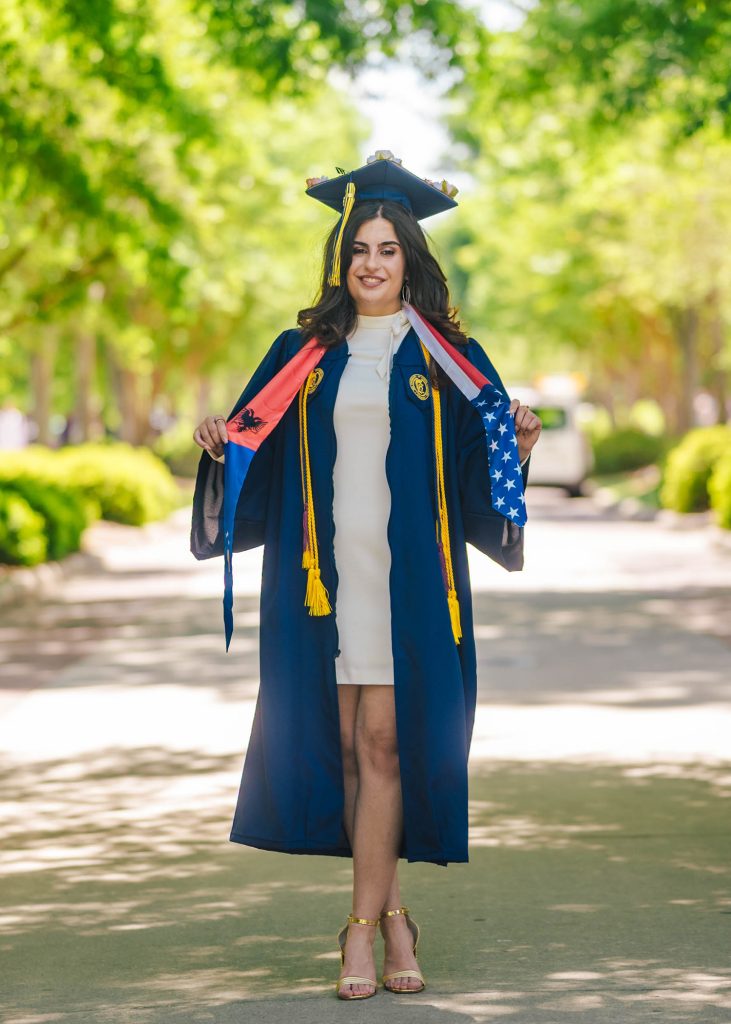
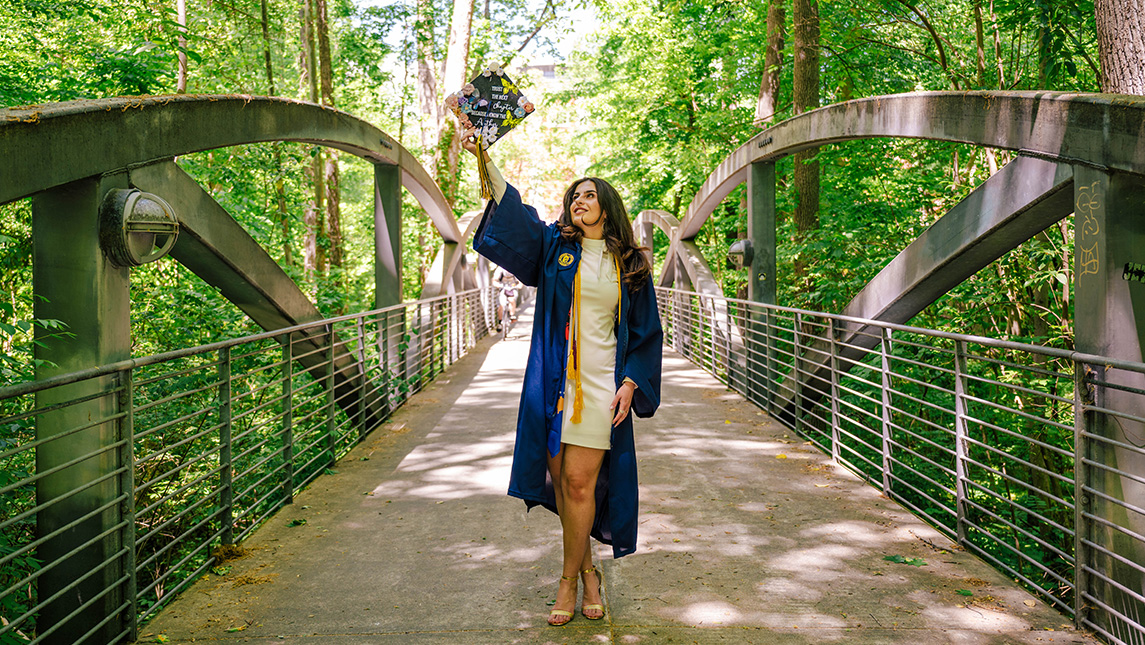
Graduate lifts her decorated cap and looks up on the bridge across Peabody creek.

Vesa Basha was not a classically trained vocalist when she arrived at UNC Greensboro, but she’s graduating from the School of Music as a polished singer-songwriter with marketable skills for success in the music industry.  

For Basha, an emotive artist with a warm smile and the voice of an angel, none of this would be possible without UNCG’s PopTech program and “God’s perfect timing.” 

“This is where I would not just grow as a singer, but as a full artist,” she says about UNCG as she prepares to graduate with honors, earning her Bachelor of Music in Performance – Popular Music and Technology.

Basha’s Background 

In 1998, Basha’s parents and older brother boarded a plane in war-torn Kosovo, bound for North America. They didn’t know exactly where they’d be relocated; the couple just knew they wanted better opportunities for their children. Settling in North Dakota, the Bashas built a life that soon also included a daughter with an extraordinary voice and a growing love for music. 

When Basha was a teenager, the family moved to Charlotte, N.C., where she began to consider college and a career in the music business. She had little performance experience and had only taken a few voice lessons, but she loved collaborating with friends in choirs and making music videos with her cousins.  

At the same time, the UNCG College of Visual and Performing Arts was developing a concentration in Popular Music and Technology (PopTech) for its music performance majors. PopTech was designed for musicians and vocalists who want to write, arrange, and produce music across diverse genres. The curriculum is broad — including creativity classes, technology courses, music theory, and subjects like media law — and it immediately drew musicians with interests ranging from songwriting and mixing to video game and movie scoring.  

In 2022, Dr. Mark Engebretson welcomed more than 20 musicians into PopTech’s first cohort and began recruiting students for the 2023 school year. Basha was one of those students, winning over faculty with her raw talent and ambition.  

“Dr. E’s encouragement meant so much to me,” Basha explains. “He knew that what I wanted in a college experience was exactly what UNCG was offering in this new program, and he saw my potential before I even started. I’m so grateful that I crossed paths with him.” 

Keep it Poppin’  

Basha thrived with the instruction and broad skills offered by the PopTech program.   

“I wanted to learn everything — not just how to sing, but how to write, produce, collaborate, and understand music as a whole,” she says. “UNCG gave me that.” 

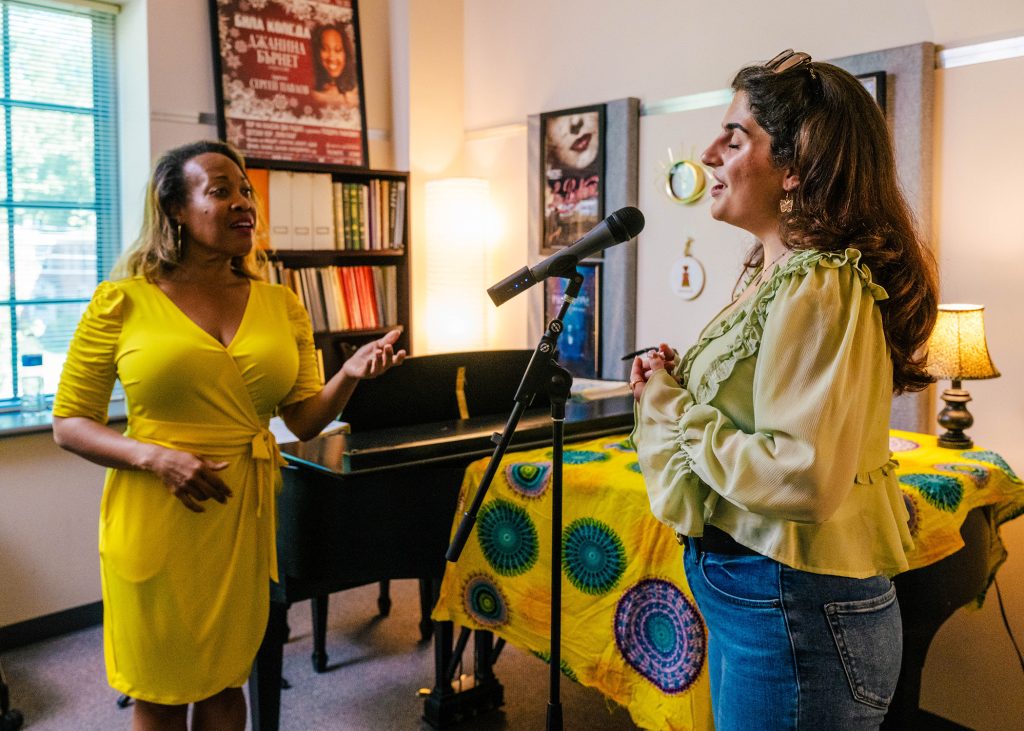
Professor Janinah Burnett became her vocal coach. As the current leader of the program, Burnett brings a wealth of experience as an actor and vocalist who has performed in opera, theater, television, and film. She admires Basha’s work ethic and her willingness to learn all aspects of music production.  

“PopTech gives students access to world-class artists who are working in today’s music industry and teaches them many facets of the music business beyond performance,” Burnett says. “Faculty encourage students to be versatile in the execution of their artistic practice and to embrace the fact that excellent work does not happen in a vacuum; collaboration is paramount.” 

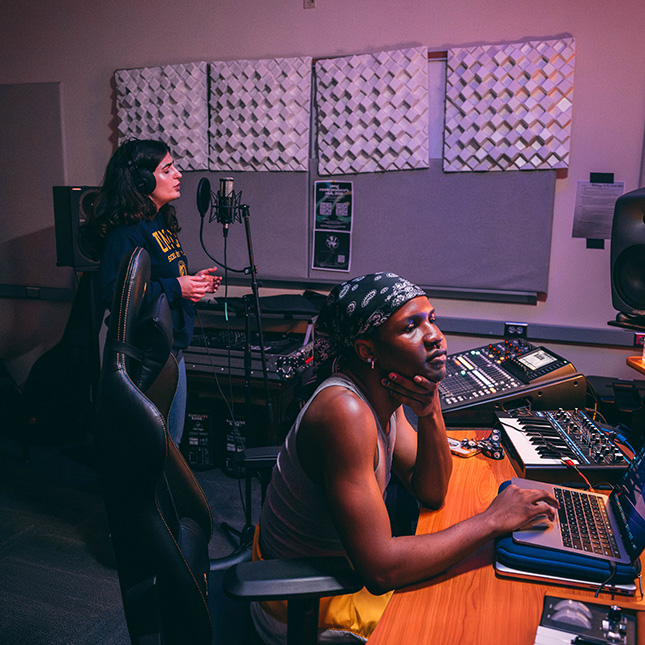
Basha counts collaboration with her fellow students among the biggest opportunities she discovered at the School of Music. She gained performance experience with ensemble vocal groups like 3-2-1; she brought her original music into the studio with musicians to develop arrangements and mixes; and she grew from critiques and ideas generated in PopTech studios and rehearsals.  

“Learning how to be a listener and take other people’s input into consideration is huge. You’re learning from others as much as from faculty,” she says. “In this program, you’re collaborating with all kinds of musicians every week. I was in the practice rooms all the time — that’s where the work happens. The practice rooms in the School of Music are where I grew as an individual. That place has my heart.” 
Authentically Vesa 

She had become more confident in her performance skills when she took a video production class, which motivated her to create a music video for a song she wrote called “21.” The electronic dance single is a blend of English and Albanian lyrics that represents her journey of independence and growth. Connecting with professionals in Kosovo, she traveled there in 2024 to produce the video for “21”.  

Basha is currently working on a new song called “Authentically,” which also has Albanian and English lyrics but more of an Afro House beat.  “’Authentically’ promotes being yourself, loving yourself for who you are, and embracing who you are,” she says. “I’m just very excited to showcase it to the world and bring that positive message to people.” 

Aside from the technical training she received in the PopTech program, Basha credits the University for giving her “the space to be authentic as an artist and a person.” Representing her culture and inspiring others is at the core of all her projects. It’s a nod to the sacrifices her parents made for her. 

Before coming to the United States, her father was a dentist and her mother a psychologist. They had to start over, taking jobs in accounting and teaching. Now, Basha is committed to honor their sacrifices by succeeding in the music industry. “Because their degrees weren’t accepted here, they had to give up their passions for a better life for their children,” she explains. “This is part of my story.” 

Burnett believes that Basha’s authenticity will be a guiding force in a competitive field: “The world needs our individual and creative voice! The truer we are to this fact, the more successful we will be overall,” she says. “In my studio, we do the work to find one’s authentic true voice. We get to know our bodies, our senses, our minds and hearts and practice using them all to interface with art making.” 
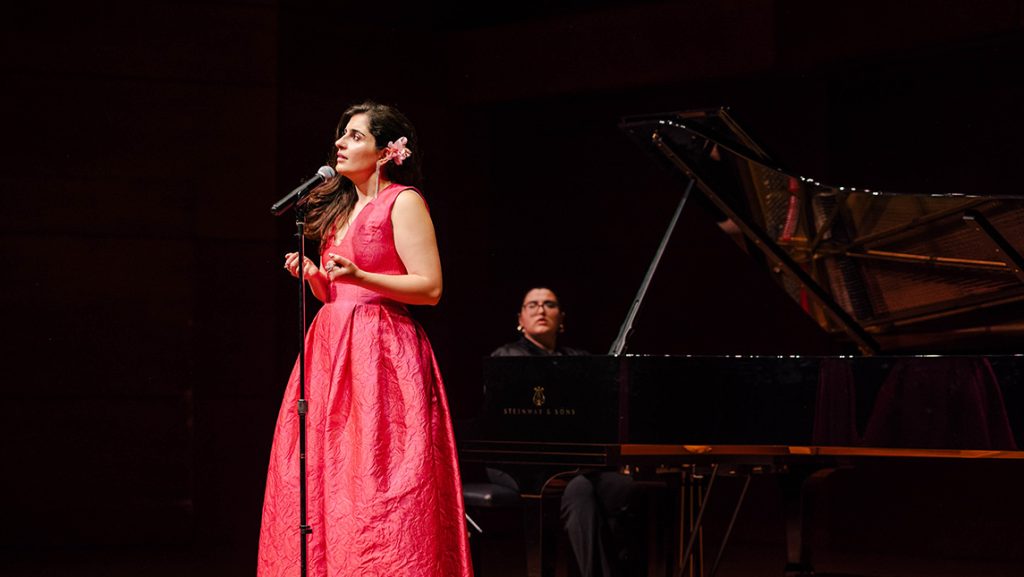
Singer on stage with a pianist on a baby grand in the background.

A Voice with a Vision 

It’s evident that Basha is a musician who cares more about inspiring others than garnering fame and fortune. Her Capstone project, “Vlera Bliss,” provides further evidence. It isn’t a vocal project nor a creative passion piece. Instead, she developed a business model for a teaching studio that provides voice lessons with a focus on student wellness and mental health through creative expression. 

After establishing a career as a vocalist and performer, she wants to be an educator. “I want to teach people to accept their imperfections and love themselves for who they are,” she says. “When you’re an artist, you’re putting yourself out there and it’s very intimate. I want to teach performing artists to gain confidence within themselves.” 

Whether writing and producing original music, performing on stage, or teaching others to express themselves through music, UNCG has prepared Basha to use her talents to uplift and serve others.  

“Vesa is incredibly devoted to her artistic vision and deeply understands the hard work and business mindset that will serve her well in all of her endeavors after college,” says Billie Feather, Basha’s Capstone advisor. “She is an inspiration within the PopTech community, and I am so excited to see how she will inspire others with her art.” 

As she prepares to cross the stage at commencement, Basha has nothing but gratitude for what she’s learned at UNCG. “When opportunities arise or doors open for me, I believe it is all part of God’s plan,” she says candidly. “When I’m riding my bike to the music building on a beautiful day, I realize how grateful I am. I know that God brought me to this school, because the experience has been so unexpected.”

Story by Becky Deakins, University Communications.
Photos by Sean Norona, University Communications.
Video by David Row, University Communications.

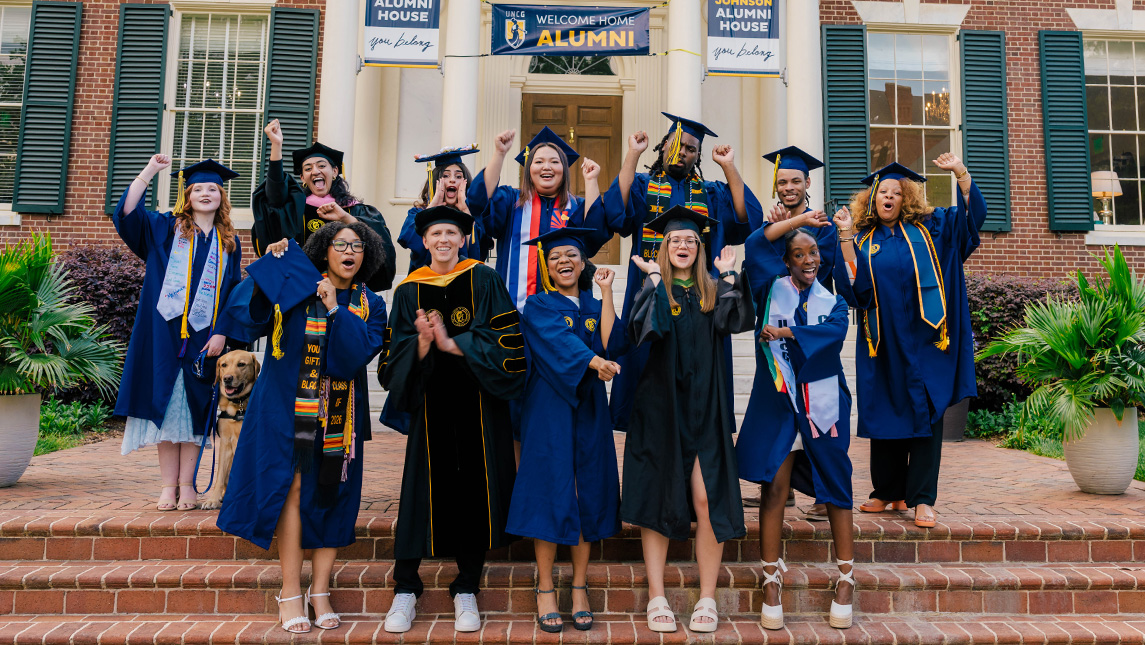
CELEBRATE OUR GRADS!

Graduates and their families are encouraged to share their accomplishments on social media by tagging the University accounts and using the hashtag #UNCGGrad. Visit UNCG’s digital swag page for Commencement-themed graphics and templates.

Mention @UNCG in celebratory posts on Instagram and X and @uncgreensboro on TikTok.
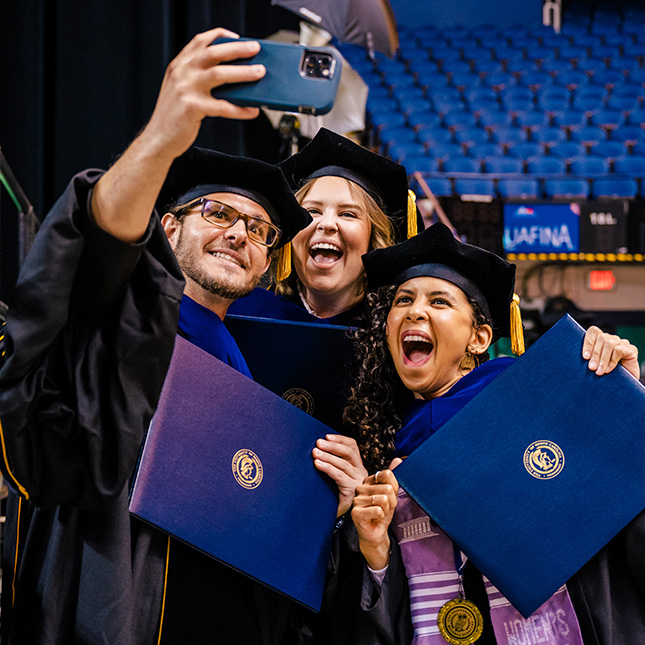
Three masters graduates pose for a selfie in cap and gown.

Latest News

May 4, 2026

Excellence and Career-Readiness Define the UNCG Class of 2026

The excitement can be felt across UNCG as it gets ready to honor the nearly 3,000 Spartans who will graduate this spring. Each of th...

May 1, 2026

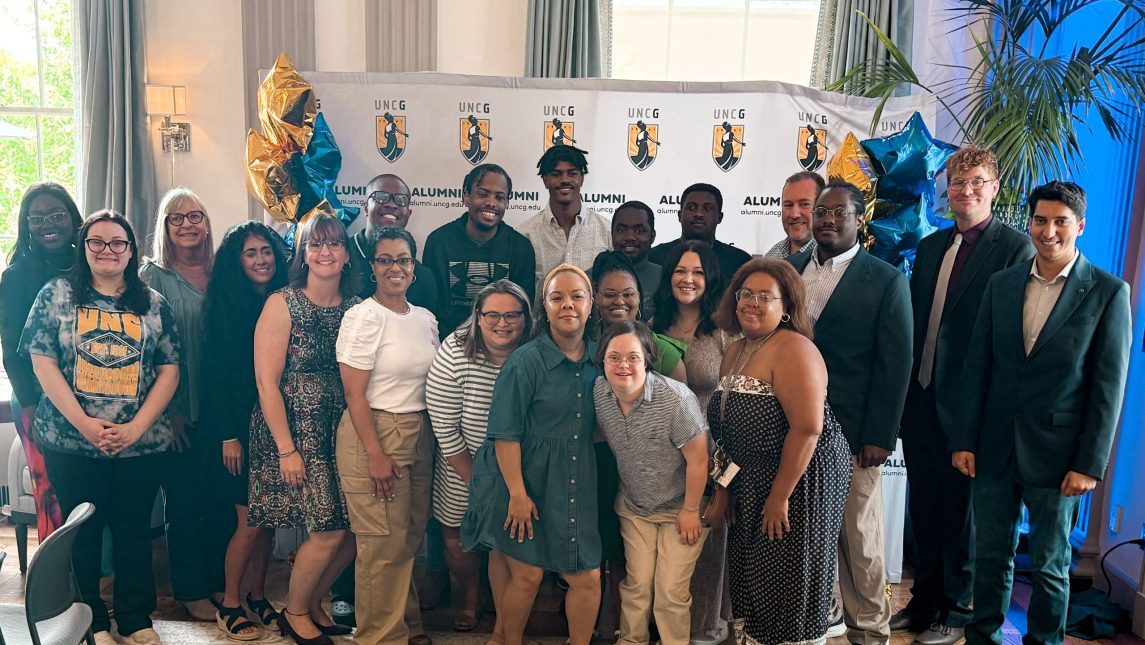
IPSE Day celebrates education and inclusion for students with IDD 

UNCG joins the nation in celebrating IPSE Day on May 1, celebrating our students with intellectual and developmental disabilities.

April 30, 2026

A Retrospective of Minerva’s Sculptor

Some of Greensboro's most iconic artwork — Nathanael Greene, the February One sit-in leaders, and UNCG's own iconic Minerva — sp...

What's Trending

Connect with Us

Subscribe to our Top 5

Subscribe today to our Top 5 Weekly email

This field is for validation purposes and should be left unchanged.

Share Your Story

For the Media

Posted on April 27, 2026

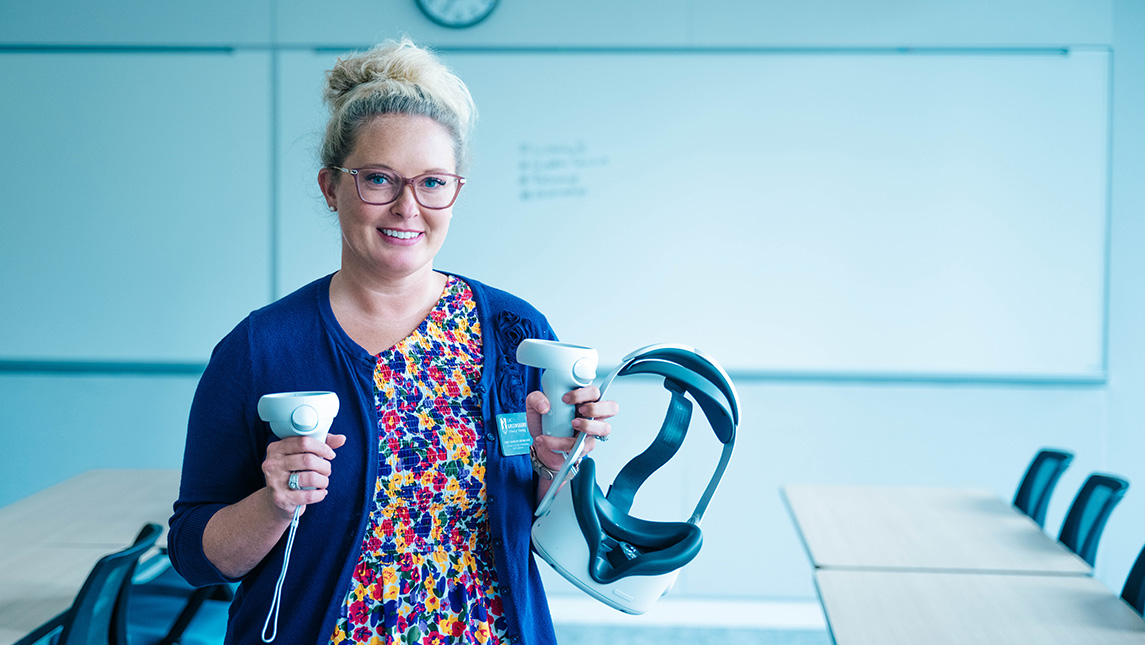
UNCG's Dr. Lindsay Draper holds a virtual reality headset.

Across all grades, the hurdle a teacher often faces on the first day of class is not lack of knowledge, but intimidation. In many cases, their students are reluctant to step up in front of classmates and risk making a mistake, cowed by Imposter Syndrome or the challenges of the coursework that came before.

The UNC Greensboro faculty who received the 2025-26 Teaching Excellence Awards are among the top role models for settling those nerves. At the end of the semester, their students feel empowered to explore avenues they never expected and make mistakes, knowing they can learn from them.

Though the faculty are all pioneers in their fields, students and colleagues repeatedly say that the following stand-outs never lose their approachability with students just starting their college experiences.

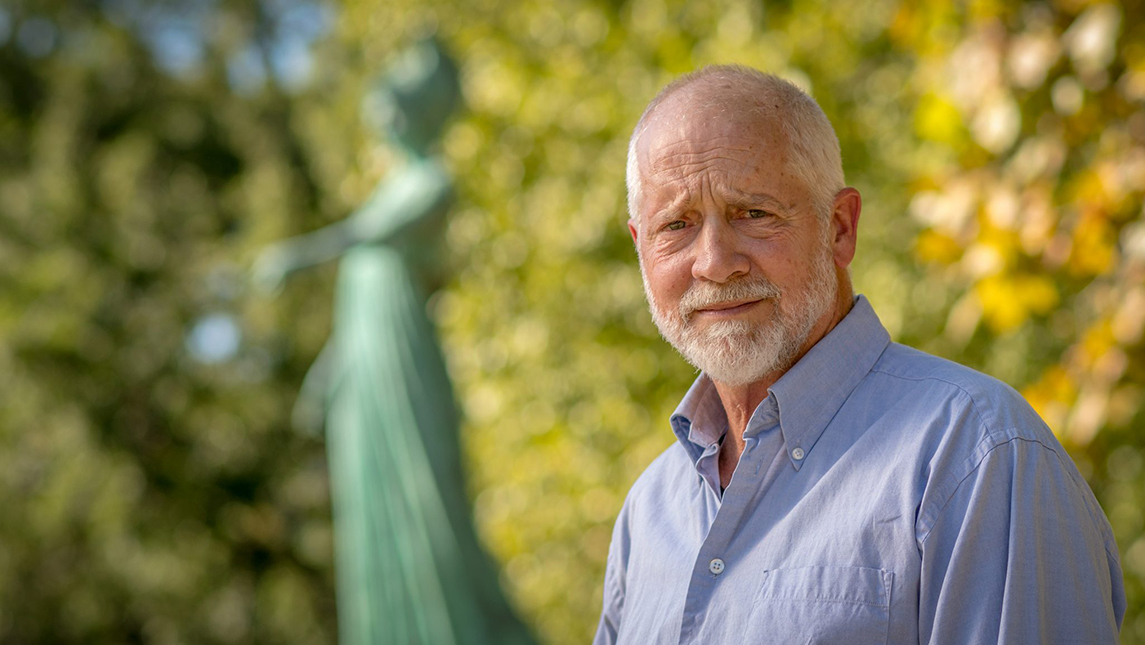
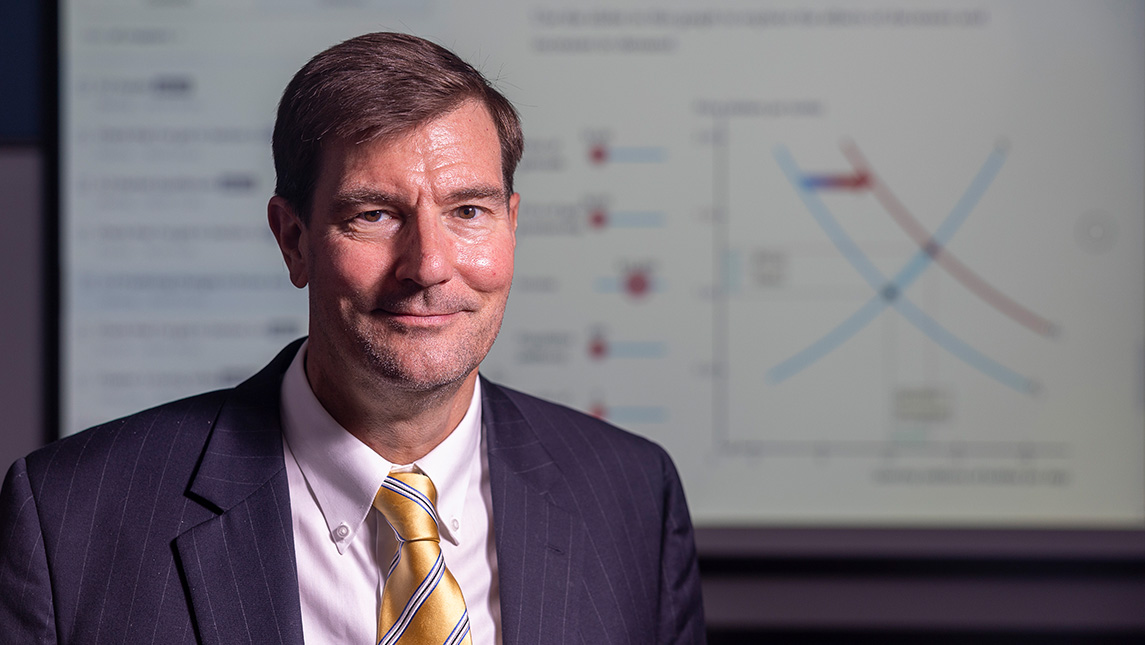
Dr. Jeff Sarbaum, Sue W. Cole Distinguished Senior Lecturer of Economics
UNC Board of Governors Excellence in Teaching Award
UNCG economics faculty Dr. Jeff Sarbaum.

This year’s highest post-secondary award in the state goes to a faculty member who has helped students transition into successful business careers for more than two decades. One look at the career of Dr. Jeff Sarbaum proves economics are anything but dry or boring. From an online Flash game, a website themed around making coffee, and multimedia textbooks, he emerged as an entertaining instructor, inspiring students and faculty alike to follow in his footsteps. Read all about the gamer, the barista, and the man who wrote the books on economics.

Dr. Faye Stewart, Associate Professor of German and German Studies
Mary Settle Sharpe Alumni Teaching Excellence Award
Portrait of Dr. Faye Stewart.

In a letter of recommendation for Dr. Faye Stewart, Ellis Ash Hiser ’22 describes transferring to UNCG to major in languages, literatures, and cultures (LLC). By the time he enrolled in the class Gender and Sexuality in German Film, he’d gone a full semester without a German class and was worried he would not be able to keep up with his peers. Stewart constantly encouraged him to stay engaged and push his skills to the next level.

“Taking this course got me back into the rhythm of engaging with the German language and increased my confidence in my speaking and writing abilities,” Hiser says.

Students who study under Stewart — she also teaches for Lloyd International Honors College and the Women’s, Gender, and Sexuality Studies Program — quickly learn their lessons aren’t limited to textbooks. They use graphic novels, food, music, movies, and games. Stewart has found great success by creating multisensory learning environments, crafted especially for students who have never traveled abroad to experience the culture.

In a class on global graphic novels, students create comics that engage with multiple languages and cultures. In her upper-level film classes, students perform oral film reviews and act out their own “interviews” with the actors or characters from the movies they watched. In an upper-level culture class, students create 3-D sculptures from recycled materials to represent what they learned about nature, sustainability, and the environment in German-speaking countries.

Dr. Mariche Bayonas, Department Head of LLC and professor of Spanish linguistics, describes Stewart as “kind and generous with her knowledge and time with students. She is always willing to take on tasks that involve them and is extremely passionate about teaching and prioritizing the wellbeing of the students.”

Beyond UNCG, Stewart is part of the international collaboration behind Grenzenlos Deutsch, a free and open-access curriculum featuring gender plurality and social justice in language classrooms. She has partnered with the German Embassy on co-curricular programming about German politics and culture.

Fellow faculty compliment her ability to juggle in-person and online classes, as well as the way she makes students feel comfortable in addressing challenges with the grammar and vocabulary. Dr. Alejandro Hortal, senior lecturer of Spanish, as co-taught with Stewart several times. He says, “Feedback from our courses frequently highlighted her as a standout instructor who made the material accessible and thought-provoking.”

For Stewart, it’s important to lead by example so that students also encourage their classmates to make them feel valued. “It is especially important in language courses,” she says, “that students have a safe space for making mistakes and testing out ideas, so that they can feel better prepared and more confident before presenting their findings to the class as a whole.”

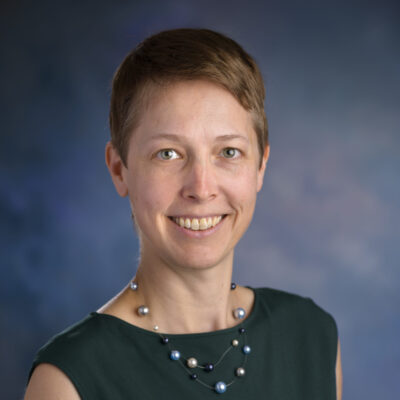
Dr. Insa Lawler, Assistant Professor of Philosophy
James Y. Joyner Alumni Teaching Excellence Award
Portrait of Dr. Insa Lawler.

Logic lessons rely on specific rules and math-like skills. Dr. Insa Lawler’s ability to break down the barriers to understanding tricky concepts inspires her students to explore the concepts more deeply.

She begins courses with an anonymous survey including questions about the students’ background knowledge and personal learning goals. She explains, “Some students take my classes because they are excited about the topics treated; others take them mainly to complete a general education [GenEd] requirement.”

Then she includes questions at the end of each assignment about what they found easiest and most challenging. “I get information that might prompt me to repeat or deepen course content or to meet with a student,” she says. “Equally important is that the students appreciate what they mastered and identify what they still struggle with.”

Lawler always thinks outside the box. She used UNCG’s lightboard to create easy-to-follow video lectures. Her adjustments to one foundational course, rearranging the complex language lessons to be taught earlier in the semester, made it one of the highest-rated classes in her student evaluations. When student feedback in an online class showed they had trouble switching from asynchronous instruction to synchronous discussions, likening it to “a kind of pop-quiz,” Lawler restructured the breakout sessions so they would feel better prepared and less intimidated.

By broadening her own education, she leads by example, spending several years on new certifications, including the Certificate for Effective College Teaching from the Association of College and University Educators.

She creates clever ways for students to practice logic outside the Department of Philosophy. She developed UNCG’s first humanities course for the GenEd Qualitative Reasoning category. Every year, she organizes the Ethics Bowl, in which multiple teams compete to debate ethically difficult scenarios.

Participating in the Ethics Bowl was a milestone for pre-law student Abigail Gallegos, given her early qualms about the subject. She recalls logging onto her first online logic course at UNCG worried about navigating the material on her own, and Lawler quickly put her fears to rest. “It was clear she genuinely wanted her students to succeed,” she says. “Dr. Lawler welcomed students with a thoughtful and detailed announcement outlining course expectations, available resources, and strategies for success, not only for students, but also for herself as an instructor.” Gallegos’ experience was so good that she sought out electives focused on logic.

Cohan Council says Lawler went above and beyond to help him pursue other opportunities. “She made the study of logic accessible, engaging, and intellectually rewarding,” he says.

Dr. Lindsay Draper, Associate Professor, Professional Track of Advanced Nursing Education
Anna Maria Gove Alumni Teaching Excellence Award
Portrait of Dr. Lindsay Draper.

Nursing students need a reliable guide for their demanding, ever-evolving field. At UNCG, they have many touchpoints with Dr. Lindsay Draper along the way, as she has taught everything from early undergraduate to doctoral-level courses.”

“My teaching philosophy is grounded in the belief that education is a collaborative and transformative process that empowers students to become critical thinkers, reflective practitioners, and lifelong learners,” she says. “Active learning strategies are reinforced through low-stakes assessments such as reflective journals, discussion activities, and short quizzes that encourage students to regularly engage with course material.”

Dr. Wanda Williams, associate professor of Advanced Nursing Education, points out Draper’s average student evaluation score across more than 30 courses is 4.7 out of 5. “Her academic credentials are complemented by her extensive experience in both clinical and educational settings, making her a well-rounded educator who bridges theory and practice effectively,” Williams says.

And just as Draper adapts easily to changes in nursing technology and culture, she’s also innovating the field. She is one of the School of Nursing’s faculty introducing students to artificial intelligence’s applications, developing a two-week module for graduate students. She customized two AI tools named Navi and Kate. Students can ask them questions or get feedback on drafts of professional memos, emails, and executive summaries. She also contributed to the UNC System’s Foundations of AI course, leading development of its “AI in Health Sciences” module.

“Innovation is a central component of my teaching practice, particularly through the integration of emerging technologies such as AI and virtual simulation,” says Draper.

On top of all that, she supports her fellow faculty as a mentor, textbook author, and a lead faculty of the UNC System’s Nursing Open Educational Resources initiative. Eloise R. Lewis Excellence Professor Pamela Rowsey says, “Her contributions to nursing education and her leadership in curriculum innovation and development make her a role model for colleagues and an inspiration to students.”

“Ultimately, my goal as an educator is to prepare nurses who are not only clinically competent but also capable of leading change within complex healthcare systems,” says Draper.

Story by Janet Imrick, University Communications
Photography by Sean Norona, University Communications

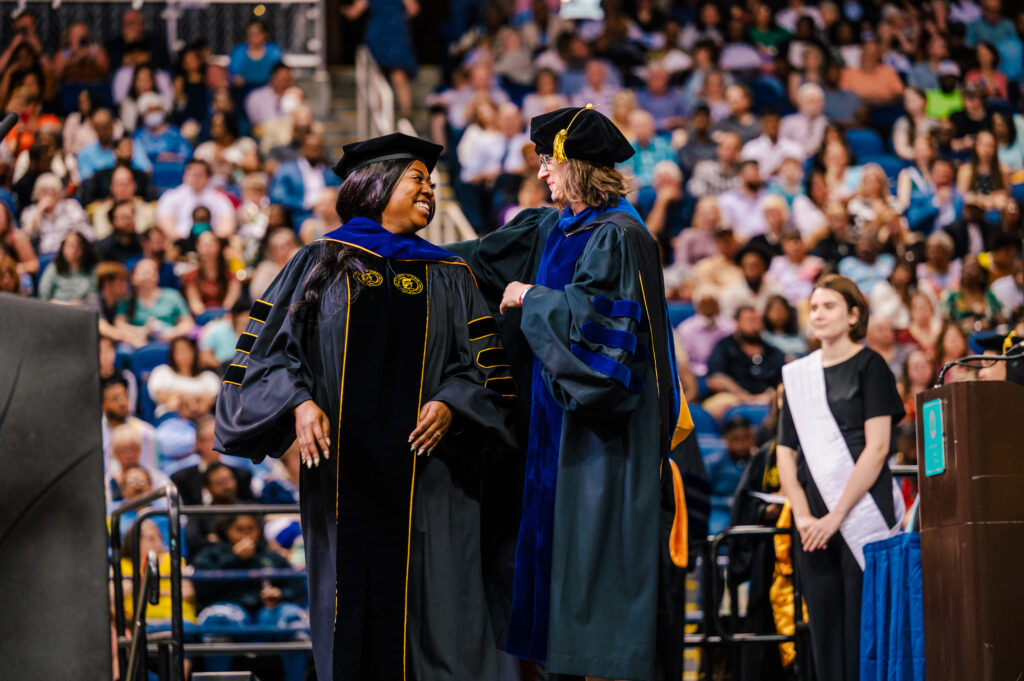
Faculty member hoods a doctoral graduate as she turns around to smile at her.

Be inspired to learn, succeed, and trailblaze.

Latest News

May 4, 2026

Excellence and Career-Readiness Define the UNCG Class of 2026

The excitement can be felt across UNCG as it gets ready to honor the nearly 3,000 Spartans who will graduate this spring. Each of th...

May 1, 2026

IPSE Day celebrates education and inclusion for students with IDD 

UNCG joins the nation in celebrating IPSE Day on May 1, celebrating our students with intellectual and developmental disabilities.

April 30, 2026

A Retrospective of Minerva’s Sculptor

Some of Greensboro's most iconic artwork — Nathanael Greene, the February One sit-in leaders, and UNCG's own iconic Minerva — sp...

What's Trending

Connect with Us

Subscribe to our Top 5

Subscribe today to our Top 5 Weekly email

This field is for validation purposes and should be left unchanged.

Share Your Story

For the Media

Posted on April 27, 2026

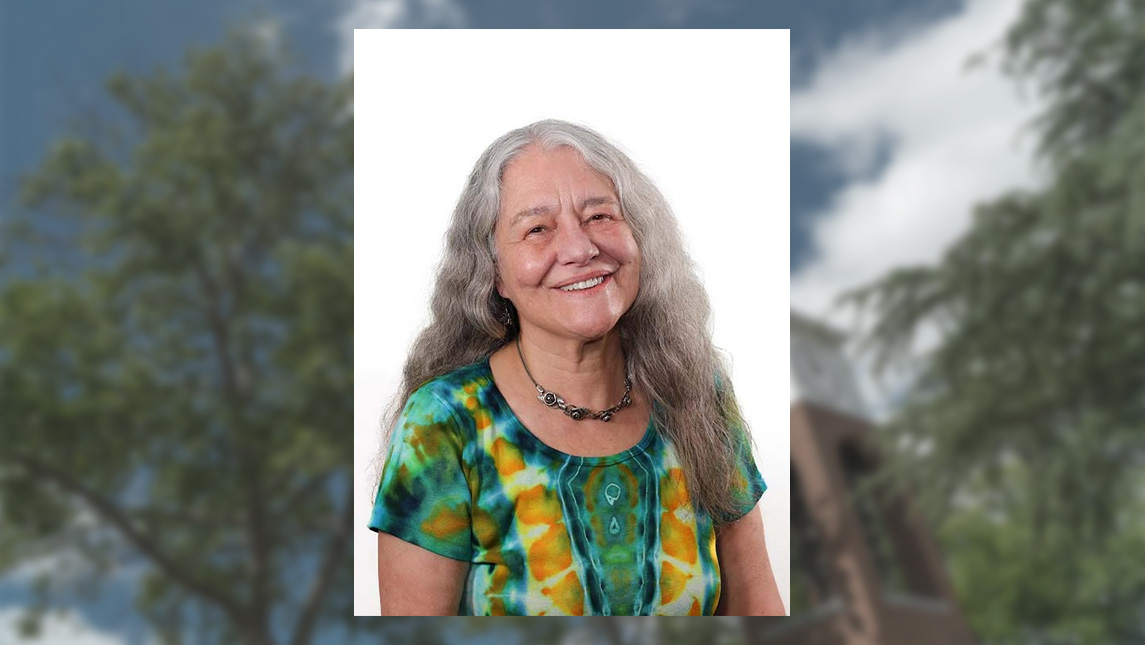
Portrait of UNCG Professor Rebecca Adams.

The UNCG Association of Retired Faculty recognizes, honors, and thanks the 2025-26 retiring faculty for all their years of dedication in providing outstanding instruction to students, conducting excellent research, and serving on various University committees.

Together, these 22 faculties have amassed 590 years of teaching and service to UNCG, making invaluable contributions to the overall quality of this institution.

10–19 years

Michael Crumpton, 19 years, Dean of University Libraries
Greg Daniels, 11 years, Department of Kinesiology
Kristine Lundgren, 19 years, Department of Communication Sciences and Disorders
Michael Perko, 18 years, Department of Public Health Education
Pamela Rowsey, 10 years, School of Nursing

20-29 years

Amy Lynn Adamson, 26 years, Department of Biology and Associate Dean for Research
Beverly Faircloth, 26 years, Department of Teacher Education and Higher Education
Nancy J. Hodges, 28 years, Department of Consumer, Apparel, and Retail Studies
Venkataraman Iyer, 27 years, Department of Accounting and Finance
Jennifer Keith, 28 years, Department of English
Hamid Nemati, 29 years, Department of Information Systems and Supply Chain Management
Harper Roehm, 27 years, Department of Marketing, Entrepreneurship, Hospitality, and Tourism
Jonathan Zarecki, 20 years, Department of Ancient Mediterranean Studies and Archaeology

30-39 years

Timothy Bucknall, 32 years, University Libraries
Brett Carter, 31 years, Associate Vice Chancellor and Dean of Students
Alice Haddy, 32 years, Department of Chemistry
Edward Hellen, 32 years, Department of Physics and Astronomy
Promod Pratap, 32 years, Department of Physics and Astronomy
Paige Hall Smith, 31 years, Department of Public Health Education
Lisa Tolbert, 32 years, Department of History
David Wharton, 37 years, Department of Ancient Mediterranean Studies and Archaeology

40-49 years

Rebecca Adams, 43 years, Department of Sociology and Gerontology

Latest News

May 4, 2026

Excellence and Career-Readiness Define the UNCG Class of 2026

The excitement can be felt across UNCG as it gets ready to honor the nearly 3,000 Spartans who will graduate this spring. Each of th...

May 1, 2026

IPSE Day celebrates education and inclusion for students with IDD 

UNCG joins the nation in celebrating IPSE Day on May 1, celebrating our students with intellectual and developmental disabilities.

April 30, 2026

A Retrospective of Minerva’s Sculptor

Some of Greensboro's most iconic artwork — Nathanael Greene, the February One sit-in leaders, and UNCG's own iconic Minerva — sp...

What's Trending

Connect with Us

Subscribe to our Top 5

Subscribe today to our Top 5 Weekly email

This field is for validation purposes and should be left unchanged.

Share Your Story

For the Media

Posted on April 24, 2026

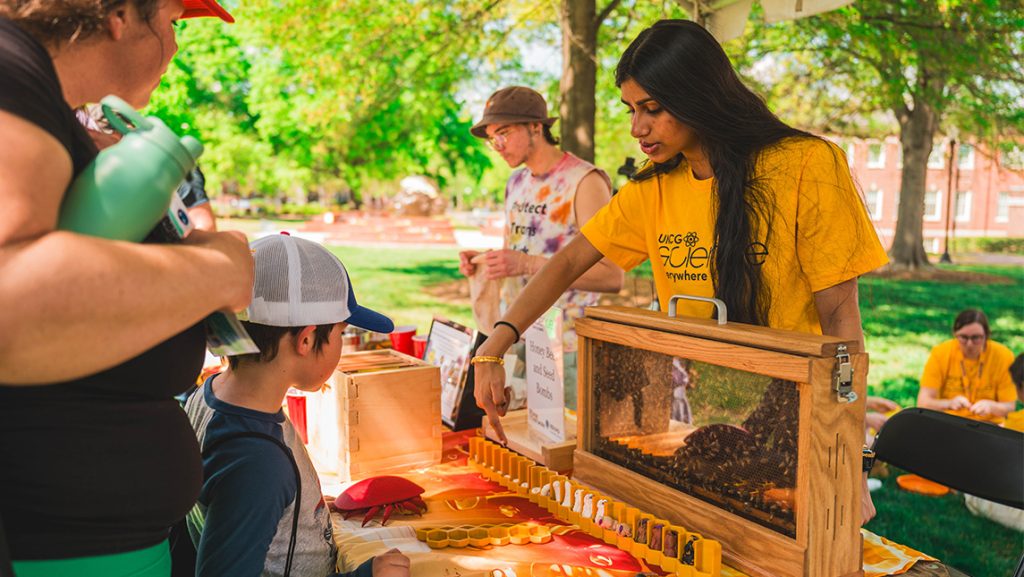
Dr. Kaira Wagoner shows a small beehive to children.
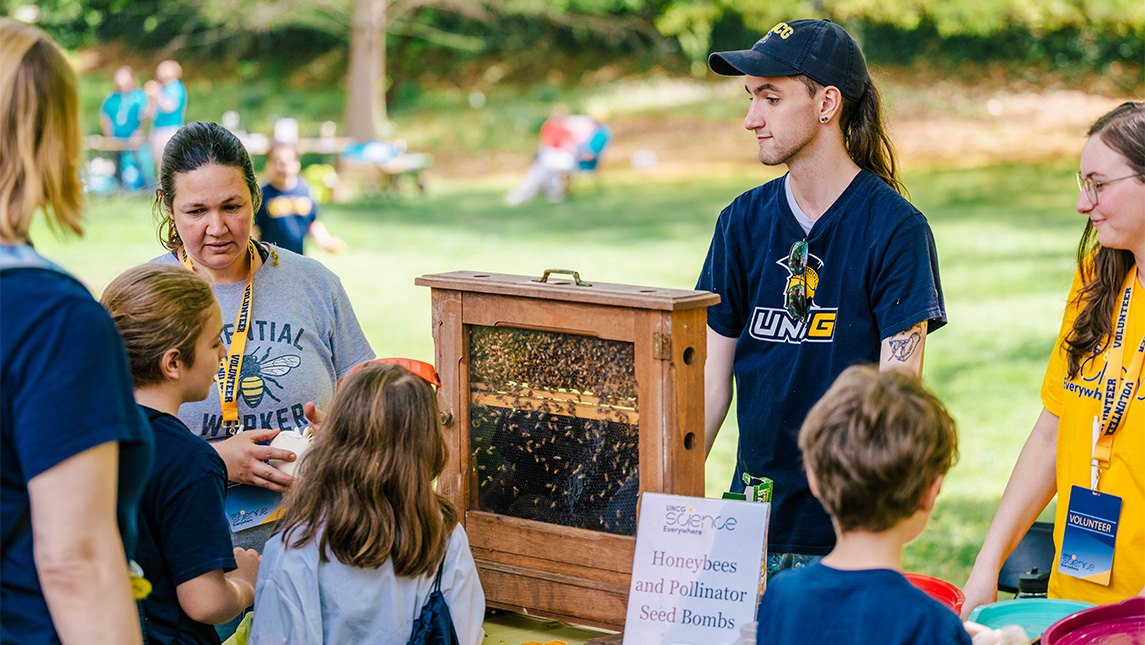
Dr. Kaira Wagoner (left) and Plant & Pollinator Center staff show children a live bee observation hive at Science Everywhere.

Five hundred. 1973. One half.

What do those numbers have to do with bees?

Five hundred is the number of bee species native to North Carolina. (Ironically, the honeybee is not one of them. They immigrated from Europe.)

1973 is when North Carolina officially named the honeybee its state insect.

One half is how many human-managed beehives North Carolina lost last year.

Numbers like these stir Dr. Kaira Wagoner ’11, ’15 Ph.D., director of the UNCG Plant and Pollinator Center (PPC), to action.

“You can ask any bee researcher or butterfly advocate, ‘What do pollinators need?’ It always comes down to habitat,” she says. “A habitat free of pesticides, and with the right plants.”

She is improving those habitats now thanks to partnerships at UNC Greensboro and community events, including one at Greensboro’s Earth Day celebration at Keeley Park on Saturday, April 25.

Three Tiers of a Pollination-Friendly Campaign

Wagoner is a bee researcher with deep roots at UNCG. Her University spin-out company Optera offers pheromone-based sprays for beekeepers. They use these to measure their bees’ pest and disease resistance — critical knowledge for breeding, given that mite infestations and viral infections are behind the majority of the state’s colony losses.

After earning her master of science in biology and her doctorate in environmental health science at UNCG, Wagoner brought the Bee Campus USA program to campus as a research scientist. This year, she was named director of the PPC in Browns Summit, NC.

Wagoner is committed to growing the PPC with a three-tiered vision.

The first tier is expanding its research program, emphasizing innovations similar to the UBeeO spray from her spin-out company, Optera. “Focusing on research and innovation makes UNCG’s Plant & Pollinator Center attractive to world-class professors and students interested in studying pollination,” she says.

Workshops and Field Trips for Students of All Ages

Second, she is working to expand pollinator-focused education and outreach. This includes engaging students, staff, and faculty in the Bee Campus program and encouraging UNCG professors to weave more pollinator-themed content into their curricula.

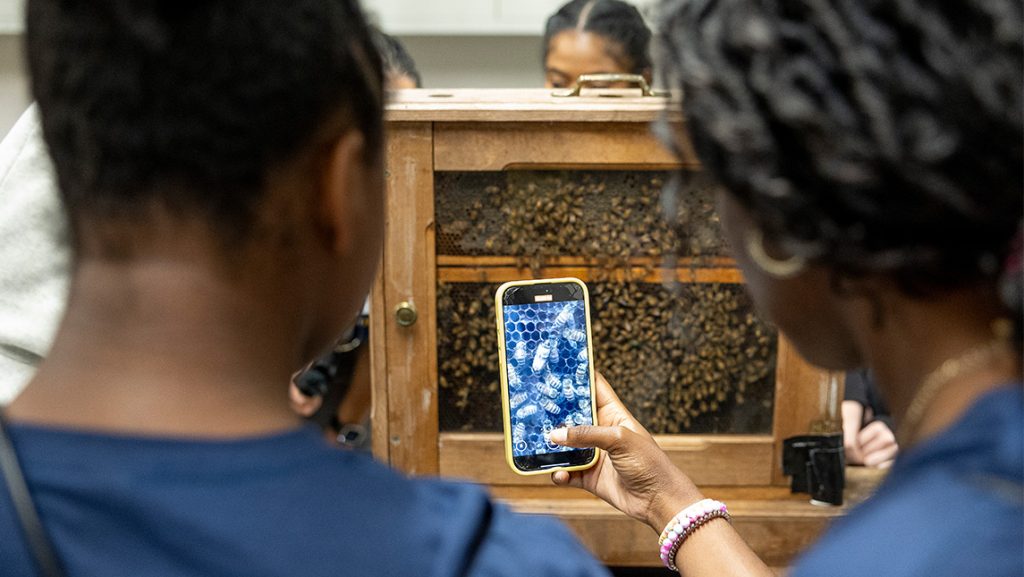
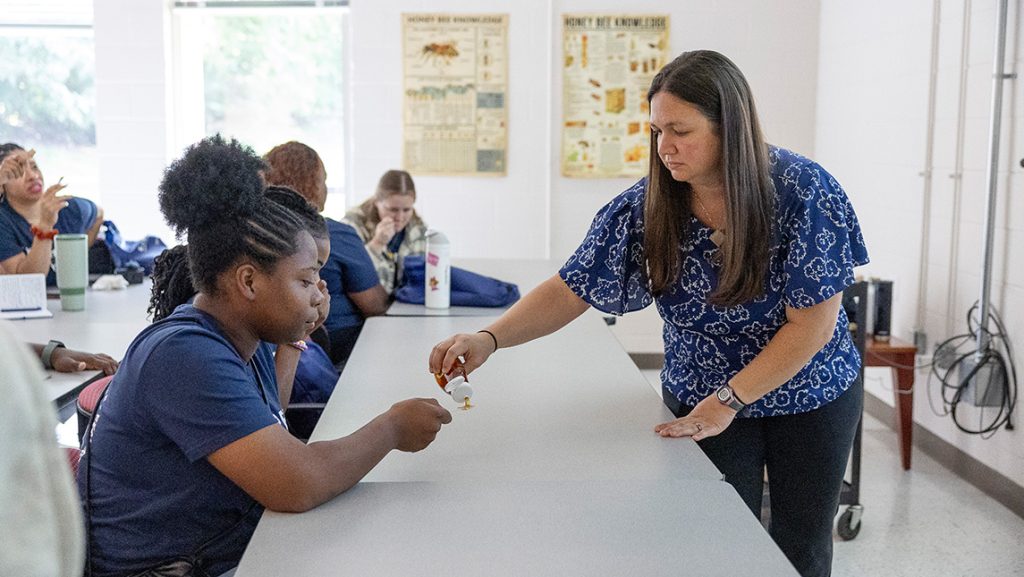
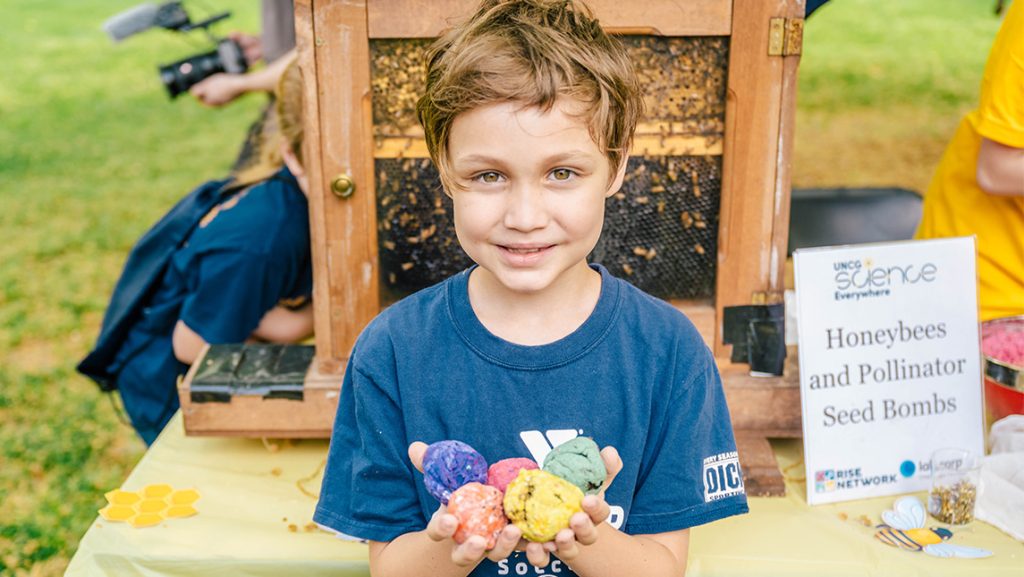
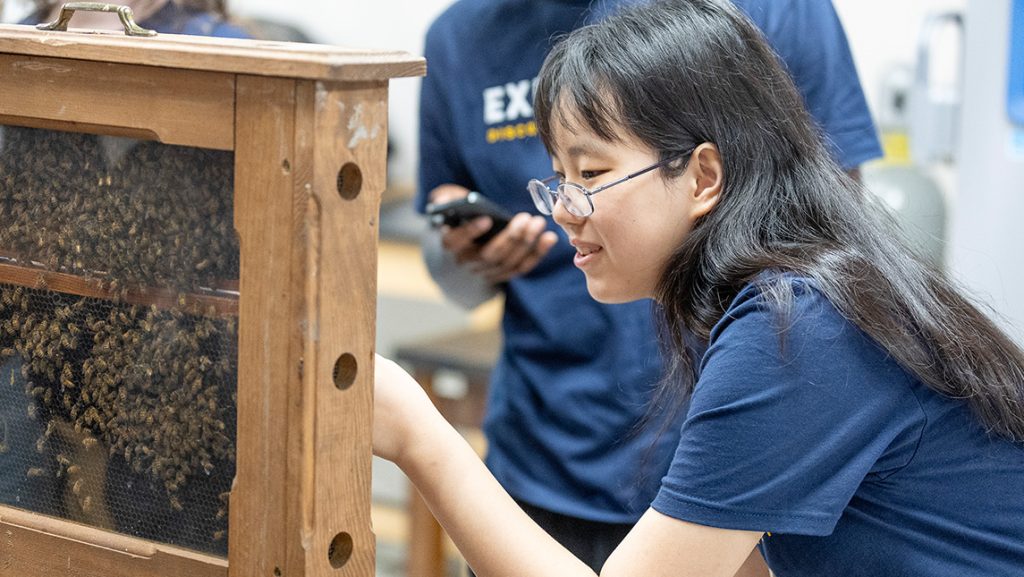
Wagoner has also created more community events to introduce people to the many ways bees are integral to the world around us. At the annual Science Everywhere festival on April 11, children played a game of “Find the queen” with a live bee observation hive from PPC. Center personnel showed them how to make “seed bombs” to throw onto the ground at home and grow a tiny pollinator-friendly garden.

Bee Campus members show children a hive.

Wagoner and her team have brought their research to children of all ages: observation hive visits to preschool and elementary schools, STEAM workshops at middle schools, and field trips to the PPC laboratories for high school students. At this Saturday’s Earth Day Celebration at Keeley Park, they will host a mini workshop on sustainable insect and pest management.

They have more events this spring and summer to get the next generation involved in protecting pollinators:

  • April 25: Earth Day at Keeley Park
  • April 27: Canterbury Preschool classroom visit
  • May 20: 2nd Grade field trip to the PPC
  • June 25: STEAM Middle School Girls Camp
  • July 21: ExPlorers Camp for high school students

Art Students Demonstrate New Places to Spark Pollination Passion

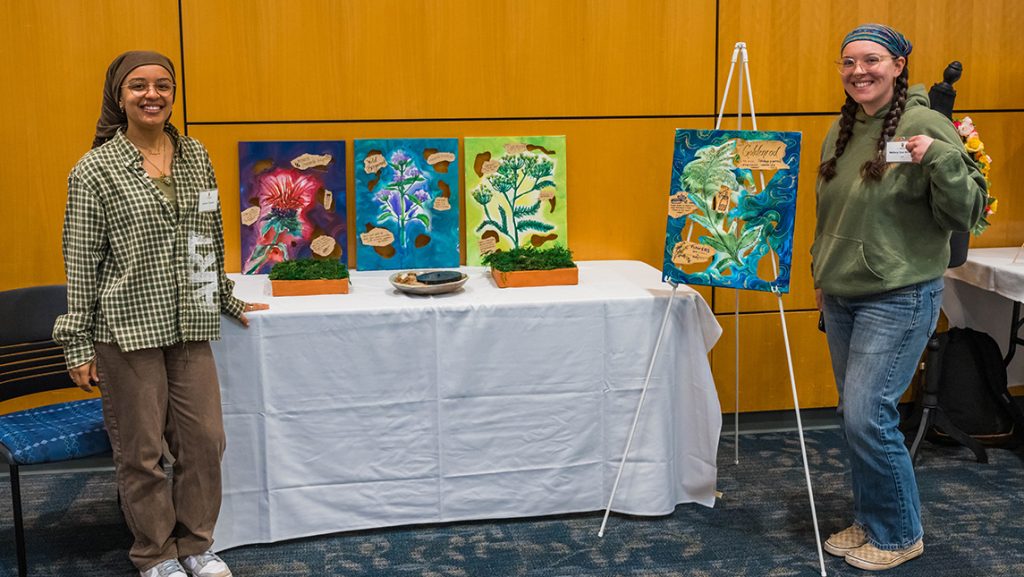
Aminah Coppage and Mallory Cox-Shreffler next to their artwork and ceramics.
Coppage and Cox-Shreffler at the Undergraduate Research Expo.

Mallory Cox-Shreffler and Aminah Coppage are prime examples of how Wagoner’s efforts have brought a diversity of programs into pollinator education. These two art majors made a bee fountain for the College of Visual and Performing Arts’ (CVPA) pollination garden, which was started by UNCG Faculty Lecturer Tara Webb. Cox-Shreffler says she learned about Bee Campus through the garden.

UNCG student Aminah Coppage holds a potted plant.
Coppage

“We have gotten our natural wildlife habitat certification,” Cox-Shreffler said of the CVPA garden. “I made and engraved a ceramic basin using clay from UNCG’s backyard. The creek has plenty of yellow clay to spare.”

Cox-Shreffler and Coppage presented their projects at the Thomas and Carol Norwood Undergraduate Research Expo and to the T. Gilbert Pearson Audubon Society. Cox-Shreffler hopes she helped set up Bee Campus for future success after she graduates this May.

“I would say I had intermediate levels of knowledge when it came to gardening, pollinators, and impacts on the environment,” she says. “It has grown immensely since being involved in the Bee Campus. I now know a lot more about nutrients in the soils, ways to go about making natural medicines and dyes, as well as being able to identify plenty more plant and insect species.”

Webb and her CVPA colleague Leah Sobsey started the garden in Peabody Park in 2022 and grew through the Bee Campus program. In the past year, they’ve expanded its footprint and added new plants, working with the Peabody Park Association and Agriculture Extension Agency to fill it with native plants.

Practicing What She Teaches, Making UNCG More Bee Friendly

The third tier of Wagoner’s efforts is conservation and habitat creation, whether on UNCG’s main campus or at its satellite sites on Greensboro’s Northridge Street and in Browns Summit. “We’re up to five pollinator gardens now that we have either planted, seeded, or expanded in the last year,” she says.

She also wants to increase the amount of pesticide-free forage to ensure bees thrive everywhere at UNCG, working with her postdoc, Arjun Khadka, and Assistant Director of Grounds, Kevin Siler, to implement an integrated pest management (IPM) plan that protects them.

She’s excited to add more positive numbers to the state’s bee stats. Last year, Bee Campus participated in the Great Southeast Pollinator Census, which saw an increase in pollinator activity. They’ll do it again this year, on Aug. 21-22.

“One thing I really love about pollinators is that a lot of people from different backgrounds get excited by them,” says Wagoner. “And folks are generally happy to volunteer to help support pollinators, so we really have a great opportunity to involve and engage any department on campus in some way.”

Story by Janet Imrick, University Communications 
Photography by Sean Norona, University Communications; Bert VanderVeen, VanderVeen Photography; and Mallory Cox-Shreffler, College of Visual and Performing Arts

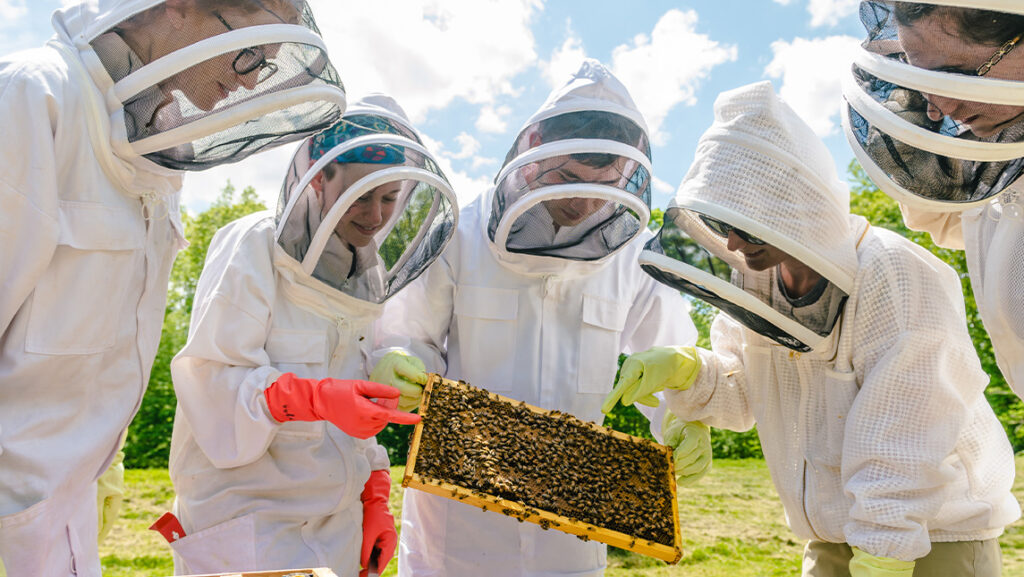
Dr. Kasie Raymann and her students tending to bee hives.

Innovate how we preserve our environment.

Latest News

May 4, 2026

Excellence and Career-Readiness Define the UNCG Class of 2026

The excitement can be felt across UNCG as it gets ready to honor the nearly 3,000 Spartans who will graduate this spring. Each of th...

May 1, 2026

IPSE Day celebrates education and inclusion for students with IDD 

UNCG joins the nation in celebrating IPSE Day on May 1, celebrating our students with intellectual and developmental disabilities.

April 30, 2026

A Retrospective of Minerva’s Sculptor

Some of Greensboro's most iconic artwork — Nathanael Greene, the February One sit-in leaders, and UNCG's own iconic Minerva — sp...

What's Trending

Connect with Us

Subscribe to our Top 5

Subscribe today to our Top 5 Weekly email

This field is for validation purposes and should be left unchanged.

Share Your Story

For the Media

Posted on April 16, 2026

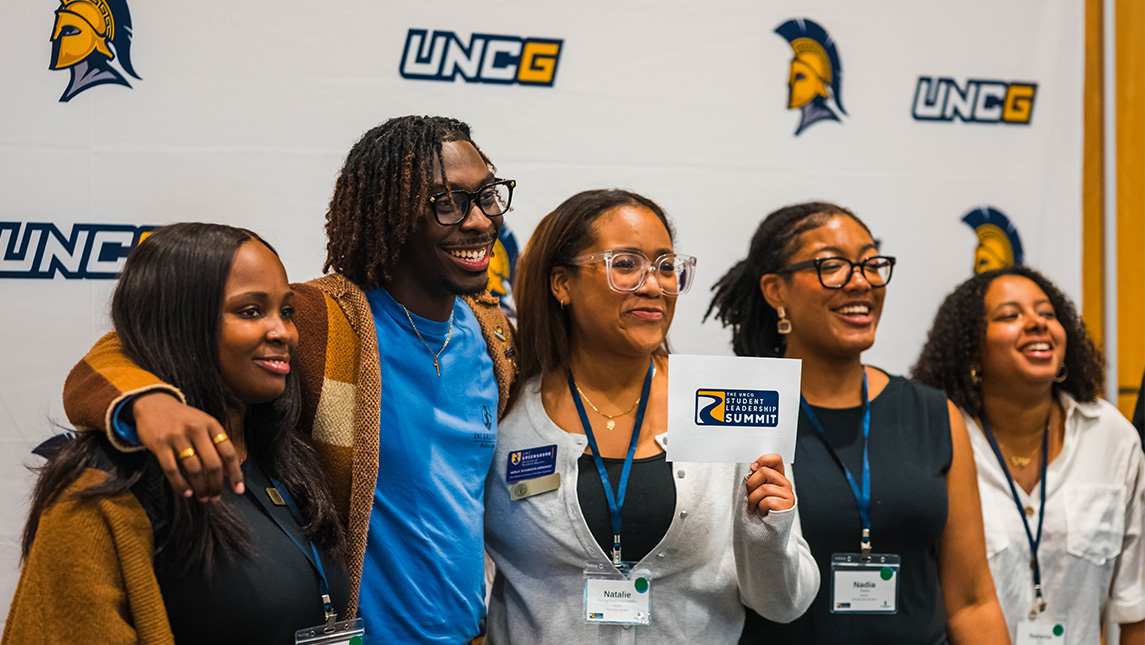
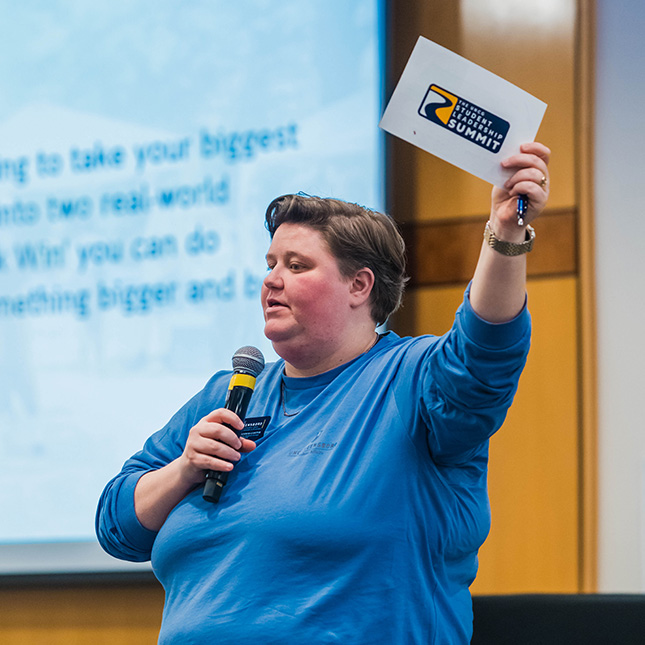
Students stand in front of a screen with UNCG logo holding a Student Leadership Summit card.

On the morning of Feb. 27, the Elliot University Center Cone Ballroom was filled with big, round tables where students drank coffee and nibbled on pastries among alumni guests and staff members. The students chatted easily with each other and the professionals in attendance as the UNCG Student Leadership Summit came to order with a keynote speaker who set the tone perfectly. 

All eyes turned to Brian Campbell ’02 at the mic, with a screen behind him that read, “20 years from now… will they be saying your name?” 

Leading with Intention 

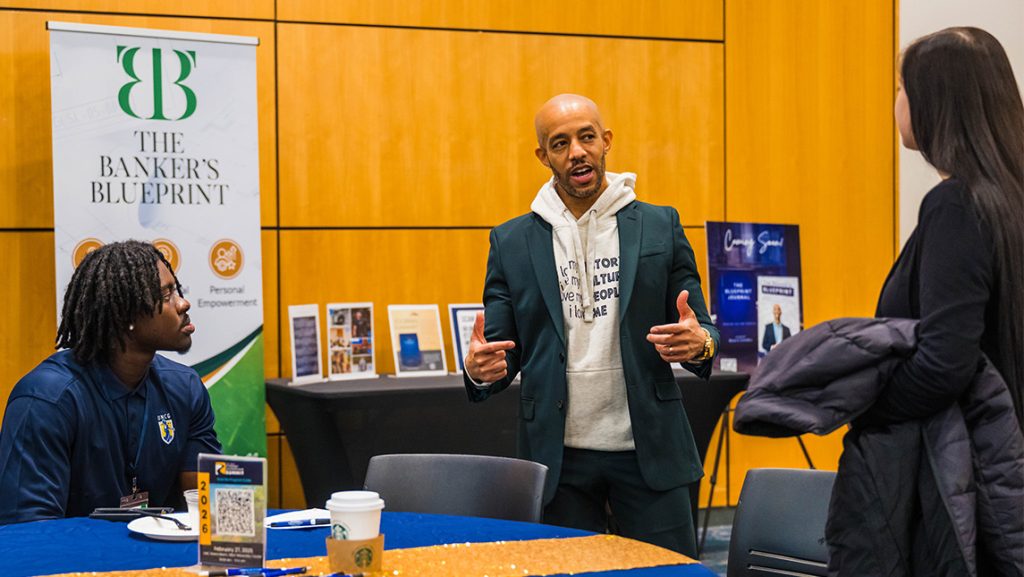
A motivational speaker, author of “The Banker’s Blueprint,” and vice president for Truist Financial Corporation, Campbell explained how he’d interviewed with BB&T on campus when he was a senior. BB&T eventually became Truist while he tenaciously built a career in mortgage banking, thanks to a campus interview made possible by UNCG resources.  

“I’ve changed the lives of more than 2,500 people by helping them to buy homes and reach financial independence because of the leadership that started at UNCG,” he said.  

Just 24 years ago, Campbell had been in the same position as the young leaders gathered before him. Today, he used the word “intentional” 15 times in his 20-minute speech, in which he encouraged students to take advantage of the opportunities around them. 

“Leadership is a lifelong journey,” he said. “You’re building for something that is much bigger than you. You’ve got to launch eventually. You’re needed!” 

Campbell learned the importance of scholarship, service, and leadership at UNCG, particularly through involvement in his fraternity, Phi Beta Sigma. He got emotional when sharing stories about lifelong friends he met at UNCG, their positive influence on him, and the impact they made in their own careers and lives beyond college. His anecdotes about influential peers hit home for the students, many of whom were drawn to organizations for the friends they met there.  

Campbell’s words, “Skills learned today shape your tomorrow. What will your story be?” kicked off a day-long event of communication exercises, self-reflection, and leadership skill development for the more than 50 UNCG students in attendance.   

Professional speaks to two students with a Banker's Blueprint banner behind them.
Brian Campbell speaks to students after his keynote address.

Reaching the Summit 

The Summit was organized by a planning committee made up of staff members from the Office of Leadership and Civic Engagement (OLCE) and Campus Activities & Programs (CAP), with support from the Office of Alumni Engagement. 

“We really wanted to design an experience where students could meet their peers and they could also learn from folks who had done it before,” said Kiley Alexander-Coster, associate director of CAP. “Their capacity to connect with one another and reflect on their own experience was something that we watched develop throughout the day.” 

The students broke into small groups based on where they were in their leadership journey: exploratory, emerging, or experienced. The groups dove deeper into issues like choosing the right organization for you, improving communication within student organizations, and leading with purpose.  

“Being in an environment where I was around similar people as myself was so amazing,” said fourth-year media studies student Jiyah McLaughlin. “The Summit did a great job of helping us identify our own personal values and then tying that back to organizations we can serve.”  

After lunch, the group was inspired by question-and-answer sessions from a student panel of leaders and an alumni panel of professionals. Like Campbell, the professionals shared anecdotes about how they developed skills in student organizations — whether they be Greek organizations, residence life, or cultural or service groups — that were useful in their careers. 

“Find your spark and build on it. Be ambitious and busy, but be strategic,” said Candace Martin ’10, operations and communications manager at Action Greensboro

April Albritton ’05 shared lessons that helped her to transition from student leadership to her current position as Community Partnerships and Development Officer with the City of Greensboro: “Volunteering with UNCG athletics made me the servant leader I am today. You don’t have to do everything on your own. Use your resources here. Wander into offices and ask what people do. Remember that you chose UNCG and UNCG chose you!” 

Panel of professionals sits on a stage and addresses a crowd.
Alumni reflect on how student leadership opportunities prepared them for their careers in a panel discussion before networking with students at the Summit.

Find Your Place to Shine at the G 

The 2026 Student Leadership Summit was a prime example of the many ways that UNCG supports students and the 250+ organizations on campus, and those in attendance were here for it.  

“Student leadership is really what our students choose to make it,” said Alexander-Coster. “It starts with finding what they’re passionate about and finding a community that makes them feel like they belong.” 

The Summit’s student panel was made up of ambassadors who had found ways to make a difference on campus. Their stories painted a unique picture of what leadership looks like at UNCG. Some are bubbly and engaging, and others are intuitive listeners. Some come from high-achieving backgrounds, and others are just finding their stride in college.  

“I would not say that I arrived as a strong leader,” explained fourth-year Malcolm Johnson. “In high school, I was kind of in this gray area. I was never the best at anything, but I wasn’t the worst either. It wasn’t until I got to UNCG that I realized I can’t make my way through that way.” Johnson’s involvement in residence life and public health classes provided a spark to create his own club, the Public Health Impact Network (PHIN)

Jason Alaniz-Ibarra carried a quiet confidence on the student panel, but came to life when he discussed the growing Hispanic community at UNCG. “Seeing my fraternity create safe spaces for Hispanics on campus inspired me to join and lead,” he said. “Leadership isn’t a trait you are born with. I had to learn how to get involved, command a room, and take control of a situation. Reaching out to faculty and staff around campus really helped.” 

It was easy to see how McLaughlin became so involved on campus. Her enthusiasm was contagious. “I love the community at UNCG and the fact that everybody is so welcoming and inviting. It makes you want to get involved,” she said. “I quickly learned that there’s no wrong way to lead. There’s room to develop your own style.” 

The takeaway from the Summit experience is that no two student leaders are the same at UNCG, but all leave with skills and confidence to make a real impact in the careers and communities they will serve, thanks to the support they receive during their college years. 

“I’m fortunate to be able to come to this University,” said Johnson. “I’m so fortunate to be immersed with all these wonderful peers and faculty and staff who can enrich me. That realization immediately makes me to give back to the community.” 

Story by Becky Deakins, University Communications.
Photos by Sean Norona, University Communications.
Video by David Row, University Communications.

Want to Make a Difference?

Latest News

May 4, 2026

Excellence and Career-Readiness Define the UNCG Class of 2026

The excitement can be felt across UNCG as it gets ready to honor the nearly 3,000 Spartans who will graduate this spring. Each of th...

May 1, 2026

IPSE Day celebrates education and inclusion for students with IDD 

UNCG joins the nation in celebrating IPSE Day on May 1, celebrating our students with intellectual and developmental disabilities.

April 30, 2026

A Retrospective of Minerva’s Sculptor

Some of Greensboro's most iconic artwork — Nathanael Greene, the February One sit-in leaders, and UNCG's own iconic Minerva — sp...

What's Trending

Connect with Us

Subscribe to our Top 5

Subscribe today to our Top 5 Weekly email

This field is for validation purposes and should be left unchanged.

Share Your Story

For the Media

Posted on April 14, 2026

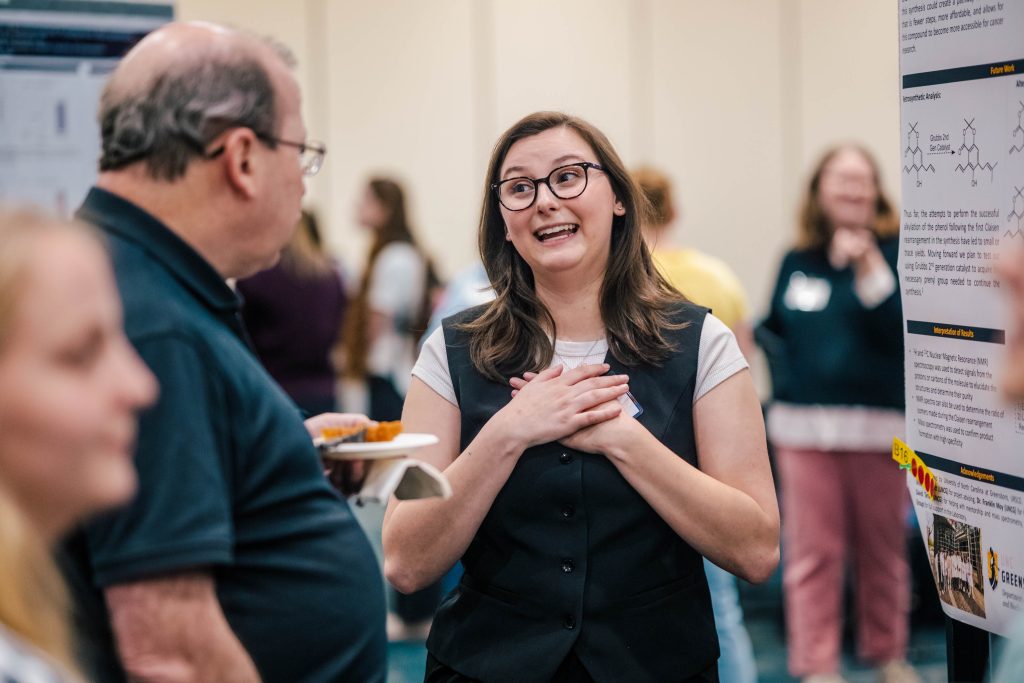
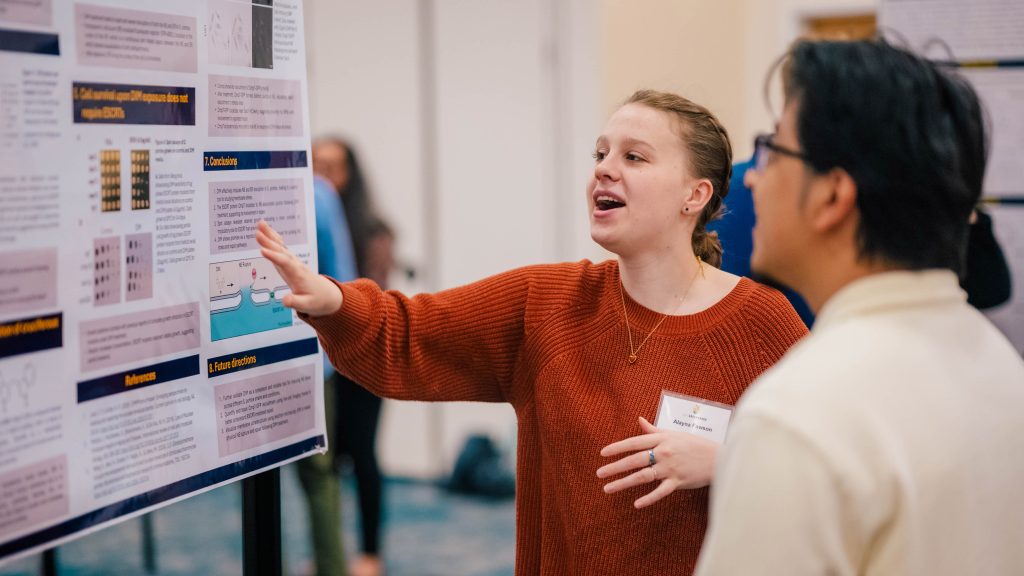
A student presents her research poster to a group of attendees

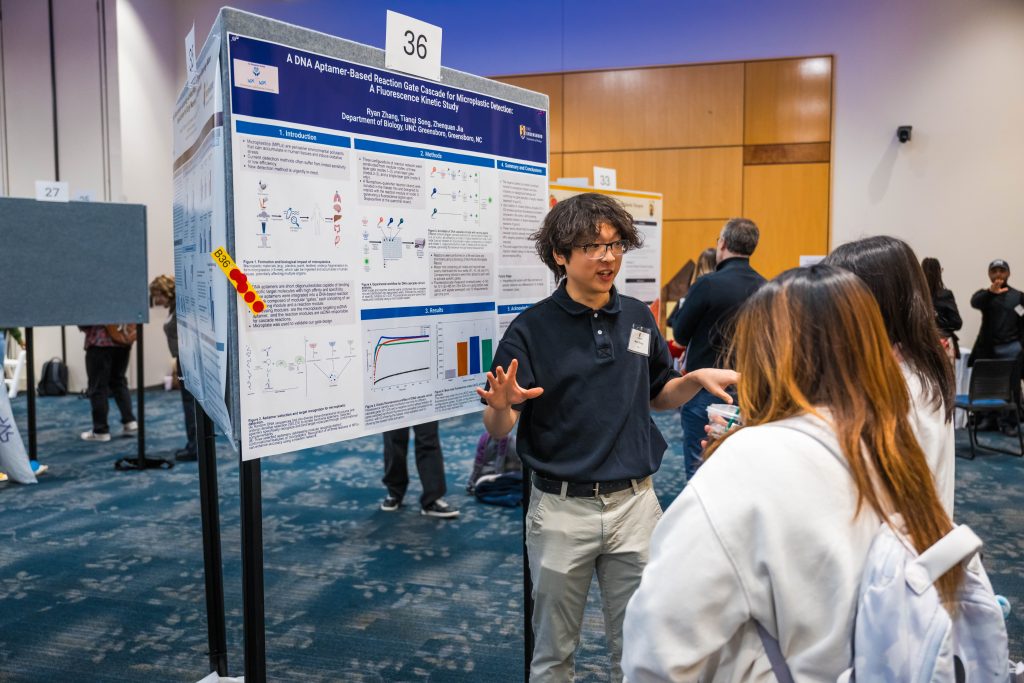
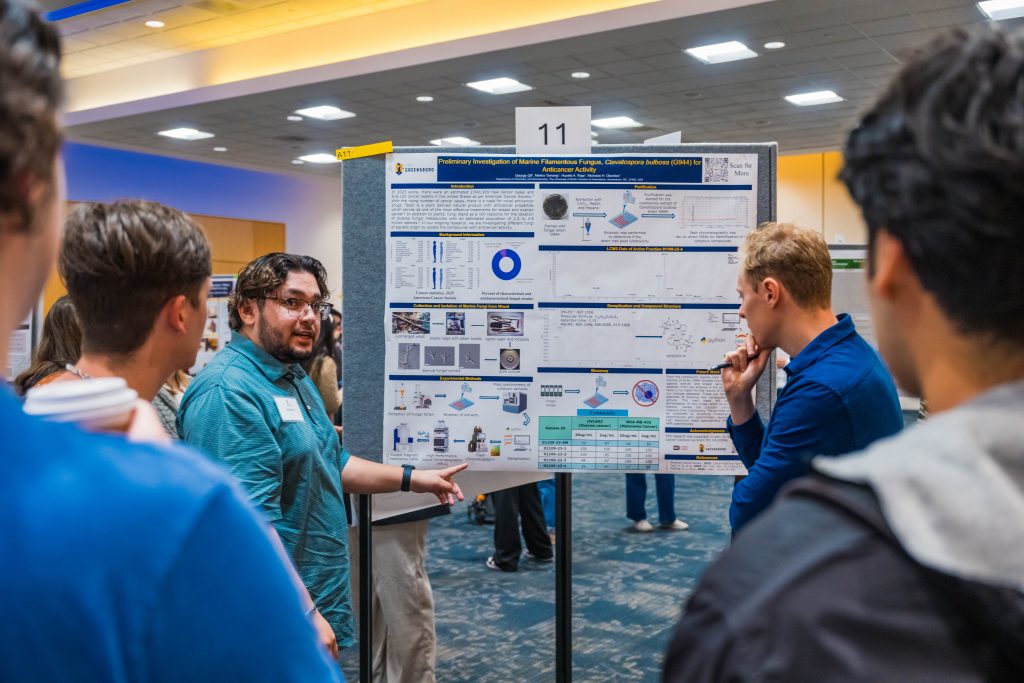
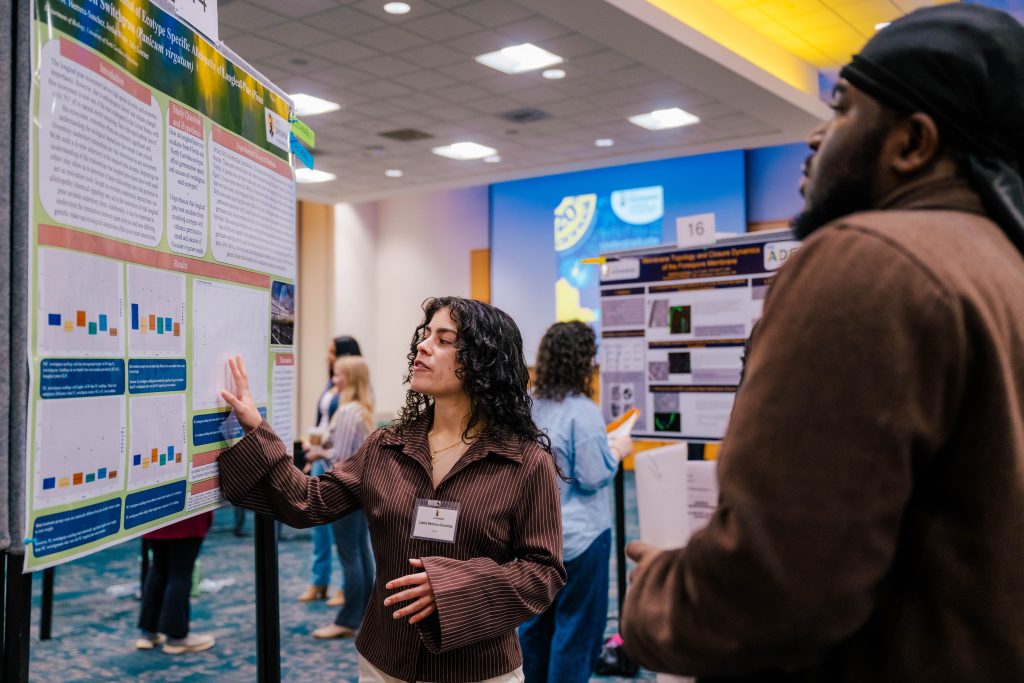
On April 7, 2026, students across campus gathered in Cone Ballroom for the Thomas Undergraduate Research and Creativity Expo. At this annual event, students engaged in faculty-mentored research, scholarship, and creative activity share the results of their projects, celebrate their accomplishments, and compete for prizes in seven categories.

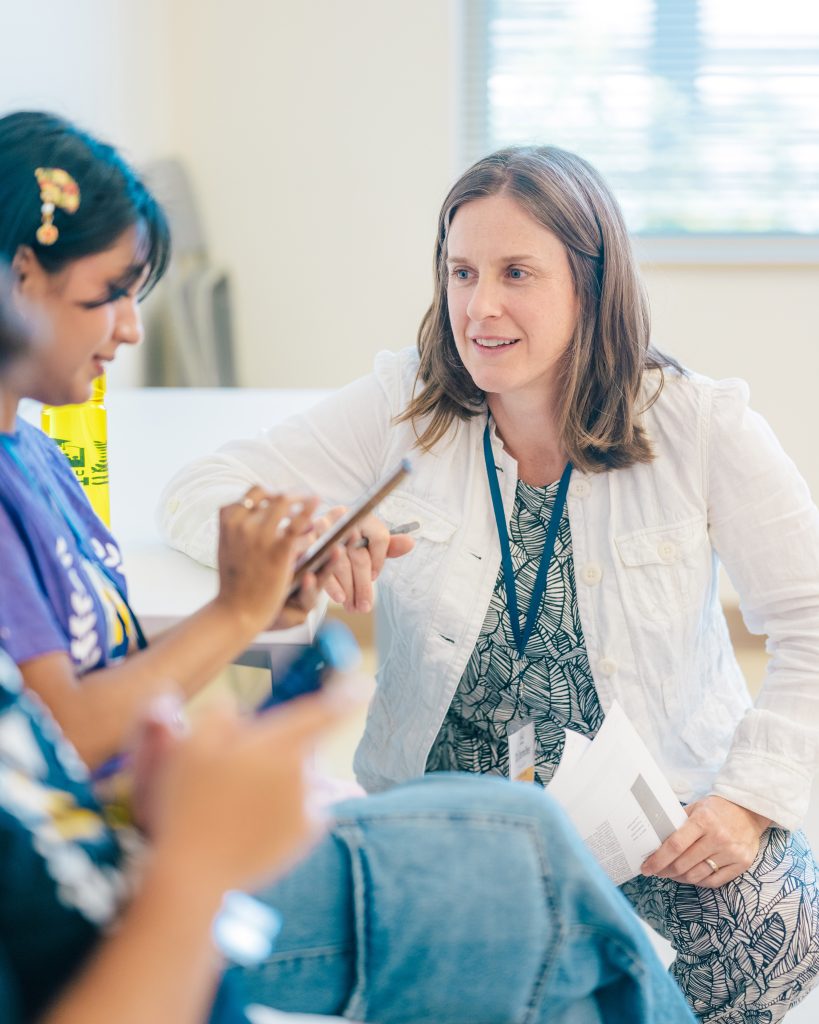
The event also recognizes the faculty whose guidance makes the expo possible, honoring recipients of the 2026 Undergraduate Research Mentor Awards.

The Undergraduate Research, Scholarship, and Creativity Office is proud to share the 2026 award winners in undergraduate research below.

EXPO First Place

Visual Arts Exhibition
Cole Smith, Senior (Media Studies) 
Faculty Mentor: Paula Damasceno (Media Studies) 
Community Hub: Entrepreneurship and Black Los Angeles 

Mathematics, Life, and Physical Sciences
Janae Wofford, Senior (Biochemistry)
Faculty Mentor: Nadja Cech (Chemistry and Biochemistry)
Addressing the Global Antibiotic Resistance Crisis: Isolation and Characterization of Antibacterial Metabolites from Fagus grandifolia

Humanities
Sheza Khurram, Senior (Archaeology)
Faculty Mentor: Geoffrey Hughes (Anthropology)
The Write Way: Re-Evaluating Writing Systems on Palm Leaves

Business, Economics, Education, Behavioral and Social Sciences
Ellie Acree, Senior (Political Science) and Ramon Almeida, Senior (Political Science)
Faculty Mentor: Michael Broache (Political Science)
Cold War Alignments and Constitutional Design in Post-Independence African State Formation: Liberia, Angola, Tanzania

Performing Arts
Ainsley Goodyear, Junior (Drama) and Caleb Van-Doornewaard, Junior (Drama)
Faculty Mentor: Mya Brown (Theater)


Erausquin engages with a student

Mentor award, Tenured category

Dr. Jennifer Toller Erausquin, associate professor in the Department of Public Health Education, has been selected as the 2026 recipient of the Thomas Undergraduate Research Mentor Award in the tenured faculty category. 

An epidemiologist whose work centers on HIV prevention, sexual and reproductive health, and health disparities among marginalized populations, Erausquin is known for the rigor of her research and the depth of her mentoring relationships. 


EXPO second Place

Visual Arts Exhibition
Shayla Scales, Senior (Art)
Faculty Mentor: Jennifer Meanley (Art)
A Southern Love Letter

Mathematics, Life, and Physical Sciences
Sydney Jones, Senior (Biochemistry)
Faculty Mentor: Mitchell Croatt (Chemistry & Biochemistry)
Towards the Total Synthesis of the Novel Antifungal Natural Product Jesterone

Humanities
Alex Parsons, Senior (Nursing)
Faculty Mentors: Tiffany Gibson (Nursing) and Sarah Apel (Nursing)
Minerva Mobile Health Unit (MMHU): Sustainable Mobile Health Care Delivery

Business, Economics, Education, Behavioral and Social Sciences (tie)
Kennedy Strong, Post-Baccalaureate (Human Health Sciences)
Faculty Mentors: Andrea Lewis (Public Health Education) and Jeannette Wade (Public Health Education)
Created for Us, by Us: The Construction of Sexual Health Education [SHE Rises] Intervention for Sexual Violence among Black Women

&

Nikolai Tassin, Senior (Psychology)
Faculty Mentor: Kari Eddington (Psychology)
Testing the Impact of a Self-Regulation-Based Micro Intervention on Depression and Subjective Well-Being


Mentor award, Tenure-Track category

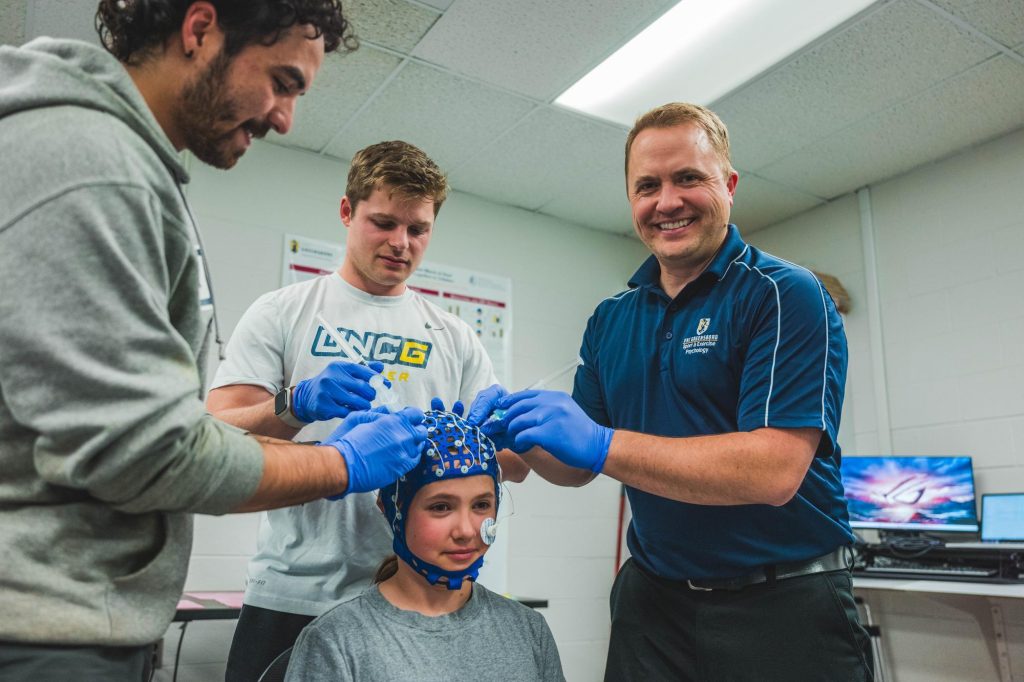
Drolette and two students place an electrode cap on a child

Dr. Eric Drollette, assistant professor in the Department of Kinesiology, has been selected as the 2026 recipient of the Thomas Undergraduate Research Mentor Award in the tenure-track faculty category.

Drollette’s Exercise and Neurocognitive Health Laboratory uses neuroimaging to explore the relationship between physical activity behaviors and cognition and brain function in children and young adults.


EXPO Third Place

Visual Arts Exhibition
Summer Null, Senior (Interior Architecture)
Faculty Mentor: Asha Kutty (Interior Architecture)
The Hour of Bloom Birth Center

Mathematics, Life, and Physical Sciences
Keesha Jazzlyn Go, Junior (Computer Science)
Faculty Mentor: Sarah McClymont (Biology)
Computational Prioritization of Schizophrenia Risk Variants via Integration of GWAS and Open Chromatin Annotations

Humanities (tie)
Victoria Charles, Senior (Liberal & Interdisciplinary Studies)
Faculty Mentor: Robyn Le Blanc (Classical Studies)
How It’s Made: The Craftsmanship and Daily Use of the Etruscan Bronze Mirror

&

Lila Thomas, Junior (Arts Administration)
Faculty Mentor: Marian Taylor-Brown (Art)
The Value of The Nutcracker: An Exploration of the Value That the Asheville Ballet’s Nutcracker Creates & Captures

Business, Economics, Education, Behavioral and Social Sciences
Daijah Elliott, Senior (Public Health Education)
Faculty Mentor: Andrea Lewis (Public Health Education)
The Burden of Being the ‘Only One’: Hyper-Visibility and Invisibility in the Career Trajectories of Black Women Physician Assistants with Doctoral Degrees


Mentor award, Professional-Track category

An undergraduate researcher interacts with a child, while a faculty member looks on.

Dr. Jessica Caporaso in the Department of Psychology has been selected as the 2026 recipient of the Thomas Undergraduate Research Mentor Award in the professional track faculty category.

Caporaso, who is an academic professional assistant professor, serves as co-primary investigator of the Development and Understanding of Children’s Knowledge Lab in collaboration with Dr. Stuart Marcovitch and Dr. Janet Boseovski. She specializes in experimental research with young children, studying the development of children’s regulatory capacities and how it relates to peer conflict resolution, moral reasoning, and temperament. 


by Sangeetha Shivaji, University Communications
photography by Sean Norona, University Communications

Latest News

May 4, 2026

Excellence and Career-Readiness Define the UNCG Class of 2026

The excitement can be felt across UNCG as it gets ready to honor the nearly 3,000 Spartans who will graduate this spring. Each of th...

May 1, 2026

IPSE Day celebrates education and inclusion for students with IDD 

UNCG joins the nation in celebrating IPSE Day on May 1, celebrating our students with intellectual and developmental disabilities.

April 30, 2026

A Retrospective of Minerva’s Sculptor

Some of Greensboro's most iconic artwork — Nathanael Greene, the February One sit-in leaders, and UNCG's own iconic Minerva — sp...

What's Trending

Connect with Us

Subscribe to our Top 5

Subscribe today to our Top 5 Weekly email

This field is for validation purposes and should be left unchanged.

Share Your Story

For the Media

Posted on April 23, 2026

Close-up on hands using a keyboard and mouse.

UNCG is continuing its work to improve digital accessibility following a one-year extension to the ADA Title II compliance deadline announced by the U.S. Department of Justice. While the timeline has shifted, the University’s commitment remains the same.

Latest News

May 4, 2026

Excellence and Career-Readiness Define the UNCG Class of 2026

The excitement can be felt across UNCG as it gets ready to honor the nearly 3,000 Spartans who will graduate this spring. Each of th...

May 1, 2026

IPSE Day celebrates education and inclusion for students with IDD 

UNCG joins the nation in celebrating IPSE Day on May 1, celebrating our students with intellectual and developmental disabilities.

April 30, 2026

A Retrospective of Minerva’s Sculptor

Some of Greensboro's most iconic artwork — Nathanael Greene, the February One sit-in leaders, and UNCG's own iconic Minerva — sp...

What's Trending

Connect with Us

Subscribe to our Top 5

Subscribe today to our Top 5 Weekly email

This field is for validation purposes and should be left unchanged.

Share Your Story

For the Media

Posted on April 23, 2026

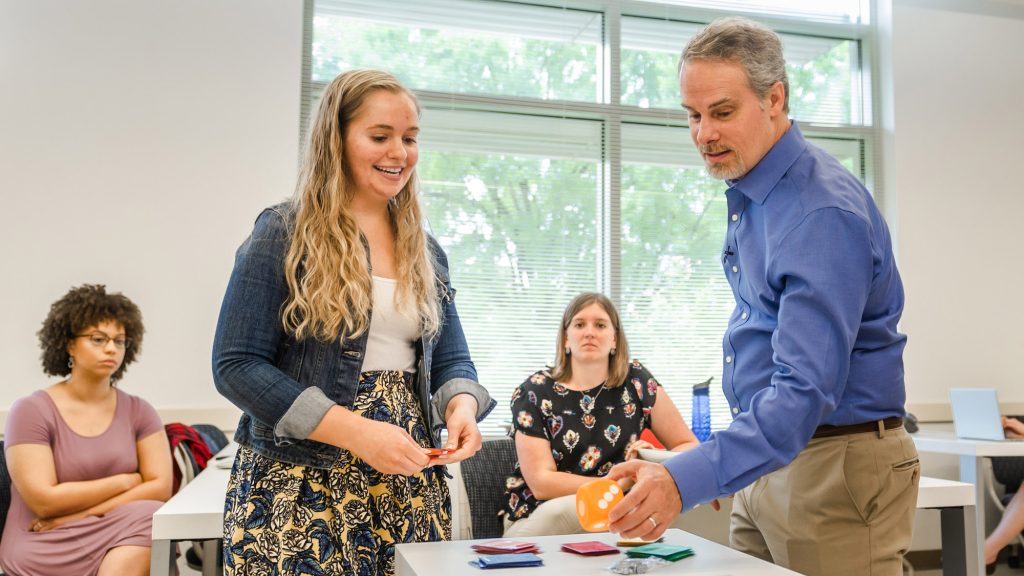
A man in a blue shirt gestures while speaking to two others seated across a table during a meeting or class discussion.
Young leads a counseling and educational development class.

For most people, dreams are fleeting — strange stories that fade with the morning alarm. For Dr. Scott Young, UNC Greensboro counseling and educational development professor, dreams can offer powerful insight into emotional well-being and clinical care.

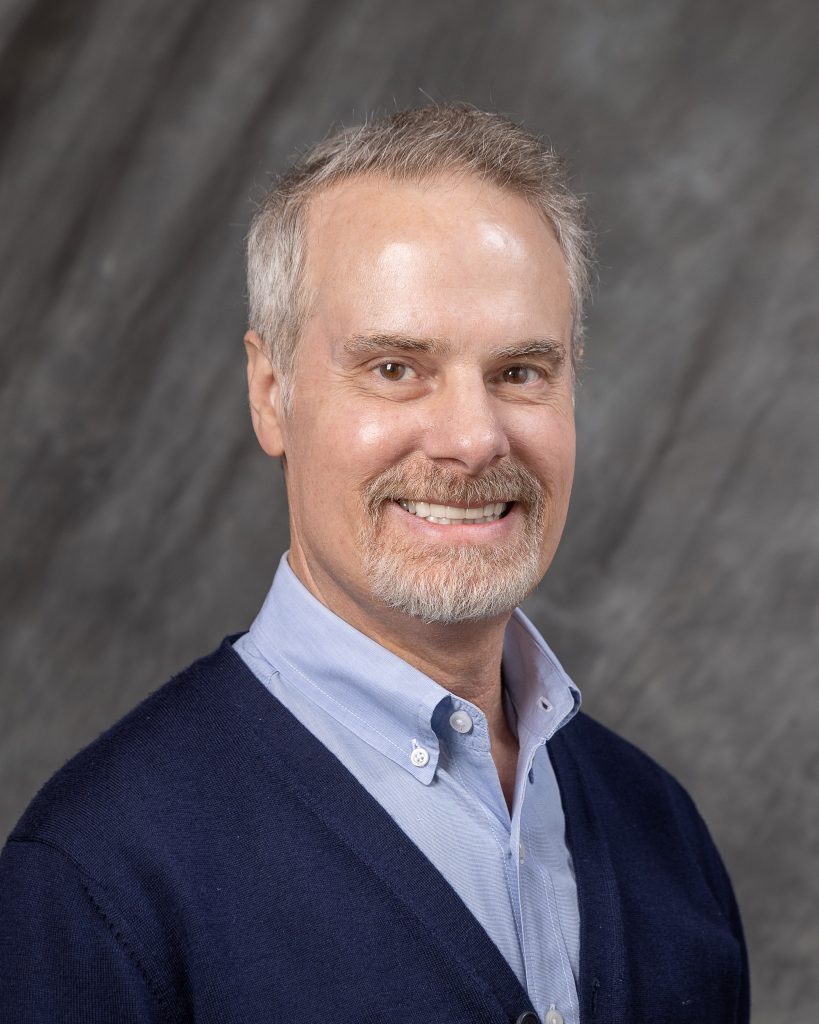
Professional headshot of a man with gray hair and a goatee, smiling, wearing a navy cardigan over a light blue shirt, against a gray background.
Dr. Scott Young, UNCG counseling and educational development professor, is working to bring dream research back into practical counseling.

Young and his former student Dr. Alwin Wagener are working to bring dream research back into practical counseling conversations. Their recent publication, “Nightmare Relief: Implementing Image Rehearsal Therapy in Counseling,” promotes a research-supported intervention to help clients reduce the frequency and severity of nightmares — including those related to trauma and post-traumatic stress disorder.

Image rehearsal therapy (IRT) is a behavior technique that invites clients to intentionally revise distressing dreams. Rather than remaining passive recipients of recurring nightmares, clients rescript troubling elements of the dream narrative and mentally rehearse the new version before going to sleep.

“People don’t think about dreams as something that can be shaped or modified, but they can be,” Young explains. “When people learn to do that, they often stop having the same repetitive nightmare.”

Citing research previously published in the field, the counselors say IRT not only reduces nightmare frequency but also decreases broader negative mental health symptoms associated with trauma. In their article, published in the Journal of Mental Health Counseling, Young and Wagener provide clear, step-by-step guidance, so counselors can confidently implement the technique in everyday practice.

Wagener, who graduated with his doctorate from UNCG in 2015, is Young’s former mentee and frequent collaborator and is now director of the Clinical Mental Health Counseling Program at Farleigh Dickinson University.

“One of the things Alwin and I have tried to do is keep up with the research that’s happening in different places and then communicate it in ways that are helpful to people sitting in front of clients trying to bring about change,” Young says.

Centering the dreamer’s cultural context

Young and Wagener emphasize that dreamwork must be culturally responsive. In another recent article, “Culturally responsive dreamwork: Facilitating culturally competent dream discourse,” they encourage clinicians to move away from outdated models that position therapists as expert interpreters of dream symbolism.

“We’ve been arguing that you can empower the dreamer and let them take more of the lead on what’s important to them,” Young says.

Dream meaning, they emphasize, is deeply embedded in cultural, religious, and personal context. For example, some individuals may view dreams as neurologically random, while others interpret them through spiritual or cultural frameworks.

“The real question is what it means to them,” Young says. “If somebody grew up in a very religious context, the same imagery could be very comforting for one person and very distressing for another.”

Their model encourages counselors to begin by exploring clients’ own beliefs and associations before offering interpretations or interventions. Even structured techniques like IRT, they note, should be delivered with sensitivity to cultural frameworks and personal meaning-making.

A practical tool for everyday clinicians

Across both recent publications, Young and Wagener aim to demystify dreamwork.
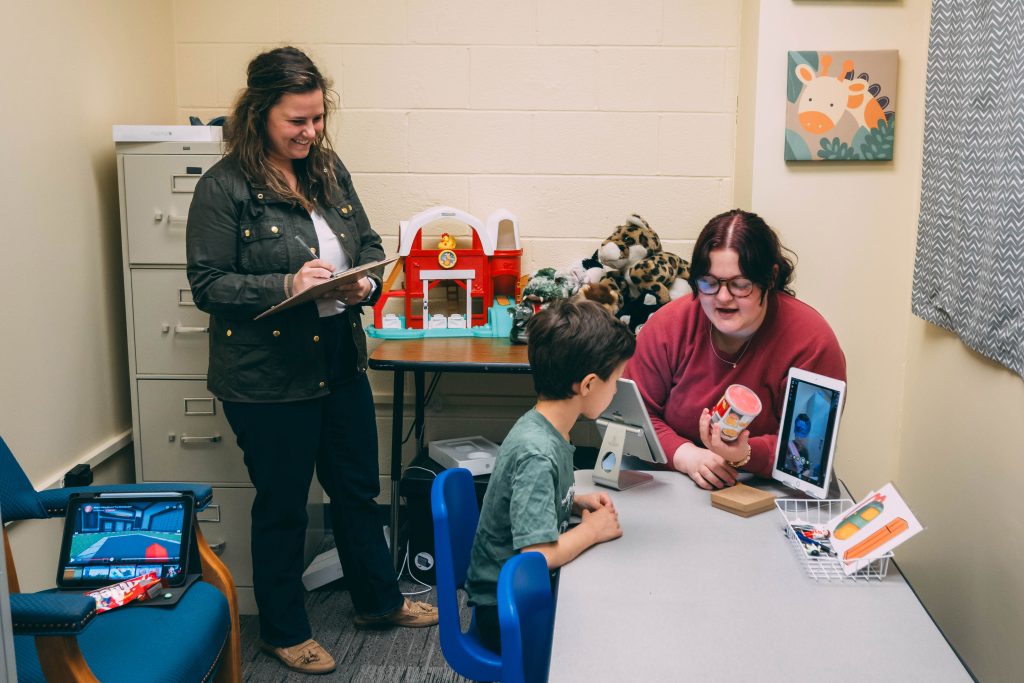
They outline a streamlined process that counselors can use without specialized dream-analysis training. The collaborative approach guides therapists to:
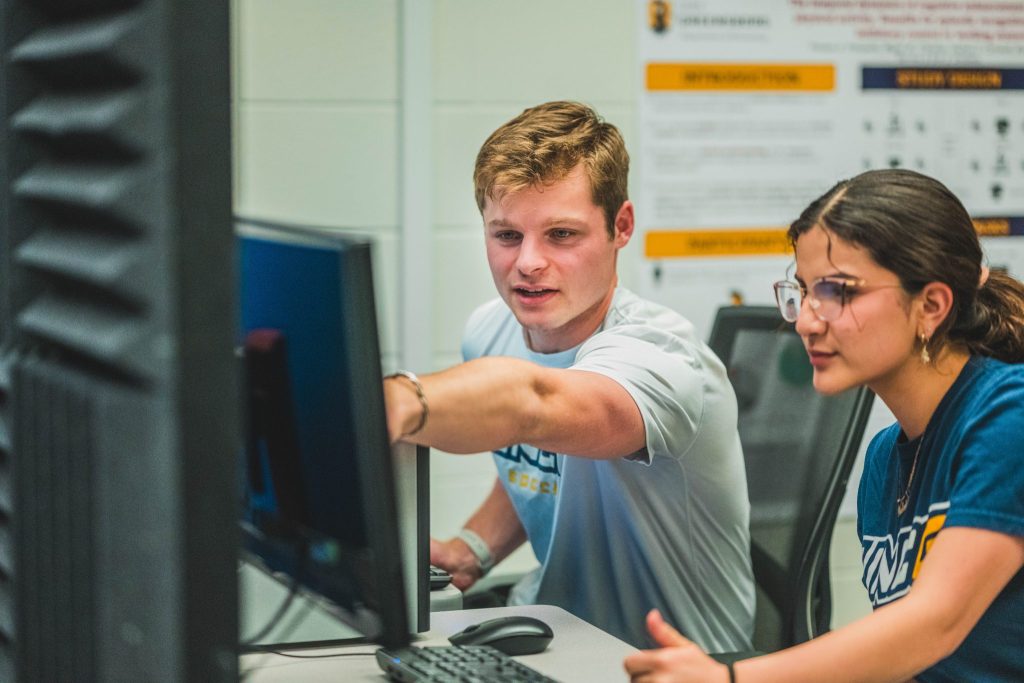
  • Explore the dream narrative with the client
  • Identify emotionally significant moments
  • Notice key images and feelings
  • Invite the dreamer’s own meaning-making
  • Consider possible revisions or insights

They hope their work will help restore dreams as a meaningful tool in mental health care.

“Most people are curious about their dreams if they pay attention at all,” he says. “Often, they’ll say, ‘I don’t know what that was about, but it was really powerful.’”

Young is helping counselors respond to that curiosity, not with rigid interpretations, but with cultural awareness and practical strategies that support healing.


By Sierra Collins, Division of Research and Engagement
Photography by University Communications

A student and instructor interact over a game or activity on a table in a bright classroom while other students look on.

Find your impact here

Latest News

May 4, 2026

Excellence and Career-Readiness Define the UNCG Class of 2026

The excitement can be felt across UNCG as it gets ready to honor the nearly 3,000 Spartans who will graduate this spring. Each of th...

May 1, 2026

IPSE Day celebrates education and inclusion for students with IDD 

UNCG joins the nation in celebrating IPSE Day on May 1, celebrating our students with intellectual and developmental disabilities.

April 30, 2026

A Retrospective of Minerva’s Sculptor

Some of Greensboro's most iconic artwork — Nathanael Greene, the February One sit-in leaders, and UNCG's own iconic Minerva — sp...

What's Trending

Connect with Us

Subscribe to our Top 5

Subscribe today to our Top 5 Weekly email

This field is for validation purposes and should be left unchanged.

Share Your Story

For the Media

Posted on April 28, 2026

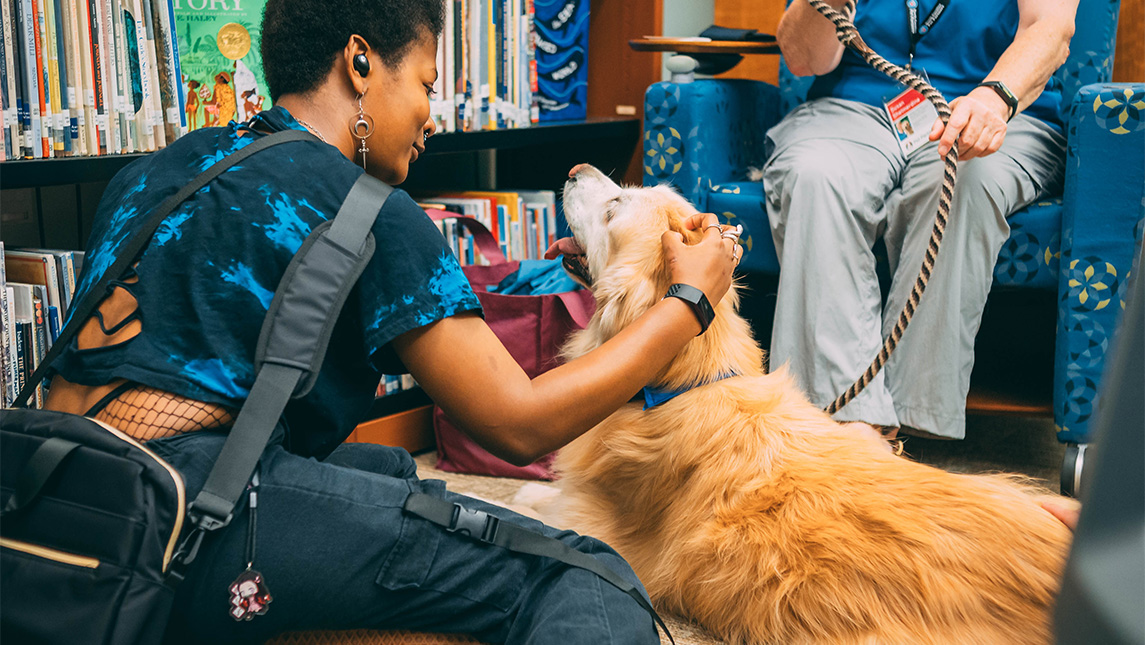
A UNCG student pets a therapy dog who is visiting the library.
Therapy dogs make regular visits to give students a boost of positive energy.

University Libraries will host free events for students, staff, and faculty to celebrate the end of another successful semester. They are also sharing important end-of-year reminders.

Latest News

May 4, 2026

Excellence and Career-Readiness Define the UNCG Class of 2026

The excitement can be felt across UNCG as it gets ready to honor the nearly 3,000 Spartans who will graduate this spring. Each of th...

May 1, 2026

IPSE Day celebrates education and inclusion for students with IDD 

UNCG joins the nation in celebrating IPSE Day on May 1, celebrating our students with intellectual and developmental disabilities.

April 30, 2026

A Retrospective of Minerva’s Sculptor

Some of Greensboro's most iconic artwork — Nathanael Greene, the February One sit-in leaders, and UNCG's own iconic Minerva — sp...

What's Trending

Connect with Us

Subscribe to our Top 5

Subscribe today to our Top 5 Weekly email

This field is for validation purposes and should be left unchanged.

Share Your Story

For the Media

Posted on April 08, 2026

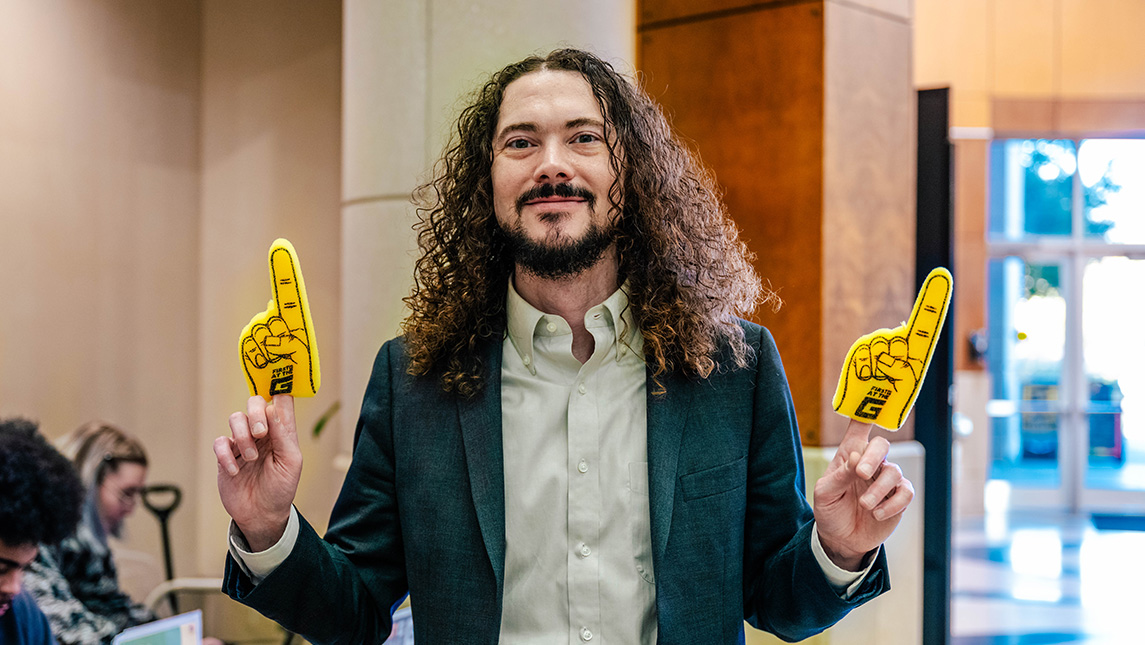
Featured Image for Non-linear Educational Path Leads to Right Place, Right Time for Fox Brown 

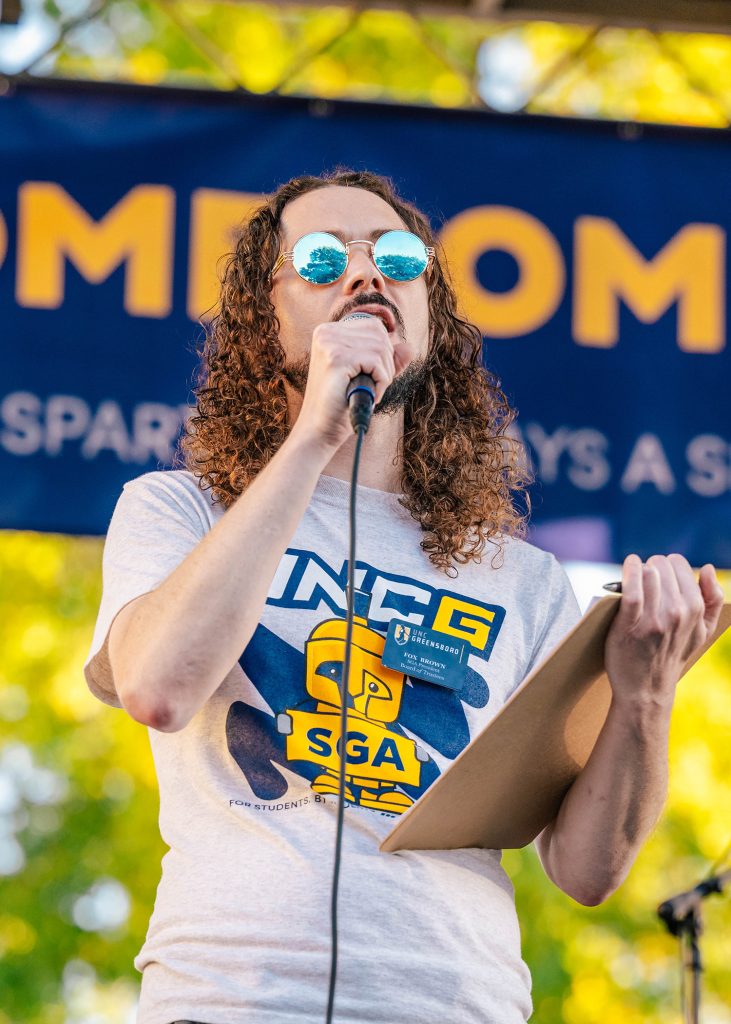
Fox Brown may represent all UNC Greensboro students as president of the Student Government Association (SGA), but he couldn’t be further from the stereotype of a typical college student. Between his family responsibilities, the multiple degrees he’s earning, and the commitments he’s made to make UNC Greensboro better during his time here, Brown keeps lots of balls in the air. Life experiences have driven his educational choices and molded the UNCG pre-law student we see today. 

A Path Diverged 

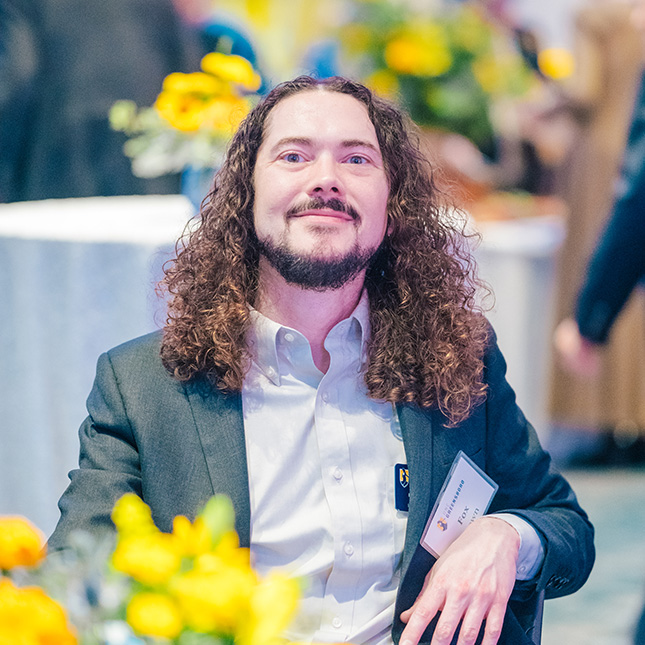
Man in sport coat sits at a table at an event.

Being a non-traditional student is nothing new for Brown. Although he attended public school until fifth grade, his mother’s love for the Montessori method shaped the way Brown learned. He was homeschooled in later years as his family moved from Southern Pines to Kernersville, NC to be closer to family after the death of a grandparent. 

His family’s hardworking Quaker values shaped Brown’s goals, but he received little guidance from his parents about higher education. His mother attended college briefly, and his father earned an associate’s degree in applied science for automotive technology. Brown tested into Forsyth Technical Community College and began taking courses for an applied science degree with plans to work in computer engineering. 

“I actually started college when I was 15 and finished my first degree at 17,” says Brown. “At Forsyth Tech, I found it easy to blend in with students from all stages of life.” 

Even as the youngest on campus, Brown thrived in a collegiate atmosphere. He joined a service fraternity, got his first taste of student government as treasurer and public information officer, and excelled in his classes — which made him curious about different degrees and his transfer options.  

He considered Guilford College but wasn’t able to get the scholarship support he needed. UNCG offered a more reasonable tuition, but Brown hit a roadblock because he didn’t have the associate’s degree in arts needed to transfer as a junior. Instead, he decided to join the workforce, taking jobs in retail and hospitality management. 

Mind for Politics 

Even during his break from college, Brown’s interest in service and civic engagement continued. Voting rights struck a chord with him from the time he reached voting age. 

“I started to really take a deeper interest in politics and the law when I was involved in a gerrymandering case in my voting district,” he explains. “They picked me to be one of only two voter plaintiffs from the state to go to Raleigh and testify before three judges.” 

The experience gave Brown a passion for representing citizens and exposed him to the many career paths in political science. Around that time, he lost both parents within a couple of years of each other, which meant care for his grandmother and disabled brother now rested on his shoulders. 

Realizing the limited wage possibilities for the jobs he was working, he decided to go back to school full-time. “I’m so thankful I broke out of that rut,” Brown remembers. “I just didn’t feel like I was making a meaningful impact with anything I was doing.” 

Finding His Way 

During the pandemic, Brown completed a second associate’s degree at Guilford Technical Community College, which enabled him to transfer to UNCG as a third-year political science major. He covered tuition with help from the TrACE program for transfers, private donations, and student loans.  

Ironically, after much life experience, Brown had finally landed on a four-year college campus but was still a non-traditional student: “I felt the same way I did when I was 15 in community college. UNCG’s diversity, with a broad array of people at different stages of life and different ages, helped me to blend in.” 

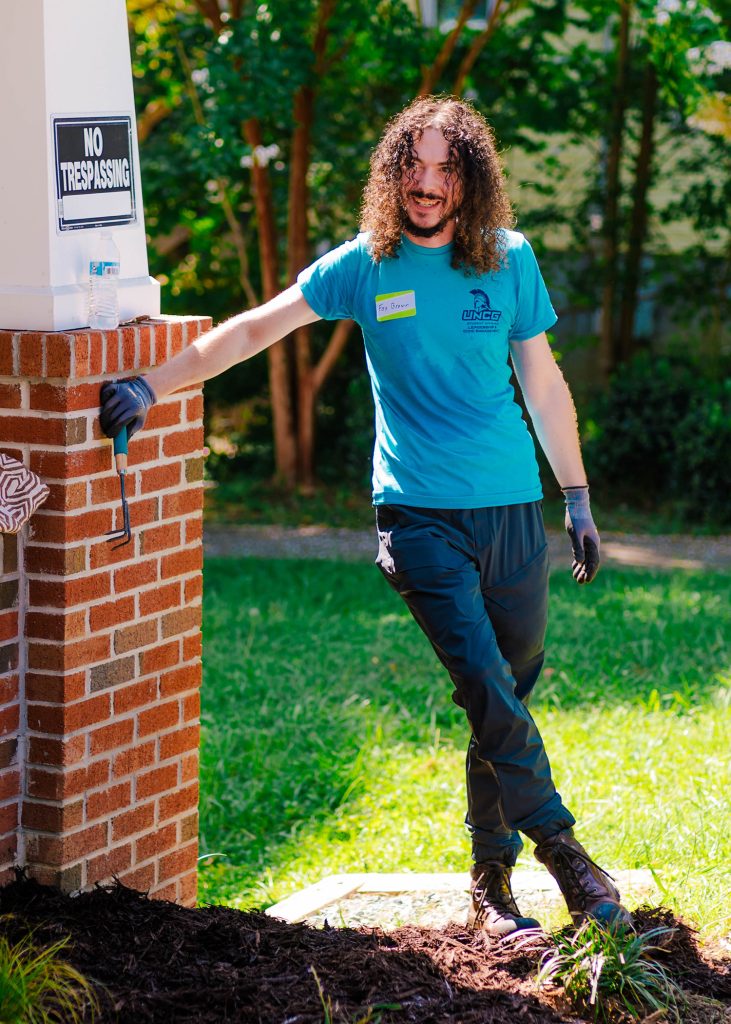
He joined Theta Delta Chi fraternity, took up fencing, and became the transfer representative for SGA. He also found himself drawn to the University’s motto of service. As a regular at UNCG’s service days, Brown loves volunteering in the Greensboro community. “It gives me a taste for how things work in life and the need for things to get better.” 

At UNCG, he could be a fully involved college student while caring for his family and pursuing his dreams. He began a pre-law professional track and then added another major in business.  

Brown loved how his classes complemented each other. Political science classes taught the judicial process, international law, and environmental law, all of which applied to his service work. Business classes focused on organization, management, and matching skill sets to workflows.  

He credits professors for helping him to find practical applications of his studies: “You can learn theory in textbooks, but you need a professor to help you work through examples of how you’ll use what you’re learning in real life.”  

When he ran for SGA president and won in 2025, he applied the theory he’d learned in both fields of study.  

“My class about the American presidency helped me understand how my position would work and how power works,” Brown explains. “It matters who you pick for your cabinet because you’re working through people so much. And I use my business classes when I’m managing my cabinet and trying to get my ideas across.” 

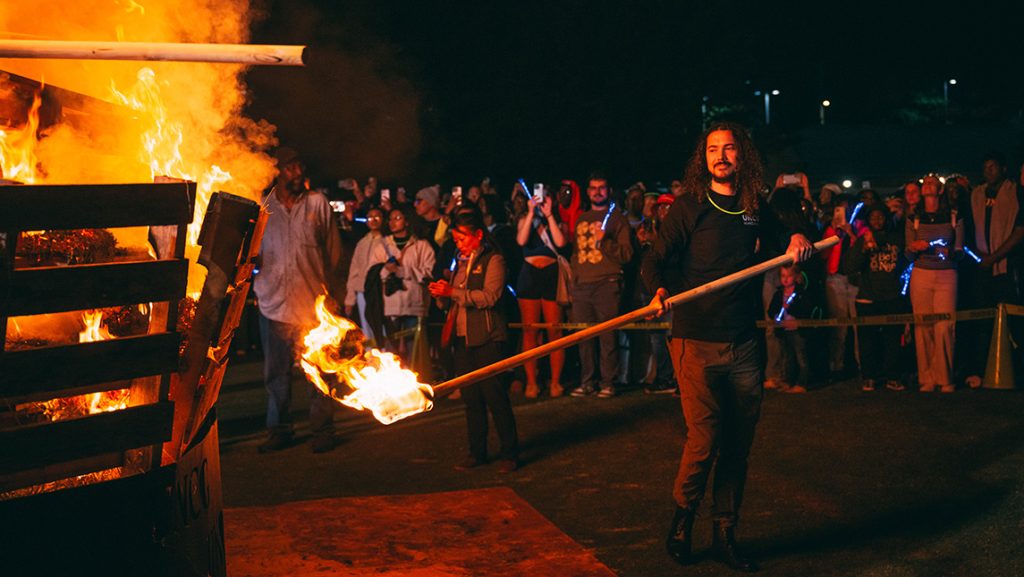
Man lights a bonfire with a crowd of students behind him.

Practicing Politician 

This year, Brown has used both his studies and life experiences in his role as SGA president.  

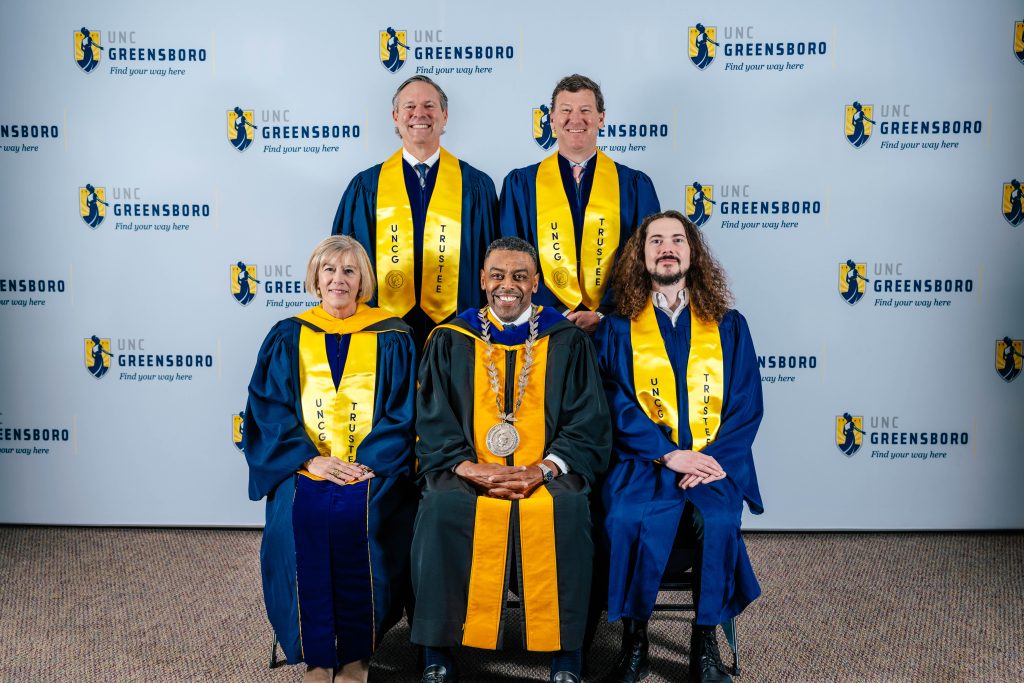
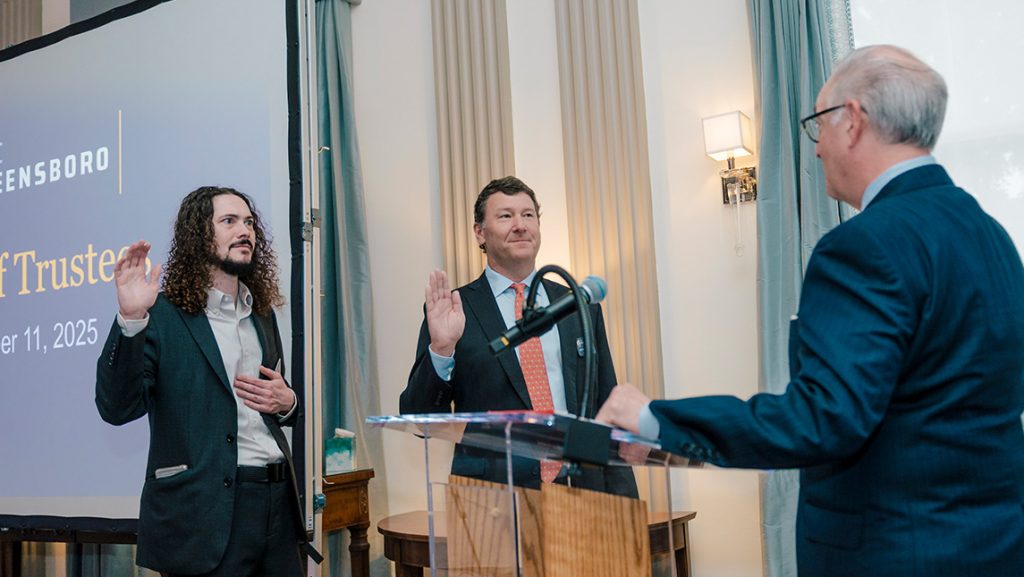
“I have learned to meet people where they are and always start by listening,” he says. This helps him relate to students he represents and work with professionals he serves with on UNCG’s Board of Trustees. “I’d have a hard time finding an internship that could match working with the experience around that table,” he adds.  

Another highlight of Brown’s presidency was writing a constitutional amendment — the first one UNCG had seen in many years. “It was very simple. It just made sure we were compensating our director of sustainability the same way we were the other directors,” he says. “I wrote it up, got it on the ballot, and it was passed.” 

In the process, Brown realized the importance of understanding the process and governing documents: “That’s where my pre-law training came in. I understood where there was a problem and knew how to fix it.” 

He praises the diverse group that works with him in SGA and the successes they’ve enjoyed together. “Our delegation consistently shows up and works hard,” he says. “We’ve had better attendance than UNC-Chapel Hill, which has a much larger SGA, in our system-wide Student Government Association meetings this year.”  

Brown is wrapping up his term as the 112th president this spring, which will allow him to focus on academics before graduating in May 2027. He’s decided to take an extra year so he can graduate with honors with double majors in political science and business and a minor in history. After that, he’s already identified some Ivy League schools where he can dual-enroll as a law and MBA student.  

The opportunities he’s taken advantage of at UNCG should certainly help him achieve these lofty goals, but serving others is always top of mind for Fox Brown: “I hope I’ve made a difference on this campus as I kind of practice to make an even bigger difference in the world.” 

Story by Becky Deakins, University Communications.
Photos by Sean Norona, University Communications. 

Make a Difference at The G.

Latest News

May 4, 2026

Excellence and Career-Readiness Define the UNCG Class of 2026

The excitement can be felt across UNCG as it gets ready to honor the nearly 3,000 Spartans who will graduate this spring. Each of th...

May 1, 2026

IPSE Day celebrates education and inclusion for students with IDD 

UNCG joins the nation in celebrating IPSE Day on May 1, celebrating our students with intellectual and developmental disabilities.

April 30, 2026

A Retrospective of Minerva’s Sculptor

Some of Greensboro's most iconic artwork — Nathanael Greene, the February One sit-in leaders, and UNCG's own iconic Minerva — sp...

What's Trending

Connect with Us

Subscribe to our Top 5

Subscribe today to our Top 5 Weekly email

This field is for validation purposes and should be left unchanged.

Share Your Story

For the Media