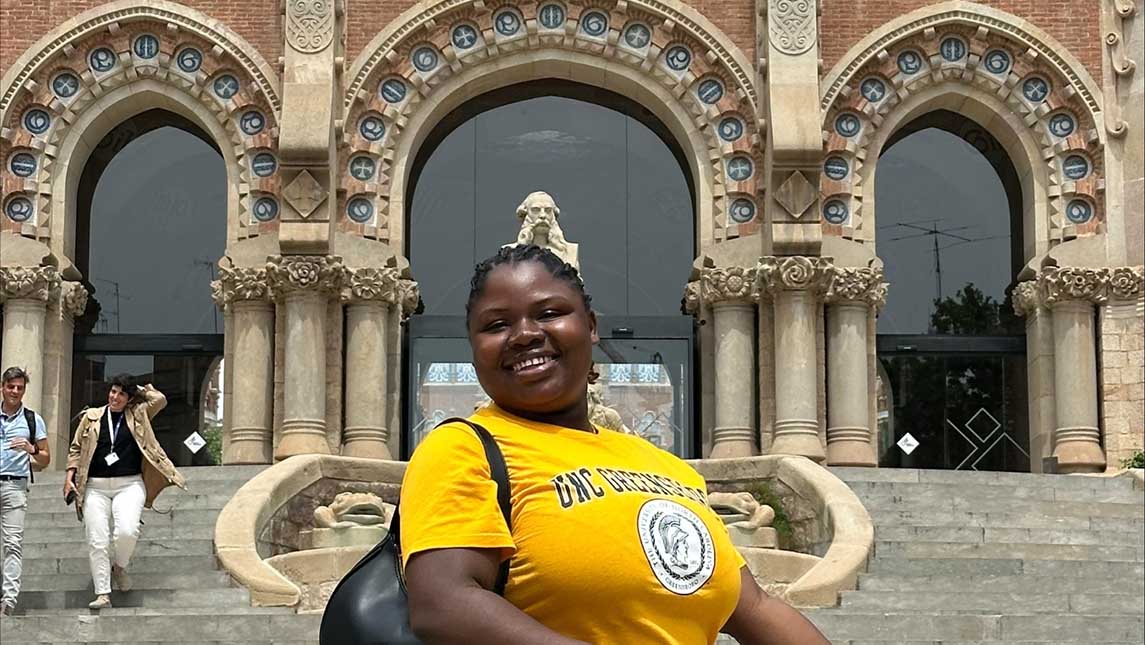
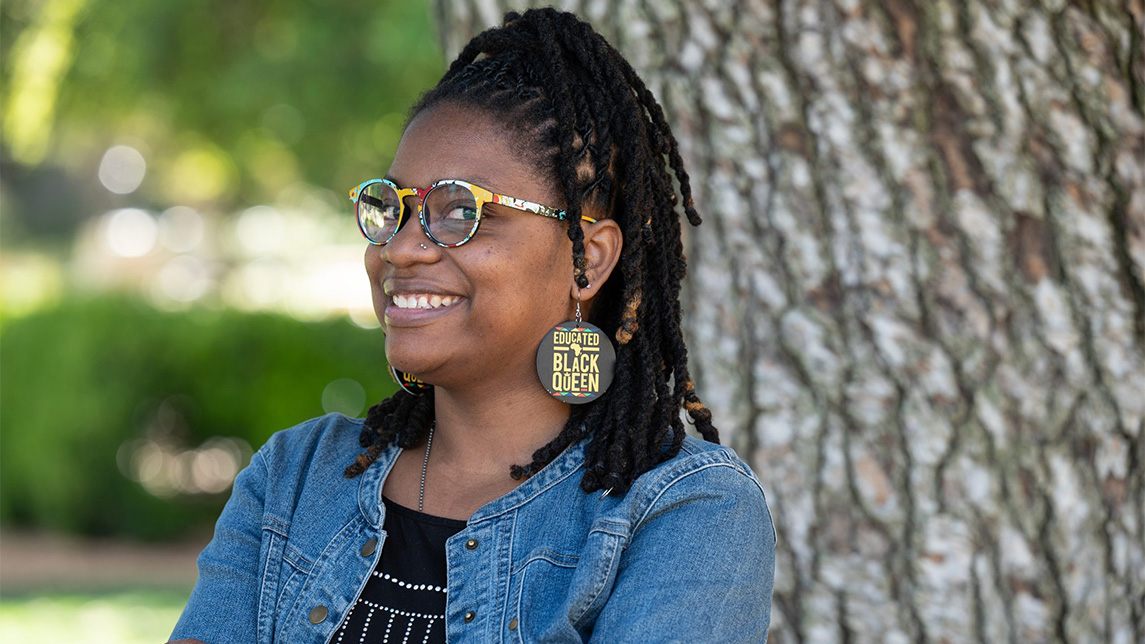
Gilman Scholar Irakoze Mireye in Barcelona, Spain.
Over the past 25 years, UNC Greensboro has produced an impressive 278 Gilman Scholars, the most of any North Carolina university, distinguishing it amongst a select group of high-performing institutions nationwide. The UNCG Gilman Program has directed more than $800,000 to students who are Pell Grant recipients with demonstrated financial need.
Beyond those impressive stats, the true impact of the Gilman Scholarship is best understood by the students who are transformed because of their study abroad experiences. UNCG students have studied in 44 countries through the program.
“I don’t think people from my culture or people that look like me often dream beyond their daily experience or study abroad,” says Gilman Scholar Irakoze Mierye. “Nelson Mandela said, ‘Education is the most powerful weapon which you can use to change the world.’ I believe everyone should have access to opportunities to learn.”
Profound Perspective
Mireye, a senior social work major in the School of Health and Human Sciences, exemplifies how study abroad can transform both academic and personal trajectories. She’s the oldest of nine children in a Burundian family. She immigrated to the United States at age 10 after growing up in a refugee camp in Tanzania. Now, she is a first-generation college student who has taken advantage of her time at UNCG.
“Being here at UNCG has been really a living testimony and a transformation journey,” Mireye says. “When I could look at my life back in Africa in the refugee camp, sometimes I couldn’t go to school because I didn’t have the uniform or my parents didn’t have the money to pay for the fees or the semester. Now, I have had opportunities that make me realize education should be a right, not a privilege.”
During a faculty-led program in Barcelona, Spain, Mireye studied global health and social work, gaining firsthand experience with international healthcare systems and diverse populations.
“The experience strengthened my cross-cultural communication skills, adaptability, and global awareness,” she says. “I want to become an international social worker. Living and learning alongside professionals from different backgrounds challenged my perspectives and made me realize I need to have more cultural humility for different ways of life. I really had to get out of my comfort zone.”
Fluency in Culture
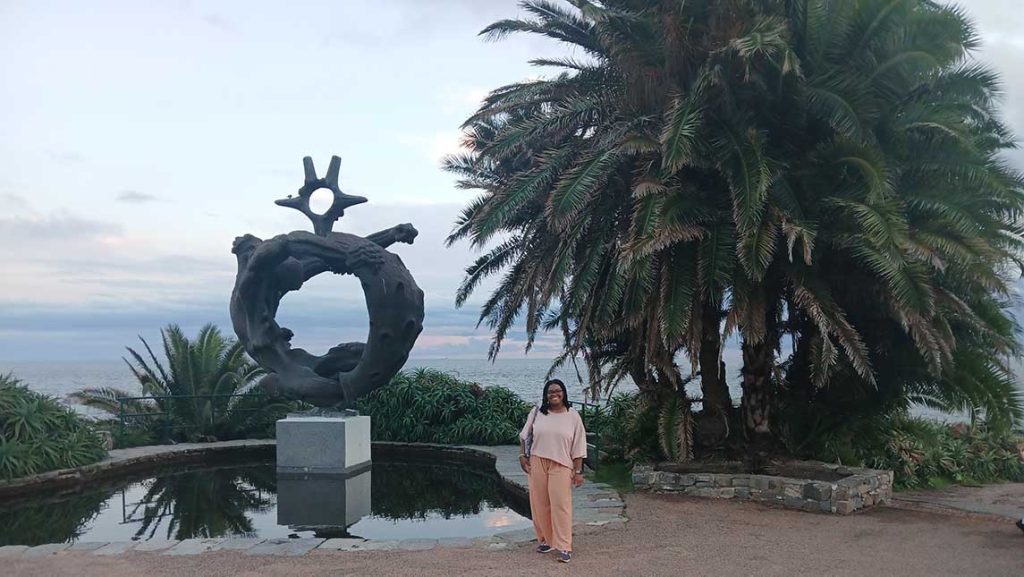
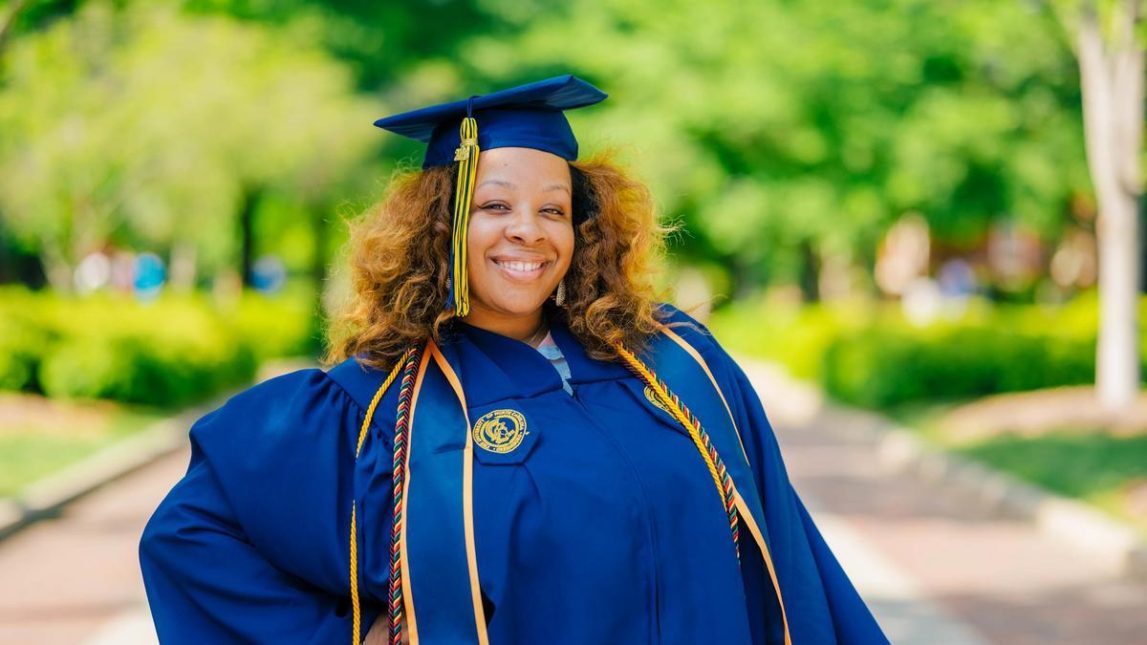
Similarly, Shelyna Moyer, an education and languages, literatures, and cultures major, found her perspective expanded through a semester abroad in Montevideo, Uruguay. Traveling outside the United States for the first time, she immersed herself in the local culture, lived with a host family, and significantly improved her Spanish proficiency.
“Before I went, I could barely understand anything in Spanish,” she says. “I am now fluent.”
Her experience also shaped her career aspirations, inspiring her to pursue teaching and potentially graduate studies in linguistics.
“I want to come into the classroom with fluent Spanish and the perspective to help my students know that the cultures of Spanish-speaking countries is very different, but there are also a lot of similarities as well,” she says.
Moyer became a part of her community there, creating close ties with her host family and fully immersing herself in the culture.
“Studying abroad is a way to open your mind and see how our humanity connects us, though we live in different ways,” Moyer says. “I had never been out of the country before the Gilman Scholarship and now, I can’t wait to go back and possibly live in another country.”
Just Go
Through the Gilman Scholarship, UNCG continues to open doors for students, fostering global awareness, personal growth, and academic success. Mireye and Moyer both credit the Global Engagement Office with helping them apply and receive the Gilman Scholarships.
“It’s thanks to the Global Engagement Office that I even knew about the scholarship,” Moyer says, “They helped us workshop our application essays, and I know it made my essay stand out because I had their tips in my head when I went to write it.”
“The Gilman Scholarship is competitive,” Mireye says. “It truly is the reason I was able to experience living abroad, studying there, eating there and learning how to live on my own in a different city and country.”
Both scholars recommend that other UNCG students apply to take advantage of the opportunity to study abroad. Access to international education can transform lives, and UNCG is committed to helping their students access and experience study abroad.
About the Gilman International Scholarship Program
The Benjamin A. Gilman International Scholarship Program provides scholarships to American undergraduates with high financial need to study or intern abroad for academic credit. Established by Congress in 2001 and administered by the Institute of International Education on behalf of the U.S. Department of State’s Bureau of Educational and Cultural Affairs, the program has supported students from more than 1,400 institutions nationwide.
Written by Alice Manning Touchette
Photography courtesy of Shelyna Moyer and Irakoze Mireye
UNCG’s Summit Maximizes Leadership Skills for Career Readiness
Posted on April 16, 2026
On the morning of Feb. 27, the Elliot University Center Cone Ballroom was filled with big, round tables where students drank coffee and nibbled on pastries among alumni guests and staff members. The students chatted easily with each other and the professionals in attendance as the UNCG Student Leadership Summit came to order with a keynote speaker who set the tone perfectly.
All eyes turned to Brian Campbell ’02 at the mic, with a screen behind him that read, “20 years from now… will they be saying your name?”
Leading with Intention
A motivational speaker, author of “The Banker’s Blueprint,” and vice president for Truist Financial Corporation, Campbell explained how he’d interviewed with BB&T on campus when he was a senior. BB&T eventually became Truist while he tenaciously built a career in mortgage banking, thanks to a campus interview made possible by UNCG resources.
“I’ve changed the lives of more than 2,500 people by helping them to buy homes and reach financial independence because of the leadership that started at UNCG,” he said.
Just 24 years ago, Campbell had been in the same position as the young leaders gathered before him. Today, he used the word “intentional” 15 times in his 20-minute speech, in which he encouraged students to take advantage of the opportunities around them.
“Leadership is a lifelong journey,” he said. “You’re building for something that is much bigger than you. You’ve got to launch eventually. You’re needed!”
Campbell learned the importance of scholarship, service, and leadership at UNCG, particularly through involvement in his fraternity, Phi Beta Sigma. He got emotional when sharing stories about lifelong friends he met at UNCG, their positive influence on him, and the impact they made in their own careers and lives beyond college. His anecdotes about influential peers hit home for the students, many of whom were drawn to organizations for the friends they met there.
Campbell’s words, “Skills learned today shape your tomorrow. What will your story be?” kicked off a day-long event of communication exercises, self-reflection, and leadership skill development for the more than 50 UNCG students in attendance.
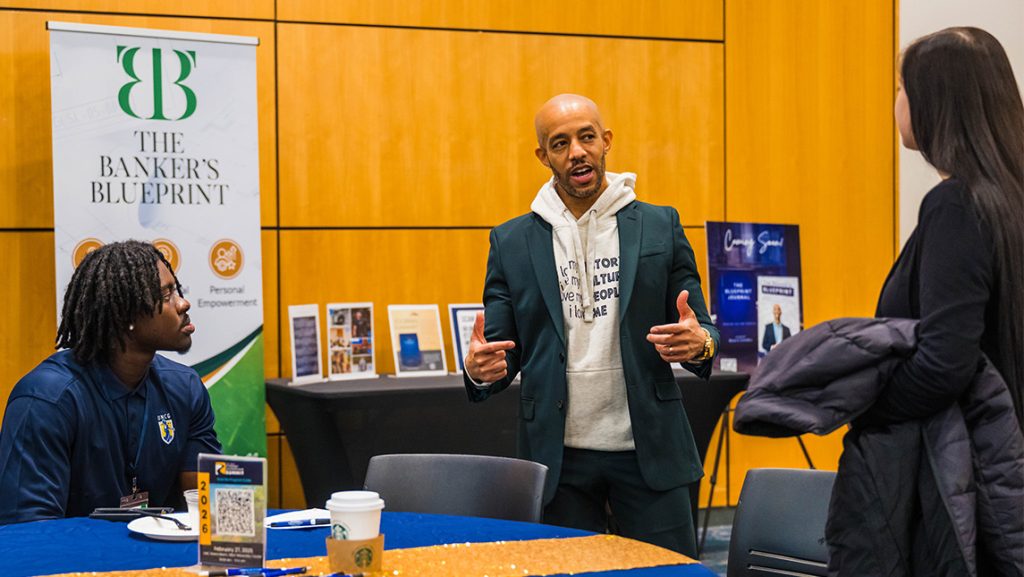
Brian Campbell speaks to students after his keynote address.
“We really wanted to design an experience where students could meet their peers and they could also learn from folks who had done it before,” said Kiley Alexander-Coster, associate director of CAP. “Their capacity to connect with one another and reflect on their own experience was something that we watched develop throughout the day.”
The students broke into small groups based on where they were in their leadership journey: exploratory, emerging, or experienced. The groups dove deeper into issues like choosing the right organization for you, improving communication within student organizations, and leading with purpose.
“Being in an environment where I was around similar people as myself was so amazing,” said fourth-year media studies student Jiyah McLaughlin. “The Summit did a great job of helping us identify our own personal values and then tying that back to organizations we can serve.”
After lunch, the group was inspired by question-and-answer sessions from a student panel of leaders and an alumni panel of professionals. Like Campbell, the professionals shared anecdotes about how they developed skills in student organizations — whether they be Greek organizations, residence life, or cultural or service groups — that were useful in their careers.
“Find your spark and build on it. Be ambitious and busy, but be strategic,” said Candace Martin ’10, operations and communications manager at Action Greensboro.
April Albritton ’05 shared lessons that helped her to transition from student leadership to her current position as Community Partnerships and Development Officer with the City of Greensboro: “Volunteering with UNCG athletics made me the servant leader I am today. You don’t have to do everything on your own. Use your resources here. Wander into offices and ask what people do. Remember that you chose UNCG and UNCG chose you!”
Alumni reflect on how student leadership opportunities prepared them for their careers in a panel discussion before networking with students at the Summit.Kiley Alexander-CosterCandace Martin connects with a student leader.
Find Your Place to Shine at the G
The 2026 Student Leadership Summit was a prime example of the many ways that UNCG supports students and the 250+ organizations on campus, and those in attendance were here for it.
“Student leadership is really what our students choose to make it,” said Alexander-Coster. “It starts with finding what they’re passionate about and finding a community that makes them feel like they belong.”
The Summit’s student panel was made up of ambassadors who had found ways to make a difference on campus. Their stories painted a unique picture of what leadership looks like at UNCG. Some are bubbly and engaging, and others are intuitive listeners. Some come from high-achieving backgrounds, and others are just finding their stride in college.
“I would not say that I arrived as a strong leader,” explained fourth-year Malcolm Johnson. “In high school, I was kind of in this gray area. I was never the best at anything, but I wasn’t the worst either. It wasn’t until I got to UNCG that I realized I can’t make my way through that way.” Johnson’s involvement in residence life and public health classes provided a spark to create his own club, the Public Health Impact Network (PHIN).
Jason Alaniz-Ibarra carried a quiet confidence on the student panel, but came to life when he discussed the growing Hispanic community at UNCG. “Seeing my fraternity create safe spaces for Hispanics on campus inspired me to join and lead,” he said. “Leadership isn’t a trait you are born with. I had to learn how to get involved, command a room, and take control of a situation. Reaching out to faculty and staff around campus really helped.”
It was easy to see how McLaughlin became so involved on campus. Her enthusiasm was contagious. “I love the community at UNCG and the fact that everybody is so welcoming and inviting. It makes you want to get involved,” she said. “I quickly learned that there’s no wrong way to lead. There’s room to develop your own style.”
The takeaway from the Summit experience is that no two student leaders are the same at UNCG, but all leave with skills and confidence to make a real impact in the careers and communities they will serve, thanks to the support they receive during their college years.
“I’m fortunate to be able to come to this University,” said Johnson. “I’m so fortunate to be immersed with all these wonderful peers and faculty and staff who can enrich me. That realization immediately makes me to give back to the community.”
Story by Becky Deakins, University Communications. Photos by Sean Norona, University Communications. Video by David Row, University Communications.
UNCG faculty, staff, and alumni honored for leadership and impact across the Triad
Posted on April 14, 2026
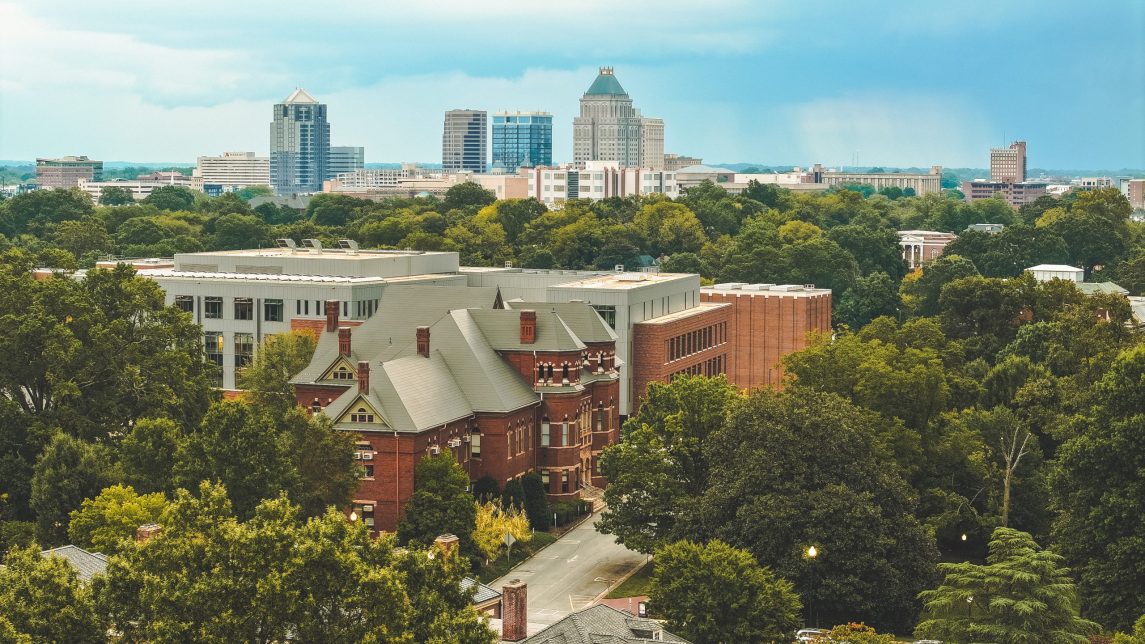
Arial photos of UNCG campus during the early morning at Week At The G.
23 Spartans honored in Triad Business Journal’s 40 Under 40, Outstanding Women in Business lists
Twenty-three UNC Greensboro staffers, alumni, and faculty have been recognized by the Triad Business Journal in its 40 Under 40 and Outstanding Women in Business lists. The honorees — ranging from business leaders and designers to nonprofit executives — highlight UNCG’s impact across the Triad and beyond.
UNCG’s Outstanding Women in Business
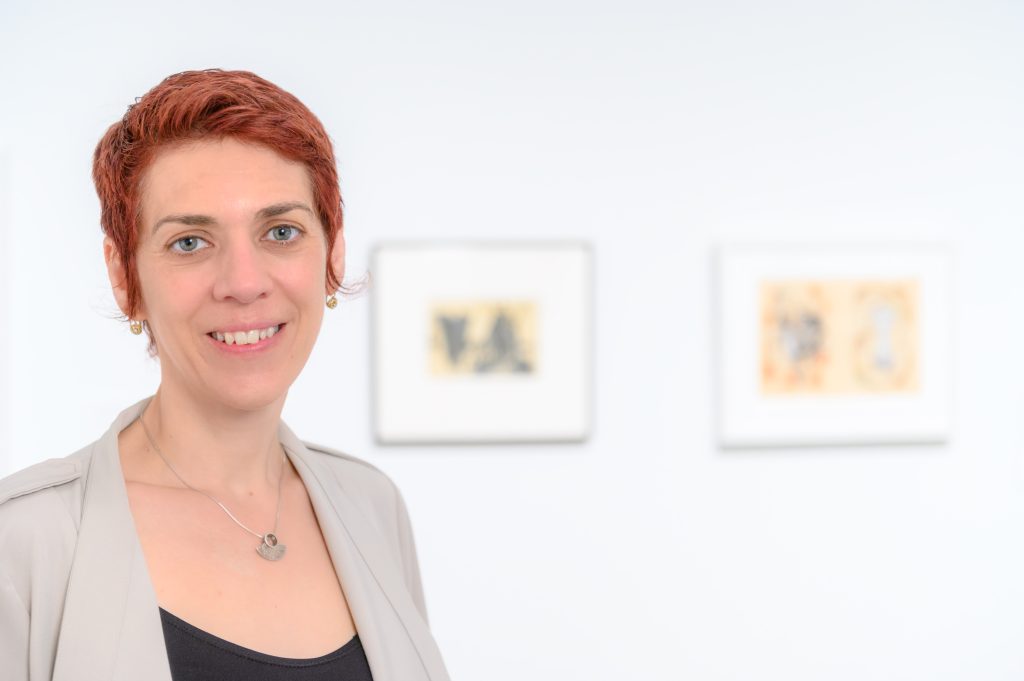
Juliette Bianco, Associate Vice Chancellor for Museums and Creative Practice and Anne and Ben Cone Memorial Endowed Director of the Weatherspoon Art Museum, carries a lengthy title and weighty responsibilities. The Weatherspoon Art Museum has been integral to the art community at UNCG and in Greensboro since 1941. It opened as the first public art gallery on any campus in the UNC System, and the fact that it is always free and open to the public weighed heavily in her decision to come to the G from Dartmouth College’s Hood Museum of Art.
Associate Vice Chancellor for Museums and Creative Practice and Anne and Ben Cone Memorial Endowed Director of the Weatherspoon Art Museum, Juliette Bianco
“I was born in New York City, where many museums were free for all residents,” Bianco says. “So, I grew up going to places like the Metropolitan Museum of Art, which helped me understand why it’s so important to have spaces that are truly for all people. My entire career I’ve only worked in university-based museums that are free and open to everyone, like the Weatherspoon.”
The Cole Levin Center is built on a gift from Carol Cole Levin, who donated funding for building renovations and programming, along with 270 works of contemporary art by more than 140 artists as part of UNCG’s Light the Way campaign. The center will be located on the first floor of the Weatherspoon and will house teaching, study, and exhibition spaces anchored by the Weatherspoon’s world-class collection of American art.
The Tannenbaum Center for Creative Practice, at the corner of Tate Street and Gate City Boulevard, will serve as a gateway to the UNCG campus. Its three main objectives are to be a hive of transdisciplinary creativity and academic innovation, to attract new students with creative opportunities, and to serve as a catalyst for innovation by bringing artists, academics, and community members together to solve shared challenges.
Both Centers are scheduled to open during the Fall 2026 semester.
“They’re going to reignite the idea that art and creativity at UNCG should serve our campus and community as broadly as possible,” Bianco says.
In addition to Bianco, seven UNCG alumnae were featured on TBJ’s Outstanding Women in Business list:
Maria Adams (Class of ’93, BS Interior Design) President/owner, Maria Adams Designs
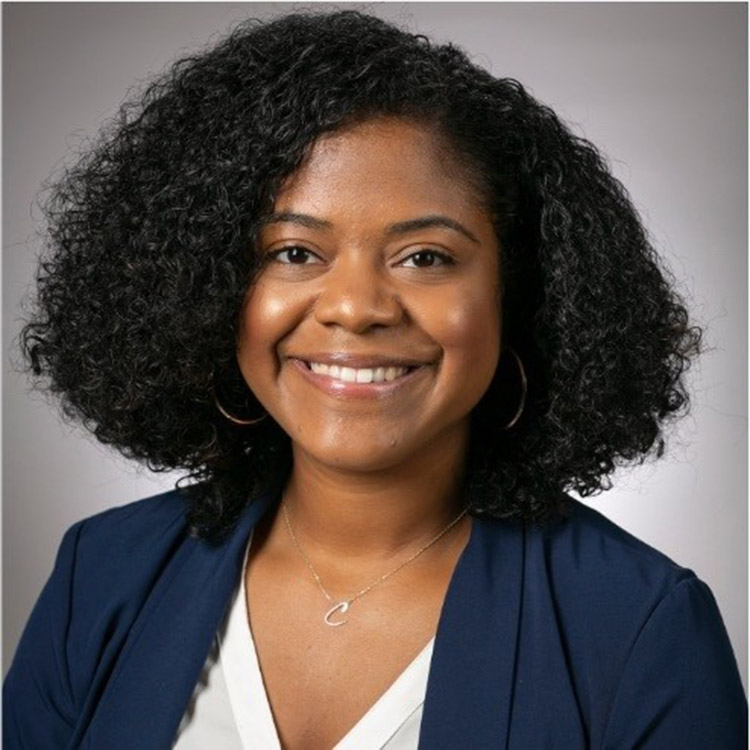
Chartanay Bonner, director of strategic initiatives and research development within the Division of Research and Engagement, was named to the Business Journal’s 40 Under 40 list for the first time this year. Her entry on the list describes her dynamic role in expanding capacities of research at the University.
Director of Strategic Initiatives and Research Development Chartanay Bonner
Her successes include leading the department to a record-high $200 million in research proposal submissions last year, designing a roadmap for UNCG to reach R1 status under the Carnegie Research Classification framework, building two STEM institutes, and launching two workforce pipelines.
Bonner’s UNCG journey began at the Joint School of Nanoscience and Nanoengineering, a collaboration with NC A&T State University, where she says she began to recognize the value of collaboration in research and developed skills in building research infrastructure.
She moved to the research division in 2024.
“Through funding and strategic initiatives, I get to support the university, faculty, scholars, and the community,” she says of her current role. “We also keep an eye on what’s happening regionally, statewide, and nationally to understand what trends are taking place, particularly shifts in AI, cybersecurity, healthcare, and resources for research. I get the beauty of thinking about initiatives to support faculty research as we’re on the journey from an R2 facility to R1.”
Along with Bonner, 12 young alumni, one part-time faculty member, and one former faculty member were named to TBJ’s list:
Alex Wolfe (Class of ’11, BS Information Systems and Operations Management) President, Wolfe Homes
Ellen Trastelis (Class of ’16, BS Business Administration and Management) Senior Director Human Resources, Pace Communications
Rachel Stafford (Class of ’09, BFA Interior Architecture) Associate Principal Interior Design/Partner, CJMW Architecture
Donor’s ‘LIFE’ Endowment Paves the Way for Scholar
Posted on May 08, 2026
Two Spartans share a special connection ahead of Spring 2026 Commencement. Shameeka M. Wilson ’18, ’20 MEd established an endowment before graduating. This week, the endowment recipient Irani Molina-Olmedo, will graduate from the School of Education.
Class of 2026: Naima Blakely Blends Humanities and Philosophy to Build Her Future
Posted on May 05, 2026
Balancing a family and a full-time leadership position at Cone Health, Naima Blakely returned to school and will graduate this spring with majors in Liberal & Professional Studies with a concentration and Humanities and philosophy with a concentration in Pre-Law.
As she approached her 30th birthday, Naima Blakely found herself confronting a familiar milestone question: Where do I want to go from here?
Blakely spent most of her 20s working as a fast-food manager and bartender, building connections and sharing stories with customers. But as she neared a new decade, she felt a growing pull toward a more stable, “corporate” career path. “I had this feeling that I needed growth and new opportunities,” she says. That realization set her on a journey that would eventually bring her to UNC Greensboro.
This spring, Blakely will graduate with a double major in Liberal & Interdisciplinary Studies with a concentration in humanities and philosophy with a concentration in pre-law. Her story reflects the experience of many adult learners balancing work, caregiving, motherhood, and coursework while rediscovering their voice and long-term goals.
A Return to UNCG Rooted in Prayer, Purpose, and Family Legacy
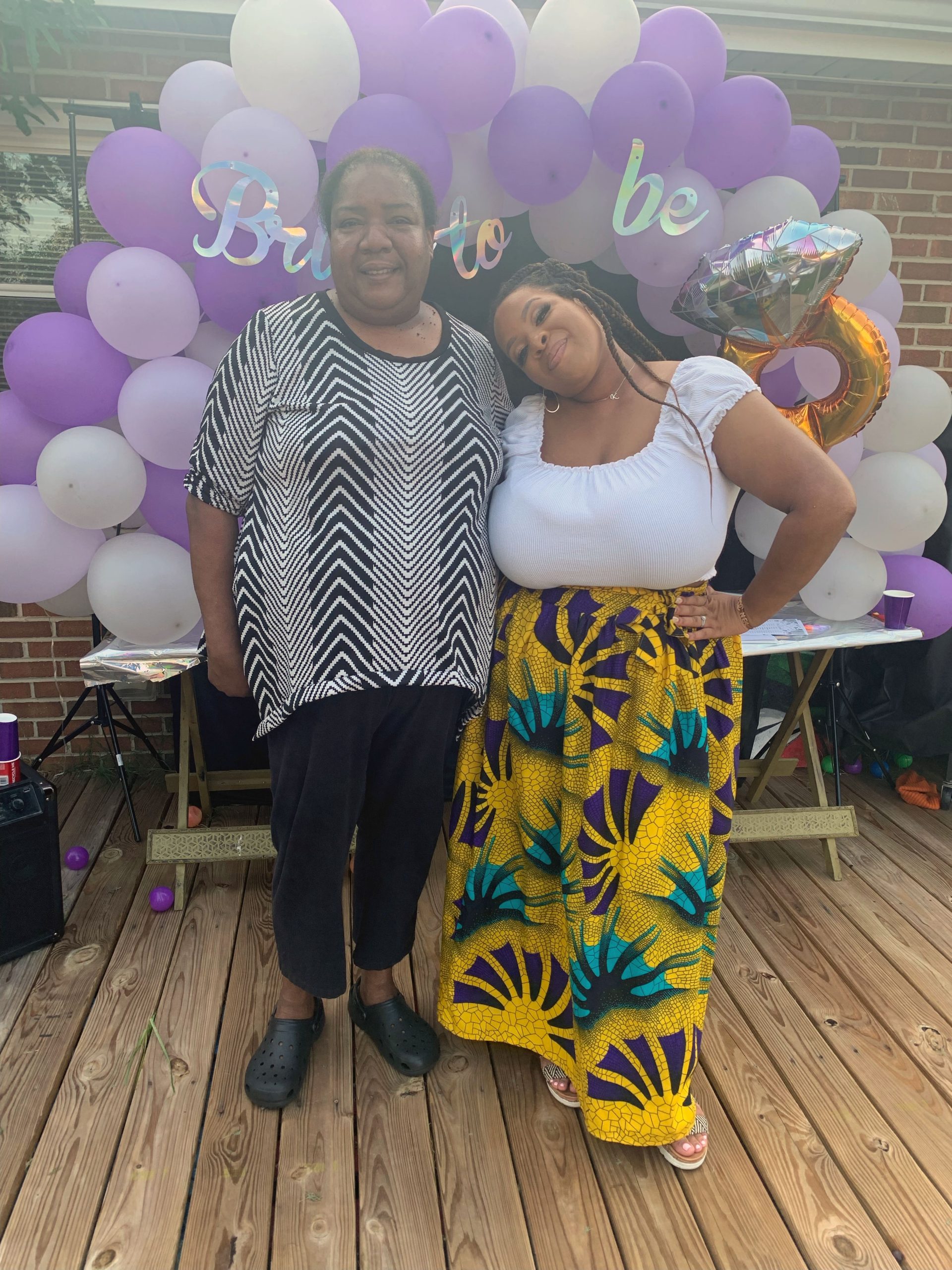
Blakely (right) with her aunt, Mildred Jordan Ricks (left), at a bridal shower.
Two pivotal life events pushed Blakely to return to school. The first came during an international trip to celebrate her 30th birthday. Just one day into her vacation in Tulum, Mexico, she broke her knee.
“That was a life-changing experience for me,” she says. “I had to sit down. And that’s where patience comes in. You pray for patience, and you don’t realize those prayers would come through as hard as they do. When you’re praying for something, just know it’s going to come as a challenge. You have to learn it first to understand it.”
Recovering from her injury gave her the space to realize it was time to continue her education. Once she made the decision, UNCG felt like a natural fit. The Liberal & Professional Studies major offered a flexible, online option that fit into Blakely’s busy schedule. She already felt connected to campus through her aunt, Mildred Jordan Ricks, who worked in Dining Services for over 25 years. Jordan Ricks was often the first person to welcome students into the dining hall, and Blakely visited her regularly over the years.
Her aunt passed away the summer before she began taking classes on campus. The loss shocked Blakely, but it also strengthened her resolve.
“I was excited to come back to campus and see her,” Blakely says. “Knowing she wasn’t going to be there was shocking for me.” But she pushed on. “Whatever is going on, I’m going to finish [my degree], because I want to move on to the next level. Since then, she’s been with me, guiding me. It took a while to learn that spirituality is its own journey and not just religious—and I learned that through my Humanities major.”
Balancing Motherhood, Caregiving, and a Leadership Role at Cone Health
When Blakely began her studies at UNCG, she was raising three boys — now 11, 7, and 6 — while serving as a part-time caregiver for her father, working full‑time, and managing her aunt’s estate. She had been with Cone Health for more than three years and had recently stepped into a leadership role as an Information Technology Supervisor.
Today, she manages a 24‑hour switchboard operation across five hospitals and leads a team of 30 employees.
Blakely credits her husband and support system — at home, at work, and at UNCG — with making it possible to pursue her degree while balancing so many responsibilities. “Yes, you can have all the power and all the strength to get things done, but if you don’t have that support system, it’s really, really difficult,” she says.
Her supervisor offered flexibility so she could take classes and participate in campus opportunities. Her cohort taught her the importance of meeting people where they are. These experiences aligned with the cornerstones of her leadership philosophy: connection, community, and intentionality.
Finding Purpose Through Humanities and Philosophy
Blakely initially chose the Humanities major because it aligned with her interests and her busy life. “People are what make the world go round,” she says. But the coursework quickly became more meaningful than she expected.
Some of her early classes helped her process her aunt’s passing. “It was serendipitous,” she says. “I didn’t know that I needed this information.” When she realized she needed additional credits to graduate, she decided to pursue a second major in Philosophy (Pre‑Law). The decision challenged and changed her. “When I got to philosophy, it got a little rough,” she laughs. “But it forces you to think — what ‘facts’ are you giving? Is this perception or emotion?”
Those critical thinking skills strengthened her leadership at Cone Health, especially as she manages a multigenerational team. “People can always learn the work,” she says. “But connecting with people, understanding their language, building relationships — that can take you further.”
Humanities at Work: Applying Classroom Learning to Community Impact
One of the most transformative parts of Blakely’s UNCG experience has been her internship through Humanities at Work (H@W), a year-long program that places students in community organizations and helps them apply humanities skills in real-world settings.
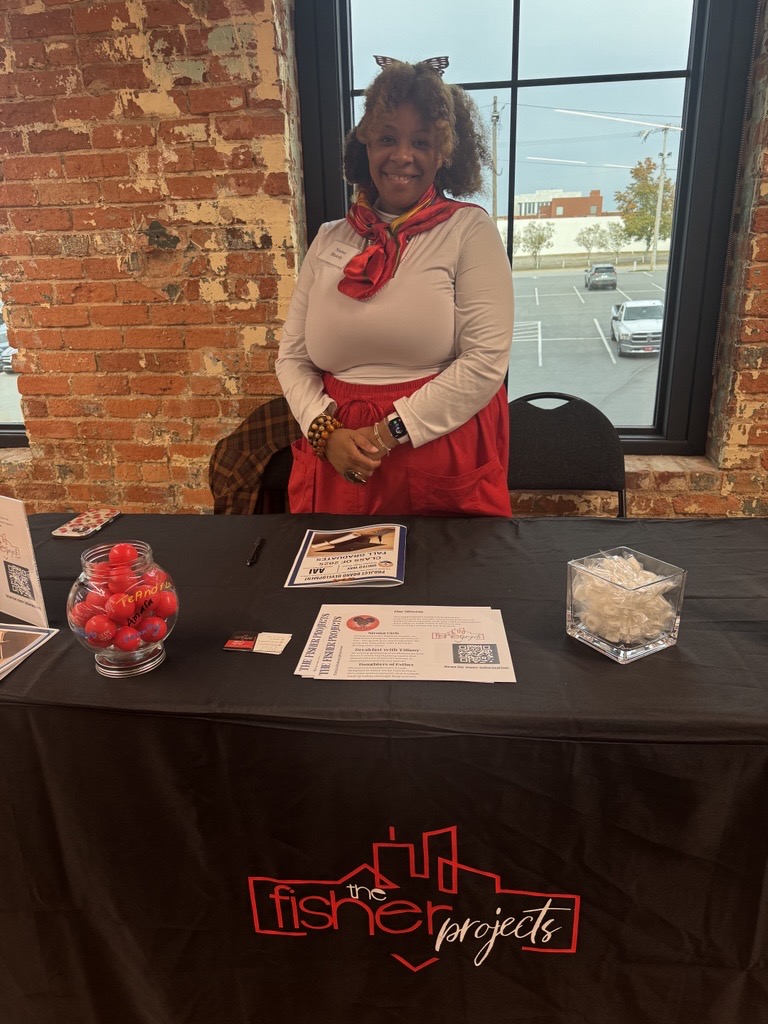
Blakely interned with The Fisher Projects, a nonprofit based in High Point that supports and connects women and girls from all walks of life. She worked with their Strong Girls program, mentoring fourth–sixth graders on topics like body positivity, affirmations, and time management. In her early 20s, Blakely wanted to work with young girls and have her own nonprofit, so this felt like a dream being realized.
“We’re here to empower them and show them you have a voice,” she says. “Everything that you need is in you already. It’s just an honor to experience that.”
Blakely now serves as a board member of The Fisher Projects.
She’s also grateful for the classroom component of H@W. She notes that students don’t get a playbook of what work will be like or what to expect. Being able to meet with fellow students, speak with mentors, and listen to visiting speakers from the community offered her spaces to ask questions and gain information that supplemented the internship experience. She learned not to expect every day to be perfect but to approach challenges that may arise from a mindset of “this isn’t a bad thing. I learned from this experience.”
Blakely (center) with her H@W cohort and site supervisor at an elementary school event with The Fisher Projects.Blakely tabling at an event to share information about The Fisher Projects.Blakely with members of her H@W cohort and Dr. Megan Walters, UNCG Career and Professional Development director (left), and Dr. Jennifer Feather, Principal Investigator for H@W and head of the English Department, at The Washington Center career launch program.
Prepared for What Comes Next
As she prepares to graduate, Blakely sees her academic journey as a powerful blend of personal growth, intellectual challenge, and community engagement. UNCG, she says, helped her connect the dots between her lived experience and her future aspirations.
Her long-term plans include continuing her leadership work at Cone Health, expanding her community involvement, and eventually pursuing opportunities that combine her interests in law, advocacy, and youth empowerment.
“I learned through this journey that everything is in the community,” Blakely says. “You have to get out there; you have to uplift those that are around you. I hope to do more in my community.”
Story by Amanda Kennison, College of Arts & Sciences Photography by Sean Norona, University Communications; and courtesy of Naima Blakely, College of Arts & Sciences
CELEBRATE OUR GRADS!
Graduates and their families are encouraged to share their accomplishments on social media by tagging the University accounts and using the hashtag #UNCGGrad. Visit UNCG’s digital swag page for Commencement-themed graphics and templates.
Mention @UNCG in celebratory posts on Instagram and X and @uncgreensboro on TikTok.
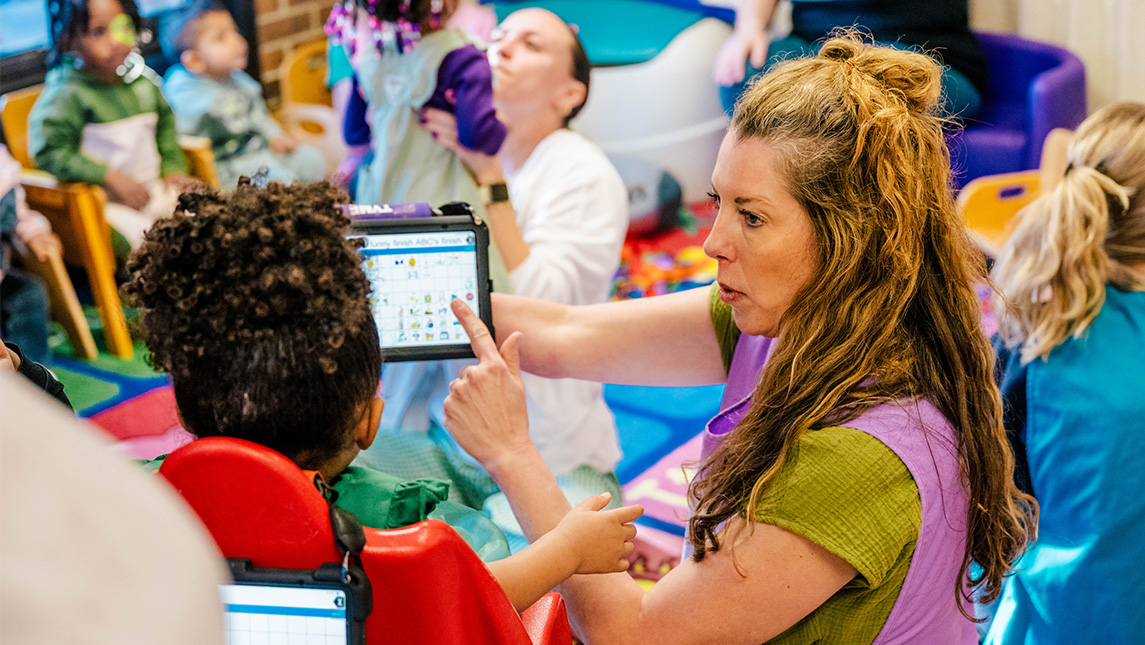
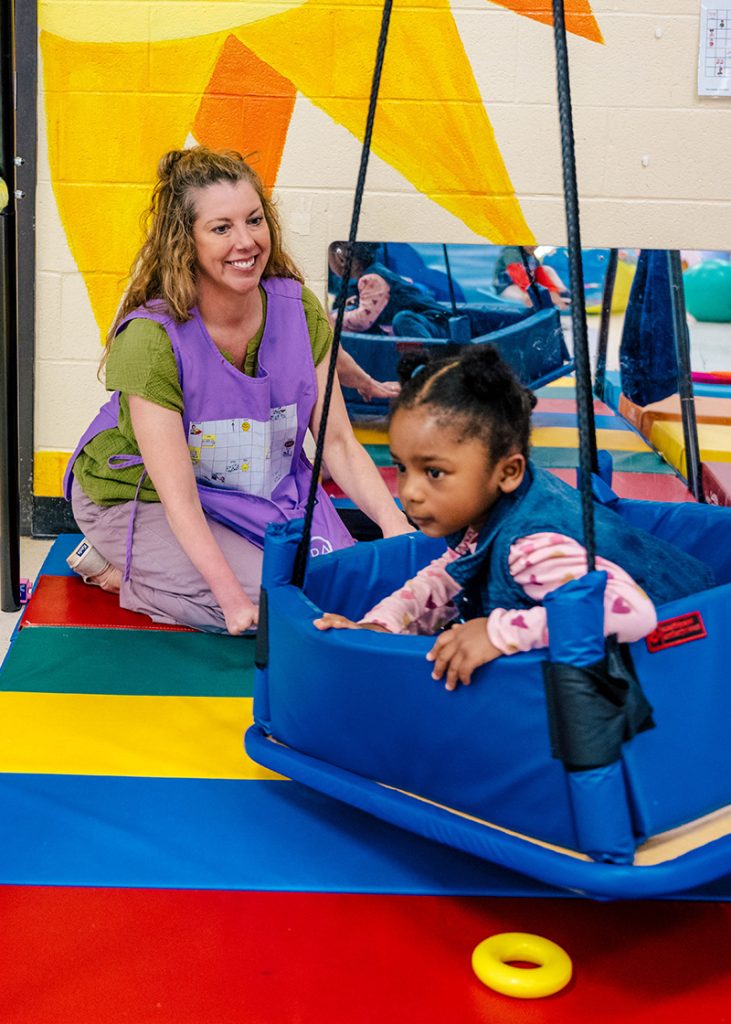
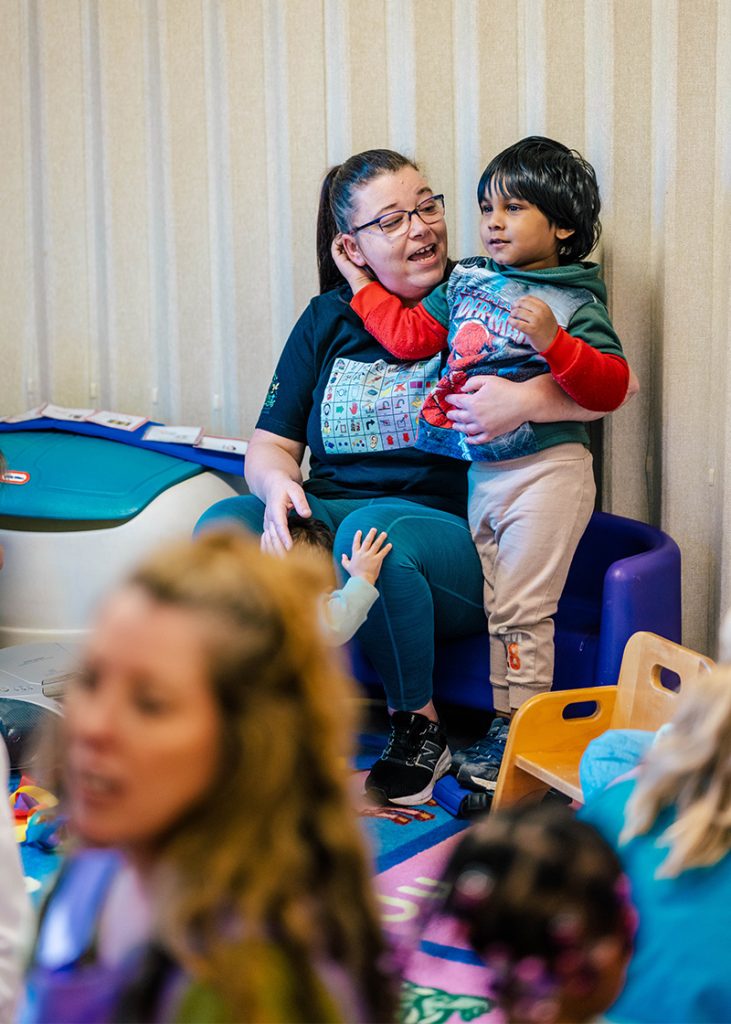
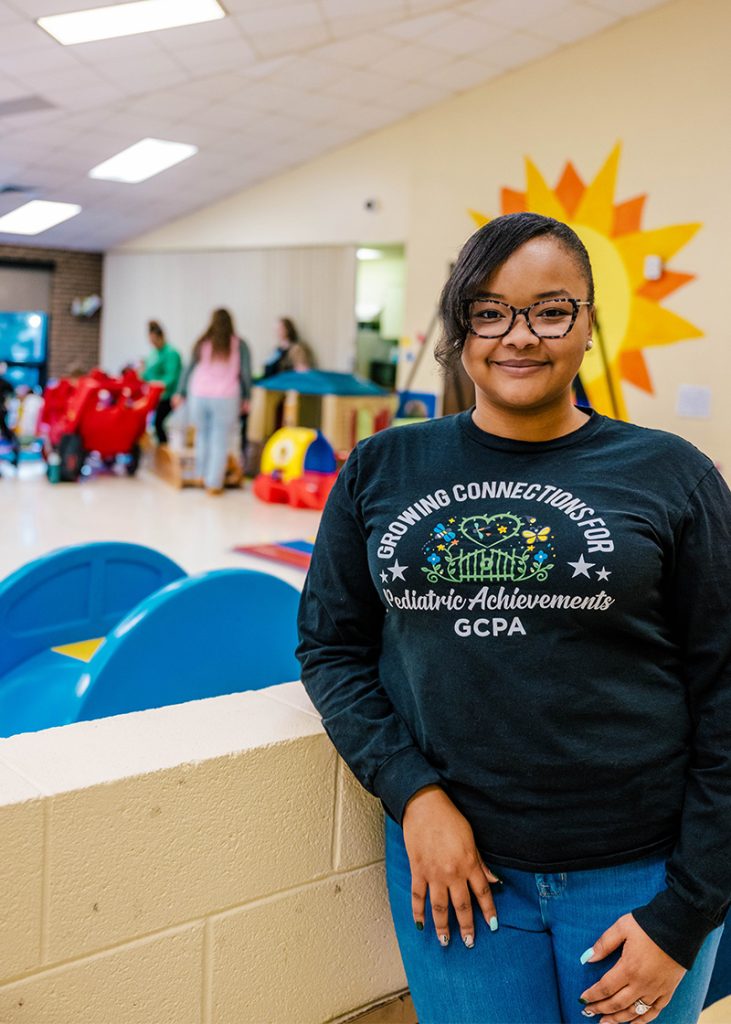
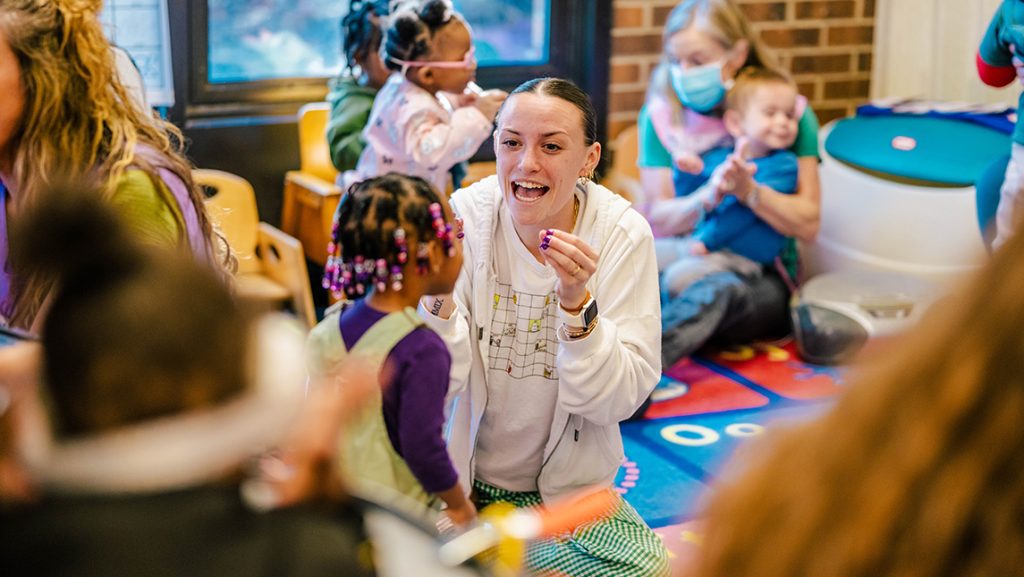
The names for the different children’s classes feel appropriate. Some of the kids are just barely old enough to walk. All have developmental delays or special health care needs. But in the comforting circle formed by their classroom leads, aides, and therapists, they happily sing along to “Wheels on the Bus” and other familiar nursery tunes as they participate in their speech, physical, or occupational therapy.
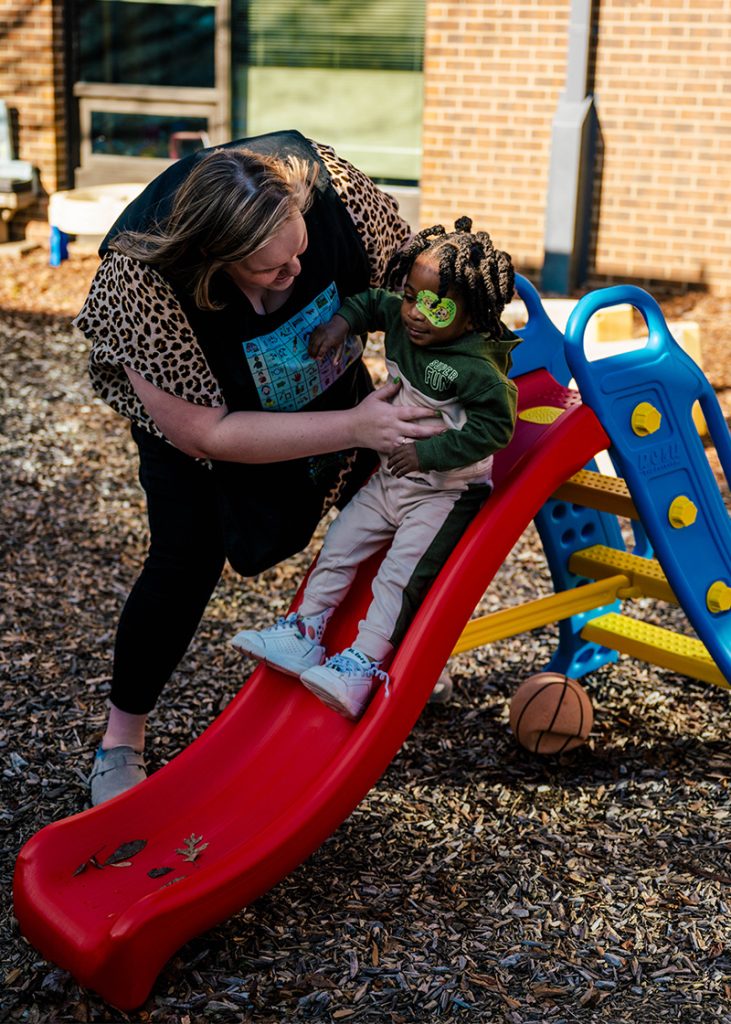
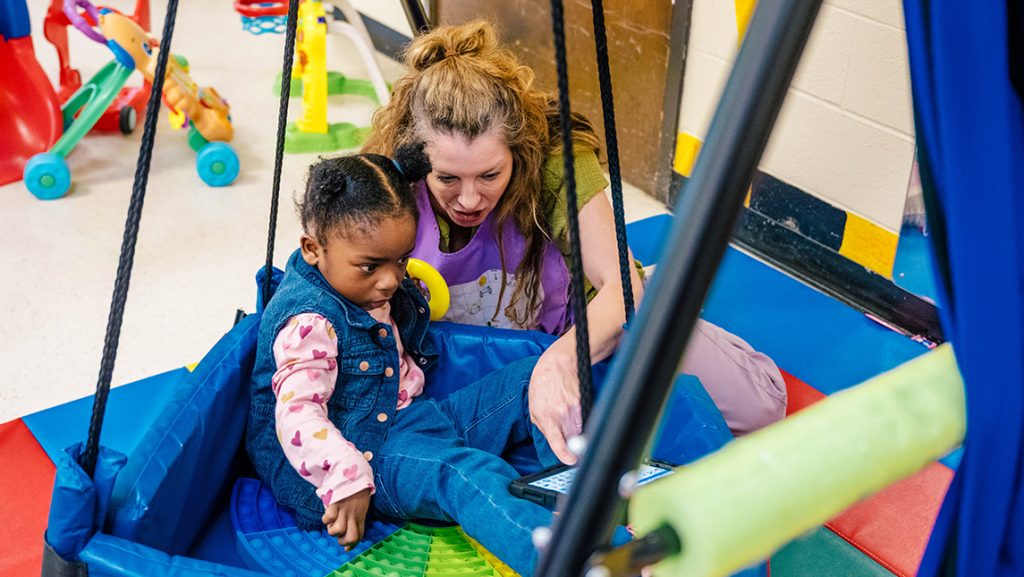
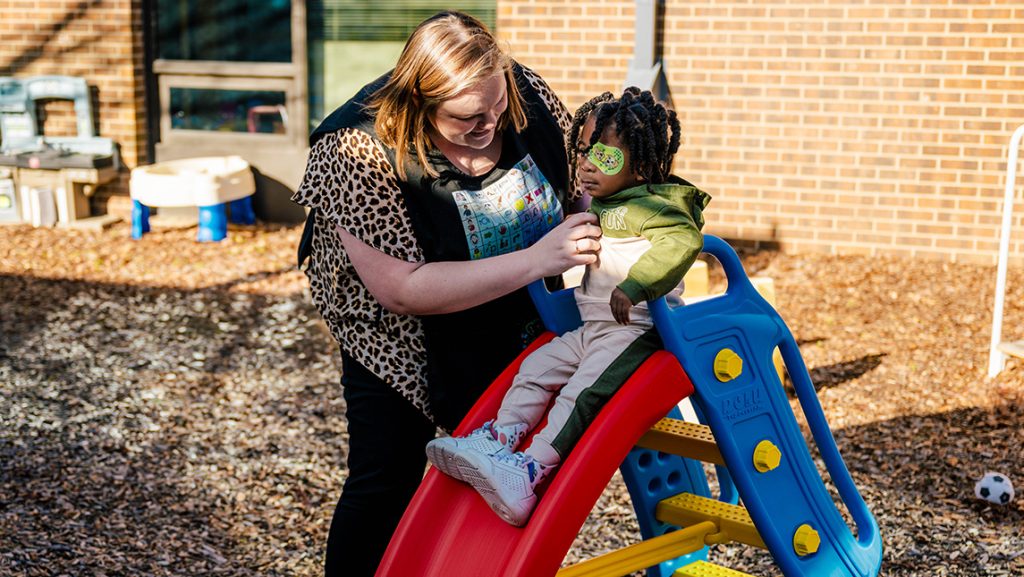
The staff wears colorful smocks decorated with a communication picture board. Children with speech delays or differences can point to the symbol of what they need, a system known as augmented and alternative communication (AAC). Similar boards cover their playground and the digital communication tablets they use in therapy sessions.
It feels like a place where a child can find their wings and soar.
One of the things that makes GCPA stand out, according to Executive Director Ma’Kayla Jefcoat, is that its programs are for children from birth to 3 years old. “A lot of other programs start at age 2,” she says. “But 80% of brain growth happens in birth-to-three. Two is a late start to be going into early intervention.”
Another perk is its location. If not for this center housed at Guilford County Schools’ Gateway Education Center, many Triad parents might have to go an hour or two out of their way, driving their children to Winston-Salem or Chapel Hill.
And GCPA has gone through a lot of growth upon reaching its 75th anniversary. It not only serves as a launchpad for children; it’s been a platform for UNC Greensboro students with a passion for care.
She was drawn to GCPA because she knew she would see an immediate benefit from her contributions. “I wanted a project that I knew would be making an impact, instead of just doing one for a grade,” she says.
She got a sense of the importance of GCPA — then known as the Greensboro Cerebral Palsy Association — from her very first meeting with its vice president, Mike Krick, in 2020. “He got emotional talking about the program and how important the work was,” she relates. “That really spoke to me and made me excited to help them.”
One of her first tasks was taking over social media responsibilities. The young intern brought an internet savviness the older staff greatly appreciated.
Little did she know it would become much more than that.
Throughout her internship, she observed the operations, fundraising, and partnership strategies of a nonprofit, and she wrote down her own ideas for improving those functions. She shared her ideas with Krick.
To her surprise, he said, “That is something we want our executive director to do.” Within a matter of months, she was recommended by the vice president to take on that very position.
“Here we are, four-plus years later,” she says. “It was a shock, but I was excited. I like to start from a blank slate, to build and see what the possibilities are. It was kind of comforting that there wasn’t a ‘box.’ I could make that box.”
A growth plan serves growing minds
Jefcoat initiated a review of growth opportunities for the program. Changing the name was one of the first priorities.
“Greensboro Cerebral Palsy Association no longer fully reflected all of what we did after 75 years,” she says. “We serve children with all developmental delays and disorders: autism, Down syndrome. We’ve had rarer conditions. As long as a child needs developmental services, then we are a resource to them.”
Renaming GCPA also helped them promote connections to families in the rest of Guilford County, not just Greensboro.
One of their biggest growth achievements was taking advantage of new technology. Jefcoat and the team were able to secure AAC devices with multiple language capacities for children with speech delays.
“And we make sure they leave the program with a device,” she says, “because once they age out, if they try to get one through the school system, with all the medical and insurance documentation necessary, it can take over a year to get one. With our dedicated team, we can get it done in a month or two.”
And Jefcoat wanted to make sure support doesn’t end once the child ages out. “We expanded to provide outings and trainings to our alumni families,” she says. “Once they turn 3, we still provide those touchpoints every month. They can still come to us and ask questions. We have 5- and 6-year-olds who still come out to our events.”
Putting together the therapy dream team
The access to technology and education is inarguably life-changing, but it comes second to the personal interactions the children get each day with dedicated therapists, classroom leaders, and assistants.
Therapy Director and Speech Language Pathologist (SLP) Sarah Cunningham ’11 MA got to know GCPA during her UNCG graduate school fieldwork across the hall in the Gateway Education Center. She’s loved working with children since her childhood babysitting and nannying jobs. Eventually, she wanted to focus on kids with special needs. That led her to UNCG to get her master’s in speech-language pathology.
“I myself was born with a limb difference,” says Cunningham. “I have no fingers on my right hand, so I always had a propensity toward working with others in ways that might make a difference or help them improve their lives, to be accepted.”
CunninghamReynolds
Once the organization hired her as their full-time therapy director, she went to work getting GCPA credentialed and enrolled in additional Medicaid and other insurance programs. “That really opened up doors for me to invest in growing the therapy program,” she says. “Working with Ma’Kayla, I’ve had to stretch myself as a leader, be a more innovative thinker, be a role model, and be an advocate.”
Cunningham made several visits to UNCG to give alumni talks to SLP students. One of those was Roslyn Reynolds ’24 MA. “I thought it sounded a lot like what I wanted to do one day: open a childcare center for kids with special needs and have in-house therapists,” says Reynolds.
She came onboard as an SLP graduate student intern, while Cunningham was still doing speech and feeding therapy and had to spend a considerable amount of her hours trialing and obtaining AAC devices based on each child’s needs. Reynolds freed up Cunningham to focus on her other work obligations. Jefcoat and the board made her their center director, assisting with childcare licensing and compliance goals, and a specialty therapist focusing on AAC.
Reynolds says the work expectations of a non-profit versus a business — learning to advocate for her ideas to the GCPA board, seeking new funding sources, etc. — assures her that the children’s best interests always remain front and center. “It allows us to do a deep dive and think about how to best serve these kids,” says Reynolds. “We’re not just thinking about the 30 minutes they’re in our office. We’re thinking about how we can make things more accessible for their families, how we can meet their goals.”
In the business of making a difference
As part of Jefcoat’s job, she constantly looks for new funding and creative ways to stretch GCPA’s resources. Naturally, it made sense to lean upon a resource in her backyard: UNCG’s Bryan School of Business and Economics.
She already had a direct link through one of her board members, Dr. Sara MacSween, senior lecturer of marketing, entrepreneurship, hospitality, and tourism. Students in her capstone course Advanced Marketing Management must create a marketing plan for a real organization, so in 2024, she had them work on GCPA’s rebrand. The students compared GCPA’s services to similar health care programs. They proposed short-term and mid-term goals, including ways to attract more donors with increased marketing and a greater online presence.
They recommended revamping the name and mission statement and proposed a new logo. “We went back and forth with the graphic designer, making changes so that it was just perfect,” says MacSween. “It’s a very strategic logo with different insects like ladybugs. We intentionally put in all the animals that make up the classrooms.”
Additionally, MacSween recommended Alice Jones ’24, a student from the capstone course, join GCPA as an intern to help with implementation. Her contributions were vital to Jefcoat. “I’m the only person on the organizational side,” she says. “All the administrative things — fundraising, development — that’s on me. You can imagine there’s a lot of things on my plate. And so, [Alice] was instrumental in rebranding.”
MacSween says nonprofits are great spaces for marketing students to experiment. “When working with a small company, a nonprofit or startup, the marketing needs vary greatly by client by client,” she says, “So students have to get very creative and come up with cost-effective ways to promote these smaller organizations.”
Cunningham and Reynolds share Jefcoat’s gratitude in seeing how their work directly impacts their community. “Working in a nonprofit really takes money out of the equation, as far as you’re doing it for the betterment of the people,” says Cunningham. “We have more flexibility, more creativity, more thinking outside the box.”
“We really get to know the families,” says Reynolds, “And so we can celebrate their growth together.”
“UNCG produces some great people,” says Jefcoat. “We have an amazing team that is really dedicated to service and going above and beyond.”
Story by Janet Imrick, University Communications Photography by Sean Norona, University Communications
Class of 2026: Swee Paw Goes From Introvert to Classroom Leader
Posted on May 06, 2026
First generation college graduate Lah “SweE” Paw on engaging with opportunity
Lah “Swee” Paw surprised herself when she stood before a classroom of young learners during her practicum at Davis Elementary School. The self-described introvert once couldn’t have imagined engaging a group of children on her own, but on this day, she confidently led them through a lesson and then jumped in to help them trace letters.
“My student teaching experience really changed me,” Paw says. “It’s then that I knew I could really be an early childhood educator.”
This May, Paw will graduate from UNC Greensboro with her degree in human development and family studies with a concentration in early childhood education, the first in her Thai-Karen family to earn a degree. As she finishes the semester with a freshly signed contract to teach Kindergarten in Durham this fall, she shares how her university experience gave her the confidence to find her profession.
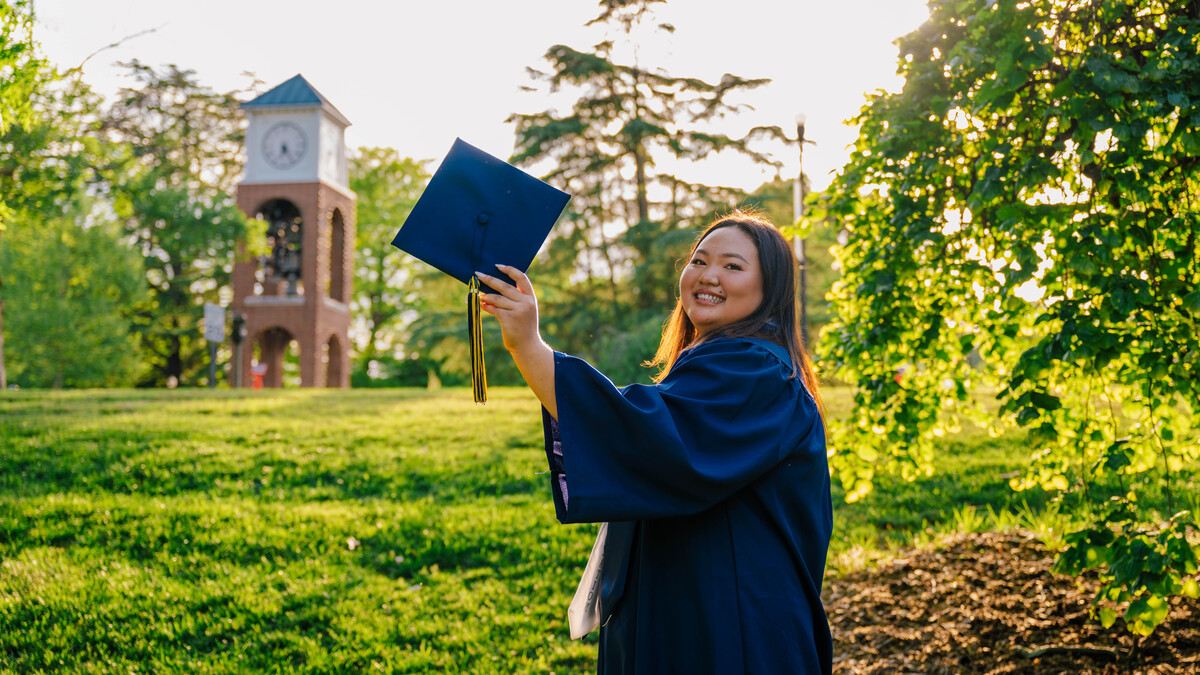
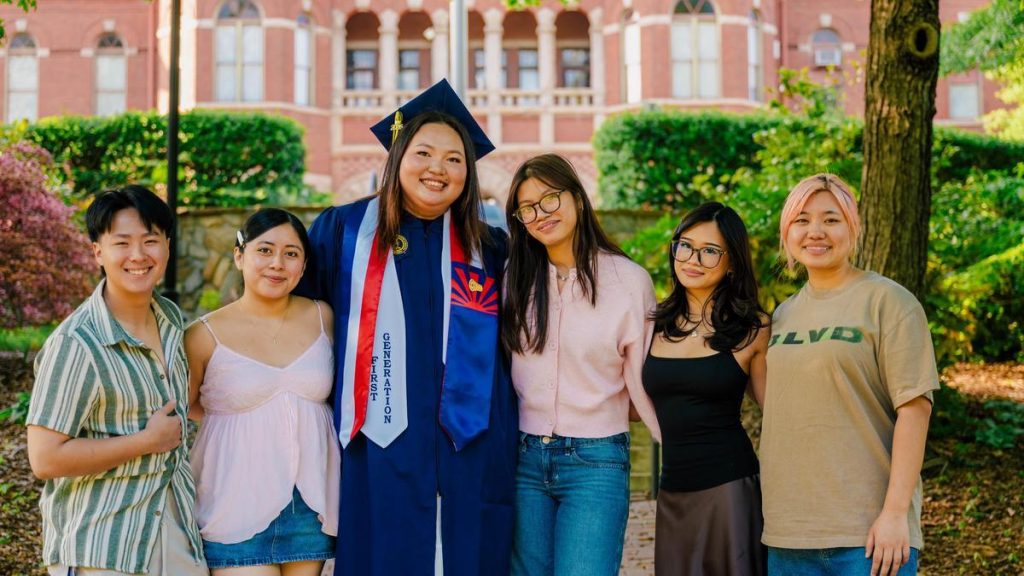
Swee Paw graduating from the School of Health and Human Sciences 2026.
First generation college student finds her way
Until the age of 10, Paw lived in Thailand with her mother and sister. When she arrived in North Carolina in 2014, she began attending school and learning English.
“I didn’t know if I would attend college, but when I toured UNCG’s campus, I knew this was the place for me,” Paw says.
It took her a few semesters to get her bearings, preferring the safety of her dorm room. But soon she accepted invitations to join student clubs, including the Human Development and Family Studies Club and the Vietnamese Student Association. Both gave her an opportunity to meet new people and spread her wings.
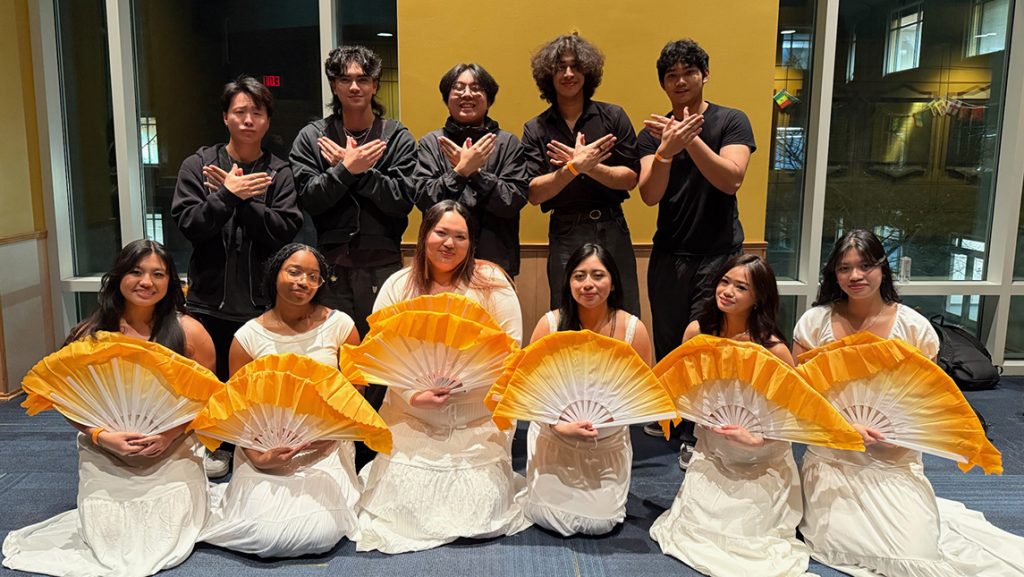
“A classmate in my BIO 111 class asked me to join the Vietnamese Student Association, and I realized it was a good chance for me to be involved on campus,” she says. “Now I’m the treasurer and I also performed the Vietnamese traditional fan dance at the International Night last semester.
“As an introvert I was really nervous,” she continues, “but I’m so glad I did it. It really helped me take another step to gaining confidence with being in front of other people.”
Paw’s sister, Bway Paw, came to UNCG a year after Paw, making a unique shared experience for the siblings.
“Her first year was really fun because I was able to walk her around the campus and help her navigate her classes,” she says. “We also lived together starting her second year, so it was incredible to do this together.”
“I met so many friends in the program, and it made me step out of my comfort zone,” Paw says. “I was required to do a lot of public speaking, which terrified me, but I was able to overcome that fear.”
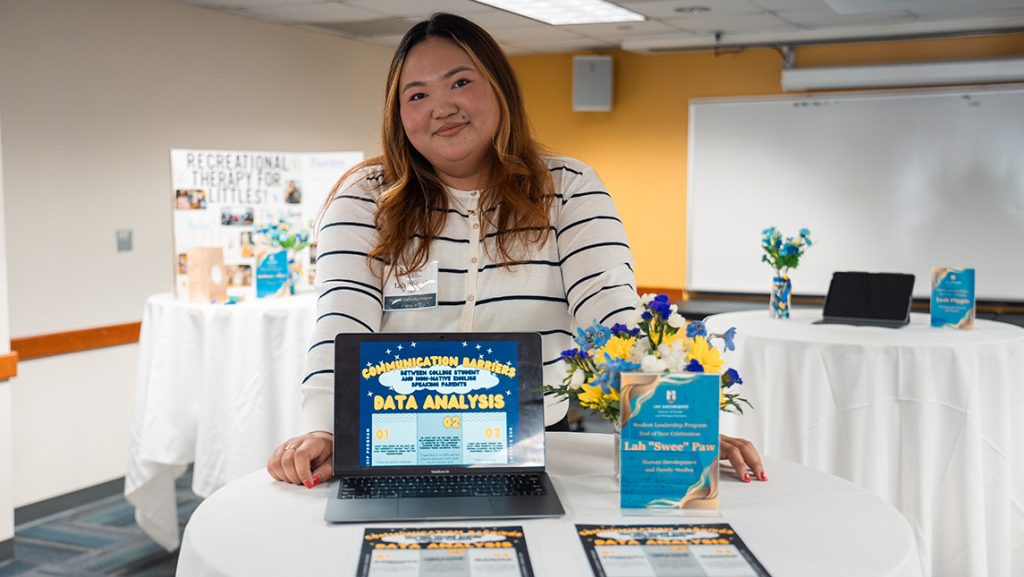
During the program, Paw represented her human development and family studies major and participated in networking, mentoring events, and workshops designed to develop her leadership skills, practice professional communication, manage projects, and more with her peers.
“The leadership program really gave me more confidence in my ability to lead and communicate, which I’ll definitely need in the classroom,” Paw says.
Paw used those skills in her practicum experience both on campus at the Childhood Education Center and during her time student teaching at Davis Elementary School.
“It has been a pleasure to watch Swee develop as a student, educator, and leader over the past few years,” says Jennifer Jones, assistant professor and student teaching coordinator for the Department of Human Development and Family Studies. “I have watched her grow from a quiet student in an introductory course to becoming an active member of our student group, Collaborative of Human Development Professionals (CHP) Executive Board, to fully embracing the teaching profession during her internship.”
The hands-on practicum, where she was given the opportunity to lead a preschool class, was a pivotal experience that confirmed her career choice.
“I never thought I would go from an introvert to confidently leading a classroom, but I realized that I was comfortable and confident with the kids,” Paw says.
A Bright Future Awaits
This August, Paw will begin co-teaching Kindergarten at Christian Academy in Durham. She’s grateful for the experiential learning, mentoring, and support she received at UNCG, crediting it with helping her discover what she wanted to do after college.
“At UNCG having a community was everything,” Paw says. “Every opportunity offered to me opened me up to more people and gave me the confidence to expand my friend group and express who I am.”
Written by Alice Manning Touchette Photography by Sean Norona and courtesy of Swee Paw
CELEBRATE OUR GRADS!
Graduates and their families are encouraged to share their accomplishments on social media by tagging the University accounts and using the hashtag #UNCGGrad. Visit UNCG’s digital swag page for Commencement-themed graphics and templates.
Mention @UNCG in celebratory posts on Instagram and X and @uncgreensboro on TikTok.
April 7, 2026 was a beautiful day at UNC Greensboro, but the mood felt lighter than most spring semester days on campus.
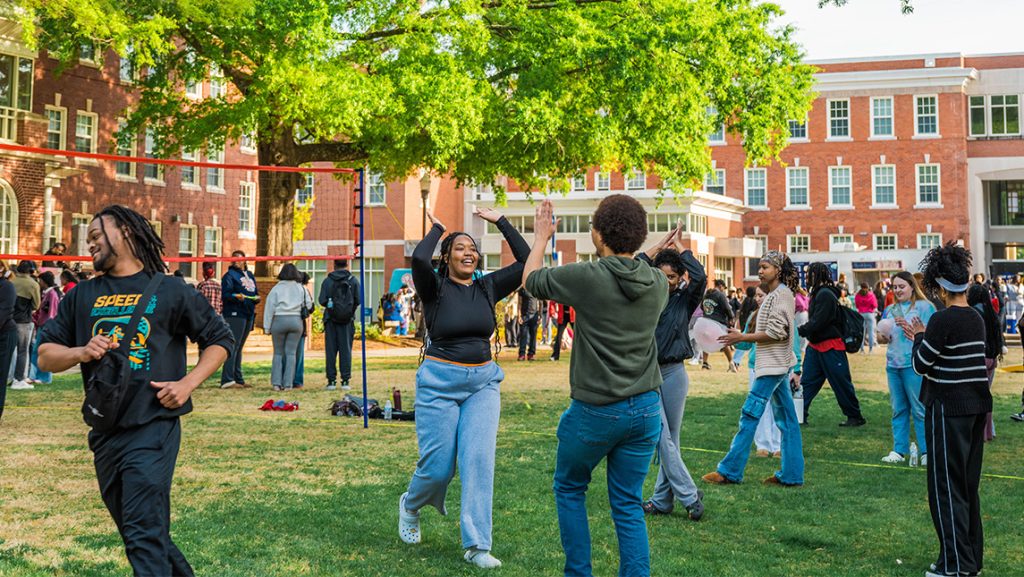
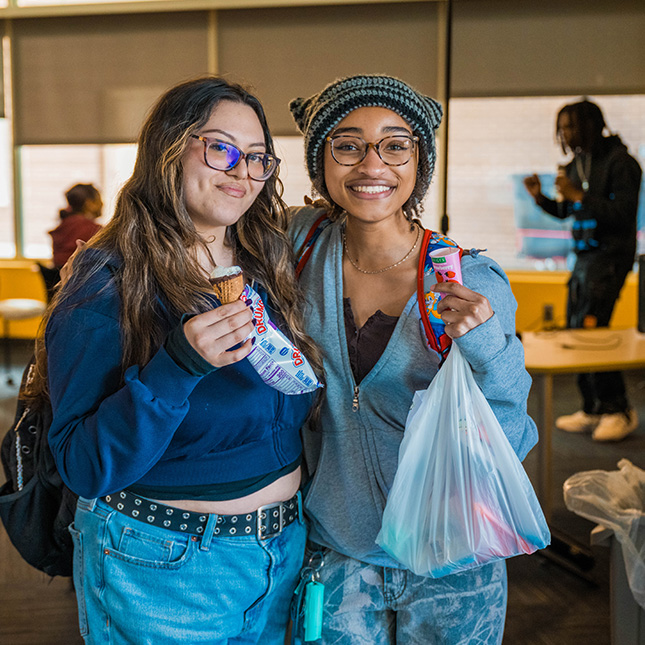
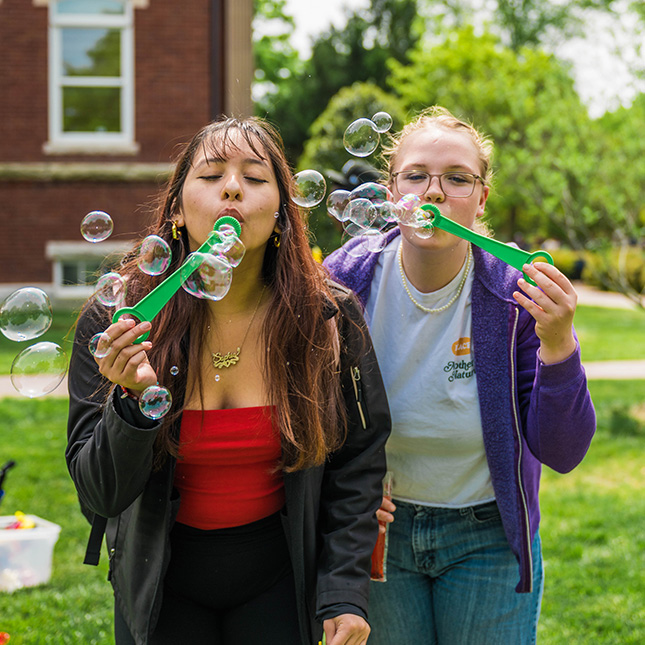
Bubbles floated by the Astera sculpture from a grassy area where students ate popsicles and played lawn games.
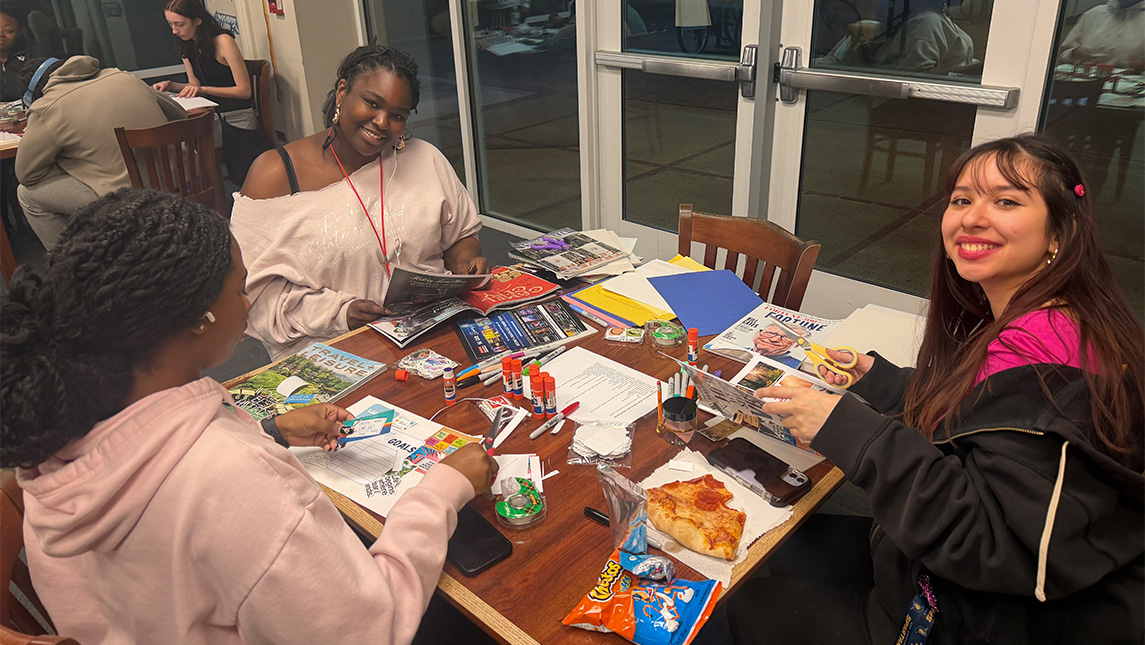
In Elliott University Center, students planted seeds along with paper slips with handwritten career goals in take-home terracotta pots.
At the Kaplan Center, the courts buzzed with pick-up volleyball and basketball games.
Music and laughter could be heard from across Spring Garden Street, as students crowded into a common room at Jefferson Suites for karaoke and ice cream.
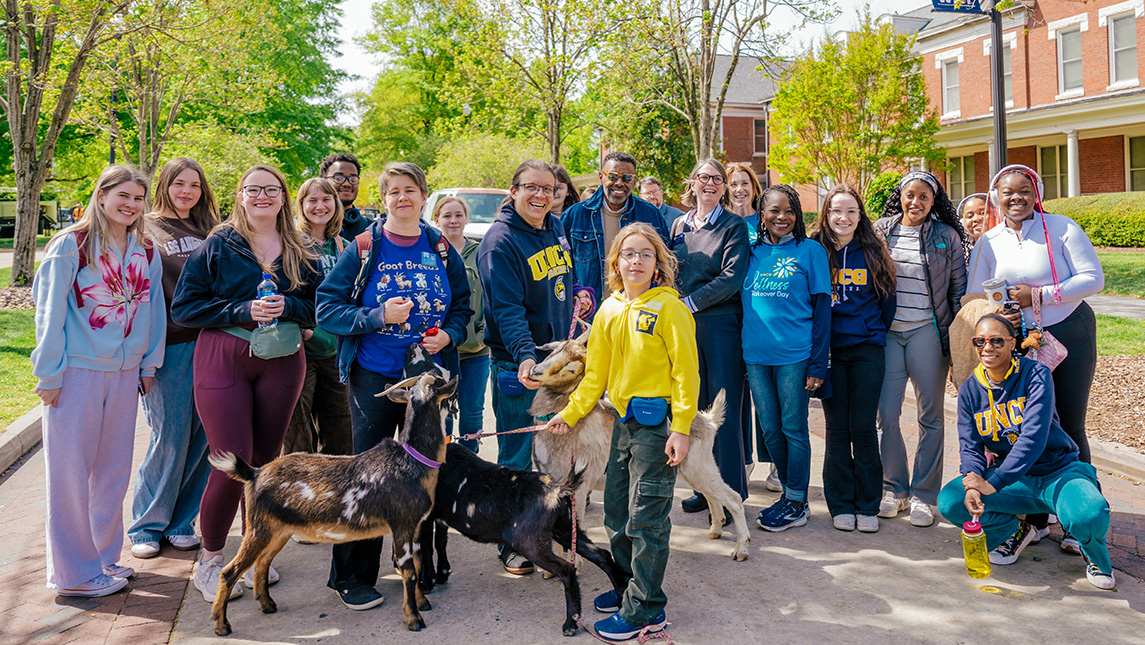
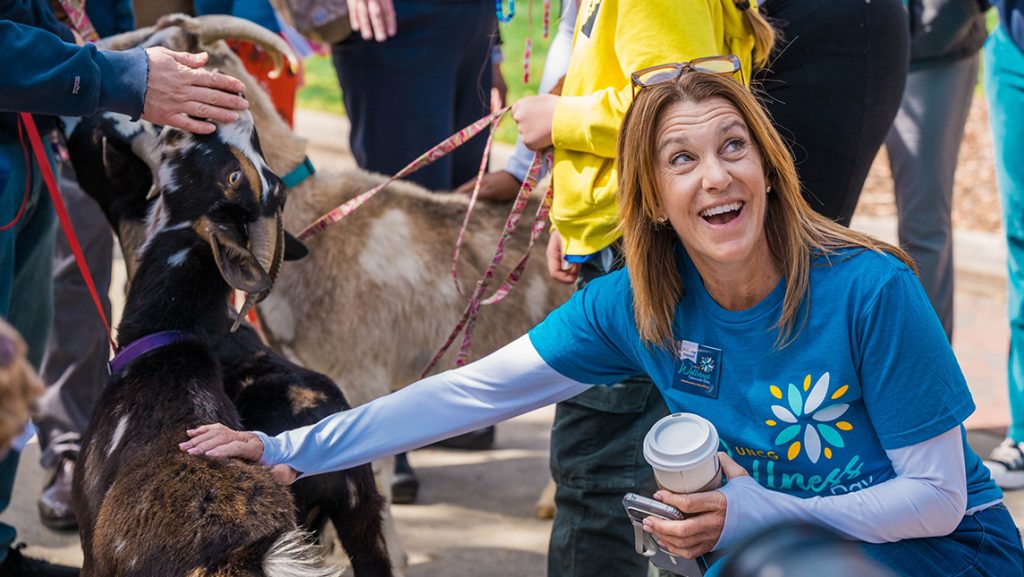
And a small group of walkers developed into a parade down College Avenue, following three leashed goats who flicked their ears as students gathered to pet their fuzzy heads and coo at them.
On the first ever Wellness Takeover Day at UNCG, positive vibes could be found at every turn.
Students who participated in the activities on Wellness Takeover Day appreciated the University’s focus on mental health, especially during early April when students are gearing up for the final push before exams.
“Mental health is more important than a grade,” said second-year art major YaMiah Meadows. “A lot of people are stressing, and it does take a toll on how you perform in class.”
Activities represented all dimensions of wellness: physical, emotional, social, intellectual, cultural, career, financial, and environmental. Over 100 events were organized by departments across campus including seminars, social media engagement, field day games, artistic expressions, special offerings in the dining hall, tabling activities, and giveaways.
Scenes from Wellness Takeover Day.Kim Sousa Peoples enjoys the G.O.A.T Walk.
Isabella Ellis, a master’s student studying counseling in education, sat on a blanket making friendship bracelets with students on the library lawn. As a volunteer with the Vacc Counseling and Consulting Clinic, she was particularly impressed with how the Wellness Takeover Day was received: “It’s really cool to see the University put together something like this that’s so accessible to students.”
Most organizations and departments were pleased with how students engaged with the Wellness Takeover activities they planned, but the most memorable event was the “G.O.A.T Walk” hosted by the College of Arts & Sciences Dean’s Office. Students met at the Foust Building for a walk with three goats, combining “gentle exercise with animal-assisted wellness.”
“Goats walking down College Ave wasn’t on our bingo card when we first discussed plans for this day,” joked Kim Sousa Peoples, senior director of First Year Student Engagement and Experience, “But the positive student reaction to this and other events across campus was exactly what our committee was hoping to achieve with the Wellness Takeover Day.”
Story by Becky Deakins, University Communications. Photos by Sean Norona, University Communications.
Setting Students Down Their Personalized Wellness Journey
Posted on April 07, 2026
At UNC Greensboro, students hear about the Eight Dimensions of Wellness. Some of these practices, like a healthy diet, are obvious. But UNCG recognizes there are many pieces in the puzzle of well-being, and they all affect one another.
UNCG wants Spartans to work on those holistic aspects of wellness during their college years so they can keep improving after graduation. Through the Spartans Thrive initiative, UNCG leaders, faculty, staff, and students are always evaluating and creating new ways to explore wellness in the ways that best suit them.
These ideas are getting a boost from Spartans Thrive Engagement Grants, led by Provost Fellow and Professor of Music Eric Willie and the Division of Student Success.
Willie says, “Through mentorship, leadership opportunities, creative scholarship, and community engagement, the Spartans Thrive Engagement Grants demonstrate how wellness can be woven into the fabric of the University experience.”
The six initiatives center around three of the eight dimensions: career, environmental, and intellectual. Students will find opportunities to make a difference, practice strategies for tricky situations, and lock into all campus resources at their fingertips. Some will be emphasized during Wellness Takeover Day on April 8.
Peer Artist Leadership Program (PAL)
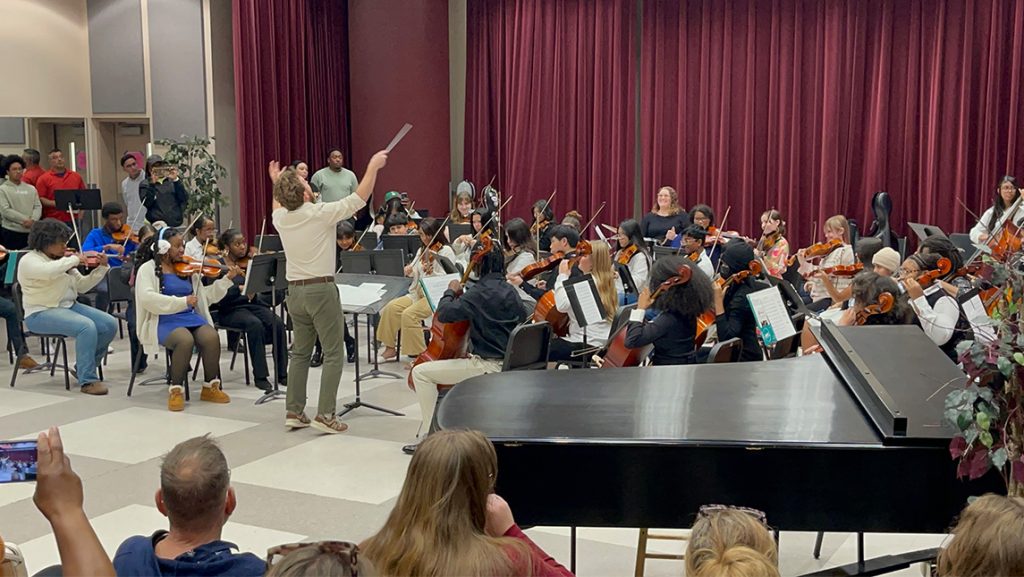
Dr. Scott Glasser with the School of Music is building undergraduate string-music education majors’ career readiness with the chance to become mentors/ His PAL program arranges weekly lessons with middle and high school students.
The program uses a layered mentorship model: Graduate students mentor the undergraduate instructors, and the undergraduates mentor younger musicians. This structure means they get to work serving the community right away, while also practicing communication, lesson planning, and reflection.
Health and Wellness Event Series
Through the School of Health and Human Sciences‘ (HHS) Student Leadership Program, undergraduate students organize and lead health-focused events for their peers. They range from Pilates sessions and nature walks to run clubs and workshops.
Each event includes a short session showing how wellness feeds into academic success. Student organizers gain experience in planning, communication, and project management.
It’s led by Dr. Joi Bulls, HHS associate dean for undergraduate affairs; and Larissa Witmer, assistant dean for projects and programs.
Building Resilient Leaders
The Office of Leadership and Civic Engagement’s director Jarrod Rudd and associate director Jordan Farmer have expanded its Empower Hour programming with “Courageous Dialogue” and “Resilience,” two workshops created by the not-for-profit organization LeaderShape. Participants learn about emotional agility and communication skills. They practice navigating difficult conversations with empathy and respect, employing strategies to manage stress, adapting to change, and strengthening community. All these skills can be put to work in their classrooms, student organizations, and careers.
Maher says it’s a win-win for everyone. “Our students gain hands‑on leadership experience while the campers see role models who encourage healthy, active lifestyles,” she says.
Spartans Walk for Wellness Challenge
For a first-year student, one of the biggest challenges to maintaining a healthy lifestyle is the dramatic change of routine. Assistant Professor of Information, Library, and Research SciencesHamid Nadir’s “Spartans Walk for Wellness Challenge” helps them form a new routine, working in habits of movement and discovery.
Participants aim to walk five miles each week while taking photos to document their routes around campus. They log their progress through Spartan Connect and fill out a survey for a chance to win swag, turning a simple weekly event into a shared experience where physical wellness becomes a social moment and a time to forge new friendships.
Exploring Belonging Through Dialogue and Storytelling
The five-week dialogue series approaches wellness through a lens of culture, language, and shared history. Students explore how identity and history shape their experiences of belonging. They learn oral-history techniques and work with community partners to document local stories for UNCG’s Digital Greensboro archive, building communication skills and deeper cultural understanding along the way.
Student Leaders Promoting Wellness Pilates Princesses April 8, 11 a.m.–Noon Open to all students. The first 20 to arrive will receive a free mat. Due to limited availability, participants should register in advance.
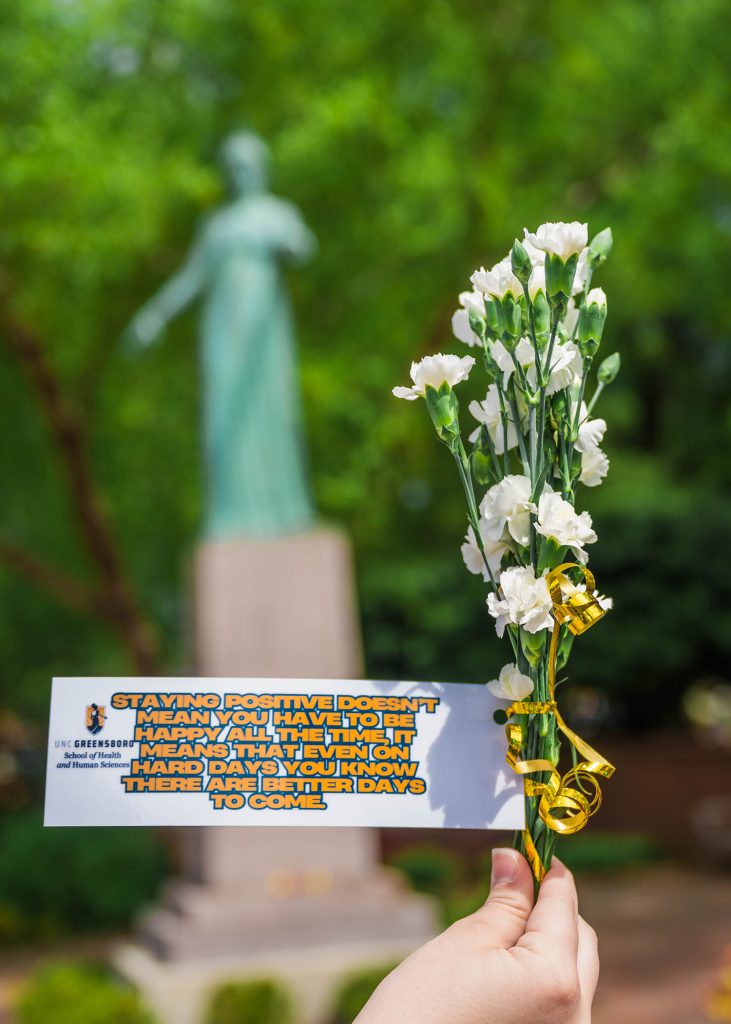
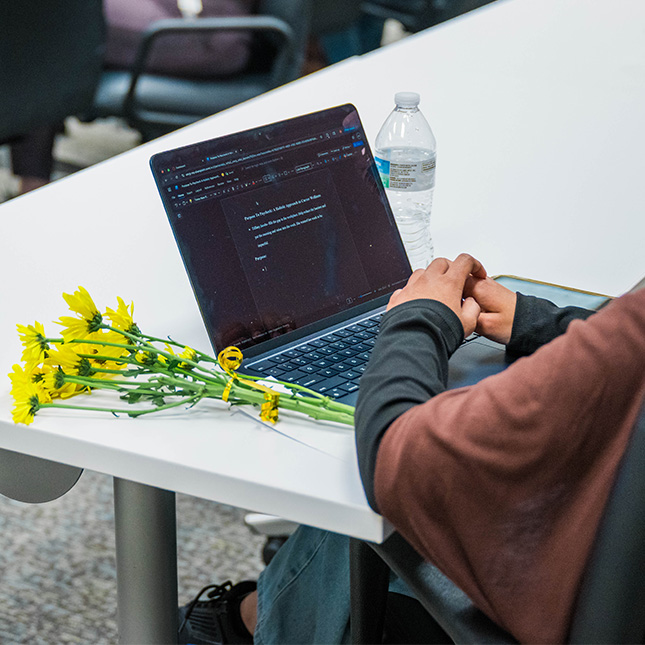
Take a Moment, Take a Daisy April 8, 11 a.m.–3 p.m. Minerva Statue
Fueling Your Workout April 8, 6–7 p.m. Reynolds Hall Common Area
Walk and Talk with Alumni Series Finale April 16, 4–5:30pm Nursing and Instructional Building Courtyard
Spartans Walk for Wellness Challenge Locations Our Secretaries’ Garden April 13–17
Peabody parks Woods Bridge April 20–24
Building Resilient Leaders Resilience Workshop April 20, 11:30 a.m.–1:30 p.m. EUC Alexander Room
Peer Artist Leadership Recital April 25, 1 p.m. School of Music Room 110
Greensboro Symphony Pre-Concert May 2, 6:30 p.m. Tanger Center for the Arts
Story by Janet Imrick, University Communications Photography courtesy of Dr. Eric Willie, Provost’s Faculty Fellow for Faculty Development
Dr. Heather Adams, associate professor of English, receives the Early Career Research Excellence Award for her groundbreaking scholarship in rhetoric, composition, and writing studies, with interdisciplinary specializations spanning feminist theory, feminist historiography, gendered health studies, reproduction studies, and public emotion.
Peers describe Adams as a preeminent early-career scholar in her field and one of her generation’s most prominent voices in feminist rhetorical studies. In her 9 years at UNCG, she has authored or coauthored an outstanding 17 peer-reviewed articles and book chapters as well as a book and a co-edited collection of scholarly essays — a level of scholarly activity one would expect from a full professor rather than an early career faculty member.
Adams’s work is published with top-tier publishers and journals, including the Quarterly Journal of Speech, which has a 6% acceptance rate, and Rhetoric Review, which has a 15% acceptance rate.
Her 2022 book, Enduring Shame: A Recent History of Unwed Pregnancy and Righteous Reproduction — which examines the raced and classed experiences of unwed mothers since the mid-twentieth century and traces a culture of shaming and blaming women into the present — won the highly competitive Horner Outstanding Book Award from the Coalition of Feminist Scholars in the History of Rhetoric and Composition. Her 2024 co-edited collection, Inclusive Aims: Rhetoric’s Role in Reproductive Justice, was released by the award-winning Parlor Press, which publishes some of writing studies’ most distinguished scholars.
Adams has delivered over 60 national and international conference presentations, earning a Distinguished Paper Award from the Rhetoric of Health and Medicine Symposium, and her invited talks include the prestigious 2023 Kenneth Burke Memorial Lecture at Pennsylvania State University. Her work has also appeared in Communication Currents, a National Communication Association publication that aims to explain scholarly information to broad and public audiences.
Beyond sharing her work with her scholarly peers, Adams also conducts extensive work in the realm of public advocacy. For example, she has been part of a community-engaged research team developing an advocacy tool to address stigma faced by those experiencing substance-exposed pregnancies.
Finally, Adams is known as a deeply engaged teacher who has published on pedagogy, collaborating with students, and undergraduate research. She is a principal investigator and the faculty director for the $5 million Mellon Foundation-funded “Humanities at Work” program that connects UNCG undergraduate humanities majors with community partners through paid internships. Her latest work with undergraduate researchers includes a digital exhibit of oral contraceptive advertisements from the 1960s that will be hosted by UNCG libraries.
Dr. Paul Knapp, professor of geography, environment, and sustainability, receives the Senior Research Excellence Award for his innovative work in biogeography and climatology using dendroecological techniques.
Dr. Paul Knapp, professor of geography, environment, and sustainability, receives the Senior Research Excellence Award for his innovative work in biogeography and climatology using dendroecological techniques.
In the field and at his Carolina Tree-Ring Science Laboratory, Knapp uses tree-ring data to reconstruct centuries of environmental conditions and help scientists better understand complex atmospheric and forest ecological dynamics. His work explores how human activities affect environments and how climate affects human well-being.
Knapp is known by his peers for innovative work advancing the frontiers of biogeography, climatology, and dendrochronology and impacting environmental understanding and climate science, locally, nationally, and internationally. The important research has drawn over $1.3 million in funding over his career, from organizations including the NSF, USDA, Bureau of Land Management, and the NC Policy Collaboratory.
He has published over 92 peer-reviewed articles over his career — 62 in his 21 years at UNCG — and amassed nearly 3,000 citations. Over the last 15 years, he has published three to six papers a year. His research appears in top-tier disciplinary journals such as Global Change Biology, Global Environmental Change, and Annals of the American Association of Geographers, which is one of geography’s flagship journals — as well as in prestigious interdisciplinary outlets.
The diversity of journals in which Knapp’s publications appear reflects the wide, multidisciplinary impact of his research explorations.
He is known for his series of publications using isotopic analyses to demonstrate physiological changes to trees due to rising atmospheric carbon dioxide, a then-controversial concept known colloquially as greening. He is also known for work demonstrating the importance of atmospheric rivers — narrow, moisture-laden plumes in the atmosphere that transport massive amounts of water vapor — in the radial growth, or width, of pine trees.
Knapp introduced the since-confirmed concept that the impact of Arctic sea-ice on the atmosphere influences wildfires in the western U.S., and he has published evidence on how atmospheric warming is associated with changing storm dynamics in North America.
He has also used dendroclimatic data to shed light on human history, as with a Bulletin of the American Meteorological Society paper on the Lewis and Clark expedition that demonstrates how the Corps of Discovery experienced one of the most severe Pacific Northwest windstorms in 300 years on their journey.
Meanwhile, his paper on the historical factors and human-environment interactions leading to the dominance of the invasive species cheatgrass throughout the Great Basin has 800 citations alone.
Knapp has delivered well over 100 conference presentations and given invited colloquia at top-tier geography programs across the country.
His outreach efforts also extend to educating the public through campus tree walks and public tours of his lab.
Finally, Knapp is an inspiring mentor who has guided over 30 graduate students over his career. His students have coauthored 26 publications with him and have won five best doctoral and masters paper presentation awards and a best research poster award at his discipline’s most important regional conference. He is also lauded for his mentorship of faculty peers.
Knapp in the field at the Buffalo Mountain Natural Area Preserve in Virginia.
Announcement by Sangeetha Shivaji Feature photo by Sean Norona