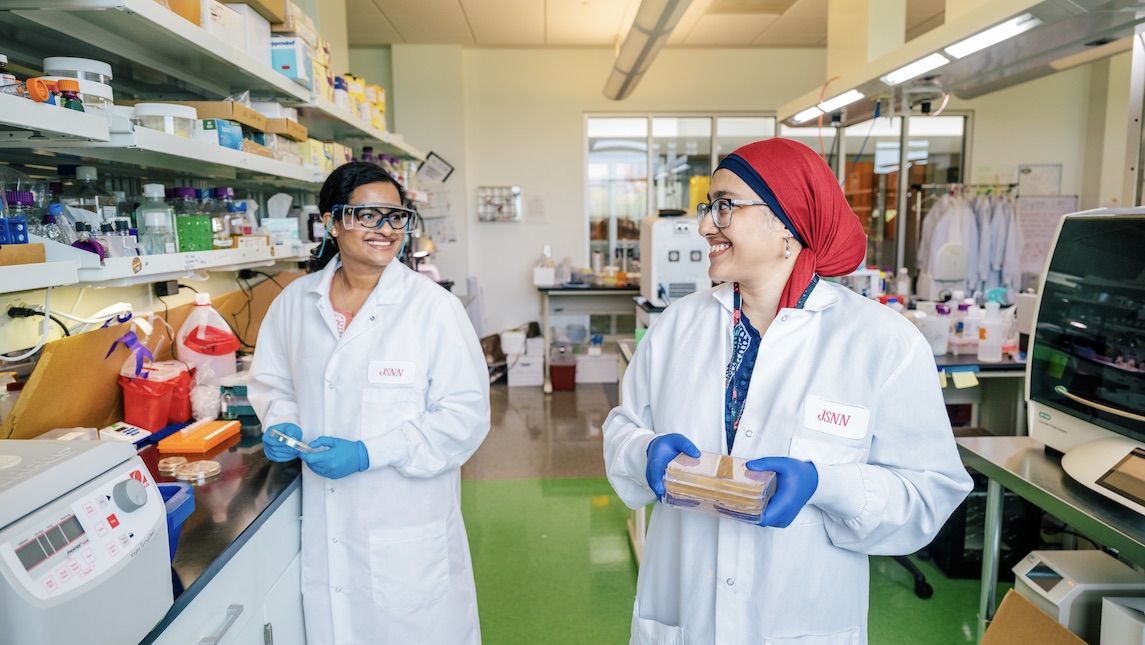
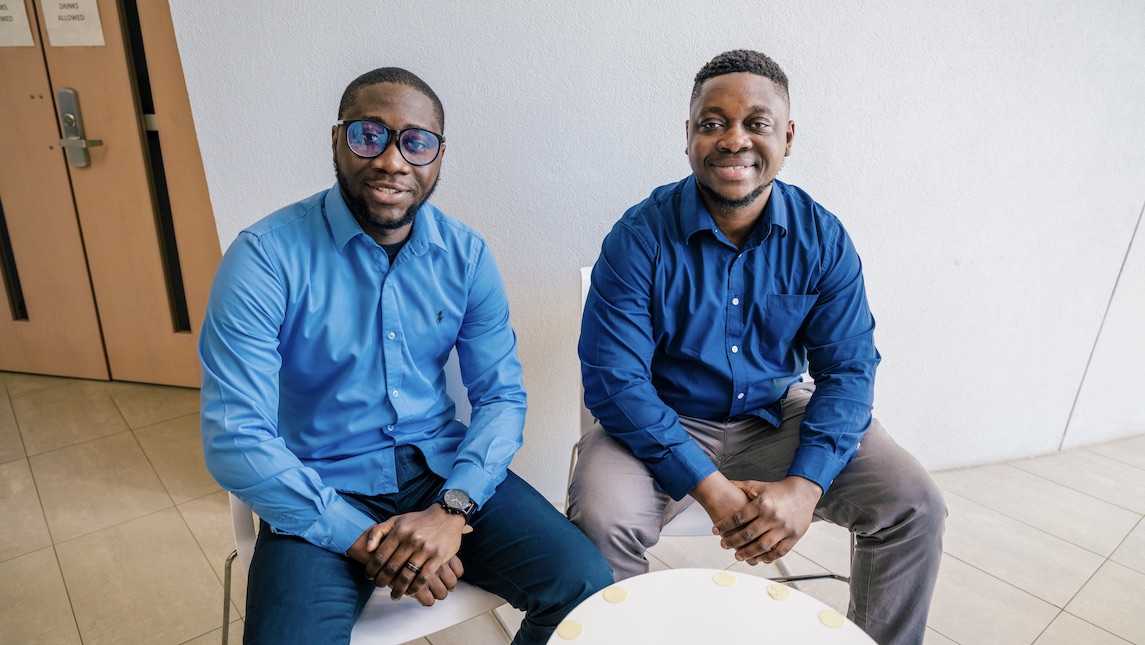
Siblings share a bond like no other. And for three pairs of siblings in UNC Greensboro’s Joint School of Nanoscience and Nanoengineering, getting to attend the school together grows that bond.
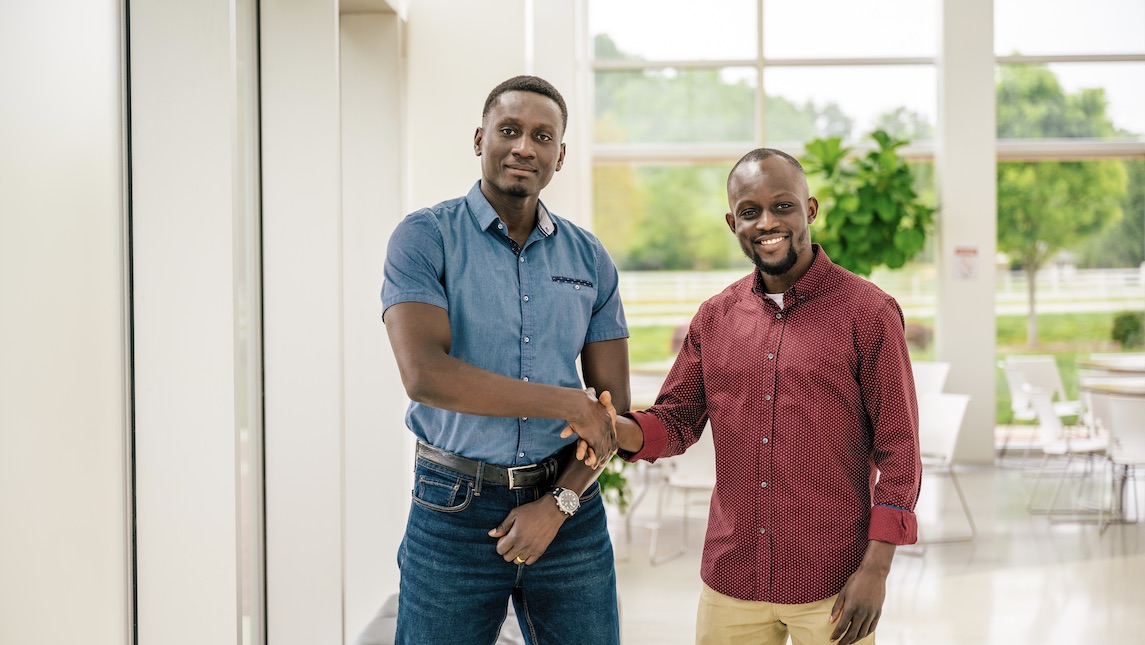
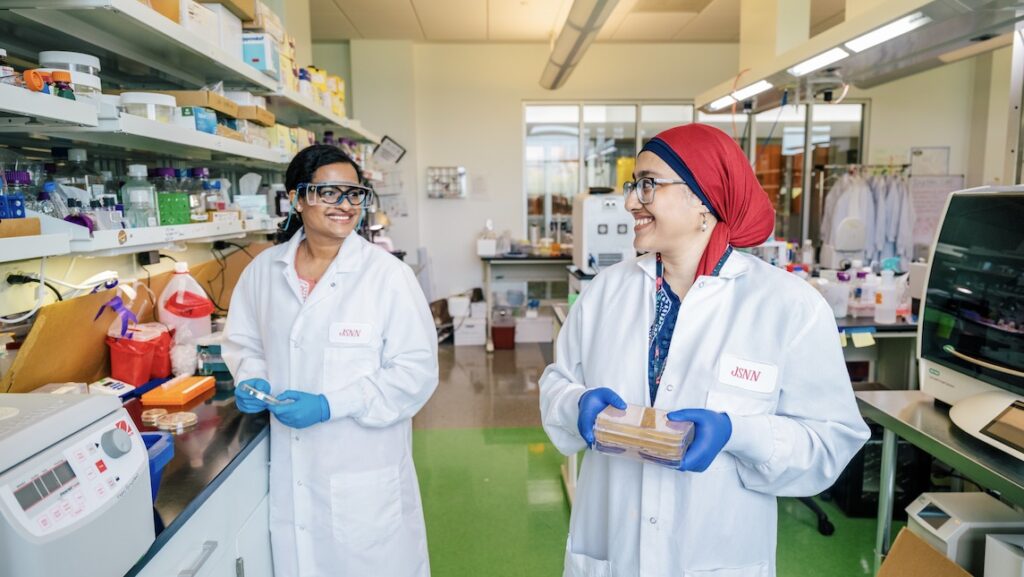
Brothers Frederick and Kelvin Adrah, sisters Tanjina and Tasmia Islam, and Panesun Tukur are pursuing Ph.D.s in nanoscience. Panesun’s brother, Frank Tukur ’23 Ph.D., is a postdoctoral research fellow in nanoscience.
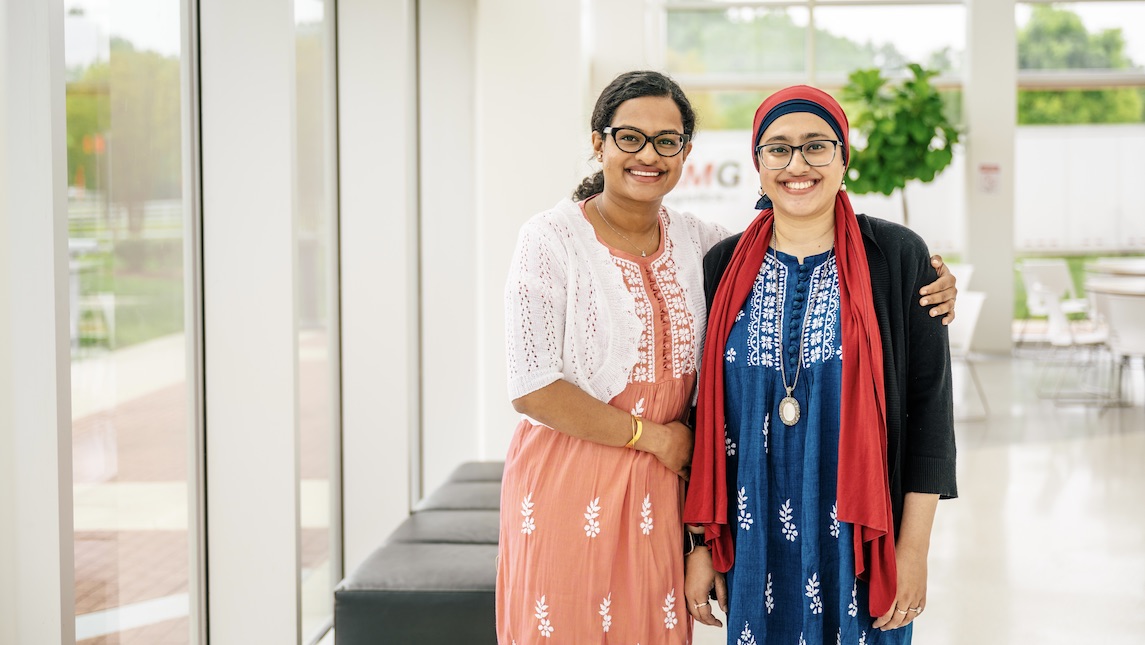
The Islam Sisters
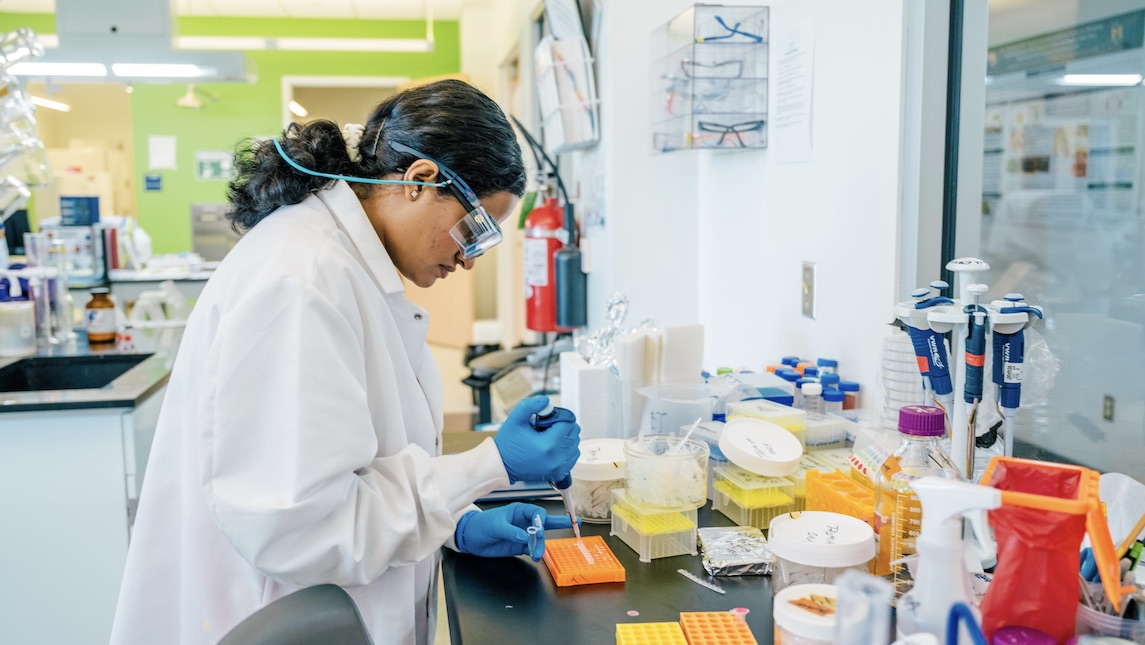
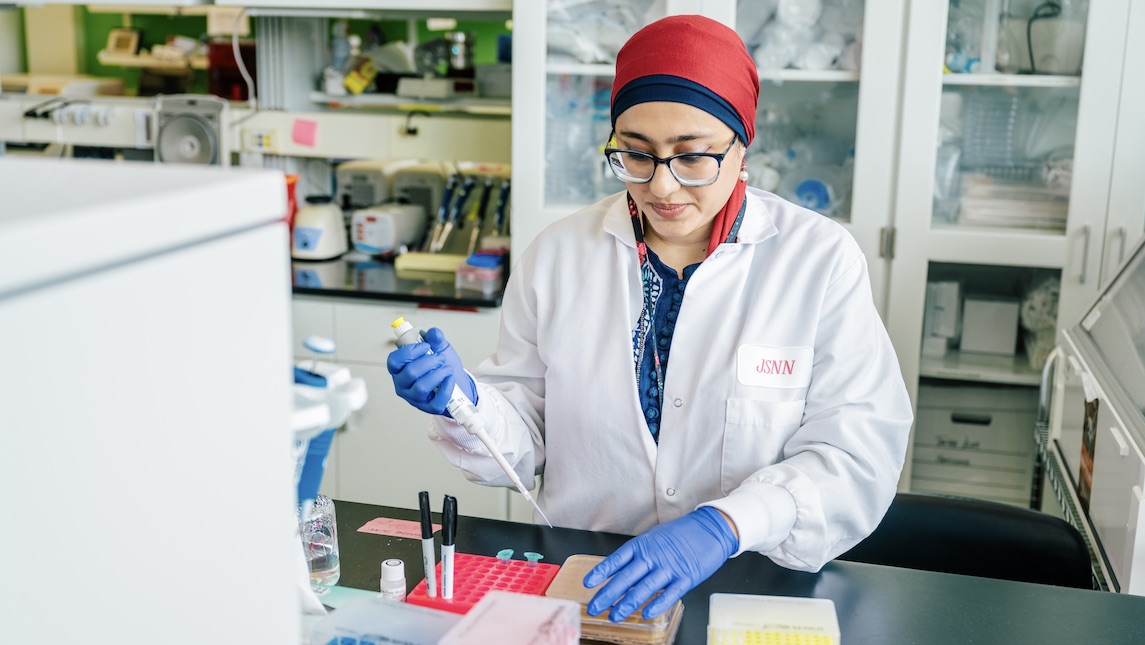
From Bangladesh, Tanjina and Tasmia have both enjoyed their time together at UNCG as synthetic biology students, getting to work in the same lab for a while and making time to study, cook, bake, watch movies, hike, and even sing and play musical instruments together.
Tasmia joined Tanjina at UNCG when Tanjina was in her third year of the Ph.D. program.
“I was relieved to have her by my side. It felt like home again,” Tanjina says. “We have been close to each other always, so going to the same graduate school has been a blessing for us.”
Both Tasmia and Tanjina are deeply interested in science and motivated to gain knowledge, and that motivation is reflected in the accolades each has received. Both Tanjina and Tasmia have been research assistants and earned fellowships at UNCG. And both are mentored by Dr. Eric A. Josephs.
Tanjina also won a UNCG General Endowed Scholarship and the Foy and Phyllis Kohler Endowment Scholarship and had a paper published in Nucleic Acid Research (NAR).
And Tasmia is the first author on a publication featured on the cover of the prestigious journal ACS Synthetic Biology. She also received the Junior Graduate Research Assistant Award in 2022.
Tasmia says she’s enjoyed the companionship and sense of familiarity that have come from being at UNCG with her sister.
“Attending the same school provides us emotional support,” she says. “We lean on each other during stressful times, celebrate each other’s successes, and navigate the challenges of academic life together.”
The Adrah Brothers
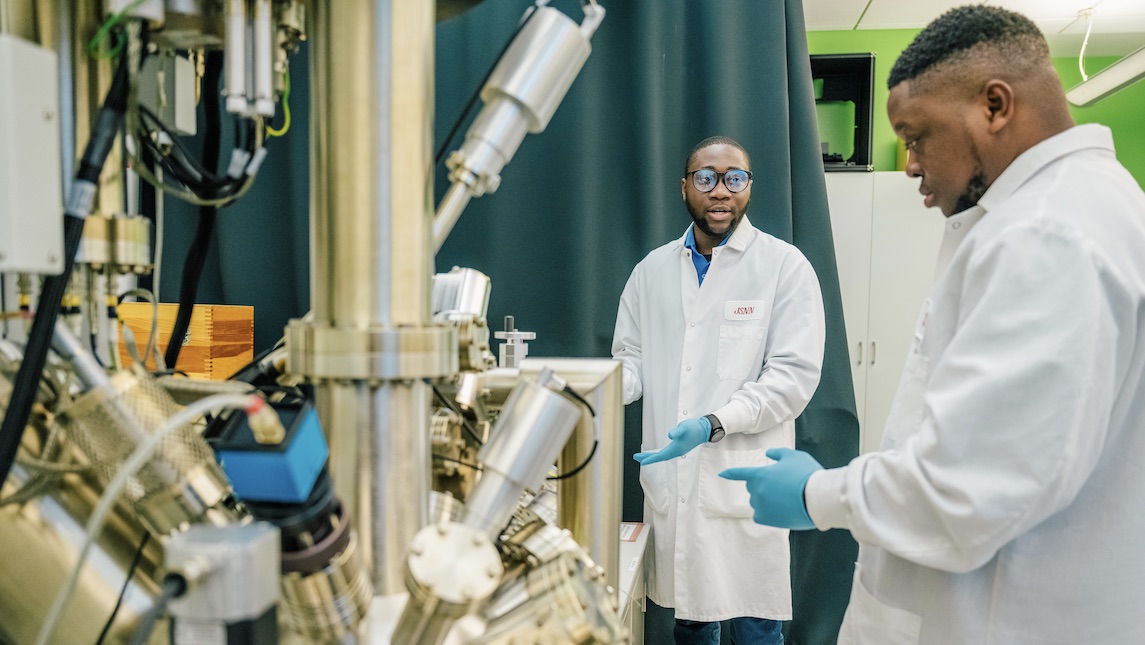
Although Frederick and Kelvin are studying different areas within nanoscience, they find it gratifying to share ideas, attend classes together, and see each other often.
The brothers grew up in Ghana, then Kelvin went to North Carolina A&T State University for a master’s in food science and chemistry.
Kelvin came to UNCG in 2021 because of the reputation of its doctoral program in nanoscience and the expertise of its faculty members, and Frederick followed in 2022.
“My brother told me so much about the wonderful research facilities at UNCG and JSNN as well as the vibrant Greensboro community,” Frederick says.
The brothers both work hard and are determined to succeed, and that has led them to excel. Kelvin is a JSNN Rising Graduate Research Scholar, and Frederick was able to graduate with a master’s degree in nanoscience in under two years.
When their schedules allow it, the brothers enjoy playing word games like Ruzzle and Scrabble, plus outdoor soccer on weekends.
The Tukur Brothers
For Panesun Tukur, the decision to come to UNCG wasn’t difficult. At the time he applied, it was one of just two U.S. universities that offered a specialized doctoral program in nanoscience. And his brother, Frank, happened to be a student.
“At that point, the choice of coming to UNCG became clear and easy,” he says.
Frank earned his Ph.D. in nanoscience in May 2023 and works at UNCG, and Panesun is a third-year doctoral candidate. The brothers are from Africa.
Frank says he’s grateful to be with his brother at UNCG.
“First, it brings a sense of home even when living in a foreign country,” he says. “Second, it strengthens our relationship as we go through new experiences and challenges together. And third, it has a significant impact on the quality of our work – we encourage, challenge, brainstorm, and critique each other’s work in a way that only family can!”
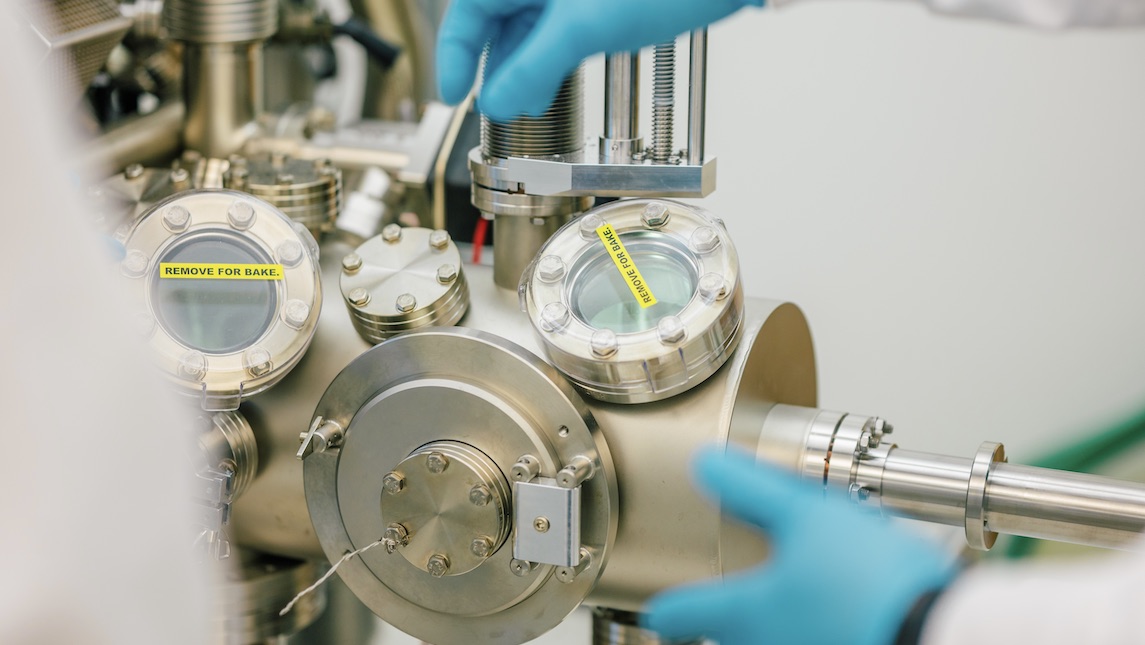
Both Tukurs work with Dr. Jianjun Wei on research. As research collaborators, the brothers have published papers in two peer-reviewed journals, ACS Applied Nano Materials and Elsevier’s Next Materials, and have two more in review.
Panesun was also a first place poster winner at the Carolina Science Symposium in 2023 and earned a Nanoscience Rising Graduate Scholar Award this year.
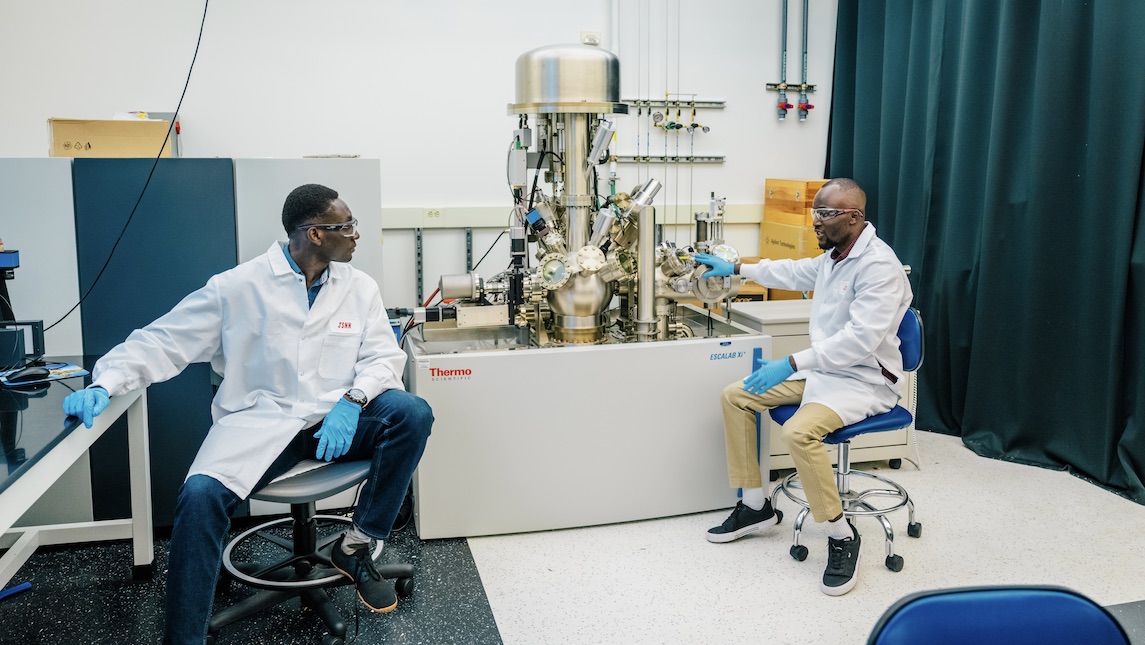
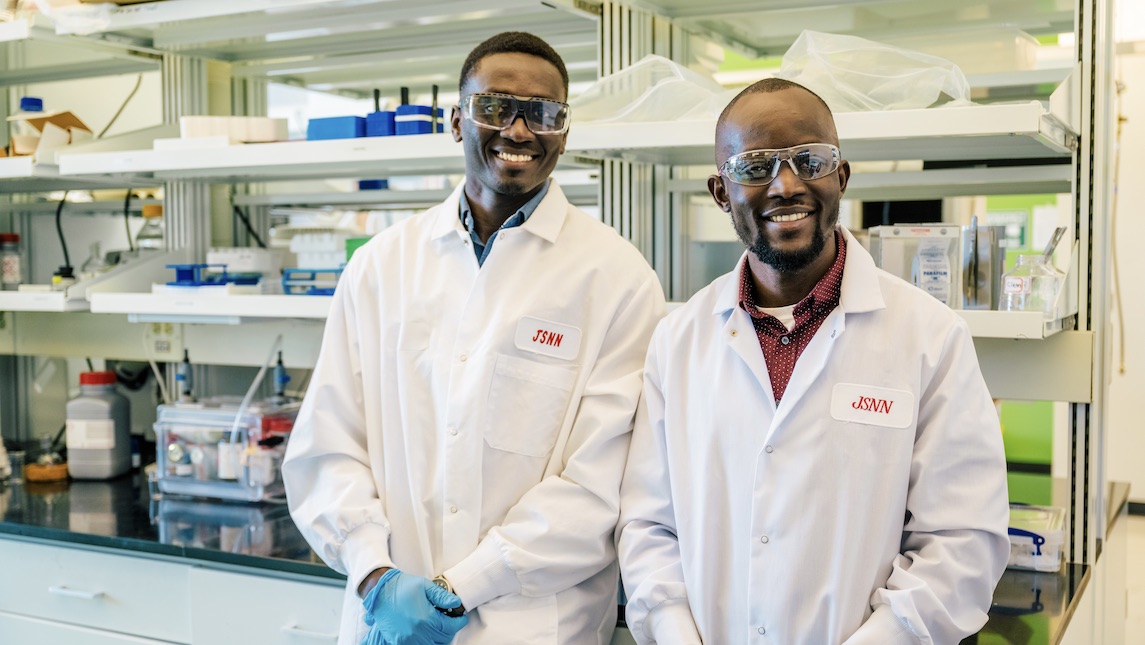
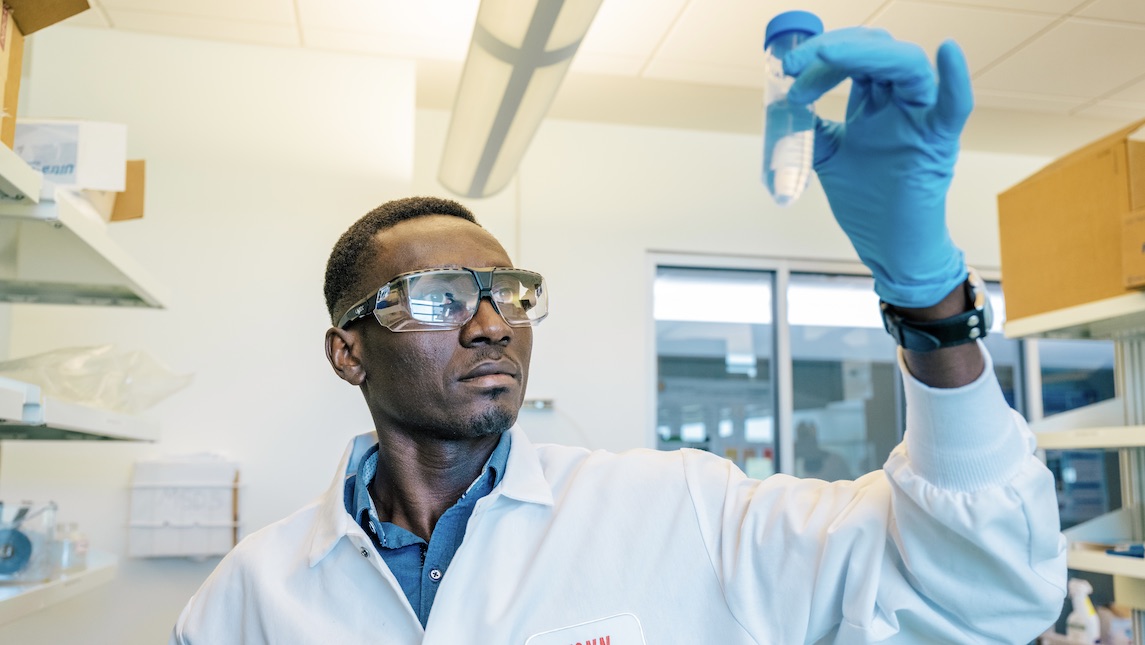
The Tukurs share several traits: “We are both fueled by challenges and goals, we’re very focused, and we prefer conducting our experiments late at night when the lab is empty and quiet,” Frank says.
Still, their research and career interests are different: While Panesun is drawn to solving dilemmas related to clean energy, Frank is interested in developing inexpensive tools for early disease diagnosis.
Panesun finds having his brother close by as he pursues a challenging Ph.D. a comfort and relief. For leisure, they share a passion for soccer, even though it can bring out their differences.
As Frank explains, “We play together whenever we get the chance and watch games together — with a healthy dose of rivalry because he supports the wrong club.”
Story by Dee Shore, AMBCopy
Photography by Sean Norona, University Communications