From playing board games to overhauling entire courses, the faculty who earned UNC Greensboro’s 2023-24 Alumni Teaching Excellence Awards have modeled a commitment to academics that they pass down to their students. It’s evident in more than good grades and attendance.
Their colleagues and their former students share how they inspired a love of learning that lasts long after that class’s last report card.
Mary Settle Sharpe Alumni Teaching Excellence Award
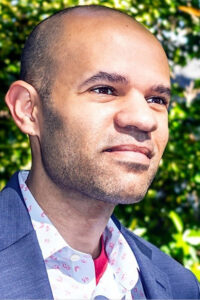
Dr. Jeffrey Jones, associate professor of history
Dr. Jeffrey Jones looks for ways that history students can learn visually – including by using board games. The associate professor of history bought the game “Arranged,” created by a Pakistani woman to portray the history of arranged marriages in South Asia. He brought the game into his honors seminar about modern history of Afghanistan.
“The students love it. There is always a lot of laughter in class that day,” says Jones. “Most importantly, our discussion of the experience afterward reveals, from their own observations, that they learned a great deal about, i.e., the central role of the matchmaker, the importance of socio-economic class and skin tone, and the great lengths to which young women will go to avoid arranged marriages.”
Jones’ approach helps students immerse themselves in different eras around the world. As one of the first Chancellor’s Resident Fellows for the Lloyd International Honors College, Jones developed many of UNCG’s history courses.
When debating an issue, he provides primary sources with different perspectives before inviting the students to come to their own conclusion and defend it in class. Student evaluations regularly declare how much they love the reading material, which includes memoirs and novels.
Ashley Low ’22 MA, a PhD student who served as teacher’s assistant to Jones, says, “He thoroughly communicates key points in a manner which really sticks with his students through creating an active learning environment.”
UNCG history undergraduate student Coleman Carter says, “Without a doubt, Dr. Jeff Jones is one of the most influential professors I have had in my college career. Dr. Jones has made a major impact in my life and the development of my skills as a historian.”
James Y. Joyner Alumni Teaching Excellence Award
Dr. Robert Wiley, assistant professor of psychology
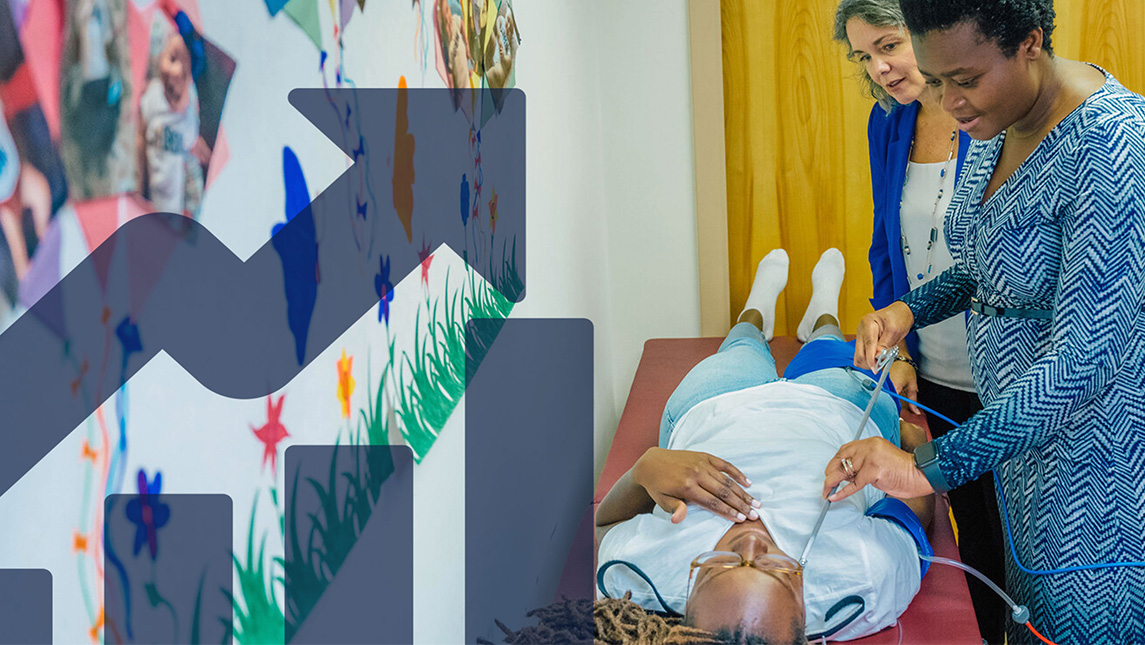
Having been certified to teach K-12 grades before becoming an assistant professor of psychology at UNCG, Dr. Robert Wiley brought a rich understanding of how students progress from elementary school to the more demanding rigor of higher education. To make sure that his students understood the material, he experimented with different teaching techniques to encourage retaining information and lifelong learning rather than just cramming for a test.
“The core tenet of my teaching is student-centered learning, which emphasizes students taking ownership of their own learning,” he says.
Wiley saw that students consistently struggled to pass “Statistics in Behavioral Science Research.” The course is required for a psychology degree, and failing could set back their chances of graduating on time. Wiley reworked the course to include several low-stakes, do-over quizzes, so students could learn and correct their mistakes throughout the year. This also helped Wiley track their progress, instead of waiting until the final exam to discover what they did not know.
For some courses, Wiley pre-records his lectures so students can watch them before class. He says, “Class time can be dedicated more toward students asking clarifying questions and engaging them in discussion, with the ultimate goal of them being able to articulate the current content in their own words.”
UNCG doctoral student Liz Gilbert worked with Wiley as a teaching assistant. She says, “On several occasions, I was told by students that they not only enjoyed this format over regular lecture style classes but felt like they gained more from it and were more deeply engaged with the material, even though the courses were considered some of the most challenging in the department.”
Portia Washington ’21 got her undergraduate degree at UNCG. She recalls how worried she was about passing the class before meeting Wiley. “For the first time, I found myself truly engaged in statistics because he framed the material as a way of making sense of the world with numbers versus abstract mathematical concepts,” she says.
As a first-generation student at UNCG working three jobs, Washington thought she might just try to “survive” her undergraduate classes. Wiley was perceptive in recognizing areas of weakness that she did not realize about herself. He advised her on courses and encouraged her through her honors project. That compassion, she says, continues to inspire her as she now works on her doctorate.
Washington says, “I take a lot of the lessons I learned from him and apply them to my interactions with the undergraduates I work with now, in the hopes that I may inspire someone else to the lengths that I have been by Dr. Wiley.”
Anna Maria Gove Alumni Teaching Excellence Award
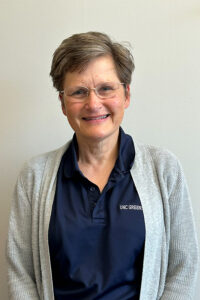
Dr. Elizabeth Tomlin, senior lecturer of biology
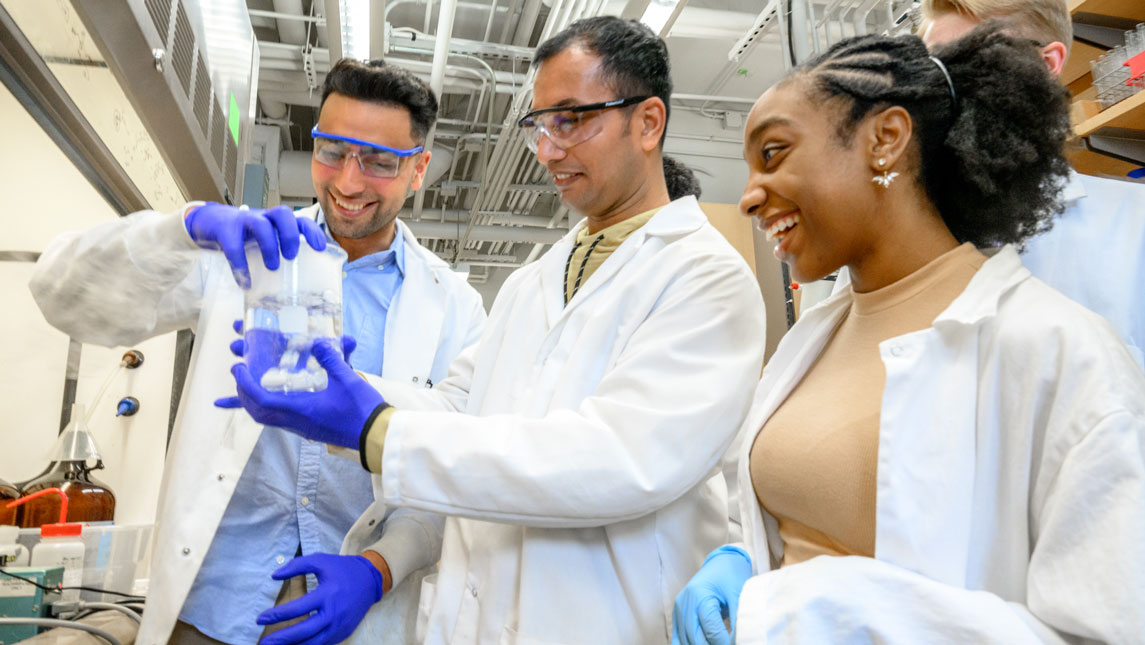
One of the courses Dr. Elizabeth Tomlin teaches, “Human Physiology,” has a 50 percent success rate nationally. It’s one of the most challenging courses for someone on a pre-health career track but is critical for students who wish to go into health care.
In 2014, the senior lecturer of biology began using a “flipped,” problem-based classroom model, based on feedback of students who said they could not keep up with the lectures. When that happened, her “DFW rate” – students who got a D, F, or withdrew – dropped below 25 percent.
“We were practicing active learning strategies in the classroom, and attendance was high,” says Tomlin.
It’s one of many changes Tomlin has made based on student feedback, which prepared her for UNCG’s sudden shift to remote classes during the COVID-19 pandemic. Tomlin came up with new ways to keep her students engaged online, such as adding timed quizzes that gave them repetitive practice. “For students struggling with ‘getting started’ with studying, this is a quick, concrete way to begin,” she says. “My DFW rates started to decline without sacrificing rigor.”
For a time, Tomlin saw many students wandering late into the first class of the day, causing disruptions. She added a 25 percent penalty on exam days but allowed students to present a defense for excusing the tardy penalty. After this, tardiness dropped into the single digits. Peer evaluations noted the way her enthusiasm rubbed off on students in an 8:00 a.m. class.
In 2022, she proposed adding a Biology Learning Center, a communal space for students to get tutoring, study together, and attend workshops. She also serves as director of the General Biology Program, training and overseeing the graduate students who teach lab courses.
Dr. Malcolm Schug, head professor of biology, praises his colleague’s willingness to embrace change, as when she revised courses to meet the demands of a National Science Foundation award. “In biology, curriculum overhaul is not for the faint of heart,” he says. “The significant feat was accomplished primarily by Dr. Tomlin’s leadership and is a testament to her sensitivity to others, ability to lead a team on a very challenging project, and work with highly diverse personalities to accomplish something great.”
Tomlin sets the bar for the entire department, according to Associate Professor Mark Hens. “The students in our classrooms today are much different than those we had even a few short years ago,” he says. “Many of the approaches to teaching that were commonplace ten years ago no longer allow students to achieve the same degree of success. Dr. Tomlin’s continual exposure to up-to-the-moment best practices has had a tremendous, positive impact on the teaching that goes on in our department.”
Story by Janet Imrick, University Communications
Photography by Sean Norona, University Communications

Meet Grade A Faculty in Your Field.