University News

  1. On Campus
    1. News
    2. Upcoming Events
    3. Intercollegiate Athletics
    4. Construction Alerts
    5. Speakers Bureau
    6. Campus Weekly
         (Faculty & Staff Newsletter)
    7. UNCG Magazine
         (Alumni & Friends Magazine)
    8. The Carolinian Online
         (Independent Student
          Newspaper)
    9. WUAG (Student Radio Station)
  2. Press Room
    1. Latest News Releases
    2. Archived News Releases
    3. Experts List
    4. UNCG at a Glance
    5. Fact Book
    6. Communication/Media Staff

Chancellor Patricia A. Sullivan Announces Plans to Retire

By Steve Gilliam, University Relations

Contact: (336) 334-5371

Posted 12-06-07

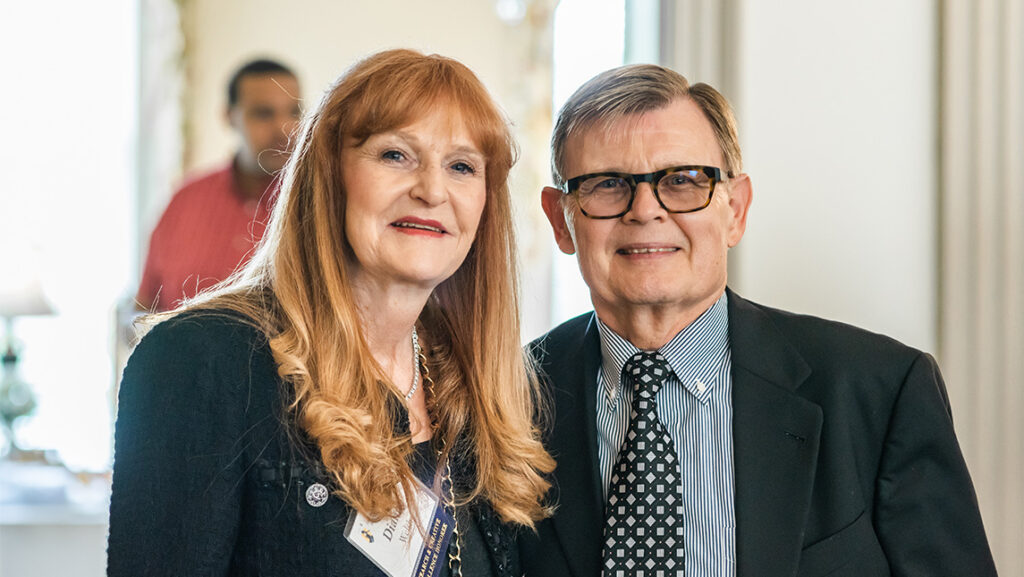
UNCG Chancellor Patricia A. Sullivan.

Chancellor Patricia A. Sullivan announces her retirement to the Board of Trustees Dec. 6.

GREENSBORO, NC – Dr. Patricia A. Sullivan, who became the first woman chancellor at The University of North Carolina at Greensboro in 1995, has announced that she will retire from the position, effective July 31, 2008.

“It has been the greatest privilege and honor to lead this university,” Sullivan said, making the announcement at the Dec. 6 Board of Trustees meeting. “UNCG is teeming with great people working together to make great things happen. People like all of you in this room with me today.

“As chancellor, I have been able to work closely with those who share a deep sense of purpose and dedication for seeing UNCG evolve to be a prestigious, top-tier university.”

Sullivan has notified UNC President Erskine Bowles of her plans to retire, along with Board of Trustees Chair Stephen Hassenfelt. Although she is stepping down from the Chancellor’s position, Sullivan will not be leaving the university. After a year’s research leave, she plans to return, possibly in a faculty position or to handle special projects.

The UNCG Board of Trustees will soon form a broadly representative search committee to locate a successor to Chancellor Sullivan. Once its search is completed, the Board of Trustees will forward a slate of finalists to President Bowles for consideration. The new chancellor, upon nomination by the president, must be elected by the UNC Board of Governors, the policy-making body of the multi-campus University of North Carolina.

Sullivan is UNCG’s ninth chief executive. She took over as chancellor on Jan. 1, 1995, succeeding Dr. William E. Moran. She came to Greensboro from Texas Woman’s University, where she was vice president for academic affairs and had served a year as interim president. Sullivan is currently the senior chancellor in the UNC system.

Tributes

UNC President Erskine B. Bowles praised Sullivan’s years at UNCG.

“For the past 13 years, UNCG and the larger Triad region have benefited enormously from Pat Sullivan’s leadership and vision,” Bowles said. “She is now the most senior chancellor within our University, and she has earned the respect and admiration of colleagues across our state and nation.

“Through word and deed, she has kept campus decision-making clearly focused on the needs of our students, even as she sought to expand and strengthen academic offerings, promote research, modernize campus facilities, and increase diversity.

“Under her quiet but forceful leadership, UNCG has also helped set the gold standard for engaged public service and collaborative partnerships that support economic and community development efforts. As an academic leader and private citizen, she offers living proof that real success comes from doing what’s right and in the public interest.”

Provost David H. Perrin praised Sullivan’s devotion to UNCG’s academic enterprise.


“Under Pat Sullivan’s leadership, UNCG has been transformed into a high level research university with a national presence and a world class faculty,” said Perrin. “She has orchestrated this transformation while at the same time enhancing the institution’s rich heritage as a student centered university.

“Her passion for this wonderful institution is apparent in every interaction she has with alumni, faculty, staff and students. The signature she leaves on this place will benefit the university and Triad communities for generations to come. I can’t imagine working for a chancellor with more integrity and dedication to UNCG than Pat Sullivan.”

Accomplishments

Under her leadership, UNCG carried out its vision statement of becoming “a diverse, student-centered research university, linking the Triad and North Carolina to the world through learning, discovery and service.” Her tenure has been marked by tremendous growth in enrollment, academic programs, research initiatives, diversity among the student body and faculty, endowments and fundraising. Among the benchmarks, campus progress since 1995 shows:

• 36 percent growth in enrollment, with the student body swelling from 12,644 in fall 1995 to 17,157 this year.

• Through May 2007, almost 33,000 students have earned degrees at the undergraduate and graduate levels during Sullivan’s tenure, including 856 who completed doctorates. The total is almost one-third of the 103,340 in total graduates since the institution opened in 1892.

• The university’s research infrastructure grew within academic affairs, including creation of the Office of Research and Public/Private Sector Partnerships, Office of Technology Transfer and Office of Research Compliance.

• Research grants and contracts grew more than 180 percent, from $12.7 million in 1994-95 to $36 million in 2006-07, and research and contract funding from federal, state and foundations has averaged $30 million annually for the past five years.

• Graduate programs grew significantly, including 10 new doctoral programs – nursing, geography, economics, information systems, special education, community health, communication sciences and disorders, history, computational mathematics and medicinal biochemistry – eight master’s programs and 20 graduate certificate programs.

• Major research initiatives include the Gateway University Research Park, the joint millennial campus being created with NC A&T State University; the Guilford Genomic Medicine Initiative being done jointly with Moses Cone Health Systems, the Duke University Human Genetics Programs, and the University of Miami School of Medicine; and more than 15 new research centers.

• International education opportunities have grown substantially. Exchange programs with universities in other countries increased from 13 to 65, and the number of incoming international exchange students grew from 59 to 257. Due to this success, the UNC system placed its system-wide Exchange Program at UNCG.

• Proposed establishment of the Joint School of Nanoscience and Nanoengineering at the South Campus of Gateway University Research Park. This project, being undertaken with NC A&T, has received $59.4 million in funding from the NC General Assembly
• Endowment holdings almost tripled from $62 million in 1995 to $183 million through June 30, 2007.
• The Students First Campaign is Sullivan’s second fundraising drive at UNCG and has raised $87.5 million through Nov. 30 of its $100 million goal. The earlier Second Century Campaign was under way when Sullivan arrived and went on to completion in 1998, raising $55.4 million.

Under Sullivan’s leadership, enrollment at UNCG reached an all-time high this fall, and the campus continues as a leader in the UNC system in minority enrollment among predominantly white institutions, underscoring UNCG’s commitment to diversity.

New undergraduate programs include the Lloyd International Honors College, Communication Across the Curriculum, Grogan College Learning Community and the Office of Undergraduate Research. In only one year, the Lloyd Honors College resulted in an increase of honors freshmen from 90 to 220 (Fall 2006 to Fall 2007). This outstanding program is now endowed with a gift pledge of $4 million.


In addition to the new doctoral, master’s and certificate programs, other distinctive graduate offerings include genetic counseling, gerontology and conflict management. This expansion of programming was essential in UNCG’s ability to gain Carnegie classification as a Research University with High Research Activity, placing UNCG among other top-tier universities such as Wake Forest, Clemson and Boston College.

Advocate for UNCG & Higher Education

Under her guidance, UNCG’s Students First Campaign has become the most successful fundraising initiative in UNCG history, and it is expected to exceed $100 million when it concludes in 2009. Through Nov. 30, 2007, the campaign had raised more than $87.5 million. Early success was so great that the original goal of $78.2 million was increased to $100 million in September of 2006.

“Pat’s tenure at UNCG will long be remembered as a period of growth, expansion, and new visions,” said Linda Arnold Carlisle, trustee and co-chair of the Students First Campaign. “From day one, she has outworked and outpaced everyone with whom she works.

“We all marvel at her capacity to get things done, provide insightful leadership and still be attentive to people’s needs. She is one of the most compassionate and caring people I have ever known. While Pat will be missed as Chancellor, we are both grateful and blessed to have had her talents and dedication for these 13 years – the Sullivan Years.”

One of Sullivan’s significant achievements was her leadership role in campaigning to promote the $3.1 billion NC Higher Education Bonds referendum, which state voters approved by a 2-to-1 margin in the fall 2000 election. System-wide construction from that bond package, the largest in state history, is almost complete and has provided $2.5 billion in capital improvements for the UNC system and $600 million to the NC Community College System.

UNCG has become a clear leader within the UNC System in distance learning through the Division of Continual Learning. UNCG has created cutting-edge online courses, which have won national awards in online learning. Governor Mike Easley was so impressed with UNCG’s online programs that he allocated funds for UNCG to start the state’s virtual early college for high school students.

The research agenda and infrastructure at UNCG has also grown significantly, including creation of the Office of Research and Public/Private Sector Partnerships, Office of Technology Transfer and Office of Research Compliance.

The campus has undergone dramatic changes in facilities and approximately $500 million in new construction and renovation has been added during her years at UNCG. The most visible examples include three structures that opened in fall of 2006 – the Gatewood Studio Arts Building, the Moore Humanities and Research Administration Building, and the Spring Garden Apartments residence hall – and the new Science Building, which opened in 2003.

Other new facilities that have been completed since her arrival are the new School of Music Building (1999), the Elliott University Center renovation, two parking decks, the Spring Garden streetscape project and numerous improvements to the campus infrastructure. UNCG also partnered with Preservation North Carolina to move and renovate the historic Chancellor’s Residence, which was dedicated in May 2005 as the Jane Harris Armfield-Emily Harris Preyer Admissions and Visitor Center.

UNCG received $166 million from the bonds for capital projects that included three new buildings and a host of renovation and infrastructure projects. Two projects are being completed this fall, the renovation of the Petty Science Building and the Brown Building; and the renovation of Aycock Auditorium will be completed during the spring of 2008. The last project, renovation of the Forney Building, began this fall.

Nationally, Sullivan is involved with the American Council on Education, chairing its Commission on Women in Higher Education. Her service to the American Association of State Colleges and Universities includes chairing the task force on mathematics and science enrollments in 2006. She serves on the advisory board of the Council for International Exchange of Scholars (CIES), which administers the Fulbright Scholar Program.

In the Triad, she serves on the board of the United Way of Greater Greensboro and was chair of the city campaign in 2002. She also serves on the boards of: the North Carolina Citizens for Business and Industry, Greensboro Area Chamber of Commerce, the Center for Creative Leadership, and the Advisory Council of Greater Greensboro Cities in Schools.

Her awards and honors include: the 2007 Thomas Osborne Distinguished Citizenship Award from the Greensboro Chamber of Commerce; one of 10 recipients of the 2003 Women in Business Awards, presented annually by The Business Journal; 2003 inductee for the Business Leaders Hall of Fame of the Central North Carolina Junior Achievement; and selected as one of “10 People to Watch in 2004” by The Business Journal. In 1999, she received the honorary Doctor of Pedagogy degree from St. John’s University.

Biographical Information

Sullivan, 68, is a 1961 cum laude graduate of St. John’s University, and earned her master’s and Ph.D. degrees in biology from New York University. A native of Staten Island, N.Y., she is married to Dr. Charles Sullivan, an electrical and computer software engineer.

Her career began in 1961 as a teaching fellow at NYU, where she later held pre-doctoral and post-doctoral fellowships from the National Institutes of Health. She spent 10 years (1970-1980) on the biology faculty at Wells College, where she chaired the Life Sciences Division and the Science and Human Values Project, and directed the Women in Science Program.

She spent eight years at Texas Woman’s University, starting as an associate professor of biology from 1979-1981. She then went to Salem College in Winston-Salem, where she was Dean of the College from 1981-1987. She returned to Texas Woman’s University in 1987 to become vice president for academic affairs. She remained at TWU until 1994, serving as TWU’s interim president 1993-1994.

Her selection for the top job at UNCG was announced on Oct. 14, 1994, by then-UNC President C.D. Spangler Jr., who said it was high time for UNCG to have a woman as chancellor – 102 years after the institution’s opening in 1892 as a normal school for the education of women.

University Relations
Location: 500 Forest Street
Mailing Address: PO Box 26170, Greensboro, NC 27402-6170
Telephone:336.334.3783
Fax:336.334.4602
Last updated Friday, 01 February 2008
Accessibility Policy
Comments