

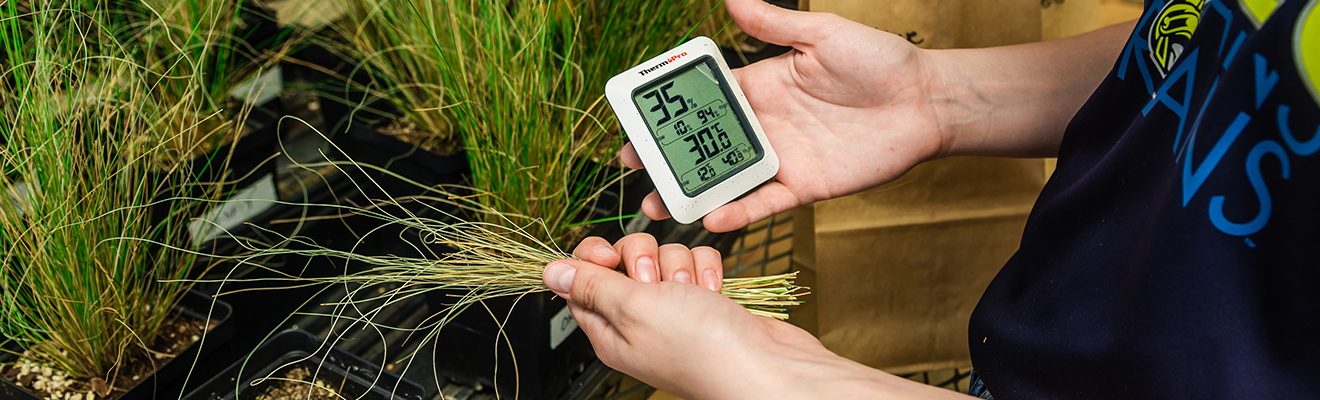
The Bachelor of Science (B.S.) in Biology with an Environmental Biology concentration at UNC Greensboro prepares students to understand and address today’s most pressing environmental challenges. This concentration blends ecology, conservation biology, environmental science, and field‑based research, giving students the scientific foundation needed to study how organisms interact with each other and their environments.
Bachelor’s in Environmental Biology PROGRAM DISTINCTIONS
- Innovative CURE (Course-based Undergraduate Research Experiences) Curriculum: As part of a National Science Foundation Study through the Council of Undergraduate Research, the biology department redesigned its curriculum so students participate in authentic scientific research from their first introductory course through advanced upper‑level classes.
- Undergraduate Research Opportunities: Students have the opportunity to work with internationally recognized faculty as they conduct research on topics ranging from cell motility, cancer, obesity, the flu, and more.
- Access to Unique Field and Research Facilities: Students have access to the Plant and Pollinator Center, Campus Wetlands, high-powered molecular biology equipment, two large greenhouse facilities, the Confocal Microscopy Facility, and more.

“The students here at UNCG are some of the brightest, most dedicated, engaged students anywhere. Seeing them thinking about these conservation ideas, grappling with difficult questions, taking challenges head-on, makes me excited to think about what they’re going to do in the future.”
– Dr. Kevin Wilcox, associate professor of biology and chair of Peabody Park Preservation Committee
THE Environmental Biology STUDENT EXPERIENCE
- Hands‑on Fieldwork and Ecological Monitoring: Students conduct field research in wetlands, forests, streams, and urban ecosystems, gaining experience with sampling, species identification, and environmental data collection.
- Upper‑Level Coursework in Environmental Science: Students explore advanced topics such as ecology, evolution, conservation biology, environmental microbiology, and ecosystem dynamics.
- Interdisciplinary Scientific Collaboration: Partnerships with departments such as nutrition, chemistry & biochemistry, mathematics, and geography expand students’ environmental science skill sets, including GIS, data analysis, and environmental modeling.

Environmental Biology Courses
In addition to core biology requirements, students can choose from a variety of courses to complete the environmental biology concentration. These include:
AFTER GRADUATIng with a B.S. in Biology – Environmental Biology Degree
Students in the environmental biology concentration graduate prepared to address environmental issues through research, conservation, policy, and applied science. They are equipped to work in government agencies, environmental consulting firms, nonprofit conservation organizations, and research institutions.
UNCG biology alumni work at organizations such as Syngenta, LabCorp, the State of North Carolina, and the cities of Greensboro, Charlotte, and Burlington. Many continue their education at institutions including Duke University, Wake Forest University, NC State, East Carolina University, and universities across the UNC System.
Potential Career Paths
- Research Scientist
- Biologist
- Ecologist
- Sustainability Consultant
- Nature Conservation Officer
- Environmental Scientist
Program Details
Degree Type: Bachelor's
College/School: College of Arts and Sciences
Program Type: Majors & Concentrations
Class Type: In Person
Catalog Name: Biology, B.S. Environmental Biology Concentration
Similar Degree Offerings
Contact Us
Department of Biology
bio@uncg.edu