Students Learn About Public Health Access Overseas
Posted on August 27, 2025
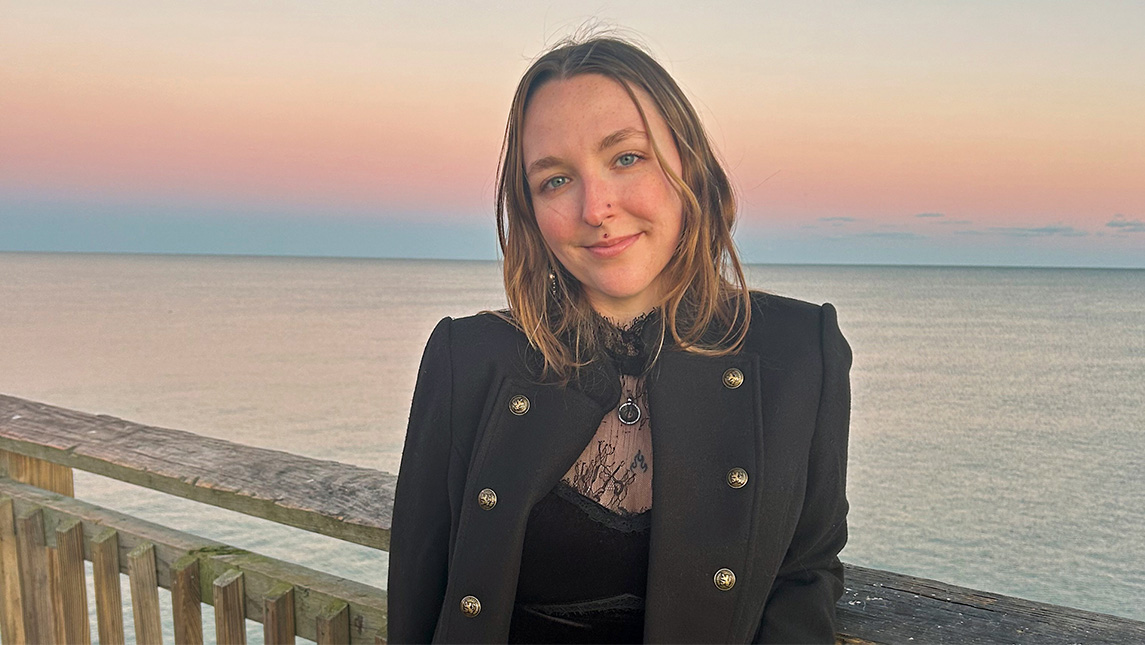
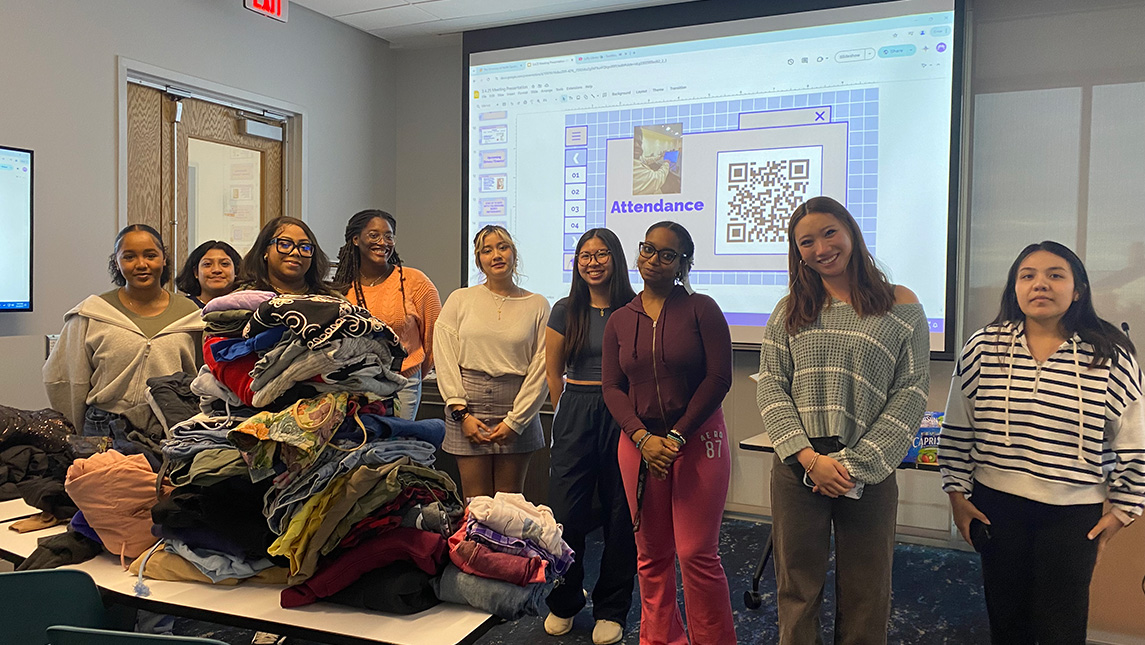
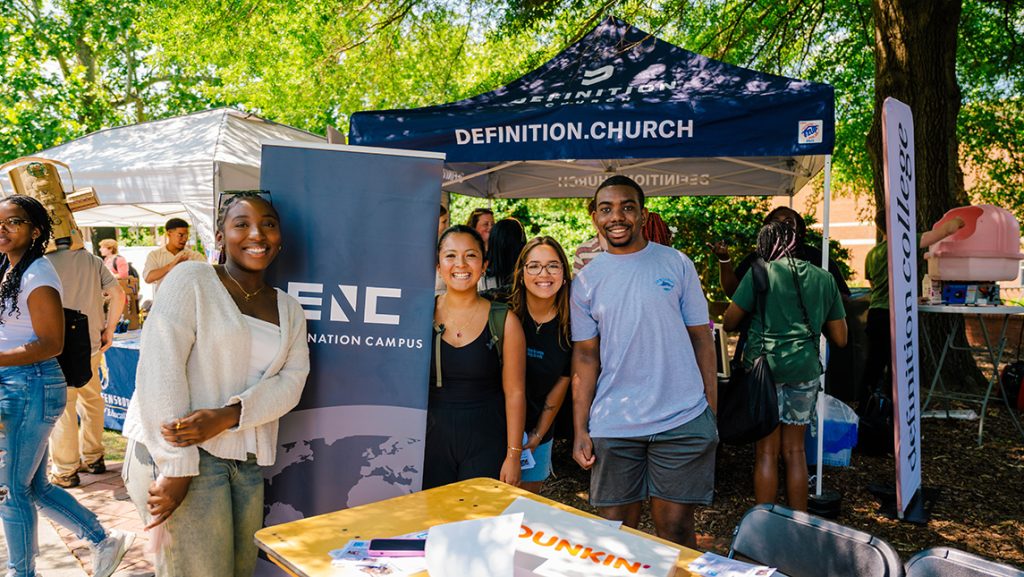
A UNCG study abroad trip to Dominican Republic encouraged public health students to look at the need through an international lens. One of those students, A’myah Wilson, shares her key takeaways.
Aetna State Employees’ Insurance Now Accepted at Speech and Hearing Center
Posted on August 28, 2025
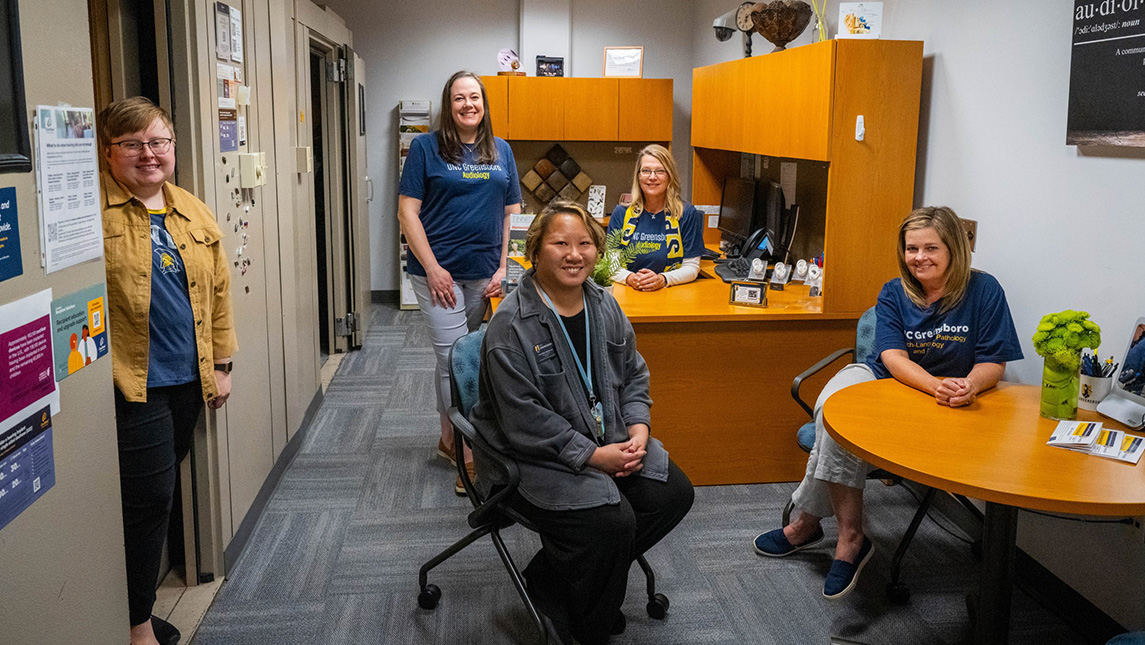
The UNCG Speech and Hearing Center is a non-profit, outpatient clinic open to the public. This insurance covers anyone in North Carolina with the state health plan who is in need of professional services for evaluation and treatment of speech, language, and hearing disorders.
The Janet B. Royster (JBR) Memorial Staff Scholarship Committee is pleased to announce the JBR Memorial Staff Scholarship Fund application is now open.
It runs from Aug. 15 to Sept. 30. Staff Senate asks employees to share this information with campus constituents and encourage them to apply. Attached you’ll find a flyer and template email for campus use.
This scholarship promotes staff development for permanent, full-time, non-faculty employees.
Applicants must be a permanent full-time non-faculty employee of the UNC System and submit a completed application. They must provide:
An essay (maximum of 500 words) describing your career, community and educational goals. Explain how participation in this course or training program will contribute to your achievement of these goals. Explain how you contribute to your community and demonstrate positive citizenship.
One letter of recommendation
Resume
Information about the professional development opportunity (examples may include the website, flyer, course description, etc.)
Since its creation, the JBR Memorial Staff Scholarship Fund has given out 186 scholarships, totaling over $130,000. It is named for Janet B. Royster, who was employed by PBS NC (formerly UNC TV) and served on the UNC System Staff Assembly as its first Parliamentarian until her death in June 2011.
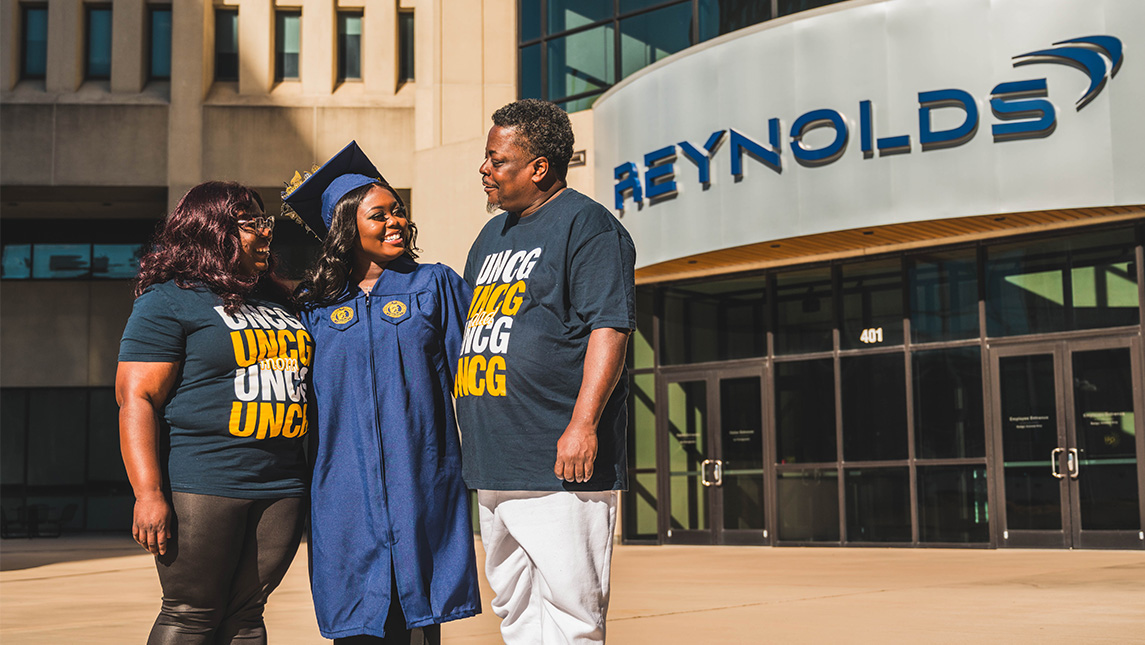
Ashanti Evans '25 accepted a job with Reynolds Inc before her graduation. Her starting salary is more than her parents Demetrice and Roy Evans had ever earned.
A UNC Greensboro commencement ceremony is a celebration unlike those at other institutions.
Families don’t clap modestly at the accomplishments of the graduates. They stand up and cheer for opportunities that previous generations thought were out of reach, as the first college graduates in families from all over the state cross the stage to receive their diplomas.
It’s the celebration of a dream that many in attendance once thought might be too big for their families. And when it comes true, the diplomas come with hope for better lives ahead.
It Begins with a Parent’s Hope
On May 9, 2025, John Penn was in the audience to watch his fifth child, Jayden King Penn, cross the stage with an accounting degree from UNCG.
Jayden King Penn with his dad. (Photo courtesy of John Penn.)
The proud father remembers being an average student at South Stokes High School in the early 80’s when winning a state title in wrestling put him on the radar of colleges like Appalachian State and NC State.
“I’d never even thought about college,” Penn says. “I didn’t take school very seriously, and always assumed I’d finish high school and get a job. Then during my senior year, I saw all this opportunity come around. I decided right then that I would make sure my kids knew that college was a possibility from a really young age. I had a chance to go, but I wanted to make sure they were prepared to follow through.”
An employee for Reynolds Inc. in Winston-Salem, Penn has been fortunate with good jobs to support his large family while staying involved in their education, sports, and interests. Today his children are aged 42, 41, 40, 28 and 22. They hold certifications and degrees from Forsyth Technical College, East Carolina University, Chowan College, Western Carolina University, and now UNCG. They make good salaries in jobs they love and are thankful their parents encouraged them to go to college.
John Penn (center in red shirt) surrounded by his children and grandchildren. (Photo courtesy of John Penn.)
“I definitely think they live easier than I did because they chose to go on to college after high school,” Penn says. “And I’m thankful that schools like UNCG helped with financial aid. This made tuition manageable for us, so no one graduated with debt.”
Higher education circles have a term for Penn’s hope for a better life for his children: social mobility.
It refers to the higher salaries, better job opportunities, planned rather than settled-for careers, broadened world views, and easier lifestyles that come with a college education.
51% of all undergraduates self-identify as first-generation students
54% of students are people of color
57% of undergraduates receive Pell grants
No. 1 in the UNC System for total percentage of Hispanic/Latino student enrollment
When first-generation student Ashanti Evans ’25 graduated from UNCG, she honored relatives who had passed away in cameos that hung from her tassel. The top one is her grandpa who worked at Reynolds Inc. as a truck driver until he retired.
Before graduating, Evans accepted her first job at the same company that her grandpa worked for. Today she is a marketing analyst at Reynolds, earning a starting salary that is more than her family’s household income.
Maris Jones ‘22 (right) with her sister Georgie, an Appalachian State grad, and Lottie (middle) who graduated from Western Carolina.
In addition to accepting more first-generation students, University departments also tailor services to them. In 2025, UNCG was cited as the first in the UNC system for performance, thanks to high scores for graduation rates, credits earned, low student debt upon graduation, and funding received. Impactful financial-aid services, academic interventions, and strategic use of “rescue” funds for high-need students has created a culture of support, hard work and tenacity that breeds success at UNCG.
Maris Jones ‘22 is proud of her personal achievement as a first-gen student and how she was able to inspire her sisters to attend four-year institutions as well.
“Seeing and hearing about my experiences, and the opportunities that higher education gave me, motivated them to pursue their own college paths,” she says. “I am happy to say that both of them will be graduating this year.”
Today, Jones inspires even more prospective students in her chosen career as a digital marketing coordinator for Enrollment Management at UNCG.
What’s Good for Spartans is Good for North Carolina
Dr. Trey Bateman ’08
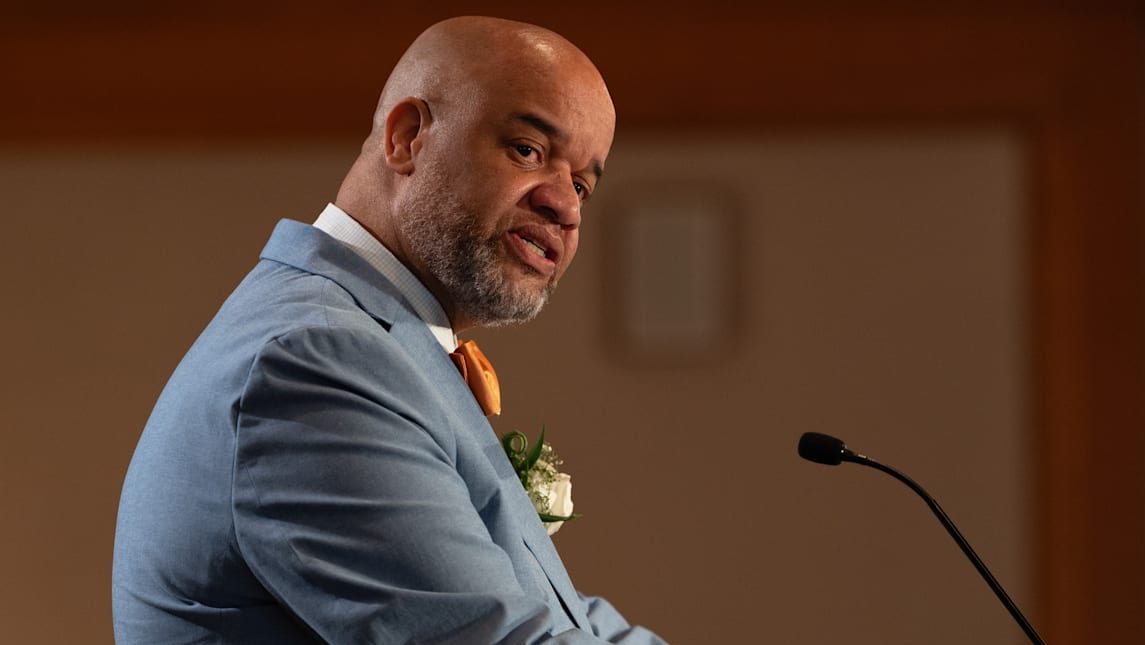
Chancellor Franklin D. Gilliam doesn’t miss an opportunity to cite the University’s service to first-gen students at every commencement and campus address. “We are proud of our efforts and appreciate the recognition that our strategic investments are bringing valuable returns for our students and our state,” he says.
UNCG’s ripples of impact uplift individual graduates and their families and in turn, boost the state of North Carolina. There are baby steps in social mobility and huge strides like Dr. Trey Bateman ‘08 made when he began commuting to UNCG for a biology degree.
“My mom had just lost her job at Pillowtex [formerly Fieldcrest Cannon],” he remembers. “We were struggling financially, so I had a Pell grant for my first two years. At UNCG, I found opportunities at a college that never felt overwhelming.”
He also found a calling that led him to medical school at UNC-Chapel Hill. Now, he’s a behavioral neurologist studying and treating adults with neurodegenerative causes of cognitive decline at Atrium Health Wake Forest Baptist.
Bateman’s specialty in treating dementia and diseases like Alzheimer’s is critical, especially in our state, where the population of adults aged 65 and up is expected to double over the next 20 years. He credits UNCG for giving him “the chance” to chase his dream and “the support to succeed.” You can bet Bateman’s family and the patients he has treated throughout the state would agree.
“Because of UNCG, not only am I able to give a better life to my wife and my children, but to my mom who sacrificed for me,” he explains. “We joke that I’m her retirement plan. She doesn’t have a 401K because she was too busy juggling credit cards to give me everything I needed and most of everything I wanted. But because of her sacrifice I am able to better support my family. It’s hard to measure the value of the way UNCG promotes social mobility for people, but it is something they are doing better than so many universities out there.”
Story by Becky Deakins, University Communications. Photos by Sean Norona, University Communications, unless otherwise noted.
Raise Your Family’s Social Mobility with a UNCG Degree
Is Screen Time Safe for Preschoolers? A UNCG Developmental Psychologist’s Take
Posted on July 17, 2025
Google “screen time for preschoolers,” and you will be hit with an onslaught of articles about behavioral problems, ADHD, or learning difficulties. Search a parenting forum for advice, and you will get an eyeful of anecdotes and admonitions. Parents may have read the American Academy of Pediatrics (AAP)’s recommended time limits, but in practice, it’s hard to pry that tablet out of their kid’s hands when it’s keeping them distracted as dinner needs to be made.
And as most Americans of all ages spend their whole day with a screen in their pocket, parents may feel it’s harder than ever to enforce good digital habits.
Jessica Caporaso, Ph.D.
The discussion interests people like UNC Greensboro’s Jessica Caporaso ’16 M.A. ’21 Ph.D. She sees it from many perspectives – as an academic professional assistant professor in the Department of Psychology, as a researcher studying how preschoolers develop self-regulatory skills and peer relationships, and as a mother.
“I have a 6-year-old and a 3-year-old,” she says. “We definitely have screen time at my house.”
Headlines only tell so much; Caporaso says many of the touted studies are far more limited in scope once you break down the data and research methods. “We might see a small effect that more screen time predicts a ‘negative’ outcome,” she explains. “But there’s always a ‘however.’ It may be an excessive amount of screen time, or without a balance of other activities, or the parents are not that involved, so on and so forth.”
She takes a deeper dive into how screens affect children’s mental health and how parents can make the right call.
Are kids really learning from what they see on screens?
That depends on the age, especially when it comes to language. “Any kid two years old or younger is not going to pick up language from screens,” says Caporaso. “Even if they’re sitting next to a cup, and Ms. Rachel says, ‘This is a cup,’ they’re not able to map the cup on the screen onto the cup next to them.”
That changes once they develop symbolic capacity by the age of three, she says. “Older research has looked at children learning vocabulary from ‘Sesame Street’ and similar TV shows. Those kids are able to map what they’re seeing on the screen to real life.”
Screen time may present an issue, according to Caporaso, if it replaces direct interaction with the parent. “We’re talking about excessive amounts of technology use,” she says. “An hour of screen time after school is not going to disrupt normal parent-child dynamics. But if kids are always on their tablets while parents are always on their phones, that could impact the amount of time parents talk with their kids.”
One thing to consider, she says, is that there are different types of screening: passive (watching a TV show or a movie) and active (playing games or puzzle activities). Headlines often lump those together, but watching a movie, using an activity app, and browsing social media engage children in different ways.
“We see with primary school-aged kids that certain games like Minecraft foster creativity or independent problem solving,” she says.
American Academy of Pediatrics’ Guidelines by Age
0-2 years: Avoid screen time except video chats with family or friends 3-5 years: 1 hour per day of high-quality programming 6+ years: Set consistent limits on hours and types of media consumed
Research into preschoolers’ screen use often overlaps with Caporaso’s field of developmental psychology. At that age, children are developing key psychological skills such as executive function, emotion regulation, and attention regulation. They need to make good life decisions and work well with others.
Caporaso is well aware of claims that screen time leads to behavioral problems. Many of those are mentioned in a 2022 meta-analysis of 87 studies on the longitudinal effect of screen time on kids. The meta-analysis shows that the effect itself is small, meaning that screen time has a limited contribution to later behavioral problems. Some of that research did not use controls to find whether the emotional problems originated with the screens, or whether the children already had issues.
“A screen might exacerbate a problem if parents use the screen as an emotion-regulation tool,” she says. “Other studies show that. If a 4-year-old has really explosive emotions, lots of tantrums, and the main way their parents or providers calm them down is putting them in front of a screen, then they’re not learning how to regulate those strong feelings without the screen.”
So, what about kids throwing tantrums when the screens are taken away? Caporaso points out that at this age, children are still developing self-regulation of their behavior; they haven’t yet learned how to step away from any activity that pleases them. Caregivers can foster these skills around the use of screens. “If your child has a really hard time putting it down, you can set a routine, use visual timers, and give reminders,” she suggests.
Finally, there is a difference between an immediate effect and a long-term effect. Parents may notice a dip in their child’s attention when they watch TV. But that does not mean they will develop ADHD or experience regulation difficulties later in life.
How can parents use screen time wisely?
As with most things in life, Caporaso says that moderation is key. “Part of learning regulation is to have it be part of a healthy lifestyle balanced with other activities.”
She offers a few nuggets of advice:
Do not allow unfettered access. Set time limits and house rules, such as asking permission before turning on the TV. Use parental controls to restrict what content the kids see. “Especially with YouTube,” she cautions. “Their algorithm can give kids some weird things.”
Watch with your kids. Caporaso says there are many positive effects for children seeing their caregivers react to the media alongside them. “For example, back to ‘Ms. Rachel,’ if your child is trying to learn vocabulary, you can repeat and reiterate what Ms. Rachel says and give praise if they repeat the word.”
Encourage active screen time. Parents can find learning apps with age-appropriate puzzles. “Just learning how to move their finger on the tablet to make something move onscreen,” says Caporaso. “We wouldn’t think of it as problem-solving, but it is for a 2-year-old.”
Sowing seeds for safe screen habits later in life
Screen time for youngsters is far from the only hurdle that parents will face when raising their kids. UNCG psychology researchers are at the forefront of studying the ramifications, from time spent on phones to mothers’ impact on body image.
Caporaso reminds parents that kids will be expected to use screens when they get older, and then new fears take hold: peer pressure on social media, online bullying, sedentary lifestyles, and online predators.
By building a healthy attitude around screens at an early age, parents lay the groundwork for positive habits once their kids become old enough to use technology without adult supervision.
As a mother, Caporaso understands that family life is busy and often chaotic. Using screens intentionally can help both the parent and child. “If you’re using technology as a babysitter, that’s not good,” she says. “But if the kids are off from school, or it’s a weekend, and you have a lot of stuff to get done around the house, and they watch a movie or two, that’s fine. Again, in moderation, parents shouldn’t feel guilty at all.”
Story by Janet Imrick, University Communications Photography courtesy of Adobe Stock and Jessica Caporaso, Department of Psychology
Spartan Club Showcase: Wrapping Up a Semester Full of Student Involvement
Posted on May 15, 2025
Spartans who find their way at UNC Greensboro often share one goal: to make a difference. But why do it alone?
What makes any good club rewarding is, first and foremost, how it transforms strangers into lifelong friends. They forge connections with the potential to grow long after everyone has earned their college degree.
The clubs and student groups of UNCG do that and more. They inspire personal and professional growth. They help students build career-ready skills such as leadership, budget management, and goal setting.
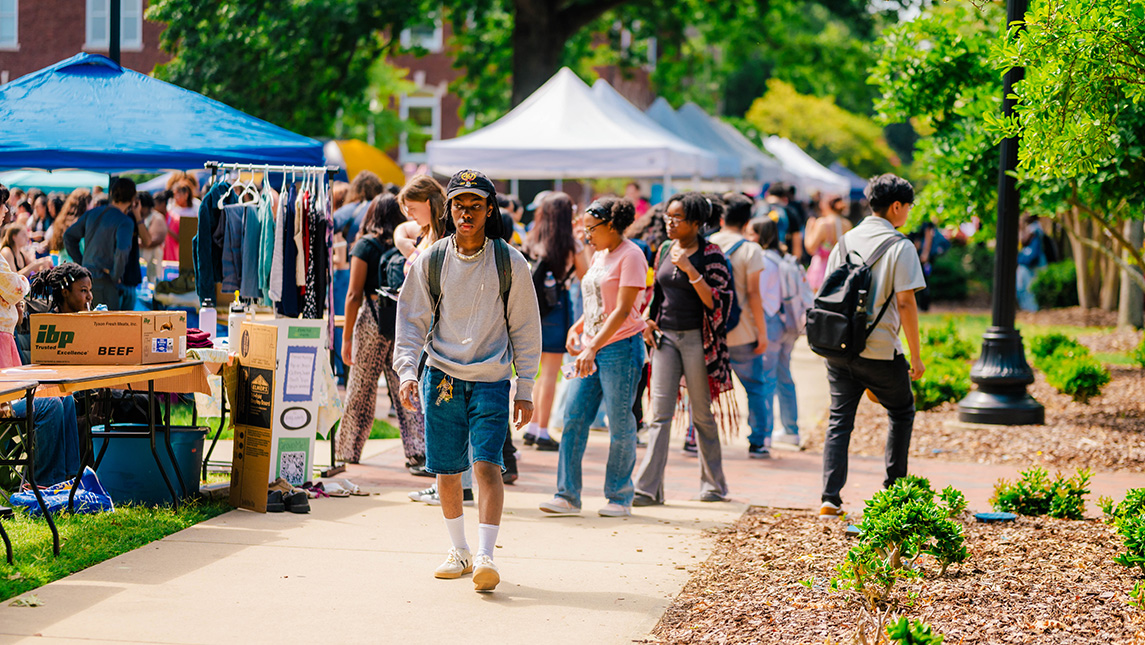
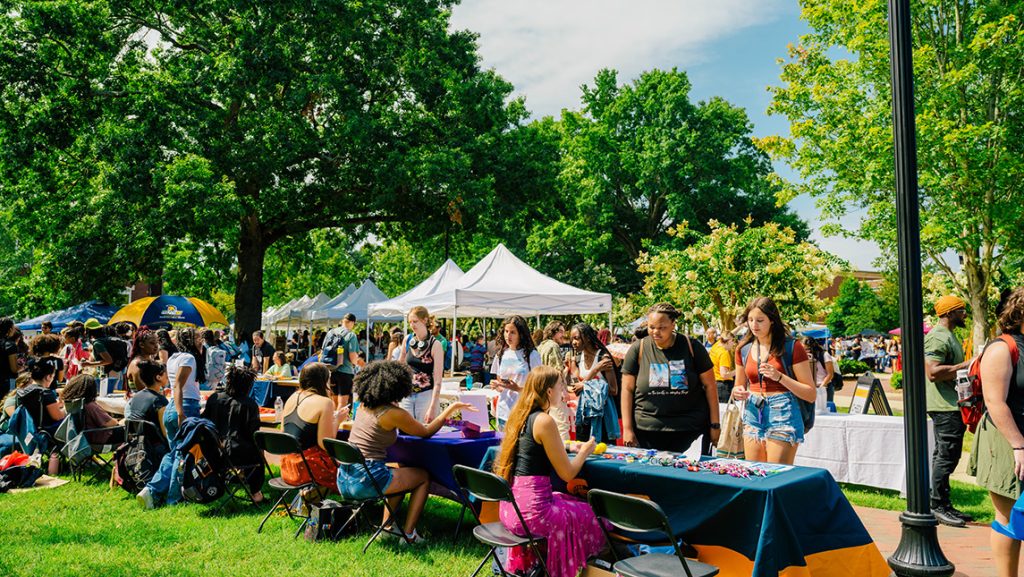
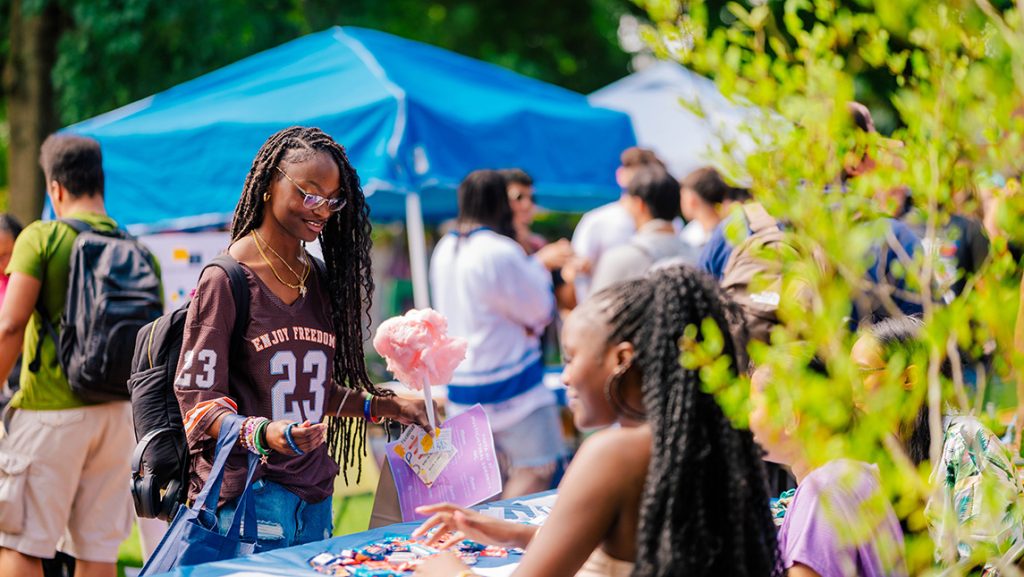
Joining a group on campus starts with knowing where to look. Besides Spartan Connect, organization fairs are a good opportunity for students to find their people. Every year, Spartans look forward to annual events like Fall Kickoff on College Avenue, which features more than 100 student groups and campus departments. The Winter Involvement Fair provides a similar opportunity each spring semester. Throughout the semester, student groups also set up tables in the EUC Commons, making it a perfect place to linger after class or check out during a lunch break.
Student Clubs Are More than Membership
When it comes to embracing campus life, it’s tempting to play it safe at first. But UNCG’s many student organizations illustrate the importance of joining communities driven by purpose and meaningful impact.
From service to academic mentorship, from empowerment to creative expression, all UNCG clubs go the extra mile to exceed their members’ expectations.
Across these four student organizations, common themes emerged: Students often shared how their involvement helped them recognize what they’re good at, how they gained valuable experience in teamwork, felt a genuine sense of belonging, or were able to improve themselves mentally and physically.
This semester’s Spartan Club Showcase featured four groups, each promoting an atmosphere of excellence and belonging while taking a unique approach to engage members.
Social Wellness is one of the key dimensions of overall well-being. Setting goals for social wellness can push a student outside their comfort zone.
It’s normal to feel nervous when meeting new peers for the first time, but forming your Spartan identity is not a race. Know that those around you are navigating the same experience at their own pace.
Here are five practical ways students can get the most out of their club involvement:
Explore new opportunities by browsing the Events or Organizations tab on Spartan Connect and reach out to inquire about upcoming meetings. If you’re looking for a club related to your field of study, consult a faculty member or your advisor for guidance.
Give yourself time to see if a club is the right fit – it’s easy to retreat back to your dorm after an hour of socializing, but seeing it through could make all the difference.
Start conversations – you never know what lifelong relationships are waiting on the other side, and club members are always excited to share what they do. By going to events like Homecoming, Spring Fling, or the Piney Lake Opening, students can easily cross paths with other like-minded individuals.
Try arriving early to connect with club leadership before the meeting begins or offer to help clean up after the meeting. Small acts of kindness are always appreciated, and they just might make attending the next meeting feel a little less intimidating.
Lastly, understand that student organizations exist for your benefit. Capitalize on the resources they offer to support your personal and professional growth.
What new opportunities could campus life bring you? You might check out that cultural event that happens every semester. You might volunteer with peers who have hearts for service, or stay up to date with that one student organization that caught your eye earlier in the year. Whatever it is, there’s no wrong way to get involved. The Spartan experience is yours to shape. You’re encouraged to do it your way.
Students interested in creating a group of their own can visit Campus Activities & Programs to learn about the requirements and read tips for success.
Story by Lauren Segers, University Communications Photography by Sean Norona, University Communications
Professor Nir Kshetri on vital AI education for university students
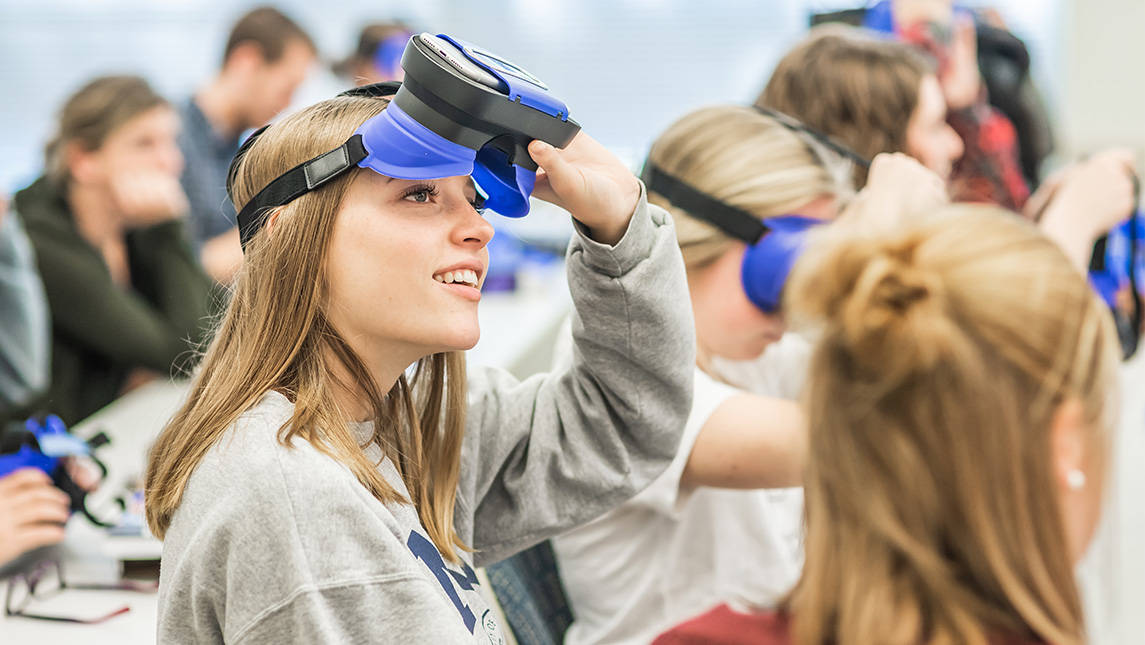
Artificial intelligence (AI) is booming. The AI market is projected to reach $244.22 billion in 2025, with business and legal services making up 13.7 percent of the entire market. Nir Kshetri, professor in UNC Greensboro’s Bryan School of Business and Economics, specializes in how emerging technologies like AI, blockchain, Web3 and the metaverse transform global economies, organizations, and societies. Ksherti received a Fulbright Scholar award to conduct research in Nepal. He plans to focus his research on the impact of AI on higher education.
“No one should graduate from higher education without understanding how AI works,” he says. “I plan to incorporate my Fulbright research into my international business and cybersecurity courses.”
“Cybersecurity is something that everyone needs,” Kshetri says. “At UNCG, I started offering a cybersecurity management course – it’s accessible for everyone, even those without a technical background.”
In the course his business students study how people and businesses are victimized by cyber criminals. He teaches how governments are responding in the regulatory landscape and the classes discuss policy changes.
Blockchains and Bitcoin: The Financial Frontier
Companies and consumers are exploring the future of cryptocurrency, the Metaverse, and blockchain technology to conduct business. Professor Nir Kshetri is spearheading research to help them.
“I have written several articles about how different generations of AI—predictive AI, generative AI, and the emerging third generation known as agentic AI, which refers to autonomous systems capable of independent decision-making and goal-directed actions—can both help cybercriminals and enhance cybersecurity,” he says. “I’m arguing that on the policy, sociocultural side that more people should understand how AI and cybersecurity work so they can better use it and protect themselves and their companies.”
Kshetri feels passionate about educating students about the AI/cybersecurity landscape because it impacts data flow between the U.S. and other parts of the world.
“AI policies and regulations are different in different parts of the world. The way that data privacy and security are handled varies in these different economies,” he says. “It makes it complicated for international business and ethics in AI.”
University of Nepal teaching and research
Kshetri is currently hosted by The School of Management Tribhuvan University in Nepal, for his Fulbright Scholar work. There he will teach courses and help the university develop a curriculum around AI.
“I predict artificial intelligence will become a required course for all university students at some point. Many universities are already investing in faculty who can teach how it applies to different disciplines,” he says. “Universities will have to change their curriculum to add value for students, some of whom use AI and believe it can replace traditional education.”
Kshetri’s research will focus on AI in the academic sector – the subject of his forthcoming book The Era of Generative and Agentic Artificial Intelligence in Academia: From Disruption to Collaboration and Value Creation, currently under contract with The State University of New York Press.
“I’ll be researching the impact that AI has on universities from a global perspective, how they’re responding to it, and what may be the best way to deal with this,” he says. “For many students outside of the West, they do not have as many AI resources or access to it because many AI languages are developed in high resource languages like English and German.”
Prompt engineering
When Kshetri returns to UNCG’s campus, he plans to teach his Bryan School students that the basics of ChatGPT and other generative AI are not enough.
“When ChatGPT came out almost two and a half years ago, then everyone suddenly started thinking they were an expert. Just being able to use and get an answer from ChatGPT is not sufficient,” he says. “You have to think critically about the best way of asking things and to get the best possible answer – that’s prompt engineering.”
Prompt engineering is essential for understanding how AI tools work. Their limitations and biases reflect the information it is scanning.
“Students should not enter the workforce without knowing how AI works and they should always pay attention to all the tools cyber criminals are using,” Kshetri says. “Be aware of all the new techniques that these different actors are developing. It is essential for students and consumers who use the internet to know so they can safely use AI tools and protect themselves.”
About the Fulbright U.S. Scholar Program
Since 1946, the Fulbright Program has provided more than 400,000 talented and accomplished students, scholars, teachers, artists, and professionals with the opportunity to study, teach, and conduct research abroad. Fulbrighters exchange ideas, build people-to-people connections, and work to address complex global challenges. Notable Fulbrighters include 62 Nobel Laureates, 93 Pulitzer Prize winners, 82 MacArthur Fellows, 44 heads of state or government, and thousands of leaders across the private, public, and non-profit sectors.
More than 800 individuals teach or conduct research abroad through the Fulbright U.S. Scholar Program annually. In addition, over 2,000 Fulbright U.S. Student Program participants — recent college graduates, graduate students, and early career professionals — participate in study/research exchanges or as English teaching assistants in local schools abroad annually.
Fulbright is a program of the U.S. Department of State, funded by the U.S. Government. Participating governments and host institutions, corporations, and foundations worldwide also provide direct and indirect support to the Program, which operates in more than 160 countries worldwide.
In the United States, the Institute of International Education implements the Fulbright U.S. Student and U.S. Scholar Programs on behalf of the U.S. Department of State. For more information about the Fulbright Program, visit https://ful-brightprogram.org.
Written by Alice Manning Touchette
Photography by Mike Dickens, Bryan School of Business and Economics; and Jiyoung Park, University Communications Graphics by Jaysen Buterin and De’Andre Gilliard, University Communications
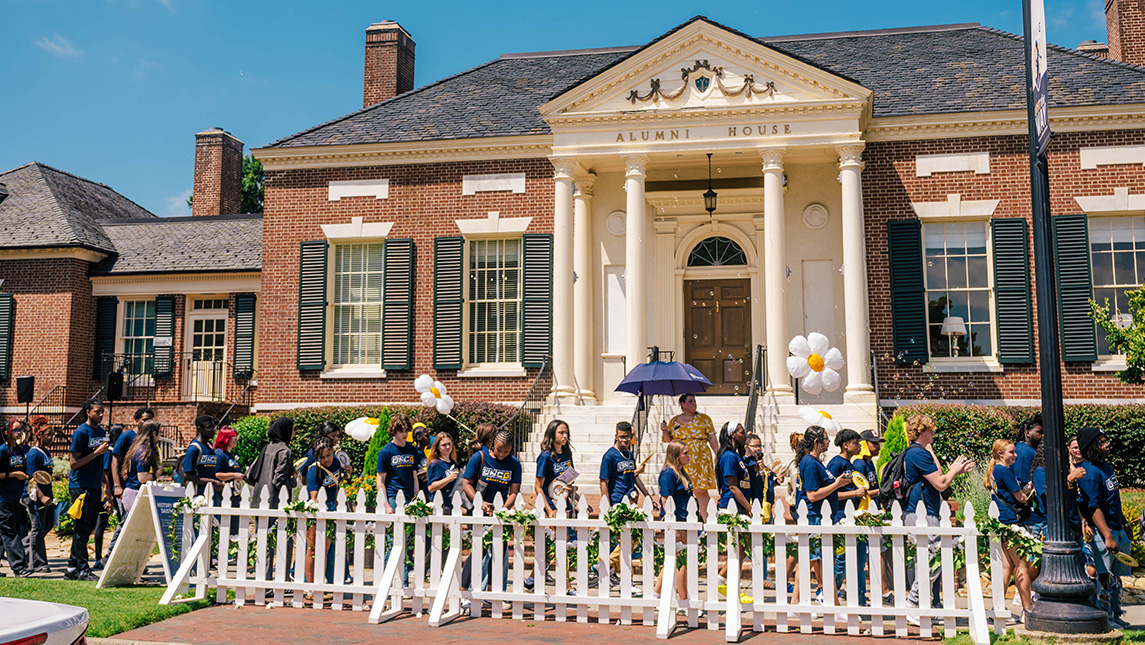
The traditional daisy chain welcomes new students and marks the beginning of a new semester.
Faculty are invited to kick off the new academic year at the annual Faculty Convocation on Wednesday, Aug. 27. Chancellor Gilliam and Provost Boyette will make their comments at 3 p.m. A resource fair and social will begin at 4 p.m. with time to socialize with old and new colleagues. Live music, food, and drink will be provided.
Faculty Senate will host the Convocation at the Oakley Reception Room in the Alumni House.
Swag Store Provides Giveaways for Tabling and Events
Posted on August 05, 2025
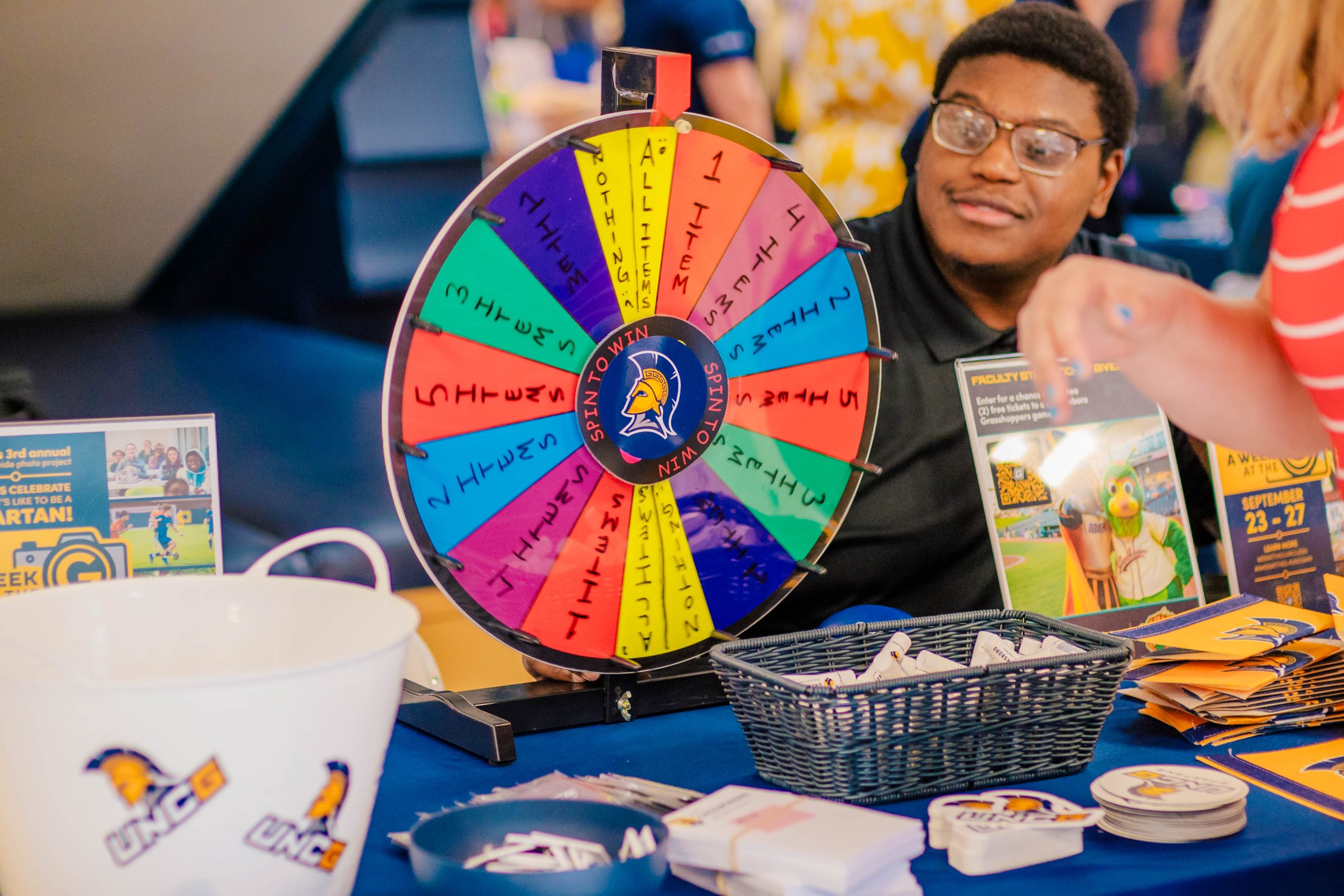
Faculty and staff spin the wheel for swag from UC at the Welcome Back luncheon.
UNCG departments and units can make their message stand out without starting from scratch. University Communications (UC) offers ready-to-use resources to help faculty and staff promote programs, events, and initiatives — quickly, on-brand, and sustainably.
Branded Swag Without the Bulk
For event organizers who need items for tabling or giveaway bags, the UNCG Swag Store offers many different options.
T-shirts, hats, water bottles, notebooks, pens, stickers, and more
Items available at bulk pricing (as few as one to as many as what’s currently in stock)
All items sourced from licensed, approved vendors
Saves time, reduces waste, and supports campus branding
For those who would like to order something not in the swag store or have it branded with a specific department logo, remember that University policy requires using an approved vendor. Organizers may contact UC for the list.
Swag given out during Churros with the Chancellor.Staff promote UNCG programs and events during Spartan Cinema at LeBauer Park.
Borrow for Events
UC will also help a setup look professional without the need to purchase new gear. These branded items are appropriate for info sessions, open houses, and campus fairs. They are first come, first served. Including, but not limited to tents and tent walls, pull-up or expanse banners, feather flags, and table cloths.
Anyone interested in more information can contact Libby Schinnow at laschinn@uncg.edu.
UC swag table at Mentoring Monday.
More Resources
In addition to swag and event materials, UC may provide strategic support for faculty and staff communicators.
‘Fighters for Freedom’ Ushers in Weatherspoon Fall 2025 Exhibitions
Posted on August 08, 2025
An exhibition from the Smithsonian American Art Museum is coming to the Weatherspoon Art Museum this Fall. “Fighters for Freedom: William H. Johnson Picturing Justice” brings together artworks illustrating the lives and impact of cultural figures, civil rights advocates, and mid-century politicians and world leaders.
Additionally, the museum at UNC Greensboro will open for two Sundays this fall with programming to learn more about “Fighters for Freedom.” These special events bring an opportunity for the public to preserve snapshots from their personal history through the “Conversations in Black” exhibition, which draws from photographs submitted by community members for the initiative of the same name.
An overview of the year will be at the annual Fall Open House on Sept. 25, 5–7 p.m. This chance to see both new and returning art is free with live music and light refreshments.
Fighters for Freedom: William H. Johnson Picturing Justice
Sept. 6 to Nov. 29
“Fighters for Freedom” pays creative tribute to African American activists, scientists, teachers, performers, and heads of state. Using a colorful palette and the addition of tiny buildings, flags, and vignettes, artist William H. Johnson captures a historic perspective with a message that the pursuit of freedom is an ongoing, interconnected struggle full of moments of both triumph and tragedy.
Born in Florence, South Carolina, a teenage Johnson left the Jim Crow South for New York City in 1901. He was accepted into the National Academy of Design, where he won most of the prizes the academy offered during his five years of study.
Left to right: William H. Johnson, Marian Anderson, about 1945. Oil on paperboard, 35 5/8 x 28 7/8 in. Smithsonian American Art Museum. Gift of the Harmon Foundation; 1967.59.657 William H. Johnson, Booker T. Washington Legend, about 1944-1945. Oil on plywood, 39 7/8 x 30 7/8 in. Smithsonian American Art Museum. Gift of the Harmon Foundation; 1967.59.664 William H. Johnson, Harriet Tubman, about 1945. Oil on paperboard, 28 7/8 x 23 3/8 in. Smithsonian American Art Museum. Gift of the Harmon Foundation; 1967.59.1146
He moved to Scandinavia where his style became influenced by European modernism. Upon his return to New York in 1938, he began painting African Americans in different scenarios: Southern sharecroppers, city hipsters, Black soldiers training for war, and religious events. “Fighters for Freedom” was Johnson’s last series painted in the mid-1940s.
“Fighters for Freedom: William H. Johnson Picturing Justice” is organized by the Smithsonian American Art Museum. Generous support for this project is provided by Art Bridges.
Conversations in Black
Aug. 9 to Jan. 10, 2026
Leading into the Fall 2025 semester, the Space for Engagement/Tannenbaum Gallery will feature photographs from “Conversations in Black,” a grant-funded collaborative initiative to collect and make accessible the rich history and contributions of African American educators, lawyers, artists, doctors, teachers, and everyday Greensboro citizens.
The exhibition invites comparisons to the people and professions explored in “Fighters for Freedom,” highlighting local equivalents whose contributions have made a lasting impact on our community.
“Conversations in Black” is in collaboration with UNCG University Libraries and Conversations in Black: African American History and Heritage, Greensboro, NC.
Curator’s Talk: Fighters for Freedom Sept. 11, 5:30 to 6:30 p.m.
Join Dr. Virginia Mecklenburg, senior curator at the Smithsonian American Art Museum, for a presentation about William H. Johnson’s work and legacy.
Gallery Talk: Fighters for Freedom Sept. 19, Noon to 1 p.m.
Artists Panel: “Whose Freedom Are We Fighting For?” Oct. 9, 6 to 7:30 p.m.
Join the dynamic discussion with Greensboro artists who will respond to William H. Johnson’s artwork through a contemporary lens to explore issues of identity, liberation, and representation. It will be moderated by Karen Archia, visual artist and community partnerships coordinator at Creative Greensboro.
Art Crawl: Fighters for Freedom Oct. 11. Time to be determined
Enjoy Creative Greensboro’s Neighborhood Arts for a free, interactive event that brings to life the themes of the “Fighters for Freedom” exhibition. Experience community-based creativity across the city during this unique opportunity to connect with local artists and their work. Presented in collaboration with Creative Greensboro, the city’s office of arts and culture, and Greensboro Parks and Recreation.
Sunday Best: Celebrating William H. Johnson Oct. 19 and Nov. 16, Noon to 5 p.m.
On two Sundays in October and November, anyone can drop by to see the paintings, attend informative panels about the works and themes of “Fighters for Freedom,” and contribute to the “Conversations in Black” project by bringing photographs and ephemera to digitize and add to this online collection chronicling African American contributions in Greensboro. Refreshments will be served.
Neighborhood Arts Celebrate William H. Johnson Nov. 9 to Dec. 12 African American Atelier at the Culture Arts Center 200 N Davie St. Greensboro, NC 27401
“Fighters for Freedom” is joined by an accompanying exhibition with Greensboro-area artists. Thanks to Creative Greensboro‘s Neighborhood Arts Grants, recipients can create or upgrade art pieces in relation to Johnson’s work. Their work will be displayed at the African American Atelier.
Pattern Recognition
June 7 to Jan. 10, 2026
This exhibition features artworks from the Weatherspoon’s collection in which artists explore the power of patterns, the ways in which they can provide both stability and activation, and how they can register both familiarity and surprise.
This ongoing exhibit presents newly rotated works this fall, including drawings by Robert De Niro Sr., Jo Sandman, Sarah Stein, and Max Weber, as well as 19th-century ukiyo-e prints by Utagawa Hiroshige and Torii Kiyomitsu.
“Making Connections” demonstrates how the Weatherspoon has served as an academic museum with deep connections to and relationships with its campus, Greensboro, and broader communities for over eight decades.
The Arts of Gaming Aug. 28, 6 to 7:30 p.m.
How might 3D modeling and digital storytelling change how we experience and learn from artworks in the Weatherspoon’s collections? New Benjamin Faculty Fellow John Borchert, Ph.D. will share ideas for connecting art, technology, and community through growing partnerships with Epic Games and new campus spaces for media, animation, and interdisciplinary collaboration. A reception will close out the evening at 7 p.m.
Of Salt and Spirit: Black Quilters in the American South
In 2026, the Weatherspoon will open a new exhibit that surveys some of the vibrantly designed and richly varied quilt-making traditions maintained by Black women in the U.S. South through the 20th century and into the present day.
Organized by the Mississippi Museum of Art and curated by Dr. Sharbreon Plummer, it foregrounds the deliberate, complex practices of quilters who have cultivated networks of mutual support and preserved personal histories around and through their craft.
Harriet’s Powers
In tandem with “Of Salt and Spirit,” the Weatherspoon will present a commissioned project by North Carolina artist Precious D. Lovell. Her installation will celebrate the life and artistry of Harriet Powers (1837–1910), considered by many to be the mother of the African American story quilt tradition.
Combining quilting, sculpture, collected historical objects, and sound, this artwork will provide visitors with an opportunity to expand their thinking about the legacies and futures of Black quilters through Lovell’s contemporary artistic response.
MORE TO COME AT THE WEATHERSPOON
This fall, the museum’s central atrium will be dedicated the Warmath Commons. This gift from the Warmath family celebrates and advances more than 60 years of commitment to the museum and its mission, ensuring that it remains a welcoming space for exploration, connection, and community.
Sarah Warmath and her late husband Jack were pivotal in shaping the Weatherspoon’s future as early supporters of the capital campaign for the Anne and Benjamin Cone Building, helping the museum grow from a campus gallery into the distinguished institution it is today.
Meet the New Fellow
The Weatherspoon is excited to announce its third annual Margaret and Bill Benjamin Faculty Fellow for the new academic year. John Borchert, Ph.D. will join the museum team to explore the ways in which close study of physical artworks in the galleries can inform the creation of virtual worlds online. A scholar of digital humanities and game studies, Borchert serves as director of videogaming and esports studies at UNCG.
He will convene gatherings of faculty from across disciplines to strategize how the collections and archives can be activated through real-time 3D technology in ways that support both traditional art history and contemporary design studies.
Story by Janet Imrick, University Communications Photography by Sean Norona, University Communications; and courtesy of the Weatherspoon Art Museum and the Smithsonian American Art Museum