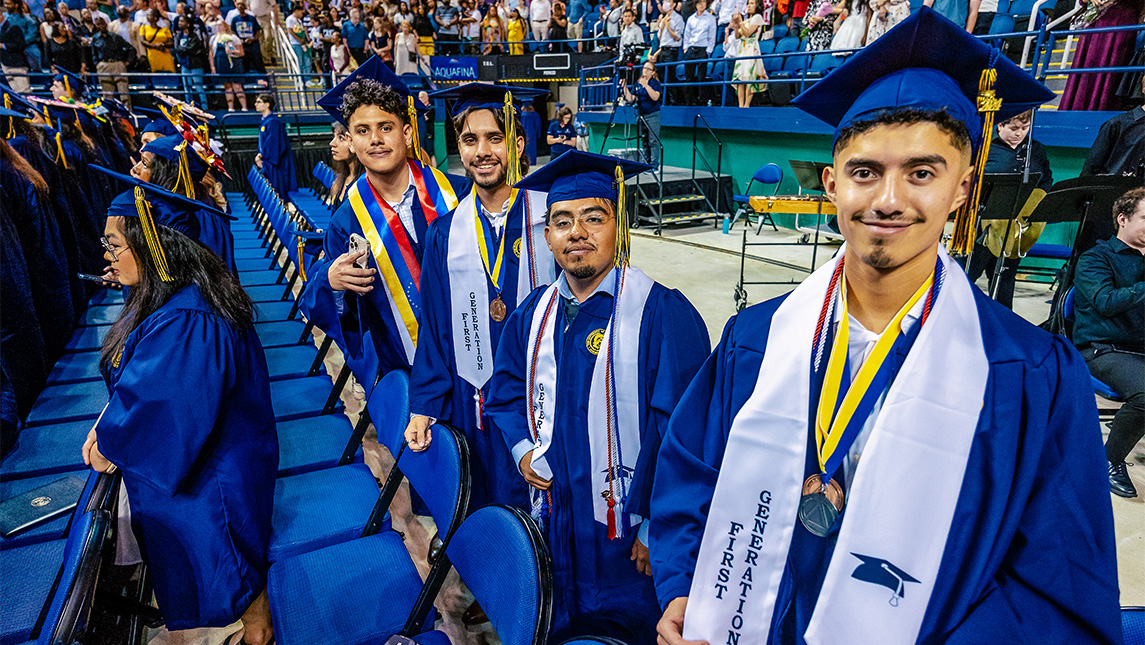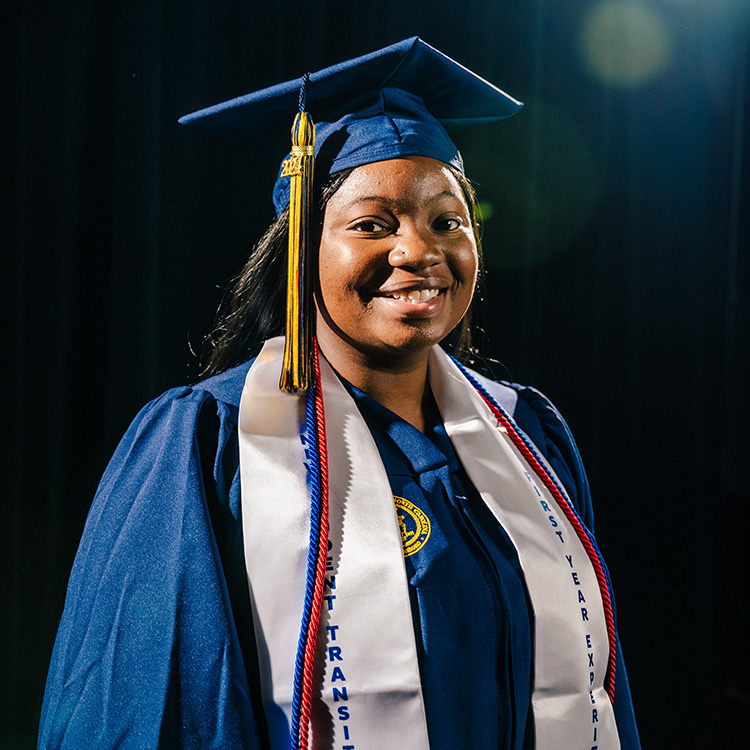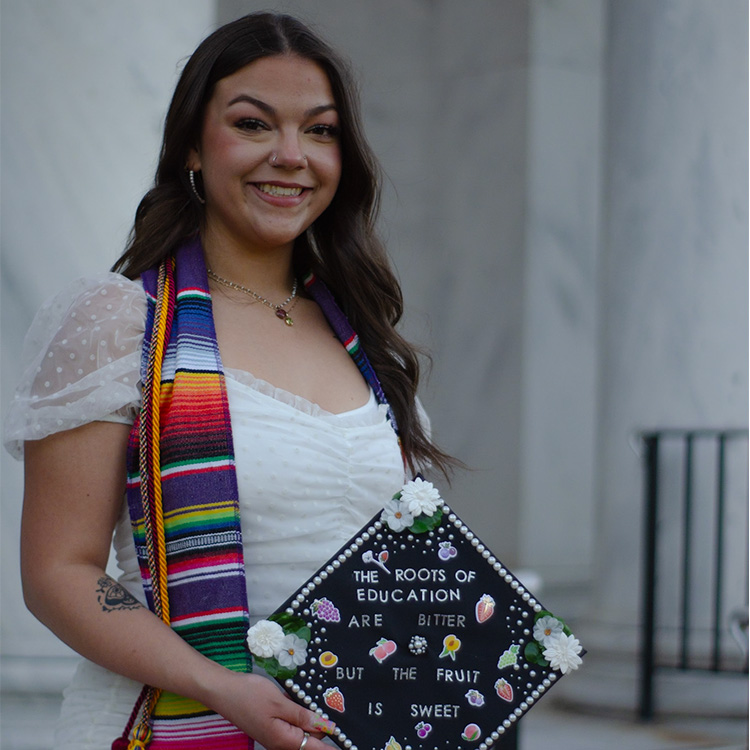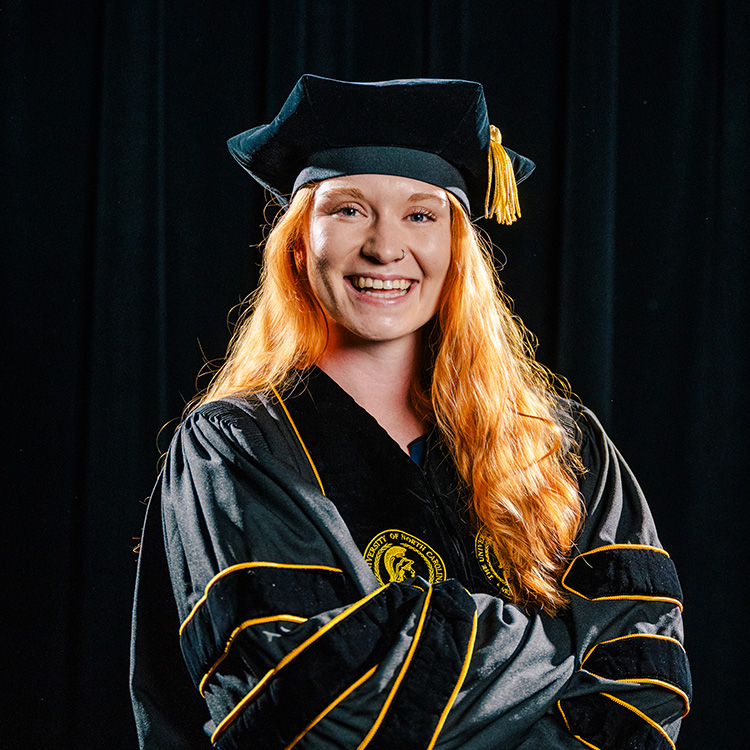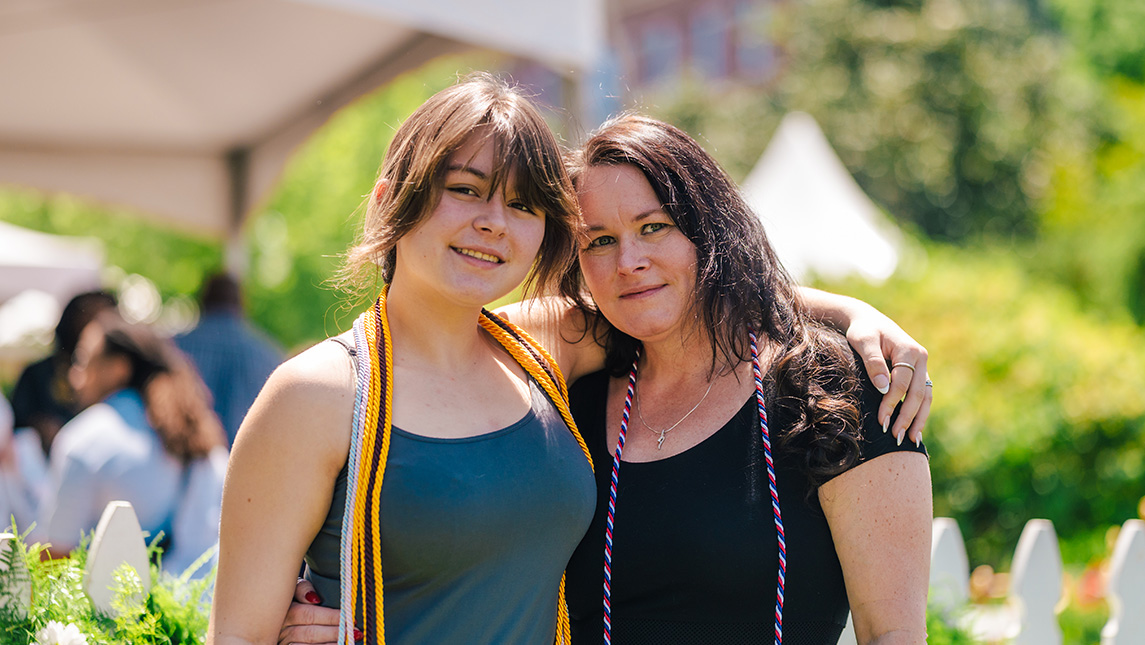
When Tiffany Stephens ’24 strolled through UNC Greensboro’s Red Carpet Reception, honoring graduates, she brought her 14-year-old daughter Rylee. Both had honorary cords draped around their necks, making it tough to tell which one had just earned her degree.
“She can’t wear my military cord, but she might as well wear the others,” Stephens said. “I wouldn’t have them if it wasn’t for her.”
This year, Stephens celebrates Mother’s Day just one week after her UNCG graduation, which completes a quest for knowledge that began when Stephens was a young mother in desperate need of a reset.
Army Wife, Happy Life
Stephens is no stranger to life adjustments as she relentlessly follows her passions. In 2000, she graduated from high school and began college classes before the September 11, 2001 terror attacks urged her to change course and join the military.
While serving six years in the National Guard, she met her husband, Riley, Special Forces medic in the United States Army. She married him and enlisted, eventually becoming a lab technician at Fort Bragg (now Fort Liberty). There, they started their life together and welcomed a little girl in 2010.
In 2012, Riley Stephens was on a mission in Afghanistan that he never returned from. Stephens was suddenly a widow, left to care for a toddler who would barely remember the father who shared her name.
“I pulled out of the Army to care for little Rylee,” Stephens explains. “I wasn’t handling life well. Who thinks they are going to be a widow at 30 years old?”
Finding Her Way Here
Stephens moved back to her hometown of Siler City, North Carolina where family could help her with Rylee, and she began to consider becoming a student again.
She initially enrolled at Wake Technical Community College (Wake Tech) for a laboratory science program but found a love for history that led her to finish with a dual associate degree in science and history. The Wake Tech courses made her hungry for more.
“As a veteran, I had this G.I. stipend for education and I realized that if I am paying my own way, I can study whatever I want,” Stephens says. “I love learning about the past. Maybe it’s because I grew up in the 80’s with Indiana Jones, but I was drawn to classical archaeology.”
In the fall of 2021, Stephens officially reset from a Wake Tech science student to a Spartan in Lloyd International Honors College majoring in classical studies with a concentration in archaeology and a minor in history.
Juggling Volleyballs with Musket Balls
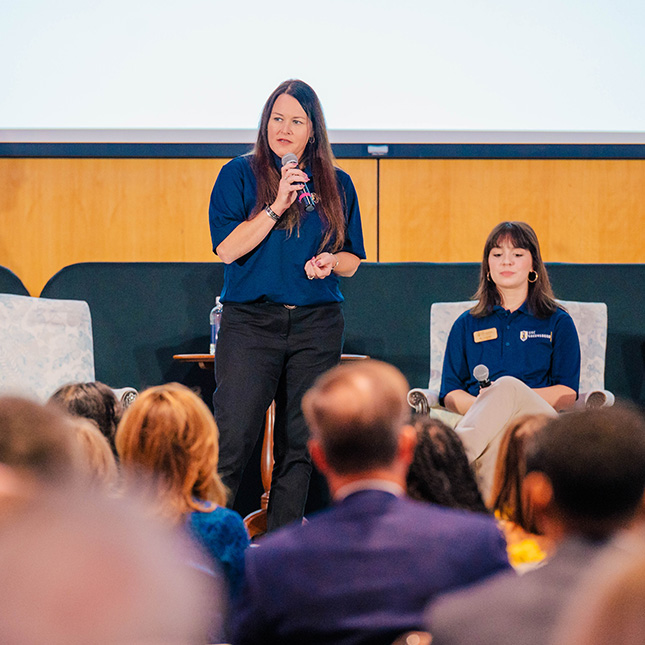
Being a single mother and full-time honors student was a complicated endeavor, but her advisors and professors were there to help.
“Raising a teenager is a job in itself,” she says. “Getting Rylee to school in the morning and not missing her volleyball games was important, so my advisors helped me schedule classes around that.”
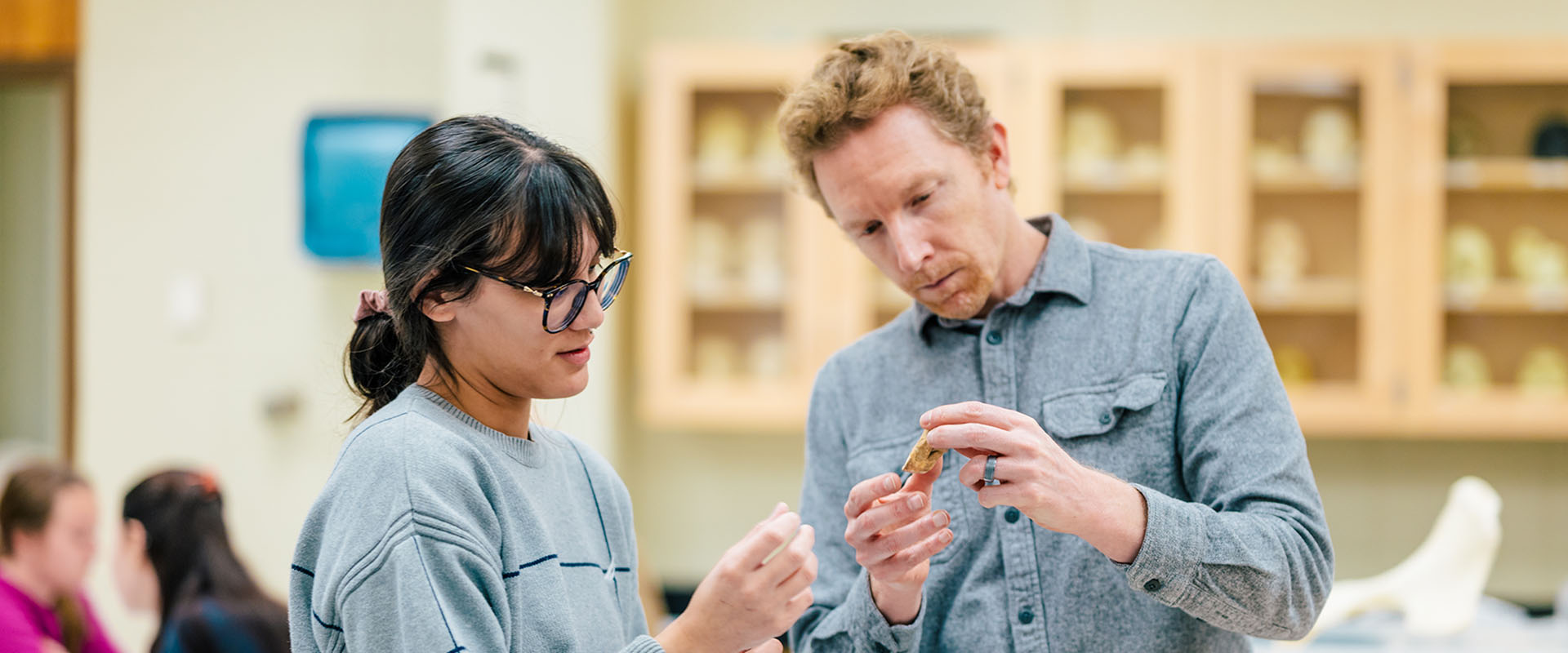
Choosing the disciplinary honors route gave Stephens more opportunity for hands-on research. She analyzed Roman coins and lamps from Pompeii and worked on an Undergraduate Research and Creativity Award work study for two semesters studying Incan pottery. This semester, she analyzed musket balls collected at the Guilford County Battlefield.
Dr. Joanne Murphy, classical studies department head and Stephens’ first advisor, appreciates her hard work. “Tiffany is an outstanding student and leader who makes a strong contribution to our community. She manages the complexity of her life with impressive courage and good humor.”
Stephens plans to go on to graduate school and has set her sights on museum studies. “Museum jobs are everywhere and it’s such a tangible use of my degree. I love the idea of helping to preserve artifacts and using them to teach people about history!”
It Takes a Village
As she completes her time at UNCG, Stephens is thankful for the specialized attention and opportunities she found here but says the most unexpected perk has been the community she discovered.
“As an older commuter student with a busy life at home, I thought I would come to class, go home, do my homework, and get my degree, but I didn’t expect to end up with so many friends,” she says. “I have built relationships with many different people at UNCG. I know I wouldn’t have found that at a larger school where I was only a number.”
She also credits family support for her accomplishments, especially from her daughter. “Rylee has earned this degree as much as I have,” Stephens explains. “She’s been patient and understanding when I need to make time for homework or to study.”
And although she jokes that “Big Riley” would be annoyed at how much smarter she is than him after graduating with honors, Stephens is convinced that her late husband would be proud of the example she has set for their daughter. “There were times I thought maybe I don’t need this degree, but then I would think of Rylee and realize that I couldn’t let her see me quit something that I have worked so hard for. I wouldn’t be here without her.”
Story by Becky Deakins, University Communications.
Photography by Sean Norona, University Communications.