Funding Friday: Biological Resilience and Nanoprobes
Posted on May 10, 2024
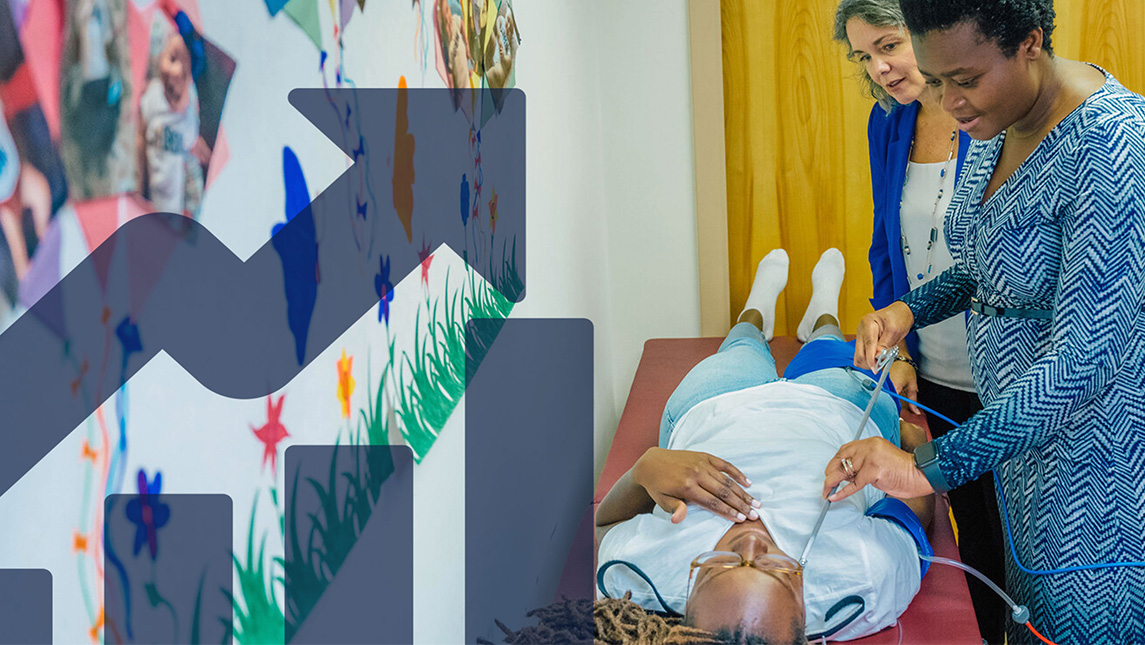
UNCG researchers will use their recent funding awards to advance improvements in ophthalmology, rural communities, herbicide detection, and foster care education.
Percussion Professor Keeps in Rhythm with UNCG Music Students
Posted on May 10, 2024
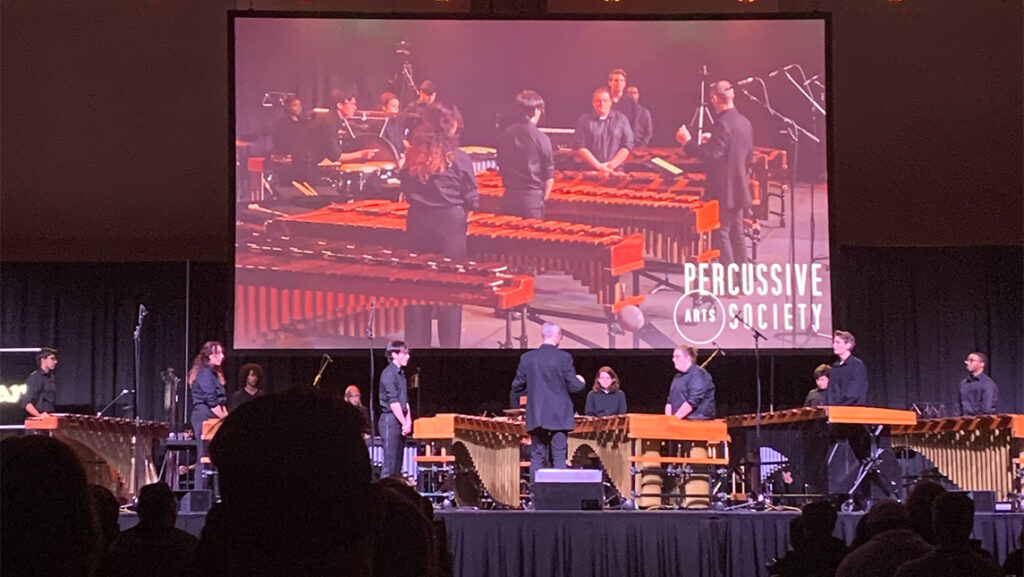
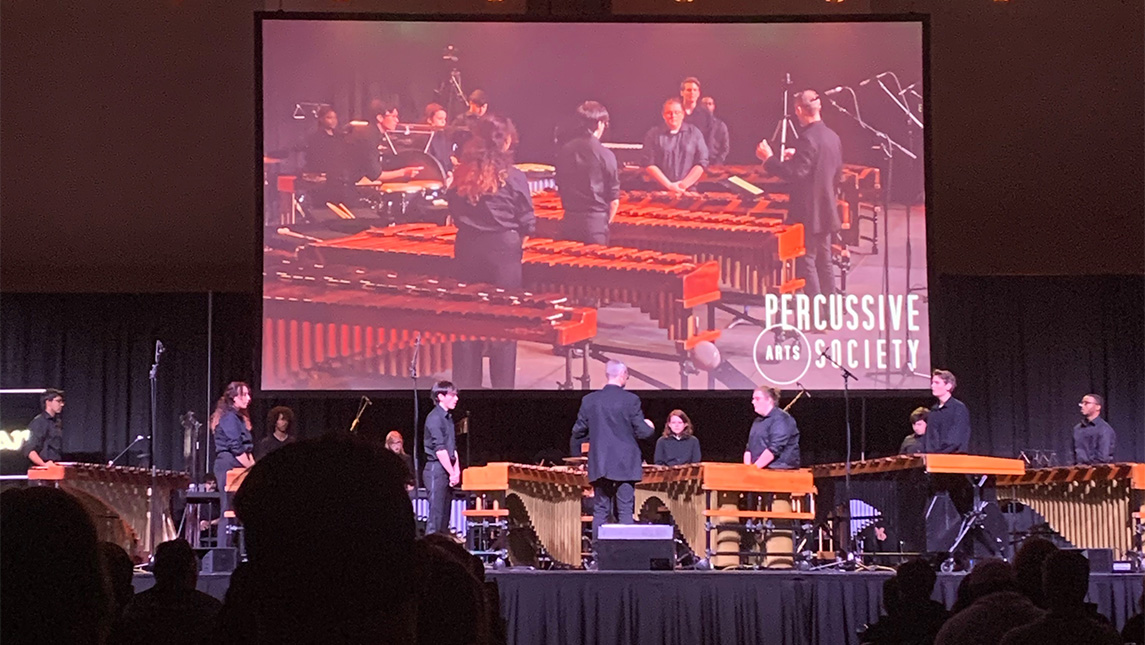
The UNCG Percussion Ensemble performs at the April 2021 world premiere of "CAOS" by Colombian-composer Jhon Ciro.
Percussion students from UNC Greensboro have won prestigious competitions, performed at Carnegie Hall, or gone on to teach at major universities and entertain children in the community. They got their start with a professor who’s learned how to set a tempo they can follow from beginning to end.
Dr. Eric Willie, assistant professor of percussion, celebrated a decade with UNCG’s School of Music by receiving the annual Board of Governors Excellence in Teaching Award, which was officially given to him during the Spring 2024 Undergraduate Commencement Ceremony. It one additional accolade that speaks to his reputation among students and his peers in academia.
In his letter of recommendation for Willie’s award, University of Alabama’s Percussion Studies Director Andrew Lynge says, “Dr. Willie is a percussion virtuoso, equally exceptional as both an educator and performer.”
Music to the Ears
The first time Willie taught percussion was at a summer music camp, when his high school band director asked him to help. He was just 16 at the time. Percussion Professor John Parks says he recognized Willie as a rising star while a graduate student at the University of North Texas.
“Dr. Willie’s service to the profession is more than appropriate for this point in his career,” Parks says. “He has been heavily involved at every level of the Percussive Arts Society for many years – adjudication, committee work, as a clinician, conductor – and simply being a percussionist in a university music program demands a high degree of service.”
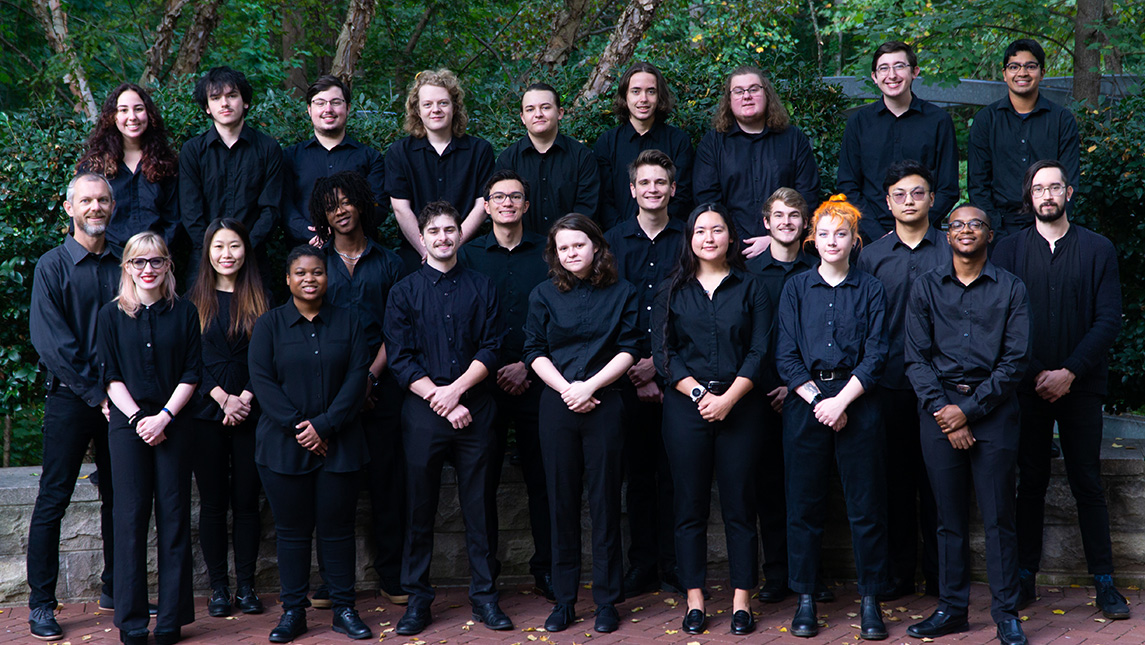
UNCG’s Percussion Ensemble with Dr. Willie on the left.
UNCG hired Willie in 2014, ending a period of instability for its percussion students who had seen three different professors over three years. Willie found a rhythm, establishing a curriculum that students could keep up with from their first year into graduate studies. He says it “allows the student to develop the mastery of their profession with regards to music performance. It also teaches time management and the creation of hierarchies in their task list.”
Along with group sessions, one-on-one lessons help Willie understand each student’s experience and personal goals. He tries to build upon their abilities demonstrated in their first class, moving from simple melodies to more complicated standards through the semesters.
“Dr. Willie has fostered an environment of musical success with individualized student growth,” says Dr. Lamon Lawhorn from Virginia State University, who was the student representative on Willie’s hiring committee at UNCG. “Although he has the curriculum in place for student development, he makes sure that each student becomes aware of their own musical voice and works to mature their craft to the highest level.”
He also teaches the role of percussion across cultures, delving into ceremonies and rituals found around the world. Having had two women as his first instructors, Willie makes sure the program promotes inclusivity.
From Apprehensive to Award-Winning
Before coming to UNCG, Willie put many years into refining the undergraduate percussion curriculum at Tennessee Tech University. Coming to UNCG brought a new challenge – to create labs for percussion students suitable for a research institution.
“I realized that the UNCG Percussion Ensemble was my lab setting,” says Willie. “Here, the students have the opportunity to work collectively to solve problems, troubleshoot, and hypothesize how to improve their craft, as well as gaining the feeling of becoming part of a larger community.”
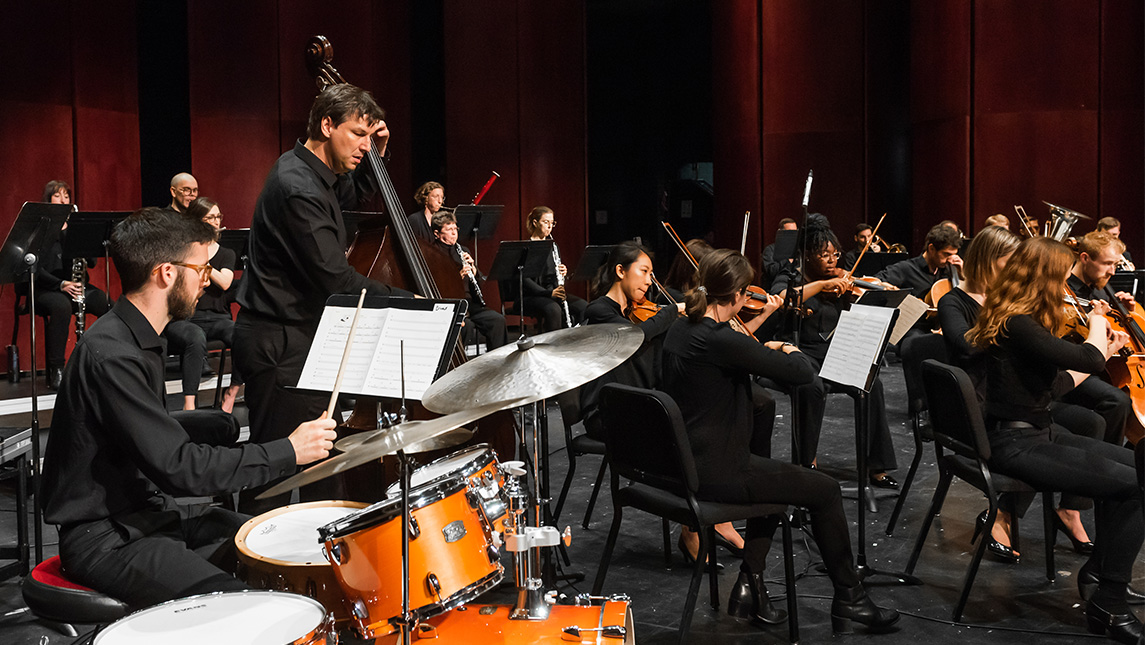
Percussion Ensemble’s performance at “CAOS” in April 2021.
UNCG’s Percussion Ensemble has won the Percussive Arts Society International Percussion Ensemble Competition (PASIC) twice under Willie’s direction, the first during his first year. He has also performed at or conducted at ten PASICs. The ensemble got to perform at the coveted International Percussive Arts Society.
Some of his students went on to become soloists who won the American Protégé International Concerto Competition at Carnegie Hall. This summer, one student is in the international steel band panorama competition in St. Lucia. Their performances are not just for other professionals; they’ve brought entertainment to local families through a partnership with the Community Theatre of Greensboro.
Recalling those first days at UNCG, Willie says, “Many students were initially apprehensive. However, I was able to generate a community of like-minded young professionals who developed a peer-learning system that is still in place ten years later.”
Story by Janet Imrick, University Communications Photography courtesy of Dr. Eric Willie and Dr. Annie Jeng, College of Visual and Performing Arts
UNCG Class of 2024 Grad Sets a Shining Example for Daughter
Posted on May 09, 2024
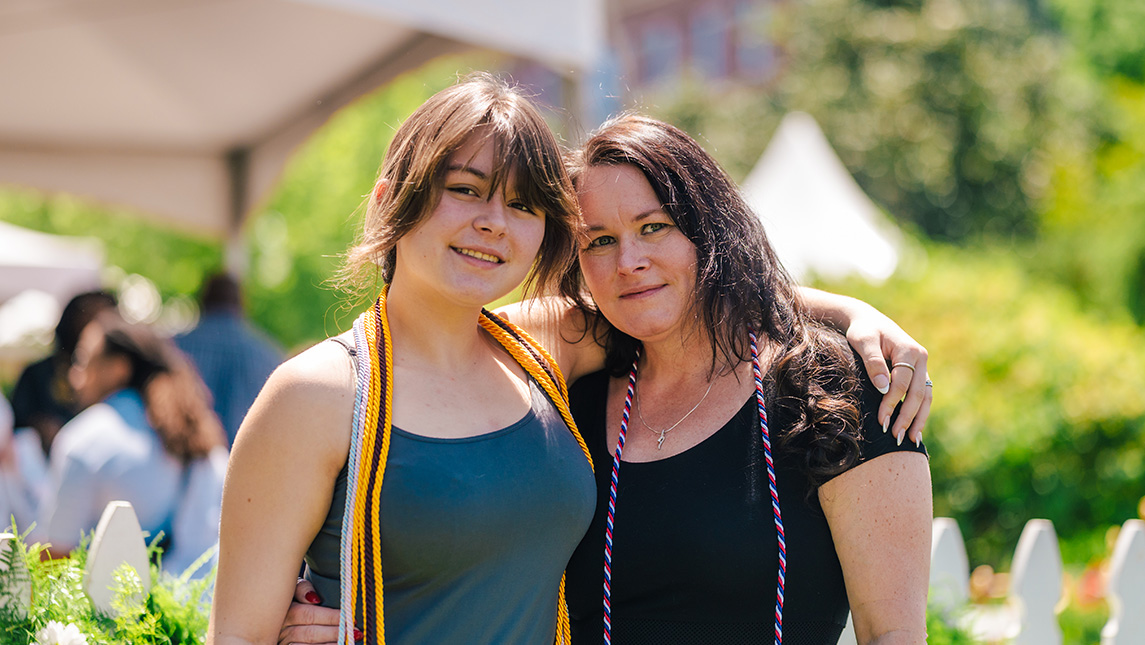
When Tiffany Stephens ’24 strolled through UNC Greensboro’s Red Carpet Reception, honoring graduates, she brought her 14-year-old daughter Rylee. Both had honorary cords draped around their necks, making it tough to tell which one had just earned her degree.
“She can’t wear my military cord, but she might as well wear the others,” Stephens said. “I wouldn’t have them if it wasn’t for her.”
This year, Stephens celebrates Mother’s Day just one week after her UNCG graduation, which completes a quest for knowledge that began when Stephens was a young mother in desperate need of a reset.
Army Wife, Happy Life
Stephens is no stranger to life adjustments as she relentlessly follows her passions. In 2000, she graduated from high school and began college classes before the September 11, 2001 terror attacks urged her to change course and join the military.
While serving six years in the National Guard, she met her husband, Riley, Special Forces medic in the United States Army. She married him and enlisted, eventually becoming a lab technician at Fort Bragg (now Fort Liberty). There, they started their life together and welcomed a little girl in 2010.
In 2012, Riley Stephens was on a mission in Afghanistan that he never returned from. Stephens was suddenly a widow, left to care for a toddler who would barely remember the father who shared her name.
“I pulled out of the Army to care for little Rylee,” Stephens explains. “I wasn’t handling life well. Who thinks they are going to be a widow at 30 years old?”
Finding Her Way Here
Stephens moved back to her hometown of Siler City, North Carolina where family could help her with Rylee, and she began to consider becoming a student again.
She initially enrolled at Wake Technical Community College (Wake Tech) for a laboratory science program but found a love for history that led her to finish with a dual associate degree in science and history. The Wake Tech courses made her hungry for more.
“As a veteran, I had this G.I. stipend for education and I realized that if I am paying my own way, I can study whatever I want,” Stephens says. “I love learning about the past. Maybe it’s because I grew up in the 80’s with Indiana Jones, but I was drawn to classical archaeology.”
Stephens was one of several high-achieving students chosen to represent UNCG’s student body at the UNC system’s Board of Governors Luncheon in October 2023.
Being a single mother and full-time honors student was a complicated endeavor, but her advisors and professors were there to help.
“Raising a teenager is a job in itself,” she says. “Getting Rylee to school in the morning and not missing her volleyball games was important, so my advisors helped me schedule classes around that.”
Choosing the disciplinary honors route gave Stephens more opportunity for hands-on research. She analyzed Roman coins and lamps from Pompeii and worked on an Undergraduate Research and Creativity Award work study for two semesters studying Incan pottery. This semester, she analyzed musket balls collected at the Guilford County Battlefield.
Dr. Joanne Murphy, classical studies department head and Stephens’ first advisor, appreciates her hard work. “Tiffany is an outstanding student and leader who makes a strong contribution to our community. She manages the complexity of her life with impressive courage and good humor.”
Stephens plans to go on to graduate school and has set her sights on museum studies. “Museum jobs are everywhere and it’s such a tangible use of my degree. I love the idea of helping to preserve artifacts and using them to teach people about history!”
It Takes a Village
As she completes her time at UNCG, Stephens is thankful for the specialized attention and opportunities she found here but says the most unexpected perk has been the community she discovered.
“As an older commuter student with a busy life at home, I thought I would come to class, go home, do my homework, and get my degree, but I didn’t expect to end up with so many friends,” she says. “I have built relationships with many different people at UNCG. I know I wouldn’t have found that at a larger school where I was only a number.”
She also credits family support for her accomplishments, especially from her daughter. “Rylee has earned this degree as much as I have,” Stephens explains. “She’s been patient and understanding when I need to make time for homework or to study.”
And although she jokes that “Big Riley” would be annoyed at how much smarter she is than him after graduating with honors, Stephens is convinced that her late husband would be proud of the example she has set for their daughter. “There were times I thought maybe I don’t need this degree, but then I would think of Rylee and realize that I couldn’t let her see me quit something that I have worked so hard for. I wouldn’t be here without her.”
Story by Becky Deakins, University Communications. Photography by Sean Norona, University Communications.
Murray is also a co-founder of the See the Triumph campaign which aims to support survivors of abuse, sharing messages of empowerment and hope. This summer, she leaves UNCG to focus on her new endeavor: Start Here Counseling and Consulting, promoting mental health and healthy relationships within the community.
The Steps to Recovery
Murray spoke on “Last First Date,” hosted by Sandy Weiner, in the episode “Healing from Emotional Abuse: Insights from Christine Murray and Sandy Weiner.” Murray shared from her personal experience as a survivor, engaging in conversation with Weiner about the intricacies of emotional abuse and the journey towards recovery.
“It’s important for people to take those steps toward educating themselves on the signs of abuse. Set an intention that you want to work on your healing and recognize those patterns that repeat themselves,” Murray said.
Some of her key messages include the various forms of emotional abuse, the profound effects of emotional abuse, the importance of actively pursuing healing, and the role of partners in supporting survivors of abuse.
In “Relationship Advice” episode “What Exactly is A Healthy Relationship Anyway,” hosted by Chase and Sarah Kosterlitz, Murray talked about her initiatives for preventing abusive relationships and shaping healthy, safe relationships of all kinds.
“I encourage listeners to be proactive in evaluating their relationships, striving for happiness and health, and taking action if they slide into unhealthy territories,” Murray said.
Some of her key messages include the importance of recognizing early warning signs of abuse, understanding the complex dynamics of abusive relationships, identifying red flags, setting personal boundaries, self-reflection, and independence.
Flexibility, Support Found in UNCG RN to BSN Program
Posted on May 08, 2024
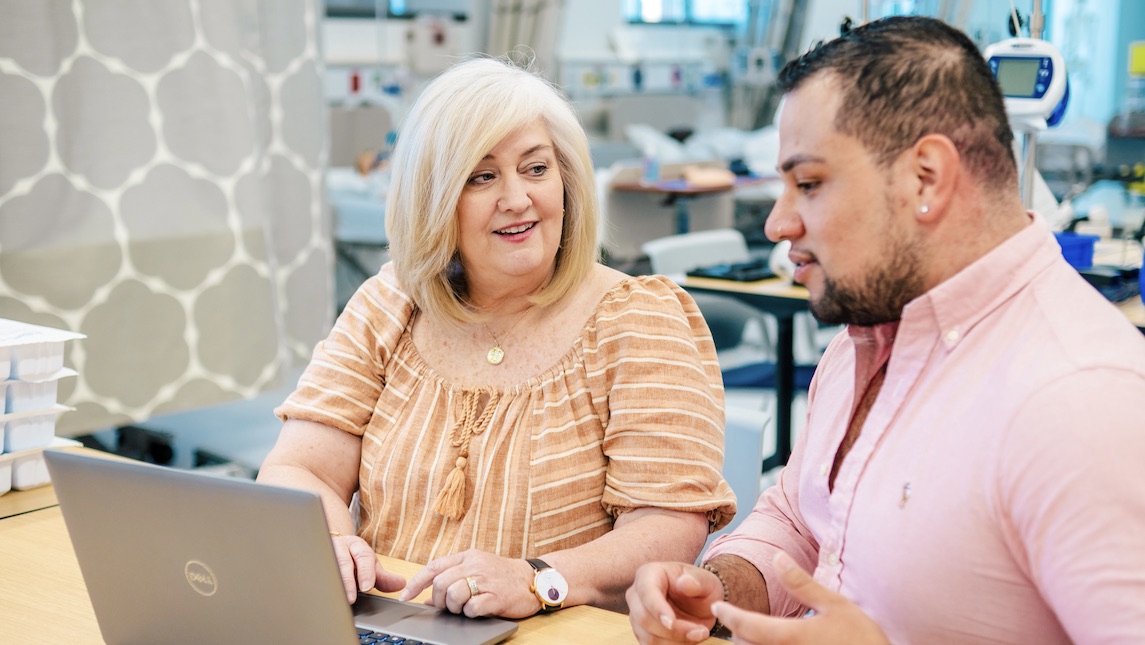
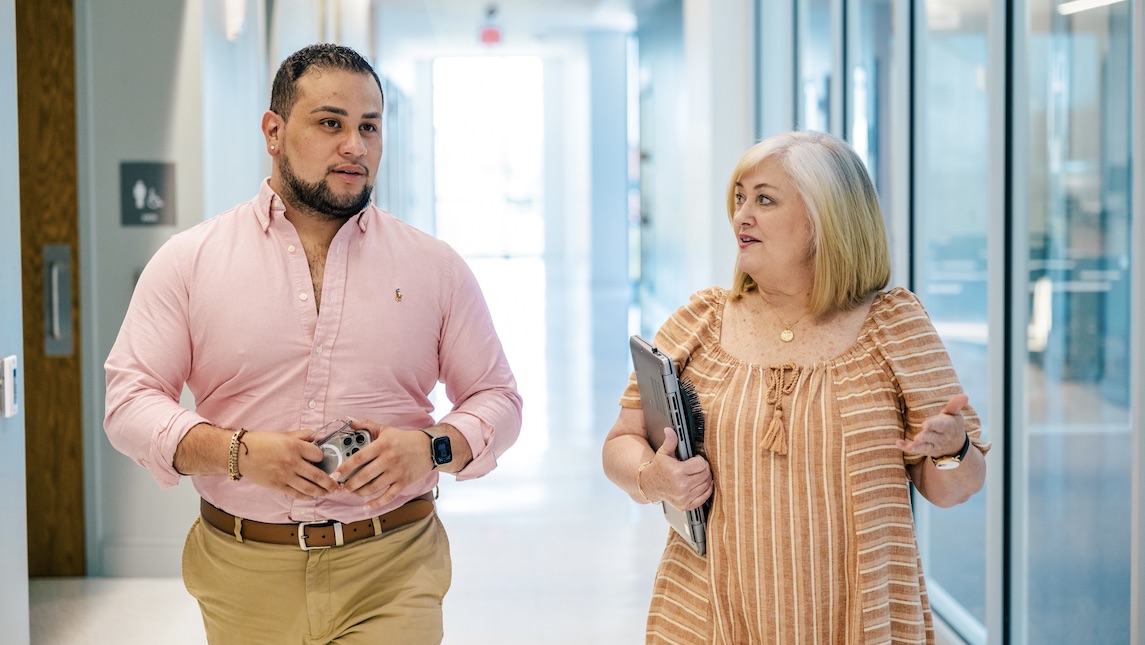
RN to BSN Coordinator Tammy Hall knows a thing or two about the students she serves in UNC Greensboro School of Nursing’s popular RN to BSN program—because she was one herself.
“I had been a nurse for 20 years before I decided I wanted to go back and earn a bachelor’s degree. I thought ‘Good grief, what more do you have to teach me that I don’t already know?’” says Hall.
“But when I started doing the work, I realized my nursing practice was changing, and I was seeing my practice differently. I am truly a living testimony to the importance of that bachelor’s degree.”
Now, Hall works to ensure other nursing students feel supported and connected in the online program as they seek to improve opportunities in their nursing career.
Why RN to BSN?
The American Association of Colleges of Nursing (AACN) reports important advantages to having a BSN-prepared workforce, which directly benefits patients.
The AACN states having higher rates of BSN-prepared nurses in hospitals is associated with greater odds of surviving cardiac arrest; lower odds of inpatient mortality and death of dementia patients; and decrease in surgical mortality rate and hospital length of stay. It is also associated with “lower rates of heart failure, decubitus ulcers, failure to rescue, medication errors, and procedural errors.”
Hall also identifies reasons as to how the RN to BSN program benefits UNCG students.
She says some applicants are associate degree nurses (ADNs) who want to pursue being a family nurse practitioner (FNP) or Ph.D. in nursing degree, so they return to school to earn their bachelor of science in nursing (BSN).
Hall explains that some hospitals have magnet designation, which requires 80% of staff to have a BSN. The hospital is allowed to hire ADNs, but the ADN must commit to earning a BSN within three to five years. Although this policy was revoked during the pandemic, Hall believes it will be reinstated in the future, thus driving more ADNs to seek their bachelor’s degree.
Lastly, earning a bachelor’s degree can result in a salary increase and becoming qualified to climb the clinical ladder at a nurse’s agency.
“There are many opportunities for nurses to spread their wings after they earn their degree,” says Hall. “It really helps them become stronger nurses and move their career forward.”
Welcomed with Open Arms
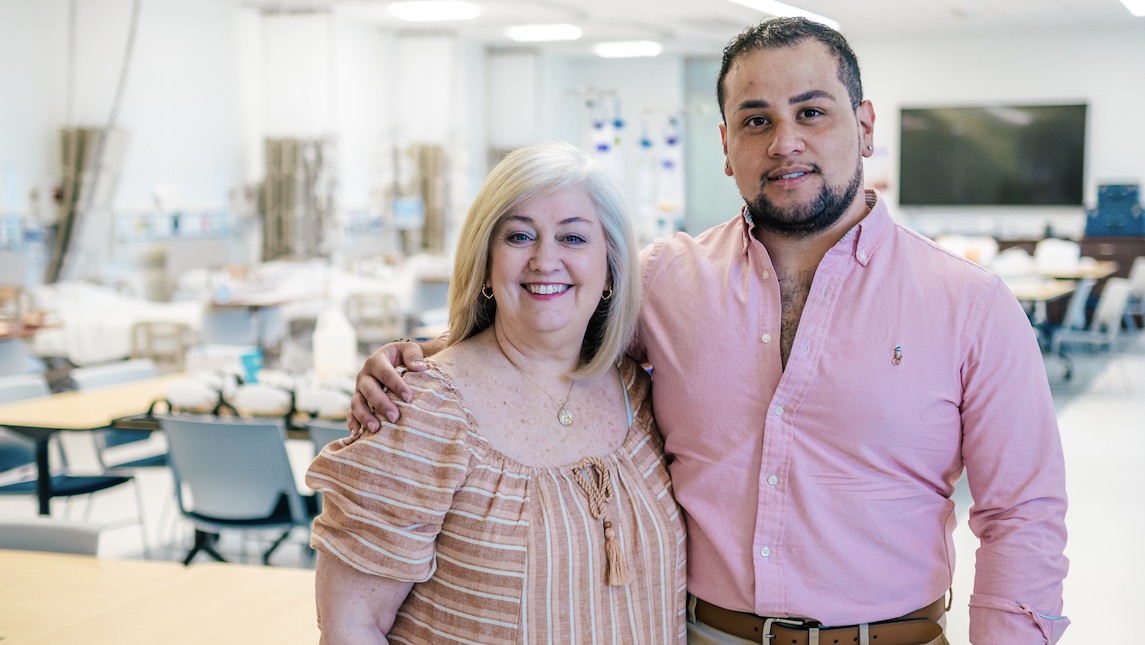
Ernan Yanez-Moreno is a first-generation Latin American student of immigrant parents, who was welcomed to the program “with open arms,” he says.
Referred to the program by a colleague, Yanez-Moreno graduated in May 2024. Currently a Registered Nurse (RN), he is joining the U.S. Navy as a critical care nurse and naval officer following graduation.
“It was UNCG’s commitment to diversity and military students as well as the student body demographics that solidified my decision to come here,” says Yanez-Moreno, who avidly thanks Laurie Kennedy-Malone, Tammy Hall, Deb Stanford, and Jennifer Boggs for their teaching and support.
Yanez-Moreno says UNCG’s program is streamlined and straightforward, and he is confident this degree will open career avenues, especially if he pursues becoming an advanced practice provider, like a certified registered nurse anesthetist (CRNA) or acute care NP.
Finish Line in Sight
Amy Cannady has been contemplating pursuing her BSN since the 1990s. Now, as a RN to BSN student looking to graduate in either Fall 2024 or Spring 2025, she “can see the finish line.”
Cannady claims her experience has been one of ease and great support: “I have been pleasantly surprised at how vested everyone has been since day one.”
When Cannady does graduate from the program, it will carry a certain weight.
“It will be proof that I did not give up after 35 years of chasing this dream,” says Cannady.
Online, Flexible, Fast
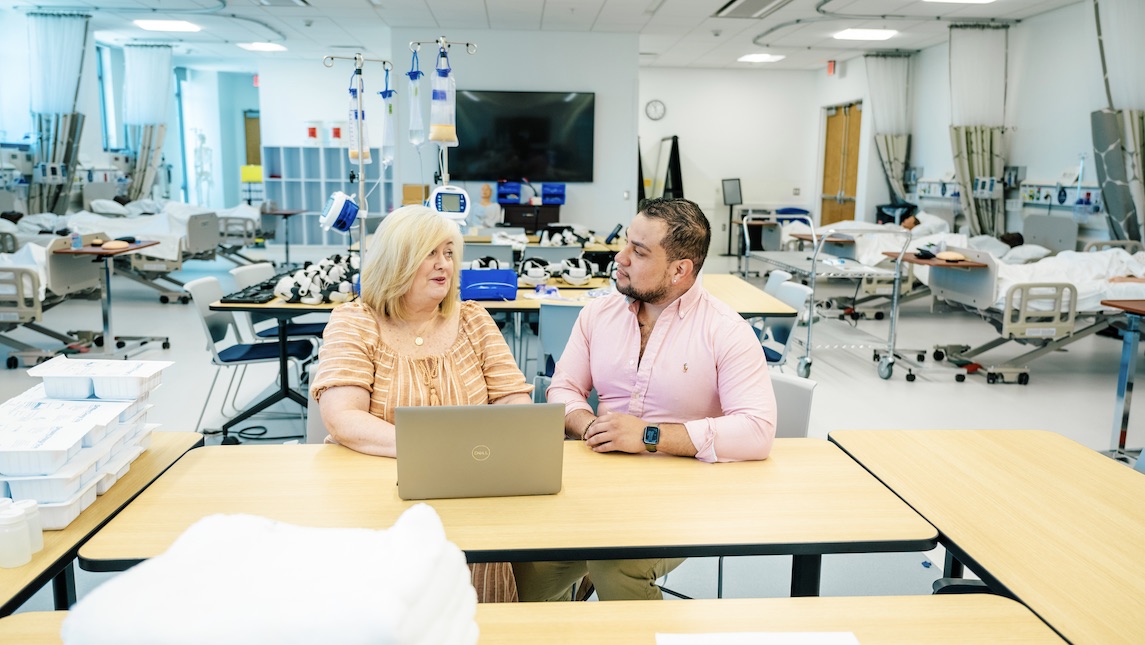
The online RN to BSN program utilizes a cohort model, can be completed in one year and offers most classes every semester, empowering students to dictate the order classes are taken.
“Students have the reins on how they complete the program,” says Hall. “I love the flexibility the online program provides students because they are making the decisions.”
Although the program is online, Hall clarifies that students are always welcome on campus. At the beginning of the program, she encourages students to come and talk with her and other faculty.
Students from across North Carolina participate, and they partner with mentors in their local community for the clinical components of the 400 level nursing courses.
Future program developments include the integration of virtual simulation into all 400 level courses and the development of micro credentials or badges, like a rural or community health badge.
From Online to Front Lines
While the RN to BSN program has existed since the early 2000s, it was originally a hybrid program, in which faculty would drive to community colleges or hospitals for weekly in-person instruction. It was popular but burdened traveling teachers, and the RN to BSN program delivery method was already changing across the country, with many already online.
When the pandemic hit, these in-person classes shut down and moved online at UNCG.
“Students started to realize they really appreciated the online program and online teaching,” says Hall. “More students began to ask specifically for the online class.”
In 2021, the then-new Dean Debra J. Barksdale recognized that the travel model was neither pedagogically warranted nor financially sustainable and challenged the faculty to put the entire program online.
When Hall started working as the RN to BSN coordinator in Summer 2022, she worked to make that happen. The last in-person class was held in Spring 2023.
Invested in Student Success
Hall’s enthusiasm for this program and the students involved is infectious.
“I think UNCG has a unique program; we aren’t just wanting to move these students through, yet we are truly investing in the future of these students,” says Hall.
“And that’s why I am motivated and impassioned to make it better and keep growing the program.”
Story by Amy Burtch, AMBCopy Photography by Sean Norona, University Communications
For the past year, Kimberly Osborne has served as the Interim Vice Chancellor for Strategic Communications. In this role and as a member of the University Communications team, Kimberly has led several University-wide marketing and communications efforts including the brand refresh, our 125th anniversary, COVID crisis communications, and the Next Generation Web Project. Since joining UNCG in 2017, she has been a vital voice in shaping UNCG and our story for years to come.
Kimberly is taking on a new role as Vice President for University Communications and Chief Marketing Officer at Old Dominion University and her last day with UNCG will be June 17. I have appreciated her willingness to step-in and lead University Communications and collaborate with key marketing units on campus to ensure our story is consistent and authentic.
I am pleased to share that Myla Edmond will serve as the next Interim Vice Chancellor for Strategic Communications. She will begin in early June and work with Kimberly to ensure a smooth transition. Myla joins us from the RW Jones Agency, where she serves as Senior Vice President, advising university clients on strategic marketing and branding. She was previously the Associate Vice President of Communications and Marketing at California State University, Dominguez Hills, and has over 17 years of higher education marketing and communications experience, including at Western Michigan University, the University of California System, and the University of Indianapolis.
Please join me in thanking and congratulating Kimberly and welcoming Myla.
Assistant Professor of Dance Marielis Garcia has been a teaching artist since she was barely a teenager—a gutsy teenager who knew exactly what she wanted and wasn’t afraid to ask for it.
UNCG Alum Makes It Home with Durham Bulls Marketing
Posted on May 06, 2024
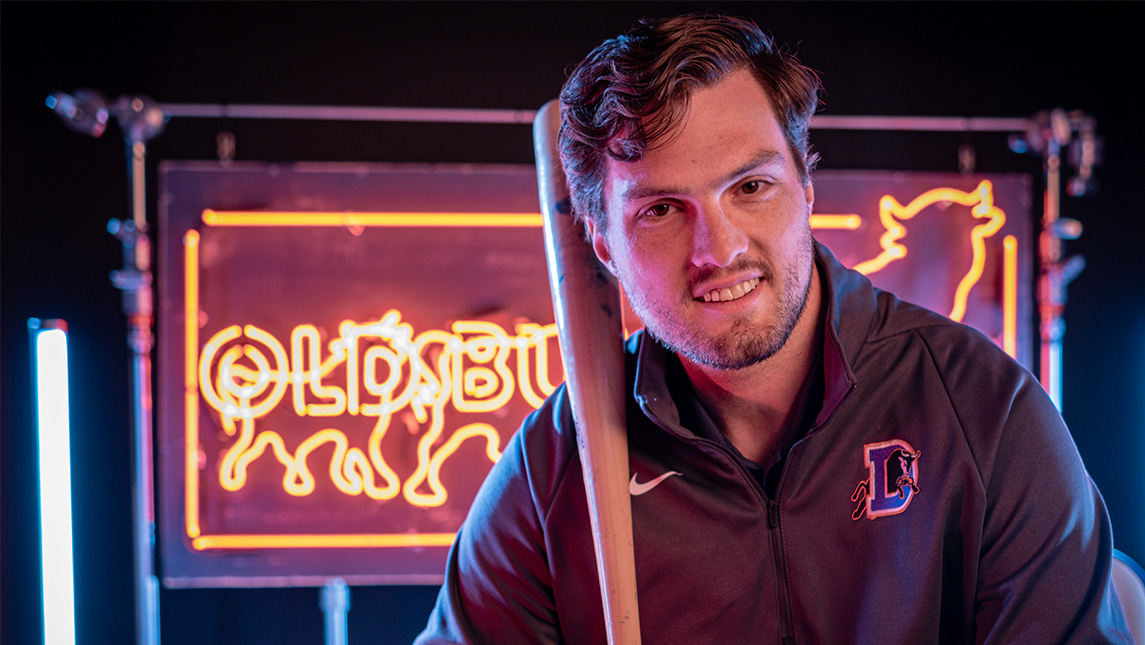
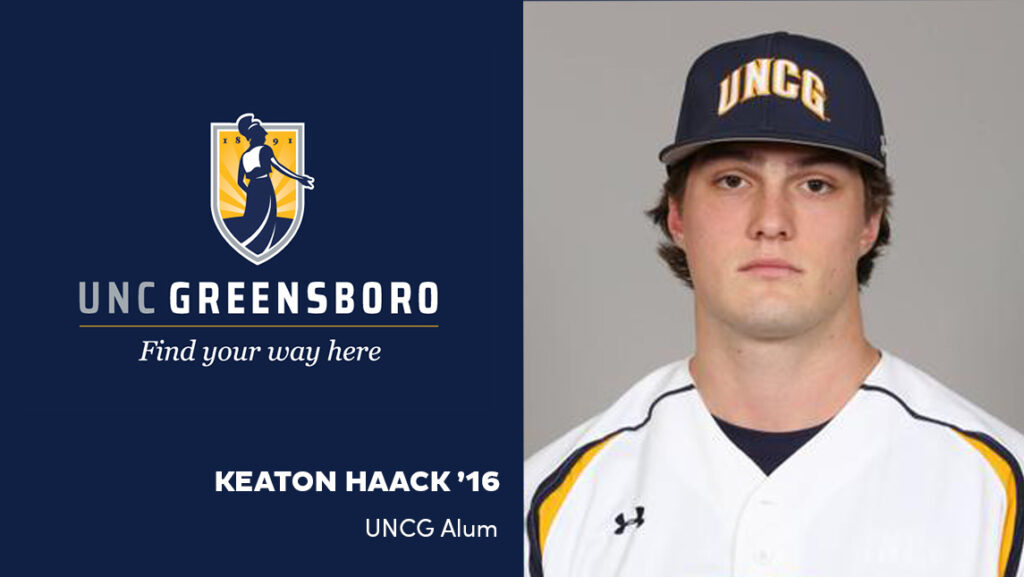
Since graduating from UNC Greensboro in 2016, former Spartan baseball player Keaton Haack ’16 has been able to keep his love of the game in a successful career.
“UNCG molded me from the day I walked into my first job,” says Haack.
Haack is originally from Guilford County and attended Northwest Guilford High School, where he also played baseball. He racked up multiple accolades early in his career, being named the 2011 Most Valuable Pitcher for Northwest Guilford and the 2011 Perfect Game Preseason High School underclassmen All-American.
BACK TO HOME PLATE
When looking at universities, he wanted to continue his baseball career and decided to go out of state. But the draw of home brought him back.
“I decided to go home where I felt comfortable. I knew that the UNCG baseball team was on the rise so it was an easy choice,” he says.
Finding his way to UNCG was one choice, but finding the right major was something else.
“I started as a biology major, wanting to go the medical school route,” Haack says. “But then I realized I had this innate ability with business and sales. I think a lot of athletes are good with business because we command a room and can have a lot of leadership potential.”
Haack says he also wanted to follow in the footsteps of his father, who has been an influential business leader throughout his career.
“It was an easy choice for me to choose business,” he says. “I didn’t necessarily know what I wanted to do in the business world though.”
FOCUS IN THE FIELD
The Bryan School did help Haack narrow down what field of business he wanted to pursue and, after graduation, he knew sports needed to be part of his life.
“I started applying to a bunch of corporate jobs in the area and I had a couple of interviews, but I felt like it wasn’t for me,” he says. “I knew sports was my passion.”
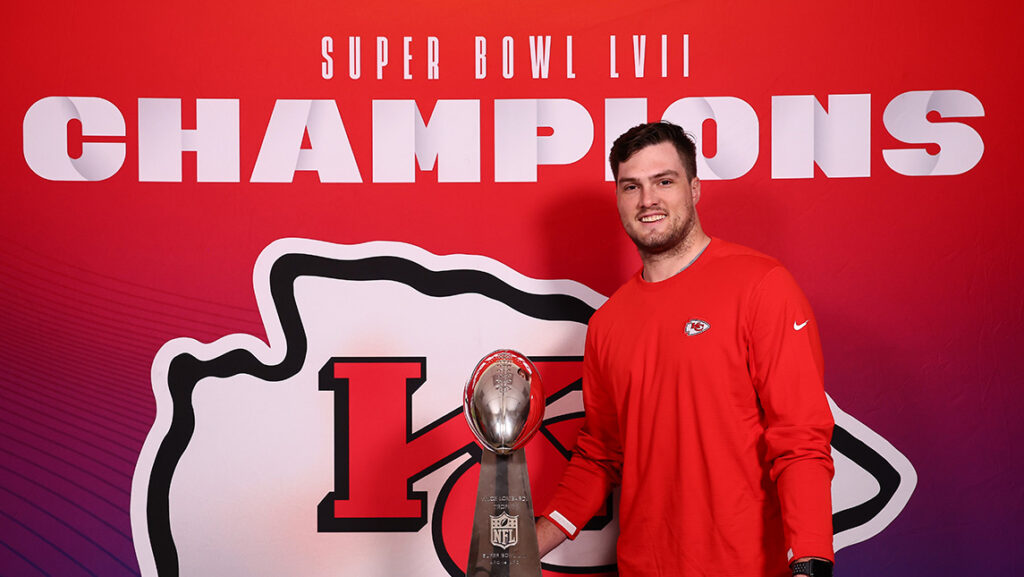
In 2018 he landed a position working in sales for the Kansas City Chiefs, something he says UNCG uniquely prepared him for.
“One of the best experiences at UNCG was my professional selling class. It taught you about consumer behavior and how to shape your selling techniques,” he says. “UNCG pushes you to think outside of the box and create your own path, which I appreciated. There was always a drive to push me to become a better person, student, and an athlete.”
COACHING COMMUNICATION
It wasn’t just his classes in the Bryan School that prepared Haack for his career, but his baseball experience as well.
“My coaches helped me adapt my communication styles and to understand different leadership styles,” he says. “My teammates also pushed me, and they were very kind and accepting when I came to the University.”
In April 2022, Haack made another homecoming – returning to North Carolina to work for the Durham Bulls as he and his wife began to start a family. His advice for students who want to get into the sports marketing world: don’t take no for an answer.
“Sports is one of the harder industries to get into, but it’s very satisfying,” he says. “And if it’s what you want to do, if it’s a passion, then it will be rewarding in the end.”
Story by Avery Craine Powell, University Communications Photography courtesy of Keaton Haackand UNCG Athletics
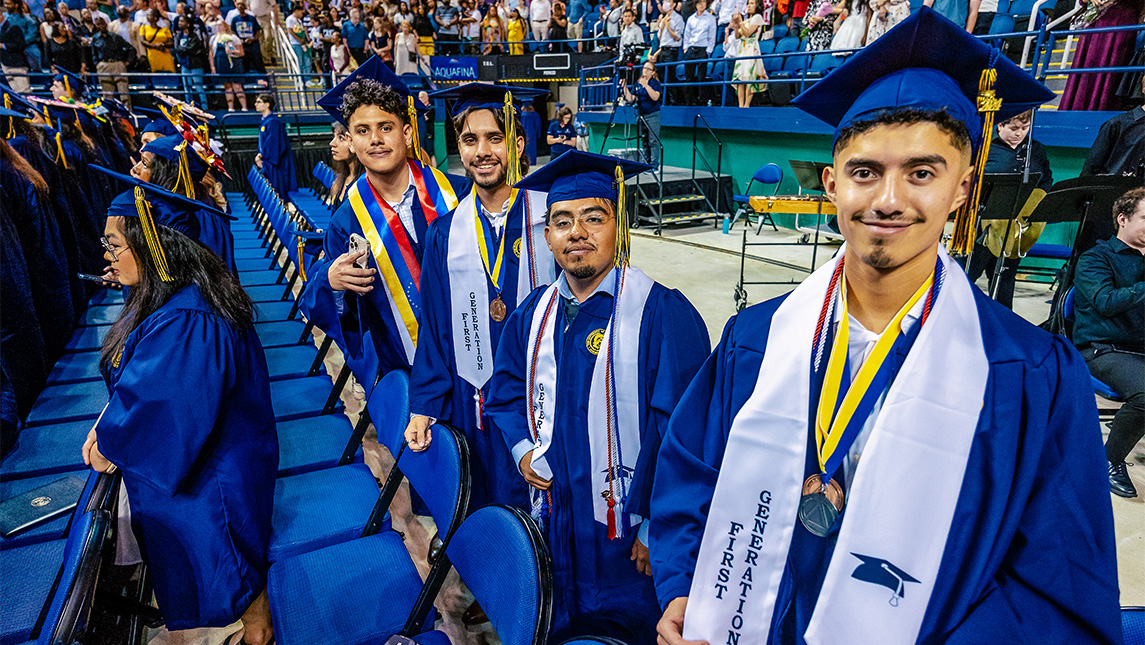
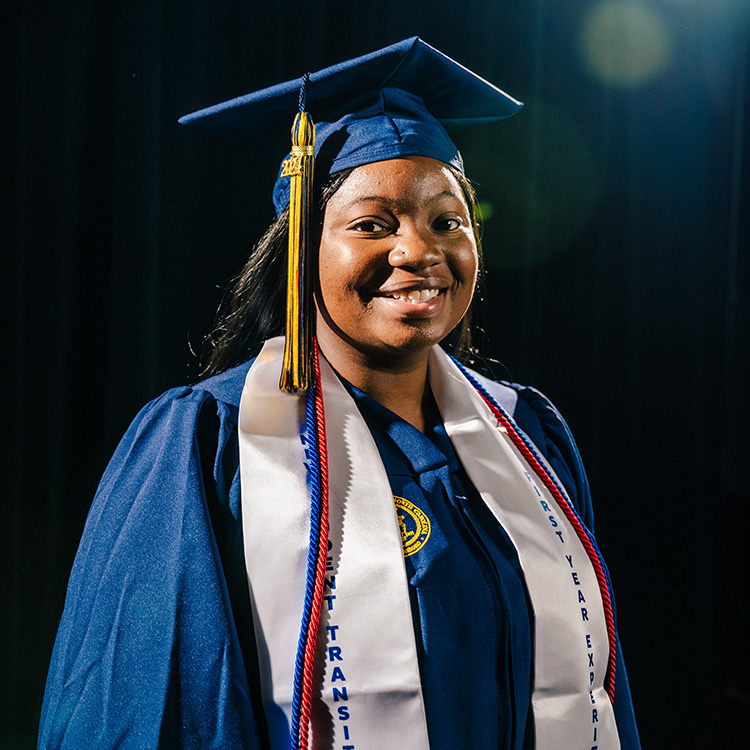
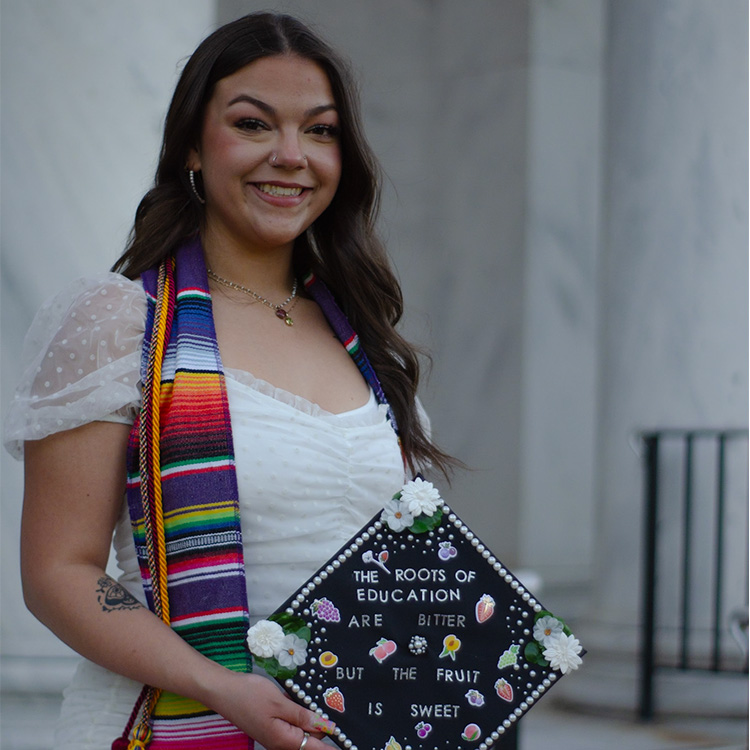
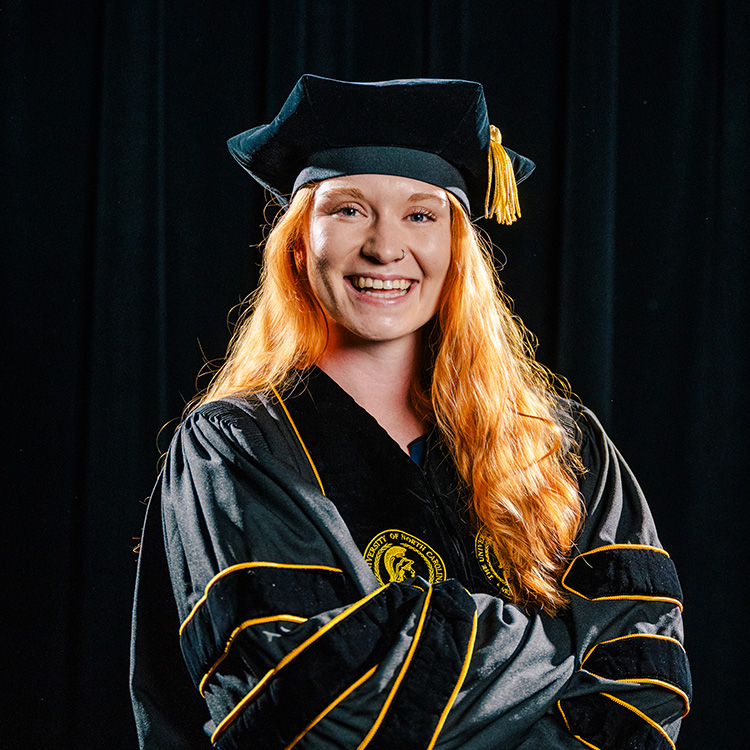
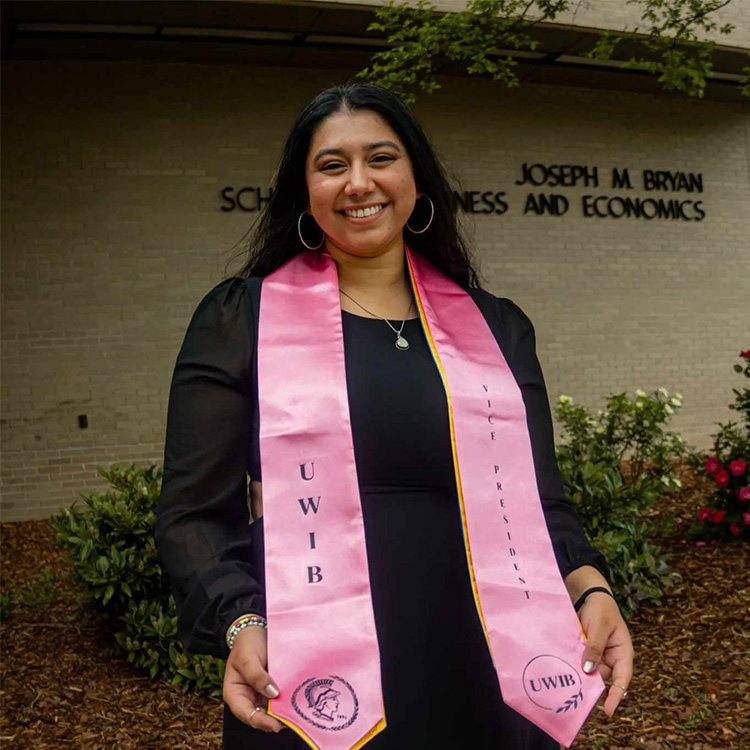
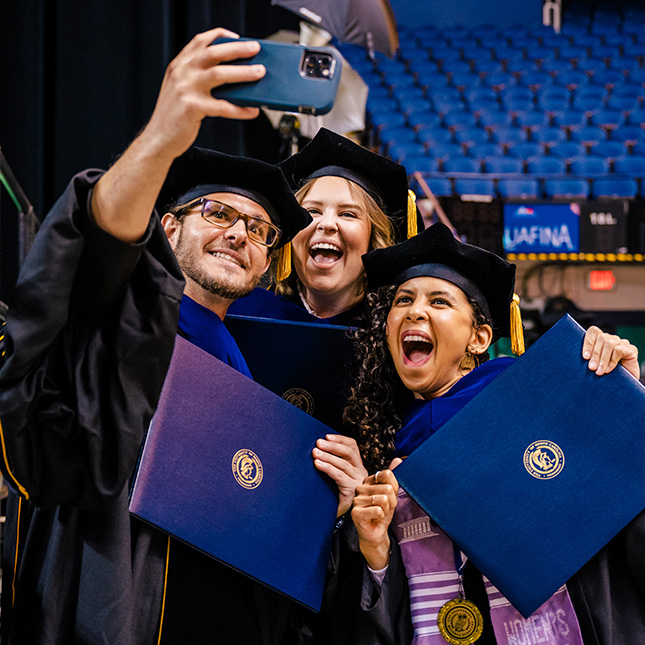
UNC Greensboro’s Class of 2024 is embarking on their next big adventure. They’re bringing their celebrations to a close and reflecting on the memories they made on campus. UNCG knows they will put their knowledge to good use, creating remarkable, real-world impact every day, and the University does not want that wisdom to be lost on campus.
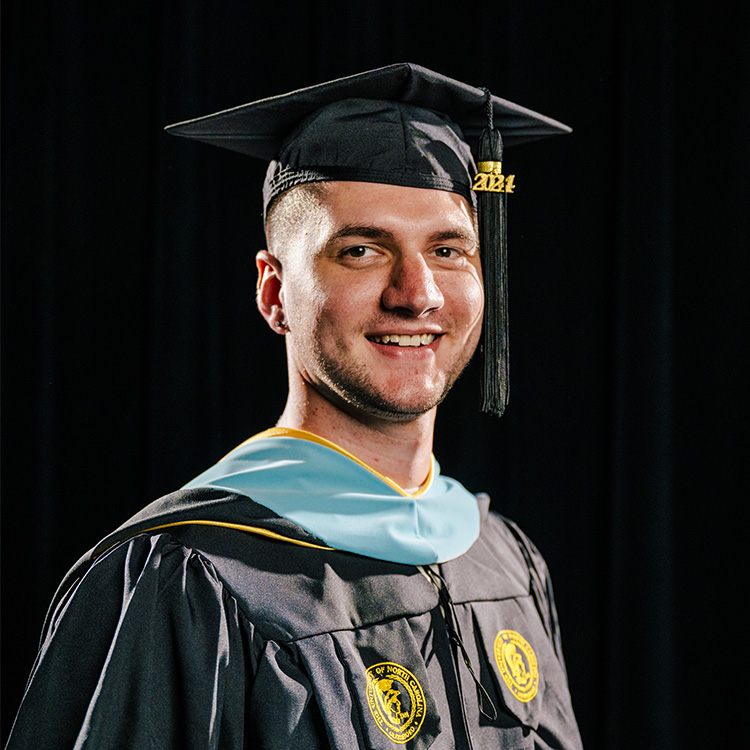
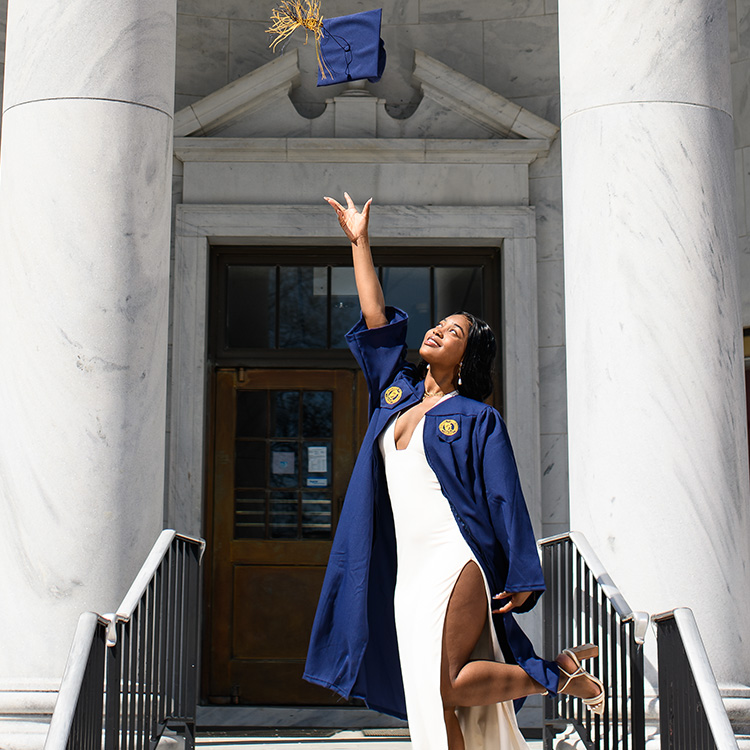
Some of this year’s graduates left a message for another set of seniors, specifically those graduating from high school and preparing for that move into higher education in the fall. This is the wisdom they want to pass on to the next generation of Spartans.
Explore all the potential career paths that can come from this major and build relationships with your professors because they genuinely care about your growth and success.
Build strong and meaningful relationships! Communicate with your professors, get to know your roommates and Resident Advisors, connect with UNCG staff members, etc. College is a connection point to wonderfully diverse people, experiences, and knowledge – you just have to seek it out. Eventually, you will leave with a degree (or degrees), but the people you met along the way will hold a very special place in your life.
I advise new students to get involved in whatever capacity works best for and excites them. Being involved helps you feel more a part of the community and builds a sense of belonging. That being said, also learn to protect your time and health. Knowing your limitations and honoring them is a strength!
There is no right path to discover who you are and what you want. Be brave and take chances. This campus gives you the opportunity to find new communities and new interests every single day, and taking advantage of that is the reason for my success here. It’s up to you how much you squeeze out of this experience.
Never settle. One of the many things my faculty members did well was push students to see themselves creating positive change in our field. They instilled a desire to be changemakers at the forefront of the field, and they provided the knowledge and resources to do just that, but it takes drive from the student to achieve that.
Graduating high school is no easy feat, so you should celebrate every single step of the way. Don’t be too nervous about college; I know your teachers have told you about how strict and scary and difficult it is, but it’s far from it. In the least stereotypical cliche way, college is a place where you simply grow as a person into a young adult. As long as you can manage your time to balance work and play, you’ll be perfectly fine and have more free time than you think.
Story by Janet Imrick, University Communications Photography by Sean Norona, University Communications; and courtesy of Ayana Cholula, Pooja Tadepalli, and Trinity Shealy
CELEBRATE OUR GRADS!
Graduates and their families are encouraged to share their accomplishments on social media by tagging the University accounts and using the hashtags #UNCGGrad and #UNCGWay. Visit UNCG’s digital swag page for graduation-themed graphics, filters, and templates.
Mention @UNCG in celebratory posts on Instagram and X and @uncgreensboro on TikTok.