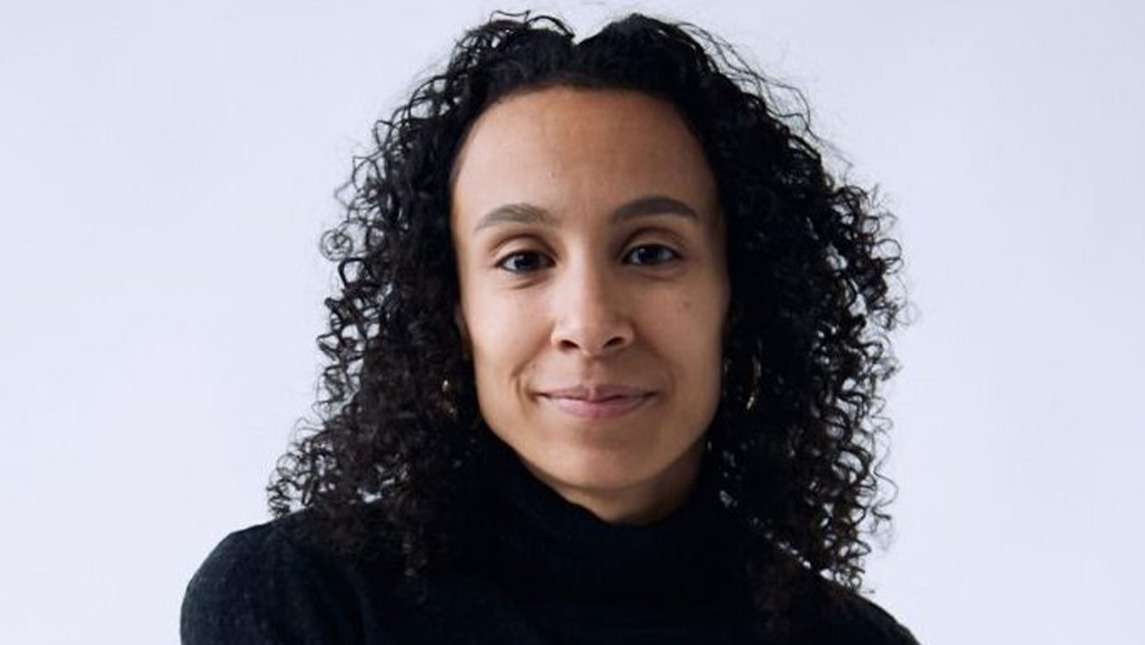
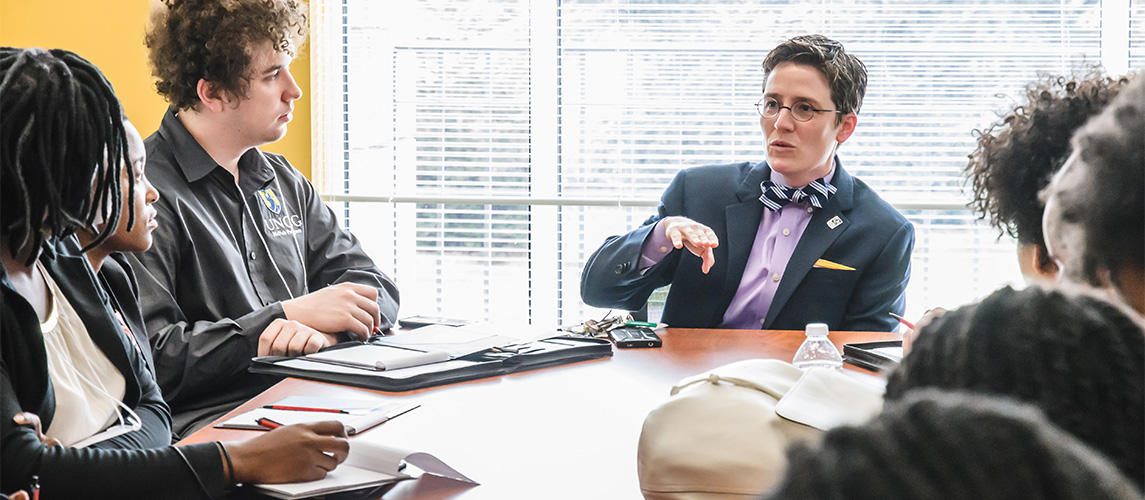
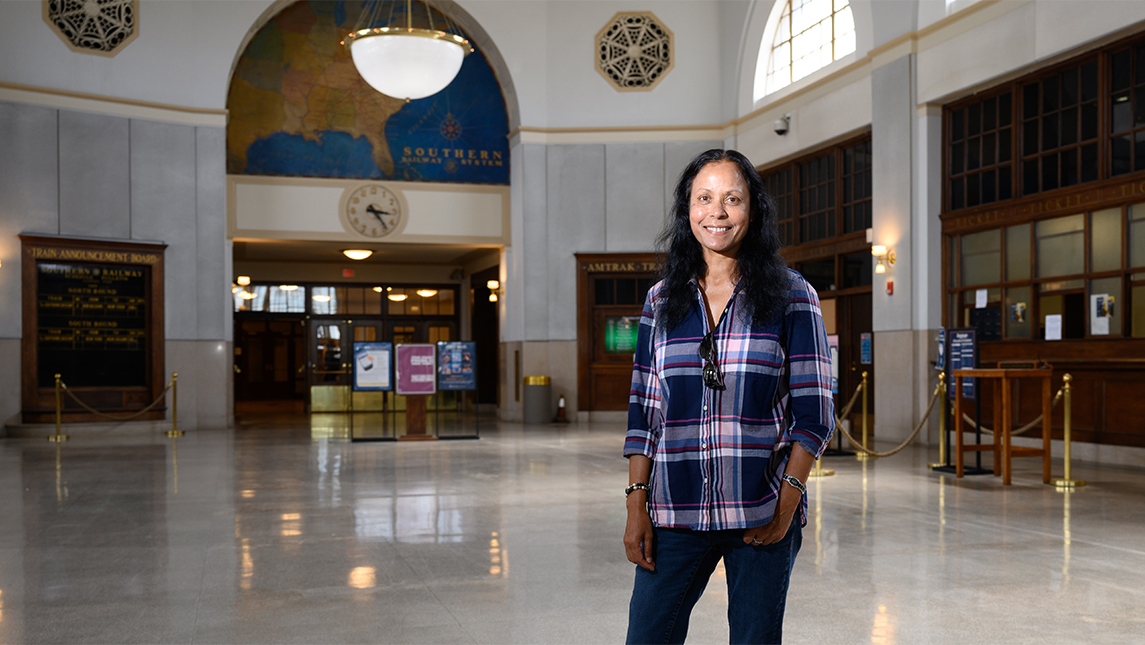
Assistant Professor of Dance Marielis Garcia has been a teaching artist since she was barely a teenager—a gutsy teenager who knew exactly what she wanted and wasn’t afraid to ask for it.
UNCG Alum Makes It Home with Durham Bulls Marketing
Posted on May 06, 2024
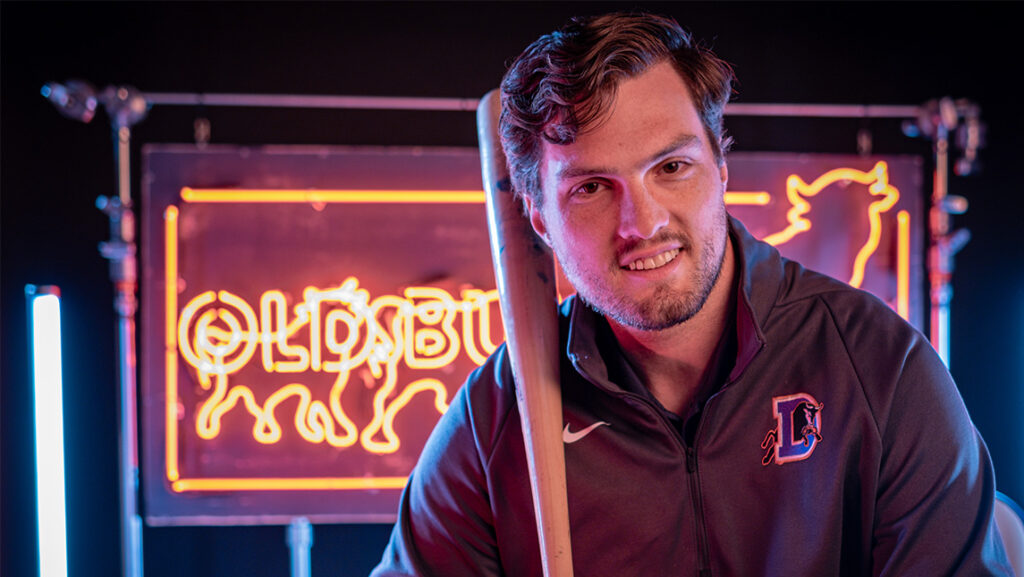
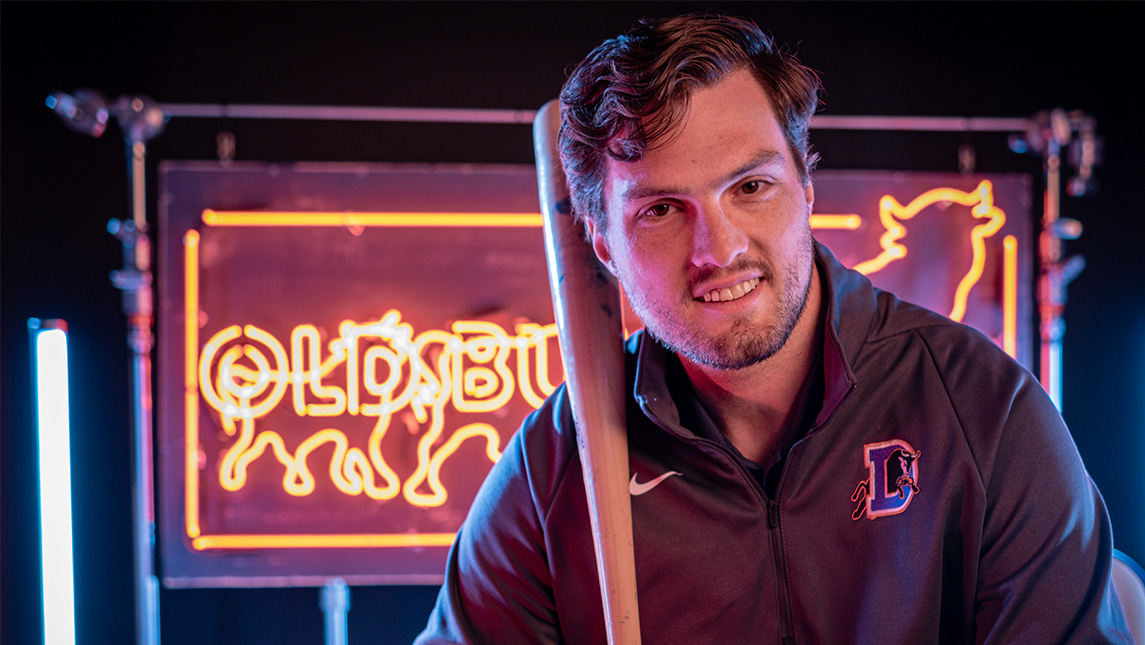
Since graduating from UNC Greensboro in 2016, former Spartan baseball player Keaton Haack ’16 has been able to keep his love of the game in a successful career.
“UNCG molded me from the day I walked into my first job,” says Haack.
Haack is originally from Guilford County and attended Northwest Guilford High School, where he also played baseball. He racked up multiple accolades early in his career, being named the 2011 Most Valuable Pitcher for Northwest Guilford and the 2011 Perfect Game Preseason High School underclassmen All-American.
BACK TO HOME PLATE
When looking at universities, he wanted to continue his baseball career and decided to go out of state. But the draw of home brought him back.
“I decided to go home where I felt comfortable. I knew that the UNCG baseball team was on the rise so it was an easy choice,” he says.
Finding his way to UNCG was one choice, but finding the right major was something else.
“I started as a biology major, wanting to go the medical school route,” Haack says. “But then I realized I had this innate ability with business and sales. I think a lot of athletes are good with business because we command a room and can have a lot of leadership potential.”
Haack says he also wanted to follow in the footsteps of his father, who has been an influential business leader throughout his career.
“It was an easy choice for me to choose business,” he says. “I didn’t necessarily know what I wanted to do in the business world though.”
FOCUS IN THE FIELD
The Bryan School did help Haack narrow down what field of business he wanted to pursue and, after graduation, he knew sports needed to be part of his life.
“I started applying to a bunch of corporate jobs in the area and I had a couple of interviews, but I felt like it wasn’t for me,” he says. “I knew sports was my passion.”
In 2018 he landed a position working in sales for the Kansas City Chiefs, something he says UNCG uniquely prepared him for.
“One of the best experiences at UNCG was my professional selling class. It taught you about consumer behavior and how to shape your selling techniques,” he says. “UNCG pushes you to think outside of the box and create your own path, which I appreciated. There was always a drive to push me to become a better person, student, and an athlete.”
COACHING COMMUNICATION
It wasn’t just his classes in the Bryan School that prepared Haack for his career, but his baseball experience as well.
“My coaches helped me adapt my communication styles and to understand different leadership styles,” he says. “My teammates also pushed me, and they were very kind and accepting when I came to the University.”
In April 2022, Haack made another homecoming – returning to North Carolina to work for the Durham Bulls as he and his wife began to start a family. His advice for students who want to get into the sports marketing world: don’t take no for an answer.
“Sports is one of the harder industries to get into, but it’s very satisfying,” he says. “And if it’s what you want to do, if it’s a passion, then it will be rewarding in the end.”
Story by Avery Craine Powell, University Communications Photography courtesy of Keaton Haackand UNCG Athletics
UNC Greensboro’s Class of 2024 is embarking on their next big adventure. They’re bringing their celebrations to a close and reflecting on the memories they made on campus. UNCG knows they will put their knowledge to good use, creating remarkable, real-world impact every day, and the University does not want that wisdom to be lost on campus.
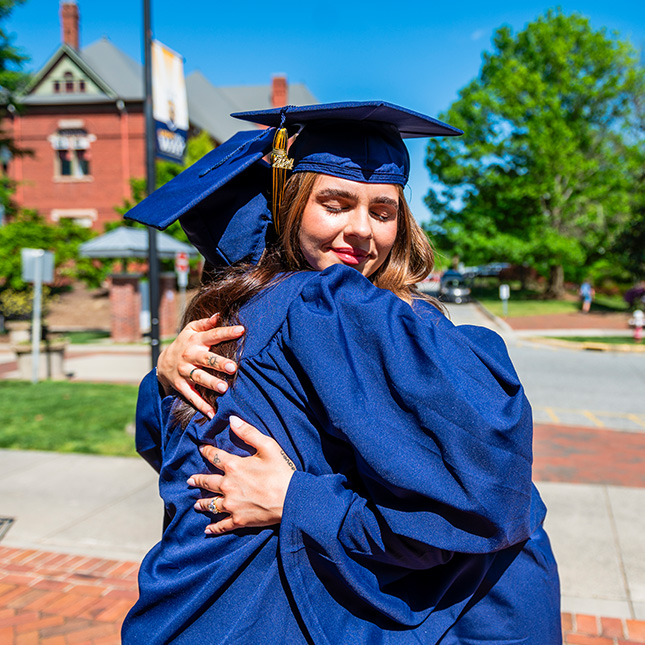
Some of this year’s graduates left a message for another set of seniors, specifically those graduating from high school and preparing for that move into higher education in the fall. This is the wisdom they want to pass on to the next generation of Spartans.
Explore all the potential career paths that can come from this major and build relationships with your professors because they genuinely care about your growth and success.
Build strong and meaningful relationships! Communicate with your professors, get to know your roommates and Resident Advisors, connect with UNCG staff members, etc. College is a connection point to wonderfully diverse people, experiences, and knowledge – you just have to seek it out. Eventually, you will leave with a degree (or degrees), but the people you met along the way will hold a very special place in your life.
I advise new students to get involved in whatever capacity works best for and excites them. Being involved helps you feel more a part of the community and builds a sense of belonging. That being said, also learn to protect your time and health. Knowing your limitations and honoring them is a strength!
There is no right path to discover who you are and what you want. Be brave and take chances. This campus gives you the opportunity to find new communities and new interests every single day, and taking advantage of that is the reason for my success here. It’s up to you how much you squeeze out of this experience.
Never settle. One of the many things my faculty members did well was push students to see themselves creating positive change in our field. They instilled a desire to be changemakers at the forefront of the field, and they provided the knowledge and resources to do just that, but it takes drive from the student to achieve that.
Graduating high school is no easy feat, so you should celebrate every single step of the way. Don’t be too nervous about college; I know your teachers have told you about how strict and scary and difficult it is, but it’s far from it. In the least stereotypical cliche way, college is a place where you simply grow as a person into a young adult. As long as you can manage your time to balance work and play, you’ll be perfectly fine and have more free time than you think.
Story by Janet Imrick, University Communications Photography by Sean Norona, University Communications; and courtesy of Ayana Cholula, Pooja Tadepalli, and Trinity Shealy
CELEBRATE OUR GRADS!
Graduates and their families are encouraged to share their accomplishments on social media by tagging the University accounts and using the hashtags #UNCGGrad and #UNCGWay. Visit UNCG’s digital swag page for graduation-themed graphics, filters, and templates.
Mention @UNCG in celebratory posts on Instagram and X and @uncgreensboro on TikTok.
New Leaders, Educators, and Innovators from UNCG Are Ready for Life’s Next Journey
Posted on May 03, 2024
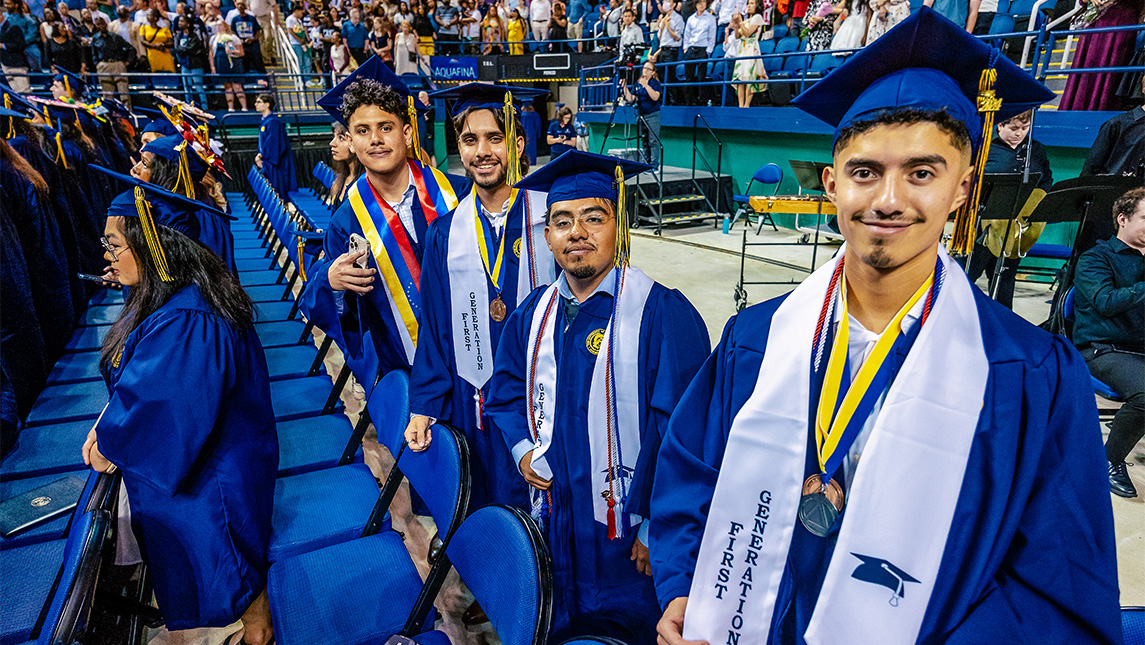
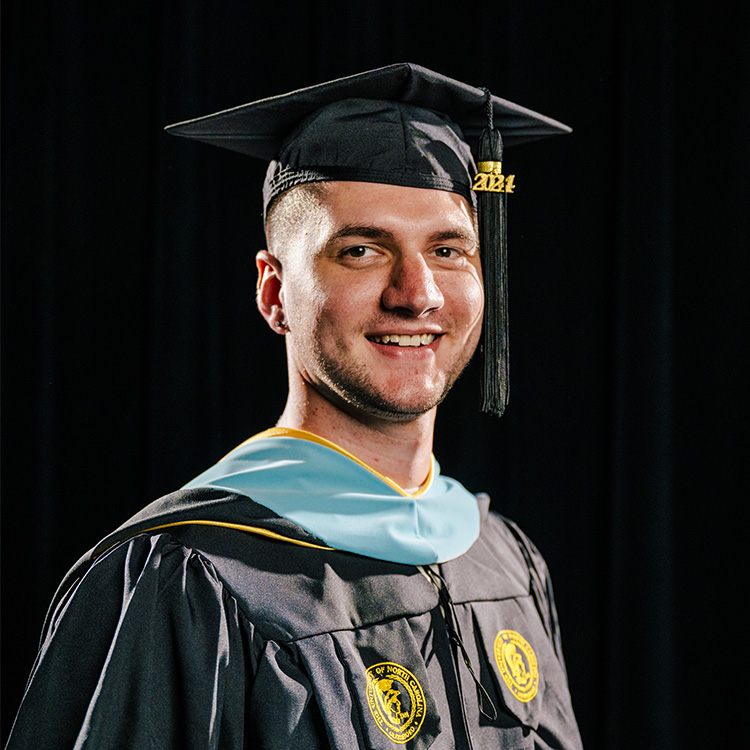
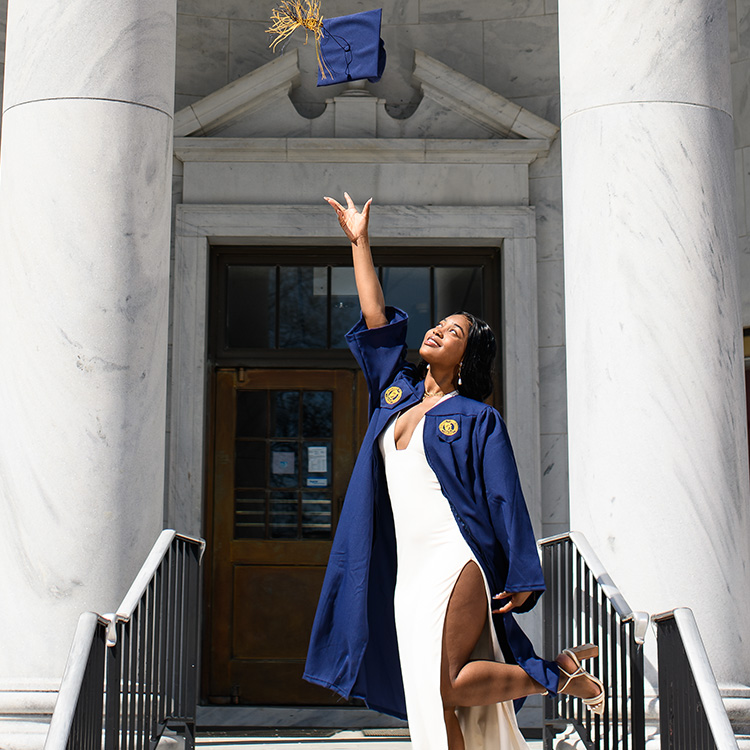
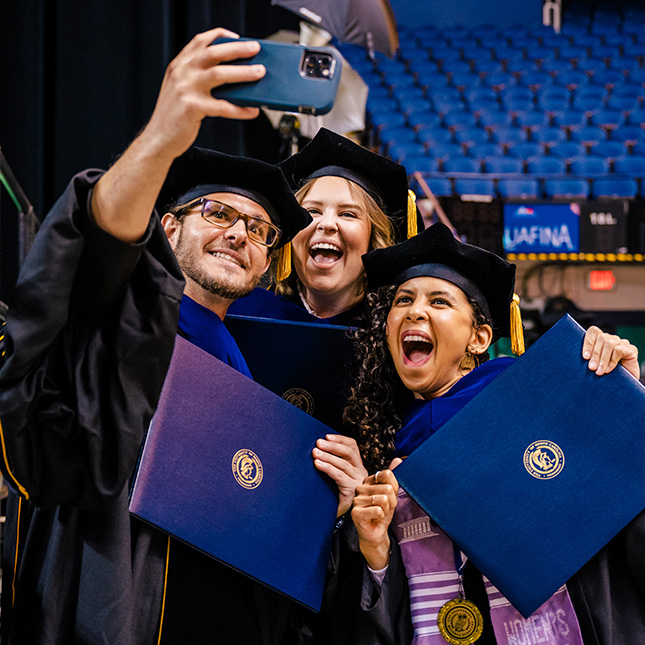
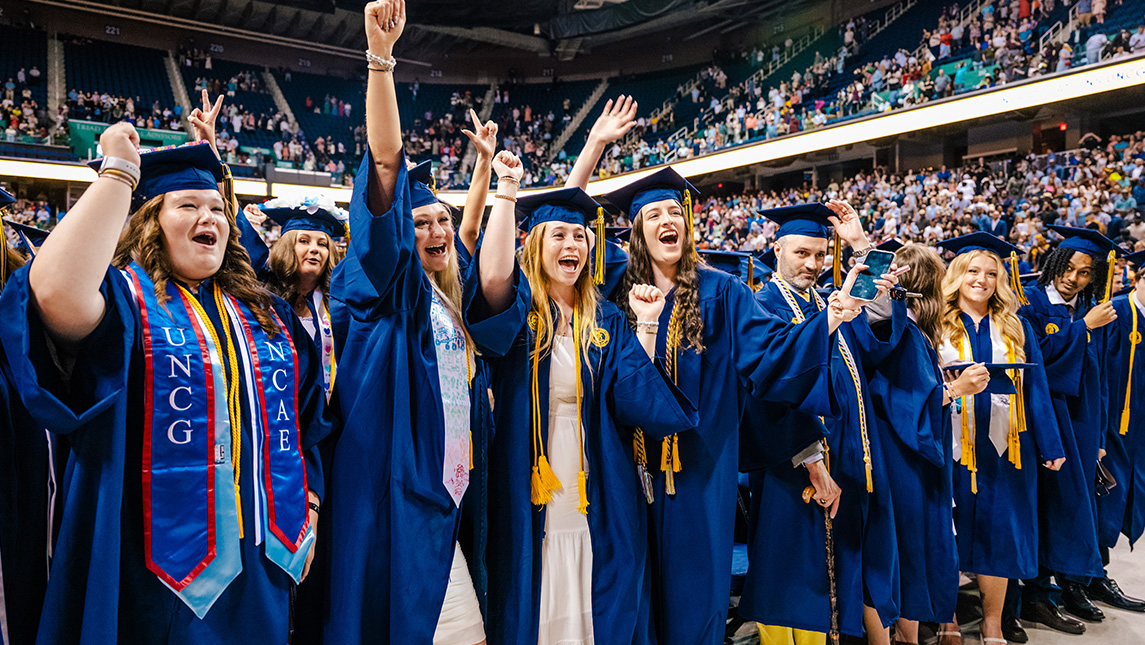
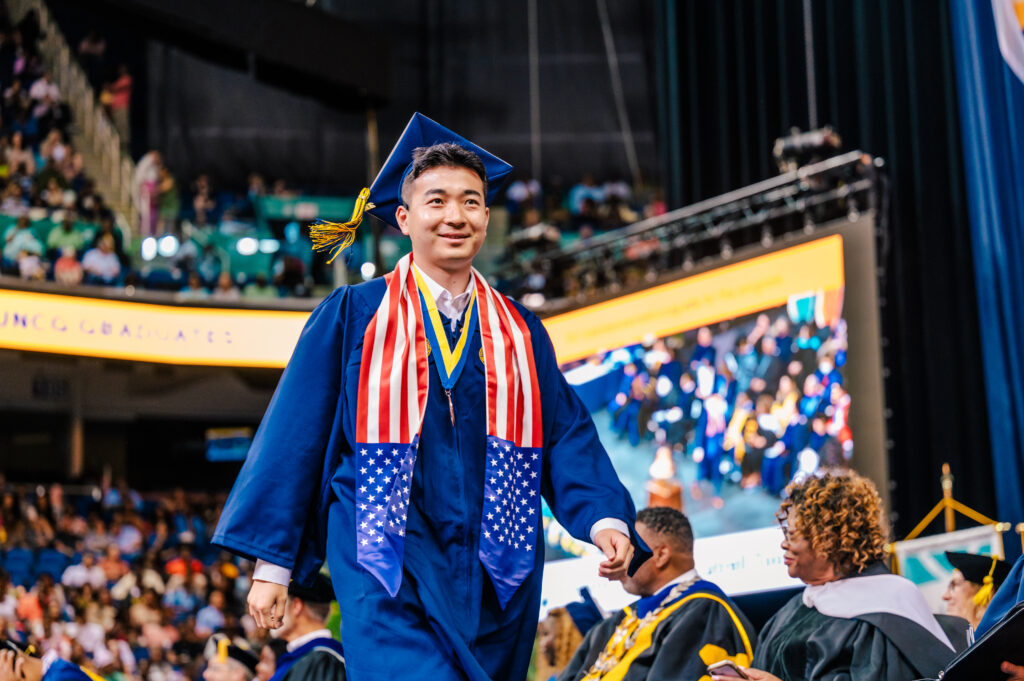
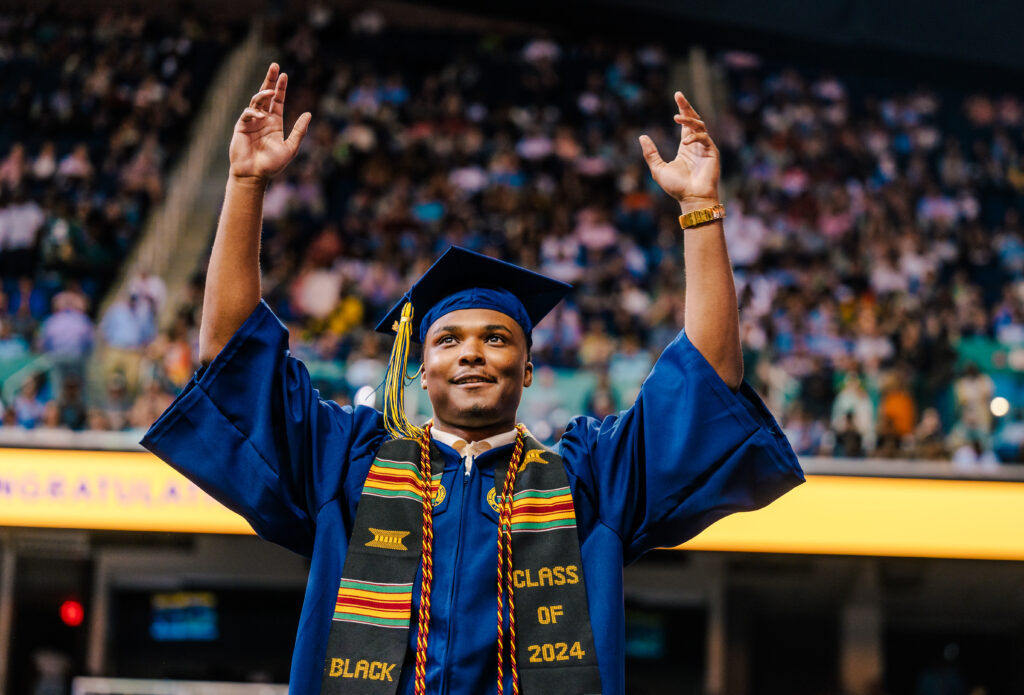
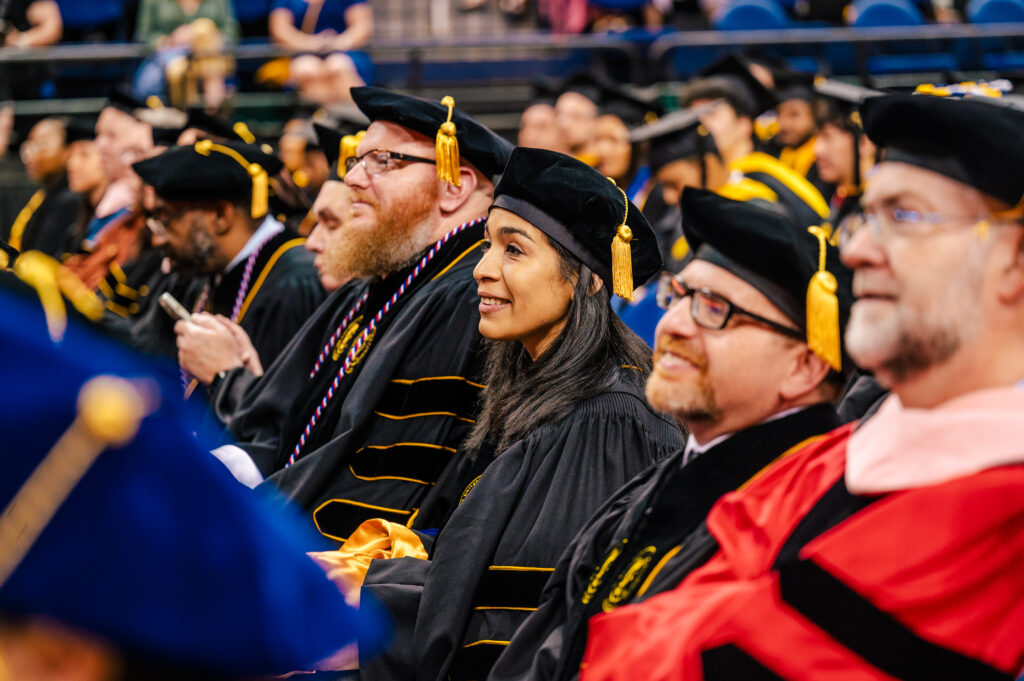
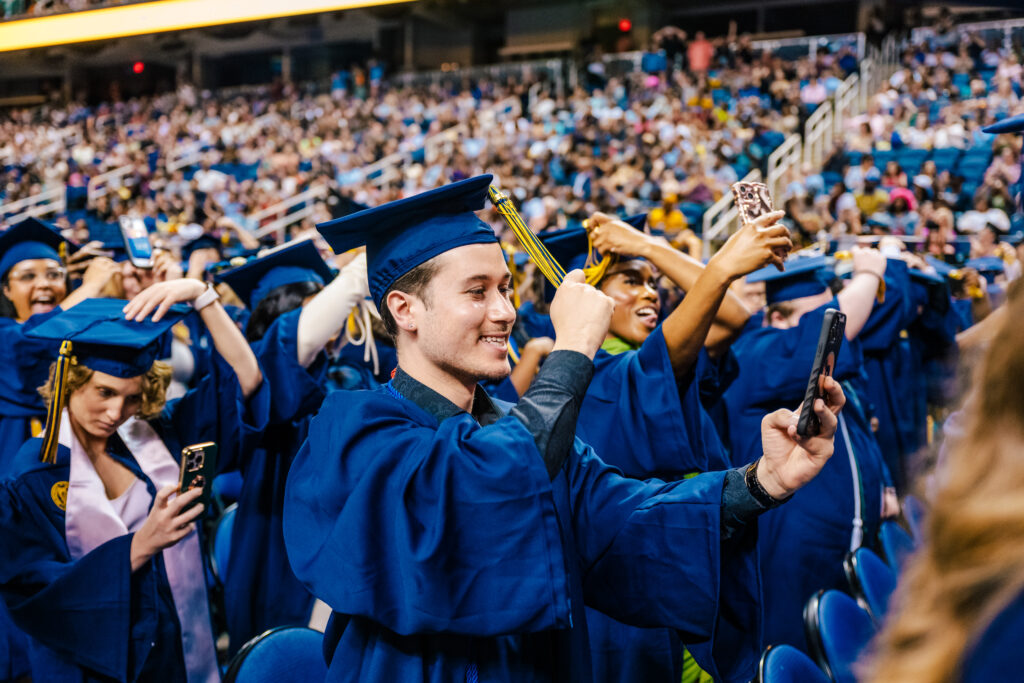
Cheers and tears of joy were shared among UNC Greensboro’s newest alumni, as their faculty and family members saw them complete their journey to the Spring 2024 Commencement ceremonies.
Embrace the transformation
When Abby Barley ’24 addressed her fellow graduates at the undergraduate ceremony, she reflected on everything it took to reach that moment – the commitments they made to themselves and to their friends and fellow students. She celebrated their hard work and how they rose above their anxiety or mistakes, embracing every instance as another step in a transformative experience.
“At our core, we are the same. With each interaction, we deepen our sense of self,” said Barley, shortly before earning her diploma for a bachelor of science in consumer, apparel, and retail studies from the Bryan School of Business and Economics. “The hardships we face along the way may feel relentless, but if we are a little happier, a bit healthier, and an ounce more authentic at the end of it, then we know it is the hardships that have allowed us to grow.”
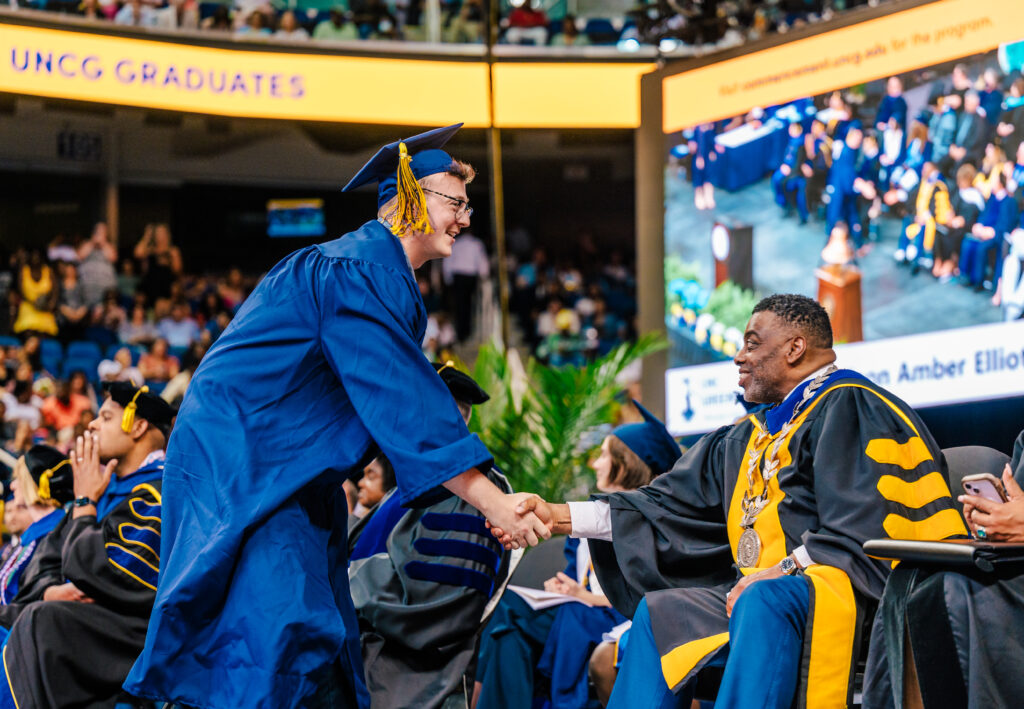
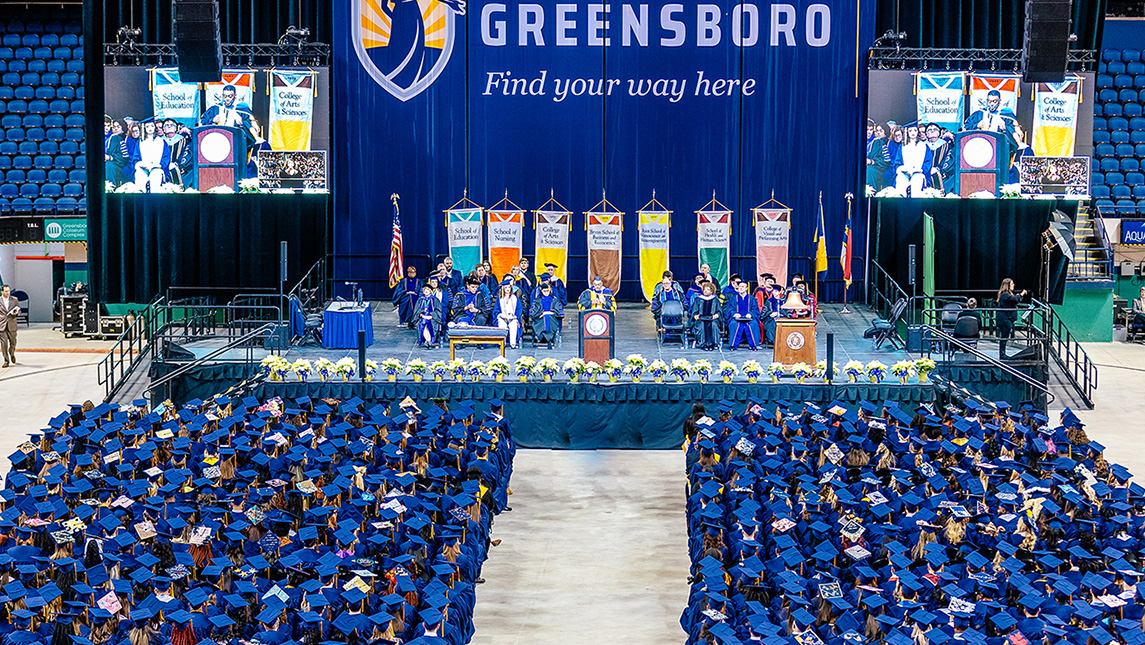
As the student speaker of UNCG’s undergraduate Commencement ceremony on May 3, Barley got to congratulate more than 2,000 Spartans getting their bachelor degrees, while their families and friends cheered from the stands of the Greensboro Coliseum.
“For many of us, college was the first opportunity for independence and separation. Leaving a hometown, living independently, or supporting oneself are a few stories of the multitudes we hear. It is an exciting, anxiety-inducing, and overwhelming journey.”
Change the world
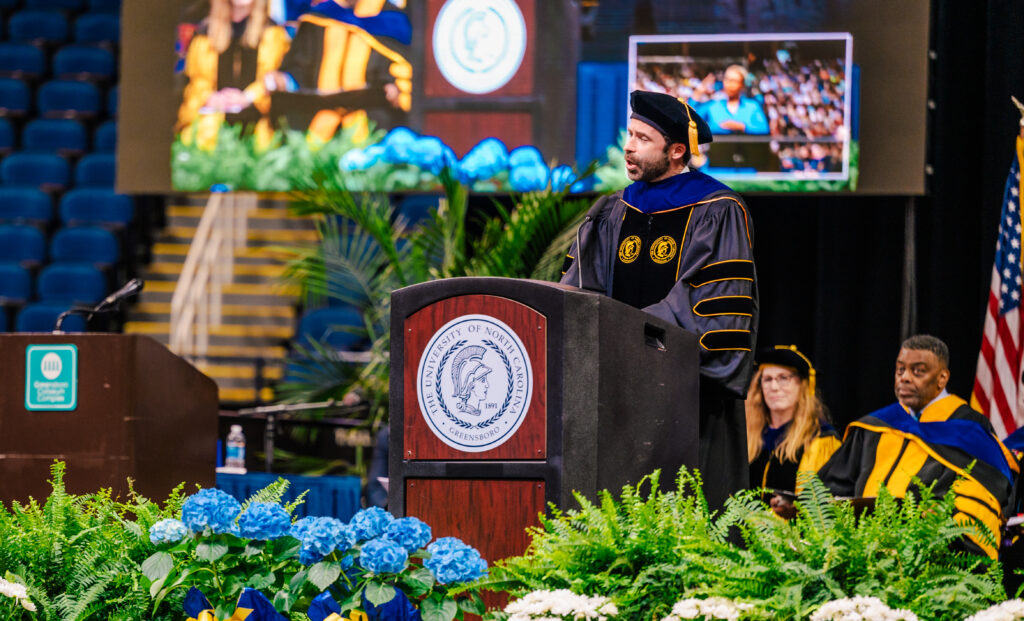
Dr. Anthony Dellinger addresses the masters and doctoral candidates.
Dr. Anthony Dellinger addresses the masters and doctoral candidates.
Dr. Anthony Dellinger addresses the masters and doctoral candidates.
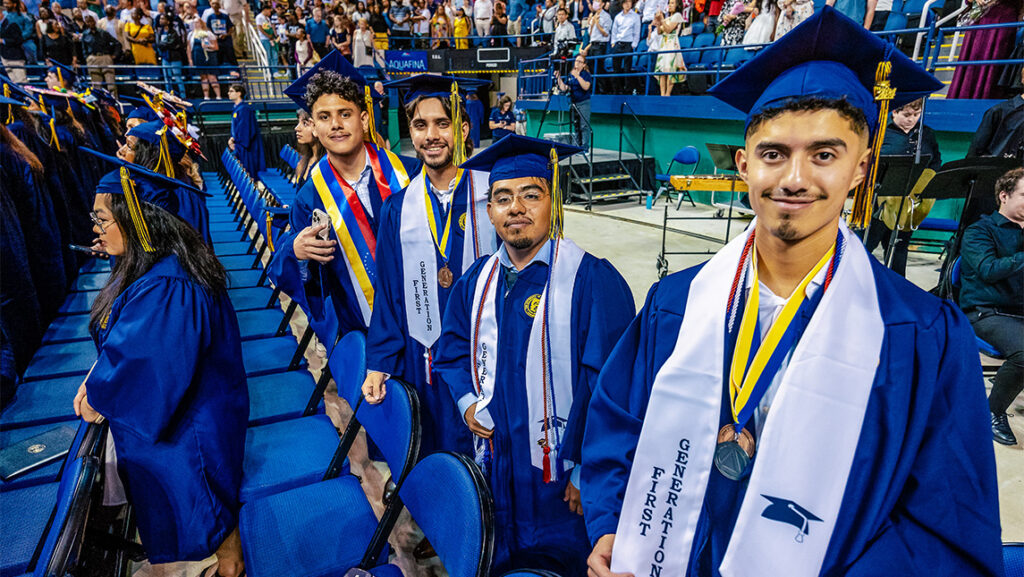
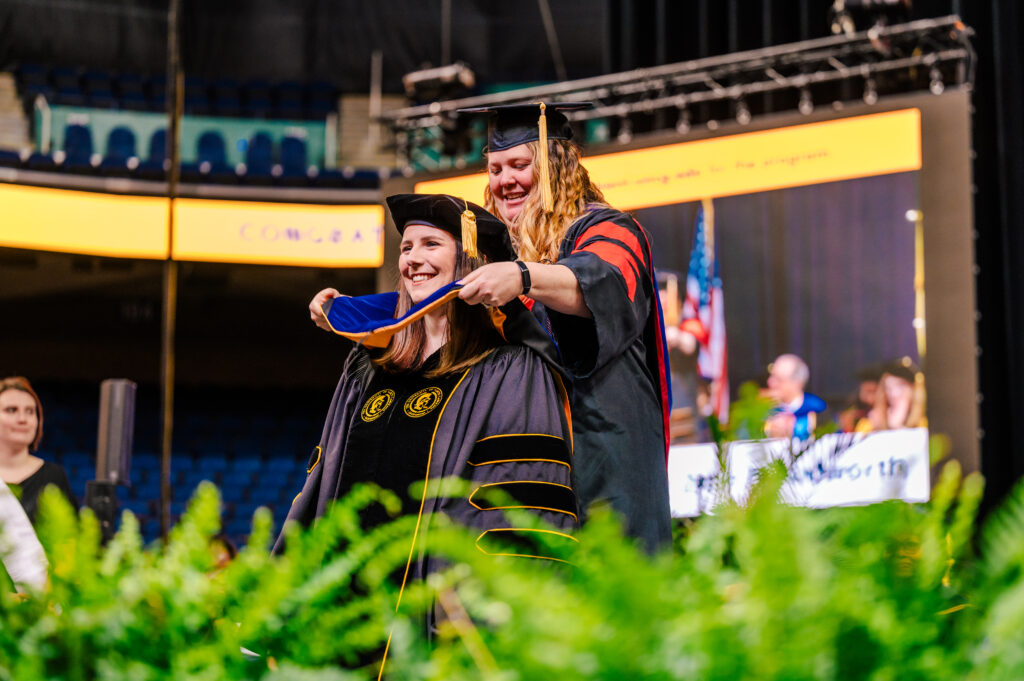
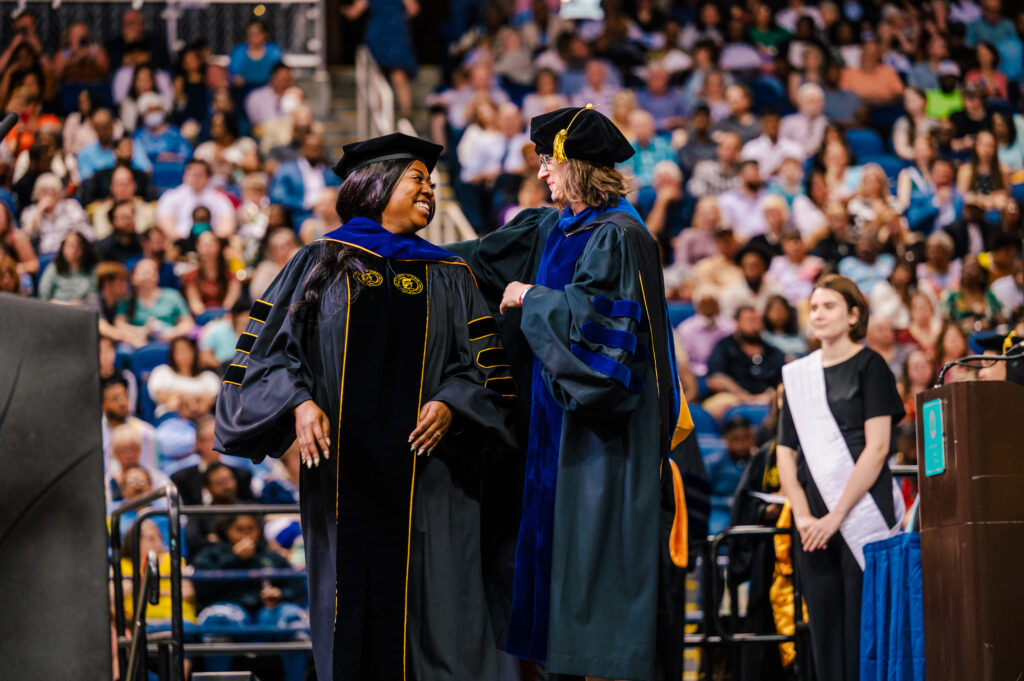
First to cross the stage as the UNCG Class of 2024, were 610 master and 104 doctoral candidates receiving hoods from their mentors in a ceremony on May 2.
Chancellor Franklin Gilliam addressed them proudly as “experts in a highly specialized field of study who have been empowered to make new discoveries and develop new knowledge in order to make a real-world impact.”
Nanoscientist, entrepreneur, and inventor Dr. Anthony Dellinger ’14 delivered the keynote address. Dellinger, who earned a PhD in nanoscience from the Joint School of Nanoscience and Nanoengineering introduced himself to the graduates as a “representative of a community that thrives on scholarship, innovation and dreams.”
“Harness your mind and unwavering determination to change the world,” he advised the master and doctoral candidates. “Be a polymath, be an innovator, be a thinker, be a leader, and be a catalyst for change.”
The nearly 2,900 graduates join the ranks of alumni, armed with new knowledge and a solid network of peers and educators read to help them on their next journey, whether that’s as the owner of a business, a nurse in the emergency room, or a teacher in the classroom.
Like Spartans who have gone before them, they’ve proved they have what it takes to fuel the future. In the meantime, Chancellor Gilliam urged them to live in the moment.
He said, “You’ve now demonstrated commitment, resilience, and transformative academic and personal growth. And you’ve become part of the Spartan family.”
Story by Janet Imrick and Becky Deakins, University Communications Photography by Sean Norona, University Communications; and Bert VanderVeen, VanderVeen Photographers Videography by Grant Evan Gilliard, David Lee Row, Jaysen Buterin, University Communications Video editing by Grant Evan Gilliard, University Communications Video written by Janet Imrick, University Communications
CELEBRATE OUR GRADS!
Graduates and their families are encouraged to share their accomplishments on social media by tagging the University accounts and using the hashtags #UNCGGrad and #UNCGWay. Visit UNCG’s digital swag page for graduation-themed graphics, filters, and templates.
Mention @UNCG in celebratory posts on Instagram and X and @uncgreensboro on TikTok.
Retiring UNCG Entrepreneurship Professor Shares Business Sense
Posted on May 03, 2024
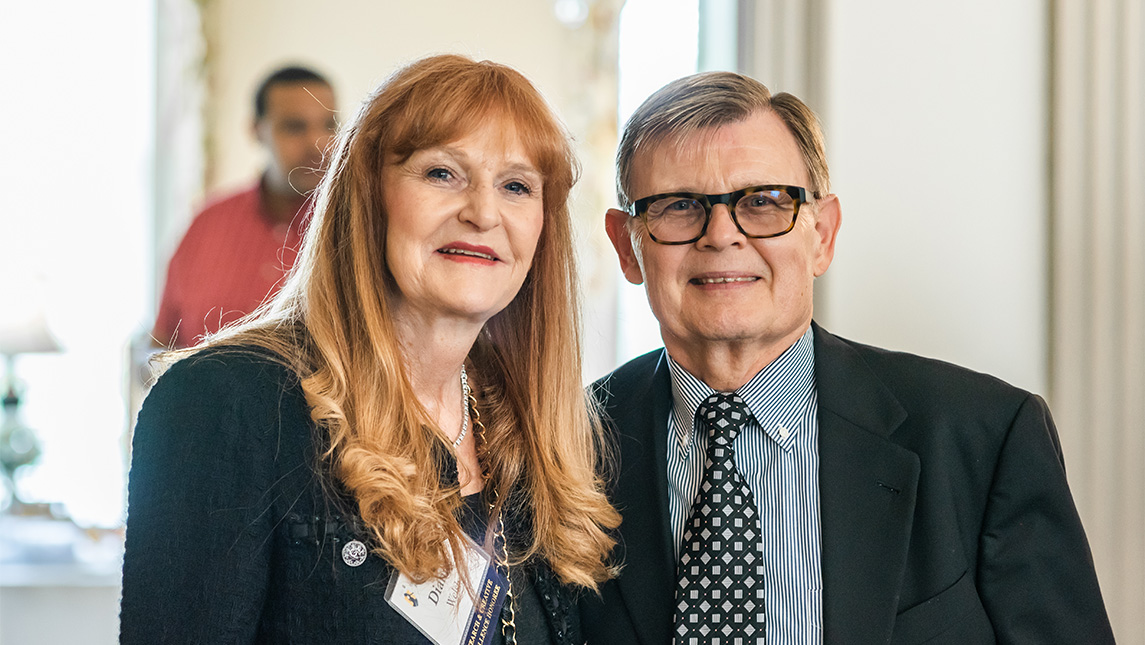
Dr. Dianne Welsh at UNCG's 2019 Faculty Awards Ceremony.
Dr. Dianne Welsh, Hayes Distinguished Professor of Entrepreneurship and Founding Director of UNC Greensboro’s Entrepreneurship Program in the Bryan School of Business and Economics was featured on podcasts “Family Business Today” and “She Means Profit.”
This year, Welsh was honored with a lifetime achievement award for entrepreneurship from the United States Association for Small Business and Entrepreneurship.
Welsh retires this summer, ending 15 years of teaching students and inspiring new entrepreneurs and business-minded individuals at UNCG.
Keeping it in the family
In “Family Business Today,” hosted by Greg Lewis, Welsh shares insight on her new book called “Entrepreneurial Family Business: From Survival to Success.” Welsh talks about her personal experiences and their influence on her perspective of family business and entrepreneurship.
“Every generation has to be entrepreneurial to survive and be successful. One of the main things I bring home is to model entrepreneurship and teach entrepreneurship.” Welsh said.
Some of her key messages include the evolving landscape of family business leadership, the importance of being open-minded when considering successors, diversity in leadership, and the significance of instilling an entrepreneurial mindset.
In “She Means Profit,” hosted by Melissa Houston, Welsh focuses on the theme of “Cultivating an Entrepreneurial Mindset for Success.” She speaks of the importance of having an entrepreneurial mindset and about her background as an owner of three businesses and founder of two entrepreneurship centers.
“There’s never going to be a perfect time to start calling yourself an entrepreneur until you actually start doing it,” Welsh said.
Some of her key messages include the critical role of financial management in business success, the potential within global markets, the qualities that can pave the way to entrepreneurial success, and documenting business succession plans.
You Can Do It! Spartans Complete Degrees With Alumni Encouragement
Posted on May 02, 2024
In Spring 2023, members of UNC Greensboro’s Alumni Leadership Board (ALB) sent hand-written messages to 292 students who had “stopped-out.” They were seniors who had left school before completing their degrees. Many returned and are now graduating with the class of 2024.
Class of 2024: Retired Technical Sergeant Dandrick Glenn Finds New Harmony at UNCG
Posted on May 01, 2024
Retired U.S. Air Force Technical Sergeant Dandrick Glenn says his retirement from military service wasn’t the end of a journey, it was an opportunity for more.
“The focus now needs to be on how I can help, rather than what can I gain,” Glenn says.
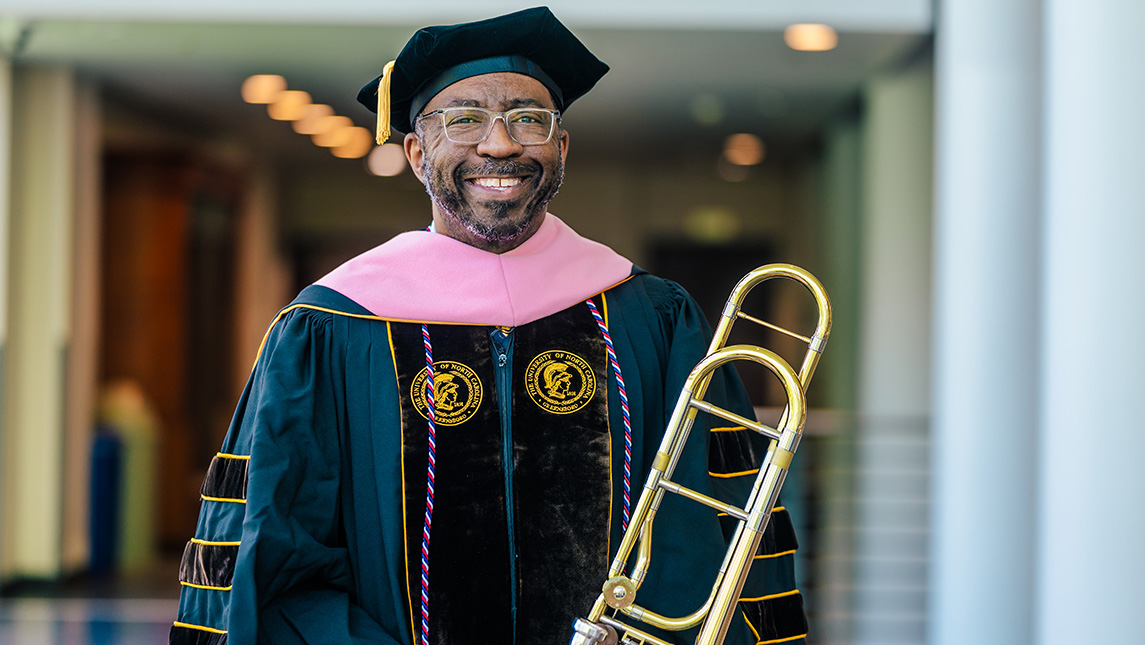
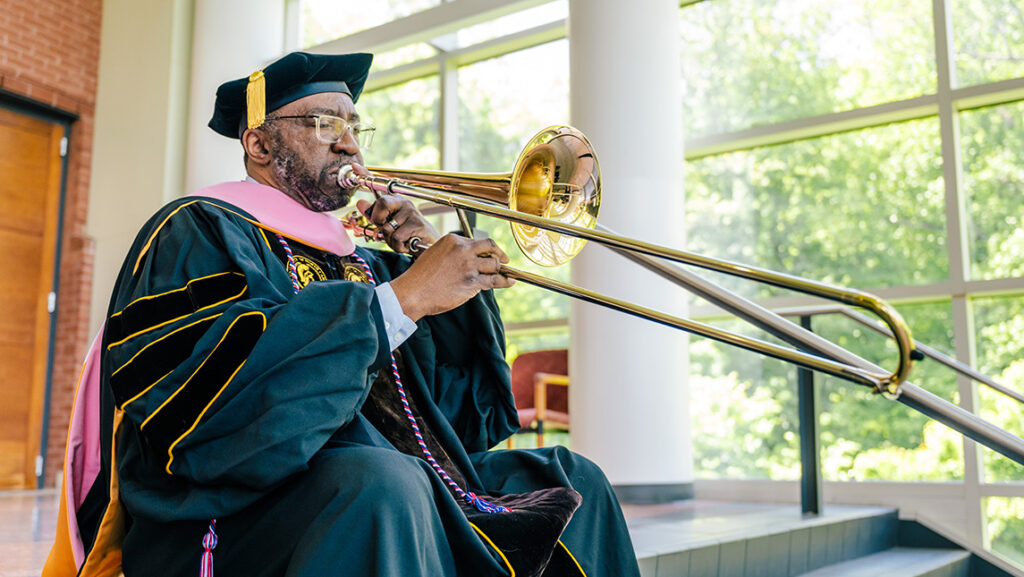
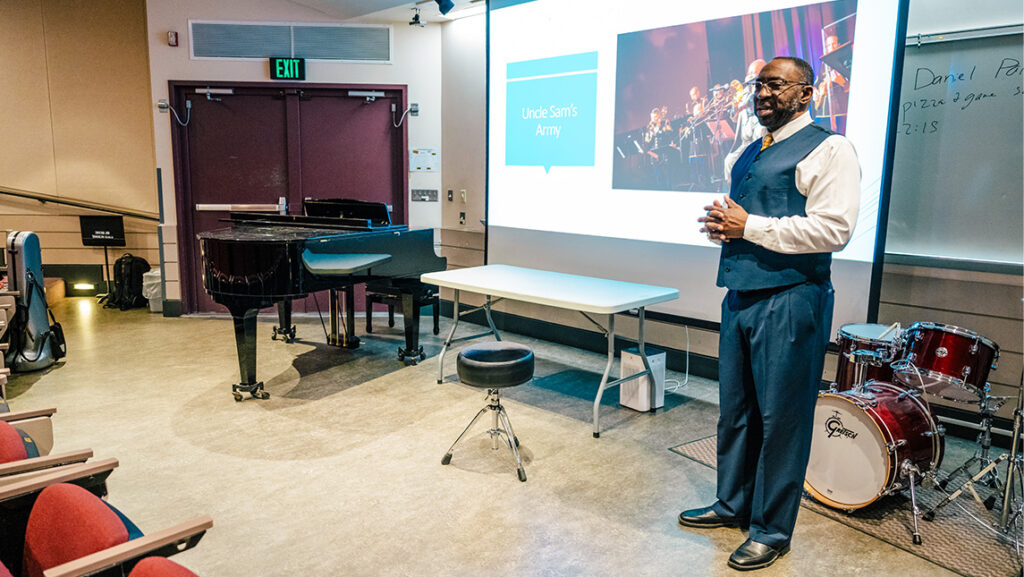
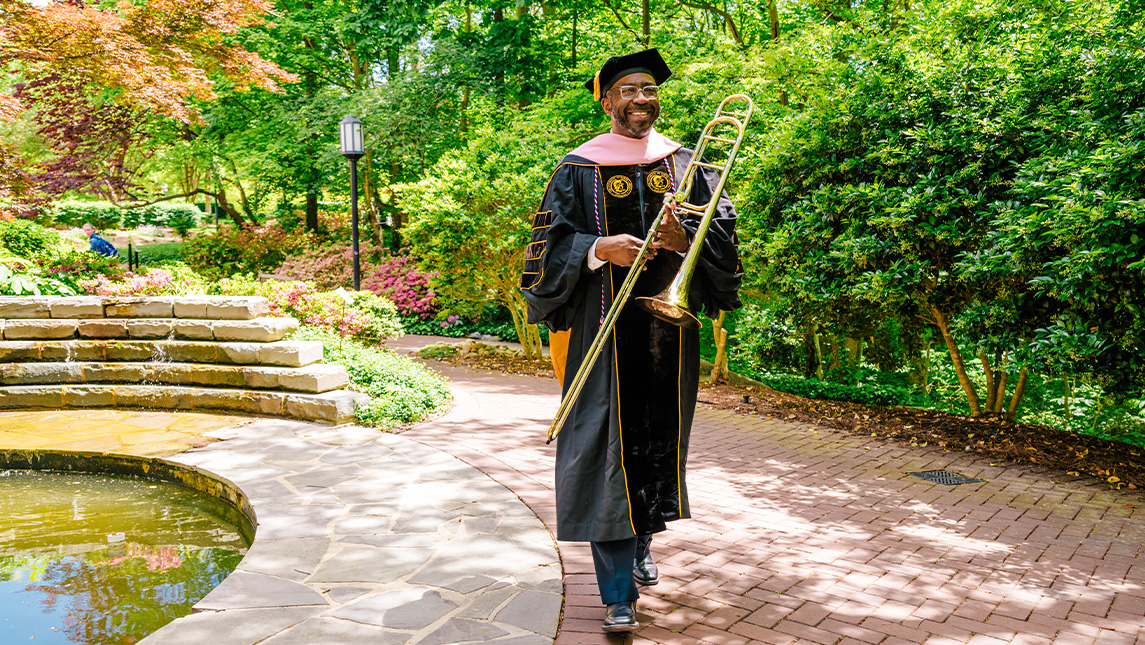
Glenn will graduate in Spring 2024 with a doctorate in musical arts, focusing on trombone performance from UNC Greensboro. The Shelby, North Carolina native recently retired after 23 years of combined service in the Air Force and the Air National Guard – performing as a military musician throughout his career.
ARTS IN THE AIR FORCE
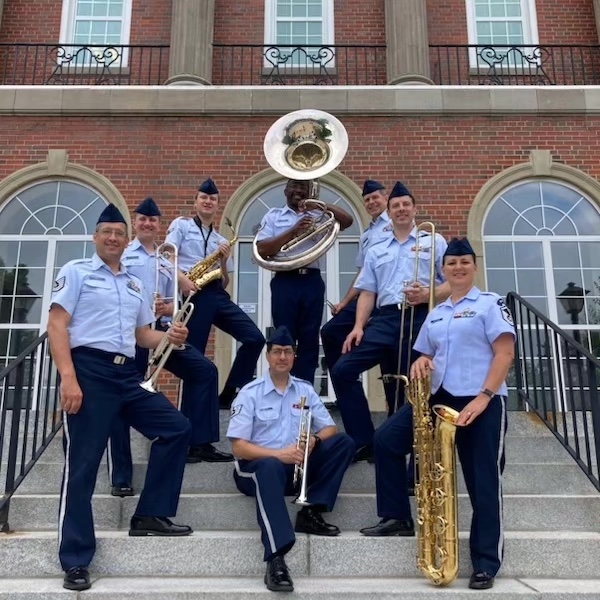
Dandrick Glenn with the Flightline Brass, a New Orleans-Style Brass band, a small ensemble in the 553rd Air National Guard Band of the Northeast.
As a member of the US Air Force, Glenn was assigned to the Band of the Pacific-Asia. A major part of the unit’s mission was to use the universal language of music to build community and international relations. The unit conducted several tours in Japan, Korea, and Singapore. In 2009, he was deployed to Southeast Asia in support of Operation Iraqi Freedom and Operation Enduring Freedom. He’s also performed for various dignitaries and heads of states including former Presidents George W. Bush and Barack Obama.
During his first assignment with the Band of the U.S. Air Force Reserve, he was part of several USO type events in Germany, Portugal, Spain and Turkey.
“Music has allowed me to meet the most amazing people, do the most amazing things, and see some amazing places that I never would have imagined,” he says.
His military experience, of course, played a part in earning his degree.
“The great football coach Mike Tomlin said that many are capable, but few are willing, and that pretty much encapsulates the military,” he says. “Two-percent of Americans are part of the greatest military force the world has ever seen. Certain aspects of discipline and structure have definitely been a part of my journey as a student here at UNCG.”
Music has always been in his life, beginning at an early age: “It all started in the church choir when my mother was singing. The church choir was, and still is, my greatest influence.”
GETTING THE DOCTORAL BUG
Throughout his time in higher education, Glenn didn’t see many others like him, especially with advanced degrees in the music field, but he recalls meeting a kindred spirit.
“I met Dr. Keith Jackson, who is now the Dean of the College of Creative Arts at West Virginia University. He was the first African American trombonist I’d met with a doctoral degree, and he understood my love for music.”
In 2016, Glenn was a guest soloist at Morehouse College for the Historically Black Colleges and University’s National Band and Orchestra Directors’ Consortium. His impact made a difference for others and sparked a change for himself.
“Several students came up to me at that performance and said ‘You inspired me. Can you give me some advice?’ And that put a bug in my ear to pursue advanced degrees.”
Years later, he’s earning that advanced degree from UNCG, which offers the most comprehensive music performance degree in North Carolina.
“UNCG is a flagship music institution here in the Southeast,” says Glenn of his decision to attend. “The School of Music is elite in communicating with their students.”
UNCG faculty, including Dr. Randy Kohlenberg, have made a dramatic difference in his career: “Dr. Kohlenberg is one of the greatest pedagogues. He really helped me hone how I teach.”
“Dandrick has been invaluable to the School of Music as a performer, teacher, and influence on students and faculty alike,” says Kohlenberg, the director of graduate programs in the School of Music. “To be able to complete the degree and juggle family life, his teaching at Fayetteville State, and performing in the Air Force reserves, with numerous symphony orchestras, in faculty groups, and at conferences is truly remarkable. He is an inspiration to all of us, especially me.”
Glenn also credits Professor Steve Haines, in the jazz studies program, with giving him new and unique opportunities to advance his studies.
“Dandrick is a special guy and one of the most determined people I’ve ever met,” says Haines. “During his time at UNCG he performed over three hundred times, wrote arrangements for the Spartan Jazz Collective, taught at another university, all the while caring for his family. He managed to spend time with James Brown’s legendary trombonist, Fred Wesley as he was the focus of Dandrick’s work. Dandrick has a bright future, and we are proud he’s a Spartan.”
If I have an opportunity to help somebody have a similar experience through this beautiful art, then i’m all for it.
CREATE A LIFE THROUGH MUSIC
Glenn moved his family to Greensboro from Fayetteville to attend UNCG – something he says required communication and a lot of support from his wife and daughter.
“The most important job I have is to be a parent and a husband,” he says. “Family is very important and managing my time was key with this program.”
Now an adjunct professor at Fayetteville State University, Glenn is ready to use his UNCG education to the fullest.
“I have a heart for that community of learners, but I’d like to, more than anything, help young people create the life they want to create through music,” Glenn says. “If I have an opportunity to help somebody have a similar experience through this beautiful art, then I’m all for it.”
Story by Avery Craine Powell, University Communications Photography by Sean Norona, University Communications Additional photography courtesy of Dandrick Glenn
CELEBRATE OUR GRADS!
Graduates and their families are encouraged to share their accomplishments on social media by tagging the University accounts and using the hashtags #UNCGGrad and #UNCGWay. Visit UNCG’s digital swag page for graduation-themed graphics, filters, and templates.
Mention @UNCG in celebratory posts on Instagram and X and @uncgreensboro on TikTok.
UNCG scientist investigates geography’s impact on access to jobs, recreation
Posted on May 01, 2024
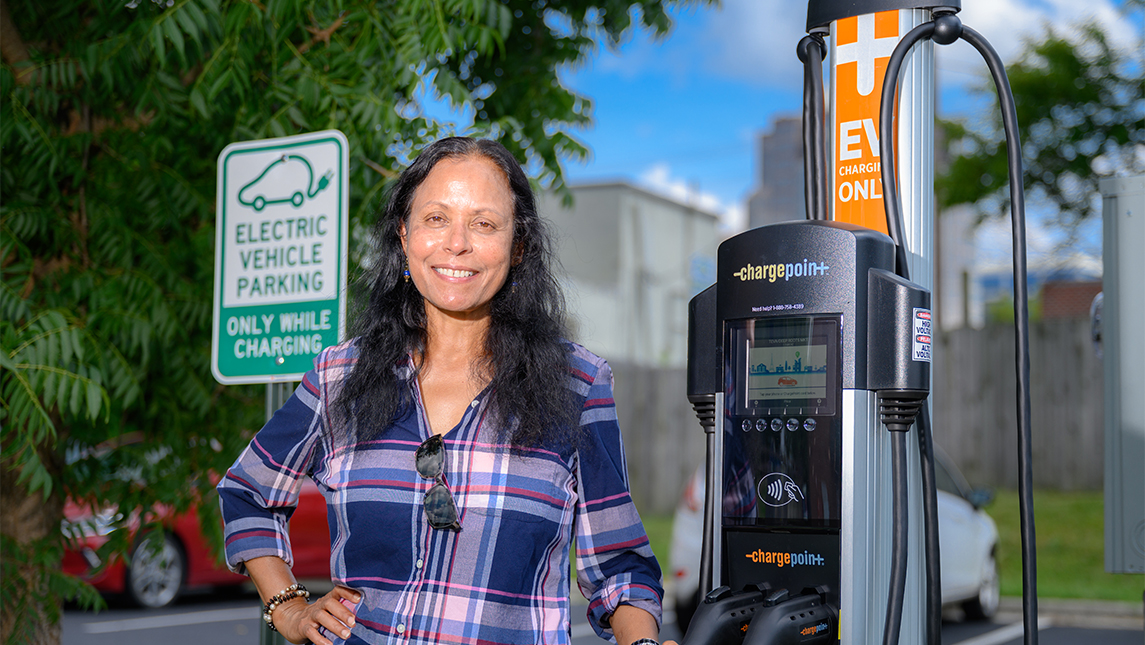
Dr. Selima Sultana, a fellow of the American Association of Geographers, is an expert on geography and urban transportation research.
When Selima Sultana was a graduate student living in Atlanta, Georgia, she was excited about a potential new job until she faced a hurdle in the application process.
“When I was interviewed, they asked whether I had a car and I said I didn’t. They were very hesitant to hire me,” she says.
This conundrum became the crux of Sultana’s dissertation research. Now, as a professor and the associate department head in UNC Greensboro’s Department of Geography, Environment, and Sustainability, Dr. Sultana is a leader in transportation and urban research. She has published and authored over 50 peer-reviewed papers, two books, and another book under contract. In 2024, she was named a fellow of the American Association of Geographers – a prestigious recognition for select scholars who have made significant contributions to geography.
Sultana’s research focuses on how the geographic location of jobs and housing significantly impacts people’s access to opportunities, jobs, and recreation – creating consistent barriers for some.
A long commute is not just an annoyance; these daily drives are linked to many downsides.
“Studies suggest that if people are commuting a long distance every day, their productivity goes down,” she says. “Longer commuting is linked to a variety of mental and physical health impacts, including obesity.”
Sultana says the design of a city can leave people with few options, forcing them to either commute extensively or face unemployment if working from home is not an option.
For her dissertation research, Sultana applied geographic information systems to determine the degree to which people are separated from their jobs. She found this job-housing imbalance was prevalent in the Atlanta metropolitan area.
“I was integrating geographic information into urban and transportation planning, which was rare at the time,” she says.
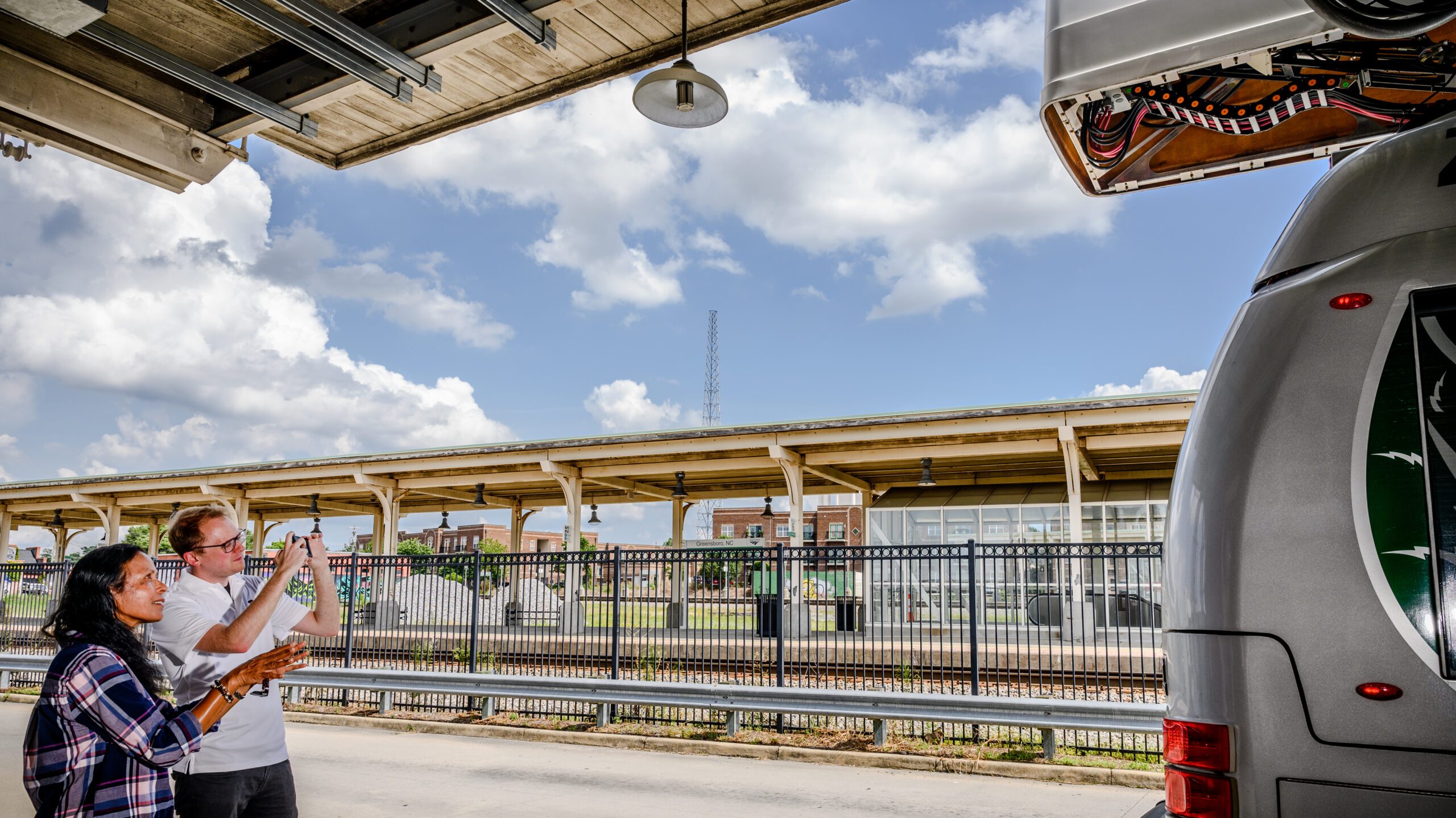
Since this initial study, Sultana has expanded her transportation research, including recent work investigating the accessibility of electric vehicle charging stations. Her goal is for her research to help policymakers and leadership make meaningful changes that foster equal access for all individuals.
“My motivation is always to solve real-world problems and make sure the solution helps the community equally,” Sultana says.
Among Sultana’s areas of expertise, she has investigated the accessibility of charging stations for electric vehicles.
Accessing national parks
When Sultana moved to the United States from Bangladesh, she was captivated by the National Parks. She resonated with the parks’ beauty, but also the mission of the National Park to make nature accessible to everyone.
“The concept of National Parks is really an American concept of access for everybody,” she says. “The goal is preservation of the parks from generation to generation.”
Sultana says preserving the parks – and its funding – hinges upon ample visitors. Like Sultana, who took solo trips to the parks as a young adult, sleeping in her car, and soaking up the sights.
“All of a sudden, I looked around and thought, ‘How come the people who visit these National Parks are predominately white?’” she says.
Sultana’s musing sparked a multi-decade long collaboration with Dr. Joe Weber, a professor at the University of Alabama who grew up in Death Valley National Park. Together, they have published multiple papers and books, including their recently published book, “The Parks Belong to the People,” in which they examine park visitation rates, geography, and how the parks are changing over time.
Among their findings, the scientists have found that many Black Americans have the least accessibility to the parks, which Sultana says contributes to lower visitation rates. Sultana has built on this work in a recent study by visiting Great Smoky Mountains National Park with UNCG students.
Their goal: better understand why there are fewer Black visitors to the park, despite geographic information indicating many Black individuals live close to Great Smoky National Park.
“We found that Black Americans are seldom mentioned in Great Smoky Mountains National Park’s historical records and only minimally featured in public materials and exhibits,” she says. “This historical pattern might have conveyed to Black Americans that the park is an unwelcoming space for them.”
Sultana shared these findings with the National Park Service. She says working with students, including on this study, is one of the highlights of her job – whether watching their eyes light up when a concept clicks or they publish a paper.
For Sultana, being a faculty member is more than conducting research and mentoring students. She also invests in service – both within the University and for geography organizations – to make a positive dent in the field.
“When you get involved and you have a seat at the table, you can always make an impact,” Sultana says.
Story by Rachel Damiani Photography by Martin Kane
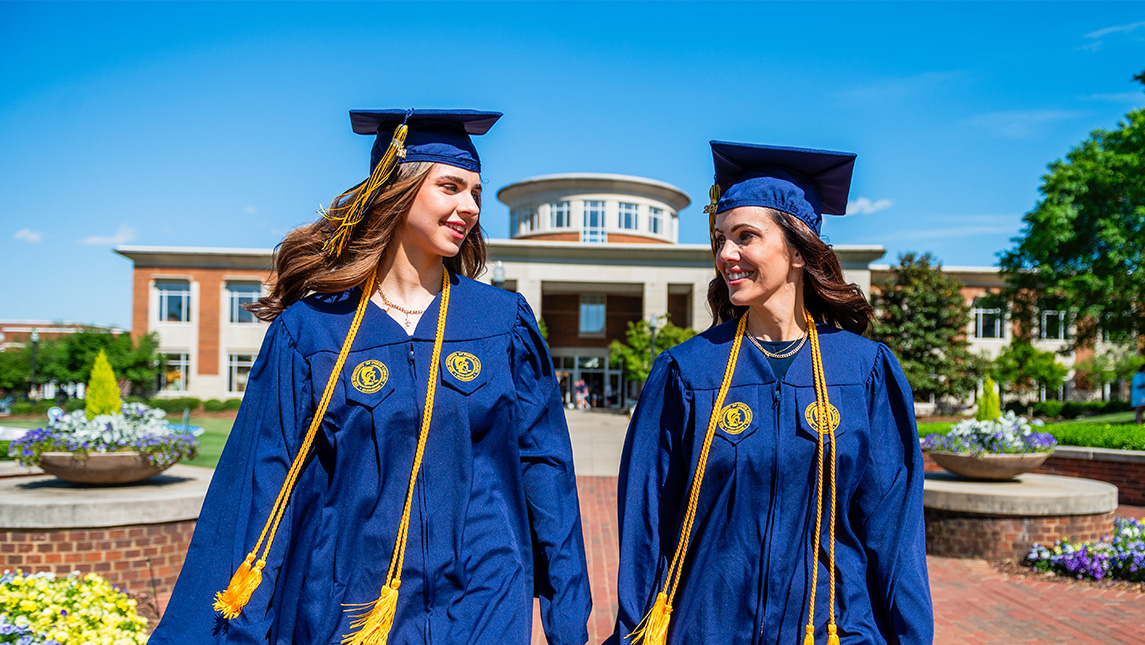
Class of 2024: Mother and Daughter Match Wits and Creativity at UNCG
Posted on May 02, 2024
In Asha Kutty’s fourth-year Interior Architecture (IARc) class, a group of fifteen students have been working on their final projects before graduation. The assignment is to design the birthing center for a women’s hospital set to occupy a historic medical facility in Wilson, North Carolina.
Most of the class had never been to a birthing center when they attended the first site visit, but for two in the class, a birthing center in Grand Rapids, Michigan was where they first met. And so began the story of how a mother and daughter found themselves graduating together in the Class of 2024 at UNC Greensboro.
Life Interrupted
In 1995, Dena and Mark Blossey were a young married couple living in Wake Forest, North Carolina. Mark was getting his start as an engineer and Dena had just begun to take classes in hopes of becoming an architect, a dream she’d had since she was a little girl.
“When I was young, my dad took drafting classes so he could design our family home,” Dena remembers. “Plans were always laying around the house. I helped him a lot with house and car repair projects, so I was comfortable with tools and interested in how things were made.”
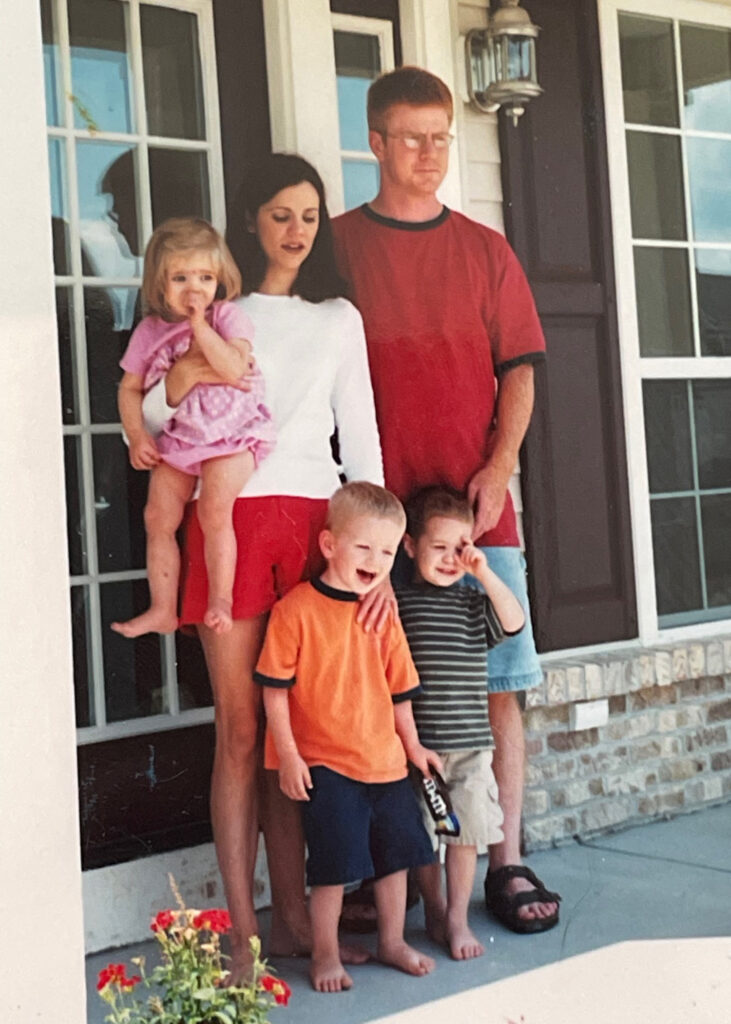
Just as Dena was settling into her first college courses, she became pregnant just as the Blossey’s application to adopt a baby was accepted. Life was about to take a turn for the young family and Dena put her education on hold. They welcomed two boys into the family and then a baby girl, Rylee, arrived in 1999 when they were living in Michigan.
“I promised myself that once everyone was out of the house, I would go back to school,” she says. “My love of architecture was the one thing I always held on to. We moved a lot when the kids were small and renovated several houses. We were always reworking our homes to fit our needs. The kids helped. Rylee seemed to have the same creative sense that I had from a young age. It was in our blood.”
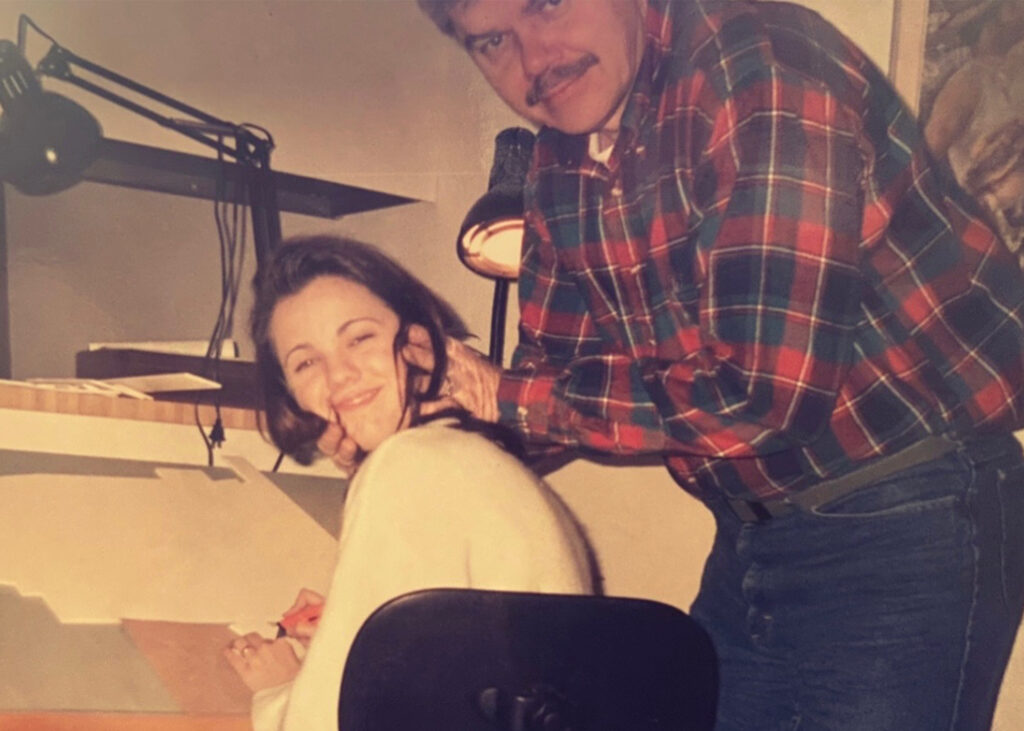
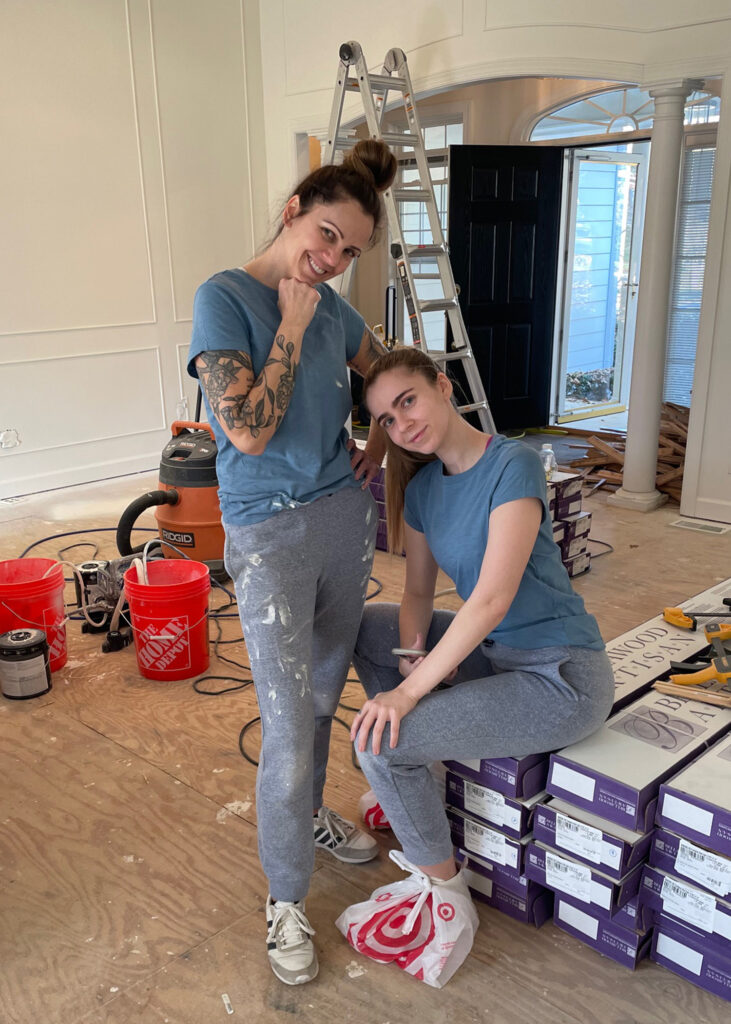
Dena and Mark Blossey and their three children*Dena Blossey and her dad working on plans for their family home at a drafting table.*Dena and Rylee Blossey doing home renovations.*
Artistic Pursuits
Dena encouraged the creativity she saw in her daughter, whether it was with decorating or music, but it was most evident in her love of dance. Rylee began dance classes when she was 2 years old, and by the time she was in high school, she was spending her summers dancing with Boston Ballet. When most of her friends were applying for college, she was at a ballet company in Huntsville, Alabama pursuing her dream of being a professional dancer.
In 2017, Rylee experienced an injury that changed her trajectory. “My body was quickly breaking down at a young age,” she says. “I was forced to quit the thing that I thought I was going to do forever.”
Since Rylee had never attended a traditional high school, applying to colleges was overwhelming. “I had never taken college prep courses or a standardized test. I needed time to catch up and consider new goals for myself,” she says. Leaning into her creative instincts, she began an online design program and planned to transfer her credits after two years.
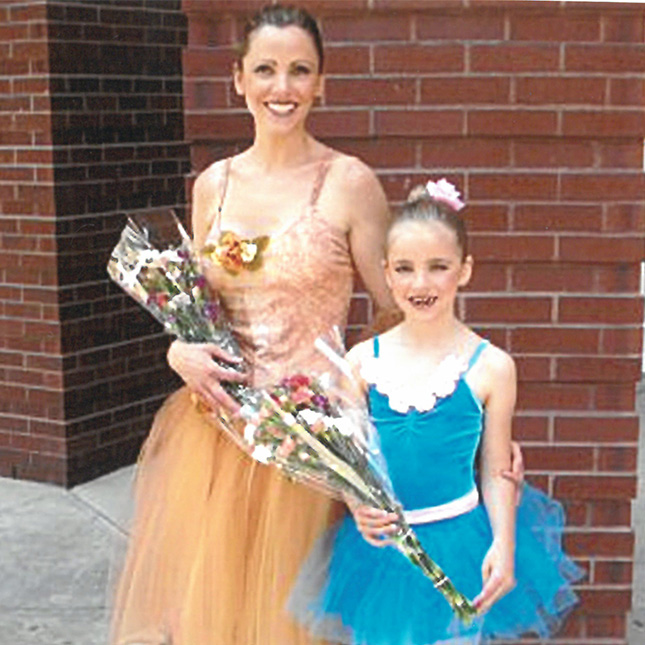
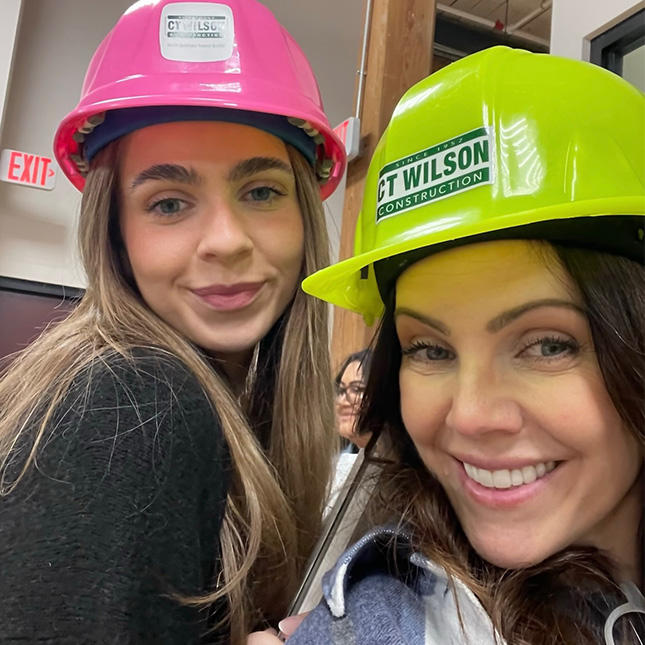
Dena and Rylee Blossey after a dance recital.* Rylee and Dena Blossey work together in Gatewood.Rylee and Dena Blossey on a site visit.*
New Beginnings
By the time Rylee’s dancing career ended, her mother’s career plans were just beginning. “My boys went into the military, Rylee had moved away to dance, and my husband and I had just moved to Hickory, North Carolina,” Dena recalls. “There had been this huge transition in the family, and I realized it was my time to start over.”
She heard about the interior architecture program at UNCG and knew it was the perfect program to explore her interests in interior design and finally study architecture. Beginning the program during the COVID-19 pandemic with classmates almost twenty years younger was a challenge. Adjusting to technology was frustrating and there were many days when she wondered if the work was worth the years she would have as an architect before retiring.
“Then I turned my whole reasoning around,” Dena says. “I told myself ‘You know what? I’ll get 20 years of a career I’ve always wanted to do!’ And once I stepped into the Gatewood Studio Arts Center, I knew I was where I was supposed to be.”
Dena and Rylee loved comparing notes from their design classes. They often talked about career goals and Rylee’s initial interest in design soon drifted towards architecture like her mother. They began talking about opening an architecture firm together after college and when it came time to transfer to an architecture program, Rylee applied to UNCG and was accepted.
Dena and Rylee Blossey in Gatewood Studio Arts Center.
Gilmore Girls in Greensboro
By the fall of 2022, both Blosseys were living in Raleigh and commuting to Greensboro for classes. Dena rented an apartment across the street from the Gatewood Studio Arts Building, where all her classes were. She would stay in Greensboro four days out of the week and go back home for weekends with her husband.
“When Rylee came last year, she just moved in with me,” Dena says.
“We were the Gilmore Girls of Greensboro,” Rylee says affectionately. They shared all their classes and were already working on projects together, which gave a glimpse of how they would work as partners in an architecture firm one day.
“I have more of a free spirit mentality and she’s much more technical and logical so we’re a great combination,” Rylee says. “I encourage her to be more daring with her ideas and she reigns me in when my ideas get too big.”
Lucinda Havenhand, IARc professor and department head, served as the Blosseys’ advisor. “I love Dena and Rylee’s story,” she says. “In so many ways it exemplifies the best parts of the interior architecture program at UNCG – its diversity, rigor, community, and openness to students from all walks of life and backgrounds. I am thrilled that these two hard-working, intelligent women found their way to us and that we could help them become everything they aspire to be.”
Right Time, Right Place
Both mother and daughter appreciate the unique advantages of UNCG’s IARc major.
“We are so fortunate to have found this dual program which mixes interior design and architecture, making us more well-rounded.” Dena explains. “There’s an excitement at Gatewood that is hard to describe. The professors have such a range of experience, and their critiques prepare us for a tough business.”
Rylee echoes Dena’s praise for the program. “The community in the program has been so important to me. In one-on-one meetings, professors always focus on our individual goals, and our own creativity and interests. We can be our own people and find our way as designers.”
Although Dena and Rylee Blossey never expected to cross a commencement stage together, they are grateful for the challenges that brought them to UNCG.
“I think my training for ballet prepared me for this field,” Rylee says. “Ballet and architecture are both structured and technical and all about lines, but there’s so much room for creativity.”
For Dena, her work and life experience give her the confidence to boldly step into this second act and she appreciates the opportunity to share a career with her daughter. “In the moment you don’t always feel like it, but everything always works out like it’s supposed to.”
Story by Becky Deakins, University Communications. Photos and Videography by Sean Norona, Grant Gilliard and David Rowe, University Communications. *Photos noted with an asterisk were submitted by Dena Blossey.
CELEBRATE OUR GRADS!
Graduates and their families are encouraged to share their accomplishments on social media by tagging the University accounts and using the hashtags #UNCGGrad and #UNCGWay. Visit UNCG’s digital swag page for graduation-themed graphics, filters, and templates.
Mention @UNCG in celebratory posts on Instagram and X and @uncgreensboro on TikTok.
UNCG Students Invited To Attend United Nations Session
Posted on April 30, 2024
Two UNC Greensboro students earned the honor of attending the United Nations 68th Annual Session of the Commission on the Status of Women. The meeting is the largest gathering on gender equality and women’s empowerment, held at the United Nations headquarters in New York City.
Doctoral student Nida Qamar and graduate student Cathy Knowles ’98 both attended the session in March 2024, having been invited through different organizations.
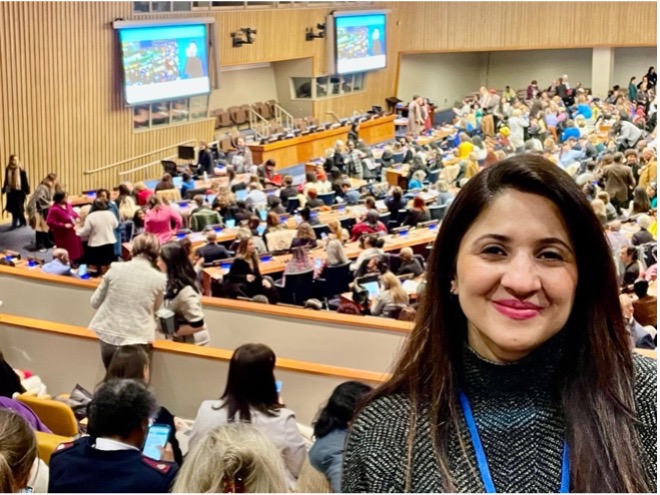
Qamar at the UN 68th Annual Session of the Commission on the Status of Women
Qamar’s research interest is in identifying and preventing human trafficking among foreign-born people in the U.S.
“Sessions such as ‘Innovative Partnerships to End Trafficking in Women and Girls,’ and ‘Collaborative Efforts in Technology and Policy to Fight Human Trafficking” provided invaluable insights into the complexities of this issue,” Qamar says. “The discussions highlighted the crucial role of technology in aiding law enforcement and other service providers efforts while emphasizing the need for collaborative approaches and policy reform to combat human trafficking effectively.”
This trip was the first time Qamar has ever been to the United Nations headquarters.
“It was very interesting and empowering,” she says. “It was amazing to see experts from all across the world come together for these sessions.”
Originally from Pakistan, Qamar earned both her bachelor’s degree and master’s degree abroad and has lived all over the world, including in Lebanon, UK, Italy, Fiji Islands, and Thailand, but it was UNCG’s Department of Public Health Education that brought her to Greensboro.
“I am interested in working in the community with refugees and immigrants, so when I was searching for a PhD program, I came across UNCG’s community health education program,” says Qamar. “I spoke with the faculty, and they were amazing. They were very knowledgeable and responsive. It was exactly what I wanted. North Carolina is also a hub for refugee resettlement agencies, so it worked out perfectly.”
COMING FULL CIRCLE
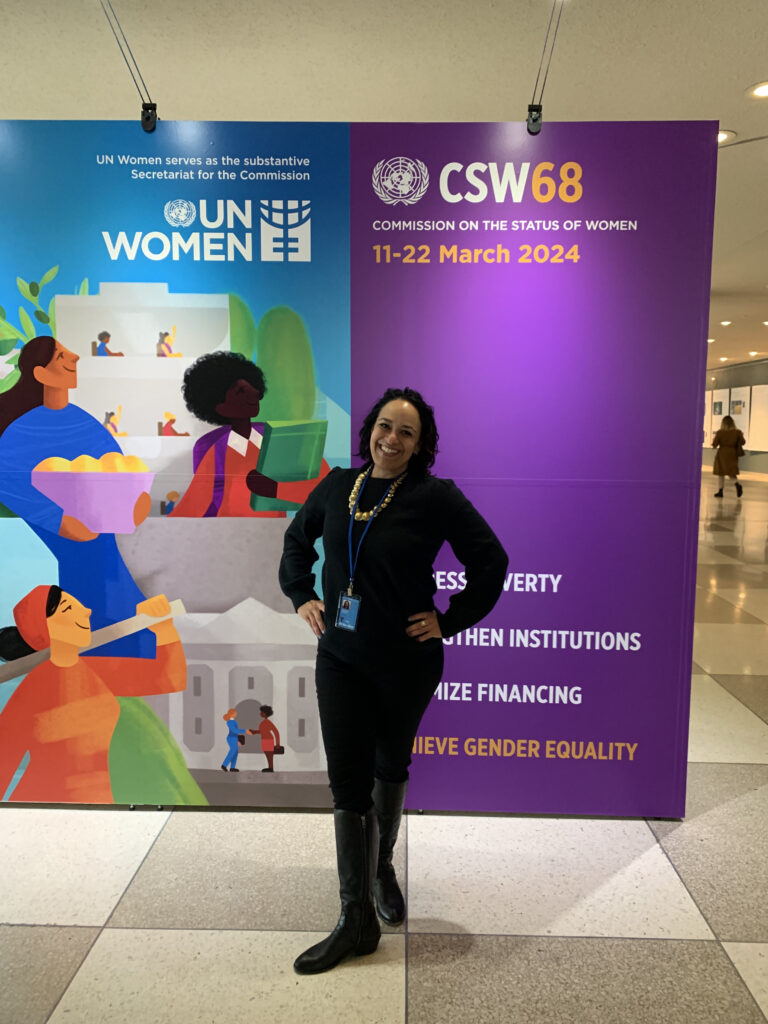
Cathy Knowles at the UN 68th Annual Session on the Commission on the Status of Women.
Knowles says going to the United Nations was a “dream come true.” She earned her undergraduate degree from UNCG in 1998 and is now working on her graduate degree in peace and conflict studies, with a focus on sustainable peace and justice. She spent the last 20+ years working at non-profit organizations in New York, Los Angeles, and now the Community Foundation of Greater Greensboro.
“I got into my career because I am a strong administrator, but my heart has always been in field work,” she says. “UNCG started me off in that area, and now I feel like I’m coming full circle with some childhood dreams. Standing in front of all the flags at the United Nations, having a security pass, getting to see all of the artwork, and seeing all of the people from around the world, it was very transformative.”
“Dr. Hale met with me and listened to what my interests and passions are. She then forwarded me this opportunity and wrote one of the best recommendation letters I’ve seen in 24 years as a professional. It was so thoughtful,” she says.
During the five-day trip, Knowles was able to attend 17 different sessions related to women and gender issues, including the first Indigenous-led session.
“It was a fully female panel, hosted by Canada and Mexico. They ranged from doctors and lawyers to ministers and talked about issues like recognizing Indigenous sciences to the crisis of missing and murdered indigenous women, girls, and two-spirit people. I knew about the crisis, but I didn’t know much, which is why I’ve chosen it as my research topic.”
DIGNITY AT THE FOREFRONT
Knowles would like to apply her learnings to issues facing women, girls and gender-diverse people. It was a guest speaker in her peace and conflict studies program that shifted her perspective.
“He talked about how, in every interaction that he had with someone in the field as a peace builder, he keeps dignity at the forefront of every single conversation,” Knowles says. “So, everything that he is doing in his practice is about paying attention to the humanity of the other people, and I thought that was a wonderful way to navigate work.”
The trip has helped to inform Knowles’ graduate studies, not just by introducing her to new research opportunities, but also from hearing about how people are working on local solutions to real world issues.
“It was one of the best experiences of my life, and it only happened because I’m enrolled in this small department at UNCG with a very dedicated and compassionate faculty,” says Knowles.
Story by Avery Craine Powell, University Communications Photography courtesy of Cathy Knowles and Nida Qamar Feature photo courtesy of adobe.stock.com